
Reviewed · LISBON COOKING CLASSES
Private Lisbon Market Tour & Portuguese Cooking Class with Paula
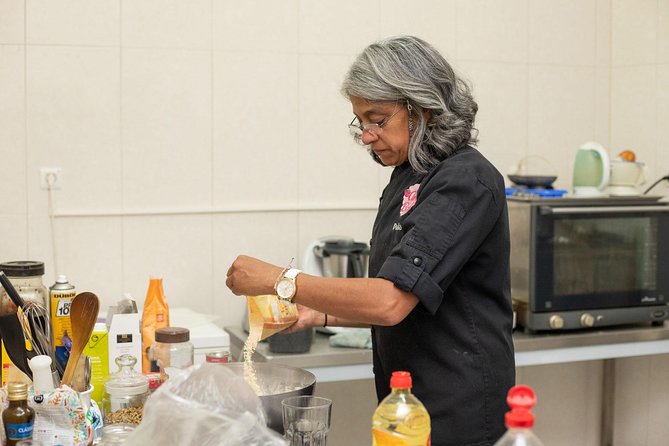
Cooking starts with a ferry to Almada. In this private experience, Paula meets you at Cacilhas and leads you through a local market before taking you to her home kitchen to cook Portuguese-Goan favorites. You’ll be with just your group, so it feels more like cooking with a friendly local than following a class schedule. I especially like the market-to-meal flow, because you pick ingredients that actually show up in everyday Lisbon cooking, not just demo items.
I also love the menu choice. You’ll learn 2–3 dishes and can steer things toward Portuguese or Goan flavors, from pataniscas de bacalhau (cod fritters) to Goan bojas (gram-flour fritters with onion and cumin), with mains such as bacalhau com natas or a Goan curry. One consideration: this is an in-home cooking and cultural experience, not a polished cooking-school setup, and Paula lives with family, so her place can be a little cluttered (plus she has a cat).
In This Review
- Key things that make this tour worth your time
- From Cacilhas ferry stop to Paula’s Almada neighborhood
- Shopping the covered market with Paula like you belong there
- Paula’s home kitchen: an in-home class with real technique
- Choosing your menu: Portuguese vs Goan mains (and why it matters)
- Appetizers first: cod fritters and bojas you can actually recreate
- The walk back to the table: dessert, coffee, and the slow pace
- Price and value: what $99 buys you in the real world
- Who this tour fits best (and who should skip it)
- Practical tips before you go
- Should you book this Lisbon market tour and cooking class?
- FAQ
- Where do we meet for the tour?
- How long is the experience?
- Is the cooking class private?
- Is the tour offered in English?
- What happens during the market part?
- What will we cook?
- Can I choose Portuguese or Goan dishes?
- Is this in a professional cooking school?
- Does Paula live with animals?
- Is there a place to communicate with Paula before the tour?
Key things that make this tour worth your time
- The 10-minute Almada walk plus a local covered market gives you context fast, before you cook a thing.
- Paula’s menu flexibility lets you choose Portuguese or Goan main-dish direction.
- Hands-on lessons in a real kitchen focus on technique you can reuse later, not just eating well.
- Private-group pace makes it easier to ask questions and take breaks when you need them.
- A shared meal right after cooking turns the class into a full experience, not a drop-off and go.
From Cacilhas ferry stop to Paula’s Almada neighborhood
This starts in Almada, across the river from central Lisbon. You’re not stuck touring in a single district. Instead, you get a short ferry ride and a small sense of place change, from Lisbon’s downtown feel to Almada’s everyday neighborhoods.
Paula meets you at the ferry stop in Cacilhas, and then you head out on foot with a short walk through the center of town. That walk matters. You get a real preview of the area where she shops and lives, and it sets the tone for the rest of the morning or afternoon. People also note the ferry part is easy, not a chore, and that local transit passes can work for it, which helps keep logistics simple.
This isn’t a long trek tour. Expect about a 10-minute walk to Paula’s home, which is only a few meters from the neighborhood’s main covered market. In other words, it’s practical. You’re not spending half the time commuting in circles.
More aprons-on hours in a Lisbon kitchen
- Lisbon: Pastel de Nata Baking Class
★ 4.9 · 2,106 reviews - Lisbon: Traditional Portuguese Cooking Class
★ 4.9 · 592 reviews - Lisbon: 2-Hour Pastel de Nata Cooking Class
★ 4.8 · 461 reviews - Lisbon Portuguese Cooking Class with 3-Course Dinner
★ 5.0 · 445 reviews
Shopping the covered market with Paula like you belong there
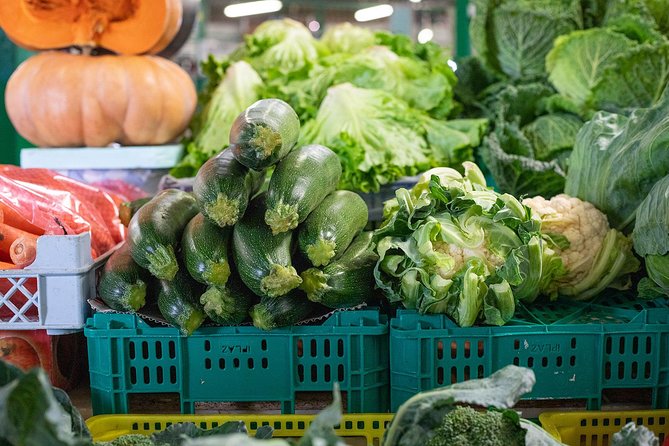
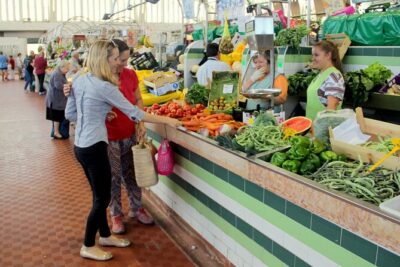
After you meet and walk over, the market is step one. Paula has been visiting and shopping there for decades, so she doesn’t just point at stalls and say which is best. She guides you through how locals think about ingredients, freshness, and what makes sense for the dishes you’ll cook.
You’re picking ingredients as you go, and that’s one of the biggest reasons this experience feels different from a cooking class where everything is pre-portioned. When you choose fish, sides, and pantry items yourself, you understand the meal at a higher level. Later, when you make something at home, you’ll remember what you bought and why.
A practical heads-up: markets can be busy, and some people found the environment a bit dirty or chaotic depending on the day and what else was happening. Most of the experience still lands as warm and friendly, but if you’re the type who wants everything spotless and tightly controlled, this part may not match your expectations.
Still, that’s the tradeoff for doing this in a local market where real people buy food.
Paula’s home kitchen: an in-home class with real technique
Once you’re at Paula’s place, you shift from street-level shopping to hands-on cooking. This is where the “home” part shows. The lesson doesn’t feel like a professional school lab. It’s more personal, more conversational, and more about getting you moving in the kitchen.
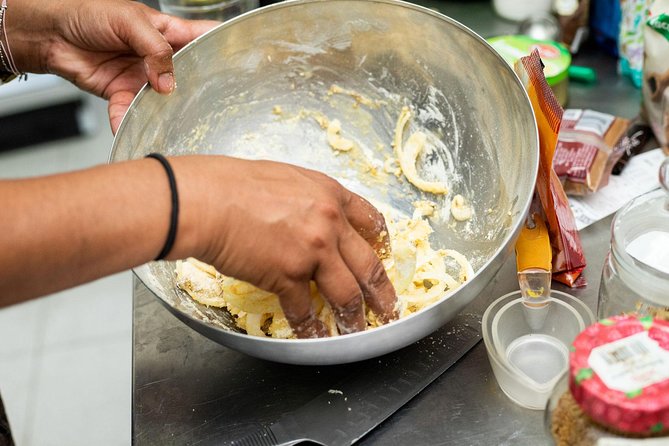
You’ll learn to make 2–3 Portuguese and Portuguese-Goan dishes, and you’ll get instruction on key techniques along the way. Examples from past sessions include things like how to handle batter and fry work, how to work through pastry-style dessert components, and how to check seafood quality. You also get a sense of how Paula cooks: method-first, but relaxed enough that you’re not just executing steps robot-style.
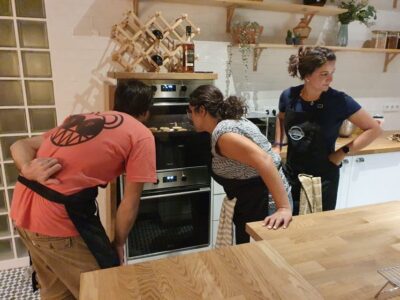
Because it’s an in-home kitchen, layout and supplies can be more casual than a commercial classroom. Add in Paula’s cat and the fact that she lives with family, and you should expect a lived-in space. Many people love that. They feel invited in, not processed through.
Just go in with the right mindset: this isn’t about spotless counters and sterile aprons. It’s about learning and eating together.
Choosing your menu: Portuguese vs Goan mains (and why it matters)
The class is built around choice. You can steer the meal toward Portuguese, Goan, or a mix, and that flexibility keeps the experience from feeling generic.
A typical menu starts with appetizers from two directions:
- Pataniscas de bacalhau: traditional Portuguese cod fritters.
- Goan bojas: gram-flour fritters made with onion and cumin seeds.
Then you move to a main dish, where you’ll select between Portuguese and Goan options. Common choices include:
- Portuguese mains like bacalhau com natas (cod with cream)
- Or Goan mains such as Goan crab curry
That Portuguese-Goan pairing is more than novelty. It’s a window into how cuisine travels and adapts through history, especially when Portuguese cooking influences show up far from Portugal. If you like food that has recognizable techniques but different spice logic, this is a smart match.
You also get practical wins. The dishes aren’t only about one flavor. They teach you how to balance savory, crisp textures (fritters), and saucy comfort (curries and cod preparations). Those are recipes you can translate to your own cooking life.
Worth a look before you lock anything else in around Lisbon:




Appetizers first: cod fritters and bojas you can actually recreate
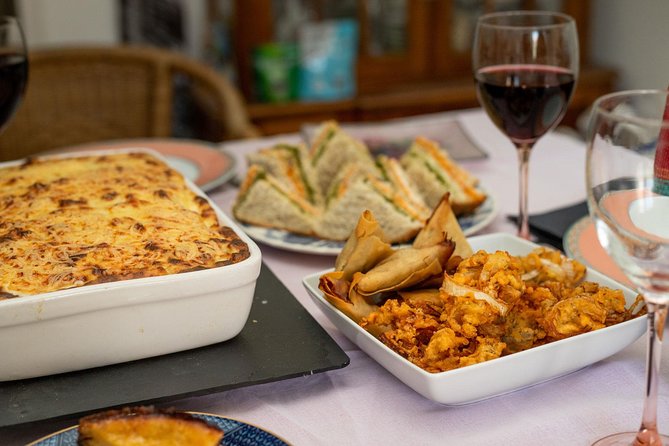
The appetizer stage is where you usually feel the technique jump. Fritters are a skill set: batter consistency, seasoning, frying temperature, and timing. That’s why cod fritters and gram-flour fritters are such a good fit for a class like this. They teach you fundamentals quickly.
Pataniscas de bacalhau gives you a chance to work with cod in a way that feels Portuguese rather than generic fish cakes. Goan bojas bring onion and cumin seeds into the batter, which changes both the aroma and the way the fritter sets.
One underrated part: you’re not just learning how to make these dishes. You’re learning how to decide what’s working. Paula talks through what she’s looking for in the process, so you start thinking like a cook rather than following a script.
That becomes helpful later when you’re eating. You’ll notice the difference between something that’s properly seasoned and something that’s only cooked through.
The walk back to the table: dessert, coffee, and the slow pace
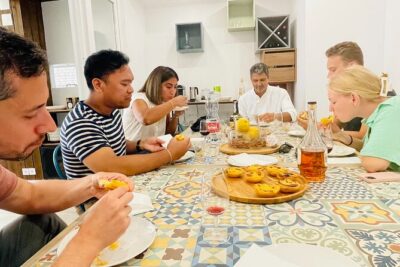
After cooking, you eat what you made. This is another feature that feels more like a shared afternoon than a class stop. You’ll sit down at Paula’s dining table or, in some cases, a nearby studio table across the street, depending on the setup.
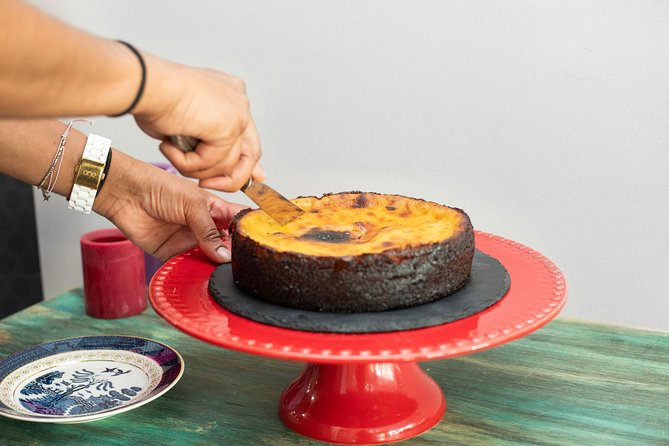
The meal is paired with a sweet dessert and coffee or tea. People often highlight Portuguese custard tarts, like pastel de nata, when dessert comes out, and the theme stays the same: custard-style sweetness that matches the savory, creamy elements of the mains.
The best part is the pacing. You’re not rushing to leave right after the dishes are plated. You’re eating while you still have Paula in the room to answer questions. That’s when the conversation usually turns into food stories, local life, and small details about what ingredients really mean to people around Almada.
If you’re visiting Lisbon with a tight schedule, this kind of meal is also a time-saver. It’s less running, less hunting for a restaurant, and more getting fed with context.
Price and value: what $99 buys you in the real world
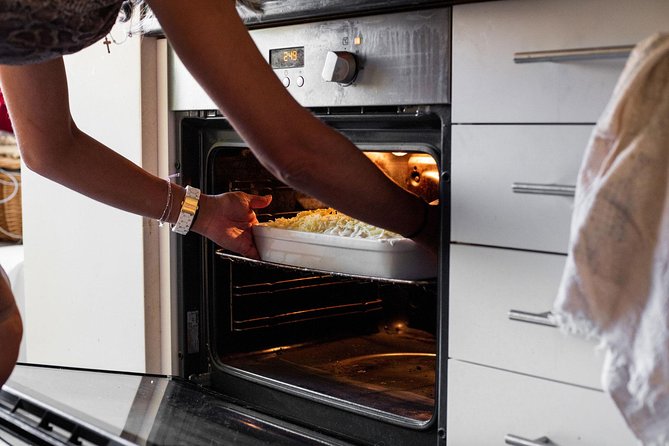
At $99 per person for about 4 hours 30 minutes, this sits in the “serious half-day food experience” range. The value comes from what’s included, not just from instruction time.
You get:
- A private market tour with ingredient shopping
- A hands-on cooking session for multiple dishes (2–3)
- A shared meal you made yourself, plus dessert and coffee or tea
- A host who also explains the food in a cultural context
If you’ve done cooking classes before where you’re handed ingredients and taught only how to assemble, this tends to feel better because you start earlier—with shopping and local choices.
Where value can vary is expectation level. If you want everything tightly organized like a commercial classroom, or if you strongly dislike home environments that feel lived-in, the experience may not justify the price for you. There are a few mentions of chaos or an environment that didn’t meet cleanliness expectations on certain days. Most sessions sound calm and friendly, but it’s fair to factor in that this is real life, not a stage set.
So I’d call this good value for the right traveler: someone who wants flavor education and a local routine, not just a plated meal.
Who this tour fits best (and who should skip it)
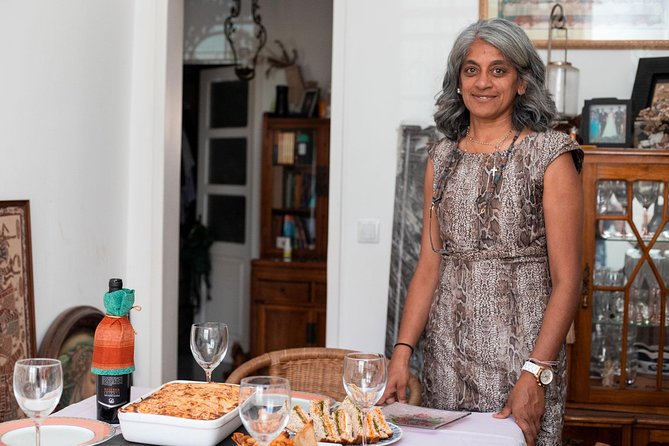
This is a strong match if you:
- Want Portuguese-Goan food and you like learning technique, not memorizing steps
- Enjoy meeting locals and seeing how they shop and cook
- Prefer a private setting where questions are easy
- Are happy with a home kitchen and a relaxed vibe
It might not be ideal if you:
- Need a perfectly clean, professional classroom environment
- Have a low tolerance for clutter in a home setting
- Expect the market to be tidy and controlled like a boutique shop
It also tends to work well for families. Several people noted Paula is patient and makes sure kids feel included, which isn’t always true in food tours.
English is the working language, so communication is straightforward.
Practical tips before you go
- Wear comfortable shoes. You’ll do a short walk and spend time moving through the market.
- Be ready to choose your menu direction once you’re with Paula. If Goan flavors are your priority, say so early.
- If you have questions about the meeting location or what you’ll be cooking, reach out to Paula directly via WhatsApp as suggested.
- Expect a home environment. Paula’s cat and a lived-in space are part of the reality.
Finally, try to go with curiosity. This isn’t a checklist of famous Lisbon sights. It’s a day shaped around food, shopping, and conversation.
Should you book this Lisbon market tour and cooking class?
Book it if you want a Lisbon food experience that feels personal and practical: a ferry ride, a real market stop, and a home-cooked meal that uses technique you can repeat. The menu choice and the Portuguese-Goan range are especially compelling if you like food with cross-cultural roots.
Skip it if you want a spotless commercial cooking school vibe. This is in-home and a little casual by design. And if cleanliness or strict organization matters a lot to you, you’ll want to think carefully.
If you’re on the fence, here’s the simplest decision rule: if you’d rather learn how locals shop and cook than just take photos with a cookbook in hand, this is likely your kind of day.
FAQ
Where do we meet for the tour?
You meet at Dá Cacilhas LG Alfredo Dinis, 2800-252 Almada, Portugal, with the start time listed as 10:00 am.
How long is the experience?
It runs about 4 hours 30 minutes.
Is the cooking class private?
Yes. It’s private, and only your group participates.
Is the tour offered in English?
Yes, it’s offered in English.
What happens during the market part?
Paula takes you to the neighborhood market where she has been shopping for decades, and you shop for the ingredients for your meal.
What will we cook?
You’ll learn to make 2–3 Portuguese and Portuguese-Goan dishes, including appetizers and a main dish.
Can I choose Portuguese or Goan dishes?
Yes. You can select the main dish direction between Portuguese and Goan options, and the starters include Portuguese and Goan choices.
Is this in a professional cooking school?
No. It’s an in-home cooking and cultural experience in Paula’s kitchen.
Does Paula live with animals?
Yes. Paula has a cat, and because she lives with family, the home can be a little cluttered.
Is there a place to communicate with Paula before the tour?
The experience notes that you should communicate directly with Paula via WhatsApp if you have questions about the menu or meeting location.
More Tours in Lisbon
- Lisbon City Center Tour – The Unmissable Lisbon★ 5.0 · 22,234 reviews
- Lisbon: History, Stories and Lifestyle Walking Tour★ 4.8 · 10,902 reviews
- True 4Hour Private Tuk Tuk Tour: Discover Lisbon with a Local!★ 5.0 · 8,008 reviews
- Winner 2025 Undiscovered Lisbon Food & Wine Tour by Eating Europe★ 5.0 · 6,390 reviews
- Lisbon: Sintra, Pena, Cabo da Roca, Cascais Tour with Pickup★ 4.8 · 5,445 reviews
More Tour Reviews in Lisbon
- Lisbon City Center Tour – The Unmissable Lisbon★ 5.0 · 22,234 reviews
- Lisbon: Sintra, Pena, Regaleira, Cabo da Roca & Cascais★ 4.7 · 19,656 reviews
- Lisbon Card: 24, 48, or 72-Hour Pass★ 4.5 · 17,944 reviews
- Lisbon: Jerónimos Monastery Entrance Ticket★ 4.1 · 14,164 reviews
- Lisbon: History, Stories and Lifestyle Walking Tour★ 4.8 · 10,902 reviews
More Time in a Lisbon Kitchen
- Lisbon: Pastel de Nata Baking Class★ 4.9 · 2,106 reviews
- Lisbon: Traditional Portuguese Cooking Class★ 4.9 · 592 reviews
- Lisbon: 2-Hour Pastel de Nata Cooking Class★ 4.8 · 461 reviews
- Lisbon Portuguese Cooking Class with 3-Course Dinner★ 5.0 · 445 reviews
- Traditional Portuguese Cooking Class in Lisbon★ 5.0 · 287 reviews
Just in: fresh Lisbon reviews from the team





Lisbon Cooking Classes, compared.
 ★ 4.9Pastel de Nata Baking ClassFrom $642,106 reviews
 ★ 4.9Traditional Portuguese Cooking ClassFrom $100592 reviews
 ★ 4.82-Hour Pastel de Nata Cooking ClassFrom $64461 reviews
 ★ 5.0Lisbon Portuguese Cooking Class with 3-Course DinnerFrom $130445 reviews
 ★ 5.0Traditional Portuguese Cooking Class in LisbonFrom $102287 reviews
 ★ 5.0Pasteis de Nata Baking Class from LisbonFrom $78248 reviews
 ★ 5.0Portuguese Cooking Class in LisbonFrom $114141 reviews
 ★ 4.5Portuguese Cooking Experience in LisbonFrom $108140 reviews
Browse the lists this tour appears in