
Reviewed · CITY TOURS
Lisbon City Center Tour – The Unmissable Lisbon
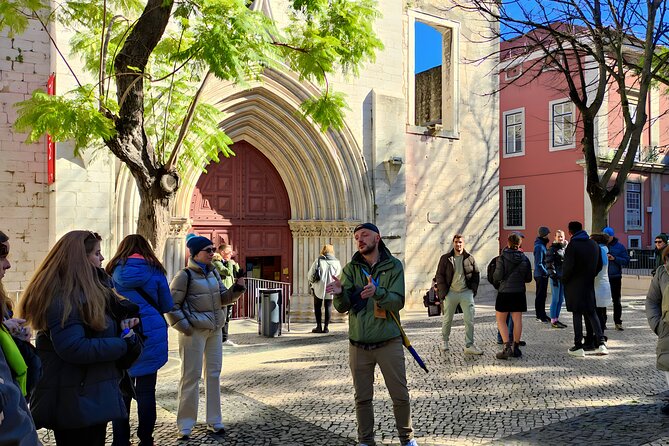
Lisbon goes from postcard to lived-in fast on this walking tour. You’ll move through the center on foot, hitting the city’s big squares, key churches, and the neighborhoods locals actually use. The format is also a nice deal: it’s pay what you think it’s worth, and the stops are built to help you get your bearings quickly.
Two things I like right away. First, the route is a smart mix of famous sights and less-obvious corners, including spots that cars can’t reach. Second, the guides tend to bring stories with personality and real take-home suggestions, and you’ll get free admission at each scheduled stop. One thing to keep in mind: it’s a steady walk on uneven streets, so plan for comfortable shoes and some up-and-down.
In This Review
- Key Highlights Worth Your Attention
- A Smart 2.5-Hour Intro for First-Time Bearings
- Starting in Praça dos Restauradores: Independence at Ground Level
- Igreja de São Domingos and the Quiet-Fancy Church Trick
- The 1506 Jewish Massacre Memorial: Lisbon Remembers Hard Things
- Rossio Square and Estação do Rossio: Where the City Moves
- Chiado Entrance: The Neighborhood That Serves Both Art and Streets
- Santa Justa Elevator Area and the Fun of Seeing Public Transport as a Monument
- Largo do Carmo: Revolutions and the Street-Level Drama
- Igreja de São Roque: The Jesuit Church Where the Interior Does the Talking
- Bairro Alto and Chiado’s Side-by-Side Story
- A Brasileira and Pessoa-Era Lisbon: Coffee as Culture
- São Carlos National Theatre: Music for the Ears, Not Just the Eyes
- Rua Augusta to Praça do Comércio: Finishing at the Tagus
- What the Best Guides Actually Do for You
- Walking Realities: Uneven Streets and Rain Plans
- Price and Booking Sense: Pay-What-You-Want Meets Real Value
- Should You Book This Lisbon City Center Tour?
- FAQ
- How long is the Lisbon City Center Tour?
- Where does the tour start and end?
- Is the tour offered in English?
- How does pricing work for this tour?
- What is the group size limit?
- Are there admission fees for the stops?
- What happens if weather is bad?
- Is there free cancellation?
Key Highlights Worth Your Attention
- Pay what you think it’s worth: you control the final price after the walk
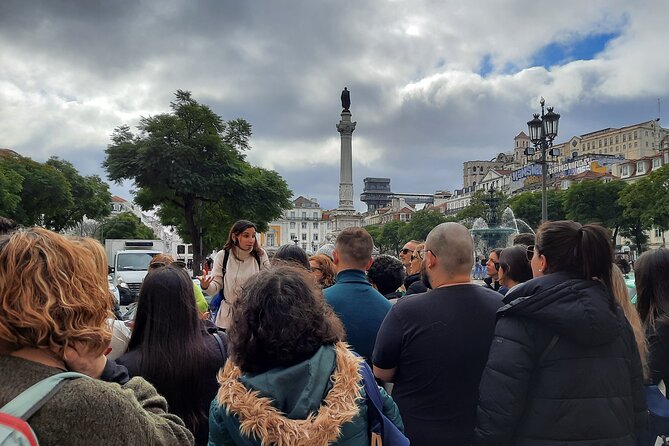
- Small group (max 25): better conversations and more guide attention
- Free-entry stops: every listed stop is marked admission ticket free
- A route that stitches neighborhoods together: squares, Chiado, Bairro Alto, and downtown to the river
- Guide-led storytelling with practical takeaways: several named guides are praised for humor and local advice
- Ends at Praça do Comércio: you finish where Lisbon opens toward the Tagus
A Smart 2.5-Hour Intro for First-Time Bearings
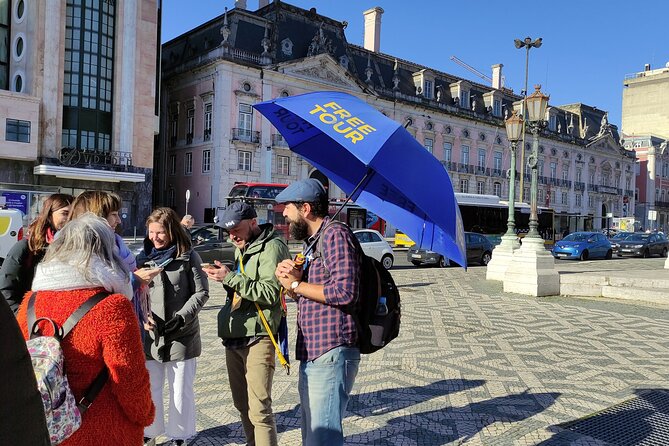
This tour is designed for a simple goal: help you understand Lisbon’s layout early, without feeling like you’re stuck in a classroom. In about 2 hours 30 minutes, you’ll connect the heart of the city center to the edges of popular neighborhoods, so the rest of your days make more sense.
The walking style is very “get around like a local.” You cover alleys and smaller streets where you’d never bother trying to drive. And because it ends at Praça do Comércio, you also get a natural finish line that makes planning for later (museum time, viewpoints, dinner) feel easier.
Price matters here in a very practical way. The listed cost is low, and the pay-what-you-think model means you’re not boxed into a fixed amount. If you’re the type who likes structured orientation and quick, guided context, the value can feel excellent.
Worth a look before you lock anything else in around Lisbon:
- Lisbon City Center Tour – The Unmissable Lisbon
★ 5.0 · 22,234 reviews - Lisbon: Daytime/Sunset/Night City Sailboat Tour with Drink
★ 4.9 · 3,114 reviews - Lisbon: City Highlights and Viewpoints E-Bike Tour
★ 4.9 · 1,556 reviews - Lisbon: City Sightseeing Hop-On Hop-Off Bus Tour
★ 3.8 · 1,220 reviews
Starting in Praça dos Restauradores: Independence at Ground Level
You begin at Monumento dos Restauradores / Praça dos Restauradores, right where Avenida da Liberdade ends. That location is useful: it puts you on a major axis of Lisbon so you can orient yourself immediately, even if you’re jet-lagged.
This first stop is a quick hit of national context. The square is a tribute to Portugal’s independence, and you’ll also get a sense of how the city “frames” its big memories with grand public spaces. It’s the sort of start that helps you understand why the next blocks feel so ceremonial.
If you’re the type who likes to photograph architecture early, this is a good moment. Even on cloudy days, the open layout gives you room to see the street geometry before the tour shifts into narrower lanes.
Igreja de São Domingos and the Quiet-Fancy Church Trick
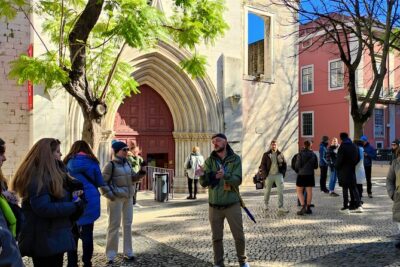
Next comes Igreja de São Domingos. What makes it interesting isn’t flash from the outside. The church is described as among the least adorned, yet it’s said to be one of the richer ones inside—linked to themes of peace, tolerance, and unity.
That contrast is a nice lesson for Lisbon itself: the city often hides its payoff a few steps in. You’ll learn to look past first impressions, which is handy later when you spot courtyards, chapels, and details that don’t scream for attention from the street.
A practical note: churches work best when you can slow down. If you’re traveling with a tight schedule, this stop can still fit, but it’s worth being mentally ready to pause.
The 1506 Jewish Massacre Memorial: Lisbon Remembers Hard Things
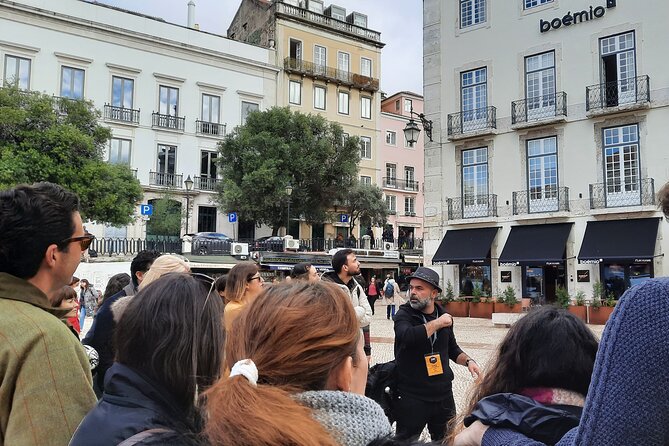
You then visit the Memorial as Vitimas do Massacre Judaico de 1506. This is Lisbon acknowledging the victims of intolerance and religious fanaticism connected to that 1506 massacre. It’s not a stop meant for casual sightseeing.
For me, this kind of memorial is valuable because it changes how you read the city. Lisbon isn’t only about light facades and scenic views. It has layers of conflict and change, and this stop gives you context that later shows up in how certain neighborhoods, churches, and stories are told.
One consideration: if you prefer tours that skip heavy themes, this may feel intense. But for many people it’s exactly the kind of grounded historical anchor that makes the softer sights mean more.


Rossio Square and Estação do Rossio: Where the City Moves
The tour hits Praça Dom Pedro IV (Rossio Square) next. Rossio is one of Lisbon’s oldest and best-known squares, and it’s tied to centuries of important events. Even without a deep historical background, the square’s “stage” feeling is obvious.
Then you step to Estação do Rossio, an imposing station whose construction date is described as something that may surprise you. Stations can be boring on tours, but here it works because it connects Lisbon’s story to how people actually travel and gather.
If you like photo stops, this is a good zone—but be flexible. Stations are also places where movement is constant, so timing your shots can take a quick bit of patience.
Chiado Entrance: The Neighborhood That Serves Both Art and Streets
From Rossio, you enter Chiado, described as the entrance to Lisbon’s most cosmopolitan neighborhood. Chiado is one of those areas where you can feel the city’s creative and public-life rhythm without needing to do a formal museum first.
This is a short stop, but it matters because Chiado sits in the middle of your route planning. After this point, you’ll understand why people cluster around cafés, why streets feel pedestrian-first, and why evening energy often shifts in the direction you’re about to walk.
The payoff here is mental orientation. You’re not just seeing sights; you’re learning where Lisbon’s “style” lives.
Santa Justa Elevator Area and the Fun of Seeing Public Transport as a Monument
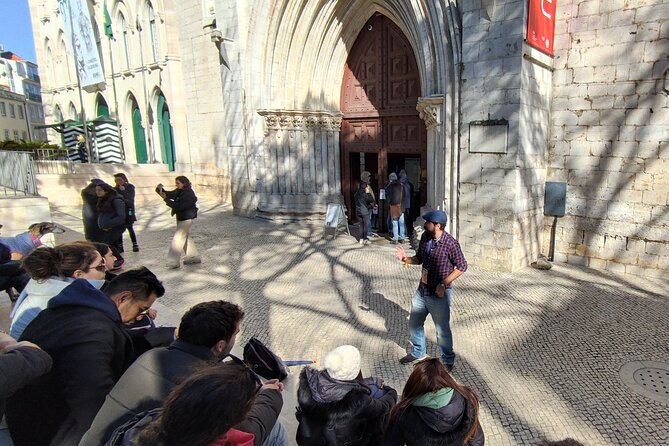
You’ll reach Elevador de Santa Justa next. This is Lisbon’s famous public transport elevator, and it’s often treated like a monument. The tour includes access to the free area, so you can experience the structure’s presence and views without needing to plan a separate attraction around it.
This stop is a good example of why this tour works even if you don’t love long lines or paid add-ons. You get the iconic moment, and you don’t lose time building your own route from scratch.
If it’s clear outside, this area usually offers an excellent “look-back” moment—like you’re checking the city’s layers before the walk continues.
Largo do Carmo: Revolutions and the Street-Level Drama
Next is Largo do Carmo, described as a stage for passionate revolutions. That description might sound dramatic, but that’s the point: this neighborhood holds energy, and the tour uses that energy to keep you from zoning out.
Stops like this are also helpful because they teach you what to watch for later. In Lisbon, street names and nearby landmarks often hint at history. When your guide frames a place like Largo do Carmo, you start noticing Lisbon’s hints for yourself.
If you like storytelling that connects history to how people lived, this is one of the best “why this matters” moments.
Igreja de São Roque: The Jesuit Church Where the Interior Does the Talking
You then visit Igreja de São Roque, built in the 16th century and described as the earliest Jesuit church in Portugal. It served as the society’s home church for over 200 years, and later the Jesuits were expelled from the country.
The highlight here is interior focus. The building is said to include one of the world’s most valuable chapels. Even if you don’t memorize every detail, the key is the shift from exterior-to-interior emphasis.
This is also a good stop for visitors who like architecture and art, but don’t want to commit to a full museum day. It gives you a “check the box” cultural moment that still feels local.
Bairro Alto and Chiado’s Side-by-Side Story
The route moves into Bairro Alto, Lisbon’s nightlife district, described as having over 500 years of history. Bairro Alto isn’t only about going out. It’s also a neighborhood with a long memory, and you’ll feel that when the streets open up into viewpoints and back lanes.
Then comes Largo do Chiado, a small transition square between Chiado and Bairro Alto. That placement is smart. You get a sense of how areas connect, not just where they start or end.
If you’re trying to decide what kind of evenings you want—quiet café corners vs. more lively streets—these two stops give you quick clues. You’ll also learn the general direction your energy should go on future nights.
A Brasileira and Pessoa-Era Lisbon: Coffee as Culture
At A Brasileira, you’re stepping into a story about coffee and modern creativity. The tour description links the coffee house to Fernando Pessoa and other intellectuals, and to the creation of the modernist magazine Orpheu.
This stop works for different types of visitors. If you love literature, you get a real name-drop with city context. If you just like good atmosphere, it’s a reminder that Lisbon has long treated cafés as public living rooms.
Practical tip for your future self: even if you don’t sit down here, note the surrounding streets. You’ll recognize them later when you come back for a coffee break.
São Carlos National Theatre: Music for the Ears, Not Just the Eyes
The tour includes Teatro Nacional de São Carlos. It’s described as the only Portuguese theatre geared toward producing and presenting opera and choral and symphonic music. It’s said to have opened in 1846, and that date gives you a scale for Lisbon’s long-term commitment to performance.
This stop is more “pass by and understand” than “stay for a show,” since the tour time is fixed. But it’s still worth it. You’ll walk away knowing that Lisbon doesn’t only do sightseeing. It does serious music culture.
If opera or classical music is part of your travel interests, you’ll likely want to plan an evening performance after the walk.
Rua Augusta to Praça do Comércio: Finishing at the Tagus
You end with Rua Augusta, described as the most agitated and charming street in downtown Lisbon. This part feels like energy collecting in a single corridor—shops, movement, people, and the sense that you’re back in the city’s public bloodstream.
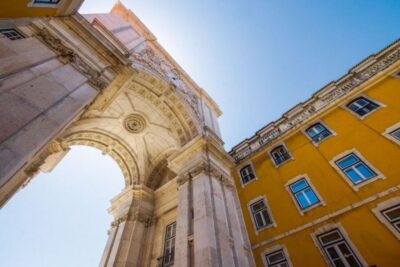
Then you finish at Praça do Comércio, one of the most beautiful squares in Europe, where the city ends and the Tagus begins. The tour ends between the arch and the equestrian statue of D. José I, which is a clear “you made it” marker. It’s a great place to regroup, cool down, and plan your next step—river stroll, dinner, or a viewpoint.
Even if you didn’t catch every detail, you’ll remember the feeling: Lisbon opens toward the water at the end of the center.
What the Best Guides Actually Do for You
The tour’s repeat praise makes sense. Guides like Miriam, Hugo, Claudia, Cecília, Ricardo, Mariana, Sandra, Odelia, and Fernanda show up in the feedback because they do two things well: they keep the walk moving with humor and pacing, and they leave you with practical next steps.
That second part matters. A great guide doesn’t only explain what you’re seeing. They help you decide what to do next. One guide is even mentioned as sending a WhatsApp document with local tips, which is the kind of extra that can save you time later.
If you want value, this is the sweet spot: learn a clear story from place to place, then use it immediately to choose where to spend your remaining hours.
Walking Realities: Uneven Streets and Rain Plans
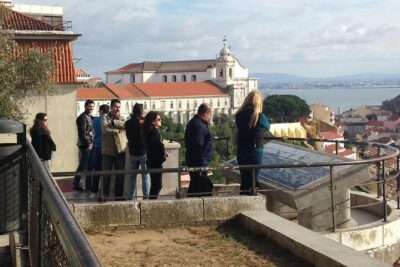
This is a walking tour with enough time at each stop to look around. It’s also described as manageable but steady, with uneven streets. If you’re sensitive to cobblestones or you plan on a lot of uphill days after, wear shoes you trust.
Weather can change your experience. The tour requires good weather, and if it’s canceled due to poor conditions, you’ll be offered a different date or a full refund. So don’t gamble blindly—check the forecast, and if it’s looking rough, be ready to be flexible.
For rainy days, even your photos change. The route still works, but the “wow” factor shifts from wide views to street textures and architectural close-ups.
Price and Booking Sense: Pay-What-You-Want Meets Real Value
The listed price is $3.62 per person, and the model is pay what you think the experience is worth. On paper, that’s unusually low for a guided 2.5-hour walk across multiple neighborhoods and landmarks.
In real terms, what you’re buying is orientation plus storytelling plus a tight route plan. If you’re the type who wants to hit key parts of downtown efficiently on day one, you’ll likely feel the value quickly.
Group size is capped at 25, which usually means the guide can keep control of pacing while still answering questions. That balance is part of why the tour gets strong scores.
And yes, it often sells ahead. The average booking is about 17 days in advance, so if your schedule is fixed, book early.
Should You Book This Lisbon City Center Tour?
Book it if you want a first-day plan that helps you understand Lisbon’s layout fast. You’ll get free-entry stops, a route that ties together Rossio, Chiado, Bairro Alto, and downtown, and a finish at Praça do Comércio that makes the city’s direction toward the Tagus feel obvious.
Skip it or be cautious if you dislike steady walking on uneven streets, or if you strongly prefer lighter sightseeing without historical context that can get heavy. Also, if your main goal is soaking up long museum time, this tour is not that. It’s orientation with stories.
For most people, though, this is a smart use of time: you walk, you learn just enough to guide your next choices, and you finish in a place you’ll want to be anyway.
FAQ
How long is the Lisbon City Center Tour?
It lasts about 2 hours 30 minutes.
Where does the tour start and end?
It starts at Monumento dos Restauradores, Praça dos Restauradores, 1250-188 Lisboa, Portugal, and ends at Praça do Comércio, between the arch and the equestrian statue of D. José I.
Is the tour offered in English?
Yes, it’s offered in English.
How does pricing work for this tour?
You choose the price. The tour is described as pay only what you think the experience is worth.
What is the group size limit?
The maximum group size is 25 travelers.
Are there admission fees for the stops?
The stops listed on the itinerary are marked as admission ticket free.
What happens if weather is bad?
The experience requires good weather. If it’s canceled due to poor weather, you’ll be offered a different date or a full refund.
Is there free cancellation?
Yes. You can cancel up to 24 hours in advance for a full refund. If you cancel less than 24 hours before the start time, the amount you paid will not be refunded.
More City Tours in Lisbon
- Lisbon: Daytime/Sunset/Night City Sailboat Tour with Drink★ 4.9 · 3,114 reviews
- Lisbon: City Highlights and Viewpoints E-Bike Tour★ 4.9 · 1,556 reviews
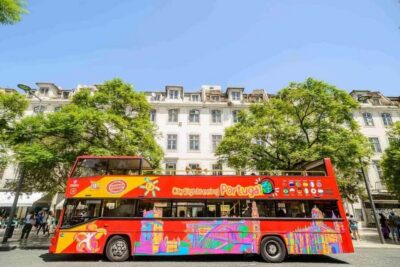
- Lisbon: City Sightseeing Hop-On Hop-Off Bus Tour★ 3.8 · 1,220 reviews
- Lisbon: Private City Tour by Eco Tuk Tuk★ 4.9 · 1,215 reviews
- Lisbon: Tagus River Sailboat City Cruise★ 4.9 · 1,212 reviews
More Tours in Lisbon
- Lisbon: History, Stories and Lifestyle Walking Tour★ 4.8 · 10,902 reviews
- True 4Hour Private Tuk Tuk Tour: Discover Lisbon with a Local!★ 5.0 · 8,008 reviews
- Winner 2025 Undiscovered Lisbon Food & Wine Tour by Eating Europe★ 5.0 · 6,390 reviews
- Lisbon: Sintra, Pena, Cabo da Roca, Cascais Tour with Pickup★ 4.8 · 5,445 reviews
- Alfama Tour in Lisbon Old Town★ 5.0 · 4,936 reviews
More Tour Reviews in Lisbon
- Lisbon: Sintra, Pena, Regaleira, Cabo da Roca & Cascais★ 4.7 · 19,656 reviews
- Lisbon Card: 24, 48, or 72-Hour Pass★ 4.5 · 17,944 reviews
- Lisbon: Jerónimos Monastery Entrance Ticket★ 4.1 · 14,164 reviews
- Lisbon: History, Stories and Lifestyle Walking Tour★ 4.8 · 10,902 reviews
- Lisbon: Sunset Boat Party Cruise with DJ and Open Bar★ 4.5 · 10,378 reviews
Just in: fresh Lisbon reviews from the team





City Tours, compared.
 ★ 4.9Daytime/Sunset/Night City Sailboat Tour with DrinkFrom $413,114 reviews
 ★ 4.9City Highlights and Viewpoints E-Bike TourFrom $291,556 reviews
 ★ 3.8City Sightseeing Hop-On Hop-Off Bus TourFrom $381,220 reviews
 ★ 4.9Private City Tour by Eco Tuk TukFrom $281,215 reviews
 ★ 4.9Tagus River Sailboat City CruiseFrom $411,212 reviews
 ★ 5.0Private City Tour by Tuk-TukFrom $41789 reviews
 ★ 4.7City Tour by Tuk TukFrom $117617 reviews
 ★ 5.0Express Lisbon | City Center and Old Town Tuk Tuk TourFrom $29606 reviews
Browse the lists this tour appears in