
Reviewed · LISBON WALKING TOURS
The Moorish Beyond the Tourist Trail Quarter Free Walking Tour
Lisbon changes fast when you stop treating it like a postcard. This free-feeling walk stitches together Moorish and Christian Lisbon with fado lore and sharp view-stops, so the city’s big story actually makes sense. I especially love how the guide keeps it lively, and how Rui’s humor turns heavy moments into something you can follow. One thing to plan for: there’s quite a bit of walking, so wear comfortable shoes if your feet aren’t usually happy.
It’s also a small-group tour, with a max of 10 people, so you get a calmer pace than the big-departure crowd. The route runs about 2 hours 30 minutes and finishes at a mirador, so you end with a payoff instead of just history-slog. If you’re expecting zero hills or lots of waiting around, this one is not built for that style of sightseeing.
In This Review
- Key Highlights Before You Go
- Why This Moorish-Themed Walk Works So Well in Lisbon
- Rui’s Storytelling: Fun, Clear, and Actually Well Paced
- Praça da Figueira: João I, Ceuta, and the Empire Jump
- Escadinhas de São Cristóvão: Maria Severa and Fado Vadio
- Rua da Rosa: The Moorish-to-Christian Shift in Plain Street Terms
- Praça Martim Moniz: A Castle-Edge Story of Siege and Choice
- Miradouro da Graça: The Flag of Lisbon Explained by Boat Colors
- Walking Time, Shoes, and Group Size: What You’ll Actually Feel
- Price and Value: Why $3.62 Can Be a Smart Buy in Lisbon
- Who This Tour Fits Best
- Should You Book the Moorish Beyond the Tourist Trail Tour?
- FAQ
- Where does the tour start and end?
- How long is the walking tour?
- How much does it cost?
- What language is the tour offered in?
- How big is the group?
- Do I need to buy tickets or pay entry fees during the stops?
- Is there a lot of walking?
- What happens if the weather is bad?
- What is the cancellation policy?
Key Highlights Before You Go

- Small group (up to 10): easier questions, smoother pacing, and less rushing between stops.
- English tour: designed for clear, direct storytelling at street level.
- Fado storytelling in Mouraria: Maria Severa and Fernando Mauricio show up in the places that shaped them.
- Five focused story stops: empire, conquest, and the Inquisition-era shift, all tied to named squares and streets.
- End at Miradouro da Graça: a view stop with meaning, including the colors behind Lisbon’s flag.
Why This Moorish-Themed Walk Works So Well in Lisbon

Lisbon has a habit of hiding its layers. One street looks ordinary, then suddenly you’re hearing about castles, empires, and cultural clashes that shaped what the city became.
This tour solves that problem by giving you a route with a storyline. You’re not just hearing facts. You’re moving through the geography that helped produce those events, from central squares to the Miradouro da Graça viewpoint.
The best part for me is how it links eras without turning into a lecture. You start with Portugal’s overseas momentum, then get pulled into Lisbon’s Moorish-Christian shift, then land back on modern Lisbon through fado and city symbols.
Lisbon at walking pace, a few more routes
- Lisbon: History, Stories and Lifestyle Walking Tour
★ 4.8 · 10,902 reviews - Best of Lisbon Small-Group Guided Walking Tour
★ 5.0 · 4,869 reviews - Lisbon: Food and Wine Small Group Walking Tour
★ 4.9 · 4,082 reviews - Best of Lisbon Walking Tour: Rossio, Chiado & Alfama
★ 4.9 · 2,700 reviews
Rui’s Storytelling: Fun, Clear, and Actually Well Paced
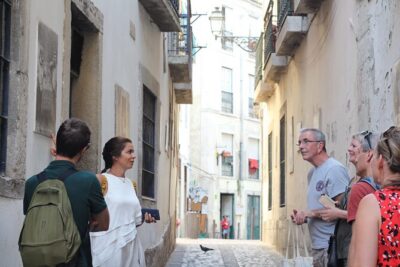
If you’ve ever been on a walking tour where the guide speed-walks through the interesting parts, you’ll appreciate how this one flows. The guide I heard described is Rui, and the standout trait is the combo of knowledge plus humor—the jokes aren’t separate from the history; they help you remember it.
Pacing also matters on this route. At each stop, you get enough time to take in the setting and hear the point of the scene without feeling like you’re being marched past everything. One participant even noted it ran a little longer than advertised, which usually means the guide wasn’t rushing.
The only real caution is practical: keep an eye out at the meeting point. In at least one instance, there wasn’t a clear guide identifier, and a person almost missed the start. So arrive a few minutes early and confirm you’ve got the right group before the walk begins.
Praça da Figueira: João I, Ceuta, and the Empire Jump
The tour begins at Praça da Figueira, a central square that’s easy to reach and a good launching pad for walking.
Here, the focus is on King John I, who ruled from 1385 to 1433. The story centers on Portugal’s early push connected to Ceuta/Morocco in 1415, and how that momentum is carried forward all the way to Macau—described as staying Portuguese until 1999.
This stop is more than a timeline. It gives you context for why Lisbon matters in the first place. When you understand the city’s drive to connect with the wider world, the later talk about conquest and religion doesn’t feel random. It feels like one chapter of the same long arc.
What to watch for: listen for how the guide links overseas expansion to local power. It’s the kind of connection that helps you read Lisbon as a city of routes, not just scenery.
Escadinhas de São Cristóvão: Maria Severa and Fado Vadio
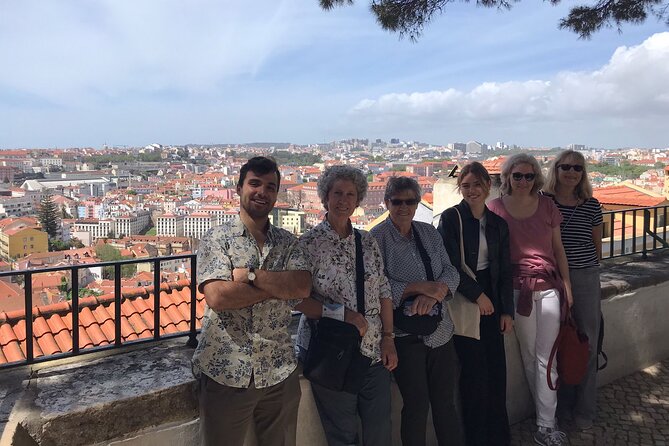
Next comes Escadinhas de São Cristóvão, where fado lore takes the lead. This is the moment where Lisbon stops being only about kings and becomes about voices.
The tour highlights Maria Severa as an early, foundational fado figure—described as the first of all time—and ties her to Mouraria, the neighborhood associated with some of fado’s roots. The story also introduces a style called Fado Vadio, described as wild, street-based, and outside strict rules—the kind of fado said to be associated with Maria Severa’s creativity.
Then the guide brings in Fernando Mauricio, called a legend in Mouraria and a fado singer born and raised there. The point isn’t just names for your notes. It’s to show you that fado wasn’t invented in a studio. It grew in lived-in streets, where culture and hardship mixed into music.
Potential drawback: if you’re not into music history, this section can feel story-heavy. But even if you’re not a fado fan, it’s still useful because it explains why Mouraria’s streets carry meaning. You’ll notice it more once you know what you’re looking for.
Worth a look before you lock anything else in around Lisbon:

Rua da Rosa: The Moorish-to-Christian Shift in Plain Street Terms
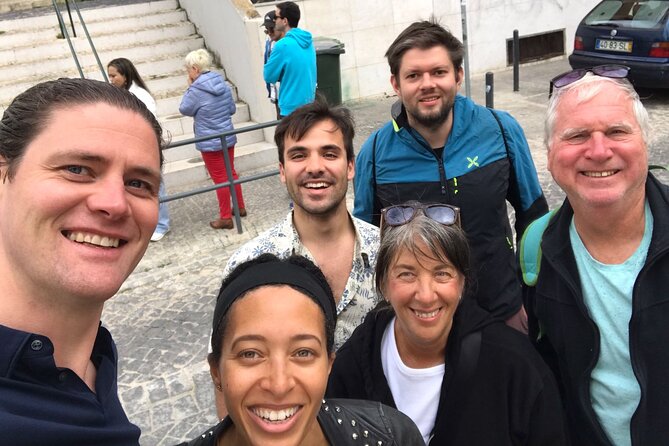
At Rua da Rosa, the tour switches into a more layered historical narrative. The guide frames the area through the lens of earlier Moorish presence in Lisbon, then connects it to the conquest of Lisbon, and the religious power shift that followed.
There’s also mention of the Inquisition-era timing and the idea of new Christians. The way it’s presented can help you understand how quickly identities, language, and power could change—sometimes within the same city blocks.
This stop is valuable because it’s specific to location. Instead of hearing a broad lecture about the Moorish period, you’re given a street and told what kind of transformation to imagine there. That mental picture sticks.
What to watch for: don’t try to memorize every era. Treat this as a map in your head—an order of change: Moorish presence → Christian conquest → later religious crackdown. The details can blur, but the structure helps.
Praça Martim Moniz: A Castle-Edge Story of Siege and Choice
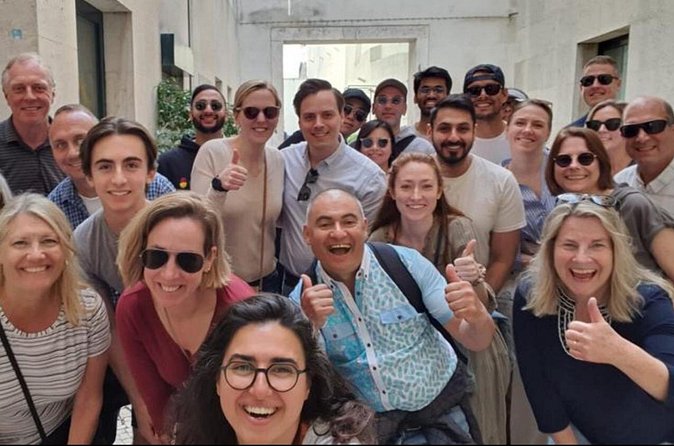
The route continues to Praca Martim Moniz, where a dramatic moment tied to St. George’s Castle is the centerpiece.
The story goes like this: the Christians make a big move to invade the castle, and Martim Moniz is described as taking action that lets crusade soldiers get into the castle. In the guide’s telling, Martim Moniz does it by throwing himself into a closing door, making the entry possible.
Even if you don’t know this exact legend before, this stop is useful for two reasons. First, it makes the castle feel less like a distant monument. Second, it helps you see how myths and history mix in Lisbon. Whether every detail is debated or not, the narrative shows how locals wanted to explain turning points.
How to enjoy it: look up and around. The geography helps you understand why this castle mattered so much. When you can picture the access and barriers, the story becomes physical instead of abstract.
Miradouro da Graça: The Flag of Lisbon Explained by Boat Colors
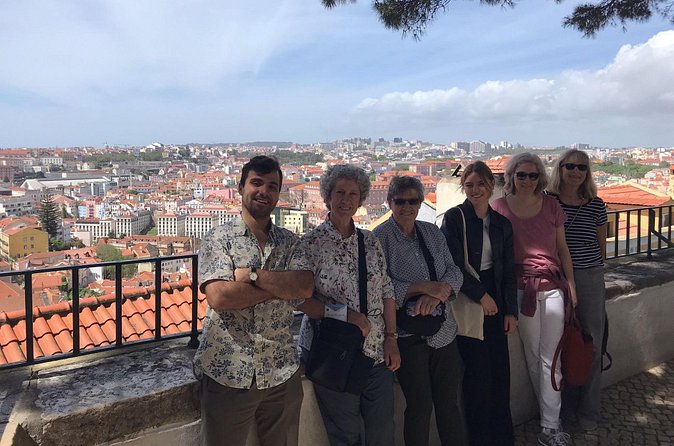
The final stretch ends at Miradouro da Graça (Calçada da Graça), one of the classic Lisbon viewpoints. This isn’t just a photo stop at the end. The guide gives the view an extra layer of meaning.
The tour connects the flag of Lisbon—specifically its black and white—to stories about the first wave of discoveries. The colors are said to match what was used on boats going to Ceuta. The guide also ties these colors to the flag of Ceuta as part of the same symbolism chain.
This is the kind of detail that makes a mirador more than a vantage point. You’re looking at a city that’s been shaped by movement, shipping, and distant connections—then you hear how even a flag can carry a travel story.
What you’ll likely remember: Lisbon’s skyline is pretty, yes. But now you’ll also remember why those colors became a signal of Portuguese presence out on the water.
Walking Time, Shoes, and Group Size: What You’ll Actually Feel
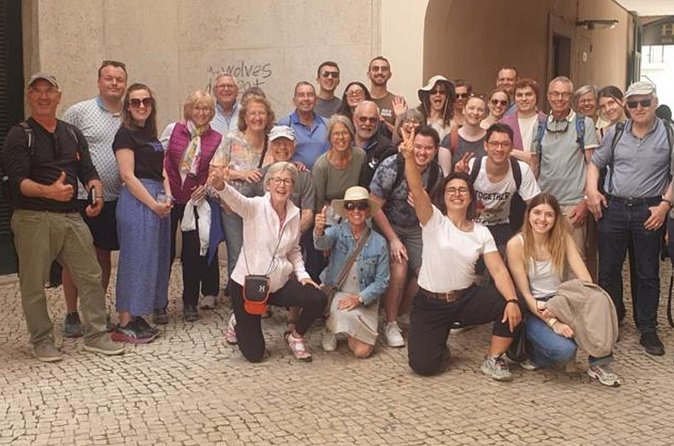
This tour runs about 2 hours 30 minutes with multiple stops, each around 30 minutes. That means you should expect a steady walking rhythm rather than long breaks.
The pace is manageable, and the tour says most people can participate, but comfortable shoes are a must. One of the strongest pieces of practical advice from the experience was simple: if you aren’t used to walking, plan for it.
The group size—up to 10—also affects what you feel during the walk. Smaller groups usually mean fewer bottlenecks at corners and less pressure to keep up. If you like asking quick questions, that small scale helps.
Weather note (important): the experience requires good weather. If conditions are poor, you’ll be offered a different date or a full refund. So if you’re booking late, keep an eye on the forecast and build flexibility into your plan.
Price and Value: Why $3.62 Can Be a Smart Buy in Lisbon
The price is listed as $3.62 per person. That’s a big part of the value story here. Even though it feels like a budget-friendly deal, you’re still getting a structured route with named stops, a set duration, and a small-group format.
For me, the value comes from the combination:
- You get context at each location, not just “see that view.”
- The tour covers multiple Lisbon layers in a single morning/afternoon window.
- It ends at a mirador with a meaningful explanation, so your last stop feels earned.
If your Lisbon time is tight, this is the kind of tour that can help you get your bearings fast. It’s also ideal if you prefer walking tours that feel personal rather than mass-produced.
Who This Tour Fits Best
This one fits best if you want Lisbon with a backbone. If you’re curious about how Moorish and Christian eras overlap, or you want fado to connect to place instead of just playlists, you’ll probably enjoy the route a lot.
It also suits first-timers who want structure. Starting in central Praça da Figueira and ending at Miradouro da Graça gives you a natural arc through the city.
If you’re the type who hates walking, or you want long indoor pauses and minimal stairs, you might find this format tiring. And if you need very clear, visible guide identification, take a moment at the start to verify you’ve joined the right group.
Should You Book the Moorish Beyond the Tourist Trail Tour?
I’d book it if you want Lisbon stories that go beyond the surface. The standout selling points are Rui’s humor and pacing, the small group size, and the way the walk links empire, conquest, and fado into a route you can actually follow on foot.
I’d skip it only if you strongly dislike walking between multiple central neighborhoods or if you’re set on a tour that focuses on sights alone with no talk about religion, conquest, and symbols.
If you’re planning your time, this is a smart way to spend a couple hours: you’ll come away with a clearer mental map of Lisbon’s past—and a better reason to enjoy the view from Miradouro da Graça.
FAQ
Where does the tour start and end?
It starts at Praça da Figueira, 1100-241 Lisboa, Portugal, and ends at Miradouro da Graça (Calçada da Graça), 1100-265 Lisboa, Portugal.
How long is the walking tour?
The duration is about 2 hours 30 minutes.
How much does it cost?
The price is $3.62 per person.
What language is the tour offered in?
The tour is offered in English.
How big is the group?
The tour has a maximum of 10 travelers.
Do I need to buy tickets or pay entry fees during the stops?
For the listed stops, the information shows admission ticket free.
Is there a lot of walking?
Yes. The route includes several stops across Lisbon and the experience includes enough walking that comfortable shoes are recommended.
What happens if the weather is bad?
The tour requires good weather. If it’s canceled due to poor weather, you’ll be offered a different date or a full refund.
What is the cancellation policy?
You can cancel up to 24 hours in advance for a full refund. If you cancel less than 24 hours before the start time, the amount paid isn’t refunded.
More Tours in Lisbon
- Lisbon City Center Tour – The Unmissable Lisbon★ 5.0 · 22,234 reviews
- Lisbon: History, Stories and Lifestyle Walking Tour★ 4.8 · 10,902 reviews
- True 4Hour Private Tuk Tuk Tour: Discover Lisbon with a Local!★ 5.0 · 8,008 reviews
- Winner 2025 Undiscovered Lisbon Food & Wine Tour by Eating Europe★ 5.0 · 6,390 reviews
- Lisbon: Sintra, Pena, Cabo da Roca, Cascais Tour with Pickup★ 4.8 · 5,445 reviews
More Tour Reviews in Lisbon
- Lisbon City Center Tour – The Unmissable Lisbon★ 5.0 · 22,234 reviews
- Lisbon: Sintra, Pena, Regaleira, Cabo da Roca & Cascais★ 4.7 · 19,656 reviews
- Lisbon Card: 24, 48, or 72-Hour Pass★ 4.5 · 17,944 reviews
- Lisbon: Jerónimos Monastery Entrance Ticket★ 4.1 · 14,164 reviews
- Lisbon: History, Stories and Lifestyle Walking Tour★ 4.8 · 10,902 reviews
More of Lisbon, One Hill at a Time
- Lisbon: History, Stories and Lifestyle Walking Tour★ 4.8 · 10,902 reviews
- Best of Lisbon Small-Group Guided Walking Tour★ 5.0 · 4,869 reviews
- Lisbon: Food and Wine Small Group Walking Tour★ 4.9 · 4,082 reviews
- Best of Lisbon Walking Tour: Rossio, Chiado & Alfama★ 4.9 · 2,700 reviews
- Age of Discoveries Walking Tour in Belém★ 5.0 · 1,513 reviews
Just in: fresh Lisbon reviews from the team





Lisbon Walking Tours, compared.
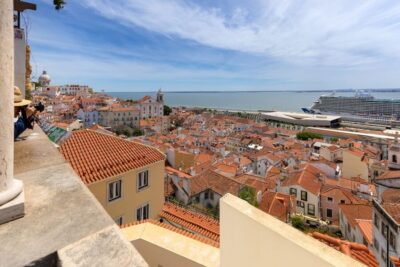 ★ 4.8History, Stories and Lifestyle Walking TourFrom $2910,902 reviews
 ★ 5.0Best of Lisbon Small-Group Guided Walking TourFrom $234,869 reviews
 ★ 4.9Food and Wine Small Group Walking TourFrom $724,082 reviews
 ★ 4.9Best of Lisbon Walking Tour: Rossio, Chiado & AlfamaFrom $232,700 reviews
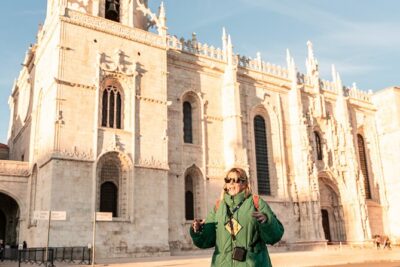 ★ 5.0Age of Discoveries Walking Tour in BelémFrom $31,513 reviews
 ★ 5.0Lisbon Roots – Small group Food & Culture Walking Tour w/tastingsFrom $168910 reviews
 ★ 4.9Starter Walking Tour to the highlights in GermanFrom $33781 reviews
 ★ 4.1Lisbon Tram No. 28 Ride & Walking TourFrom $23766 reviews
Browse the lists this tour appears in