
Reviewed · LISBON WALKING TOURS
Lisbon: History, Stories and Lifestyle Walking Tour
Lisbon has a trick: hills and stories. This 3-hour walk stitches together Bairro Alto, miradouros with big views, an iconic tram ride, and the oldest streets of Alfama, with a coffee-and-cake break built in. You’ll get a local guide to connect the dots between neighborhoods, disasters, and day-to-day Lisbon life.
I love two parts most. First, the route climbs and reveals the city in layers, from Bairro Alto viewpoints like Miradouro São Pedro de Alcântara to Alfama’s narrow lanes. Second, you get more than photos: you’ll stop at major sights like San Roque Church and Carmo Convent, plus a café-style break with coffee and cake.
One thing to consider: this is a short window (3 hours) that still means walking on steep hills and lots of steps. Wear grippy shoes, and expect the pace to include pauses for viewpoints and photos, not sprinting between stops.
In This Review
- Key moments that make this tour worth your time
- Start in Bairro Alto, where Lisbon’s mix of old and new makes sense
- Miradouro São Pedro de Alcântara: the view that sets the whole day’s mood
- San Roque Church: the “stop inside” you’ll actually remember
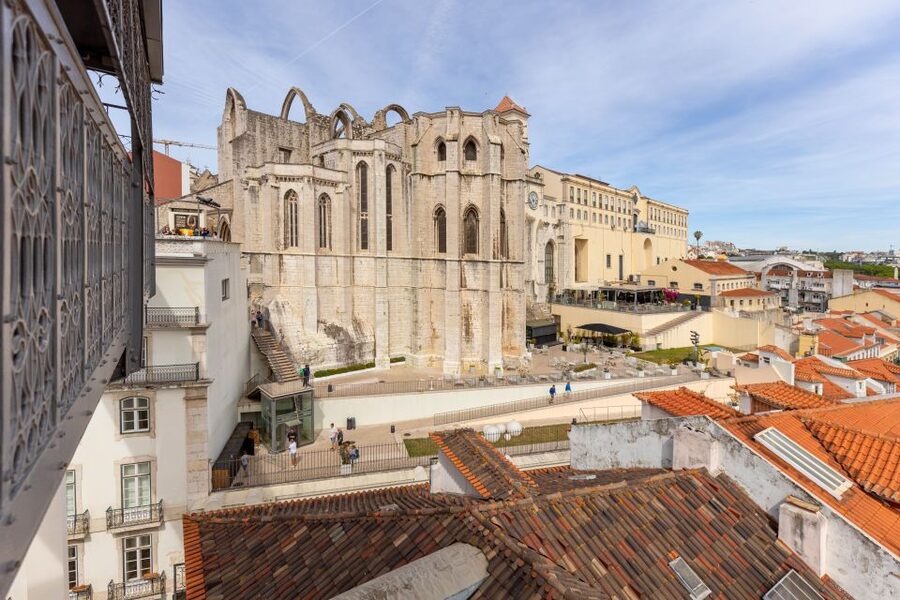
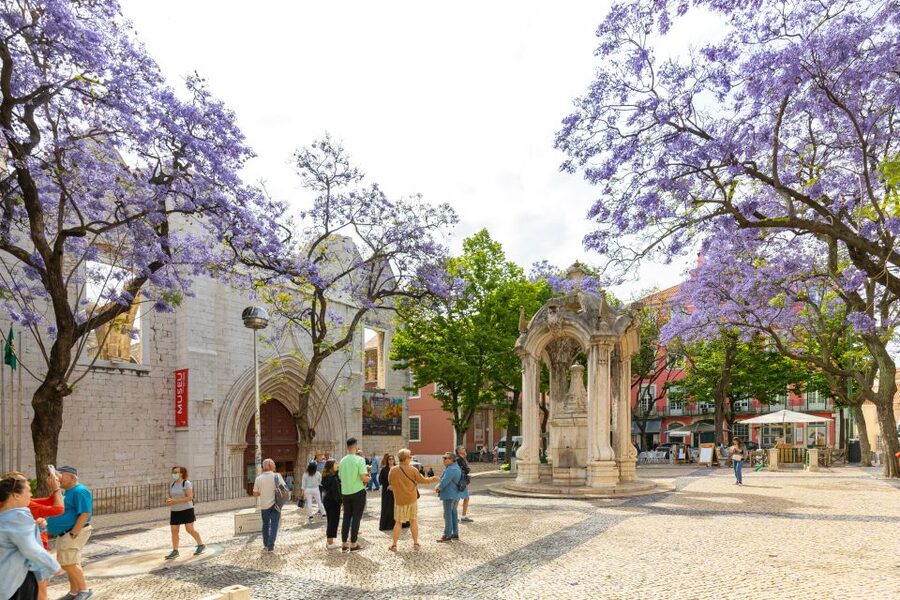
- Carmo Convent and Church: Gothic architecture with a modern political shock
- Santa Justa Elevator and Baixa: a viewpoint plus the logic of the rebuilt city
- The tram ride to Portas do Sol: short lift, big change in perspective
- Alfama in layers: saints, fado, and streets that don’t do straight lines
- Lisbon Cathedral ending: a medieval anchor for the whole route
- Price and value: $29 for a 3-hour Lisbon orientation that mixes inside stops with viewpoints
- Who this tour fits best, and who should choose something else
- Should you book this Lisbon history and lifestyle walking tour?
- FAQ
- How long is the Lisbon: History, Stories and Lifestyle Walking Tour?
- How much does the tour cost?
- What’s included in the tour?
- Is hotel pickup or drop-off included?
- What languages are available for the live guide?
- Is the tram ride included, and can I get a refund if plans change?
Key moments that make this tour worth your time
- Bairro Alto, from the 16th century, with stories about how Lisbon rebuilt after the 1755 earthquake
- Miradouro São Pedro de Alcântara views, including the Baixa area and the south bank of the Tagus
- Iconic tram ride, a classic Lisbon move that changes how you see the city
- San Roque Church, with its tiled interiors and a mix of Mannerist and Baroque styles
- Carmo Convent and Church, tied to the Carnation Revolution in 1974
- Alfama and Lisbon Cathedral, where saints, fado culture, and medieval Lisbon collide
Start in Bairro Alto, where Lisbon’s mix of old and new makes sense
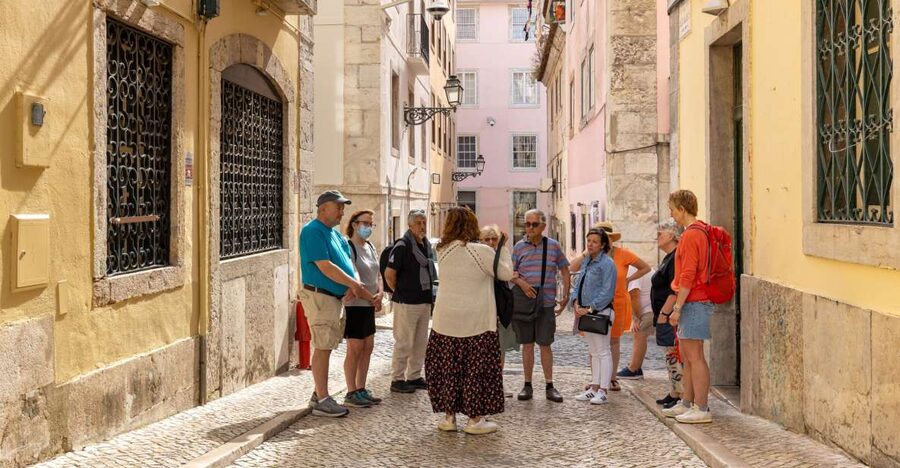
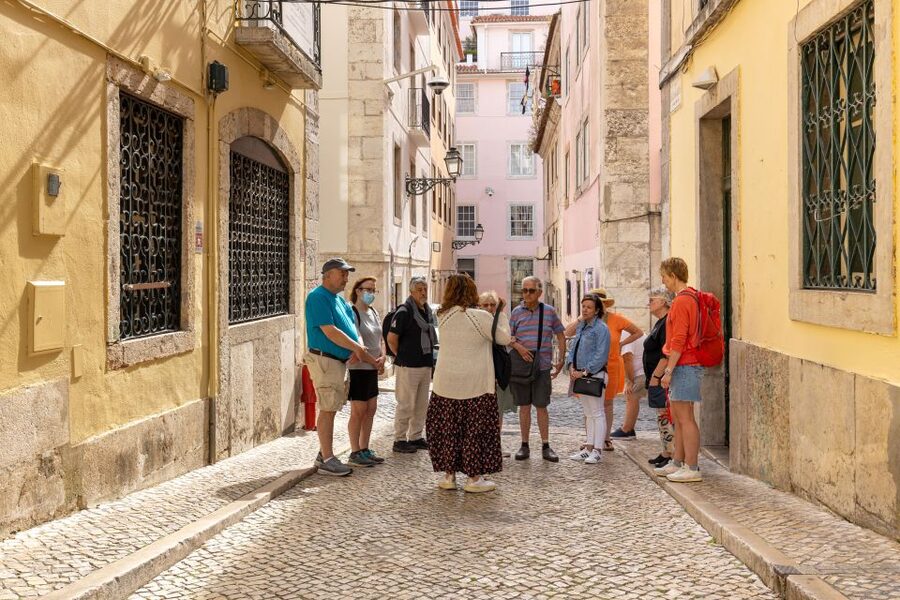
Bairro Alto is the kind of neighborhood that feels like it has always been there, even if it didn’t start as we see it today. The tour begins here, in an area dating to the 16th century, and your guide sets up Lisbon’s big pattern: the city changes, but the hill-and-street bones stay.
You’ll hear how, after the 1755 earthquake, parts of the city reshuffled. Families moved in from the Baixa and Bairro districts, and that shift helped renew the area. That context matters, because otherwise Bairro Alto can look like a maze of streets with a great vibe. With the story attached, it becomes a map of how Lisbon survived and re-formed.
A smart touch is that you don’t just stroll for views. You’re walking in a way that lets the guide explain why certain corners feel different. It’s the same city, but each neighborhood has its own logic, and Bairro Alto is where that logic starts to click.
Lisbon at walking pace, a few more routes
- Lisbon: History, Stories and Lifestyle Walking Tour
★ 4.8 · 10,902 reviews - Best of Lisbon Small-Group Guided Walking Tour
★ 5.0 · 4,869 reviews - Lisbon: Food and Wine Small Group Walking Tour
★ 4.9 · 4,082 reviews - Best of Lisbon Walking Tour: Rossio, Chiado & Alfama
★ 4.9 · 2,700 reviews
Miradouro São Pedro de Alcântara: the view that sets the whole day’s mood
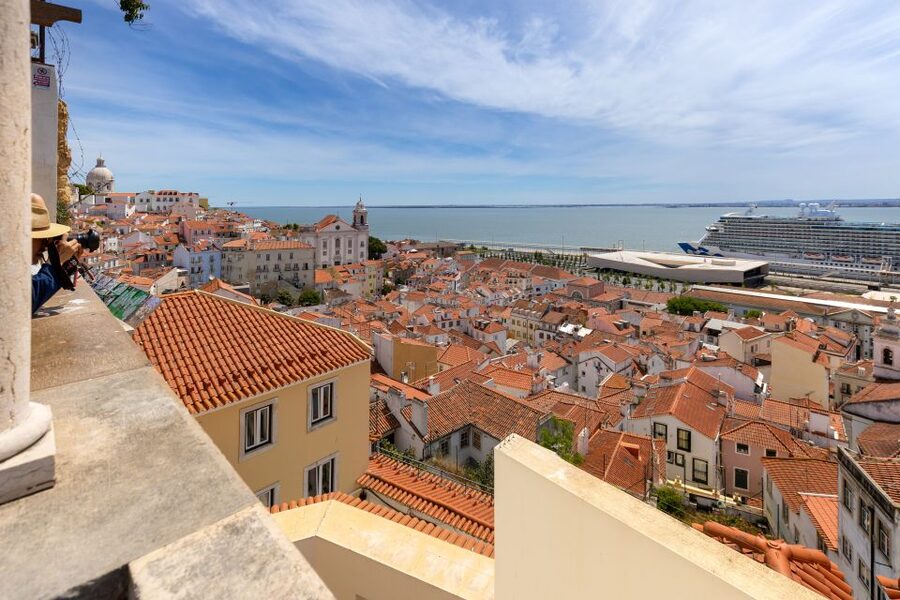
Soon you’ll reach Miradouro São Pedro de Alcântara, one of those spots where you pause and suddenly understand Lisbon’s shape. From here, you can see the Baixa area and the south bank of the Tagus River. Even if you know the postcard image already, this is still useful, because it tells you where you are relative to everything else you’ll walk through later.
This stop is also practical. Lisbon’s hills can feel random until you’ve seen the “big picture.” A view like this gives your brain anchors: river on one side, lower city (Baixa) below, and the old neighborhoods clinging to the slopes. After that, streets don’t feel as confusing.
Tip from the way guides run this tour: take a moment to look, then look again. First glance is for wow. Second glance helps you connect what you saw to where you’re headed next.
San Roque Church: the “stop inside” you’ll actually remember
Next up is San Roque Church, built by the Jesuits. The exterior is described as austere, so it can be easy to assume it’s plain. Then you’re guided inside, and the contrast is the whole point: you’ll see gilding, tiles, and paintings that make it feel like a small museum of Mannerist and Baroque styles.
This is one of those moments where the tour adds value beyond scenery. Lisbon is famous for facades and viewpoints, but art inside churches gives you texture. Tiles and paintings aren’t random decoration; they were part of how communities learned, worshiped, and expressed taste. Seeing that in a focused stop makes later sightseeing easier because you begin to recognize style cues.
What I like here is pacing. It’s not a long museum day, so you keep momentum, but you still get a true interior moment. That balance is what keeps a 3-hour tour from turning into only walking and looking.
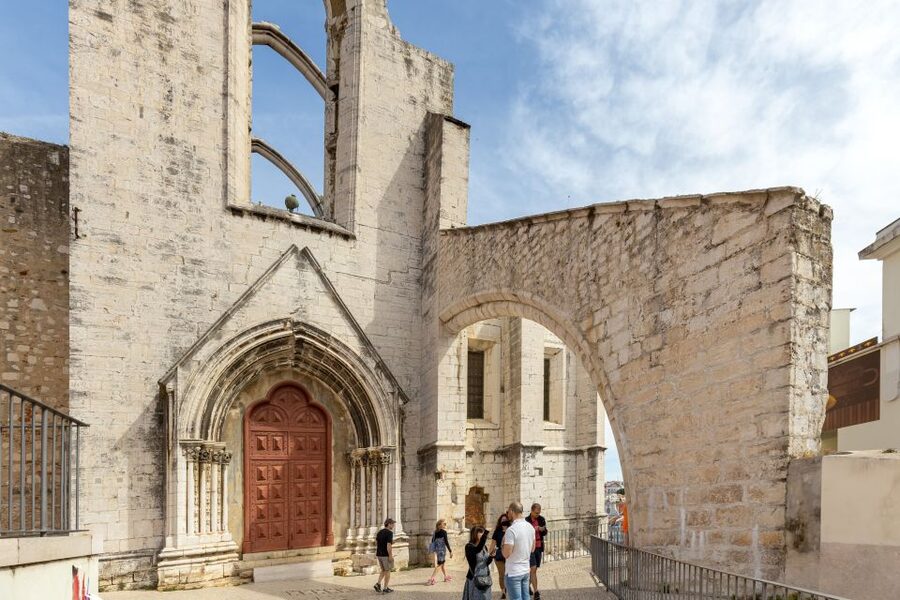
Carmo Convent and Church: Gothic architecture with a modern political shock
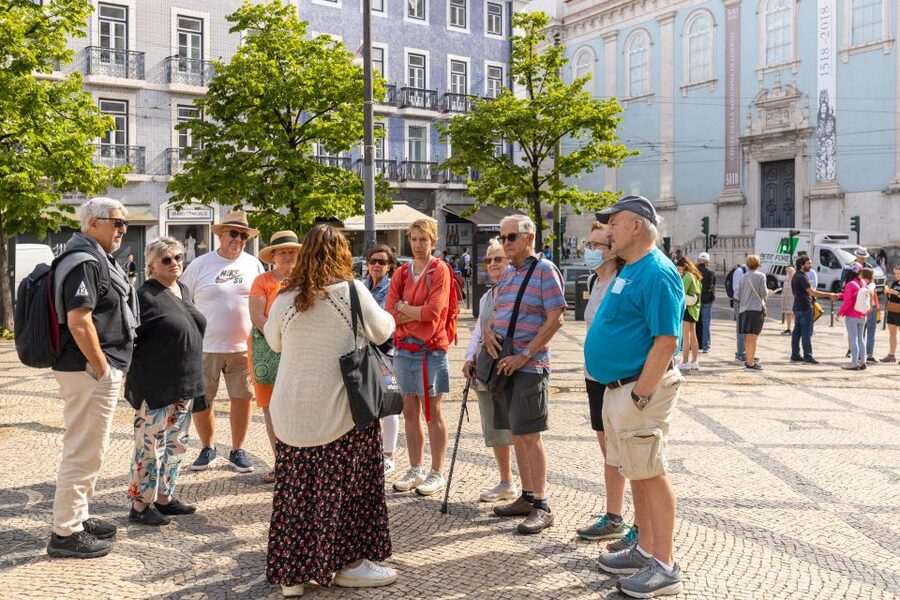
The tour then heads down toward the Carmo convent and church, a key site for Gothic architecture in Lisbon. This is where the “history stories” part turns from old-timey to urgent.
Your guide ties the site to the Carnation Revolution in 1974, the turning point that ended nearly five decades of dictatorship. It’s a reminder that landmarks aren’t only about what happened centuries ago. Buildings also hold the memory of people who fought for change in living history.
One drawback to keep in mind: if you’re expecting only architecture commentary, this stop may hit with more emotion than you planned. But that’s also why it works. A tour like this gives you a usable understanding of Lisbon, not just a checklist.
Worth a look before you lock anything else in around Lisbon:

Santa Justa Elevator and Baixa: a viewpoint plus the logic of the rebuilt city
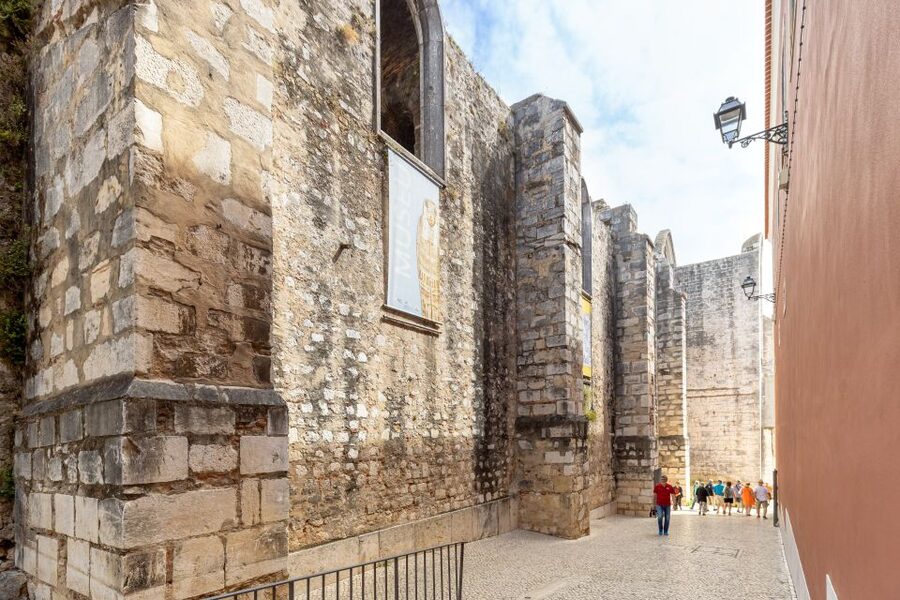
After the Gothic atmosphere, you’ll arrive at Santa Justa elevator, an imposing structure in Gothic Revival style. Even if you don’t ride it, the area around it is a classic Lisbon viewpoint moment. Your guide uses it to show you how elevated vantage points matter in a city built on hills.
From here, the tour shifts into Baixa, the heart of the city. This section helps connect Lisbon’s topography to its urban planning. Baixa is the area that many visitors experience most often, so you’ll get a framework for what you’re seeing: where the streets funnel, why certain sightlines feel intentional, and how the city’s rebuilding shaped daily movement.
Then there’s a practical break inserted before the tram ride. You’ll have coffee and cake as part of the included stops. Many guides lean into something like a pastel de nata-style pastry, and the coffee helps reset your legs before more uphill angles.
The tram ride to Portas do Sol: short lift, big change in perspective
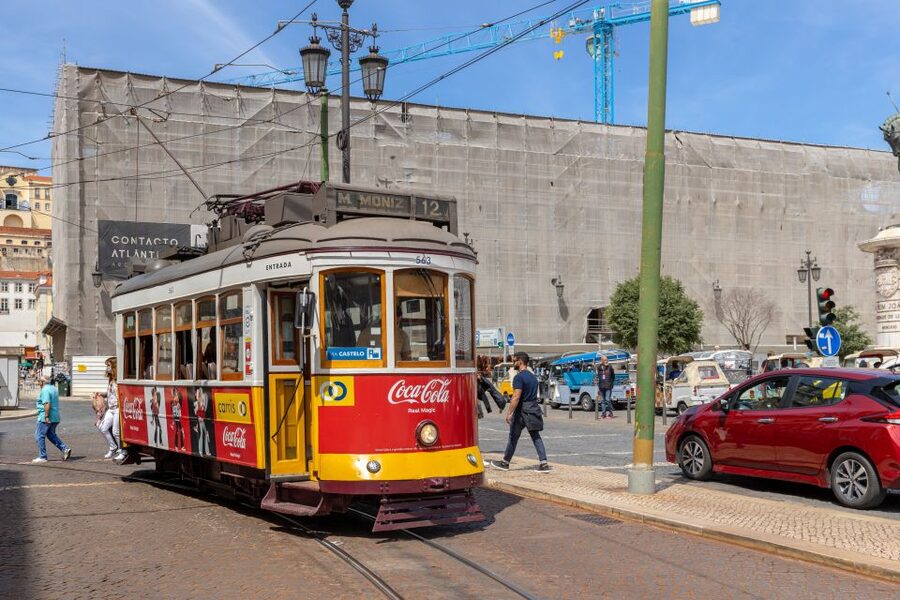
Next comes one of Lisbon’s most satisfying experiences: a tram ride. This isn’t only about nostalgia. The tram gives you a different height and a different “camera” than your feet. In a hilly city, that matters.
The ride goes up from the castle area to Portas do Sol. When you arrive, the tour uses Portas do Sol as a springboard for more big sights and the next neighborhood chapter.
What I like about building in a transit moment like this is that you get a mental breather. It breaks the walking rhythm without turning the tour into a bus day. You still feel like you’re moving through Lisbon, but with less strain.
Alfama in layers: saints, fado, and streets that don’t do straight lines
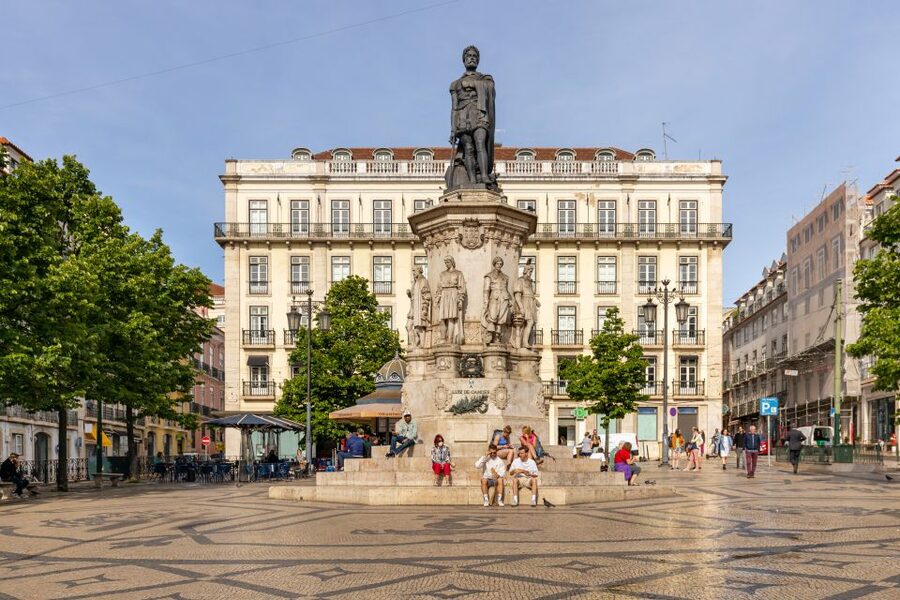
From Portas do Sol, you’ll pass major landmarks including the Monastery of São Vicente de Fora and the National Pantheon, then you’ll head into Alfama. This is Lisbon’s oldest and most traditional neighborhood, and it earns those labels the hard way: narrow streets, steep curves, and daily life pressed right up against historic walls.
Alfama is also closely tied to fado houses, and your guide will point out how the neighborhood fits the music. You’ll hear about traditions tied to festivals of saints, especially St. Anthony. Even if your trip doesn’t line up with the exact festival dates, the stories help you understand why these corners feel built for celebration.
Here’s the practical part: Alfama can feel like sensory overload if you wander without a plan. On this tour, the guide paces you, so you get to experience the feel without getting lost. You get just enough structure to keep moving, and you get viewpoints at moments when they actually help.
Lisbon Cathedral ending: a medieval anchor for the whole route
The tour ends at Lisbon Cathedral, originally built in 1150, about three years after Lisbon was taken back from the Moors. Over time, it was modified and now carries a mixture of architectural styles.
This ending works because it gives you a time anchor. After the earthquake-era stories, 1974 political history, and modern city logic, the cathedral pulls you back to a point much earlier than the rest of the route. It’s a good finish for photos too, since cathedrals always give you a sense of place and permanence.
If you want to keep the experience going after the tour, this is a natural spot to do it. You’ll already know the neighborhoods’ “why,” not just their “what.”
Price and value: $29 for a 3-hour Lisbon orientation that mixes inside stops with viewpoints
At $29 per person for about 3 hours, this tour sits in the sweet spot for first-timers. You’re paying for four things most walking tours don’t combine cleanly:
- major hills-and-viewpoints
- an inside church stop with art and style
- a political history thread tied to 1974
- a tram ride plus a café break (coffee and cake)
That mix matters for value. If you only do outside sightseeing, Lisbon can start to blur. If you only do museum-style stops, you miss how neighborhoods actually feel. Here, you get both, in a tight format.
Also, since there are private or small-group options, you’re more likely to hear the guide clearly and ask questions. Multiple guides in this experience style are praised for humor, flexibility, and answering questions at a relaxed pace. On a tour like this, that can be the difference between memorizing dates and actually understanding the city.
One thing to watch: the route can run over a little when conditions change, like rain or a tram issue. That’s not a dealbreaker, but it’s smart to keep a bit of buffer if you have a later plan.
Who this tour fits best, and who should choose something else
This is a strong fit if you want a high-impact overview. You’ll learn how Lisbon’s neighborhoods connect, get practical orientation fast, and leave with a shortlist of places to revisit on your own.
You’ll probably love it most if you care about:
- history that’s tied to real places you can stand in
- viewpoints that explain the city’s geometry
- local culture like fado and saint festivals
Skip it or pair it with a lighter day if you:
- hate steep hills and steps
- want only time inside buildings
- are looking for an in-depth, museum-heavy schedule rather than a guided route
Should you book this Lisbon history and lifestyle walking tour?
Yes, you should book it if you’re in Lisbon for a short time and you want a guided route that actually makes the city easier to understand. The biggest reason to choose this one is balance: viewpoints, churches with real art, a tram ride, and a finish at Lisbon Cathedral in one 3-hour block.
Book it especially if you’re the type who likes to ask questions and get context while you walk. This tour is built for that. You’ll come away with better bearings, a clearer sense of Lisbon’s “why,” and a few stops you’ll want to revisit later.
If you’re sensitive to walking hills, plan for comfortable shoes and a slower start. Otherwise, this is a very solid value and a fun way to hit the highlights without turning your day into a sprint.
FAQ
How long is the Lisbon: History, Stories and Lifestyle Walking Tour?
The tour lasts 3 hours.
How much does the tour cost?
The price is $29 per person.
What’s included in the tour?
It includes a live guide, a walking tour, a tram trip, coffee, and cake.
Is hotel pickup or drop-off included?
No, hotel pickup and drop-off are not included.
What languages are available for the live guide?
The guide is available in Portuguese, Spanish, Italian, German, French, and English.
Is the tram ride included, and can I get a refund if plans change?
Yes, the tram trip is included. You can cancel up to 24 hours in advance for a full refund.
More Tours in Lisbon
- Lisbon City Center Tour – The Unmissable Lisbon★ 5.0 · 22,234 reviews
- True 4Hour Private Tuk Tuk Tour: Discover Lisbon with a Local!★ 5.0 · 8,008 reviews
- Winner 2025 Undiscovered Lisbon Food & Wine Tour by Eating Europe★ 5.0 · 6,390 reviews
- Lisbon: Sintra, Pena, Cabo da Roca, Cascais Tour with Pickup★ 4.8 · 5,445 reviews
- Alfama Tour in Lisbon Old Town★ 5.0 · 4,936 reviews
More Tour Reviews in Lisbon
- Lisbon City Center Tour – The Unmissable Lisbon★ 5.0 · 22,234 reviews
- Lisbon: Sintra, Pena, Regaleira, Cabo da Roca & Cascais★ 4.7 · 19,656 reviews
- Lisbon Card: 24, 48, or 72-Hour Pass★ 4.5 · 17,944 reviews
- Lisbon: Jerónimos Monastery Entrance Ticket★ 4.1 · 14,164 reviews
- Lisbon: Sunset Boat Party Cruise with DJ and Open Bar★ 4.5 · 10,378 reviews
More of Lisbon, One Hill at a Time
- Best of Lisbon Small-Group Guided Walking Tour★ 5.0 · 4,869 reviews
- Lisbon: Food and Wine Small Group Walking Tour★ 4.9 · 4,082 reviews
- Best of Lisbon Walking Tour: Rossio, Chiado & Alfama★ 4.9 · 2,700 reviews
- Age of Discoveries Walking Tour in Belém★ 5.0 · 1,513 reviews
- Lisbon Roots – Small group Food & Culture Walking Tour w/tastings★ 5.0 · 910 reviews
Just in: fresh Lisbon reviews from the team





Lisbon Walking Tours, compared.
 ★ 5.0Best of Lisbon Small-Group Guided Walking TourFrom $234,869 reviews
 ★ 4.9Food and Wine Small Group Walking TourFrom $724,082 reviews
 ★ 4.9Best of Lisbon Walking Tour: Rossio, Chiado & AlfamaFrom $232,700 reviews
 ★ 5.0Age of Discoveries Walking Tour in BelémFrom $31,513 reviews
 ★ 5.0Lisbon Roots – Small group Food & Culture Walking Tour w/tastingsFrom $168910 reviews
 ★ 4.9Starter Walking Tour to the highlights in GermanFrom $33781 reviews
 ★ 4.1Lisbon Tram No. 28 Ride & Walking TourFrom $23766 reviews
 ★ 5.0Walking Tour in the Center (Max 12 Participants)From $47741 reviews
Browse the lists this tour appears in