
Reviewed · ALFAMA & OLD TOWN TOURS
Lisbon Downtown & Alfama with a guide Walking tour
Lisbon’s backstreets pack a lot. This guided walk strings together the big ideas of Lisbon—1755 earthquake rebuild, centuries of religious architecture, and the lookouts that make Alfama worth the stairs. I especially like how the route mixes major landmarks with smaller, story-driven details (think José Saramago’s foundation building and the Fado Museum) without turning into a checklist.
Two things I like most are the small group size (max 20, so the guide can actually answer questions) and the way Alfama’s medieval lanes are explained as you walk, not from a bus window. One consideration: it’s a lot of walking on uneven, hilly streets, and the stated duration is about 2 hours even if the description reads like a longer day—so go in expecting a fast-paced highlights loop.
In This Review
- Key things that make this walk worth your time
- Where the tour begins: Rua dos Douradores, then straight into Lisbon’s core
- Praça do Comércio (Terreiro do Paço): waterfront grandeur with a real shock in the backstory
- The Augusta Street Arch: Portugal’s symbols, tied to myth and memory
- José Saramago Foundation and the Fado Museum: stories you can hear, not just read
- Alfama: medieval alleys, surviving bedrock, and the best walking views in town
- The “280 years to build” stop and the National Pantheon vibe
- Feira da Ladra: when market days make Lisbon feel lived-in
- Cerca Moura wall viewpoints: seeing Lisbon from the old city edge
- Knights of Malta church and the cathedral: a timeline of power and rebuilding
- Saint Anthony’s church and the marriage coin tradition: local custom with a quick payoff
- Monastery-to-plaza to Door of the Sea: the walk gets more atmospheric as it nears the castle area
- Price and group size: what $3 can buy you in Lisbon terms
- What to expect on your feet (and how to make it feel easy)
- Guides can make this tour: names to look for in the flow
- Should you book this Lisbon Downtown & Alfama walking tour?
- FAQ
- How long is the Lisbon Downtown & Alfama walking tour?
- Where is the meeting point, and what time does the tour start?
- What is the maximum group size?
- Is the tour accessible for people with mobility concerns?
- Do I need to buy tickets for the tour itself?
- What should I bring?
- What languages are available for English audio commentary?
Key things that make this walk worth your time
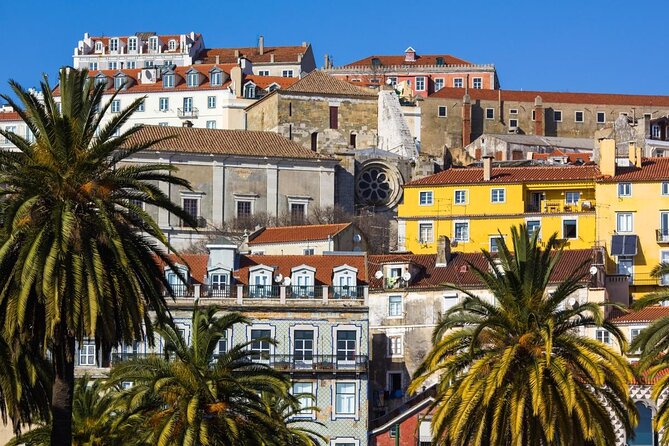
- Alfama’s bedrock history: the neighborhood’s dense foundation is part of why it survived the 1755 earthquake.
- Earthquake-to-rebuild story in one square: Praça do Comércio ties the waterfront, the Paço da Ribeira, and the Pombaline rebuild together.
- Culture stops that aren’t just photos: you’ll pass the José Saramago Foundation HQ (1521) and the Fado Museum.
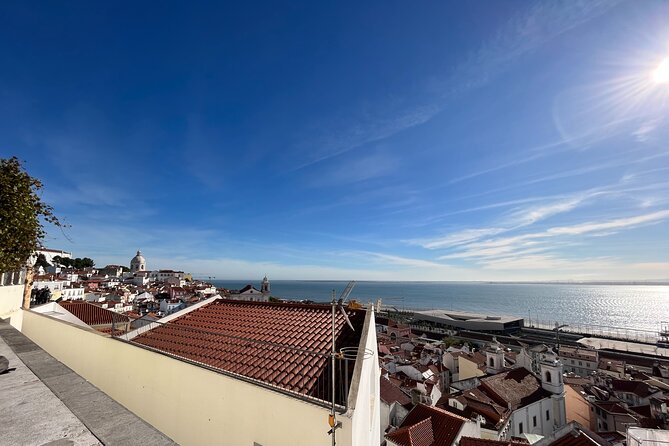
- Lookouts from the Cerca Moura wall: you get views positioned between São Jorge Castle and the cathedral.
- Market-day option: Feira da Ladra runs Tuesdays and Saturdays near Campo de Santa Clara.
- A guided timeline of religion and power: mosque-to-cathedral, Knights of Malta era, and multiple centuries of church building in sequence.
Where the tour begins: Rua dos Douradores, then straight into Lisbon’s core
You meet at Rua dos Douradores (number 16), with start times at 09:45 and 13:45. It’s a smart start point because you’re already in the city center, close to the kind of streets where Lisbon’s “one turn leads to another world” feeling kicks in quickly.
From there, the walk heads toward Praça do Comércio, and the guide’s job is to help you see Lisbon as a layered place: geography first, then power, then art, then everyday life. If you like understanding why a building looks the way it does—who built it, what happened to it, and how the next era took over—this route suits you.
One practical note: this isn’t a sit-and-stare tour. The tour notes call for tennis shoes, water, and weather gear (sunscreen in summer; a jacket in winter). You’ll want that comfort because Lisbon’s streets can be rough underfoot and steep under tempo.
Deeper into Alfama's lanes and miradouros
- Alfama Tour in Lisbon Old Town
★ 5.0 · 4,936 reviews - Private Lisbon Sightseeing Tuk-Tuk Tour: Alfama, Belém & More
★ 5.0 · 4,277 reviews - Lisbon: Hills, Alfama, and Mouraria Tour by Electric Bike
★ 4.8 · 3,438 reviews - Best of Lisbon Walking Tour: Rossio, Chiado & Alfama
★ 4.9 · 2,700 reviews
Praça do Comércio (Terreiro do Paço): waterfront grandeur with a real shock in the backstory
Your first major “wow” is Praça do Comércio, the big waterfront square facing the Tagus (Tejo). The square has a lot of presence—open space, sea air, and that feeling that this was once Lisbon’s front door. It still carries the old name Terreiro do Paço, tied to the Paço da Ribeira, which once stood here.
Here’s what makes this stop more than scenery: the 1755 Lisbon earthquake is part of the square’s identity. The Paço da Ribeira was destroyed, and then the city rebuilt the downtown area (Baixa) under the Pombaline plan ordered by Sebastião José de Carvalho e Melo, the 1st Marquis of Pombal. That means you’re not just looking at a square—you’re seeing a public space shaped by disaster and design.
From the 19th century onward, Praça do Comércio became the seat of major Portuguese state departments. So when you look across the water and imagine trade, governance, and rebuilding, the details start to click. It also sets you up for the next idea on the walk: symbols, monuments, and what Lisbon chose to remember.
The Augusta Street Arch: Portugal’s symbols, tied to myth and memory
As you move toward the Augusta Street Arch, it’s presented as a monumental entrance tied to Portuguese symbolism and a biblical reference to Solomon’s Temple. The key thing isn’t whether you remember every carving. The guide helps you read the Arch as a message: each symbol points back to layers of Portuguese history, while also celebrating cultural icons.
What I like about this kind of stop is that it’s compact. You don’t need museum-level time. You just need a guide who can translate “stone language” into something you can actually notice while you walk.
Also, being near Praça do Comércio means the Arch lands in context: the square, the river, the historical center. It helps the whole walk feel like one continuous story rather than disconnected points.
José Saramago Foundation and the Fado Museum: stories you can hear, not just read
Next up, you pass a building originally built in 1521. Today it’s the headquarters of the José Saramago Foundation, dedicated to the only Portuguese author to have won the Nobel Prize for Literature so far. It’s a neat way to show that Lisbon’s heritage isn’t only monuments and churches. It’s also literature and modern cultural legacy, living in older stone.
Then the route includes the Fado Museum, focused on the legacy and influence of fado—the traditional Portuguese guitar-led music style. Even if you don’t plan to go deep inside, the value here is context. Fado isn’t just a sound you hear at a dinner show. It’s part of how Lisbon frames emotion, history, and identity.
One review detail that sounds like it would be fun in real time: guides have used their phones to play fado audio as a small extra during the walk. That turns a museum-area stop into something sensory, and it’s a good reminder to ask your guide what to listen for when you later catch a fado performance on your own.
Lisbon at walking pace, a few more routes
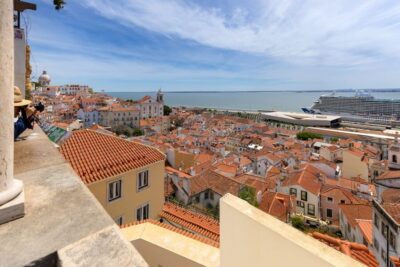


Alfama: medieval alleys, surviving bedrock, and the best walking views in town

Then comes Alfama, Lisbon’s oldest and most emblematic quarter. This is where the walk turns from “center-city history” into “street-level Lisbon.” Alfama is famous for medieval lanes and serious views, and it’s one of the rare areas where your feet and your eyes both do the sightseeing work.
The tour’s framing includes a key explanation: Alfama’s dense bedrock foundation helped it survive the 1755 earthquake. That detail matters because it explains why these areas can feel like they time-traveled. You’re not just looking at old walls—you’re walking through places shaped by geology and survival.
If you like photography, this area rewards you constantly. The guide also helps you notice what’s usually missed in selfie mode: the shape of streets, how the neighborhood climbs, and how viewpoints connect different parts of the city like a visual map.
The “280 years to build” stop and the National Pantheon vibe
Your route includes a building tucked into Alfama alleys that took over 280 years to build. It’s described as the resting place of many Portuguese heroes. Even if you treat this as a quick stop (and most of us do when we’re on a walk), it’s worth a pause because the guide’s story is about what nations do with memory.
This is where I like the small-group format the most. A bigger crowd tends to turn places into traffic. With a max group size of 20, the guide can slow down, correct the direction you’re looking, and make the “why” land.
If you’re the type who loves legends and symbolism, you’ll probably end up with at least a few extra questions here. And if you’re not, you’ll still leave with clearer mental connections between Lisbon’s monuments and Portugal’s identity.
Feira da Ladra: when market days make Lisbon feel lived-in
One of the most charming segments can be the Feira da Ladra, the traditional open-air flea market held every Tuesday and Saturday around Campo de Santa Clara. Even if you don’t plan to buy anything, a market stop gives you something a monument walk can’t: daily, local energy.
This market won’t be like the curated craft fairs you might see elsewhere. It’s described as for locals and tourists, and the value is the variety—small stalls, odd finds, and the kind of street chatter that makes a historic neighborhood feel current.
If you’re traveling midweek or on a weekday that isn’t a market day, don’t worry. The walk still works because the market is added flavor, not the entire purpose. But if you can match a Tuesday or Saturday, it’s worth it.
Cerca Moura wall viewpoints: seeing Lisbon from the old city edge
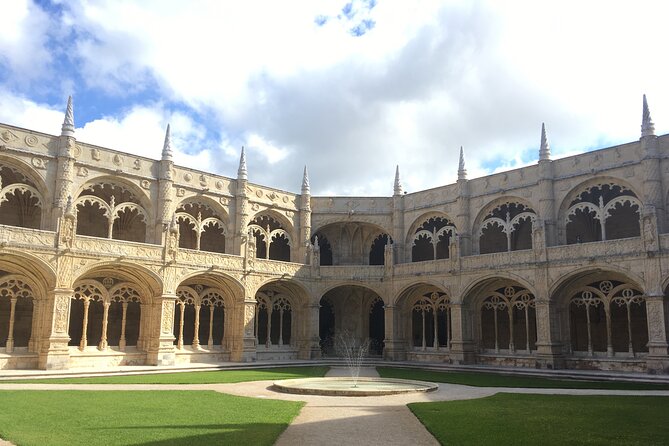
After the market area, you hit a viewing point from the old gate in the Cerca Moura (Moorish city wall). This is a classic “strategic spotting” moment. The description places it roughly midway between São Jorge Castle and the cathedral, and it’s reputed to be Lisbon’s oldest building.
Even if you don’t confirm that age on the spot, the practical win is the view logic. You’ll understand where Lisbon’s major landmarks sit relative to each other, which makes your future self-guided walking easier.
This stop is also a great reminder that Lisbon’s layers aren’t only Portuguese Christian ones. The Moors shaped city structure too, and this wall viewpoint helps you visualize that continuity in stone and distance.
Knights of Malta church and the cathedral: a timeline of power and rebuilding
From the viewing point, the tour includes a church originally built by the Knights of the Order of Malta in the 12th century. It’s one of those “small enough to miss, old enough to matter” stops. The guide helps connect the order’s presence to the broader story of religion and defense in medieval Europe.
Then comes the Lisbon Cathedral, built where a mosque erected by the Islamic Moors once stood. You’re told it was commissioned by King Afonso I in 1150. That one detail alone gives you a powerful lens: Lisbon keeps repurposing sacred sites as control and culture change.
The cathedral you see today reflects a messy reality. The tour notes mention a long series of collapses and renovations, which means today’s cathedral is a mixture of styles. That’s not just trivia—it explains why architectural features can look like they belong to different eras. It also makes the building feel honest. History here isn’t clean lines. It’s repairs, rebuilds, and layers.
Saint Anthony’s church and the marriage coin tradition: local custom with a quick payoff
Next is the church built on the site of the purported birthplace of Saint Anthony of Lisbon. Saint Anthony is tied to traditions about newlyweds and marriage vows, and the tour includes a specific ritual: single women might throw a coin to the saint’s statue, hoping for marriage within a year.
Even if you don’t plan to do it, it’s one of the more fun cultural moments on the route because it’s not just about what happened long ago. It’s about what people still do today, in a quiet way, in a city that loves small rituals.
Monastery-to-plaza to Door of the Sea: the walk gets more atmospheric as it nears the castle area
Your route continues with a monastery stop described as an example for much later church building in Portugal. It stayed in use until the abolition of religious orders in the early 19th century. This is a useful transition point. You start in big civic spaces, then move through sacred architecture, and now you’re watching how religious influence changes over time.
After that, you’ll reach a small plaza within about 500 meters of São Jorge Castle. It’s close enough to feel like a pre-castle breath, but it keeps the focus on the Alfama streets rather than forcing you into the castle itself.
Then there’s the Door of the Sea, named for being one of the main entrances into the city from the beach and harbor when Lisbon was fortified. It’s the kind of detail that makes you picture the old city as a working fortification system, not just a place to visit.
Finally, the walk includes a family-owned grocery store specializing in canned fish. That’s a nice end note because it brings you back to everyday Lisbon. History is great, but so is the fact that people have always eaten, shopped, and carried on—sometimes with plain staples like canned seafood.
Price and group size: what $3 can buy you in Lisbon terms
The price shown is $3 for an approximate 2-hour walking tour. Even with the small print that not everything is included (food and drinks aren’t), that price reads like exceptional value if it matches what you actually pay. In practical terms, you’re mostly paying for a professional guide plus the structure to see Alfama and the downtown core in one organized route.
This is where small-group guidance matters. With up to 20 people, the guide can keep the walk moving, explain what you’re looking at, and help you orient between plazas, churches, and viewpoints. If you tried to DIY all of this without a guide, you’d still see it—but you’d likely spend more time guessing what to notice.
Also look at what is included beyond the human guide: there’s insurance according to Portuguese law, plus multilingual audio commentary in English, French, Italian, Spanish, Chinese, and German. There’s also a Vox City app perk with 5 free self-guided walking tours. That means after your guided portion, you can keep exploring with extra structure.
What to expect on your feet (and how to make it feel easy)
This tour is described as involving a considerable amount of walking, with a moderate physical fitness level expected. Lisbon’s hills can turn “2 hours” into a real workout if your shoes are wrong.
My practical advice:
- Wear tennis shoes or other grippy footwear.
- Bring water, especially in warmer months.
- Summer: sunscreen. Winter: jacket, because it can get cold.
Since food and drinks aren’t included, you’ll also want to plan your next meal timing. The tour’s stops are the priority, so you shouldn’t build your day around a long sit-down meal unless you’ve already mapped it.
One more balancing point from the overall feedback pattern I see in the guide experiences: pacing can vary with the group. Guides like Marina have adjusted walking speed for people who move slower, and that kind of flexibility is a big reason the tour works. If you have mobility concerns, tell the guide at the start so they can manage the flow.
Guides can make this tour: names to look for in the flow
The tour quality often hinges on who’s holding the story thread. Reviews in the dataset highlight guides like Bruno, Marina (also referred to as Mariana), Miguel, Mihaela, Ines, Daniel, Patricia, Stanislaw, and Elisabeth.
Common thread: they’re described as enthusiastic and knowledgeable about Portuguese history, and several guides add little “extras.” For example, one guide used fado audio from a phone as a point of connection. Another guide is praised for managing a tight schedule well. If you tend to get bored on history walks, this matters. These guides aim to keep you moving while still making each stop make sense.
Should you book this Lisbon Downtown & Alfama walking tour?
Yes—if you want a guided path through Lisbon’s key layers without the hassle of planning every turn. I’d especially recommend it if you’re new to the city and you want Alfama + Praça do Comércio in one outing, with explanations tied to real events like the 1755 earthquake and site-changing shifts from mosque to cathedral.
Skip it or choose a different format if you hate uphill walking or you want a slower, longer, sit-down sightseeing day. Since the walking time is listed as about 2 hours and the itinerary is packed with stops, it’s not meant to be a leisurely stroll.
If you want to get your bearings fast, wear good shoes, bring water, and trust the guide to point out what to notice—you’ll come away with Lisbon that feels less like postcards and more like a place with cause and effect.
FAQ
How long is the Lisbon Downtown & Alfama walking tour?
The duration is listed as approximately 2 hours.
Where is the meeting point, and what time does the tour start?
The meeting point is Rua dos Douradores, number 16, Lisbon. Start times are 09:45 and 13:45.
What is the maximum group size?
The tour has a maximum of 20 travelers.
Is the tour accessible for people with mobility concerns?
It’s described as requiring a moderate physical fitness level, and it notes that there is a considerable amount of walking.
Do I need to buy tickets for the tour itself?
You’ll receive a mobile ticket. Many stops are described as having free admission, but the tour does not include food and drinks.
What should I bring?
The tour recommends wearing tennis shoes or other appropriate footwear, bringing a bottle of water, and using sunscreen in summer or a jacket in winter. A mobile device is also noted as not included.
What languages are available for English audio commentary?
Audio commentary is available in English, French, Italian, Spanish, Chinese, and German. English, Spanish, and Portuguese are listed as available all year round.
More Tour Reviews in Lisbon
- Lisbon City Center Tour – The Unmissable Lisbon★ 5.0 · 22,234 reviews
- Lisbon: Sintra, Pena, Regaleira, Cabo da Roca & Cascais★ 4.7 · 19,656 reviews
- Lisbon Card: 24, 48, or 72-Hour Pass★ 4.5 · 17,944 reviews
- Lisbon: Jerónimos Monastery Entrance Ticket★ 4.1 · 14,164 reviews
- Lisbon: History, Stories and Lifestyle Walking Tour★ 4.8 · 10,902 reviews
More of Lisbon, One Hill at a Time
- Lisbon: History, Stories and Lifestyle Walking Tour★ 4.8 · 10,902 reviews
- Best of Lisbon Small-Group Guided Walking Tour★ 5.0 · 4,869 reviews
- Lisbon: Food and Wine Small Group Walking Tour★ 4.9 · 4,082 reviews
- Best of Lisbon Walking Tour: Rossio, Chiado & Alfama★ 4.9 · 2,700 reviews
- Age of Discoveries Walking Tour in Belém★ 5.0 · 1,513 reviews
Keep Wandering Old Alfama
- Alfama Tour in Lisbon Old Town★ 5.0 · 4,936 reviews
- Private Lisbon Sightseeing Tuk-Tuk Tour: Alfama, Belém & More★ 5.0 · 4,277 reviews
- Lisbon: Hills, Alfama, and Mouraria Tour by Electric Bike★ 4.8 · 3,438 reviews
- Best of Lisbon Walking Tour: Rossio, Chiado & Alfama★ 4.9 · 2,700 reviews
- Lisbon: Baixa District Food Tour with Dinner and Drinks★ 4.9 · 1,997 reviews
Just in: fresh Lisbon reviews from the team





Alfama & Old Town Tours, compared.
 ★ 5.0Alfama Tour in Lisbon Old TownFrom $34,936 reviews
 ★ 5.0Private Lisbon Sightseeing Tuk-Tuk Tour: Alfama, Belém & MoreFrom $524,277 reviews
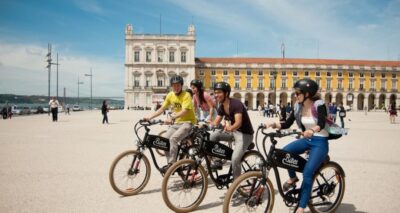 ★ 4.8Hills, Alfama, and Mouraria Tour by Electric BikeFrom $253,438 reviews
 ★ 4.9Best of Lisbon Walking Tour: Rossio, Chiado & AlfamaFrom $232,700 reviews
 ★ 4.9Baixa District Food Tour with Dinner and DrinksFrom $931,997 reviews
 ★ 5.0Lisbon Small-Group Food Tour with 18 Tastings in Alfama DistrictFrom $1261,967 reviews
 ★ 4.5Lisbon E-Bike Tour Commerce Square, Mouraria and AlfamaFrom $301,688 reviews
 ★ 5.0Old Town TukTuk Tour and Scenic Viewpoints in AlfamaFrom $35974 reviews
Browse the lists this tour appears in