
Reviewed · ALFAMA & OLD TOWN TOURS
Alfama Tour in Lisbon Old Town
Lisbon’s hills hide stories in plain sight. This Alfama walking tour strings them together with guided stops, viewpoints, and church squares that feel like Lisbon’s living neighborhood. You’ll walk through places like Chafariz D’El Rei and multiple miradouros, where the city explains itself.
Two things I really like: first, the guides’ storytelling. People rave about guides such as Cecelia and Hugo for turning architecture and history into something you actually remember. Second, the value setup: it’s a pay-what-you-want style experience, with a small listed price and a strong culture of tipping at the end.
One heads-up: the walk includes steep grades and stairs, so if hills are a struggle for you, plan for slower pace breaks and good shoes.
In This Review
- Key highlights you’ll feel fast
- Alfama Tour in Lisbon: a pay-what-you-want walk with real local flavor
- Who this tour fits best
- Price and what you really pay (tips matter here)
- Meeting point, time, and the walking pace you should expect
- Stop 1: Blue umbrellas and the Casa dos Bicos–Museu de Lisboa warm-up
- Stop 2 and 3: Chafariz D’El Rei and Largo do Chafariz de Dentro
- What to watch for
- Stops 4 to 6: Sao Rafael, Largo do Salvador, and Igreja de Sao Miguel
- Stop 7: The History of Lisbon mural by Nuno Saraiva
- Stop 8 and 9: Miradouro de Santo Estevao and Miradouro das Portas do Sol
- Stop 10: Miradouro de Santa Luzia, Alfama’s most romantic terrace
- Stop 11: Lisbon Cathedral (Sé de Lisboa) from the outside
- Stop 12: Church of St. Anthony (Santo António), saints, and street-level Lisbon
- What the best guides add beyond the scheduled stops
- Tips for getting the most out of this Alfama walk
- Should you book the Alfama Tour in Lisbon?
- FAQ
- How long is the Alfama walking tour?
- What time does this tour start?
- Is this tour admission-free?
- Is food or drink included?
- Where do I meet the guide?
- Where does the tour end?
- How does the tip-based pricing work?
- Can I cancel for a refund?
Key highlights you’ll feel fast
- Tip-based walking tour: pay what feels fair, with tipping welcomed and expected at the end
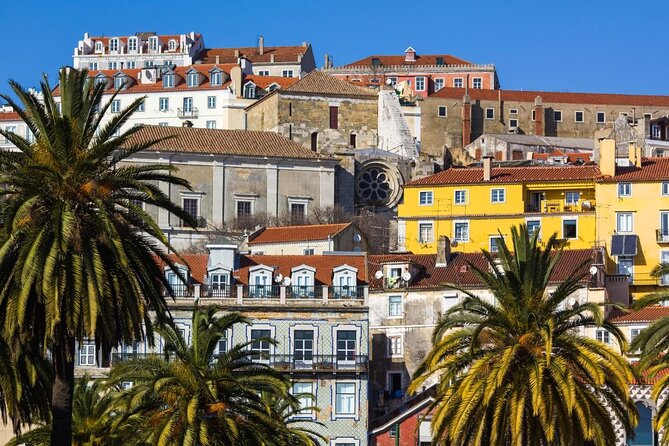
- Alfama views in sequence: multiple lookouts, including Portas do Sol and Santa Luzia
- Photo-friendly story stops: fountains, plazas, and murals you can actually spot and name later
- Fado and neighborhood layers: many guides connect Alfama to music and historical change (saudade often comes up)
- Small-group feel: capped at 25 travelers, so questions don’t get lost
Alfama Tour in Lisbon: a pay-what-you-want walk with real local flavor
If you want Lisbon that feels less like a checklist, Alfama is the neighborhood for it. The streets twist, the buildings lean, and the landmarks are often small—until a guide points out what you’re looking at. This tour is built for that exact experience: a guided walk through Lisbon’s oldest quarter, paced with story stops rather than constant sight-seeing.
It also helps that the tour format is tip-based. Even with the low listed price (shown as $3.62 per person), the intention is clear: your guide’s time is what you’re paying for, and tipping is part of the deal. That’s a nice change from tours where you feel like you’re buying entry fees to stand in lines.
Where it gets especially good is how the guide helps you connect the dots. One reviewer described how the walk tied together Moorish alleys, traces of the Jewish quarter, and the way centuries of change show up in tiles, walls, and street layout. Another called out a Fado explanation—not just “what it is,” but why the emotion of saudade matters in Lisbon.
Deeper into Alfama's lanes and miradouros
- Alfama Tour in Lisbon Old Town
★ 5.0 · 4,936 reviews - Private Lisbon Sightseeing Tuk-Tuk Tour: Alfama, Belém & More
★ 5.0 · 4,277 reviews - Lisbon: Hills, Alfama, and Mouraria Tour by Electric Bike
★ 4.8 · 3,438 reviews - Best of Lisbon Walking Tour: Rossio, Chiado & Alfama
★ 4.9 · 2,700 reviews
Who this tour fits best
You’ll get the most out of this if you:
- enjoy walking history through real streets
- want viewpoints without trying to manage them alone
- like hearing how neighborhoods evolve over time
It may feel less ideal if you have very limited mobility or hate stairs, since the route includes steep stretches.
Price and what you really pay (tips matter here)
On paper, it’s listed at $3.62 per person, and it’s about 2 hours 30 minutes long. In practice, it’s the guide’s guidance that makes the value. The tour explicitly welcomes and expects a tip at the end, and that’s what many highly rated experiences focus on: the guide’s craft.
So think of the “price” as your ticket into the walk, but the actual experience is the guide-led storytelling, pacing, and local recommendations. If you want to try Alfama with minimal financial risk, this is one of the smarter bets in Lisbon—especially when you’re the kind of traveler who values good guidance over photo ops alone.
Meeting point, time, and the walking pace you should expect
The meeting point is R. dos Bacalhoeiros 12A, 1100-070 Lisboa. The tour starts at 3:30 pm for the session listed here, and it ends in a different location than where you begin.
A few practical notes that will save you stress:
- Bring comfortable walking shoes. People mention steep grades and stairs.
- If you need restrooms or prefer less sun, pay attention to the guide’s pacing. Reviews praise guides for slowing down, choosing discussion spots, and keeping the group comfortable.
- The group cap is 25 travelers, which usually makes it easier to ask questions and keep the pace human.
English is offered, and you’ll get a mobile ticket.


Stop 1: Blue umbrellas and the Casa dos Bicos–Museu de Lisboa warm-up
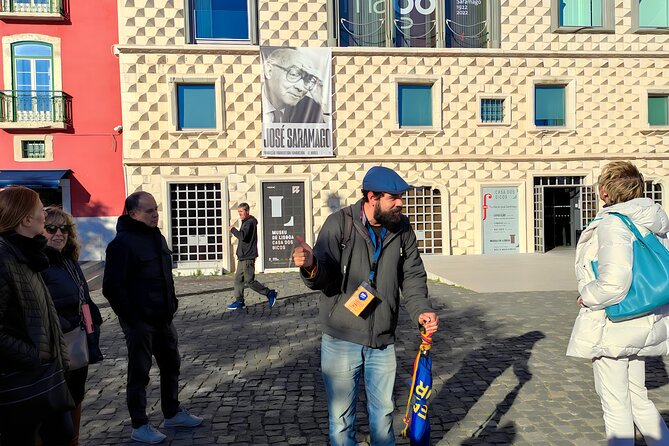
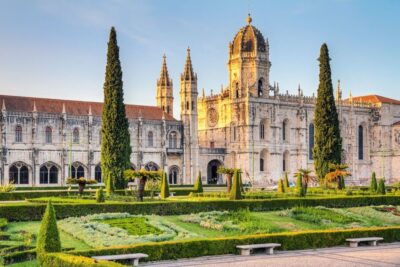
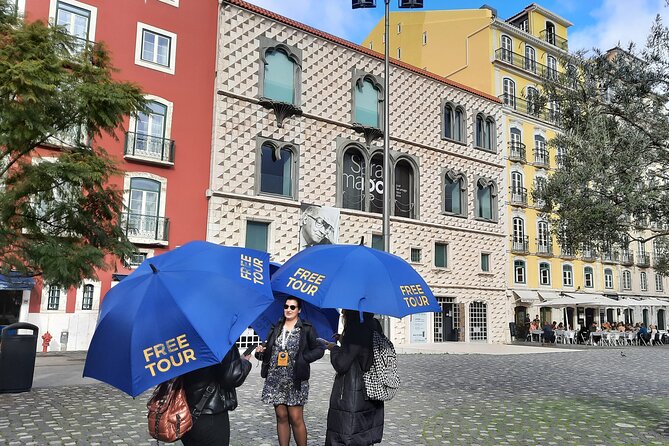
You start at Casa dos Bicos–Museu de Lisboa, and the simple instruction is: look for the blue umbrellas. Even if you don’t go inside, this first stop matters. It helps you get your bearings in Alfama’s rhythm—where tiny streets funnel you toward bigger views, and where buildings carry layered meaning.
Time here is short (about 15 minutes), and admission is not included for the museum. That’s fine. You’re not paying for a full museum day; you’re paying for context that makes the rest of the neighborhood click.
If you’re the kind of traveler who likes to understand architecture before you admire it, this first stop is a great signal that the guide will keep explaining what you’re seeing.
Stop 2 and 3: Chafariz D’El Rei and Largo do Chafariz de Dentro
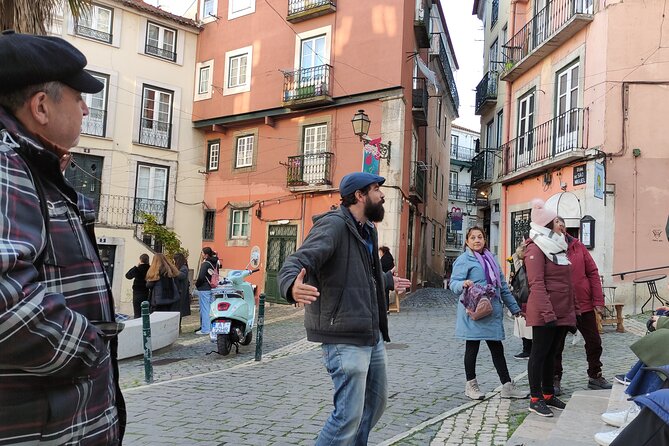
Next you visit Chafariz D’El Rei, a fountain connected to the city’s water history. The tour notes that it likely dates back to the 13th century, built by taking advantage of the Alfama hillside’s water supply. This is the kind of detail that makes the tour feel grounded: Alfama isn’t just charming; it’s functional infrastructure that shaped daily life.
From there, you reach Largo do Chafariz de Dentro, about 10 minutes. It was once called Chafariz dos Cavalos (Horse Fountain), and today it’s Alfama’s central plaza. The tour adds a neat piece of context: its current name comes from being located within the walls of the Fernandina wall.
These fountain stops are valuable because they teach you how Lisbon historically solved problems—water, movement, and community gathering—using whatever the terrain allowed. On a self-guided stroll, you’d likely notice fountains. With a guide, you start noticing why they’re there.
What to watch for
Keep your eyes on:
- how street shape funnels crowds toward plazas
- how walls and fortifications affect where you stand and what you can see
Stops 4 to 6: Sao Rafael, Largo do Salvador, and Igreja de Sao Miguel
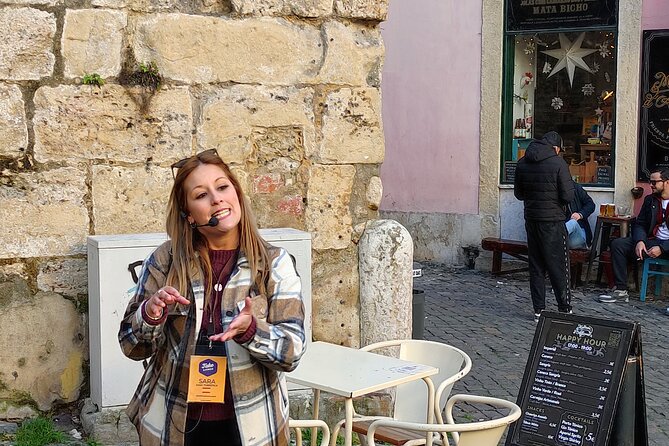
After the fountains, the tour shifts toward Alfama’s social and spiritual heart.
- Largo de Sao Rafael: another spot where memories of old Alfama linger (about 10 minutes). This is the kind of stop that helps you slow down. You get a breather while the guide explains what used to define this area versus what defines it now.
- Largo do Salvador: you’ll sit to listen to stories about culture and long-running habits (about 10 minutes). Even without specific museum entry, these storytelling breaks are a core reason people rate this tour so highly.
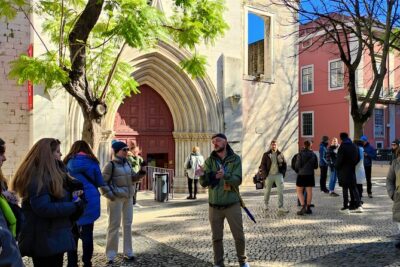
- Igreja de Sao Miguel: a beautiful church and square tied to the Popular Saints Festivities (about 15 minutes). If you time Lisbon around a festival, these stops help you understand why locals care about these exact corners.
This sequence is a smart use of time. You move from infrastructure (fountains) to communal life (squares) to identity (church and festivities). That order helps your brain build a map of Alfama.
Stop 7: The History of Lisbon mural by Nuno Saraiva
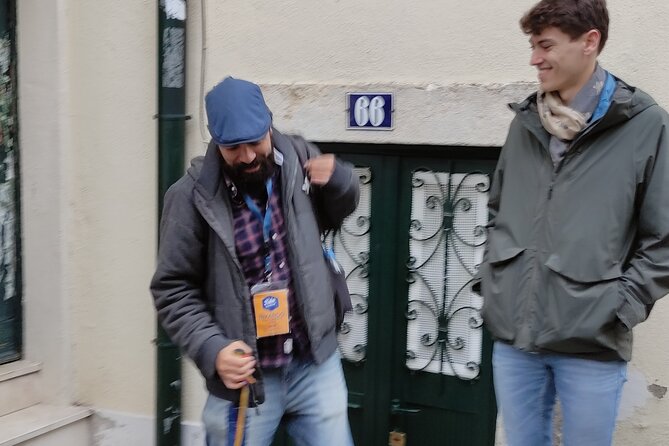
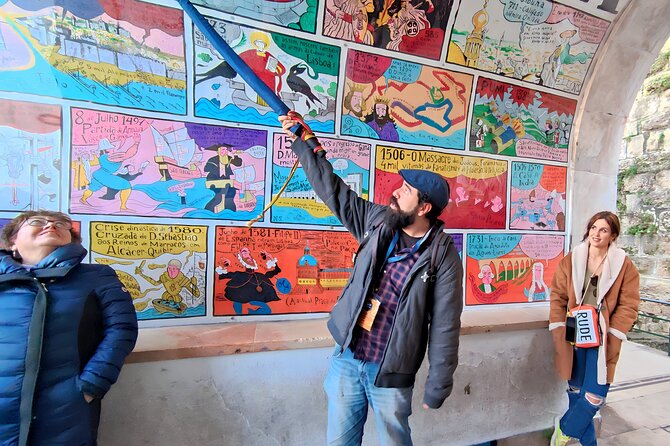
Then you hit History of Lisbon mural by Nuno Saraiva. It’s one of the more recognizable public art moments on the route (about 10 minutes), and it gives the tour a modern anchor.
Mural stops are underrated in walking tours because they’re easy to skip. But when your guide explains what you’re looking at, public art becomes a shortcut to understanding how the city narrates itself.
It also gives you a change of pace from churches and viewpoints—useful when you’ve already walked some steep segments.
Stop 8 and 9: Miradouro de Santo Estevao and Miradouro das Portas do Sol
Now the tour starts giving you that classic Alfama experience: viewpoints.
- Miradouro de Santo Estevao: about 15 minutes, with a route that depends on pace through Alfama’s maze and then up to the church viewpoint.
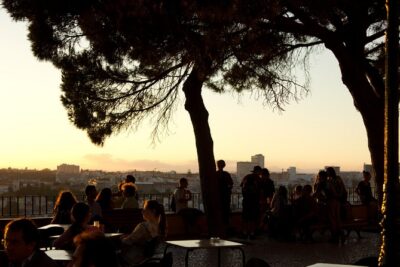
- Miradouro das Portas do Sol: about 10 minutes. The tour describes it as one huge balcony overlooking Alfama—an image you’ve probably seen on postcards.
These miradouro stops are where your photos start making sense. From up high, you can finally see how the street layout creates neighborhoods like a stack of layers. The guide’s explanations often help you spot what matters: older walls, church shapes, and why some areas feel denser than others.
Tip: even if the view is the obvious draw, pay attention to what the guide points out in the distance. That’s what turns a pretty scene into a mental map.
Stop 10: Miradouro de Santa Luzia, Alfama’s most romantic terrace
You end the viewpoint cluster at Miradouro de Santa Luzia (about 10 minutes). The tour calls it iconic and romantic, and that’s fair. This is one of the places where Lisbon feels like it was designed for lingering.
From a practical standpoint, it’s also a helpful timing stop. By now, your legs have worked. A viewpoint terrace is the kind of place where you can catch your breath, take a last set of photos, and let the neighborhood settle into focus.
Stop 11: Lisbon Cathedral (Sé de Lisboa) from the outside
Next is Lisbon Cathedral, Sé de Lisboa, which the tour notes as the city’s oldest and most important church, with construction dating back to the 12th century.
You won’t go inside; the tour notes entry costs 5€ and is not included. The value here is perspective. Even if you skip entry, your guide helps you understand why this cathedral matters in the story of Lisbon—and why it sits where it does.
If you want to go in afterward, this stop sets you up to decide. If you’re short on time or you don’t enjoy interiors, staying outside still gives you the key context.
Stop 12: Church of St. Anthony (Santo António), saints, and street-level Lisbon
The final stop is Church of St. Anthony (Igreja de Santo António), about 15 minutes, and the tour frames it as Lisbon’s most cherished saint—especially meaningful because this is also where the Popular Saints Festivities connect.
This end stop is a good final emotional landing. After fountains, murals, and miradouros, you finish at a place tied to devotion and local ritual. It’s the kind of ending that makes Alfama feel less like scenery and more like a community.
What the best guides add beyond the scheduled stops
The written itinerary gives you locations. What makes the top-rated versions special is what the guide layers over it.
From reviews, I picked up a few patterns:
- Stories that connect eras: Roman ruins, Moorish alleys, hints of the Jewish quarter, and even social and political change show up in the explanations.
- Fado and saudade: some guides connect Alfama to music and emotion, not just facts. The word saudade often lands as a real feeling by the end.
- Taste moments: multiple reviews mention trying ginjinha (cherry liqueur), sometimes served in a chocolate cup. One guide—Hugo—is specifically linked to introducing you to Dona Alice, a local icon who sells homemade ginjinha in those chocolate cups.
- Personality and performance: one reviewer praised Cecelia not just for history but for being a great singer; others call out humor, clear English, and energetic storytelling.
You should treat these as “likely with the right guide,” not a guaranteed program element. But they’re a strong clue that the experience isn’t dry.
Tips for getting the most out of this Alfama walk
Here’s how to make sure you leave with more than photos:
- Wear shoes you trust. Steep grades and stairs are part of Alfama. Don’t gamble with lightweight sneakers.
- Go in with questions. When your guide invites conversation, ask about the walls, tiles, or the layout you’re seeing.
- Plan your day for flexibility. The tour is 2h30, but viewpoints and stories take time—especially if the group is engaged.
- Don’t treat it like a museum day. The cathedral stop is outside; the museum stop at Casa dos Bicos is brief and admission isn’t included. This is about orientation and storytelling.
Should you book the Alfama Tour in Lisbon?
I think it’s a strong booking when you want a guided Alfama walk that balances iconic spots (miradouros, Sé de Lisboa area, major church squares) with less obvious context (water history through fountains and the street-and-wall story of Alfama).
Book it if:
- you love neighborhoods that feel lived-in, not just curated
- you want help understanding Lisbon’s layers fast
- you’re okay with walking hills and stairs
Skip it or choose something easier if:
- you have trouble with steep walking grades
- you want minimal walking time and lots of seated time
If your goal is to get Alfama into your head—so the streets make sense after you leave—this tour is one of the most cost-effective ways to do it, especially with a highly rated guide-focused format.
FAQ
How long is the Alfama walking tour?
It’s approximately 2 hours 30 minutes.
What time does this tour start?
The start time listed here is 3:30 pm.
Is this tour admission-free?
Not all stops are fully free. Casa dos Bicos–Museu de Lisboa is listed as not included. Lisbon Cathedral entry is also not included (5€). Other stops on the route are free.
Is food or drink included?
No. Food and beverages are not included.
Where do I meet the guide?
You meet at R. dos Bacalhoeiros 12A, 1100-070 Lisboa, Portugal.
Where does the tour end?
It ends in a different location than it starts. Your booking details should show the end point.
How does the tip-based pricing work?
The tour is fully tip-based, and a tip at the end of the tour is welcomed and expected, while a mobile-ticket price is listed per person.
Can I cancel for a refund?
Yes. Free cancellation is available if you cancel at least 24 hours in advance for a full refund. Canceling within 24 hours doesn’t get a refund.
More Tours in Lisbon
- Lisbon City Center Tour – The Unmissable Lisbon★ 5.0 · 22,234 reviews
- Lisbon: History, Stories and Lifestyle Walking Tour★ 4.8 · 10,902 reviews
- True 4Hour Private Tuk Tuk Tour: Discover Lisbon with a Local!★ 5.0 · 8,008 reviews
- Winner 2025 Undiscovered Lisbon Food & Wine Tour by Eating Europe★ 5.0 · 6,390 reviews
- Lisbon: Sintra, Pena, Cabo da Roca, Cascais Tour with Pickup★ 4.8 · 5,445 reviews
More Tour Reviews in Lisbon
- Lisbon City Center Tour – The Unmissable Lisbon★ 5.0 · 22,234 reviews
- Lisbon: Sintra, Pena, Regaleira, Cabo da Roca & Cascais★ 4.7 · 19,656 reviews
- Lisbon Card: 24, 48, or 72-Hour Pass★ 4.5 · 17,944 reviews
- Lisbon: Jerónimos Monastery Entrance Ticket★ 4.1 · 14,164 reviews
- Lisbon: History, Stories and Lifestyle Walking Tour★ 4.8 · 10,902 reviews
Keep Wandering Old Alfama
- Private Lisbon Sightseeing Tuk-Tuk Tour: Alfama, Belém & More★ 5.0 · 4,277 reviews
- Lisbon: Hills, Alfama, and Mouraria Tour by Electric Bike★ 4.8 · 3,438 reviews
- Best of Lisbon Walking Tour: Rossio, Chiado & Alfama★ 4.9 · 2,700 reviews
- Lisbon: Baixa District Food Tour with Dinner and Drinks★ 4.9 · 1,997 reviews
- Lisbon Small-Group Food Tour with 18 Tastings in Alfama District★ 5.0 · 1,967 reviews
Just in: fresh Lisbon reviews from the team





Alfama & Old Town Tours, compared.
 ★ 5.0Private Lisbon Sightseeing Tuk-Tuk Tour: Alfama, Belém & MoreFrom $524,277 reviews
 ★ 4.8Hills, Alfama, and Mouraria Tour by Electric BikeFrom $253,438 reviews
 ★ 4.9Best of Lisbon Walking Tour: Rossio, Chiado & AlfamaFrom $232,700 reviews
 ★ 4.9Baixa District Food Tour with Dinner and DrinksFrom $931,997 reviews
 ★ 5.0Lisbon Small-Group Food Tour with 18 Tastings in Alfama DistrictFrom $1261,967 reviews
 ★ 4.5Lisbon E-Bike Tour Commerce Square, Mouraria and AlfamaFrom $301,688 reviews
 ★ 5.0Old Town TukTuk Tour and Scenic Viewpoints in AlfamaFrom $35974 reviews
 ★ 4.4Alfama Tour and Live Fado with Traditional DinnerFrom $58970 reviews
Browse the lists this tour appears in