

Reviewed · LISBON WALKING TOURS
Best of Lisbon Small-Group Guided Walking Tour
Lisbon hits you fast, and this walk gives you shape. I like how the route strings together the city’s big stories and big views in a small group setting, so you can ask questions and keep moving without feeling rushed. Two highlights I especially like are the included pastel de nata plus wine tasting, and the chance to walk through multiple neighborhoods that are usually tackled one-by-one.
The route also matters because it’s built for orientation. You’ll get a clear sense of where squares, stations, viewpoints, and famous districts sit relative to each other, which makes the rest of your trip easier. One consideration: you will be on foot for a half day with some hills, so you’ll want moderate fitness and solid shoes.
A great add-on is how the guides bring Lisbon alive—people name guides like Felipe, Maria, Jose, and Franco for their pacing and for answering questions in real time. Still, if Lisbon Cathedral is on your must-see list, plan on doing it separately since it isn’t part of this walking loop.
In This Review
- Key things to know before you go
- A half-day loop that links Lisbon’s biggest neighborhoods
- Meeting at Praça Dom Pedro IV: Rossio Square’s real-world meaning
- São Domingos to Restauradores: independence is written into the stones
- Rossio Station and Manueline-style details outside the crowds
- Largo do Carmo and the Carnation Revolution: Lisbon’s political shift you can feel
- Santa Justa viewpoints: when the walking starts to feel worth it
- Chiado and Rua Augusta: the elegant part of Lisbon that still feels walkable
- Baixa and the 1755 rebuilding logic: what anti-seismic planning looks like
- Miradouro Chão do Loureiro: a panoramic breather
- Alfama: Moorish streets, fado feeling, and slow-walk energy
- Ending at Praça do Comércio: the Atlantic welcome, minus the guesswork
- Price and value: why $23.94 can work
- Who should book this, and who might want a different plan
- Should you book this Lisbon walking tour?
- FAQ
- How long is the Best of Lisbon small-group guided walking tour?
- Where does the tour start and end?
- What language is the tour offered in?
- How large is the group?
- Is a mobile ticket included?
- What’s included in the price?
- Are museums or monument entry tickets included?
- What fitness level do I need?
- Are service animals allowed?
- Can I cancel for a full refund?
Key things to know before you go
- Small group size (max 14) makes the tour feel personal and keeps your questions from getting lost.
- Pastel de nata + wine tasting + tapa/snacks turn this into more than just photo stops.
- A half-day route covers Rossio, Chiado, Baixa, Alfama, and ends at Praça do Comércio.
- Main Lisbon viewpoints are built in, including a panoramic stop near Chão do Loureiro.
- No museum tickets are included, so think of this as streets-and-squares sightseeing.
A half-day loop that links Lisbon’s biggest neighborhoods
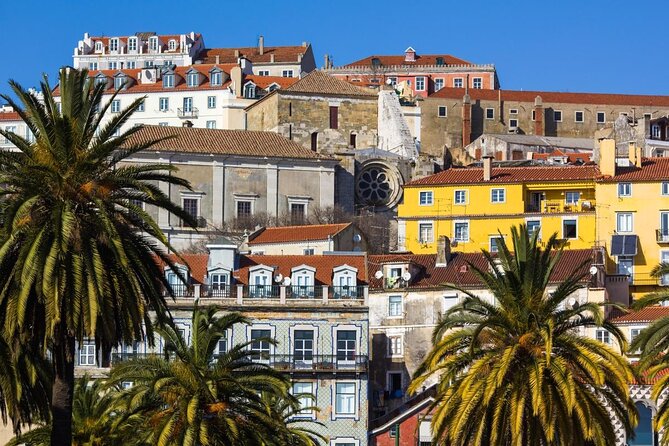
This is the kind of Lisbon tour you do early, or when you want a clean refresher on how the city pieces connect. In roughly 3 to 4 hours, you’ll walk across central Lisbon’s most recognizable areas—starting in the city’s nerve center and ending right by the Tagus at Praça do Comércio.
The format is built for first-timers and time-crunched travelers. You’re not trying to see everything at once with tickets and long museum waits. Instead, you’re learning the city by walking it: squares that mark major moments, streets that explain neighborhoods, and viewpoints that show you what’s uphill, what’s central, and what’s worth circling back to later.
And because it’s a guided walking experience with a local expert, you’re not stuck reading plaques alone. Expect lots of context—why certain areas were rebuilt after disaster, how political change shaped public spaces, and how Lisbon’s layers (Roman, Moorish, 18th-century, 20th-century) sit next to each other without asking permission.
Lisbon at walking pace, a few more routes
- Lisbon: History, Stories and Lifestyle Walking Tour
★ 4.8 · 10,902 reviews - Best of Lisbon Small-Group Guided Walking Tour
★ 5.0 · 4,869 reviews - Lisbon: Food and Wine Small Group Walking Tour
★ 4.9 · 4,082 reviews - Best of Lisbon Walking Tour: Rossio, Chiado & Alfama
★ 4.9 · 2,700 reviews
Meeting at Praça Dom Pedro IV: Rossio Square’s real-world meaning
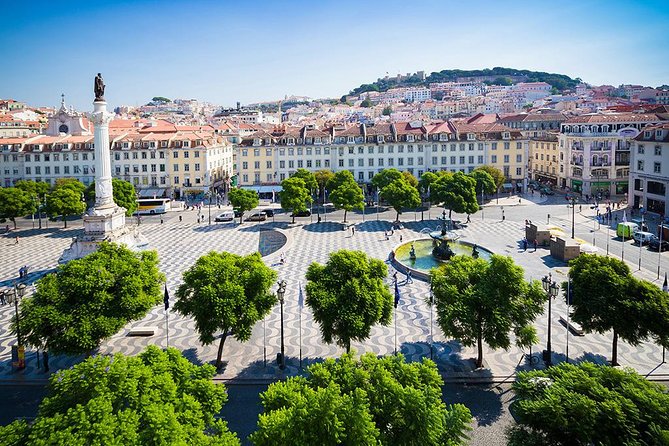
You start at Praça Dom Pedro IV (Rossio Square) in Baixa. This place isn’t just a “pretty square” to pass through. It’s a hub—Lisbon’s central nerve center—so it makes sense as your kickoff point. The guide sets you up for what you’re about to see and how to read the city while you walk.
One of the most memorable details here is the square’s paving style. You’ll learn how the design uses Portuguese stonework to evoke the waves of the nearby ocean. It’s a small detail, but it’s a good trick for the rest of the day: look at the ground, not only the buildings.
You’ll also get the rhythm of Lisbon. Rossio is where people live their day. The tour pace here tends to feel comfortable, and it helps you adjust to the walking tempo before the route starts moving toward bigger monuments and steeper streets.
São Domingos to Restauradores: independence is written into the stones

From Rossio, you’ll pass by São Domingos Square and then head to Praça dos Restauradores. This is where Lisbon’s political story shows up in a dramatic, very physical way: the obelisk in the middle of the square points the sky and ties back to Portugal’s independence in 1640.
The guide explains what the obelisk is commemorating and what those battle names and dates represent. It’s the sort of fact you’d never notice on your own unless you already knew to look. And it changes how you view the square—suddenly it’s not a stop, it’s a monument with a clear message.
This segment is short but strong. You get an immediate payoff: a deeper understanding of why these squares exist, how Portugal marked major turning points, and how public art in Lisbon functions like history you can stand next to.
Rossio Station and Manueline-style details outside the crowds

Next comes Estação do Rossio, one of the historical center’s standout buildings. Even if you’re not going inside, the outside has personality. The façade is described as being inspired by Manueline architecture, which gives the station a sense of ornate Portuguese identity.
What makes this stop valuable is not just the building itself—it’s the idea of Lisbon as a “gateway” city. You’ll hear how the trains head into tunnels toward Sintra, and why this engineering achievement mattered. Lisbon’s story is always tied to movement: people arriving, people commuting, people fleeing, people rebuilding.
This is also a good mental pause in the tour. You can stand still, look up at the structure, and catch your breath before heading into the next phase of the walk.
Worth a look before you lock anything else in around Lisbon:

Largo do Carmo and the Carnation Revolution: Lisbon’s political shift you can feel
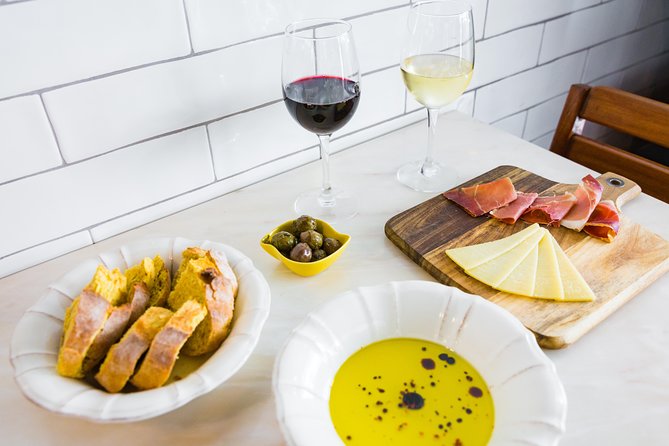
Then you reach Largo do Carmo, a small square that’s quietly important. The guide connects this spot to the Carnation Revolution in 1974, when Portugal’s dictatorship finally collapsed after 48 years.
It helps to know that Largo do Carmo is not just a postcard plaza. It’s a hinge in the country’s modern history. Listening to the story while you stand in the place makes it click—politics becomes something you can point at, not something you only read about later.
You may also notice how guides frame Lisbon’s modern identity. Places like Carmo show that Lisbon’s “old city” isn’t frozen. It changed—politically, socially, and physically—and those changes are still visible if you know where to look.
Santa Justa viewpoints: when the walking starts to feel worth it
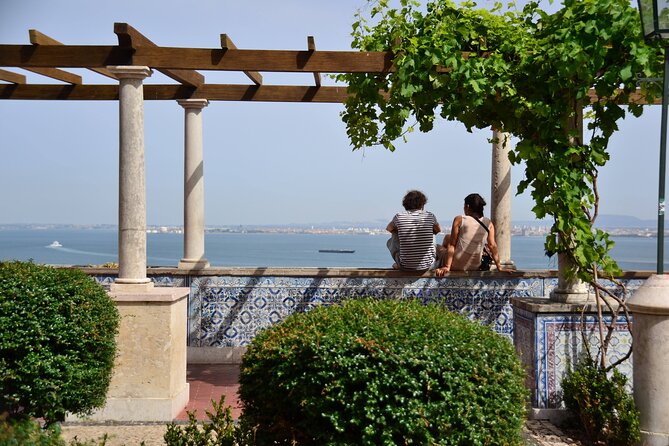
Near Elevador de Santa Justa, you’ll stop for a view. Lisbon’s hills can be a shock if you’re arriving for the first time. This is one of the ways the tour makes those hills feel less like a workout you didn’t sign up for and more like the point.
Even without turning it into a theme park stop, the route gives you a chance to see the city’s layout from a higher perspective. You start to understand why areas like Alfama feel tucked away and why Baixa reads so differently at street level versus up high.
Also, this is where guides often adjust pacing. You’ll see why many people mention good timing and helpful use of public elevators and escalators when available. It’s not about avoiding effort—it’s about making sure the group stays together and you’re not exhausted before the best neighborhoods.
Chiado and Rua Augusta: the elegant part of Lisbon that still feels walkable

After the viewpoint moment, you move into Chiado, Lisbon’s 19th-century intellectual and wealthy district. The feel here is different: more fashion, bookstores, theaters, and cafés. Even if you’re not shopping, Chiado helps you see the city’s “culture layer.”
From there you head onto Rua Augusta, described as the main central street and, in the tour’s framing, the most expensive and fancy avenue in Lisbon. This section is useful because it’s a straight line through the center. It helps you map the city’s spine.
A practical tip: if you want photos without crowds crushing your space, be ready to shoot in short bursts. This is a main artery, so plan your shots and keep moving—your guide will likely manage timing based on foot traffic.
Baixa and the 1755 rebuilding logic: what anti-seismic planning looks like
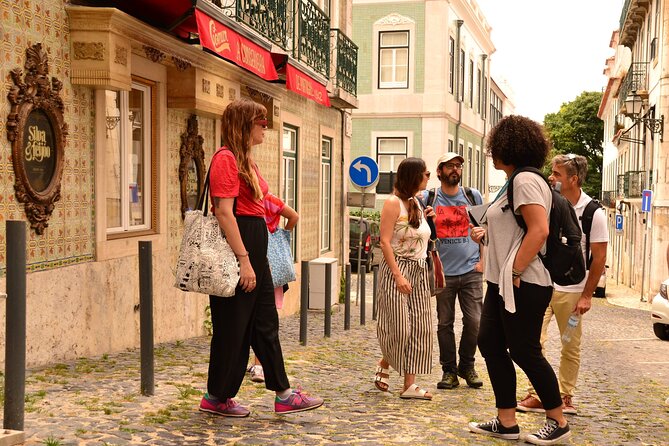
Then comes Baixa, Lisbon’s downtown core, and this stop is about more than aesthetics. You’ll learn how the area was rebuilt after the 18th-century earthquake, with new rules for urban planning and anti-seismic architecture based on solutions that were innovative for their time.
This is one of the best parts of the tour to pay attention with your whole brain. When you understand why the streets and layout look the way they do, the neighborhood stops feeling random. It feels engineered. The guide’s job here is to give you the “why,” not just point at façades.
And since Baixa is relatively flat compared with Lisbon’s other districts, it’s also a comfortable stretch mid-tour. Many people like this because it breaks up the hillier areas ahead. If you’re battling jet lag, this is the part that helps your legs recover while your mind keeps working.
Miradouro Chão do Loureiro: a panoramic breather
A quick scenic pause comes at Miradouro Chão do Loureiro. This is your panoramic viewpoint moment on the route, and it’s a smart one. The walk has taken you through architecture, monuments, and political stories. Now you get to see Lisbon’s geography.
That view is what helps you understand the rest of the day—why winding streets behave the way they do and how Alfama’s layout fits the hill. It’s also where you can slow down and take photos without feeling like you’re always sprinting for the next stop.
Even if you’re not a hardcore viewpoint collector, this break keeps the tour enjoyable instead of exhausting.
Alfama: Moorish streets, fado feeling, and slow-walk energy
After the viewpoint, you’ll head into Alfama, Lisbon’s oldest neighborhood and a district strongly tied to fado music and Moorish heritage. The tour framing here shifts again. This isn’t the Lisbon of wide center streets. It’s a maze of narrow alleys and winding lanes.
You’ll hear how fado connects to Lisbon’s melancholic musical identity while you walk past fado restaurants tucked between the streets. This is one of those experiences where you don’t just learn a fact—you change how you see the neighborhood while you’re standing in it.
And yes, Alfama comes with extra walking. That’s normal for the area. The tour helps by keeping a reasonable pace and using the day’s earlier flatter sections as a warm-up. If you’re prone to sore feet, plan ahead: bring shoes you can trust on uneven pavement.
People often describe the guides here as energetic and question-friendly. Guides like Maria, Jose, and Franco are frequently praised for pacing and keeping the group engaged, which really matters when you’re moving through tight streets.
Ending at Praça do Comércio: the Atlantic welcome, minus the guesswork
The tour finishes at Praça do Comércio (Terreiro do Paço) near the river. This is a great landing spot because it feels open after Alfama’s tight lanes. The guide explains how the hall in this area historically welcomed travelers arriving from the Atlantic.
You’ll also hear why the square is tied to the 1755 Lisbon earthquake and how rebuilding reshaped downtown. When you finish here, you get a strong sense of Lisbon’s “arrival point” energy—this is where the city meets water, trade, and people coming in from beyond.
Then you’re released to keep exploring on your own. And because you’ve already walked the city’s logic in one half-day, you’re not guessing as much. You know where to head next: back uphill for views, toward Chiado for shopping and cafés, or into Baixa for easier wandering.
Price and value: why $23.94 can work
At $23.94 per person, this tour can feel like a good deal because you’re not just paying for a walk. You’re getting:
- a local guide for a half day (with lots of stop-based storytelling),
- a pastel de nata included,
- and wine tasting plus a tapa/snacks.
For many first-timers, food and drink are the easiest way to make a tour feel like a full experience rather than a series of checkpoints. And since museum and monument entry isn’t included, the tour stays focused on the public spaces that define Lisbon—squares, streets, stations, viewpoints.
It also helps that the group is limited to 14 travelers. In practice, that usually means you don’t spend your walking time stuck behind a sea of strangers.
The main cost consideration is what you may want after the walk. You might choose to add a monument ticket later, or eat a full meal somewhere your guide recommends. This tour gives you the orientation; it doesn’t try to buy your whole day.
Who should book this, and who might want a different plan
This tour fits best if you want a fast, high-impact introduction to central Lisbon. It’s ideal if:
- it’s your first time in Lisbon,
- you want a guided route that covers multiple neighborhoods in one afternoon,
- you like history explained in plain language while you walk,
- and you enjoy a snack-and-drink element.
It may not fit if you want a deeper dive into specific one-off landmarks. One limitation that comes up for people is that Lisbon Cathedral isn’t included. If that’s a core goal, plan it separately. Also, while the pace is often described as manageable, you still need to handle Lisbon’s uneven streets and some hills.
Should you book this Lisbon walking tour?
If you’re trying to get your bearings fast, yes, this is a smart first booking. The route hits the “Lisbon essentials” in a way that makes later self-guided wandering easier: Rossio and Restauradores for big stories, Chiado and Rua Augusta for central city feel, Baixa for rebuilding logic, Alfama for fado-and-streets texture, then Praça do Comércio to finish by the water.
I’d book it if you care about street-level Lisbon and you want a guide who can answer questions. I’d skip it (or at least treat it as a supplement) if your priority is monument-specific time like a full cathedral visit.
Either way, bring comfortable shoes, expect some uphill sections, and be ready to look up and look down. Lisbon rewards both.
FAQ
How long is the Best of Lisbon small-group guided walking tour?
It runs about 3 to 4 hours.
Where does the tour start and end?
You start at Praça Dom Pedro IV, 1100 Lisboa, Portugal, and the tour ends at Praça do Comércio, 1100-148, Portugal.
What language is the tour offered in?
The tour is offered in English.
How large is the group?
The tour has a maximum of 14 travelers.
Is a mobile ticket included?
Yes, the tour uses a mobile ticket.
What’s included in the price?
It includes a local guide, a pastel de nata pastry, and a wine tasting with a tapa/snacks.
Are museums or monument entry tickets included?
No. Entry to museums and monuments is not included.
What fitness level do I need?
You should have a moderate physical fitness level.
Are service animals allowed?
Yes, service animals are allowed.
Can I cancel for a full refund?
You can cancel up to 24 hours in advance for a full refund. If you cancel less than 24 hours before the start time, it’s not refunded.
More Tours in Lisbon
- Lisbon City Center Tour – The Unmissable Lisbon★ 5.0 · 22,234 reviews
- Lisbon: History, Stories and Lifestyle Walking Tour★ 4.8 · 10,902 reviews
- True 4Hour Private Tuk Tuk Tour: Discover Lisbon with a Local!★ 5.0 · 8,008 reviews
- Winner 2025 Undiscovered Lisbon Food & Wine Tour by Eating Europe★ 5.0 · 6,390 reviews
- Lisbon: Sintra, Pena, Cabo da Roca, Cascais Tour with Pickup★ 4.8 · 5,445 reviews
More Tour Reviews in Lisbon
- Lisbon City Center Tour – The Unmissable Lisbon★ 5.0 · 22,234 reviews
- Lisbon: Sintra, Pena, Regaleira, Cabo da Roca & Cascais★ 4.7 · 19,656 reviews
- Lisbon Card: 24, 48, or 72-Hour Pass★ 4.5 · 17,944 reviews
- Lisbon: Jerónimos Monastery Entrance Ticket★ 4.1 · 14,164 reviews
- Lisbon: History, Stories and Lifestyle Walking Tour★ 4.8 · 10,902 reviews
More of Lisbon, One Hill at a Time
- Lisbon: History, Stories and Lifestyle Walking Tour★ 4.8 · 10,902 reviews
- Lisbon: Food and Wine Small Group Walking Tour★ 4.9 · 4,082 reviews
- Best of Lisbon Walking Tour: Rossio, Chiado & Alfama★ 4.9 · 2,700 reviews
- Age of Discoveries Walking Tour in Belém★ 5.0 · 1,513 reviews
- Lisbon Roots – Small group Food & Culture Walking Tour w/tastings★ 5.0 · 910 reviews
Just in: fresh Lisbon reviews from the team





Lisbon Walking Tours, compared.
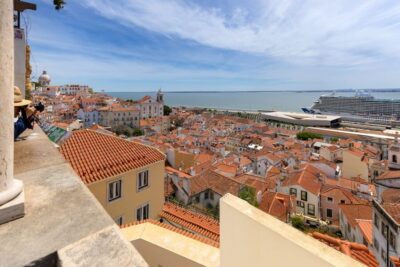 ★ 4.8History, Stories and Lifestyle Walking TourFrom $2910,902 reviews
 ★ 4.9Food and Wine Small Group Walking TourFrom $724,082 reviews
 ★ 4.9Best of Lisbon Walking Tour: Rossio, Chiado & AlfamaFrom $232,700 reviews
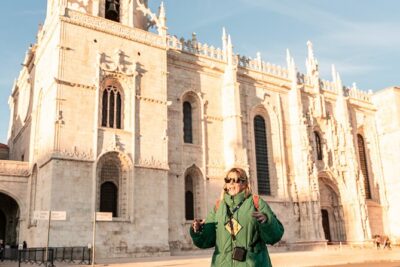 ★ 5.0Age of Discoveries Walking Tour in BelémFrom $31,513 reviews
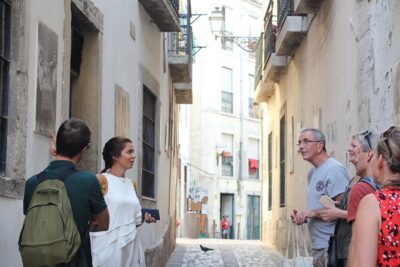 ★ 5.0Lisbon Roots – Small group Food & Culture Walking Tour w/tastingsFrom $168910 reviews
 ★ 4.9Starter Walking Tour to the highlights in GermanFrom $33781 reviews
 ★ 4.1Lisbon Tram No. 28 Ride & Walking TourFrom $23766 reviews
 ★ 5.0Walking Tour in the Center (Max 12 Participants)From $47741 reviews
Browse the lists this tour appears in