
Reviewed · BELÉM TOURS
Age of Discoveries Walking Tour in Belém
Belém comes together fast, linking the Monument to the Discoveries with a stop at the original Pastéis de Belém bakery and the trade-route stories behind Portuguese expansion. I like how the walk turns big-name landmarks into a clear, easy-to-follow theme instead of a random list of photos.
I also like the guide-led pacing and the practical extras. People often sing praises for guides like Fernanda or Katerina, especially for connecting what you see with what’s going on around Lisbon today, plus tips for where to eat and what to do next. With a group cap of 25, it stays friendly without feeling like you’re sprinting with a crowd.
One consideration: you won’t go inside every famous stop. The tour includes the church at Jerónimos, but not the full monastery complex, and it treats the Monument to the Discoveries and the Tower of Belém as exterior viewing only (with many visitors planning those interiors for later).
In This Review
- Key things to know before you go
- Belém Walking Plan: Two and a Half Hours From Afonso de Albuquerque to the Tower
- First Stop: Afonso de Albuquerque Square and Why “Trade” Matters More Than You Think
- Pastéis de Belém: The Taste Stop That Turns History Into Something You Can Hold
- Chão Salgado Alley and the Marquis of Pombal: Reform Meets Brutality
- Jerónimos Monastery Area: What You See When the Tour Doesn’t Go Inside
- Praça do Império and Rosa dos Ventos: Two Stops That Make Navigation Visual
- Monument to the Discoveries and the Tagus Riverside: Pointing Toward the Sea
- Gardens of the Tower of Belém and the UNESCO Tower Exterior
- Price and Value: Why the Reservation Fee Feels Light
- Who This Tour Fits Best (And Who Should Rethink)
- Quick Game Plan Before You Show Up
- Should You Book the Age of Discoveries Walking Tour in Belém?
- FAQ
- How long is the Age of Discoveries Walking Tour in Belém?
- What language is the tour offered in?
- How much does the tour cost?
- Where does the tour start and end?
- Is the ticket mobile?
- What’s the maximum group size?
- Will I be able to go inside Jerónimos Monastery?
- Will I go inside the Monument to the Discoveries or Torre de Belém?
- What happens if the weather is bad?
- Can I cancel for a full refund?
Key things to know before you go

- 2.5-hour Belém loop with a clear story from empire monuments to sea navigation imagery.
- Pastéis de Belém stop gives you a classic taste break at the original bakery.
- Jerónimos Church only during the tour, with the rest left for later if you want it.
- English speaking guide with mobile tickets and no private transport needed.
- Max 25 people keeps questions realistic and the walk more human.
Belém Walking Plan: Two and a Half Hours From Afonso de Albuquerque to the Tower
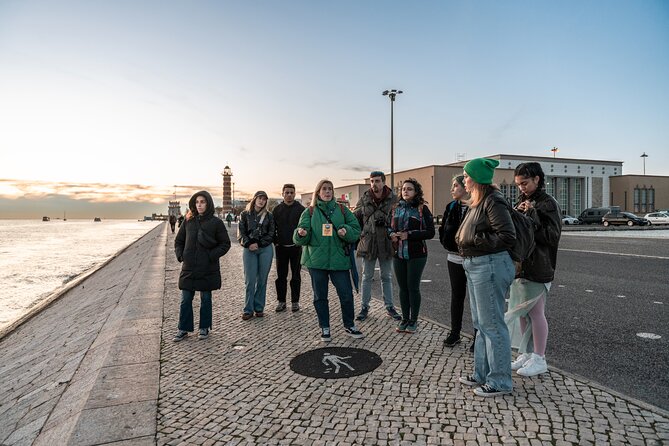
This is a straightforward, walk-and-learn route in Belém, starting at the Jardim of Afonso de Albuquerque (Praça Afonso de Albuquerque) and ending next to the Belém Tower on Av. Brasília. Expect about 2 hours 30 minutes of time on foot, plus a few short stops where you can actually look up and take photos.
The tour is offered in English and uses a mobile ticket, which makes it simple once you’re in Lisbon. There’s no private transportation included, and that’s a big part of the value: you’re paying for a guide and a route, not for a van ride.
Group size matters here. With a cap of 25, you’re more likely to hear explanations clearly near monuments instead of getting muffled by 40-plus people. If you’re traveling solo or as a couple, this size also makes it easier to fall into the rhythm of the tour.
More mornings among the monuments of Belém
- Lisbon: Jerónimos Monastery Entrance Ticket
★ 4.1 · 14,164 reviews - Private Lisbon Sightseeing Tuk-Tuk Tour: Alfama, Belém & More
★ 5.0 · 4,277 reviews - Age of Discoveries Walking Tour in Belém
★ 5.0 · 1,513 reviews - Lisbon: Bike Tour from Lisbon to Belém + Liquor & Pastry
★ 4.7 · 688 reviews
First Stop: Afonso de Albuquerque Square and Why “Trade” Matters More Than You Think
The walk kicks off in the Afonso de Albuquerque Square and Garden, a landscaped tribute to Portugal’s viceroy who expanded influence in the east. This stop is only about 15 minutes, but it sets the tone: Portuguese history isn’t just about ships. It’s also about strategy, power, and the practical systems that helped empires move.
Look around this square and garden and you’ll see how the statues and layout are designed like a story you can walk through. The guide’s job is to translate what you’re seeing into context: who Afonso de Albuquerque was and why his legacy connects to the wider Age of Discoveries theme.
From there, you head to the Thai Pavilion (Sala Thai – Pavilhão Tailandês). This is one of the more interesting twists of the route because it pulls you away from the usual “only Portugal vs. the sea” framing. The pavilion represents Portuguese trade reach across India, Thailand, Sri Lanka, and more. It also points to cultural side effects—like how Portuguese trade routes eventually played a role in bringing tea to Britain through Lady Catarina of Bragança.
This pair of stops works well if you want a tour that feels like it explains the how and why, not just the where.
Pastéis de Belém: The Taste Stop That Turns History Into Something You Can Hold
You get a dedicated stop at Pastéis de Belém, about 10 minutes, and it’s one of the reasons this tour is so popular. These custard tarts are a Belém rite of passage: flaky pastry, creamy filling, and a recipe tied to the Jerónimos Monastery tradition.
Here’s how to use this moment smartly. Go in expecting to buy and eat on the spot, not a sit-down meal. If you’re sensitive to waiting, arrive ready with your payment method and a plan: one tart is usually plenty unless you’re traveling with strong snack stamina.
The guide’s explanation matters more than you might expect. When you hear why the tarts became iconic, the flavors feel less random. It’s food as a living part of Portugal’s story, not just a tourist purchase.
Practical tip: if the queue at the bakery looks slow, you can still use the time to enjoy the area around Belém while you wait for your order.
Chão Salgado Alley and the Marquis of Pombal: Reform Meets Brutality

Next comes Chão Salgado Alley, a small stretch that packs a lot of political punch. This stop is about 10 minutes, but it’s a useful counterweight to the Age of Discoveries hero stories.
The alley is linked with the Marquis of Pombal and his controversial legacy: modernization efforts in Lisbon paired with the darker side of power, including the Távoras Massacre. Even if you don’t know Portuguese history well yet, this is where the tour becomes more than postcards.
Why I like this stop: it prevents the tour from becoming one-note. You get to see that “progress” can be complicated, and that leaders who reshape cities and systems can also be ruthless.
If you’re the type of traveler who likes history with an edge—rather than only celebratory narratives—this is a good moment to slow down and actually read the vibe of the place.
Lisbon at walking pace, a few more routes



Jerónimos Monastery Area: What You See When the Tour Doesn’t Go Inside
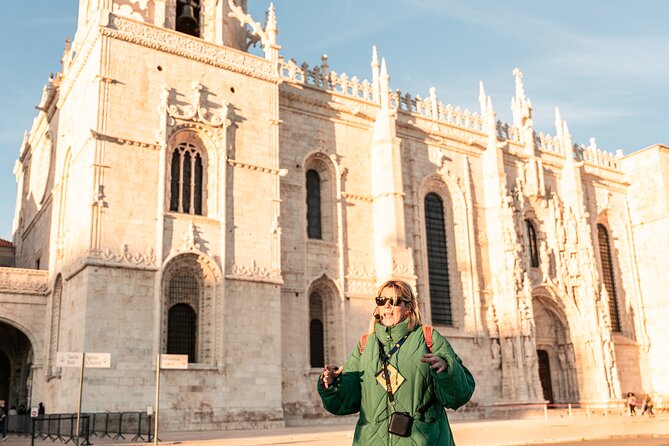
Jerónimos Monastery is a highlight for many people, and this tour gives you real time there—about 20 minutes. The architectural focus is the Gothic marvel and the way the monastery visually mixes Christian symbolism with sea motifs, tying it directly to Portugal’s maritime exploration spirit.
Important detail for planning: the walk will not take you inside the full Mosteiro dos Jerónimos. The tour includes entry to the church, but the rest is something you’ll likely choose to do later on your own. The guide typically sets you up so you’ll know what you’re looking at, even without walking through every part.
So what’s the tradeoff? You’ll save time during the tour, and you’ll still get the most central interior element. But if your dream is to spend a long, quiet hour wandering every cloister and chapel, this tour won’t fully satisfy that.
If you’re curious, plan a follow-up after the walk when you have stamina and daylight on your side.
Praça do Império and Rosa dos Ventos: Two Stops That Make Navigation Visual

After Jerónimos, the route heads to Jardim da Praca do Imperio (about 15 minutes). Praça do Império connects Portugal’s identity to a 1940 exhibition called the New State World exhibition, celebrating more than 800 years of Portuguese resilience and innovation, from 1140 origins to the country’s rebirth after Spanish rule in 1640. You’ll find a monumental fountain and gardens that feel like a museum you can walk through outdoors.
Then comes Rosa dos Ventos, around 10 minutes. This is where the tour gets surprisingly arts-and-science. You’ll see the compass rose and Mappa Mundi concept—navigation mapped into a big, visible design. The mosaic spans 50 meters, turning the idea of exploration routes into something physical and readable from a distance.
This pair is valuable because it helps you understand the Age of Discovery through symbols, not just dates:
- The 1940 plaza frames national identity in a modern-looking way.
- The compass rose turns navigation into a visual language.
If you like landmarks that you can decode after a short explanation, you’ll enjoy these stops.
Monument to the Discoveries and the Tagus Riverside: Pointing Toward the Sea
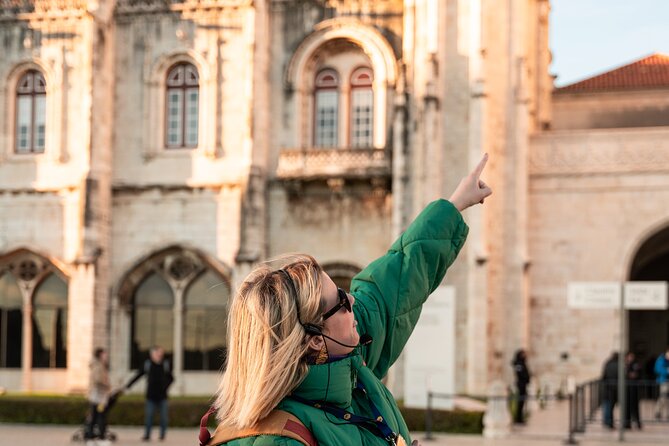
The Monument to the Discoveries is next, about 15 minutes along the Belém waterfront. The tall structure points toward the sea and is lined with statues of major explorers, all facing outward as if they’re still watching for horizons.
A nice thing about this stop is that it works at any time of day. Even without entering, you can get a sense of scale and direction. You’re not just looking at a building—you’re looking at a message Portugal wanted to leave behind.
After that, the tour walks the Tagus riverbank toward Belem Lighthouse, about 10 minutes. This stretch gives you a calmer, scenic pause where the water reflects modern landmarks like the 25th of April Bridge and the Christ the King statue. You also hear about Gago Coutinho, tied to aviation and the idea of crossing the Atlantic by flight—another chapter in Portugal’s travel-and-navigation legacy.
If you want a clear mental image of Lisbon, this is the part that helps. It links the sea-age with the modern city that grew around it.
Gardens of the Tower of Belém and the UNESCO Tower Exterior
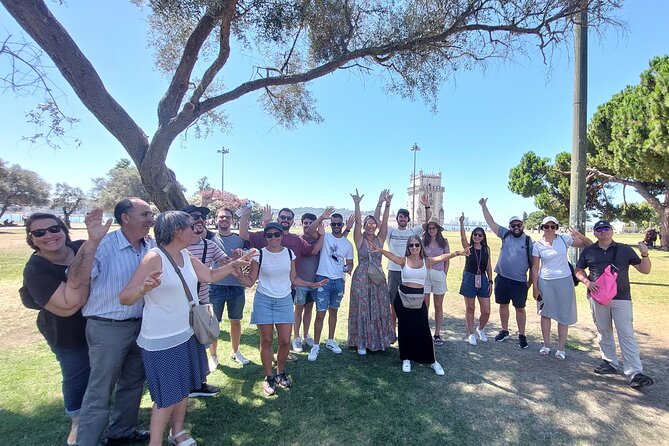
Near the end, you’ll hit the Torre de Belém garden area first (about 15 minutes). These gardens act like a buffer between busy sightseeing and the tower itself. You get green space, a chance to breathe, and a better angle to see how the tower sits at the edge of the Tagus.
Then the tour arrives at Torre de Belém for about 20 minutes. This is a UNESCO World Heritage Site, famous for its Manueline architecture, ornate details, and battlements. Even though the tour does not include entering the tower, the exterior is enough to leave most people impressed—especially if you’ve already heard the guide connect it to Portugal’s maritime role.
The best way to think about this final pair:
- The gardens help you settle your eyes and slow down.
- The tower closes the loop by giving you the most recognizable symbol of Belém’s sea defenses.
If you still want more after the walk, many visitors choose to return later for an interior visit. The tour ending right next to the tower makes that easy.
Price and Value: Why the Reservation Fee Feels Light
At $3.62 per person, this tour is priced for budget travelers who still want quality guidance. The guide is included, and the stops are largely framed with free admission ticket notes for the viewing points. The main cost you’re likely to add is food—especially if you want more than one Pastéis de Belém tart.
One thing to watch: this price doesn’t turn the experience into a full museum pass. It’s a guided walking tour with selective access. You’ll see a lot of major highlights, but interior access is limited (church at Jerónimos only, and the Monument and Tower are exterior during the walk). If your priorities are mostly museums and ticketed interiors, you may want to plan separate time blocks after the tour.
That said, for first-time visitors, the value is strong. You’re paying to get your bearings fast, understand the stories behind the landmarks, and avoid wasting your limited Lisbon energy on guesswork.
Also, because it’s a walking route, you’re not paying for private transportation you might not need.
Who This Tour Fits Best (And Who Should Rethink)
This tour is a great fit if you:
- Want a first-timer’s Belém route that links monuments into one theme.
- Like history that includes trade routes and power struggles, not only “heroes and ships.”
- Enjoy a snack stop that’s part of the cultural picture, not an afterthought.
- Travel on a budget but still want a guide.
Rethink it if you:
- Know you want long interior visits inside Jerónimos or inside the Tower of Belém during the tour window.
- Get impatient with an outdoor pace that can feel longer than expected when crowds or weather slow things down.
- Need flexible plans if rain is in the forecast, since the tour requires good weather.
If you’re traveling with kids, it can still work, but keep expectations realistic: you’re looking at architecture, monuments, and symbols, not a theme park.
Quick Game Plan Before You Show Up
Wear shoes you’re comfortable walking in. This is a true walking tour through Belém, and the best views come when you can stop without grumbling.
Bring a small plan for the Pastéis de Belém stop:
- Decide if you want one tart or more.
- Have payment ready.
- Don’t overbook yourself right before or after, because you’ll likely want a little wandering time at the end near the tower.
And because the tour ends next to Belém Tower, think about how you want to spend that remaining time. The walk ends in the exact zone where you might continue with photos, optional interior visits, or a longer sit-down meal.
Also note: confirmation is received at booking, and service animals are allowed. If you rely on a specific transit connection, you’ll find the route near public transportation helpful.
Should You Book the Age of Discoveries Walking Tour in Belém?
Yes, if you want a time-friendly way to understand Belém’s core landmarks and the Portugal story behind them—plus a memorable Pastéis de Belém stop. The combination of sea-exploration symbols (compass rose, monument, tower area) with the human side of empire (trade routes, political power) makes this tour feel more useful than a simple sightseeing loop.
Don’t book it if your main goal is interior museum time at Jerónimos or the Tower of Belém during the tour itself. You’ll get the church, but most other major interiors are saved for later, and this walk is built for clarity and coverage over long ticketed wandering.
If you can handle exterior viewing and you’re okay adding optional visits afterward, this is a strong value pick.
FAQ
How long is the Age of Discoveries Walking Tour in Belém?
It runs for about 2 hours 30 minutes.
What language is the tour offered in?
The tour is offered in English.
How much does the tour cost?
The price shown is $3.62 per person.
Where does the tour start and end?
It starts at the Garden of Afonso de Albuquerque (Praça Afonso de Albuquerque, 1300-004 Lisboa) and ends next to the Belém Tower (Av. Brasília, 1400-038 Lisboa).
Is the ticket mobile?
Yes, it uses a mobile ticket.
What’s the maximum group size?
The tour has a maximum of 25 travelers.
Will I be able to go inside Jerónimos Monastery?
The tour will not go inside Mosteiro dos Jerónimos except for the church.
Will I go inside the Monument to the Discoveries or Torre de Belém?
The tour notes that it will not go inside Padrão dos Descobrimentos or Torre de Belém.
What happens if the weather is bad?
This experience requires good weather. If it’s canceled due to poor weather, you’ll be offered a different date or a full refund.
Can I cancel for a full refund?
Yes. You can cancel up to 24 hours in advance of the experience for a full refund. If you cancel less than 24 hours before, the amount you paid isn’t refunded.
More Tour Reviews in Lisbon
- Lisbon City Center Tour – The Unmissable Lisbon★ 5.0 · 22,234 reviews
- Lisbon: Sintra, Pena, Regaleira, Cabo da Roca & Cascais★ 4.7 · 19,656 reviews
- Lisbon Card: 24, 48, or 72-Hour Pass★ 4.5 · 17,944 reviews
- Lisbon: Jerónimos Monastery Entrance Ticket★ 4.1 · 14,164 reviews
- Lisbon: History, Stories and Lifestyle Walking Tour★ 4.8 · 10,902 reviews
More of Lisbon, One Hill at a Time
- Lisbon: History, Stories and Lifestyle Walking Tour★ 4.8 · 10,902 reviews
- Best of Lisbon Small-Group Guided Walking Tour★ 5.0 · 4,869 reviews
- Lisbon: Food and Wine Small Group Walking Tour★ 4.9 · 4,082 reviews
- Best of Lisbon Walking Tour: Rossio, Chiado & Alfama★ 4.9 · 2,700 reviews
- Lisbon Roots – Small group Food & Culture Walking Tour w/tastings★ 5.0 · 910 reviews
Belém: More Monuments and Pastéis
- Lisbon: Jerónimos Monastery Entrance Ticket★ 4.1 · 14,164 reviews
- Private Lisbon Sightseeing Tuk-Tuk Tour: Alfama, Belém & More★ 5.0 · 4,277 reviews
- Lisbon: Bike Tour from Lisbon to Belém + Liquor & Pastry★ 4.7 · 688 reviews
- Bike Tours Lisbon – Center of Lisbon to Belém★ 5.0 · 686 reviews
- Lisbon: Jerónimos Monastery E-Ticket and Audio Guide★ 3.7 · 660 reviews
Just in: fresh Lisbon reviews from the team





Belém Tours, compared.
 ★ 4.1Jerónimos Monastery Entrance TicketFrom $2114,164 reviews
 ★ 5.0Private Lisbon Sightseeing Tuk-Tuk Tour: Alfama, Belém & MoreFrom $524,277 reviews
 ★ 4.7Bike Tour from Lisbon to Belém + Liquor & PastryFrom $46688 reviews
 ★ 5.0Bike Tours Lisbon – Center of Lisbon to BelémFrom $19686 reviews
 ★ 3.7Jerónimos Monastery E-Ticket and Audio GuideFrom $33660 reviews
 ★ 4.9Belém Walking Tour with Jerónimos Monastery TicketFrom $69637 reviews
 ★ 4.0MAAT Gallery and MAAT Central Entry TicketsFrom $17559 reviews
 ★ 4.8Electric Bike Tour by the River to BelémFrom $25507 reviews
Browse the lists this tour appears in