
Reviewed · BELÉM TOURS
Full Day Lisbon Tour Baixa Chiado with Alfama and Belem
Lisbon history makes sense when you walk it. This full-day route strings together the city’s big turning points—Portuguese Discoveries, the 1755 earthquake rebuilding, and the feel of old Lisbon—so the neighborhoods start connecting in your head, not just on a map. With guides like João and Fernanda noted for turning dates into stories, you’re not just moving from sign to sign.
I really like two things about this experience: the Belém morning hits the icon sites that define Portugal’s seafaring age, and the pace keeps you in the action without feeling rushed. I also like the food moment built in—Pastéis de Belém—paired with real local context rather than a quick stop-and-run.
One main consideration: this is a long, mostly walking day (about 9 hours) with some hills, including classic Alfama lanes. If your legs get cranky fast, plan accordingly.
In This Review
- Key highlights you’ll feel on the day
- A 9-hour route that stitches Belém to Alfama
- Belém morning: Torre de Belém to Jerónimos cloisters
- Discovery monuments, maps, and a garden with a fountain story
- Pastéis de Belém and lunch strategy at Time Out Market
- Praça do Comércio: the earthquake-era “new Lisbon” moment
- Santa Luzia and the views that keep the pace honest
- Lisbon Cathedral and the São Vicente-to-Sé religious layers
- Alfama: steep lanes, surviving façades, and old Lisbon atmosphere
- Casa dos Bicos: the diamond façade you can’t miss
- Arco do Triunfo and Rua Augusta: the walk returns to street level
- Rossio, Church of Carmo, and São Roque’s interior power
- The finish: Miradouro de São Pedro de Alcântara
- Price and what makes it solid value around $110
- Who should book this tour (and who might not)
- Should you book?
- FAQ
- How long is the Full Day Lisbon Tour Baixa Chiado with Alfama and Belem?
- What time does the tour start?
- Where is the meeting point?
- Where does the tour end?
- What is the group size?
- Is lunch included?
- Is Pastéis de Belém included?
- Which attractions have admission included?
- Does the tour require good weather?
- How much does the tour cost, and can I cancel?
Key highlights you’ll feel on the day
- A route that connects Discoveries-era Lisbon to the earthquake-rebuilt Baixa
- Small groups (max 20) so questions and detours feel manageable
- Included monument access at Torre de Belém, Jerónimos (cloisters), and Arco do Triunfo
- Original Pastel de Belém taste plus an easy lunch break at Time Out Market
- Viewpoints that frame the city like postcards: Santa Luzia and São Pedro de Alcântara
- Strong guide storytelling energy, often praised by names like João, Teresa, and Andreas
A 9-hour route that stitches Belém to Alfama
This tour is built like a guided walk-through of Lisbon’s identity. You start on the Tagus River side in Belém, then you move into the historical center where the city rebuilt itself after the 1755 earthquake. By the time you reach Alfama, you’re already carrying the context the guide has been handing you, so the steep streets and old churches feel like part of one story instead of random stops.
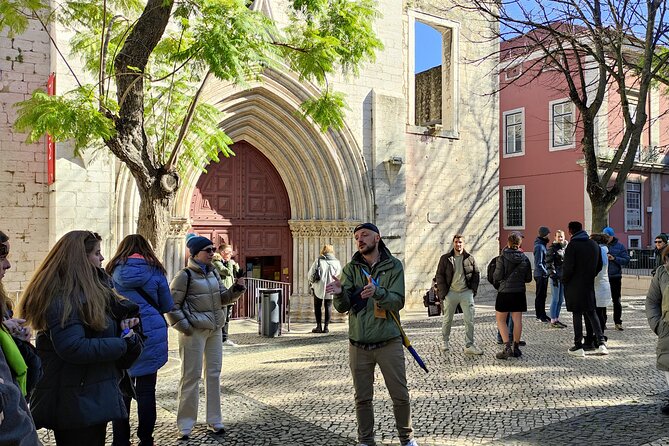
The group size matters. With up to 20 people, the day feels social without turning into a stampede. You can actually hear what the guide is saying at the key moments, and you’ll have enough breathing room to take photos, read details on façades, and step back when you want the view.
You also get a clear end point: the walk finishes near Miradouro de São Pedro de Alcântara. That’s smart, because you leave with a payoff view rather than ending in the middle of nowhere.
More mornings among the monuments of Belém
- Lisbon: Jerónimos Monastery Entrance Ticket
★ 4.1 · 14,164 reviews - Private Lisbon Sightseeing Tuk-Tuk Tour: Alfama, Belém & More
★ 5.0 · 4,277 reviews - Age of Discoveries Walking Tour in Belém
★ 5.0 · 1,513 reviews - Lisbon: Bike Tour from Lisbon to Belém + Liquor & Pastry
★ 4.7 · 688 reviews
Belém morning: Torre de Belém to Jerónimos cloisters
Belém is where Lisbon puts its “we were the power of the seas” energy on full display. Starting at Torre de Belém gives you a strong anchor point. It’s one of the city’s most recognized silhouettes, and the tour’s history framing helps you see it as more than a photo spot. You’re given the background so it clicks as part of Portugal’s maritime era.
Next, you stroll along the Tagus and build your mental timeline for the Portuguese Discoveries. Even when you’re simply walking a riverfront stretch, the guide’s explanation makes the waterfront feel purposeful—like you’re moving through the edges of the old port world.
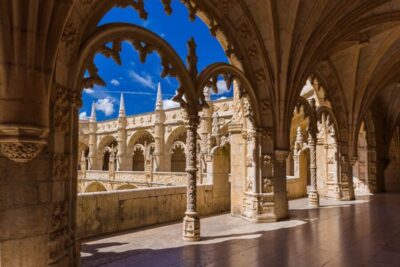
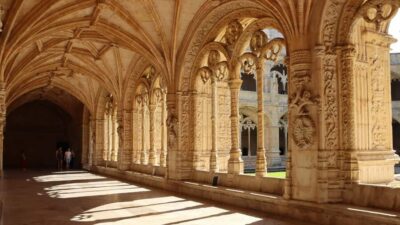
Then you reach Mosteiro dos Jerónimos (Jerónimos Monastery). The centerpiece here is the Manueline style—Portugal’s signature late medieval / early Renaissance look—and the guide helps you understand why it got used for this place. The tour includes admission for the monastery’s cloisters, and that’s a huge deal for value because cloisters are where the stonework details give you the best “how did they build this?” reactions.
Timing is important too. The tour gives you a full hour here, which is long enough to slow down, study the arches, and not feel like you’re sprinting for the next stop.
Discovery monuments, maps, and a garden with a fountain story
Belém isn’t only stone monuments and big-ticket landmarks. You also get stops that feel lighter and more visual—perfect for resetting after the bigger sites.
Padrão dos Descobrimentos is one of those “see it and get the reference” moments. You don’t go inside, but you do get the visual of the giant caravel with Henry the Navigator leading the Portuguese maritime expansion. It’s the kind of stop that makes your later explanations in the day easier to follow.
Rosa dos Ventos (Wind Rose Square) is another clever choice. The 14-meter map and the 50-meter compass rose turn the history into something physical. If you like understanding how navigation worked—at least at the symbolic level—this stop helps you connect the Discovery Age to direction, routes, and trade.
Then there’s Jardim da Praca do Imperio (Praça do Império Garden), where the tour slows down a bit. The garden ties to the 1940 Portuguese World Exhibition, with mosaics, a sundial, lakes, and sculptural groups near the top. It’s a peaceful pause that still stays in-theme because it’s part of how Lisbon remembers and stages its own history.
Pastéis de Belém and lunch strategy at Time Out Market
The tour’s food plan is refreshingly practical. You get the Original Pastel de Belém as part of the experience, and the guide gives the story behind why these pastries came to be—linked to the closure of convents in the 19th century and the survival strategy of selling a sweet recipe. That context makes the first bite more satisfying, because you’re tasting a tradition that has already outlived political and social change.
After that, you get lunch time: a 90-minute break at Time Out Market Lisboa. The meal itself isn’t included, but the value is that you’re given a reliable, central option instead of having to figure out where to eat while your energy runs low. This market setup also reduces decision fatigue. You can pick what fits your appetite—fish, other Portuguese choices, or something simpler—without losing the day to long searches.
One tip I’d give you: use the 90 minutes smartly. Eat quickly enough to come back feeling refreshed, not stuffed, because the afternoon still includes more viewpoints and church stops.
Deeper into Alfama's lanes and miradouros

Praça do Comércio: the earthquake-era “new Lisbon” moment
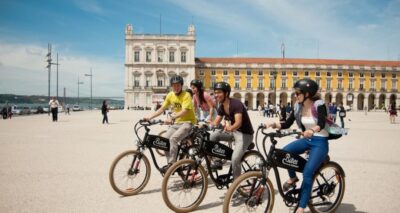
From Belém, you transition to the historical center with a stop at Praca do Comercio, also known as Terreiro do Paco. This square is big—among the largest in Europe—and it’s shaped by a major transformation in Lisbon’s layout.
The guide connects the dots: before the 1755 earthquake, this area included the royal palace and official residence of the Portuguese kings for centuries. After the earthquake, Marquis of Pombal planned the rebuilding, with this square as the crown. That’s exactly why this stop is valuable on a guided day. You’re not just admiring arches; you’re understanding how power, politics, and disaster changed the city plan.
You get a quick moment here (about 15 minutes), but it’s enough to stand in the space, take in the scale, and appreciate why the Baixa feels more structured than Alfama.
Santa Luzia and the views that keep the pace honest
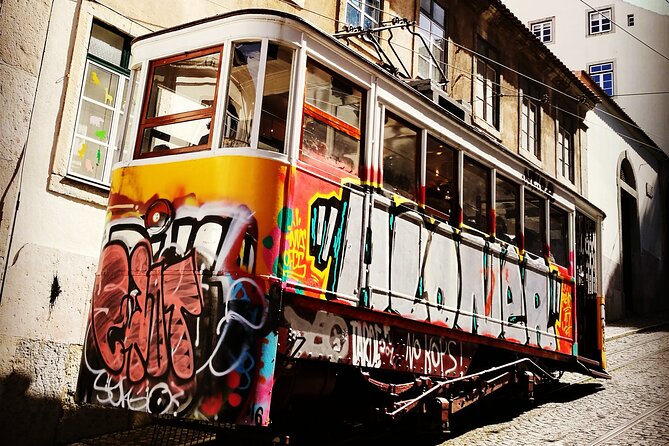
To keep you from feeling like the day is only “buildings, then buildings,” you get Miradouro de Santa Luzia. This viewpoint is described as romantic for a reason: it frames rooftops, churches, and the Tagus boats crossing daily.
What I like about viewpoints on a structured tour is that they reset your body. After walking, you can look up, breathe, and take photos without feeling like you’ve stopped wasting time. The tour points out the tile panels and how they help you identify landmarks in the older parts of town, which makes the view more than scenery.
You’ll also notice that this is the kind of viewpoint that changes with time of day. If you can, linger long enough to take one wide shot, then shift slightly for a second angle.
Lisbon Cathedral and the São Vicente-to-Sé religious layers
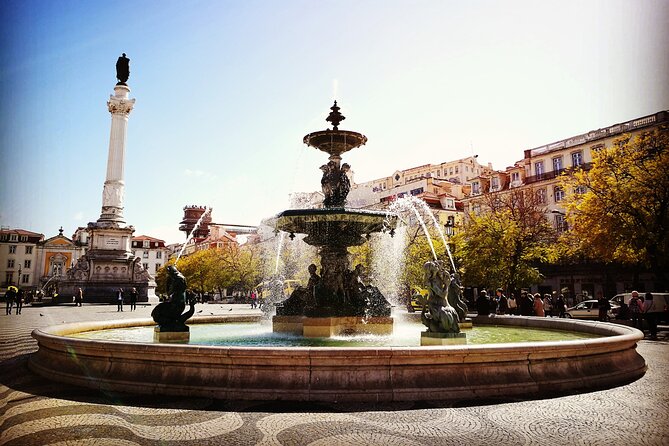
Lisbon Cathedral (Santa Maria Maior Basilica, also called the Sé) is the oldest church in Lisbon in the sense of the 12th-century rebuild after the city was recaptured from the Moors. The tour’s framing helps you understand the deeper layer beneath the cathedral: it was built under or around a former mosque, with earlier Christian temple traces found through archaeological work.
Important practical note: cathedral admission isn’t included. So if you want to go inside, you’ll be making that decision separately from the guided portion. Still, even from the outside and through the guide’s explanation, the cathedral stop gives you a strong sense of continuity and change across centuries.
This is the point in the day where you’ll start appreciating how often Lisbon rebuilds. Earthquake damage, religious shifts, and political change all show up in the architecture, and the guide makes sure you don’t miss those connections.
Alfama: steep lanes, surviving façades, and old Lisbon atmosphere
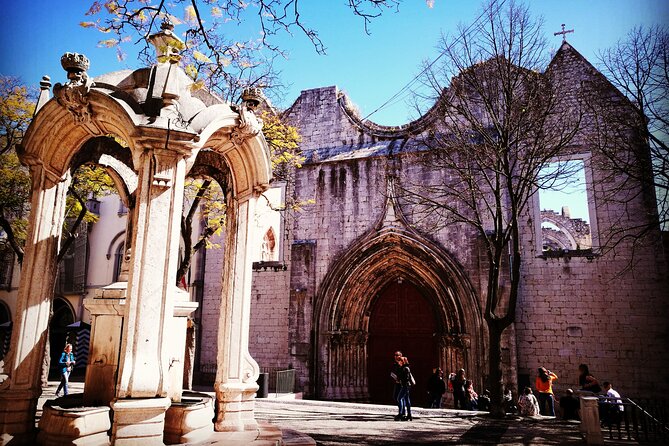
Then you hit Alfama, and the feel shifts instantly. Alfama is the historic neighborhood between the castle and the river. The tour gives you a focused walk through the steep web of streets and alleys, with time to absorb the atmosphere rather than speed past it.
You’re told why Alfama’s streets and houses look the way they do: many façades withstood the 1755 earthquake, which is a major reason the neighborhood feels like it preserves older Lisbon. That’s key context. When you’re standing in a narrow lane with a viewpoint above, it’s easy to think it’s just charming. Here, it becomes something more: survival.
If you’re sensitive to steep steps, take your time. The tour sets aside about 40 minutes for Alfama, which is good, because you can stop for a photo and still keep the group moving.
Casa dos Bicos: the diamond façade you can’t miss
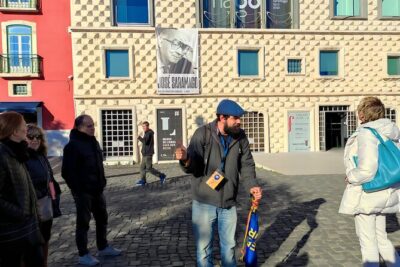
Right after Alfama, you get Casa dos Bicos. It’s short, about 10 minutes, but it’s unforgettable in the way its façade is cladded in diamond-shaped stone points—called bicos. The detail is visible even before you fully understand the story, which is great for photo lovers who want a quick win.
This stop is also a reminder of how much the earthquake affected buildings. The last two floors disappeared in 1755 and were restored later. So again, you’re not only seeing style—you’re seeing what survived and what changed.
Admission isn’t included, so you’ll likely focus on the exterior and the guide’s context rather than going deep into museum-like spaces.
Arco do Triunfo and Rua Augusta: the walk returns to street level
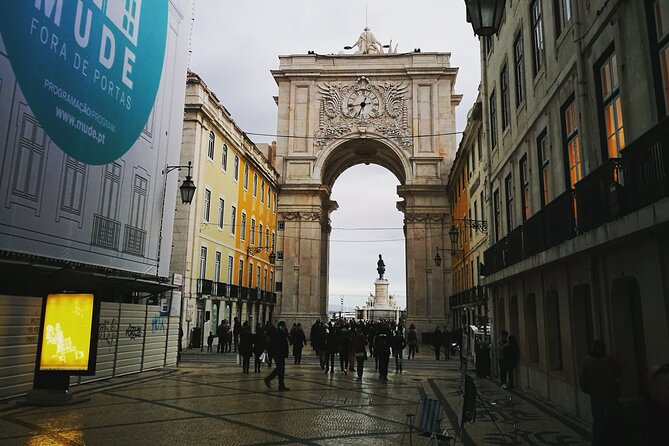
Arco do Triunfo is a surprise in a good way. It works as an actual entrance portal into Baixa Pombalina, and the tour includes admission here. The allegorical ensemble on top, plus the statues below, turns Lisbon’s identity into a kind of outdoor program. You’ll hear how Vasco da Gama, Marquês de Pombal, and other figures are represented, plus the Rivers Tejo and Douro.
Then you walk Rua Augusta, which connects Praça do Comércio to Praça do Rossio. It’s the liveliest central street and is pedestrian now. The guide points out why it feels concentrated: it’s lined with commerce, street artists, craftsmen, and street vendors filling the space with constant motion. It’s a good break from churches and viewpoints, and it’s a strong place to just experience Lisbon at human speed.
Rossio, Church of Carmo, and São Roque’s interior power
Next comes Praça Dom Pedro IV (Rossio), Lisbon’s public-history square. The guide’s background gives the area more weight: it was a heart for fairs and festivals, and it also had an espionage-heavy World War II chapter. Even if you don’t stop long, Rossio helps you feel the city’s social life beyond monuments.
The tour includes Convento do Carmo as a major Gothic presence, but the focus is the church’s story—especially how the entire ceiling disappeared during the 1755 earthquake and how fire consumed much after. That’s one of those stops where the damage becomes part of the meaning.
Then you move to Igreja de São Roque. Here the key value is contrast. The church’s exterior is simple in a way that surprises you. But inside, the tour explains it contains one of the most valuable chapels collections on the planet. It also survived the earthquake almost intact, which is a major reason it feels like a time capsule compared to other damaged sites.
The finish: Miradouro de São Pedro de Alcântara
To close, you end at Miradouro São Pedro de Alcântara. This is a classic Lisbon viewpoint with tilework and a view that helps you orient across the city. The guide points out landmarks you can identify in the distance, including Graça Church, São Jorge Castle, and the Cathedral.
Ending at a viewpoint is smart because it works like a final chapter. Your afternoon and late-day walking gets tied together visually. It also helps you transition smoothly to wherever you’re heading next, since the tour’s ending point is close to the viewpoint area.
Price and what makes it solid value around $110
At about $110.06 per person for a roughly 9-hour day, this tour isn’t the cheapest option—but it is the kind of value that comes from what’s included and what’s handled for you.
Here’s where the money usually makes sense:
- You get a guide for the full day, not just a short orientation.
- Key monument admissions are included, including Torre de Belém, the Jerónimos monastery cloisters, and Arco do Triunfo.
- You also get the Original Pastel de Belém, which is a genuinely Lisbon-specific food anchor.
- Lunch isn’t included, but the tour gives you a structured lunch break at Time Out Market, which saves you from guessing when you’re hungry and tired.
If you were trying to replicate this on your own, the “hidden cost” is time and planning. Lisbon’s architecture and history layers are easy to miss if you’re wandering without context. This tour gives you the story glue, so the sites feel connected.
Who should book this tour (and who might not)
Book it if you want Lisbon’s highlights in one day and you care about history that connects the dots. It’s especially good for first-timers who don’t want to bounce between isolated sights or spend the day in decision mode.
It’s also a good fit if you like guided storytelling. The reviews strongly highlight guides who keep energy high and explain details clearly, with many named like João, Teresa, Diego, and Helena for their history lesson style.
You might consider a different format if you prefer a slower pace or you struggle with steep walking. Since Alfama is part of the route, comfortable shoes aren’t a suggestion. They’re your best friend.
Should you book?
I’d book this tour if you want a guided day that genuinely links Belém, the rebuilt Baixa, and Alfama into one coherent Lisbon narrative. The included monument access plus the Original Pastel de Belém and the built-in lunch plan at Time Out Market are practical wins.
If your goal is only a couple of the most famous photos, you might not need a full-day itinerary. But if you want to leave Lisbon feeling like you understand why the city looks the way it does, this is a strong bet.
FAQ
How long is the Full Day Lisbon Tour Baixa Chiado with Alfama and Belem?
It’s approximately 9 hours.
What time does the tour start?
The start time is 9:00 am.
Where is the meeting point?
The tour meets at Avenida Brasília, Av. Brasília, 1400-038 Lisboa, Portugal.
Where does the tour end?
It ends near R. de São Pedro de Alcântara 85, 1200-089 Lisboa, Portugal, close to the São Pedro de Alcântara viewpoint.
What is the group size?
The tour has a maximum of 20 travelers.
Is lunch included?
Lunch is not included. You get a 90-minute lunch break at Time Out Market Lisboa, and you choose and pay for your own meal.
Is Pastéis de Belém included?
Yes. The Original Pastel de Belém is included.
Which attractions have admission included?
Admission is included for Torre de Belém, Mosteiro dos Jerónimos, and Arco do Triunfo. Some other sights on the route are listed as admission not included.
Does the tour require good weather?
Yes. The tour requires good weather, and if it’s canceled due to poor weather, you’ll be offered a different date or a full refund.
How much does the tour cost, and can I cancel?
The price is $110.06 per person, and free cancellation is available up to 24 hours in advance for a full refund.
More Tour Reviews in Lisbon
- Lisbon City Center Tour – The Unmissable Lisbon★ 5.0 · 22,234 reviews
- Lisbon: Sintra, Pena, Regaleira, Cabo da Roca & Cascais★ 4.7 · 19,656 reviews
- Lisbon Card: 24, 48, or 72-Hour Pass★ 4.5 · 17,944 reviews
- Lisbon: Jerónimos Monastery Entrance Ticket★ 4.1 · 14,164 reviews
- Lisbon: History, Stories and Lifestyle Walking Tour★ 4.8 · 10,902 reviews
Keep Wandering Old Alfama
- Alfama Tour in Lisbon Old Town★ 5.0 · 4,936 reviews
- Private Lisbon Sightseeing Tuk-Tuk Tour: Alfama, Belém & More★ 5.0 · 4,277 reviews
- Lisbon: Hills, Alfama, and Mouraria Tour by Electric Bike★ 4.8 · 3,438 reviews
- Best of Lisbon Walking Tour: Rossio, Chiado & Alfama★ 4.9 · 2,700 reviews
- Lisbon: Baixa District Food Tour with Dinner and Drinks★ 4.9 · 1,997 reviews
Belém: More Monuments and Pastéis
- Lisbon: Jerónimos Monastery Entrance Ticket★ 4.1 · 14,164 reviews
- Private Lisbon Sightseeing Tuk-Tuk Tour: Alfama, Belém & More★ 5.0 · 4,277 reviews
- Age of Discoveries Walking Tour in Belém★ 5.0 · 1,513 reviews
- Lisbon: Bike Tour from Lisbon to Belém + Liquor & Pastry★ 4.7 · 688 reviews
- Bike Tours Lisbon – Center of Lisbon to Belém★ 5.0 · 686 reviews
Just in: fresh Lisbon reviews from the team




Belém Tours, compared.
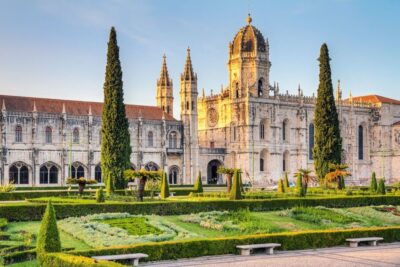 ★ 4.1Jerónimos Monastery Entrance TicketFrom $2114,164 reviews
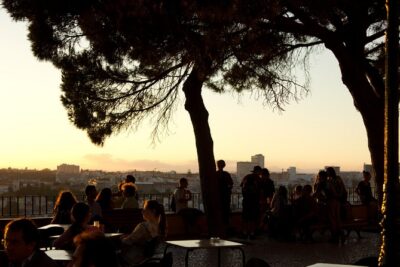 ★ 5.0Private Lisbon Sightseeing Tuk-Tuk Tour: Alfama, Belém & MoreFrom $524,277 reviews
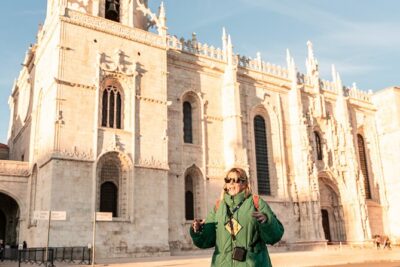 ★ 5.0Age of Discoveries Walking Tour in BelémFrom $31,513 reviews
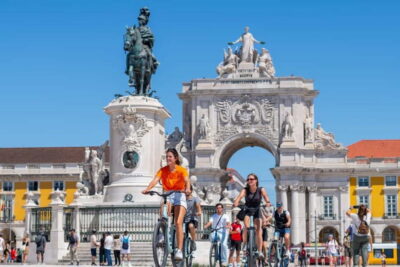 ★ 4.7Bike Tour from Lisbon to Belém + Liquor & PastryFrom $46688 reviews
 ★ 5.0Bike Tours Lisbon – Center of Lisbon to BelémFrom $19686 reviews
 ★ 3.7Jerónimos Monastery E-Ticket and Audio GuideFrom $33660 reviews
 ★ 4.9Belém Walking Tour with Jerónimos Monastery TicketFrom $69637 reviews
 ★ 4.0MAAT Gallery and MAAT Central Entry TicketsFrom $17559 reviews
Browse the lists this tour appears in