
Reviewed · ALFAMA & OLD TOWN TOURS
Walk Lisbon Like a Local: Bairro Alto & Downtown Experience
Yellow trams make this walk feel like cinema. This 2-hour stretch through Bairro Alto and downtown turns Lisbon’s streets into a live story, with artworks along the way, neighborhood history, and those iconic yellow tram moments rolling past.
I especially love two things: the street-level history (earthquake recovery and famous monuments explained in plain language) and the way the guide keeps you moving through real corners of the city, not just photo stops. A small drawback: you’re on your feet for the full walk on cobbles and streets that can feel steep, so wear grippy shoes and don’t expect an easy stroll.
If you’re lucky with your guide, it shows. Past leaders named Vivian and Vitor have been described as professional, friendly, and especially good at making the tour interactive, so you’re not just listening while you pass by.
In This Review
- Key highlights you will remember
- Rossio Square meetup: where the walk starts
- Santa Justa Lift: a landmark you learn to read
- Igreja de São Roque: history on foot, not behind ticket lines
- Bairro Alto: cobbled streets, street art, and yellow-tram timing
- Chiado’s downtown stretch: contrast makes the story clearer
- Earthquake and rebuilding: why the city looks the way it does
- Food talk (without a food bill): petiscos and sweets
- The nightlife vibe, even during the day
- Artworks and fun facts: how the walk stays interesting
- Ending at the miradouro viewpoint near Santa Catarina
- Price and value: what you’re really paying for
- Who should book this Bairro Alto and Downtown walk
- Should you book this walking tour?
- FAQ
- How long is the tour?
- Where does the tour start?
- What language is the tour in?
- Is Santa Justa elevator entry included?
- Are food and drinks included?
- Is the tour suitable for people with mobility impairments?
Key highlights you will remember
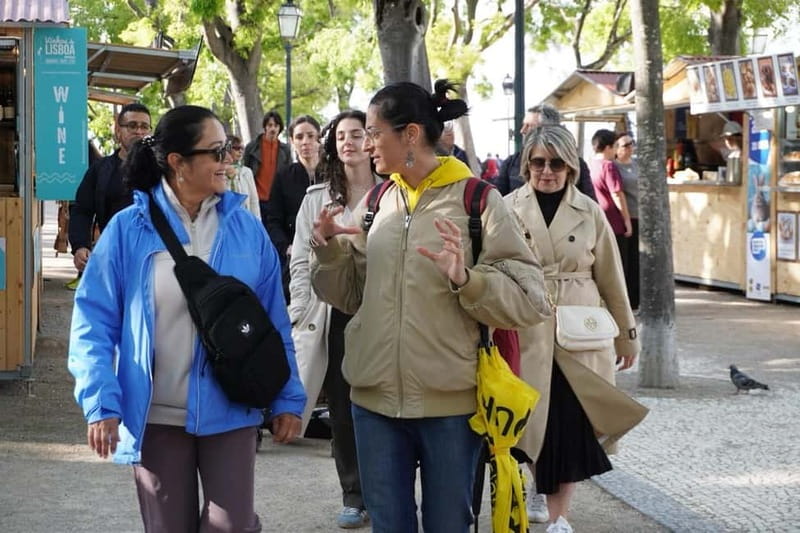
- Iconic yellow trams nearby: you’ll time your lookouts as the street traffic and rails cut across the scenery
- Art along the route: you get coached on what you’re seeing, not just where to stand
- Earthquake stories and monument context: Lisbon’s past becomes something you can connect to buildings around you
- Chiado’s downtown walk: prosperous central Lisbon gives you a contrast to the hills and nightlife energy
- Finish at a major miradouro area: you end with a viewpoint payoff so the walk has a satisfying wrap-up
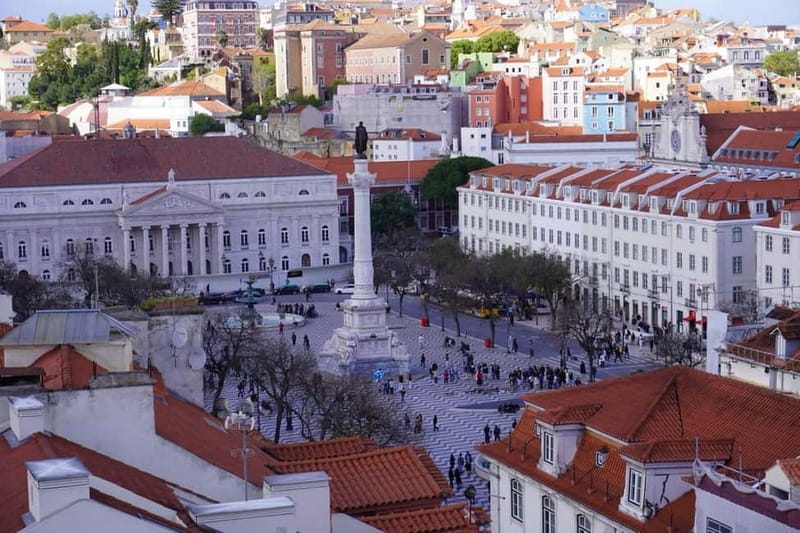
Rossio Square meetup: where the walk starts
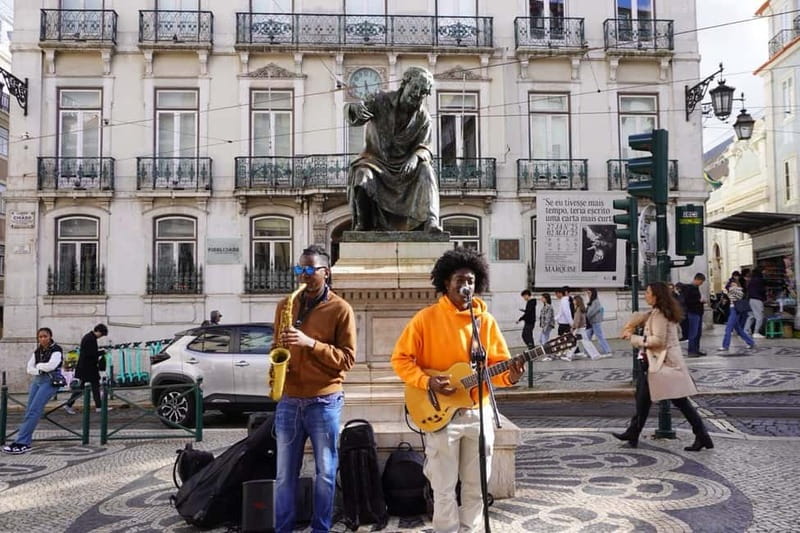
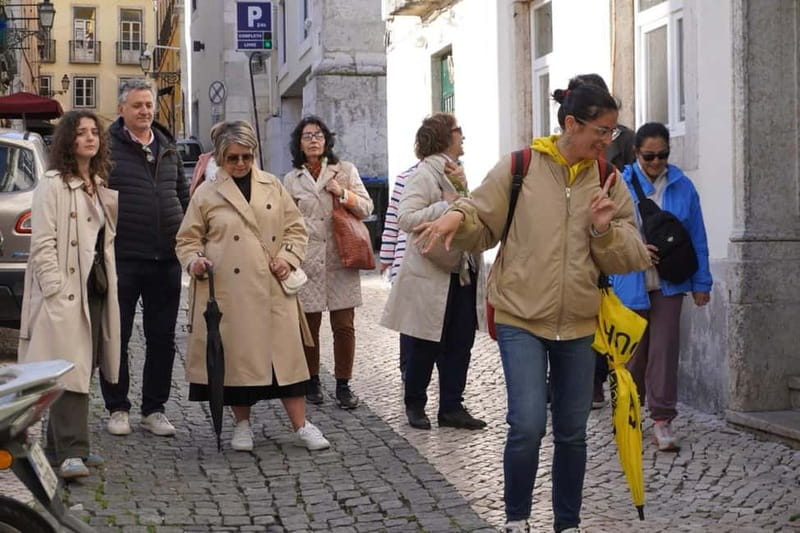
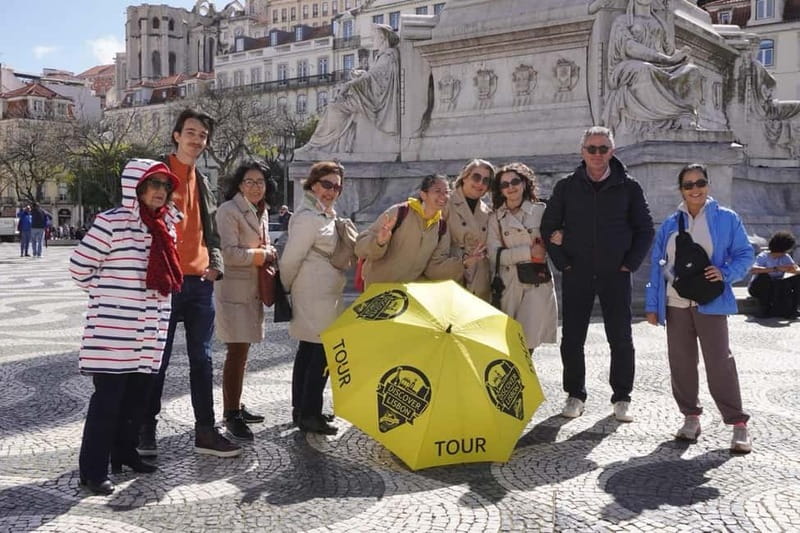
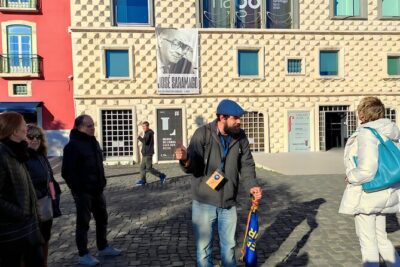
The tour meets in the middle of Rossio Square, near the statue. You’ll spot the group by a yellow hoodie or T-shirt and a yellow umbrella.
This matters because Rossio is busy, and you don’t want to burn time figuring out where your tour actually begins. Once you’re with your guide, you’ll quickly get a sense of the route and the pace: this is a walk with stories, stops, and quick look-and-learn moments.
Deeper into Alfama's lanes and miradouros
- Alfama Tour in Lisbon Old Town
★ 5.0 · 4,936 reviews - Private Lisbon Sightseeing Tuk-Tuk Tour: Alfama, Belém & More
★ 5.0 · 4,277 reviews - Lisbon: Hills, Alfama, and Mouraria Tour by Electric Bike
★ 4.8 · 3,438 reviews - Best of Lisbon Walking Tour: Rossio, Chiado & Alfama
★ 4.9 · 2,700 reviews
Santa Justa Lift: a landmark you learn to read
You’ll pass the Santa Justa Lift area as part of the guided route. Even when you don’t go inside, the value here is context: your guide ties the monument into broader Lisbon themes, including how famous structures fit into the city’s identity.
One practical note: elevator entry is not included. So if your plan includes riding it, you’ll need to arrange that separately. For most people, though, the walk benefits more from keeping time and using the lift stop as an anchor for the history the guide is sharing.
What to watch for: don’t rush. Use this moment to orient yourself—how Lisbon’s landmarks relate to the streets around them—because that same “reading the city” skill makes Bairro Alto far more meaningful later.
Igreja de São Roque: history on foot, not behind ticket lines
Next comes Igreja de São Roque, where the tone shifts from monument-as-picture to monument-as-context. Your guide’s job is to connect what you’re seeing with what Lisbon has been through and what it chose to preserve.
Since entry details aren’t listed as included here, treat this stop as part of the learning stop, not a long indoor visit. The payoff is that you’ll come away knowing why this church matters within the bigger story of the neighborhoods you’re walking through.
Bairro Alto: cobbled streets, street art, and yellow-tram timing
Now you get to the heart of the experience: Bairro Alto. This is one of Lisbon’s most character-filled neighborhoods—winding, cobbled streets, colorful facades, and lots going on. Even in daytime, the street life and creative touches are visible.
Your guide has a few tricks that make this section click:
- You’re not just walking uphill—you’re learning why the area feels the way it does.
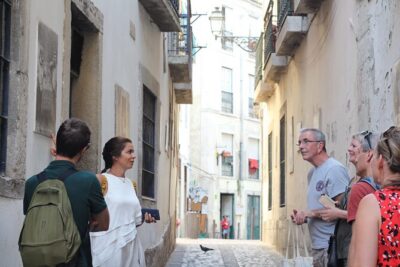
- You’ll notice artworks along the route, and you’ll get help understanding what you’re looking at.
- You’ll get coached on those quick yellow-tram moments when the rails and streets intersect the view.
Possible drawback to keep in mind: Bairro Alto’s streets are not flat. If you’re sensitive to steep grades or you haven’t worn shoes with good traction, pace yourself from the start rather than waiting until you’re halfway up.
Worth a look before you lock anything else in around Lisbon:


Chiado’s downtown stretch: contrast makes the story clearer
After Bairro Alto’s hill energy, you’ll walk into the more prosperous downtown area of Chiado. This contrast is underrated. When you see Chiado after Bairro Alto, Lisbon’s “two moods” become obvious: creativity and nightlife energy in one direction, refinement and central city flow in the other.
Why this is valuable: it helps you understand Lisbon as a place with layers, not a single postcard. The tour doesn’t treat neighborhoods as isolated stops. Your guide uses the walk to show how different parts of the city reflect different chapters of Lisbon’s culture.
You’ll also keep hearing the same theme in different forms: tradition and creativity side by side. That’s what makes Chiado more than a transition zone—it turns into a breather where you can absorb Lisbon’s rhythm after the climbs.
Earthquake and rebuilding: why the city looks the way it does
A big part of the tour’s appeal is that you’re not only shown sights—you’re given explanation. The included content specifically includes stories about the earthquake and the destructions in the past, plus the history of famous monuments.
This is where a guided walk earns its keep. Without context, many Lisbon buildings and streets are just scenery. With it, you start connecting lines: why certain areas feel shaped by rebuilding, and why monuments show up where they do.
If you like history, this section is one of the best reasons to book this kind of tour. If you’re not a “history person,” don’t worry. The guide’s tone is meant to be understandable and conversational, not a lecture—something reflected in how past guests described the experience as interactive and easy to follow.
Food talk (without a food bill): petiscos and sweets
Bairro Alto is a food lover’s neighborhood, and the guide includes that angle. You’ll discuss traditional petiscos (Portuguese tapas) and classic snack-style eating, plus pastries that people find hard to resist.
Here’s the important detail for your planning: food and drinks are not included. So you’ll get recommendations and conversation, not a built-in meal. That can actually be a win. It keeps the tour moving while you still learn what to look for later when you’re hungry and ready to choose.
Practical tip: if you think you might want a tasting after the tour, note where the guide points out likely spots. The tour is brief, and having a couple of starting ideas can save you from wandering hungry.
The nightlife vibe, even during the day
Bairro Alto is famous for its nightlife, but the tour helps you see why it works even when the crowds thin out. You’ll notice music drifting from balconies, colorful facades, and street art that hints at the energy you’ll feel later.
This part is more than atmosphere. It shapes how you interpret everything else: bars and restaurants aren’t randomly placed; they fit the neighborhood’s rhythm. When the guide connects those dots, Lisbon stops being just beautiful and starts feeling understandable.
Artworks and fun facts: how the walk stays interesting
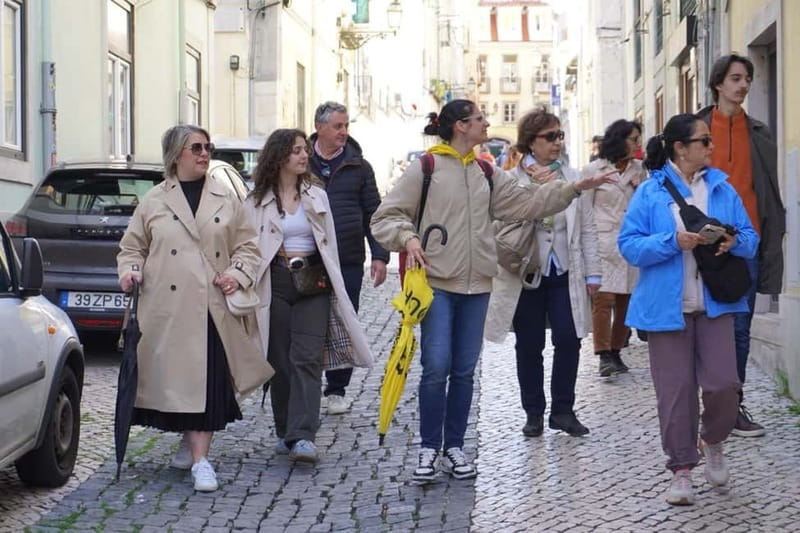
The tour includes fun facts and “look again” details, and that’s key for a 2-hour walking experience. The best guided walks prevent boredom by constantly changing the mental task: look at street art, then a monument connection, then a viewpoint payoff.
Past guests praised guides like Vivian for being professional and friendly with detailed, interesting explanations, and praised Vitor for explaining things well and keeping things interactive. If your guide has that same style, you’ll probably enjoy the tour more than a standard highlights walk.
Ending at the miradouro viewpoint near Santa Catarina
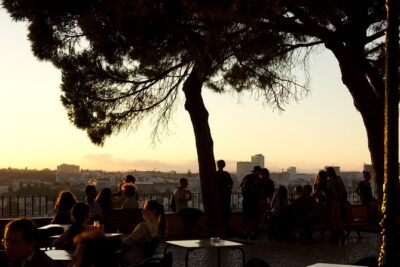
You finish at R. de Santa Catarina, 1200-262 Lisboa. This area lines up with one of Lisbon’s great viewpoint experiences, and it’s a smart way to end a walk because it gives you a final reward: city views.
What to do at the end: take your time. The goal isn’t to rush out for the next activity. Use the viewpoint to connect the neighborhoods you just walked—Chiado’s central energy below, Bairro Alto’s hill streets behind, and the way Lisbon stacks layers.
This ending also makes it easier to plan your next steps. If you’re staying for dinner or a drink nearby, your route is already aligned with what the neighborhood offers.
Price and value: what you’re really paying for
The listing shows a very low base price (given as $1.18 per person), but the tour description makes it clear the real payment is pay what you think it’s worth. It also notes most guests typically contribute 10–20€.
So what’s the value here? You’re paying for:
- A guided structure over a real neighborhood route (not just “walk around and hope”)
- Context about monuments and the earthquake story
- Direction on what to notice (artworks, street scenes, tram moments)
- An ending at a miradouro area so you don’t finish with nothing but sore feet
For me, the best way to decide is to ask: do you want Lisbon with meaning for a couple of hours? If yes, this model makes sense because you can match your payment to your experience quality. If you’re the type who prefers solo pacing with an app, you might feel you could do it cheaper on your own—especially since food and elevator entry aren’t included.
My practical recommendation: if the guide’s explanations feel on point, plan to pay in the typical 10–20€ range. The tour is short, but it packs in several guided learning beats and a viewpoint finish.
Who should book this Bairro Alto and Downtown walk
Book it if you want:
- A guided way to connect Lisbon’s neighborhoods, monuments, and neighborhood vibe
- A walk that includes history without making you sit still for long
- Street-level storytelling, artworks, and a viewpoint finish
Skip it if:
- You need step-free routes or have mobility limitations. The tour is not suitable for people with mobility impairments.
- You travel with luggage, large bags, or a stroller. Baby strollers, luggage/large bags, and scooters are not allowed.
- You’re hoping for a slow, flat stroll. This is a walking tour through cobbled streets and steep sections.
If you’re traveling with kids, note that strollers aren’t permitted, so plan accordingly. And if you hate sun, bring sunscreen—sun exposure is real during short, active city walks.
Should you book this walking tour?
If your ideal Lisbon day is part sightseeing, part story, and part “I want to understand why this place feels like it does,” then yes, I’d book it. You’re getting a tight route from Rossio into Bairro Alto, an educational connection to major monuments and Lisbon’s earthquake recovery story, and a confident finish at the Santa Catarina viewpoint area.
The only reason not to book is if you strongly prefer flat, low-effort walking or you need accessibility accommodations. Otherwise, this is one of those 2-hour experiences that pays you back immediately: you’ll leave with sharper eyes, better context, and a viewpoint payoff that makes the walk feel complete.
FAQ
How long is the tour?
It lasts 2 hours.
Where does the tour start?
It starts at Rossio Square. The meeting spot is in the middle of the square near the statue, and the guide will be wearing a yellow hoodie or T-shirt and holding a yellow umbrella.
What language is the tour in?
The live tour guide speaks English.
Is Santa Justa elevator entry included?
No. Entry to the Santa Justa elevator is not included.
Are food and drinks included?
No. Food and drinks are not included.
Is the tour suitable for people with mobility impairments?
No. It is not suitable for people with mobility impairments.
More Walking Tours in Lisbon
- Lisbon: History, Stories and Lifestyle Walking Tour★ 4.8 · 10,902 reviews
- Best of Lisbon Small-Group Guided Walking Tour★ 5.0 · 4,869 reviews
- Lisbon: Food and Wine Small Group Walking Tour★ 4.9 · 4,082 reviews
- Best of Lisbon Walking Tour: Rossio, Chiado & Alfama★ 4.9 · 2,700 reviews
- Age of Discoveries Walking Tour in Belém★ 5.0 · 1,513 reviews
More Tour Reviews in Lisbon
- Lisbon City Center Tour – The Unmissable Lisbon★ 5.0 · 22,234 reviews
- Lisbon: Sintra, Pena, Regaleira, Cabo da Roca & Cascais★ 4.7 · 19,656 reviews
- Lisbon Card: 24, 48, or 72-Hour Pass★ 4.5 · 17,944 reviews
- Lisbon: Jerónimos Monastery Entrance Ticket★ 4.1 · 14,164 reviews
- Lisbon: History, Stories and Lifestyle Walking Tour★ 4.8 · 10,902 reviews
Keep Wandering Old Alfama
- Alfama Tour in Lisbon Old Town★ 5.0 · 4,936 reviews
- Private Lisbon Sightseeing Tuk-Tuk Tour: Alfama, Belém & More★ 5.0 · 4,277 reviews
- Lisbon: Hills, Alfama, and Mouraria Tour by Electric Bike★ 4.8 · 3,438 reviews
- Best of Lisbon Walking Tour: Rossio, Chiado & Alfama★ 4.9 · 2,700 reviews
- Lisbon: Baixa District Food Tour with Dinner and Drinks★ 4.9 · 1,997 reviews
Just in: fresh Lisbon reviews from the team





Alfama & Old Town Tours, compared.
 ★ 5.0Alfama Tour in Lisbon Old TownFrom $34,936 reviews
 ★ 5.0Private Lisbon Sightseeing Tuk-Tuk Tour: Alfama, Belém & MoreFrom $524,277 reviews
 ★ 4.8Hills, Alfama, and Mouraria Tour by Electric BikeFrom $253,438 reviews
 ★ 4.9Best of Lisbon Walking Tour: Rossio, Chiado & AlfamaFrom $232,700 reviews
 ★ 4.9Baixa District Food Tour with Dinner and DrinksFrom $931,997 reviews
 ★ 5.0Lisbon Small-Group Food Tour with 18 Tastings in Alfama DistrictFrom $1261,967 reviews
 ★ 4.5Lisbon E-Bike Tour Commerce Square, Mouraria and AlfamaFrom $301,688 reviews
 ★ 5.0Old Town TukTuk Tour and Scenic Viewpoints in AlfamaFrom $35974 reviews
Browse the lists this tour appears in