
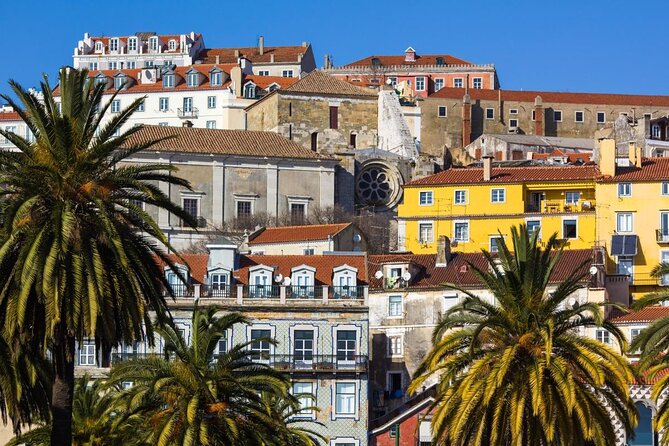
Reviewed · ALFAMA & OLD TOWN TOURS
Small-Group Alfama Walking Tour
Lisbon has a way of rewarding slow steps. This small-group Alfama walking tour strings together viewpoints, old churches, and neighborhood stories in about three hours.
I really like that it starts with big panoramic context at Miradouro da Graça, so Alfama clicks in your mind fast. I also like the pacing: short stops, plenty of time to look around, and a guide who keeps the history tied to daily life.
One thing to plan for: the start area is hilly, and there are steps. If walking is hard for you, this isn’t the easiest choice, even if much of the route trends downhill.
In This Review
- Key highlights worth circling
- Alfama, explained with real streets and real stops
- Miradouro da Graça: the big view start that makes everything click
- Igreja & Convento da Graça plus the terrace-studded street walk
- Igreja de São Vicente de Fora: Lisbon’s patron-saint connection
- Feira da Ladra on the right days: browsing without the stress
- National Pantheon exterior: a quick hit of scale
- Down into Alfama: viewpoints, everyday life, and short questions
- Miradouro de Santo Estêvão and the Fado connection
- Igreja de São Miguel and the 1755 earthquake survivor angle
- Lisbon Cathedral and Igreja de Santo António: where to spend your inside time
- Small-group size and guides like Andriy and Rui Fernandes
- Price check: is $39.50 worth it?
- Practical tips for comfortable walking in Alfama
- Should you book this Alfama walking tour?
- FAQ
- How long is the Small-Group Alfama Walking Tour?
- Where does the tour start and end?
- What does it cost?
- What language is the tour offered in?
- Is it a small group?
- Are tickets and entry included?
- When does Feira da Ladra happen?
- What happens if the weather is bad?
- Can I cancel for a full refund?
Key highlights worth circling
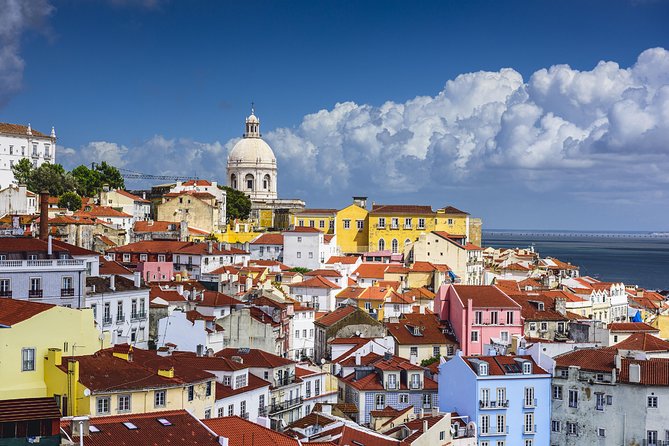
- Miradouro da Graça view: Castle of Saint George, Mouraria, and the Tagus in one sweep
- Miradouro Nosso Senhora do Monte: another classic lookout angle over Lisbon
- Feira da Ladra: one of Lisbon’s oldest flea markets, timed for Tuesdays and Saturdays
- Augustinian history at Igreja & Convento da Graça: monks until 1834, then a new chapter
- Alfama’s everyday streets: not just sights, but how the neighborhood lives
- Small group up to 8: easier questions, more guide attention, less time waiting
Alfama, explained with real streets and real stops
Alfama is Lisbon at its most intimate. Instead of wide avenues and quick photo stops, you move through narrow lanes where the city feels lived-in. The tour is built for that: lots of short “look here, notice this” moments, then a story that helps you read what you’re seeing.
What makes this walk especially workable is the structure. You’re not wandering at random. You’re guided from viewpoint to church to market to neighborhood center, with enough time at each place to actually take it in.
And yes, you’ll walk past places that make Lisbon look like a postcard—but you’ll also hear what those places meant to people here, long before the crowds.
Deeper into Alfama's lanes and miradouros
- Alfama Tour in Lisbon Old Town
★ 5.0 · 4,936 reviews - Private Lisbon Sightseeing Tuk-Tuk Tour: Alfama, Belém & More
★ 5.0 · 4,277 reviews - Lisbon: Hills, Alfama, and Mouraria Tour by Electric Bike
★ 4.8 · 3,438 reviews - Best of Lisbon Walking Tour: Rossio, Chiado & Alfama
★ 4.9 · 2,700 reviews
Miradouro da Graça: the big view start that makes everything click
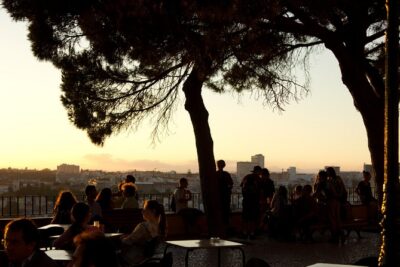
You meet at Miradouro da Graça (Calçada da Graça). It’s a strong starting point because it gives you context immediately: you can see Lisbon’s downtown, the Castle of Saint George, parts of Mouraria, and the Tagus river.
This viewpoint matters more than it sounds. Alfama sits on slopes, so it’s easy to feel like you’re just climbing and descending. Starting high lets you understand the geography, so the route feels logical instead of random.
From there, the tour begins after a short intro. The pace is designed for a walking tour rhythm: enough guidance to keep you oriented, with time to enjoy the view before heading into the older streets below.
Igreja & Convento da Graça plus the terrace-studded street walk
Your next stop focuses on one of Lisbon’s older religious sites: Igreja & Convento da Graça. You’ll admire a historic church and convent linked with the Augustinian monks until 1834. That date gives you a clean historical marker for understanding how the city’s institutions changed.
From there, you’ll move into a quieter, more charming part of the neighborhood. Expect a little street lined with houses that have large terraces decorated with flowers like buganvilia. It’s not only pretty; it also shows how daily life is built into the architecture here—your eyes start noticing balconies, thresholds, and how people use the space.
The tour also brings in a topic you might not expect on a basic walking route: the history of trade union activism in Lisbon. That kind of stop is where a guide adds real value. You’re not just collecting landmarks; you’re learning how ordinary people organized and pushed for change.
Igreja de São Vicente de Fora: Lisbon’s patron-saint connection
Next comes Igreja de São Vicente de Fora, tied to Lisbon’s patron saint—Saint Vincent the Deacon. The key benefit here is interpretation. A quick exterior-and-context moment can still be satisfying if the guide helps you connect what you see to why it mattered.
This is one of those stops that works well in a tour like this because it’s brief but specific. You’re not getting stuck in one place for too long, yet you’re still building a timeline of Lisbon’s spiritual and civic identity.
If you love churches, you’ll enjoy how this tour keeps the meaning attached to the building rather than turning every stop into a separate lecture.
Lisbon at walking pace, a few more routes


Feira da Ladra on the right days: browsing without the stress
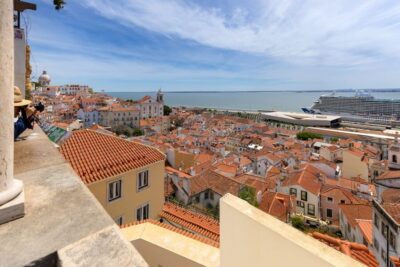
Then you hit Feira da Ladra, an older flea market in Lisbon known for its unique atmosphere. The timing is built in: it runs on Tuesdays and Saturdays during the tour’s schedule.
This stop is practical. Even if you don’t plan to shop, markets change the tone of a neighborhood. You get sound, motion, and that slightly chaotic-but-fun feel that bigger museums don’t deliver.
The caution is simple: flea market walking can be more crowded and more active than church courtyards. If you’re the type who gets overwhelmed by lots of stalls, treat it like a short stroll, not a full shopping mission—keep your eyes up for signs and street rhythm, not only inside displays.
National Pantheon exterior: a quick hit of scale
After the market scene, you get an exterior view of Portugal’s National Pantheon. The focus here is scale and presence, not entry. It’s a mausoleum for some of the greatest Portuguese men and women, so even from outside it has weight.
Because you’re not paying for entry on this stop, it fits well into a 3-hour walk. You get the feeling of what it represents without turning the tour into a timed ticket line experience.
If you want to go inside later, you’ll at least know what you’re looking for.
Down into Alfama: viewpoints, everyday life, and short questions
Now you spend time in Alfama, focusing on neighborhood life rather than just postcard corners. The tour’s goal here is to help you see what day-to-day existence looks like in a district that’s older than most of the city’s modern layout.
This part is where a small-group format pays off. When you can hear explanations clearly and ask questions easily, you start noticing details you would miss on your own—how streets funnel movement, how locals use entrances, and why some streets feel warmer and more sheltered than others.
You also get a viewpoint element again soon after, but this stretch keeps it grounded. It’s not only “look out.” It’s also “look around and interpret.”
Miradouro de Santo Estêvão and the Fado connection
One of the strongest moments is Miradouro de Santo Estêvão, often described as Alfama’s best viewpoint. Even when you’ve already seen Miradouro da Graça earlier, this one feels different because you’re closer to the neighborhood texture: tiny streets, tighter angles, and views that feel more immediate.
Then the tour includes an exterior visit tied to Fado music. You’re not getting stage time or a performance here. You’re connecting Fado to place—how the neighborhood’s mood and history became part of the music’s identity.
This is a great choice if you’re planning to hear Fado later, because it makes the experience feel less random. You’ll remember why that melancholy, that intimacy, belongs here.
Igreja de São Miguel and the 1755 earthquake survivor angle
Next up is Igreja de São Miguel, again an exterior visit. The big detail is that this church survived the 1755 earthquake. That one fact changes how you look at the building.
You’ll start seeing structures as historical documents. In Lisbon, earthquake history isn’t abstract—it’s written into what’s standing and what had to be rebuilt.
This stop is short, but it gives your walk a sense of resilience. You’re watching the city explain itself through architecture.
Lisbon Cathedral and Igreja de Santo António: where to spend your inside time
Toward the end, the tour brings you to Lisbon Cathedral (Sé de Lisboa) for an interior tour that is not included. That means you can expect guided context, but if you want to go inside fully, you’ll be responsible for entry.
Right after, you visit Church of St. Anthony, built on the site where Saint Anthony was born. This stop is different in tone: it’s both famous and specific, and the religious significance is part of why people keep coming back.
The key for you: plan your energy for the ending. This is also where your legs feel it most. The route is generally downhill after the start, but there can be steps and uneven surfaces throughout Alfama.
Small-group size and guides like Andriy and Rui Fernandes
The tour caps at 8 people, and that’s a big deal in Alfama. Narrow streets create natural bottlenecks. A small group keeps movement smooth, and it gives you more chances to ask questions without feeling like you’re holding everyone up.
From the guide examples, names like Andriy and Rui Fernandes pop up with strong feedback. The theme across them is consistent: they connect history to everyday Portugal and keep the information understandable in real life terms, not textbook-only language.
One practical advantage: small groups usually mean fewer waits. You spend less time standing around while the whole line catches up.
Price check: is $39.50 worth it?
At $39.50 per person for around 3 hours, this is positioned as solid value for three reasons.
First, you’re not only paying for a route. You’re paying for guided interpretation at multiple stops: viewpoints, multiple churches, a historic market setting, and neighborhood context. In Lisbon, that type of local storytelling is usually what turns a walk from photos into understanding.
Second, it’s small-group with a maximum of 8. If you’ve ever done a big-group walking tour and felt invisible, you’ll appreciate the difference here.
Third, lots of the included stops have admission ticket free notes, while a couple are not included (notably the National Pantheon exterior and Lisbon Cathedral interior). That mix keeps the tour affordable without forcing you into paid entries for every single location.
Practical tips for comfortable walking in Alfama
This tour is rated as doable for most people, but the neighborhood is still Lisbon: hills, steps, and uneven streets.
Here’s what helps:
- Wear shoes with grip. Alfama streets can be slick and irregular.
- If you’re meeting in the uphill zone and stairs feel rough, consider taking a taxi or using public transportation to get closer before walking from there.
- Bring a light layer. Viewpoints can get breezy even when the streets are warm.
Also, the tour requires good weather. If the day’s conditions are poor, you’ll be offered a different date or a full refund.
Should you book this Alfama walking tour?
Book it if you want Alfama to make sense fast. The combination of Miradouro da Graça, Graça church/convent history, Feira da Ladra on the right days, and then time in Alfama with viewpoint moments makes for a tour that feels like a guided education, not a hit-and-run checklist.
Don’t book it if your mobility is limited. The meeting area is hilly, there are steps, and the cobbled feel of old neighborhoods can be tiring.
If you’re in Lisbon for a few days and want one dependable, well-paced walk that builds context for the rest of your trip, this is the kind of tour that helps your future self. You’ll wander later and recognize what you saw, and why it mattered.
FAQ
How long is the Small-Group Alfama Walking Tour?
The tour is about 3 hours.
Where does the tour start and end?
It starts at Miradouro da Graça (Calçada da Graça, 1100-265 Lisboa) and ends at Praça do Comércio (1100-148, Portugal).
What does it cost?
The price is $39.50 per person.
What language is the tour offered in?
The tour is offered in English.
Is it a small group?
Yes. The tour has a maximum of 8 travelers.
Are tickets and entry included?
Local taxes, your guide, and the tour are included. Not included: National Pantheon (exterior visit) and Lisbon Cathedral (interior).
When does Feira da Ladra happen?
Feira da Ladra is part of the experience on Tuesdays and Saturdays.
What happens if the weather is bad?
This experience requires good weather. If it’s canceled due to poor weather, you’ll be offered a different date or a full refund.
Can I cancel for a full refund?
Yes. You can cancel up to 24 hours in advance for a full refund. Cancellation within 24 hours of the start time is not refunded.
More Tour Reviews in Lisbon
- Lisbon City Center Tour – The Unmissable Lisbon★ 5.0 · 22,234 reviews
- Lisbon: Sintra, Pena, Regaleira, Cabo da Roca & Cascais★ 4.7 · 19,656 reviews
- Lisbon Card: 24, 48, or 72-Hour Pass★ 4.5 · 17,944 reviews
- Lisbon: Jerónimos Monastery Entrance Ticket★ 4.1 · 14,164 reviews
- Lisbon: History, Stories and Lifestyle Walking Tour★ 4.8 · 10,902 reviews
More of Lisbon, One Hill at a Time
- Lisbon: History, Stories and Lifestyle Walking Tour★ 4.8 · 10,902 reviews
- Best of Lisbon Small-Group Guided Walking Tour★ 5.0 · 4,869 reviews
- Lisbon: Food and Wine Small Group Walking Tour★ 4.9 · 4,082 reviews
- Best of Lisbon Walking Tour: Rossio, Chiado & Alfama★ 4.9 · 2,700 reviews
- Age of Discoveries Walking Tour in Belém★ 5.0 · 1,513 reviews
Keep Wandering Old Alfama
- Alfama Tour in Lisbon Old Town★ 5.0 · 4,936 reviews
- Private Lisbon Sightseeing Tuk-Tuk Tour: Alfama, Belém & More★ 5.0 · 4,277 reviews
- Lisbon: Hills, Alfama, and Mouraria Tour by Electric Bike★ 4.8 · 3,438 reviews
- Best of Lisbon Walking Tour: Rossio, Chiado & Alfama★ 4.9 · 2,700 reviews
- Lisbon: Baixa District Food Tour with Dinner and Drinks★ 4.9 · 1,997 reviews
Just in: fresh Lisbon reviews from the team





Alfama & Old Town Tours, compared.
 ★ 5.0Alfama Tour in Lisbon Old TownFrom $34,936 reviews
 ★ 5.0Private Lisbon Sightseeing Tuk-Tuk Tour: Alfama, Belém & MoreFrom $524,277 reviews
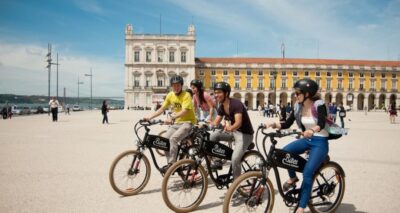 ★ 4.8Hills, Alfama, and Mouraria Tour by Electric BikeFrom $253,438 reviews
 ★ 4.9Best of Lisbon Walking Tour: Rossio, Chiado & AlfamaFrom $232,700 reviews
 ★ 4.9Baixa District Food Tour with Dinner and DrinksFrom $931,997 reviews
 ★ 5.0Lisbon Small-Group Food Tour with 18 Tastings in Alfama DistrictFrom $1261,967 reviews
 ★ 4.5Lisbon E-Bike Tour Commerce Square, Mouraria and AlfamaFrom $301,688 reviews
 ★ 5.0Old Town TukTuk Tour and Scenic Viewpoints in AlfamaFrom $35974 reviews
Browse the lists this tour appears in