
Reviewed · FOOD
Private group Lisbon Roots, Food & Cultural Walk
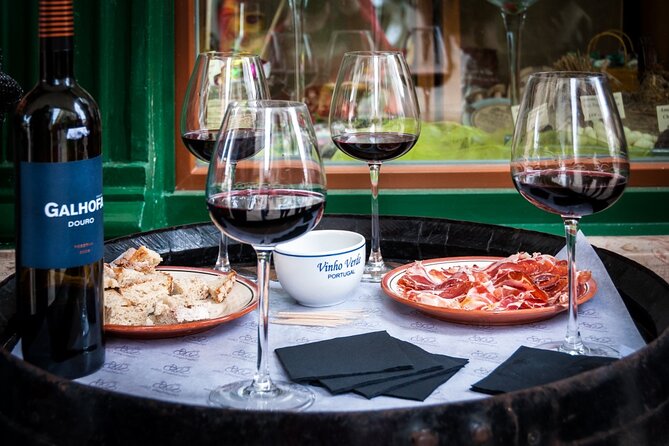
Lisbon gets loud fast. This private food walk keeps it human, with 10+ tastings and wine woven into neighborhood history, from Mouraria’s fado roots to downtown landmarks. I especially liked the way you learn through what you’re eating, plus the local angle on places like Largo de São Domingos and the Chapel of Our Lady of Health. One thing to plan for: it’s a moderate walking tour with uphill stretches on cobblestones and plenty of steps.
You’ll cover about 2 km / 1.2 miles at a steady pace over roughly 3 hours 30 minutes, guided by a local host and tailored to just your group. The tour includes food, snacks, and coffee or tea, with wine and other alcoholic tastings along the way. If you’re expecting a sit-down meal with no walking, this isn’t it—this is an on-your-feet tasting tour.
In This Review
- Key things you’ll notice fast
- Mouraria roots are the whole point
- What you get for the $325.60 price (and why it can feel fair)
- Your legs will earn the tastings (cobblestones, steps, and pacing)
- Stop-by-stop: Lisbon landmarks you’ll actually remember
- Mouraria’s core stories: fado, trade, and a neighborhood identity
- Igreja de São Domingos: scars from earthquakes and fire
- Rossio (King Pedro IV Square): the downtown meeting point with an old heartbeat
- Elevador de Santa Justa: iron architecture with a view payoff
- Mouraria’s Fado monument: a marble tribute to singers and suffering
- Praça da Figueira: Pombaline planning and a former market site
- Martim Moniz: tram 28 territory and the doorway to Mouraria
- A 19th-century theater stop: art that used to be for elites
- Rossio Train Station: Manueline detail without the stuffiness
- Chapel of Our Lady of Health: 1505 origins and a recurring tradition
- Largo de São Domingos: the City of Tolerance mural and cherry brandy
- Memorial for the 1506 Jewish victims: a hard story in public view
- Dietary needs and the small details that matter
- Guides can make or break it, and this group has strong ones
- Who should book this (and who should skip it)
- Should you book the Lisbon Roots, Food & Cultural Walk?
- FAQ
- How long is the Lisbon Roots, Food & Cultural Walk?
- Is this tour private?
- What’s included in the price?
- Are any attraction tickets included?
- Is hotel pickup included?
- Where do we meet, and where does the tour end?
- What physical level should I expect?
- Can the tour accommodate dietary restrictions?
- Is there free cancellation?
Key things you’ll notice fast
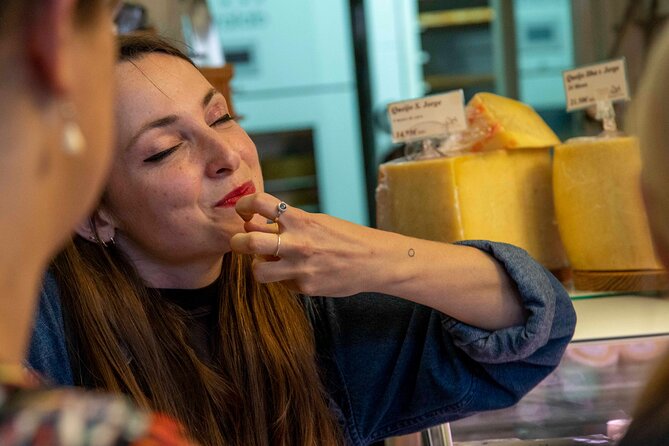
- Mouraria + fado as the backbone: the walk starts in Portugal’s multicultural fado birthplace, then points you to key symbols tied to that music
- More than “just food”: churches, squares, and historic scars (earthquakes and fire) come up naturally between tastings
- Wine is part of the plan: alcoholic beverages are included, not tacked on as an afterthought
- Tickets are mostly simple: most stops are free-entry, but the Elevador de Santa Justa is not included
- Guides bring the city to life: multiple guides on this experience are known for mixing history, humor, and strong Lisbon perspective
Mouraria roots are the whole point
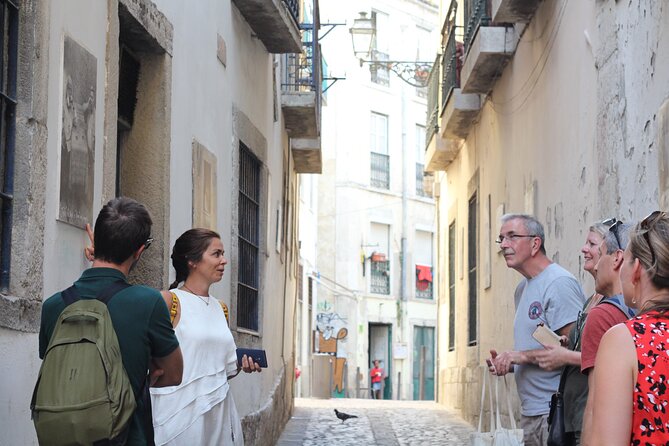
This tour is built around the idea that Lisbon’s food culture isn’t separate from its streets. You start in the historic core and then angle into Mouraria, a neighborhood tied to the origins of fado and known for mixing communities over centuries. That matters because fado isn’t just a soundtrack here. It’s tied to people, hardship, and identity—exactly the kind of story that makes food tastings feel more meaningful than a checklist.
What I like about this approach is how it keeps your brain busy while your stomach is busy too. You’re not only trying things; you’re also learning why those things show up in certain places, how Portuguese flavors were shaped by trade and waves of influence, and how everyday life in Lisbon has shaped its table culture.
And yes, you’ll do real walking. But it’s the kind of walking that helps you orient yourself. You end up with a mental map: squares you can name, churches you can picture, and views you can seek out later.
Worth a look before you lock anything else in around Lisbon:
- Lisbon: History, Stories and Lifestyle Walking Tour
★ 4.8 · 10,902 reviews - Best of Lisbon Small-Group Guided Walking Tour
★ 5.0 · 4,869 reviews - Lisbon: Food and Wine Small Group Walking Tour
★ 4.9 · 4,082 reviews - Best of Lisbon Walking Tour: Rossio, Chiado & Alfama
★ 4.9 · 2,700 reviews
What you get for the $325.60 price (and why it can feel fair)
At $325.60 per person, you’re paying for a private, guided experience with a lot included—especially food and drink. If you’ve done any “cheap” walking tours that mainly hand you a pastry and a sip of something, this is a different setup.
Here’s what’s included:
- Food tasting (multiple stops)
- Wine tasting plus alcoholic beverages
- Snacks
- Coffee and/or tea
- A local guide
That inclusion is the core value. In Lisbon, it’s easy to spend money at every stop you didn’t plan for. Here, tastings and drinks are scheduled, so you know what to expect and you don’t have to keep asking what’s extra.
You’re also not stuck in a big crowd. This is private, so only your group participates. That tends to make it easier for the guide to slow down when a question pops up (and you’ll have questions, because Lisbon keeps dropping story hooks).
Two practical notes on price realism:
- The Elevador de Santa Justa admission is not included, so budget a bit if you want the full tower experience.
- Hotel pickup and drop-off are not included, so you’ll want to get to the meeting point under your own steam.
Your legs will earn the tastings (cobblestones, steps, and pacing)
The tour is marked as medium physical level. Expect uphill walking on cobblestones, plus climbing down steps—very typical of old Lisbon streets. The itinerary distance is listed as about 2 km / 1.2 miles, but that number can feel shorter than reality because the ground isn’t flat and the steps add up.
My advice:
- Wear shoes with grip. Smooth soles on old stone can turn into a comedy you don’t want.
- Bring a little patience for the altitude changes. Lisbon’s hills are part of the experience, whether you asked for them or not.
- If anyone in your group has mobility limits, you’ll want to think carefully before booking, since there are steps and some uneven surfaces.
Stop-by-stop: Lisbon landmarks you’ll actually remember
Even though it’s a food tour, each stop adds a piece of the puzzle. Here’s how the highlights come together, in the same spirit as the walk.
Worth a look before you lock anything else in around Lisbon:
Mouraria’s core stories: fado, trade, and a neighborhood identity
From the start, the guide frames Lisbon from the long view—starting in the historical timeline that takes you from the 12th century through today. You’ll learn why Mouraria is special: it’s tied to fado’s origins and it’s described here as Lisbon’s most multicultural neighborhood.
This is also where the tastings start to feel logical. The neighborhood isn’t just a backdrop; it’s the reason the food stops feel connected to real local life.
Igreja de São Domingos: scars from earthquakes and fire
You’ll visit Igreja de S Domingos, originally 13th century. It’s been damaged repeatedly—by earthquakes and a major fire—then it reopened after long closure. The interior is described as simply restored, still echoing signs of earlier ruin.
I like this kind of stop on a food tour because it reminds you that Lisbon survived, rebuilt, and kept moving. That theme shows up again and again in how Portuguese culture carries on through adversity.
Rossio (King Pedro IV Square): the downtown meeting point with an old heartbeat
Next you’ll pass through Rossio, the square associated with King Pedro IV. It has long been a stage for celebrations and revolts, and today it works as a common meeting place for both locals and visitors.
This is one of those spots where your brain starts mapping Lisbon instantly. If you’re looking for a “landmark you can find later,” Rossio is it.
Elevador de Santa Justa: iron architecture with a view payoff
You’ll get to Elevador de Santa Justa, also known as the Elevator of Carmo. It was built in 1902 by Raoul de Mesnier du Ponsard, and it connects downtown with Bairro Alto by climbing between major elevation points.
A few details that make this stop interesting even if you don’t ride it:
- The structure is 45 meters / 147 ft high.
- It was originally powered by steam.
- It has Neo-Gothic features, and the top offers views over Rossio Square, the castle, and the river.
Important: admission is not included. If you want that top view, plan for the extra cost.
Mouraria’s Fado monument: a marble tribute to singers and suffering
There’s a monument dedicated to Fado and Mouraria, with a marble block that has carved the Portuguese guitar. It’s described as a tribute to fado that originated in the alleys and was sung by people living with hard lives.
It also honors notable figures connected to Mouraria and fado’s story—like Maria Severa and Fernando Mauricio. This stop is short but sticks with you, especially if you’ve just learned about how the neighborhood shaped the music.
Praça da Figueira: Pombaline planning and a former market site
Praça da Figueira has layers. Before the 1755 earthquake, it was tied to the All-Saints Hospital, and when underground work exposed foundations, the site gained another archaeological angle.
It later became part of the Pombaline Downtown design and was a major food market. Today, the market role is mostly gone, and the space is filled by shops, cafes, and hotels.
Even if you don’t stop long, it’s a useful Lisbon moment: you see how the city’s purpose changes over time.
Martim Moniz: tram 28 territory and the doorway to Mouraria
Martim Moniz Square is described as the starting point of the famous tram 28 line. It’s also positioned as a gateway to Mouraria and a mini “Chinatown” feel in the area.
One small practical thing: if you’ve been to Lisbon, you know tram 28 can turn into a line situation. Here, you’re not focusing on the ride itself; you’re using the square as a way to understand the neighborhood flow.
A 19th-century theater stop: art that used to be for elites
You’ll also pass a 19th-century theater that historically served elites, then became open to everyone. The interior includes guided tours and a bookstore. The walls have Vihls’ giant portraits of great actresses, plus a friendly lounge with a café/restaurant.
This stop feels like a palate cleanser between heavier history and food moments. Also, it’s a reminder that culture isn’t only in churches and museums.
Rossio Train Station: Manueline detail without the stuffiness
Then comes Rossio Train Station, connected to Lisbon’s routes—especially the line toward Sintra and connections through two stations that serve Palácio Nacional de Queluz.
What you’ll notice is the exterior: ornate design inspired by 16th-century Portuguese Manueline architecture. There are two horseshoe-shaped archways, plus turrets and pinacols on the roof. This is one of those stations where you might stop just to stare at the details.
Chapel of Our Lady of Health: 1505 origins and a recurring tradition
One of the most specific cultural stops is Capela de Nossa Senhora da Saude, in Mouraria. It was built in 1505 by artillerymen of the Lisbon garrison and originally dedicated to St. Sebastian, including protection from war, famine, and especially plague.
Later, it became dedicated to Our Lady of Health, with the image welcomed in 1662. After damage from the 1755 earthquake, the portal attributed to João Antunes dates from the early 18th century.
A standout detail: there’s an annual procession on the first Sunday of May. If you’re traveling around then, this stop becomes even more alive.
Largo de São Domingos: the City of Tolerance mural and cherry brandy
Largo de São Domingos is described as popular with natives and Lisbon’s African community. You’ll see a monument mural inaugurated in 2008 that reads Lisbon, City of Tolerance in 34 languages, referencing the 1506 episode and honoring Jewish victims.
This is also tied to taste in a very literal way. The square is home to A Ginjinha, a famous cherry brandy shop. Even if you don’t stop for a bottle, you’ll understand why people seek this area out.
Memorial for the 1506 Jewish victims: a hard story in public view
Finally, there’s a memorial for the victims of the Judaic Massacre of 1506. The story is tied to religious events amid drought, hunger, and plague. It describes how a New Christian tried to explain a so-called miracle differently, then was beaten to death. After that, Jews in Lisbon were accused of heresy. The memorial also notes later Inquisition-era burnings at Rossio.
This stop is brief, but it’s powerful. It also makes the tolerance theme at Largo de São Domingos feel less like a slogan and more like a historical memory.
Dietary needs and the small details that matter

The tour includes lots of tastings and alcoholic beverages. If you or someone in your group has dietary restrictions, you’ll need to flag it in advance. The information you’re given is blunt: if you don’t inform the team during booking, they won’t be able to adapt the tastings on the day.
So do this early:
- Submit dietary needs in the booking form.
- If you’re vegetarian or have other requirements, tell them clearly.
- Don’t wait until the day of the tour to say something. Lisbon food has variety, but a scheduled tasting walk needs planning.
Guides can make or break it, and this group has strong ones
This experience is built around a local guide who can connect food with Lisbon’s layers—Mouraria, fado, earthquakes, and downtown squares. In past groups, guides like Pedro, Daniella (Dani), Daniel, Ricardo, Raul, and Sophia have come through with a mix of humor and history, and they’ve even been praised for things like accommodating vegetarian needs and keeping the walk from feeling tiring.
You can’t choose who you get, but you can choose your approach: show up hungry, ask questions, and don’t be shy about steering toward what interests your group most—fado, architecture, or what you’re tasting right now.
Who should book this (and who should skip it)
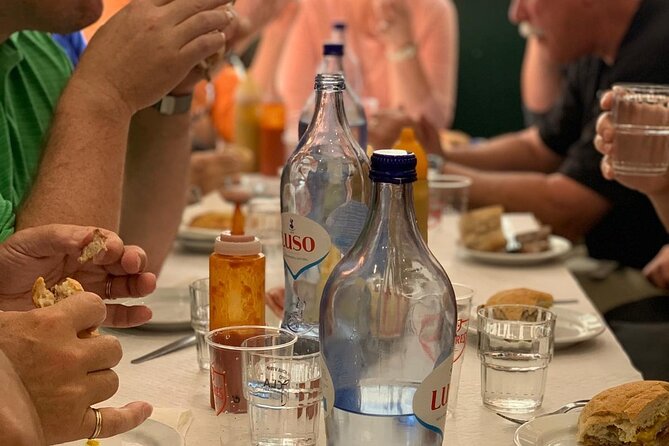
This tour is a strong match if you want:
- A private walk that feels like Lisbon through local eyes
- Food + wine included, so you’re not constantly budgeting extra meals
- A route that covers churches, squares, and one major viewpoint (Elevador de Santa Justa)
- A meaningful cultural anchor around Mouraria and fado
You might skip it if:
- Your group can’t handle uneven cobblestones and steps
- You’re not into walking for a few hours, even if the distance is “only” about 2 km
- You’re expecting food to be the only focus and not history too
Should you book the Lisbon Roots, Food & Cultural Walk?
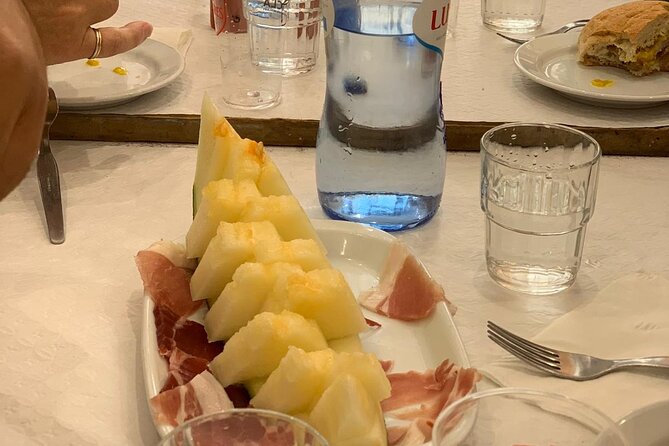
If you like your Lisbon with stories tied to what’s on your plate, book it. The value is strongest when you factor in the tastings, wine, snacks, and coffee/tea bundled into one private morning or afternoon-style experience. The route also gives you a quick education on how neighborhoods and architecture overlap with everyday Portuguese life.
If your priority is Instagram-level sights with minimal food effort, this may not be your best fit. But if you want to leave with a sharper sense of place—Mouraria’s fado roots, Rossio’s center-of-town energy, and the Chapel of Our Lady of Health in your memory—this walk is a smart way to spend your half-day.
One last decision helper: if you’re in the mood to actually try things and you can handle hills and steps, this is the kind of tour you’ll feel good about for days afterward.
FAQ
How long is the Lisbon Roots, Food & Cultural Walk?
It runs for about 3 hours 30 minutes.
Is this tour private?
Yes. It’s a private tour/activity, so only your group participates.
What’s included in the price?
The experience includes a local guide, food tastings, wine tasting, alcoholic beverages, snacks, and coffee and/or tea.
Are any attraction tickets included?
Many stops are free entry based on the listed admission info, but Elevador de Santa Justa admission is not included.
Is hotel pickup included?
No. Hotel pickup and drop-off are not included.
Where do we meet, and where does the tour end?
Meet at St. Dominic’s Square (Largo São Domingos, 1150-114 Lisboa, Portugal) and the walk ends at Confeitaria Nacional (Praça da Figueira 18B, 1100-241 Lisboa, Portugal).
What physical level should I expect?
Moderate physical fitness is recommended, with some uphill walking on cobblestones and walking on steps typical of old Lisbon streets.
Can the tour accommodate dietary restrictions?
You’ll be asked about dietary restrictions when booking. If you don’t inform them in the booking form, the tastings may not be adaptable on the day.
Is there free cancellation?
Yes, free cancellation is offered up to 24 hours in advance for a full refund.
More Food & Drink in Lisbon
- Winner 2025 Undiscovered Lisbon Food & Wine Tour by Eating Europe★ 5.0 · 6,390 reviews
- Lisbon: Food and Wine Small Group Walking Tour★ 4.9 · 4,082 reviews
- Lisbon Small-Group Portuguese Food and Wine Tour★ 5.0 · 3,972 reviews
- Lisbon: Baixa District Food Tour with Dinner and Drinks★ 4.9 · 1,997 reviews
- Lisbon Small-Group Food Tour with 18 Tastings in Alfama District★ 5.0 · 1,967 reviews
More Walking Tours in Lisbon
- Lisbon: History, Stories and Lifestyle Walking Tour★ 4.8 · 10,902 reviews
- Best of Lisbon Small-Group Guided Walking Tour★ 5.0 · 4,869 reviews
- Lisbon: Food and Wine Small Group Walking Tour★ 4.9 · 4,082 reviews
- Best of Lisbon Walking Tour: Rossio, Chiado & Alfama★ 4.9 · 2,700 reviews
- Age of Discoveries Walking Tour in Belém★ 5.0 · 1,513 reviews
More Tour Reviews in Lisbon
- Lisbon City Center Tour – The Unmissable Lisbon★ 5.0 · 22,234 reviews
- Lisbon: Sintra, Pena, Regaleira, Cabo da Roca & Cascais★ 4.7 · 19,656 reviews
- Lisbon Card: 24, 48, or 72-Hour Pass★ 4.5 · 17,944 reviews
- Lisbon: Jerónimos Monastery Entrance Ticket★ 4.1 · 14,164 reviews
- Lisbon: History, Stories and Lifestyle Walking Tour★ 4.8 · 10,902 reviews
Just in: fresh Lisbon reviews from the team




Food, compared.
 ★ 5.0Winner 2025 Undiscovered Lisbon Food & Wine Tour by Eating EuropeFrom $1256,390 reviews
 ★ 4.9Food and Wine Small Group Walking TourFrom $724,082 reviews
 ★ 5.0Lisbon Small-Group Portuguese Food and Wine TourFrom $763,972 reviews
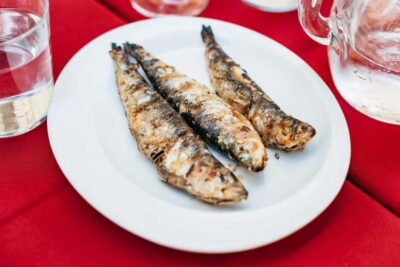 ★ 4.9Baixa District Food Tour with Dinner and DrinksFrom $931,997 reviews
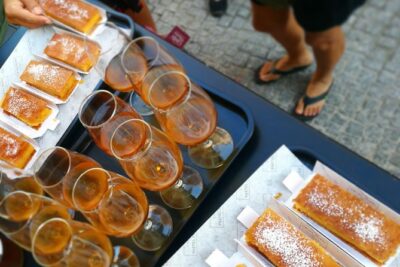 ★ 5.0Lisbon Small-Group Food Tour with 18 Tastings in Alfama DistrictFrom $1261,967 reviews
 ★ 5.0Devour Lisbon: The Ultimate Portuguese Food TourFrom $951,782 reviews
 ★ 5.0Lisbon Food Tour with 10+ Tastings of Local Delicacies & WinesFrom $971,339 reviews
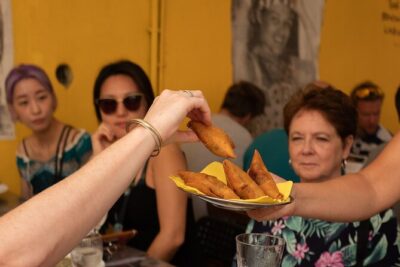 ★ 5.0Award-Winning Original Lisbon Food Wine Tour: 19 Curated TastingsFrom $1371,288 reviews
Browse the lists this tour appears in