
Reviewed · LISBON FOOD & WINE TOURS
Lisbon Food Tour with 10+ Tastings of Local Delicacies & Wines
Lisbon tastes better on foot through old neighborhoods. This 3-hour walk blends 10+ local bites with history stops and wine, led by guides who often add real street-level context, like Marta or Vanda.
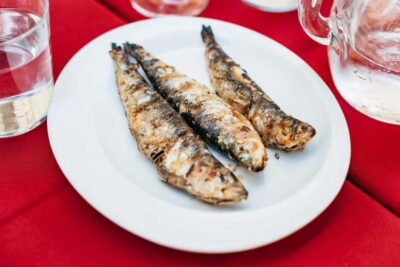
I especially like the way you get variety without feeling stuffed: cured meat and cheeses, sardines, petiscos-style Portuguese tapas, plus classic sweets like pastel de nata. I also like the drinks mix, from Porto wine tastes to ginjinha sour cherry liqueur, and the fact that non-alcoholic options are available.
One thing to plan for is the pace. This is a fair amount of walking through hilly districts, so comfortable shoes matter, and slower group members can change the feel of the day.
In This Review
- Key takeaways before you go
- Why this 3-hour tasting route feels efficient (and fun)
- The food menu: what those 10+ tastings really add up to
- Monday to Saturday menu favorites
- Sunday menu shifts (with bacalhau and Pastel de Belém)
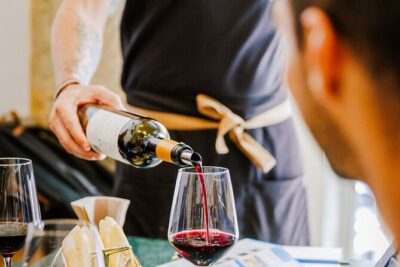
- Porto wine, ginjinha, and Vinho Verde: the drink plan makes sense
- Praça dos Restauradores to Mouraria: the route starts with momentum
- What to watch for
- Santa Justa Lift: the shortcut that turns hills into a storyline
- Alfama and the castle area: where the flavors feel tied to views
- The castle stop (Santa Maria Maior)
- Convent walls and Pedro IV Square: small pauses, big context
- Best-loved guide style: why names like Marta and Vanda keep showing up
- Walking pace and group size: how to set yourself up for success
- How to get the most from 3 hours
- Price and value: what $97.94 buys you in real terms
- Who should book this Lisbon food tour
- Should you book this Lisbon Food Tour with 10+ Tastings?
- FAQ
- How long is the Lisbon food tour?
- Where does the tour start and end?
- What’s included in the tour besides food?
- Do I need to drink alcohol to join the tastings?
- Is the tour offered in English?
- How many people are in a group?
- Does the menu change depending on the day?
- Is hotel pickup included?
- What if I have dietary requirements?
Key takeaways before you go
- A small group max of 12 keeps the tour from turning into a food stampede.
- Two styles of tastings depending on the day: Monday–Saturday leans cheeses, sardines, pastel de nata; Sundays include bacalhau and Pastel de Belém.
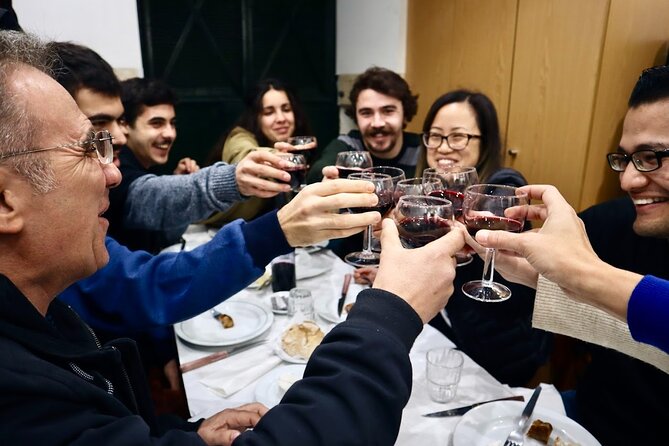
- Wine and sweets aren’t just extras here; they’re part of the structure of the route. You’ll also try Vinho Verde and craft beer.
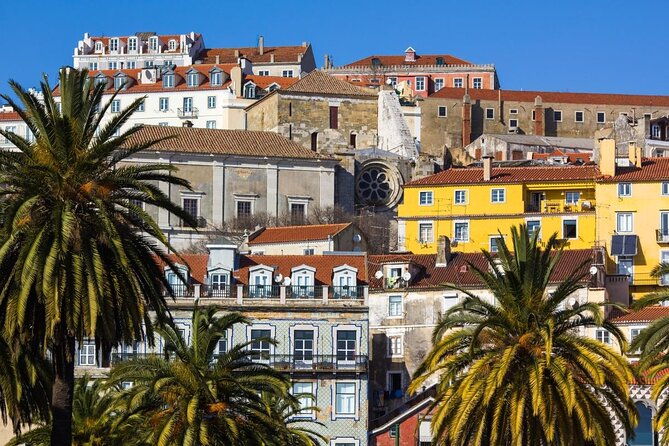
- You’ll walk through major Lisbon neighborhoods on the food schedule, including Mouraria, Baixa, and Alfama.
- Guides often include practical hill help, including tips for moving between levels fast.
- Dietary needs must be handled in advance, so message the operator early if you have restrictions.
Why this 3-hour tasting route feels efficient (and fun)
Lisbon has a habit of splitting itself into layers. Streets climb, neighborhoods stack, and “just a short walk” can turn into a workout. This tour is designed to make that geography work for you, using tastings as your time markers while you move between districts.
You’ll start at Praça dos Restauradores, then head into historic quarters where food is tied to place, not just served on a platter. The tour doesn’t try to cover everything. It focuses on a tight loop that gets you multiple textures, flavors, and local staples, plus enough history to help you understand why Portuguese food tastes the way it does.
The best part is that you’re not stuck choosing restaurants with zero context. You’ll get guided ordering logic: what to try first, what to pair with wine, and what each bite is like beyond the tourist version.
Still hungry? More tastings around Lisbon
- Winner 2025 Undiscovered Lisbon Food & Wine Tour by Eating Europe
★ 5.0 · 6,390 reviews - Lisbon: Food and Wine Small Group Walking Tour
★ 4.9 · 4,082 reviews - Lisbon Small-Group Portuguese Food and Wine Tour
★ 5.0 · 3,972 reviews - Lisbon: Baixa District Food Tour with Dinner and Drinks
★ 4.9 · 1,997 reviews
The food menu: what those 10+ tastings really add up to
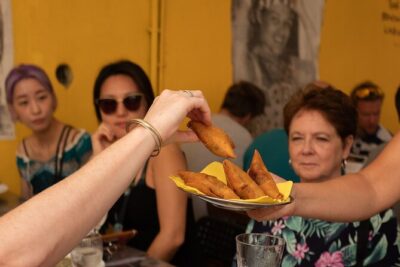
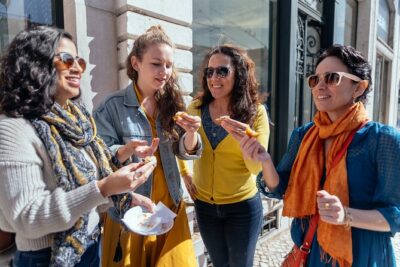
The tour’s promise is 10+ tastings of local delicacies and wines, and the value comes from the variety. You’re not repeating the same thing at stop after stop. You’re sampling categories: cured and aged flavors, seafood staples, savory Portuguese tapas, and multiple dessert classics.
A typical flow includes:
- Artisan cheeses and cured meats, including pata negra (cured ham)
- Fresh Portuguese fish on the menu (and, on Sundays, other fish options like bacalhau)
- Petiscos, which is Portugal’s tapas style—small plates meant for mixing and matching
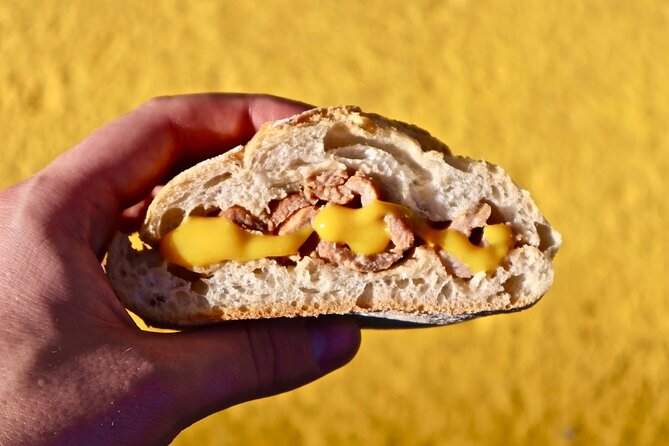
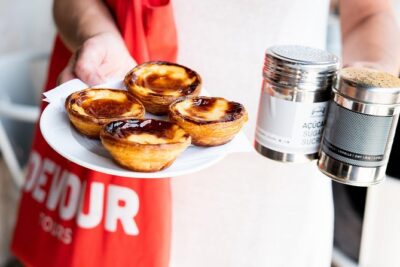
- A classic pork sandwich, bifana, plus a pastry stop like pastel de nata
- A signature secret dish paired with Vinho Verde
If you like eating across a spectrum—salty, smoky, briny, creamy—this structure helps. You get a “progression” during the walk: savory first, seafood in the middle, then desserts to close the loop.
Monday to Saturday menu favorites
On weekdays and Saturdays, your tastings lean hard into iconic Lisbon comfort foods. Expect to see a strong run of cheese and cured meat, fish, bifana (pork sandwich), and ending with pastel de nata. You’ll also have the wine pairing component throughout the route.
For seafood lovers, this is one of the more satisfying ways to sample Portugal’s flavor without committing to one huge meal.
Sunday menu shifts (with bacalhau and Pastel de Belém)
On Sundays the menu structure changes. You might get:
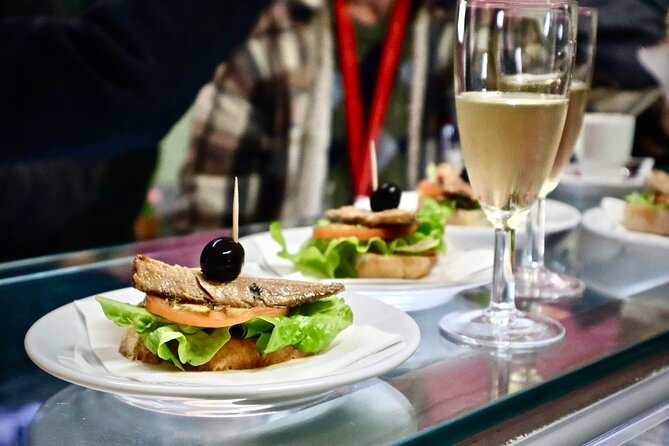
- Gourmet canned fish
- Crispy pastéis de massa tenra
- Bacalhau with spinach and potatoes
- Artisan Portuguese chocolates
- Pastel de Belém (another Lisbon custard classic)
- Craft beer and the sour cherry liqueur experience
The advantage here is you’ll feel the “Portuguese Sunday table” energy, especially with bacalhau and the dessert lineup.
Worth a look before you lock anything else in around Lisbon:
Porto wine, ginjinha, and Vinho Verde: the drink plan makes sense
Portugal’s drinks can feel confusing if you only know wine labels from home. This tour helps by using a simple logic: you taste the local drinks that match the food you’re eating.
Here’s what’s built into the experience:
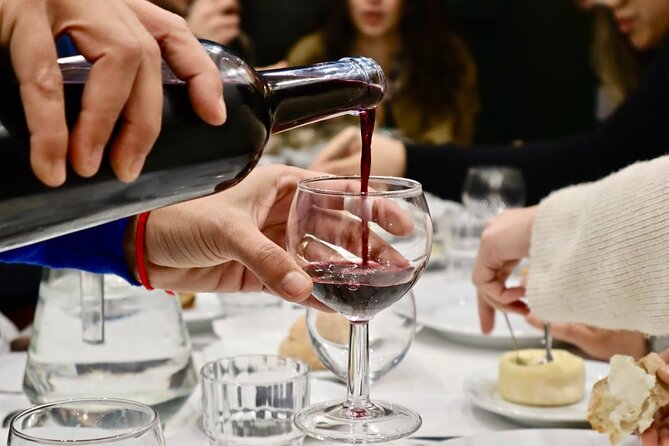
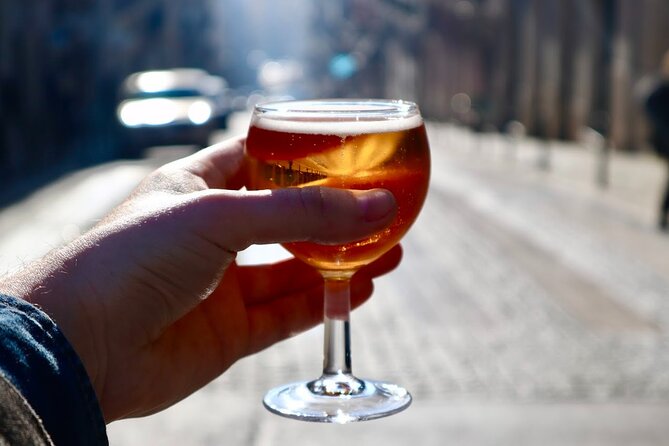
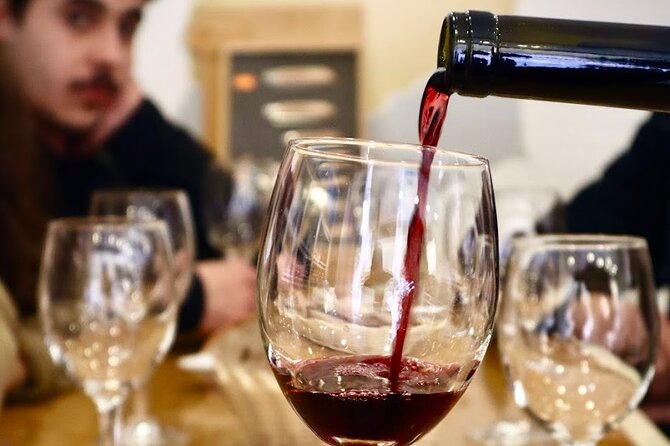
- Port Wine: you’ll taste red and white options sourced from Porto
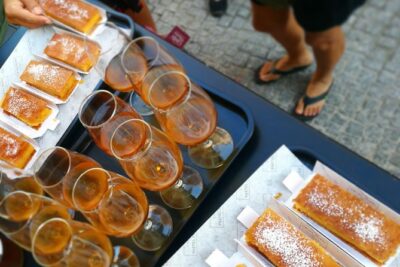
- Ginjinha: the sour cherry liqueur, a Lisbon classic you can actually remember
- Vinho Verde: included as a refreshing pairing during the walk
- Craft beer: included on Sunday’s menu set
- Non-alcoholic options available so you’re not forced into a strictly alcohol-based plan
One practical tip: pace your sipping. With wine and liqueur in the mix, it’s easy to arrive at dessert already a little too warm. If you want to taste everything clearly, take smaller sips and alternate with water when you can.
Praça dos Restauradores to Mouraria: the route starts with momentum
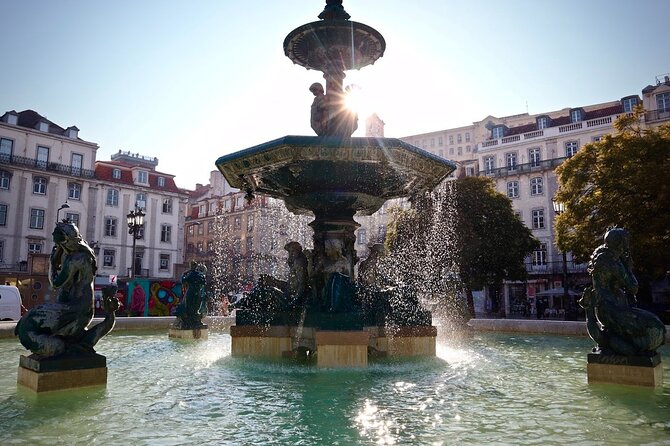
You’ll meet at Praça dos Restauradores and the tour ends back there. That matters because it gives you an easy starting point if you’re arriving by transit and want to keep your day simple.
From the meeting area, you’ll walk into historic quarters, including Mouraria and Baixa. This is a smart early focus because these districts help you understand how Lisbon formed around trade, movement, and neighborhood food culture. You don’t just see buildings. You start seeing the logic behind street life.
In Mouraria, food feels like part of the social fabric, not something separate. The guide sets the stage while you’re still fresh enough to enjoy the first tastings without thinking about what’s next.
What to watch for
In the opening stretch, watch your footwear and your posture. You’ll be walking and climbing, and it’s better to treat it like a “gentle hike” than a casual stroll.
Santa Justa Lift: the shortcut that turns hills into a storyline
One of the most memorable stops is the Santa Justa Lift. The lift connects the lower streets of Baixa with higher areas near Largo do Carmo, and it shows you how Lisbon solves its own slopes.
For food tours, this kind of stop is more than scenery. It helps you understand why meals and markets shaped street patterns. The city isn’t random. It’s built around levels and connections, and that affects where people gather.
The drawback is simple: you may spend a bit of time standing around at key points, especially if the group needs to re-form after transit moments. If you’re tight on patience, you’ll want to keep your water bottle handy and stay aware of when the guide starts moving again.
Alfama and the castle area: where the flavors feel tied to views
Next comes Alfama, Lisbon’s oldest district area, stretching on the slope between São Jorge Castle and the Tagus River. If you’ve got a “Portugal feels old” mindset, this is where it becomes visual.
You’re not just sightseeing from a postcard angle. You’re walking through streets that feel built for slow movement. That’s a good match for a food tour because you can taste, pause, and listen without the day feeling rushed.
The castle stop (Santa Maria Maior)
You’ll also have a stop at a historic castle area in the parish of Santa Maria Maior. This is the kind of point where the guide can explain how Lisbon’s defenses and trading routes shaped where people lived, and why certain foods stayed popular.
The practical side: expect stairs or uneven ground nearby, even if the route itself is manageable. Keep your shoes grippy and you’ll do fine.
Convent walls and Pedro IV Square: small pauses, big context
After the older-district wandering, the tour includes a stop at a former Catholic convent in Santa Maria Maior. Even without going deep into details, it gives you a mental break from food intensity.
Then you’ll reach Pedro IV Square (popularly known by its other common name as a major city square). This stop helps reset the day. Squares like this are where people feel the pulse of the city: street noise, crowd flow, and the sense of “this is where Lisbon meets itself.”
From a food-touring point of view, these stops matter because they prevent the day from feeling like you’re only eating and walking. You get a little context, then you get back to tastings.
Best-loved guide style: why names like Marta and Vanda keep showing up
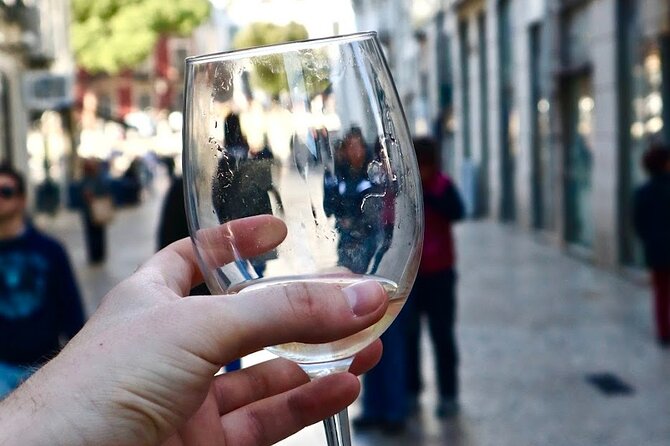
Across the experience, the guide is a big deal. Many guides are praised for tying history directly to what you’re eating, not treating it as a separate lecture. You’ll often see comments about guides mixing food and neighborhood stories, plus humor that makes the pace feel lighter.
You may be guided by people like:
- Marta, noted for strong history links and keeping a group engaged, including teenagers
- Vanda, praised for being friendly and fun, plus practical tips for moving around the hills
- Claudia, mentioned as a standout for knowledge and insight
- Tony, sometimes referenced as newer to guiding but still aiming to make the experience work well
Whatever your guide, the pattern that’s consistently valuable is this: you get an easy-to-grab understanding of Portuguese staples. You leave knowing what you liked and why it’s typical here, which makes your later self-guided restaurant choices better.
Walking pace and group size: how to set yourself up for success
This is a walking tour with a maximum of 12 travelers. That small cap is one of the biggest quality drivers. In a large group, food tours become logistics. In a small one, the guide can keep track of timing, help people at tastings, and answer questions while still moving.
You should plan for a fair amount of walking. Comfortable shoes aren’t optional in Lisbon, and this tour specifically gives you a schedule that crosses changing levels.
How to get the most from 3 hours
- Arrive a few minutes early so the group doesn’t wait at the start.
- If you’re sensitive to alcohol, plan smaller sips early and save your focus for dessert.
- If you have dietary needs, contact the operator in advance. They ask you to do this so they can cater well.
Price and value: what $97.94 buys you in real terms
At $97.94 per person for about 3 hours, the math only works if you treat it as an “organized sampling session,” not just a walk.
Here’s what you’re paying for:
- multiple stops with real tastings (not tiny bites of just one item type)
- wine and liqueur elements, including Porto wine and ginjinha
- a guide who helps you interpret what you’re tasting, so you get more than food satisfaction
- small group size, which keeps the day smooth and more personal
If you were to recreate this on your own, you’d be spending time figuring out where to go, what’s seasonal, how to order, and how to fit it all into a short sightseeing window. This tour condenses that decision-making into a single plan.
Potential downside on value is mostly expectation-based. If you want heavy alcohol pours or a long list of additional drink upgrades, you may need to ask ahead. Also, if your group is slower or pauses often, the day can feel longer than the time on the clock.
Who should book this Lisbon food tour
This tour is ideal if you:
- want 10+ tastings without building a restaurant route yourself
- like combining food with neighborhood context in historic districts
- enjoy wine experiences, including Porto styles and ginjinha
- want a small-group day where the guide can answer questions
It may be less ideal if you:
- dislike hills and long walks
- expect a mostly seated experience
- only want desserts or only want meat-free options and haven’t arranged dietary needs in advance
Should you book this Lisbon Food Tour with 10+ Tastings?
If you’re going to Lisbon for the first time and want a fast, flavorful orientation, I’d book this. The structure is practical: you get tastings, pairing, and district context in one 3-hour loop, starting and ending at a major square.
I’d book it even more confidently if you like the Lisbon classics listed here—pastel de nata, petiscos-style tapas, sardines and seafood, and the sour cherry hit of ginjinha. If you have dietary restrictions, message early. If you want extra drinks beyond what’s included, ask directly so you don’t assume an upgrade will show up automatically.
If you want a fun start to your day in Lisbon that helps you eat smarter for the rest of the trip, this is the kind of tour that pays you back later.
FAQ
How long is the Lisbon food tour?
It runs for about 3 hours.
Where does the tour start and end?
It starts and ends at Praça dos Restauradores in Lisbon, and the tour ends back at the same square.
What’s included in the tour besides food?
You’ll also have wine tastings, including Port wine, Vinho Verde (refreshing), and ginjinha. Craft beer and other items depend on whether it’s the Monday–Saturday or Sunday menu.
Do I need to drink alcohol to join the tastings?
No. Non-alcoholic options are available.
Is the tour offered in English?
Yes, it’s offered in English.
How many people are in a group?
The group size is capped at a maximum of 12 travelers.
Does the menu change depending on the day?
Yes. The tour has a different included menu for Monday to Saturday versus Sundays, including items like bacalhau and Pastel de Belém on Sundays.
Is hotel pickup included?
No, hotel pickup and drop-off aren’t included.
What if I have dietary requirements?
You should contact the operator in advance so they can cater for you as best as possible.
More Tours in Lisbon
- Lisbon City Center Tour – The Unmissable Lisbon★ 5.0 · 22,234 reviews
- Lisbon: History, Stories and Lifestyle Walking Tour★ 4.8 · 10,902 reviews
- True 4Hour Private Tuk Tuk Tour: Discover Lisbon with a Local!★ 5.0 · 8,008 reviews
- Winner 2025 Undiscovered Lisbon Food & Wine Tour by Eating Europe★ 5.0 · 6,390 reviews
- Lisbon: Sintra, Pena, Cabo da Roca, Cascais Tour with Pickup★ 4.8 · 5,445 reviews
More Tour Reviews in Lisbon
- Lisbon City Center Tour – The Unmissable Lisbon★ 5.0 · 22,234 reviews
- Lisbon: Sintra, Pena, Regaleira, Cabo da Roca & Cascais★ 4.7 · 19,656 reviews
- Lisbon Card: 24, 48, or 72-Hour Pass★ 4.5 · 17,944 reviews
- Lisbon: Jerónimos Monastery Entrance Ticket★ 4.1 · 14,164 reviews
- Lisbon: History, Stories and Lifestyle Walking Tour★ 4.8 · 10,902 reviews
More Lisbon Plates and Pours
- Winner 2025 Undiscovered Lisbon Food & Wine Tour by Eating Europe★ 5.0 · 6,390 reviews
- Lisbon: Food and Wine Small Group Walking Tour★ 4.9 · 4,082 reviews
- Lisbon Small-Group Portuguese Food and Wine Tour★ 5.0 · 3,972 reviews
- Lisbon: Baixa District Food Tour with Dinner and Drinks★ 4.9 · 1,997 reviews
- Lisbon Small-Group Food Tour with 18 Tastings in Alfama District★ 5.0 · 1,967 reviews
Just in: fresh Lisbon reviews from the team




Lisbon Food & Wine Tours, compared.
 ★ 5.0Winner 2025 Undiscovered Lisbon Food & Wine Tour by Eating EuropeFrom $1256,390 reviews
 ★ 4.9Food and Wine Small Group Walking TourFrom $724,082 reviews
 ★ 5.0Lisbon Small-Group Portuguese Food and Wine TourFrom $763,972 reviews
 ★ 4.9Baixa District Food Tour with Dinner and DrinksFrom $931,997 reviews
 ★ 5.0Lisbon Small-Group Food Tour with 18 Tastings in Alfama DistrictFrom $1261,967 reviews
 ★ 5.0Devour Lisbon: The Ultimate Portuguese Food TourFrom $951,782 reviews
 ★ 5.0Award-Winning Original Lisbon Food Wine Tour: 19 Curated TastingsFrom $1371,288 reviews
 ★ 4.5Lisbon Exclusive PRIVATE Food Tour with 6 or 10 TastingsFrom $1081,113 reviews
Browse the lists this tour appears in