
Reviewed · ALFAMA & OLD TOWN TOURS
Privat Walking Tour in Alfama, Baixa, Chiado
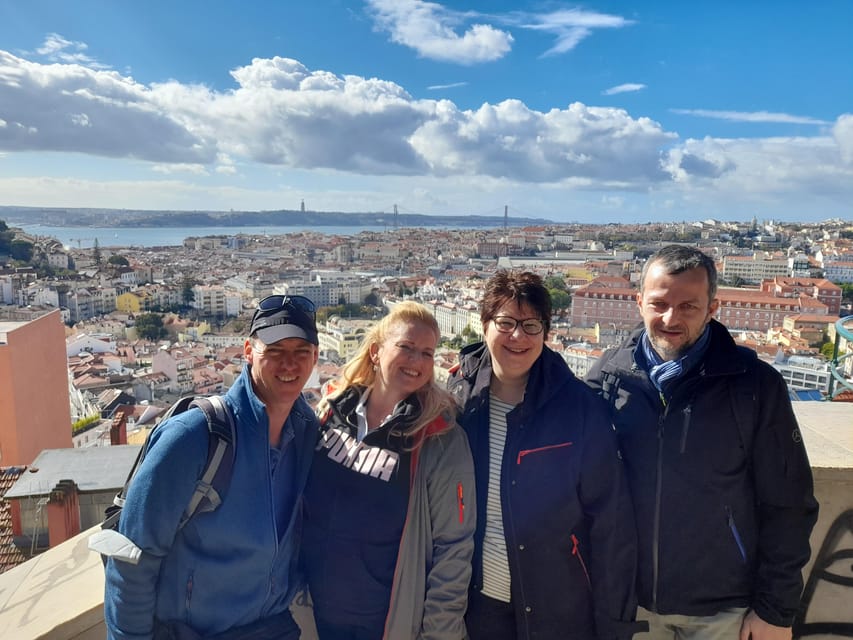
Lisbon’s hills make even a short walk feel like a show. This 3-hour tour strings together Alfama, Baixa, and Chiado with smart photo stops and local context, so you’re not just moving from viewpoint to viewpoint. I especially liked how you get the old-streets feel in Alfama, then you see the cleaner, more official side of the city in Baixa.
I also liked the included ginjinha, which is a fun, quick taste that fits the pacing of the walk. One drawback to flag: you’ll be on uneven old lanes, so closed-toe shoes matter, and the route isn’t aimed at kids under 10.
In This Review
- Why This Alfama-Baixa-Chiado Walk Works So Well
- Starting at the Statue of S. Vicente: your orientation in one spot
- Alfama’s lanes in 80 minutes: viewpoints, architecture, and street art
- Portas do Sol viewpoint: a quick breath with the right context
- Baixa de Lisboa and Praça do Comércio: open space after the hills
- Santa Justa Lift: a photo stop that still earns its place
- Chiado and Rossio Square: city-center texture and a smooth lead-in
- Miradouro de São Pedro de Alcântara: your grand finale without the chaos
- The small-group pacing: why up to 10 people matters
- Ginjinha included: a practical Lisbon taste, not a gimmick
- Price and value: $58 for 3 hours of guided Lisbon
- Who this tour fits best (and who should rethink it)
- Should you book this Alfama-Baixa-Chiado private walking tour?
- FAQ
- Where is the meeting point?
- How long is the tour?
- How large is the group?
- What languages are the guides?
- What is included in the tour?
- What should I bring?
- Is the tour suitable for children?
- Is there free cancellation?
Why This Alfama-Baixa-Chiado Walk Works So Well
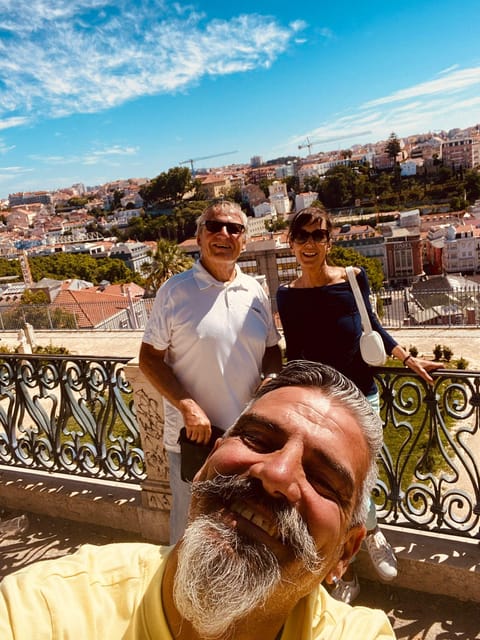
- Alfama time (80 minutes) gives you room to slow down and actually look, not just pass through.
- Portas do Sol viewpoint is part of the flow, not a rushed detour.
- Praça do Comércio and the Baixa core show Lisbon’s more formal, open-city side.
- Santa Justa Lift is worth seeing from the outside, with quick guidance on what you’re looking at.
- Chiado to Rossio keeps you grounded in the city center before the final lookout.
- Small group (up to 10) means your guide can answer questions without shouting.
Starting at the Statue of S. Vicente: your orientation in one spot
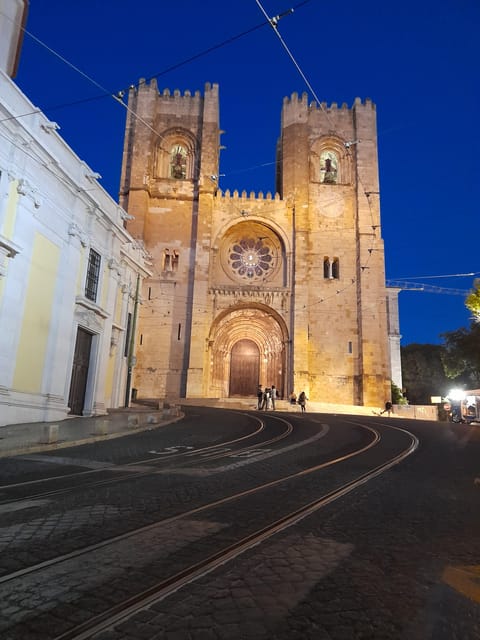
Meet at the statue of Saint Vicente. It’s a good first move because it anchors you in Lisbon’s story right away, and it helps you understand why Alfama sits where it does. From there, you start moving immediately, which keeps the tour feeling like a connected walk instead of a sequence of disconnected stops.
If you like practical tours, this one starts with that mindset: you get a direction, then you learn what to notice as you go. And since the guide works in German, Spanish, or English, you can pick the language that makes you feel most comfortable asking quick questions.
Deeper into Alfama's lanes and miradouros
- Alfama Tour in Lisbon Old Town
★ 5.0 · 4,936 reviews - Private Lisbon Sightseeing Tuk-Tuk Tour: Alfama, Belém & More
★ 5.0 · 4,277 reviews - Lisbon: Hills, Alfama, and Mouraria Tour by Electric Bike
★ 4.8 · 3,438 reviews - Best of Lisbon Walking Tour: Rossio, Chiado & Alfama
★ 4.9 · 2,700 reviews
Alfama’s lanes in 80 minutes: viewpoints, architecture, and street art
Alfama is the main event here, and the extra time (80 minutes) matters. You’ll be on small old streets that feel stepped and layered, with the kind of stone-and-stair street grid that can’t be replicated by a map screenshot. This is where Lisbon’s “real day-to-day” feeling shows up, even if you’re still in a classic tourist zone.
You’ll get stops that are clearly chosen for seeing and understanding:
- Photo stop and guided walk as you orient yourself in the neighborhood’s twists.
- A mix of architecture and street art, so you’re not only focused on old facades.
- Explanations that connect what you see to the city’s early monarchy period—how Lisbon’s shape grew around power, defense, and daily life.
I like that the guide doesn’t treat Alfama like a single highlight. They help you read it. That means you’ll notice how the streets bend, how the buildings sit, and why certain corners turn into natural meeting points.
And here’s a small detail that makes a difference: the guide is attentive to what you want to see. One guide named Ingo has been praised for enthusiastic delivery plus detailed historical explanations. In other words, if you’re the type who wants context while you walk, this tour is built for you.
Portas do Sol viewpoint: a quick breath with the right context
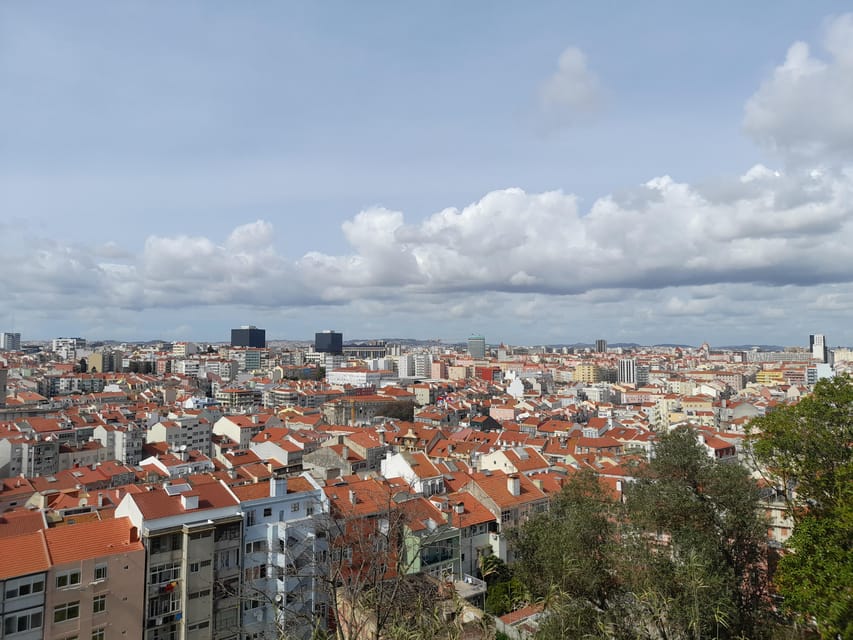
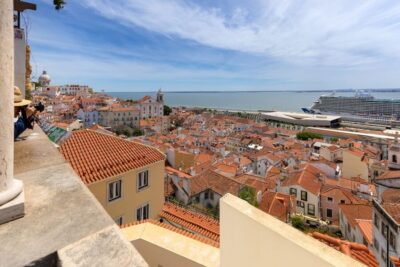
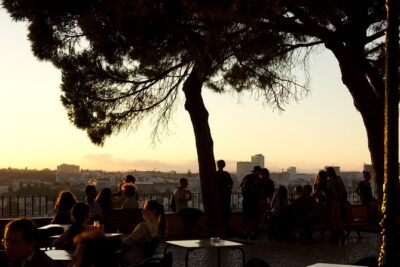
Portas do Sol is one of those Lisbon views that seems simple at first: you stand somewhere high, you look out, and you realize the whole city is stacked in layers. But the viewpoint becomes more satisfying when you get a guide pointing out what’s relevant—where the neighborhoods sit, what the sightlines mean, and how the hill geography shaped Lisbon.
On this tour, Portas do Sol isn’t an isolated “go stand there” stop. It’s placed after the Alfama start, so you feel the transition from narrow lanes to open sightlines. You’ll have time for photos, then you move on without dragging the moment out.
Baixa de Lisboa and Praça do Comércio: open space after the hills
Then you head into Baixa de Lisboa, the part of Lisbon that feels more intentional—wider streets, more direct routes, and a center designed for movement. After Alfama’s tight, winding streets, Baixa can feel like someone opened a window.
You’ll also pass through Praca do Comercio, the big open square that feels like the city’s official front stage. This is where your guide’s storytelling helps most. Lisbon’s not just pretty from the outside here; it’s structured, planned, and built for traffic—human feet, markets, and the movement of commerce.
What I like about this section is the “contrast lesson.” You stop seeing Lisbon as one kind of place. You start seeing it as a city with different built personalities.
Lisbon at walking pace, a few more routes


Santa Justa Lift: a photo stop that still earns its place
Santa Justa Lift is short on time here, but it’s not wasted time. You’ll have a photo stop and a short guided look around the lift area. Even if you don’t ride the elevator, it’s still a landmark that helps you understand Lisbon’s relationship with steep terrain.
Why this works on a walking tour: Lisbon loves vertical solutions. You go from hill streets to a system that moves people up and down, and the lift becomes a symbol of that practical problem-solving. The quick guided explanation keeps you from treating it like just another photo spot.
Chiado and Rossio Square: city-center texture and a smooth lead-in
Next comes Chiado, followed by Rossio Square. This is the part of Lisbon where you feel the city center’s everyday pace—shops, streets designed for people to flow through, and neighborhoods that sit between more dramatic districts.
The guide gives you guided walking time with photo stops, so you’re not just collecting pictures. You’re connecting the geography: how Chiado links areas, how Rossio acts like a central hub, and why these streets feel like a natural continuation after Baixa.
Rossio Square is especially useful as a “mental reset.” It’s open enough to reorient your sense of scale, and it helps you position yourself for the last big moment: the final viewpoint.
Miradouro de São Pedro de Alcântara: your grand finale without the chaos
The tour finishes at Miradouro de São Pedro de Alcântara. This is a great ending because it feels earned. You don’t start at the top and burn time. You work through neighborhoods, then you end with a viewpoint where Lisbon spreads out.
I like that the final stop turns the walk into a loop of sensations:
- tight lanes earlier
- open city squares in the middle
- then a wide horizon at the end
If you’re the kind of person who enjoys closing a day with a viewpoint, this landing is a smart choice.
The small-group pacing: why up to 10 people matters
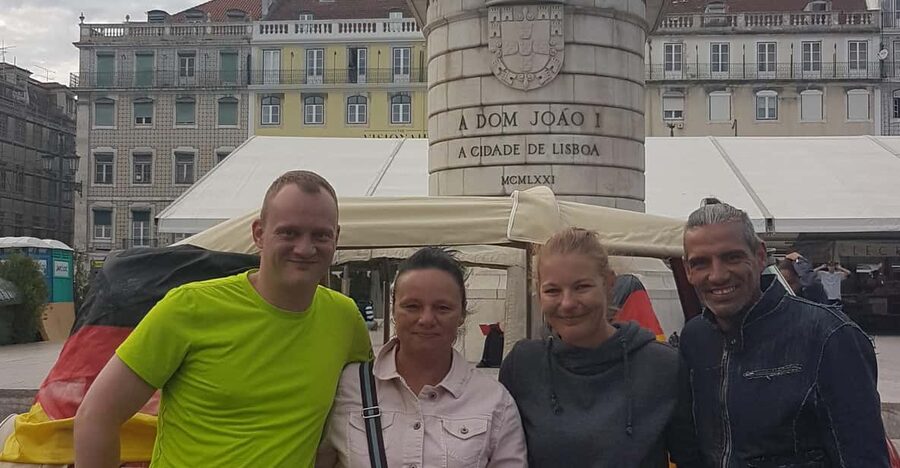
Small group size—limited to 10 participants—isn’t just a comfort perk. It changes how the tour feels. In a big crowd, you get rushed. Here, you can actually hear the guide, ask a question, and pause without feeling like you’re holding everyone back.
It also supports the tour’s style of adapting to you. The guide is described as reading your wishes—meaning you’re more likely to get explanations that match what you care about, not a one-size script.
And since the guide works in English, Spanish, and German, you’re more likely to understand the details without straining through a second language.
Ginjinha included: a practical Lisbon taste, not a gimmick
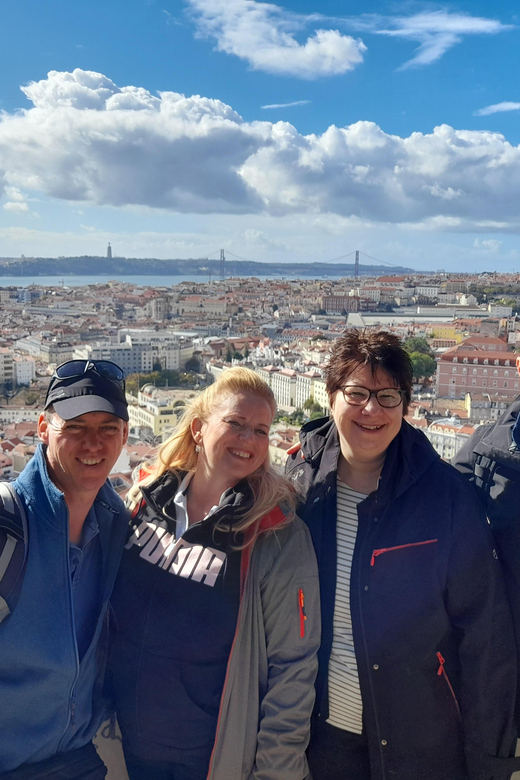
You get ginjinha included. It’s a simple add-on, but it’s effective for two reasons. First, it fits Lisbon culture without requiring a long sit-down meal. Second, it gives you a shared moment during the walk—something to mark progress.
I wouldn’t rely on ginjinha as your only food plan for the day, but as a short included taste it makes sense. It also helps the tour feel like more than a sightseeing checklist.
Price and value: $58 for 3 hours of guided Lisbon
At $58 per person for 3 hours, the value depends on what you want from Lisbon on day one. If you just want photos, you can do it alone. But if you want a guided thread—history cues, street-level context, and a route that connects Alfama to downtown to Chiado—the guide time is the product you’re paying for.
You also get something tangible in the mix: the included ginjinha. And because the group is kept small, you’re paying for attention, not just someone talking while you shuffle past.
Tips aren’t included, so if you like rewarding strong guiding (and many people do), plan for that. The rest of what you need is covered by the experience itself: route, timing, and guidance.
Who this tour fits best (and who should rethink it)
This works well for adults and young teens who like walking, street-level stories, and Lisbon’s mix of old neighborhoods and central streets. It also suits couples and small friend groups who don’t want to be swallowed by large crowds.
It’s not suitable for children under 10, based on the activity’s design and walking demands. It’s also not a good fit if you want to stop for long breaks along the way, since the tour is built as a steady 3-hour stroll with set photo and guided segments.
The experience rules also clearly say no alcohol and no drugs, so it’s aimed at a respectful, sightseeing pace. And yes: bring closed-toe shoes. Lisbon cobblestones don’t care about good intentions.
Should you book this Alfama-Baixa-Chiado private walking tour?
If you want Lisbon to feel connected—Alfama’s old lanes leading into Baixa’s open squares, then Chiado and Rossio before a final viewpoint—this tour makes it easy. The small-group size and the guide’s style of tailoring explanations to your interests are the two biggest “value drivers.”
I’d book it if:
- you want a guided route instead of figuring it out block by block
- you care about street-level history and what to notice
- you like ending a day with a miradouro
I’d think twice if:
- you’re uncomfortable with walking on uneven streets
- you’re traveling with kids under 10
- you only want major landmarks with zero interpretation
FAQ
Where is the meeting point?
Meet the guide on the statue of S. Vicente.
How long is the tour?
The tour lasts 3 hours.
How large is the group?
It’s a small group limited to 10 participants.
What languages are the guides?
Live guides are available in German, Spanish, and English.
What is included in the tour?
The tour includes the guide and ginjinha.
What should I bring?
Bring closed-toe shoes.
Is the tour suitable for children?
No, it’s not suitable for children under 10 years old.
Is there free cancellation?
Yes. You can cancel up to 24 hours in advance for a full refund.
More Tour Reviews in Lisbon
- Lisbon City Center Tour – The Unmissable Lisbon★ 5.0 · 22,234 reviews
- Lisbon: Sintra, Pena, Regaleira, Cabo da Roca & Cascais★ 4.7 · 19,656 reviews
- Lisbon Card: 24, 48, or 72-Hour Pass★ 4.5 · 17,944 reviews
- Lisbon: Jerónimos Monastery Entrance Ticket★ 4.1 · 14,164 reviews
- Lisbon: History, Stories and Lifestyle Walking Tour★ 4.8 · 10,902 reviews
More of Lisbon, One Hill at a Time
- Lisbon: History, Stories and Lifestyle Walking Tour★ 4.8 · 10,902 reviews
- Best of Lisbon Small-Group Guided Walking Tour★ 5.0 · 4,869 reviews
- Lisbon: Food and Wine Small Group Walking Tour★ 4.9 · 4,082 reviews
- Best of Lisbon Walking Tour: Rossio, Chiado & Alfama★ 4.9 · 2,700 reviews
- Age of Discoveries Walking Tour in Belém★ 5.0 · 1,513 reviews
Keep Wandering Old Alfama
- Alfama Tour in Lisbon Old Town★ 5.0 · 4,936 reviews
- Private Lisbon Sightseeing Tuk-Tuk Tour: Alfama, Belém & More★ 5.0 · 4,277 reviews
- Lisbon: Hills, Alfama, and Mouraria Tour by Electric Bike★ 4.8 · 3,438 reviews
- Best of Lisbon Walking Tour: Rossio, Chiado & Alfama★ 4.9 · 2,700 reviews
- Lisbon: Baixa District Food Tour with Dinner and Drinks★ 4.9 · 1,997 reviews
Just in: fresh Lisbon reviews from the team





Alfama & Old Town Tours, compared.
 ★ 5.0Alfama Tour in Lisbon Old TownFrom $34,936 reviews
 ★ 5.0Private Lisbon Sightseeing Tuk-Tuk Tour: Alfama, Belém & MoreFrom $524,277 reviews
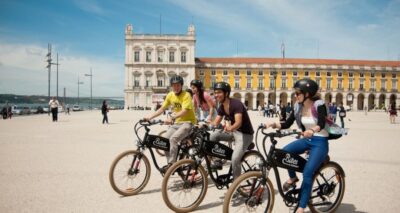 ★ 4.8Hills, Alfama, and Mouraria Tour by Electric BikeFrom $253,438 reviews
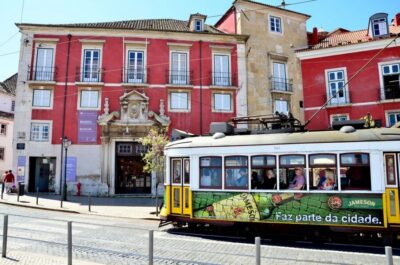 ★ 4.9Best of Lisbon Walking Tour: Rossio, Chiado & AlfamaFrom $232,700 reviews
 ★ 4.9Baixa District Food Tour with Dinner and DrinksFrom $931,997 reviews
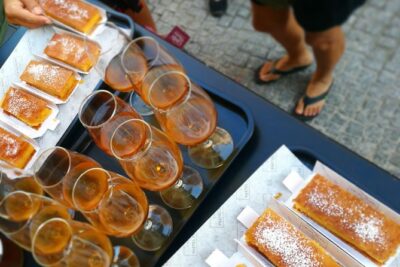 ★ 5.0Lisbon Small-Group Food Tour with 18 Tastings in Alfama DistrictFrom $1261,967 reviews
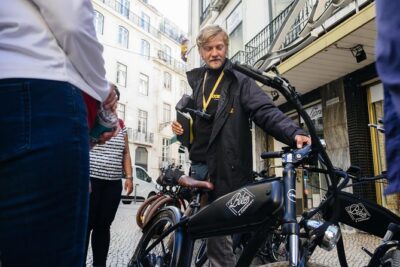 ★ 4.5Lisbon E-Bike Tour Commerce Square, Mouraria and AlfamaFrom $301,688 reviews
 ★ 5.0Old Town TukTuk Tour and Scenic Viewpoints in AlfamaFrom $35974 reviews
Browse the lists this tour appears in