

Reviewed · LISBON WALKING TOURS
Lisbon: Jewish Quarter Guided Walking Tour
You can walk Lisbon’s Jewish timeline in 2 hours. Starting at Praça do Comércio, this guided route connects the Exodus story to the medieval Jewish quarter experience in Alfama and the Baixa, with Amber bringing the big picture down to street level. I love how the tour blends Jewish history with Portuguese history, so the events don’t feel stuck in one textbook. I also like the small-group feel, which makes it easier to ask questions while you climb through the real neighborhoods. One possible drawback: the walking is mainly uphill, and Alfama includes stairs.
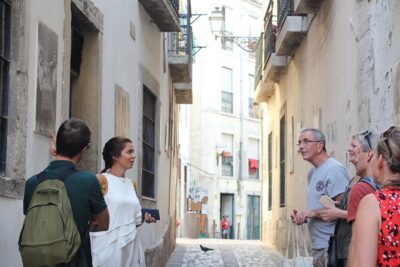
You’ll meet your guide by a dark red umbrella or sign, so message ahead via WhatsApp or iMessages to confirm the exact spot. With a limit of 10 participants and an English live guide, the pace is friendly, and Amber’s style makes the story easy to follow even when the streets get steep.
At $58 for a guide-led walking tour (food and drinks not included), this is best viewed as a storytelling tour—there isn’t much visible left from centuries ago, so the value is in the explanations and where you’re standing while she explains it. If you’re not up for hills and stairs, skip it. Otherwise, it’s one of the more meaningful “history walks” you can do in Lisbon.
In This Review
- Key things that make this Lisbon Jewish Quarter tour worth your time
- Praça do Comércio: the Exodus connection and why this start matters
- Walking into the Judiaria streets: medieval segregation, then real Lisbon geography
- Portas do Sol: take the pause, then use the view to understand Alfama
- S. Jorge Castle area: power, protection, and the story’s uphill shift
- Baixa District and forced conversions: seeing policy in the city plan
- Rossio and the 1506 Pessah massacre: history in a public square
- The 1940s refugee thread: Lisbon’s role after the medieval era
- Price and value: is $58 fair for a 2-hour walk?
- Who should book this, and who should choose a different tour
- The guide makes the difference: what Amber’s style brings to the walk
- Should you book the Lisbon Jewish Quarter guided walking tour?
- FAQ
- How long is the Lisbon Jewish Quarter guided walking tour?
- What’s included in the price?
- Is food and drinks included?
- Where do we meet the guide?
- Is the tour in English?
- What should I bring for the walk?
- Is this tour wheelchair-friendly or stroller-friendly?
Key things that make this Lisbon Jewish Quarter tour worth your time
- Praça do Comércio as the starting story: you begin with the Exodus connection, then the guide builds from there.
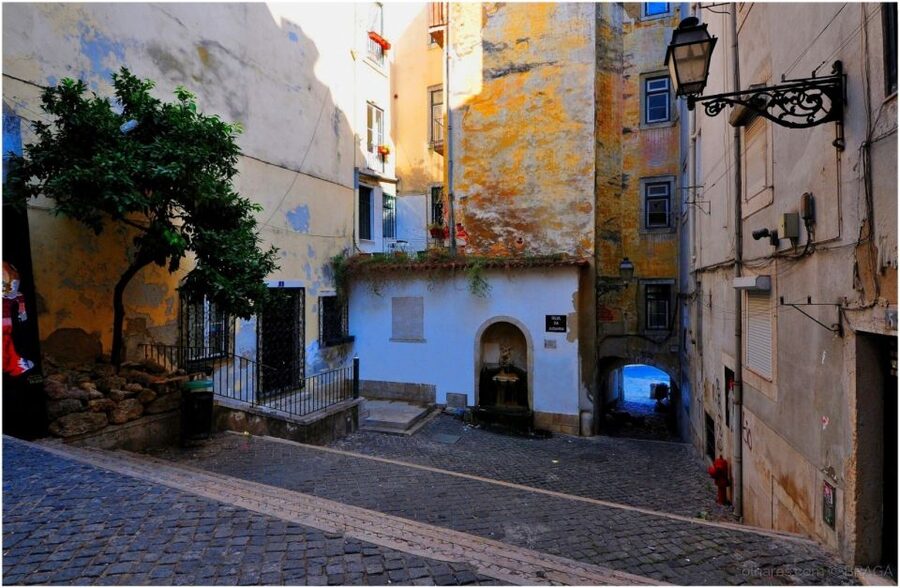
- Alfama’s medieval reality: the tour focuses on segregation and what it meant in everyday life on the ground.
- Baixa and forced conversions: you connect laws and policies to the city’s layout.
- Rossio and the 1506 Pessah massacre: history gets anchored to specific public spaces.
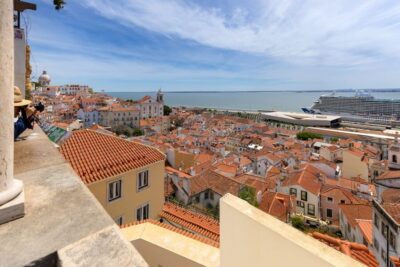
- Views included, not just facts: Portas do Sol viewpoint helps you see how Lisbon funnels movement uphill and down into the city.
Praça do Comércio: the Exodus connection and why this start matters
Most Lisbon walks start with postcard energy. This one starts with context. You begin at Praça do Comércio, a big open square that feels like a natural place to talk about beginnings—then the guide links that idea to the Exodus theme and to the wider Jewish story in Portugal.
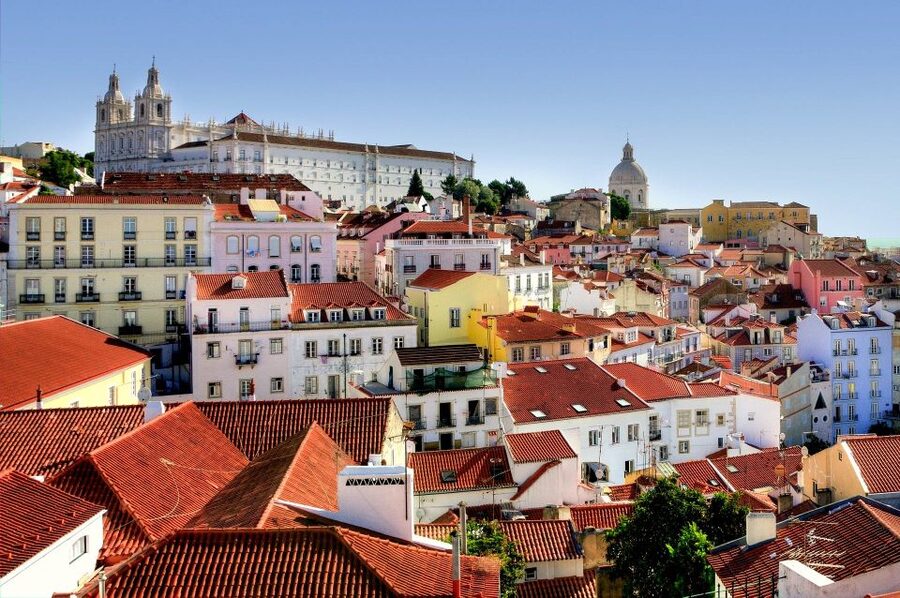
Here’s why that matters for you as a visitor: history in Lisbon isn’t neatly boxed into one synagogue or one museum. It’s scattered across districts, street shapes, and changing power structures. Starting in an open, central place helps you get your bearings fast—then the tour gradually makes sense of why the city’s older areas feel layered and hilly.
It also sets the tone. This isn’t just “what happened.” You’re taught how people lived with pressures from outside, including forced change over time.
Lisbon at walking pace, a few more routes
- Lisbon: History, Stories and Lifestyle Walking Tour
★ 4.8 · 10,902 reviews - Best of Lisbon Small-Group Guided Walking Tour
★ 5.0 · 4,869 reviews - Lisbon: Food and Wine Small Group Walking Tour
★ 4.9 · 4,082 reviews - Best of Lisbon Walking Tour: Rossio, Chiado & Alfama
★ 4.9 · 2,700 reviews
Walking into the Judiaria streets: medieval segregation, then real Lisbon geography
From Praça do Comércio, you move toward the Judiaria areas on foot. The goal isn’t to cram in every street possible. It’s to follow the logic of Lisbon: where people were placed, where movement was constrained, and how the city’s topography shaped daily life.
The tour focuses on Alfama Jewish quarter and medieval segregation, which is exactly the kind of history that’s hard to grasp from a brochure. On the ground, you start to understand how separation works when it’s built into neighborhoods—through routes, vantage points, and the way steep hills naturally limit easy access.
I also appreciate that the guide doesn’t treat Jewish history as a separate “side story.” The route is designed to connect Jewish presence to Portuguese history, including the ways communities were affected by Portuguese decisions and social systems.
One more thing: even though you’ll hear about centuries of Jewish life, you may notice that there isn’t a lot of physical evidence left. That’s not a downside. It’s part of Lisbon’s reality. The tour’s job is to give the missing pieces so the city still makes sense.
Portas do Sol: take the pause, then use the view to understand Alfama

At Portas do Sol, you get a viewpoint break. It’s not a random stop for photos. It helps you understand Lisbon’s mechanics.
When you look out from above Alfama, you can see the city’s structure in one glance: steep neighborhoods that stack on top of each other, streets that funnel movement, and the way “up” and “down” shape time and access. That’s useful because the tour later talks about segregation, forced conversions, and how communities were pushed into new realities.
So yes, you’ll take in the view. But you’ll also use it. I find it makes the next parts of the story click into place.
S. Jorge Castle area: power, protection, and the story’s uphill shift
From the viewpoints, the walk keeps leaning uphill toward S. Jorge Castle. This is where Lisbon’s medieval feel becomes more than atmosphere. It becomes a clue.
Castle areas are naturally linked to control—who could defend, who could impose rules, and what it meant to live with shifting authority. In this tour, the guide uses castle-hill context to explain what life could be like for communities under pressure.
You also get a practical benefit here: you’ll be moving through an area where you can feel the altitude. That helps you plan your effort. The tour is built for the idea that you’ll manage hills in segments, not sprint the whole time.
If you’re a slower walker, don’t panic. The guide offers breaks when needed. Just ask—don’t try to “tough it out” and ruin the experience for yourself.
Worth a look before you lock anything else in around Lisbon:

Baixa District and forced conversions: seeing policy in the city plan
The Baixa District portion is one of the tour’s most important turns, because it’s where the story connects to forced conversions.
This is history that’s heavier than the average city walk, and the tour handles it in a way that feels grounded. Instead of treating conversion as a vague label, the guide ties it to the experience of living inside Lisbon’s changing social landscape.
Here’s what you should watch for as you walk: how the city’s layout and movement patterns can reflect power dynamics. Lisbon’s neighborhoods don’t just sit next to each other. They represent eras, decisions, and different “rules of life.”
Also, by the time you reach Baixa, you’ve already seen enough of Alfama to understand what “segregation” means in real space. That makes the forced-conversion topic hit harder—because you aren’t hearing it in a vacuum. You’re hearing it after you’ve walked the ground where earlier chapters played out.
Rossio and the 1506 Pessah massacre: history in a public square
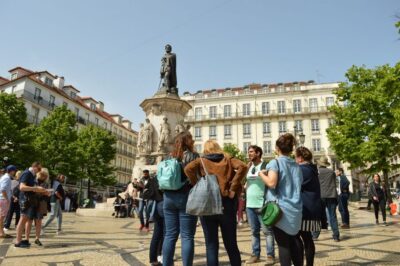
Then you head toward Praça da Figueira and Rossio, which gives the story a public, civic stage.
Rossio is where the tour brings up the 1506 Pessah massacre. This stop matters because it’s not hidden history. It’s attached to a place where many kinds of people would have crossed paths.
I like that the guide doesn’t just drop a date and move on. She connects the event to the wider context of Jewish life in Portugal at the time, and how fear and violence can become part of the rhythm of public life.
If you’re the kind of traveler who wants your history anchored in recognizable spots, you’ll appreciate this part. It turns a grim moment into something you can actually locate.
The 1940s refugee thread: Lisbon’s role after the medieval era
This tour doesn’t stop at medieval Lisbon. It also covers the contemporary thread, including the passage of WWII refugees in the 1940s.
That does two helpful things for you. First, it shows that the story of Lisbon’s Jewish communities isn’t frozen in the past. Second, it ties the Atlantic world together—because Lisbon historically connected Europe to the wider world, and you’ll hear about how the diaspora spread beyond the peninsula.
It’s a smart way to end the “why Lisbon” question. You’re not just learning events; you’re learning Lisbon’s geographic and historical role as a crossroads.
Price and value: is $58 fair for a 2-hour walk?
For $58 per person, you get what matters most for this kind of tour: a live guide, an organized route through key sites, and a tight 2-hour window that focuses on the Jewish story in Lisbon across medieval and modern time.
You do not get food and drinks. That’s normal for a walking tour, but it means you should plan a snack or a drink before or after, especially if you’ll finish near Rossio.
Is it a bargain or a splurge? I’d call it solid value if you’re the kind of traveler who likes context and narrative. The city won’t hand you this story on your own. The route helps, but the real payoff is the explanations—especially since the physical remnants from earlier centuries aren’t always obvious.
Given the small group size and the guide’s ability to answer questions, I think the price makes sense. You’re paying for interpretation, not just walking.
Who should book this, and who should choose a different tour
This one fits best if you want a focused history walk and you’re okay with effort.
It’s a great match if you:
- enjoy Jewish history in the context of Portuguese history
- want a route that includes Alfama and the Baixa, not just flat downtown sights
- like asking questions and getting answers in plain language
You should think twice if you:
- need wheelchair-friendly access (the route is mainly uphill with stairs in Alfama)
- have back problems, recent surgeries, low fitness, or mobility limitations
- are traveling with kids under 10
Also, baby strollers and carriages aren’t allowed. If you’re traveling with small children, this isn’t the right format.
The guide makes the difference: what Amber’s style brings to the walk
A lot of walking tours are “facts with a headset.” This one is more human than that. I’d point to two things that matter a lot:
First, Amber connects Jewish and Portuguese history in the same breath, so the story feels like one city’s changing reality, not separate chapters pasted together. That makes the topics—segregation, forced conversions, and later refugee history—feel less like random events and more like a through-line.
Second, she moves at a pace that works for people who need breaks. Even when the walk has hills, the tour doesn’t feel like a punishment march. You still get to cover key sites like Portas do Sol, S. Jorge Castle, and Rossio without constantly feeling rushed.
Should you book the Lisbon Jewish Quarter guided walking tour?
If you want a history-focused Lisbon walk that actually explains what you’re seeing—and you’re prepared for uphill walking and Alfama stairs—I’d book it. You’ll come away with a clearer mental map of Lisbon’s Jewish presence across eras, plus a better sense of how Portugal’s policies and power shaped real neighborhoods.
If stairs and steep routes are a problem, pick a different tour. This one is built around being in the neighborhoods, not around staying comfortable.
If you’re on the fence, remember this: for $58, you’re buying interpretation of a story that isn’t fully visible in the street stones. When the guide is strong—like Amber—that’s the value.
FAQ
How long is the Lisbon Jewish Quarter guided walking tour?
It runs for 2 hours.
What’s included in the price?
A live tour guide is included.
Is food and drinks included?
No. Food and drinks are not included.
Where do we meet the guide?
You’ll meet at the start point listed with your voucher. Your guide will be holding a dark red umbrella or a sign. Message via WhatsApp or iMessages linked to your voucher to confirm the exact location.
Is the tour in English?
Yes, the live tour guide speaks English.
What should I bring for the walk?
Bring comfortable shoes, water, and comfortable clothes.
Is this tour wheelchair-friendly or stroller-friendly?
No. The route is mainly uphill and includes stairs in the Alfama quarter. Baby strollers and baby carriages are also not allowed.
More Tours in Lisbon
- Lisbon City Center Tour – The Unmissable Lisbon★ 5.0 · 22,234 reviews
- Lisbon: History, Stories and Lifestyle Walking Tour★ 4.8 · 10,902 reviews
- True 4Hour Private Tuk Tuk Tour: Discover Lisbon with a Local!★ 5.0 · 8,008 reviews
- Winner 2025 Undiscovered Lisbon Food & Wine Tour by Eating Europe★ 5.0 · 6,390 reviews
- Lisbon: Sintra, Pena, Cabo da Roca, Cascais Tour with Pickup★ 4.8 · 5,445 reviews
More Tour Reviews in Lisbon
- Lisbon City Center Tour – The Unmissable Lisbon★ 5.0 · 22,234 reviews
- Lisbon: Sintra, Pena, Regaleira, Cabo da Roca & Cascais★ 4.7 · 19,656 reviews
- Lisbon Card: 24, 48, or 72-Hour Pass★ 4.5 · 17,944 reviews
- Lisbon: Jerónimos Monastery Entrance Ticket★ 4.1 · 14,164 reviews
- Lisbon: History, Stories and Lifestyle Walking Tour★ 4.8 · 10,902 reviews
More of Lisbon, One Hill at a Time
- Lisbon: History, Stories and Lifestyle Walking Tour★ 4.8 · 10,902 reviews
- Best of Lisbon Small-Group Guided Walking Tour★ 5.0 · 4,869 reviews
- Lisbon: Food and Wine Small Group Walking Tour★ 4.9 · 4,082 reviews
- Best of Lisbon Walking Tour: Rossio, Chiado & Alfama★ 4.9 · 2,700 reviews
- Age of Discoveries Walking Tour in Belém★ 5.0 · 1,513 reviews
Just in: fresh Lisbon reviews from the team





Lisbon Walking Tours, compared.
 ★ 4.8History, Stories and Lifestyle Walking TourFrom $2910,902 reviews
 ★ 5.0Best of Lisbon Small-Group Guided Walking TourFrom $234,869 reviews
 ★ 4.9Food and Wine Small Group Walking TourFrom $724,082 reviews
 ★ 4.9Best of Lisbon Walking Tour: Rossio, Chiado & AlfamaFrom $232,700 reviews
 ★ 5.0Age of Discoveries Walking Tour in BelémFrom $31,513 reviews
 ★ 5.0Lisbon Roots – Small group Food & Culture Walking Tour w/tastingsFrom $168910 reviews
 ★ 4.9Starter Walking Tour to the highlights in GermanFrom $33781 reviews
 ★ 4.1Lisbon Tram No. 28 Ride & Walking TourFrom $23766 reviews
Browse the lists this tour appears in