
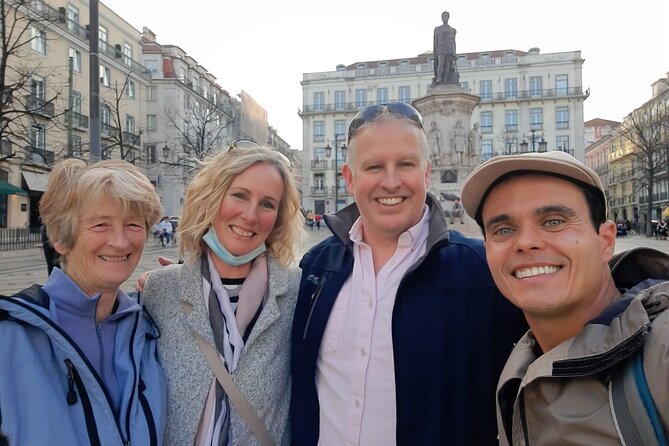
Reviewed · LISBON WALKING TOURS
Lisbon Highlights Guided Walking Tour
Lisbon is a city where buildings carry receipts from the past. This walking tour threads major landmarks through the stories that shaped Lisbon—especially the shock of the 1755 earthquake. I like how it gives you an instant sense of how the city was rebuilt, and I also like the fast, photo-friendly finish at Miradouro São Pedro de Alcântara. One thing to plan for: it is a real walk with hills, so good shoes matter.
You’ll get a clear orientation without feeling like you’re stuck in a lecture. The guide keeps things moving, and the stops are tightly chosen for big views, key street layouts, and “wait, how did that happen” history moments.
For value, this is hard to beat. At $21.72 for a professional guide (with fees included), it’s a budget-friendly way to sample the center of Lisbon in one sitting. My only caution: book ahead if your dates are fixed—this one averages about 43 days in advance, and groups are capped at 20.
In This Review
- Key things to know before you go
- Why this central Lisbon walk works so well
- The start at Praça do Comércio: Lisbon’s big reset button
- Augusta Street Arch and Rua Augusta: seeing Lisbon’s plan in stone
- Municipal Square and the end of monarchy: power, not just scenery
- Santa Justa Elevator: Lisbon’s iconic lift and a built-from-inspiration story
- Rossio Square (Praca Dom Pedro IV): oldest square, big escape story
- Igreja de São Domingos and the emotional side of history
- A Ginjinha: taste the city the easy way
- Casa do Alentejo: moorish influence in everyday Lisbon streets
- Avenida da Liberdade and Estação do Rossio: the city’s grand moves
- Carmo Square: the church that didn’t finish
- Luis de Camões Square and Café A Brasileira: writers, poets, and real hangout energy
- Ending at Miradouro São Pedro de Alcântara: your photo payoff
- Price and value: what $21.72 buys you in Lisbon time
- How to get the most out of it (without overplanning)
- Who this tour suits best
- Should you book this Lisbon highlights walking tour?
Key things to know before you go
- Two-and-a-half hours of focused central Lisbon, with no wasted detours
- Small group size (max 20), which helps the guide keep questions flowing
- English-led tour with a mobile ticket for easy check-in
- A lineup that connects Lisbon’s big turning points: 1755 earthquake, monarchy to republic, and dictatorship to revolution
- The route ends at Miradouro São Pedro de Alcântara, a strong “one last look” photo stop
Why this central Lisbon walk works so well
Lisbon’s center can feel like a maze until someone gives you the map behind the map. This tour does that with a tight route through Praça do Comércio, Augusta Street, Rossio, and the Chiado area, then finishes with a viewpoint. You’re not just seeing pretty places—you’re learning why those places look the way they do.
I also like that the pacing matches real sightseeing time. The tour is long enough to feel complete (about 2 hours 30 minutes), but short enough that you’ll still have energy left for lunch or a second wander. Reviews highlight guides like Jose and Jose Guia for making the city’s history feel relevant, and Thelma for clarity and restaurant tips—exactly the kind of practical value you want on day one.
And because this is a guided walk with a group limit of 20, you won’t be lost behind a crowd. If you’re the type who likes to ask questions—about the city layout, architecture, or the meaning behind landmarks—this format helps.
Lisbon at walking pace, a few more routes
- Lisbon: History, Stories and Lifestyle Walking Tour
★ 4.8 · 10,902 reviews - Best of Lisbon Small-Group Guided Walking Tour
★ 5.0 · 4,869 reviews - Lisbon: Food and Wine Small Group Walking Tour
★ 4.9 · 4,082 reviews - Best of Lisbon Walking Tour: Rossio, Chiado & Alfama
★ 4.9 · 2,700 reviews
The start at Praça do Comércio: Lisbon’s big reset button
The tour begins at Praça do Comércio, the massive square by the river. It’s a great starting point because it’s open, readable, and visually sets your bearings fast: you can look around and understand how the central city connects to the waterfront.
From here, you’ll hear how the Great Earthquake of 1755 reshaped about 80% of Lisbon. That number matters. It turns a lot of the city’s “why does it look like that?” questions into something you can actually explain.
What I like: you don’t just get the earthquake as a headline. You get it as a cause—something that drives the rebuilding choices you’ll see later on Rue Augusta and around the downtown grid.
A practical note: Praça do Comércio can be busy. Go easy on the phones at the start; set your meeting rhythm, then let the guide lead.
Augusta Street Arch and Rua Augusta: seeing Lisbon’s plan in stone
Next comes the Arco do Triunfo—the Augusta Street Arch. This is one of those landmarks that looks permanent and official, but on a good guided walk it turns into a story about what the city wanted to show the world.
From there, you’ll move along Rua Augusta, Lisbon’s key main street. The guide focuses on why this area was built as a grid. That’s a big deal in Lisbon: the city’s hills are famous, but the grid tells you Lisbon also experimented with order and control after disruption.
Why it’s valuable: once you understand the grid idea, you start noticing it everywhere. Streets stop feeling random. You can navigate more confidently later, even without a map app.
Also, the time at each stop is tight—so you’re not standing around waiting for your turn to move. Reviews praised the pace as right and the time as perfect, which matches the structure of a route like this.
Municipal Square and the end of monarchy: power, not just scenery
Then you’ll visit Municipal Square, where Lisbon’s City Hall is located. Here you’ll hear about the end of Portugal’s monarchy. That historical shift can feel abstract if you only read about it, but seeing it in the downtown layout makes it more real.
How this helps you as a visitor: once you know Lisbon’s political timeline—monarchy to the end of monarchy, then later dictatorship and revolution—more neighborhoods and buildings feel connected instead of random.
There’s a rhythm to the route here: big places with national-level stories. That keeps the tour from turning into trivia-only sightseeing.
Worth a look before you lock anything else in around Lisbon:

Santa Justa Elevator: Lisbon’s iconic lift and a built-from-inspiration story
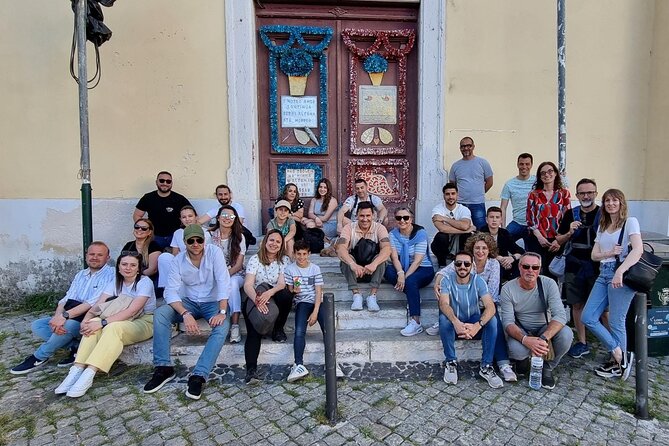
Next up is Elevador de Santa Justa. This tower-like structure is famous for a reason, and you’ll get the key context: it’s the only elevator of its kind in Portugal. You’ll also hear its connection to the Eiffel Tower concept.
What to expect: the stop is short, but it’s a strong “see it, then understand it” moment. You’ll look up, you’ll get the explanation, and suddenly the elevator stops being just a photo spot.
One consideration: elevators are iconic, but this tour is a walking highlights route. If you want to ride it, you’ll likely need to add that separately on your own time.
Rossio Square (Praca Dom Pedro IV): oldest square, big escape story
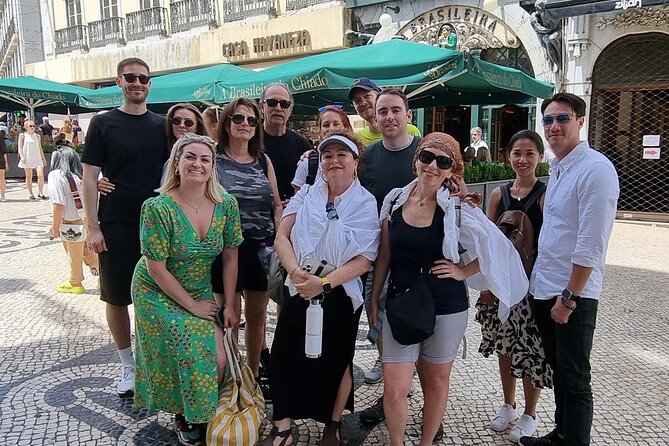
You’ll then head to Rossio Square, also known as Praca Dom Pedro IV. This square has been around since the 13th century, which instantly gives you a sense of continuity. Lisbon didn’t stop after the earthquake; the city kept stacking layers.
The guide also shares a story involving Portuguese stones and the escape of the Portuguese royal family to a foreign country. Details like this are exactly why a guided walk beats self-guided wandering—squares look similar until you learn what happened inside them.
Practical payoff: when you later return to Rossio for coffee or a metro connection, you’ll have a mental anchor. The place becomes meaningful instead of just central.
Igreja de São Domingos and the emotional side of history
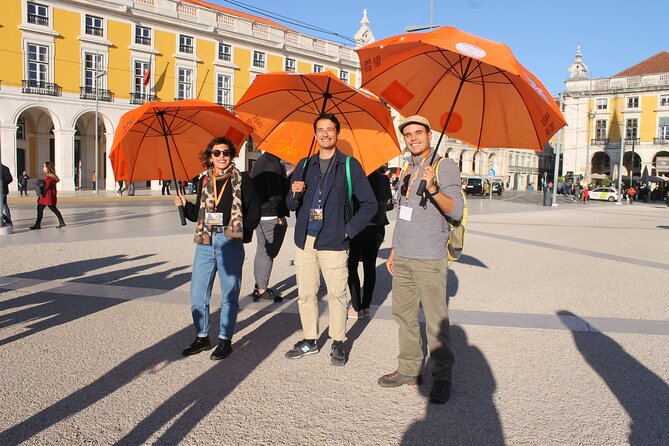
At Igreja de S Domingos (São Domingos Church), you’ll see one of the most unique churches in the world—at least in how it’s described in this route. The stop pairs the architecture with the story behind one of Lisbon’s saddest episodes.
I won’t guess the exact episode details here (you’ll get them from your guide), but I will tell you what makes this stop worth it: it’s not only about a pretty exterior or an interior you might rush through. It’s about what the city remembers.
Why this matters: Lisbon is often packaged as sunny and postcard-perfect. This stop adds the human weight. That gives the rest of the tour more contrast—and it helps you see why some streets and buildings feel so serious.
A Ginjinha: taste the city the easy way
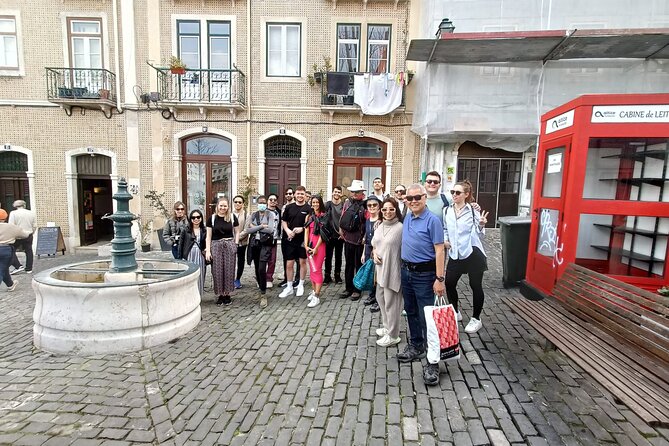
Then you’ll stop for A Ginjinha, the famous shop associated with ginjinha—a cherry liqueur that’s basically a Lisbon signature. You’ll learn why the shop became an institution.
Even if you don’t drink much, this stop is still useful. It helps you understand local food-and-drink culture in plain terms, not as some vague “local flavor” concept.
Tip I’d use: if you plan to sample something, keep it to one tasting. There’s still more walking and several viewpoints coming up.
Casa do Alentejo: moorish influence in everyday Lisbon streets
Next is Casa do Alentejo, one of Lisbon’s most unique buildings. The guide connects it to moorish influence in Portugal’s history.
This stop is a good reminder that Lisbon isn’t isolated. Portugal’s identity was shaped by centuries of contact across the Iberian world and beyond. You’ll leave with a clearer sense of how architecture can carry cultural fingerprints.
What I like about the pacing here: after heavier history stops, this one feels more architectural and visual. You get a break from emotional stories, without losing the thread.
Avenida da Liberdade and Estação do Rossio: the city’s grand moves
You’ll walk past Avenida da Liberdade, often compared to Lisbon’s Champs Élysées. The guide explains when it was built, which helps you understand why it feels more modern and ceremonial than some older downtown streets.
Then you’ll reach Estação do Rossio, described here as the first central station in Lisbon with magnificent architecture style found in Portugal. Stations are practical spaces, but great ones are also civic statements. This stop teaches you how the city thought about movement, arrival, and identity.
Why these stops are worth the minutes: they help you cover Lisbon beyond the “old town only” instinct. If you’re spending only a short time in Lisbon, this route balances old squares with more formal, later-era city planning.
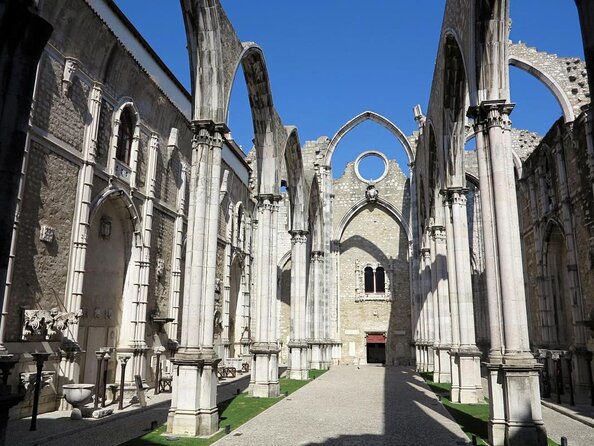
Carmo Square: the church that didn’t finish
In the Chiado area, you’ll see Carmo Square and learn why the church is unfinished. You’ll also get a guided look at another historical layer—Portugal’s dictatorship and the revolution that put an end to it.
This is one of those stops where a building becomes a timeline. An unfinished church isn’t just a quirk. It’s an imprint of decisions, conflict, and time.
What I take away every time I see something like this: it’s a reminder that history isn’t only in museums. It’s in what did not get rebuilt the way someone planned.
Luis de Camões Square and Café A Brasileira: writers, poets, and real hangout energy
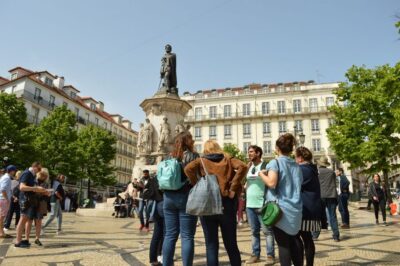
Next comes Praca Luis de Camoes in the Chiado walk. Here you’ll see fancy shops and the famous Café A Brasileira, described as a writers and poets meeting point in the 20th century.
Then you’ll hear about Luis de Camões Square as one of Lisbon’s important meeting points.
This stop works if you like culture beyond monuments. It also gives you an easy next move: after the tour, you can linger here and pick a café or restaurant in the area, using the square as your anchor.
Ending at Miradouro São Pedro de Alcântara: your photo payoff
The final stop is Miradouro São Pedro de Alcantara. This viewpoint is the kind of finish that makes the whole route feel complete: you’ve learned the stories, walked the streets, and now you get the city spread out in front of you.
Why it’s a smart ending: photos at viewpoints are better when you understand the streets below them. You can point, recognize, and connect what you saw earlier to what you’re looking at now.
And because it’s at the end, you can stay for as long as you want without worrying about catching up to the group.
Price and value: what $21.72 buys you in Lisbon time
Let’s talk money without the hand-waving. This tour costs $21.72 per person and includes a professional guide plus all fees and taxes. That means you’re mainly paying for the explanation and the route planning.
For that price, you get:
- a guided walkthrough of central Lisbon highlights in about 2 hours 30 minutes
- a clear storytelling thread (earthquake rebuilding, monarchy changes, dictatorship and revolution)
- multiple “photo and landmark” stops without the hassle of organizing each one separately
- practical city orientation you’ll keep using later
If you’re budgeting, this is the type of tour where the value comes from efficiency. Instead of hopping between sights with no context, you’re walking a curated spine of Lisbon. And because group size maxes at 20, you’re less likely to feel swallowed by the crowd.
How to get the most out of it (without overplanning)
If you want this to feel like a best-first-day Lisbon move, come ready to walk and listen.
- Bring comfortable shoes. Hills are part of the experience, even though it’s a central route.
- Have a drink plan. There’s a ginjinha stop, but that’s still not a full meal.
- Ask questions early. Guides like Jose and Shiri are described as engaging and clear, and you’ll get more out of the stories if you prompt the guide with your interests.
Also, since the tour is offered in English, you can relax about language and focus on the route.
Who this tour suits best
This walk fits well if you:
- want a first-time orientation to central Lisbon
- like history that connects to what you can physically see (squares, street design, architecture)
- prefer small-group movement with a guide who can explain and answer questions
- want a finish with a viewpoint that’s easy to revisit for photos
It’s also a solid option for families across ages, based on the range of groups described in feedback (teens through grandparents). Service animals are allowed, and most people can participate, but use your own judgment if stairs and hills are an issue.
Should you book this Lisbon highlights walking tour?
I’d book it if you want Lisbon’s top sights in one go with clear context, and you like the idea of ending at a viewpoint rather than rushing to your next thing. The route hits major icons like Praça do Comércio, Rua Augusta, Santa Justa, Rossio, Chiado, and Miradouro São Pedro de Alcântara, and it connects them with the city’s turning points—especially the earthquake of 1755 and later political changes.
Skip it only if you dislike walking, or if you’re already deeply familiar with Lisbon and just want quick, self-paced photo stops. In most other cases, this tour is a fast, practical way to understand Lisbon and start exploring with confidence.
More Tours in Lisbon
- Lisbon City Center Tour – The Unmissable Lisbon★ 5.0 · 22,234 reviews
- Lisbon: History, Stories and Lifestyle Walking Tour★ 4.8 · 10,902 reviews
- True 4Hour Private Tuk Tuk Tour: Discover Lisbon with a Local!★ 5.0 · 8,008 reviews
- Winner 2025 Undiscovered Lisbon Food & Wine Tour by Eating Europe★ 5.0 · 6,390 reviews
- Lisbon: Sintra, Pena, Cabo da Roca, Cascais Tour with Pickup★ 4.8 · 5,445 reviews
More Tour Reviews in Lisbon
- Lisbon City Center Tour – The Unmissable Lisbon★ 5.0 · 22,234 reviews
- Lisbon: Sintra, Pena, Regaleira, Cabo da Roca & Cascais★ 4.7 · 19,656 reviews
- Lisbon Card: 24, 48, or 72-Hour Pass★ 4.5 · 17,944 reviews
- Lisbon: Jerónimos Monastery Entrance Ticket★ 4.1 · 14,164 reviews
- Lisbon: History, Stories and Lifestyle Walking Tour★ 4.8 · 10,902 reviews
More of Lisbon, One Hill at a Time
- Lisbon: History, Stories and Lifestyle Walking Tour★ 4.8 · 10,902 reviews
- Best of Lisbon Small-Group Guided Walking Tour★ 5.0 · 4,869 reviews
- Lisbon: Food and Wine Small Group Walking Tour★ 4.9 · 4,082 reviews
- Best of Lisbon Walking Tour: Rossio, Chiado & Alfama★ 4.9 · 2,700 reviews
- Age of Discoveries Walking Tour in Belém★ 5.0 · 1,513 reviews
Just in: fresh Lisbon reviews from the team





Lisbon Walking Tours, compared.
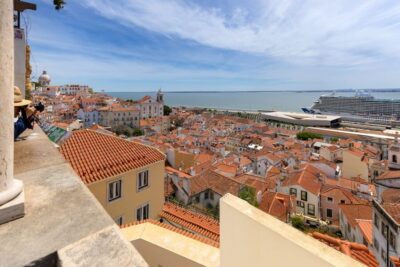 ★ 4.8History, Stories and Lifestyle Walking TourFrom $2910,902 reviews
 ★ 5.0Best of Lisbon Small-Group Guided Walking TourFrom $234,869 reviews
 ★ 4.9Food and Wine Small Group Walking TourFrom $724,082 reviews
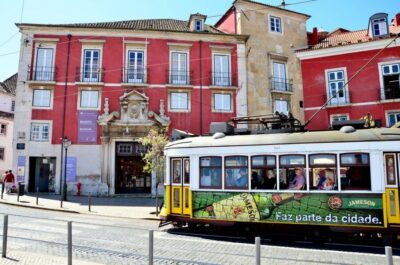 ★ 4.9Best of Lisbon Walking Tour: Rossio, Chiado & AlfamaFrom $232,700 reviews
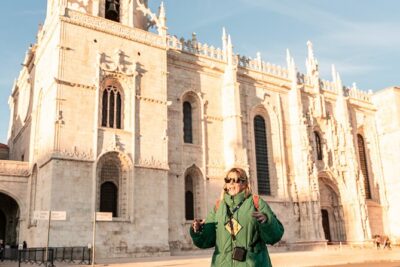 ★ 5.0Age of Discoveries Walking Tour in BelémFrom $31,513 reviews
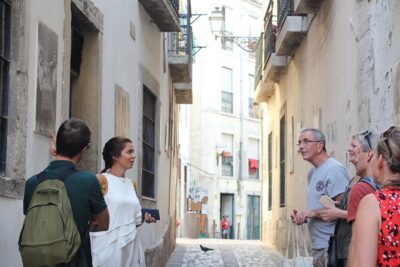 ★ 5.0Lisbon Roots – Small group Food & Culture Walking Tour w/tastingsFrom $168910 reviews
 ★ 4.9Starter Walking Tour to the highlights in GermanFrom $33781 reviews
 ★ 4.1Lisbon Tram No. 28 Ride & Walking TourFrom $23766 reviews
Browse the lists this tour appears in