
Alfama turns history into walking views. I love how this short tour guides you through the only part of Lisbon that survived the 1755 earthquake, right inside the maze of narrow lanes and old squares, where the past still feels close.
The second thing I really like is the mix of culture and scenery: St. George’s Castle for big panoramas, plus fado stories that give the neighborhood a soundtrack and a reason to matter.
A small drawback to flag up front: this is a hilly, cobbled district walking tour, and it’s not wheelchair accessible. Even if the ascent is described as gentle, you’ll still want good shoes and a bit of patience for uphill sections.
In This Review
- Key takeaways before you go
- Starting at Praça do Comércio: how you get your bearings fast
- Alfama’s streets: the 1755 earthquake story you can walk through
- Climbing toward St. George’s Castle for panoramic Lisbon
- Miradouro da Senhora do Monte: your “one big picture” moment
- Churches in Alfama: Cathedral and Church of St. Anthony
- Fado context: learning what the music means in the streets
- Walking pace, shoes, and weather reality in Alfama
- Price and value: what $30 buys you in real terms
- Who this tour fits best
- Should you book the Alfama District 2.5-Hour Walking Tour?
- FAQ
- Where is the meeting point?
- How long is the tour?
- What is included in the price?
- Is this tour wheelchair accessible?
- Are there discounts for children?
- Is the tour language English?
- What are the main places the tour visits?
- Can the itinerary change?
Key takeaways before you go
- Alfama’s 1755 earthquake survival explains why these streets feel different from the rest of Lisbon.
- St. George’s Castle photo stop gives you the views without turning the whole day into museum time.
- Miradouro da Senhora do Monte is the kind of viewpoint where Lisbon suddenly looks like one big plan.
- Fado history in real places ties the music of longing to the community that created it.
- Lisbon Cathedral plus Church of St. Anthony adds religious and architectural layers to the walk.
- A live English guide keeps the pace moving while you learn what to look for along the way.
Starting at Praça do Comércio: how you get your bearings fast
You begin at Pç. Comércio, Lisbon’s grand riverside square. It’s a smart starting point because it anchors everything: the Tagus is right there, and you can feel the city’s shape before you start climbing into Alfama.
Look for your guide by the monument at Praça do Comércio. Guides wear red t-shirts and carry an umbrella with the local partner’s name. If you’re arriving early, use a couple minutes to scan for the red shirt instead of stressing about timing.
Deeper into Alfama's lanes and miradouros
- Alfama Tour in Lisbon Old Town
★ 5.0 · 4,936 reviews - Private Lisbon Sightseeing Tuk-Tuk Tour: Alfama, Belém & More
★ 5.0 · 4,277 reviews - Lisbon: Hills, Alfama, and Mouraria Tour by Electric Bike
★ 4.8 · 3,438 reviews - Best of Lisbon Walking Tour: Rossio, Chiado & Alfama
★ 4.9 · 2,700 reviews
Alfama’s streets: the 1755 earthquake story you can walk through
The tour spends about 40 minutes walking through Alfama, one of Lisbon’s oldest and most atmospheric districts. The big idea here is simple: when you move through Alfama’s winding streets, you’re moving through a part of the city that the 1755 earthquake left behind when much of Lisbon was rebuilt elsewhere.
That single fact changes how you experience everything around you. You start noticing the older street pattern, the way small spaces open into ornate squares, and the feeling that the neighborhood has had time to grow its own identity. The walk also points out layers that go further back than you might expect, including references to Roman foundations and Moorish-style streets.
And yes, you’ll hear fado mentioned in context, not as a random cultural add-on. Alfama is described as the heart of fado music, a sound tied to longing and loss, and this guide approach helps you understand why that music belongs here. Even if you’re not a fado superfan, it’s an easier way to grasp the neighborhood’s emotional tone.
Practical note: Alfama’s streets are narrow and uneven. Plan on a steady walking rhythm rather than rushing from photo to photo.
Climbing toward St. George’s Castle for panoramic Lisbon
Next comes the São Jorge Castle stop for about 40 minutes, with time for photos and viewpoints. This is the classic Lisbon payoff: sun-bleached sandstone walls and a summit position that turns the city into a giant map.
The tour is designed to make the climb feel manageable. The ascent is described as gentle to help your breath catch up with the views. That matters because if you’ve been walking around Lisbon all day, the difference between a stressful climb and a steady one is huge.
What you’ll get at the castle stop is less about ticking a box and more about reading Lisbon. From up here, you can see why Alfama’s street layout makes sense, and why the river and hills shape where people built, traveled, and looked outward. A photo stop can still be meaningful if it helps you understand the geography.
If you’re thinking about going inside the castle areas, remember: entrance to sites or museums isn’t included. So treat this time as primarily exterior viewpoints and city viewing.
Miradouro da Senhora do Monte: your “one big picture” moment
After the castle, you head to Miradouro da Senhora do Monte, with about 40 minutes of sightseeing. This is where Lisbon often clicks for first-time visitors. The viewpoint is high enough to show neighborhoods spreading out, and it gives you that moment of orientation where you can finally tell what’s where.
What makes this stop valuable on a short tour is that it’s scheduled after you’ve already walked through Alfama and climbed up to the castle. Now you’re not just staring at a view. You’re matching what you see to what you just learned to look for: older streets, hill shapes, and the way the Tagus frames the city.
Bring your phone, but also take a few seconds to look without it. Views from Lisbon’s miradouros can feel similar if you’re rushing. This one gets you time to actually read the scene.
Lisbon at walking pace, a few more routes
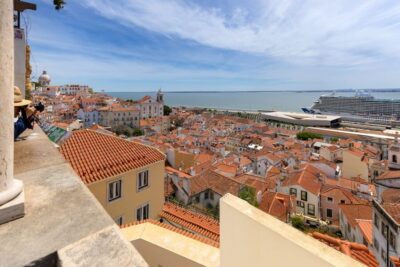


Churches in Alfama: Cathedral and Church of St. Anthony
The tour finishes at Lisbon Cathedral, and the highlight list also mentions the Church of St. Anthony. That religious stop pattern isn’t random. It’s part of how Alfama connects different eras of Portuguese life in one walk.
Here’s what I like about including these places even when the tour time is short: churches act like landmarks you can remember. When you later wander on your own, you’ll have a mental map tied to real architecture instead of just street names.
Lisbon Cathedral is a strong finish because it shifts the mood from hillside views back to built history. Meanwhile, Church of St. Anthony fits the theme of layered community life in Alfama, where faith, local identity, and daily rhythms have long coexisted with cultural traditions like fado.
If you’re hoping to go inside every place, double-check what’s included on the day. Entrance fees aren’t included, so you may want to plan a little extra time or budget for any interior visits you care about.
Fado context: learning what the music means in the streets
Fado can be tricky for visitors. If you treat it like a show, it stays surface-level. This tour handles it differently by placing fado history inside the Alfama setting.
You get a guided explanation of how fado grew in this area, described as a neighborhood voice shaped by multiple languages, cultures, and religions. The point isn’t to turn you into a fado scholar. It’s to help you hear the connection between the music of longing and the tight streets, old community spaces, and long memory of Alfama.
This is also where the guides’ style shows up. People mention guides who keep the experience moving and make the history feel like it belongs to the city, not to a lecture hall. You’ll also get practical ideas on where to look next for fado after the tour.
Some guides leading this walk have been praised for adding extra personality to the story. I’ve seen names like Teresa, Antonio, Rita, Fred, Raquel, Pascal, and Jorge associated with strong pacing and memorable local context. Even if your guide’s personality is different, the goal stays the same: leave with a stronger sense of why fado sounds the way it does, and why Alfama carries it.
Walking pace, shoes, and weather reality in Alfama
This is a 2.5-hour walking experience, so it’s not trying to cover every corner of Lisbon. It focuses on the high-value route: Alfama streets, the castle viewpoint, a top miradouro, and an end at the cathedral.
The reviews and tour notes point to a real-world truth: you’re walking on uneven pavement in a district built around hills. If you hate slipping on cobblestones, treat footwear as part of your itinerary. Comfortable, grippy shoes matter here more than anything you bring in your bag.
Weather changes the vibe fast in Lisbon. If it’s sunny, you’ll want water and some shade breaks. If it’s windy, miradouros can feel cooler, but you’ll still be outside for long stretches. Since you’re outside most of the time, dressing for conditions is part of getting the full experience.
Price and value: what $30 buys you in real terms
At $30 per person for a 2.5-hour guided walk with a local guide, this is the kind of price that makes sense for an orientation day. You’re paying for two things: a human guide to interpret the streets, and time you save from trying to figure out the story of Alfama on your own.
Also consider the value trade-off: entrance to sites or museums isn’t included, which usually keeps the tour affordable and keeps the schedule flexible. So you’re not paying for a long museum circuit. You’re paying for context, viewpoints, and a clean route that ends where you can keep exploring.
Children under 13 go free, which can make it a good family option if the kids can handle the walking and hills. Just keep in mind the route is not wheelchair accessible.
Who this tour fits best
This one is ideal if you want:
- A first-time Lisbon foundation focused on Alfama’s identity
- A scenic route with viewpoints that actually help you orient
- Culture explained in place, especially fado context rather than a generic history talk
It may not be for you if you:
- Need wheelchair access (it isn’t suitable)
- Want a mostly flat walk
- Prefer lots of indoor time, since entrances aren’t included and the pacing emphasizes outdoor streets and viewpoints
Should you book the Alfama District 2.5-Hour Walking Tour?
I’d book it if you want a smart introduction to Lisbon that feels local, not staged. For the money, you’re getting the story of Alfama’s survival after the 1755 earthquake, a real sequence of viewpoint moments, and cultural context around fado tied to the streets you’re walking.
Skip it or think twice if your mobility is limited or if cobblestones and hills are a deal-breaker. If you can handle uneven pavement and short climbs, this is a high-value way to start a Lisbon trip with the city’s most atmospheric district at the center of it.
FAQ
Where is the meeting point?
Meet your guide by the monument at Praça do Comércio.
How long is the tour?
The tour lasts 2.5 hours.
What is included in the price?
You get a local guide. Entrance to sites or museums is not included.
Is this tour wheelchair accessible?
No. The tour is not wheelchair accessible.
Are there discounts for children?
Yes. Children under 13 go free of charge.
Is the tour language English?
Yes, the live guide is English.
What are the main places the tour visits?
You’ll walk through Alfama, have time at São Jorge Castle, see Miradouro da Senhora do Monte, and finish at Lisbon Cathedral. The tour also includes Church of St. Anthony.
Can the itinerary change?
Yes. The itinerary may change if the guide customizes the tour for your group.
More Tour Reviews in Lisbon
- Lisbon City Center Tour – The Unmissable Lisbon★ 5.0 · 22,234 reviews
- Lisbon: Sintra, Pena, Regaleira, Cabo da Roca & Cascais★ 4.7 · 19,656 reviews
- Lisbon Card: 24, 48, or 72-Hour Pass★ 4.5 · 17,944 reviews
- Lisbon: Jerónimos Monastery Entrance Ticket★ 4.1 · 14,164 reviews
- Lisbon: History, Stories and Lifestyle Walking Tour★ 4.8 · 10,902 reviews
More of Lisbon, One Hill at a Time
- Lisbon: History, Stories and Lifestyle Walking Tour★ 4.8 · 10,902 reviews
- Best of Lisbon Small-Group Guided Walking Tour★ 5.0 · 4,869 reviews
- Lisbon: Food and Wine Small Group Walking Tour★ 4.9 · 4,082 reviews
- Best of Lisbon Walking Tour: Rossio, Chiado & Alfama★ 4.9 · 2,700 reviews
- Age of Discoveries Walking Tour in Belém★ 5.0 · 1,513 reviews
Keep Wandering Old Alfama
- Alfama Tour in Lisbon Old Town★ 5.0 · 4,936 reviews
- Private Lisbon Sightseeing Tuk-Tuk Tour: Alfama, Belém & More★ 5.0 · 4,277 reviews
- Lisbon: Hills, Alfama, and Mouraria Tour by Electric Bike★ 4.8 · 3,438 reviews
- Best of Lisbon Walking Tour: Rossio, Chiado & Alfama★ 4.9 · 2,700 reviews
- Lisbon: Baixa District Food Tour with Dinner and Drinks★ 4.9 · 1,997 reviews
Just in: fresh Lisbon reviews from the team





Alfama & Old Town Tours, compared.
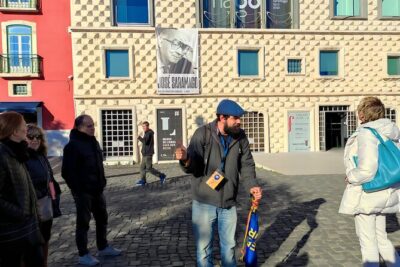 ★ 5.0Alfama Tour in Lisbon Old TownFrom $34,936 reviews
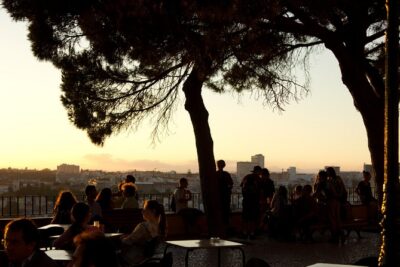 ★ 5.0Private Lisbon Sightseeing Tuk-Tuk Tour: Alfama, Belém & MoreFrom $524,277 reviews
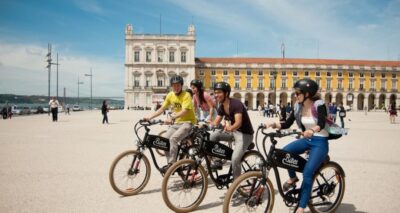 ★ 4.8Hills, Alfama, and Mouraria Tour by Electric BikeFrom $253,438 reviews
 ★ 4.9Best of Lisbon Walking Tour: Rossio, Chiado & AlfamaFrom $232,700 reviews
 ★ 4.9Baixa District Food Tour with Dinner and DrinksFrom $931,997 reviews
 ★ 5.0Lisbon Small-Group Food Tour with 18 Tastings in Alfama DistrictFrom $1261,967 reviews
 ★ 4.5Lisbon E-Bike Tour Commerce Square, Mouraria and AlfamaFrom $301,688 reviews
 ★ 5.0Old Town TukTuk Tour and Scenic Viewpoints in AlfamaFrom $35974 reviews
Browse the lists this tour appears in