

Reviewed · LISBON WALKING TOURS
3-Hour Private Guided Walking Tour of Lisbon
Lisbon clicks into place on this guided loop. You’ll love the private flow through classic sights plus local stops (like A Ginjinha) and you’ll love how the viewpoints make Lisbon’s hills and neighborhoods feel understandable, not just scenic. One consideration: it’s a lot of walking for a 3-hour window, with some uphill stretches, so you’ll want comfy shoes.
I also like that the guide experience is personal. The reviews consistently highlight a guide named Pedro for being friendly and really into the stories behind Lisbon’s landmarks, not just reciting facts. With a small group (up to 8) and a route designed to cover a big slice of the city, this feels like a fast way to get your bearings—without the rushed bus-tour vibe.
In This Review
- Key Highlights You Should Expect
- A Private, 3-Hour Route That Actually Connects Neighborhoods
- Starting at Estação do Rossio: The Perfect Lisbon Scene-Setter
- Praça Dom Pedro IV: A Square That Acts Like a Stage
- A Ginjinha Stop in Real Life, Not a Museum
- Praça da Figueira: A Classic Square Right Next Door
- Igreja de S Domingos: A Quick Church Stop That Adds Depth
- Mouraria: The Fado District Walk (Including a Graffiti Clue)
- Miradouro Chão do Loureiro: A View That Explains the City
- Alfama: The Most Famous District Gets Its Walk-Through Moment
- Miradouro de Santa Luzia and Portas do Sol: Two Angles, Same Lesson
- Lisbon Cathedral: The Most Beautiful Church, With a Real Sense of Place
- Baixa de Lisboa: Rebuilt After 1755, and Still the City Center
- Praça do Comércio (Terreiro do Paco): River Views That Land the Route
- Chiado and Praça Luís de Camões: Ending With Style and Familiar Energy
- Price and Value for a Private Group
- Who This Tour Suits Best
- What Could Be a Deal Breaker for Some People
- Should You Book This 3-Hour Private Walking Tour?
- FAQ
- How long is the 3-Hour Private Guided Walking Tour of Lisbon?
- What is the price and what group size is it for?
- Is this tour private?
- Where do we meet and where does the tour end?
- What language is the tour offered in?
- Do I get a ticket on my phone?
- Are the stops admission-free?
- Is there public transportation nearby?
- What is the cancellation policy?
Key Highlights You Should Expect
- Rossio Station as the opening scene: a dramatic start with the kind of architecture that sets the tone for the whole day.
- Ginjinha stop built in: you get an easy, local move at a real spot for the typical cherry liqueur.
- Mouraria and fado markers: the walk includes the district known for fado, plus a graffiti clue called Fado Vadio.
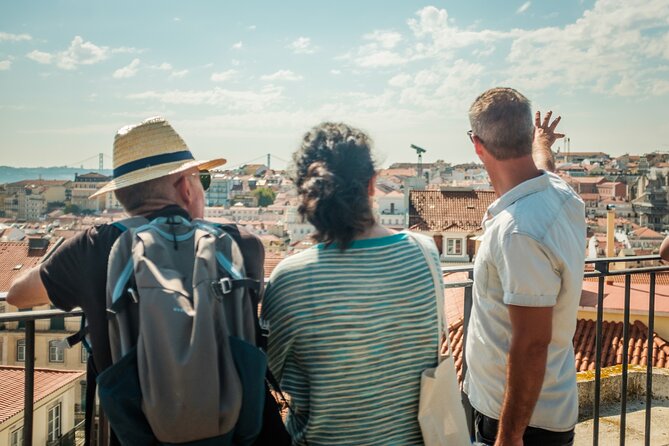
- Three viewpoint moments: Miradouro Chão do Loureiro, Santa Luzia, and Portas do Sol help you understand how Lisbon sits.
- A proper Alfama walk-through: you don’t just look from afar—you pass through the most famous district.
- Riverfront finale back in the center: Praça do Comércio (Terreiro do Paco) plus Chiado brings the route full circle.
A Private, 3-Hour Route That Actually Connects Neighborhoods
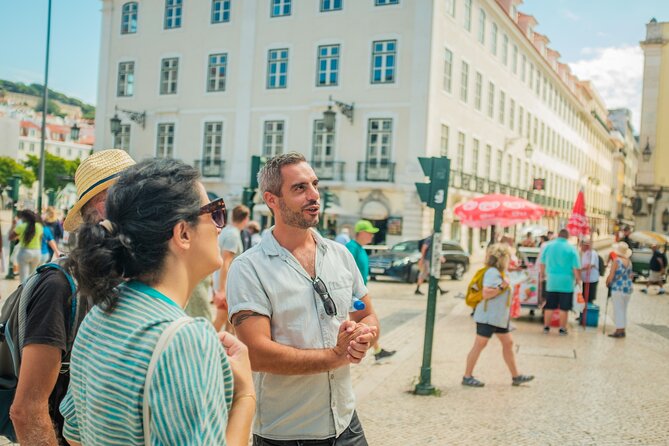
This is the kind of walking tour that works best when you want structure. In a single morning or afternoon, you’ll go from Lisbon’s big train-station energy into old-square rhythms, then down into the story-heavy lanes of Alfama and back toward the center by the river and the more stylish streets of Chiado.
What makes it feel valuable is the pacing. Most stops are short—often around 10–15 minutes—so you’re not stuck listening for long stretches. Instead, you get quick context, a couple of minutes to look around, and then you move on. That helps Lisbon feel less like a checklist and more like a connected map in your head.
And because it’s private for your group (up to 8), the guide can adjust the rhythm a bit for your pace. That matters on Lisbon’s uneven streets and steps.
Lisbon at walking pace, a few more routes
- Lisbon: History, Stories and Lifestyle Walking Tour
★ 4.8 · 10,902 reviews - Best of Lisbon Small-Group Guided Walking Tour
★ 5.0 · 4,869 reviews - Lisbon: Food and Wine Small Group Walking Tour
★ 4.9 · 4,082 reviews - Best of Lisbon Walking Tour: Rossio, Chiado & Alfama
★ 4.9 · 2,700 reviews
Starting at Estação do Rossio: The Perfect Lisbon Scene-Setter
You’ll begin at Estação do Rossio, widely seen as one of Lisbon’s most beautiful stations. Think light, tilework, and that grand “arrival” feeling—even if you’re not getting on a train. Starting here is a smart choice because it tells you something right away: Lisbon mixes grand public spaces with neighborhood life.
Practical tip: if you’re arriving early, take a minute to look up and around before you meet up. You’ll save time later and you’ll get the best first impression.
What you’ll like here: it’s a visual warm-up, and it anchors the whole route in central Lisbon.
Praça Dom Pedro IV: A Square That Acts Like a Stage
From Rossio, you head to Praça Dom Pedro IV. This is one of the emblematic Lisbon squares, the kind of place where people cross in multiple directions and the city feels on display. It’s also a good place for the guide to set themes: Lisbon’s identity is shaped by layers—old districts, rebuilt areas, and public spaces that keep acting as meeting points.
Since you only spend about 10 minutes here, don’t expect a deep “sit and study” moment. Instead, use it to orient yourself. Look at how the streets funnel away from the square and imagine where the route will take you next—toward Mouraria and Alfama’s older maze.
A Ginjinha Stop in Real Life, Not a Museum
Next comes A Ginjinha, an authentic stop to drink the typical cherry liqueur. This is one of those Lisbon “small but real” moments that makes a tour memorable. It’s not just a drink—it’s a local ritual, and it gives you a comfortable break without breaking the walking flow.
You’ll be there briefly, so order what’s available quickly. If you’re sharing, it’s an easy way to try something you can’t really replicate at home.
Why this matters: it’s an emotional reset. After looking at stations and squares, tasting a local specialty makes the day feel lived-in.
Worth a look before you lock anything else in around Lisbon:

Praça da Figueira: A Classic Square Right Next Door
After that, you move to Praça da Figueira, often described as the “little sister” to the earlier square. It’s a great contrast stop: same general central energy, but with a slightly different feel. If you like seeing how Lisbon repeats a theme—big civic spaces, street-level life—you’ll enjoy this.
Don’t rush through it. Even on a short stop, give yourself a chance to watch the street rhythm for a minute or two. That’s how Lisbon starts to feel like a place you could actually spend time in.
Igreja de S Domingos: A Quick Church Stop That Adds Depth
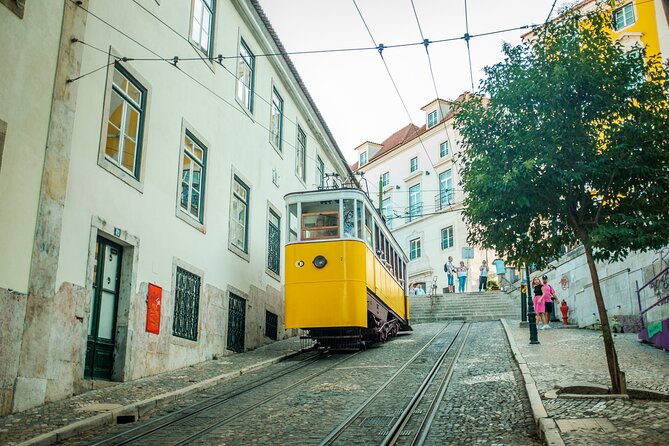
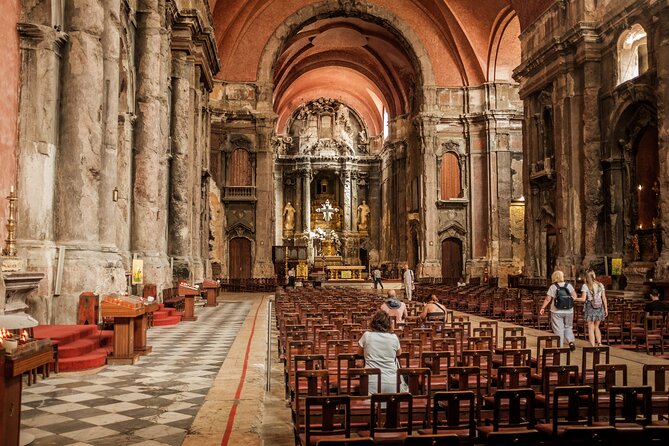
Then you head to Igreja de S Domingos, a small church you shouldn’t skip. Churches in Lisbon do more than offer religious space; many function as history markers, memory holders, and proof of how the city keeps rebuilding while staying itself.
You’ll spend about 10 minutes here. Use that time for what’s most practical: look for the details you can’t replicate from street level, and notice the scale and design without overthinking it. This is a “short pause with payoff” kind of stop.
Mouraria: The Fado District Walk (Including a Graffiti Clue)
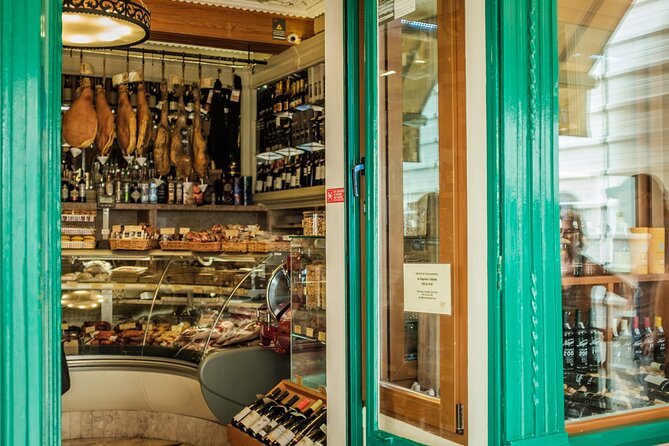
Next up is Mouraria, home to the city’s fado tradition, with stops connected to that identity. You’ll visit Monumento Mouraria Berço do Fado and also Fado Vadio, a graffiti on a wall you’ll see in the district.
This is where the tour starts to feel more like a story walk. Mouraria isn’t just a location; it’s a mood—narrow streets, older textures, and a sense of culture that’s tied to sound and memory. Even if you don’t go to a fado performance that day, the walk itself gives context.
How to get more out of it: slow down slightly in Mouraria. The streets are less about straight lines and more about turning corners and reading the space around you.
Miradouro Chão do Loureiro: A View That Explains the City

Now you reach Miradouro Chão do Loureiro, a belvedere with a great view over Lisbon’s historic center. This viewpoint stop is more than a photo moment. It helps you understand the city’s layout: hills, districts, and how Lisbon’s neighborhoods stack on each other.
The timing here is perfect. You’ve moved through stations, squares, and fado territory—now the city opens up visually.
Practical advice: if it’s windy, step closer to the view area quickly and keep your phone secure. Viewpoints can be breezy, even when the walking streets feel calm.
Alfama: The Most Famous District Gets Its Walk-Through Moment
Then you get to Alfama, Lisbon’s most famous district. You’ll spend about 15 minutes here, and that’s a sweet spot: long enough to feel like you’re inside it, not long enough to get lost with no context.
Alfama is the place many people imagine when they picture Lisbon—old streets, layered architecture, and a sense that the city keeps its personality even as it evolves.
What I like about including Alfama: it turns your earlier viewpoints and squares into something meaningful. You can look at the city from above, then walk into the neighborhood that created the look.
Miradouro de Santa Luzia and Portas do Sol: Two Angles, Same Lesson
After Alfama, you visit Miradouro de Santa Luzia for an overlook of Alfama, then Miradouro das Portas do Sol, a lookout point right nearby that gives a different view angle.
Doing two viewpoints back-to-back is smart. Lisbon’s best trick is that the city looks different just by shifting your position. From one viewpoint you’ll see one shape and street pattern; from the next you’ll notice another. It’s the quickest way to grasp how the streets, roofs, and terraces relate to one another.
If you hate crowded viewpoints: go with the timing you get from your guide. The stop lengths are short, and a private tour often keeps you from getting stuck in the worst rush.
Lisbon Cathedral: The Most Beautiful Church, With a Real Sense of Place
Next comes Lisbon Cathedral, described as the most beautiful church in Lisbon. You’ll have around 15 minutes. This is a place where the tour’s pacing pays off—you don’t linger so long that you start tuning out, but you do get enough time to feel the space.
Even if you’re not a big church person, cathedrals in cities like Lisbon carry weight because they anchor layers of rebuilding and identity. You’ll likely notice how the cathedral’s presence changes the feel of the surrounding streets.
Baixa de Lisboa: Rebuilt After 1755, and Still the City Center
From the cathedral, you head into Baixa de Lisboa, the central district rebuilt after the earthquake of 1755. This stop gives you an important contrast. Alfama feels old and maze-like. Baixa feels planned and central.
Spending only about 10 minutes here means you’re not doing a full architecture lecture. But you can still appreciate the difference in street layout and how Lisbon’s center acts like its civic heart.
Why this is valuable: you finish the older districts with a look at the rebuilt core. That’s how Lisbon makes sense—then it doesn’t just look pretty, it starts feeling logical.
Praça do Comércio (Terreiro do Paco): River Views That Land the Route
Then you arrive at Praça do Comércio (Terreiro do Paco), a big square overlooking the Tagus River (Tejo). This is one of those “reset your eyes” moments. After hills and tight streets, the open space and river view feel like Lisbon exhaling.
You’ll spend about 15 minutes. Use it to look across the water, scan the buildings around the square, and let the scale sink in. It’s a great payoff point near the end of a walking tour because it frames everything you saw earlier.
Chiado and Praça Luís de Camões: Ending With Style and Familiar Energy
After the riverfront, the walk shifts to Chiado, a neighborhood with a more chic feel. You’ll spend about 10 minutes there, just enough to sense the change from Baixa and river area.
Then you finish at Praça Luís de Camoes, an emblematic square and a classic place to end. The tour ends at Praça Luís de Camões at the foot of the statue, so you have a clear final reference point.
If you want an easy next step after the tour, this ending location is useful. You’re back in a more central area, and it’s straightforward to keep exploring on your own.
Price and Value for a Private Group
At $204.38 per group (up to 8 people) for about 3 hours, this isn’t priced like a budget group tour. But private walking tours often make sense if you’re traveling as a small group or family.
Here’s the simple math: if you fill the group, it works out to about $25 per person. Even with fewer people, you’re still buying something practical—your guide, your pace, and a route that’s heavy on viewpoints and neighborhood context.
I think it’s best value when:
- You want a fast orientation in Lisbon’s key areas
- You care about fado culture and older neighborhoods like Alfama and Mouraria
- You prefer a guided route over piecing together viewpoints and streets on your own
Who This Tour Suits Best
This is a great fit for first-timers who want more than postcard stops. It’s also ideal if you want a walking day that feels structured but not rigid—short stops, quick context, and a route that connects the dots.
You’ll likely enjoy it if you:
- Like history and culture tied to real places
- Want viewpoint time without planning a separate outing
- Prefer a small, private group experience
What Could Be a Deal Breaker for Some People
The main drawback is pacing. The day covers a lot—Rossio, squares, Mouraria/fado markers, multiple miradouro viewpoints, Alfama, cathedral, Baixa, and the riverfront—within a compact 3-hour window. If you need slow, frequent breaks, you may feel rushed.
Also, note the language details listed for the tour. The features mention English, while the additional info notes French only. If language is a priority, confirm what your guide will speak when you book.
Should You Book This 3-Hour Private Walking Tour?
If you want a smart, compact Lisbon intro, I’d book it. The route hits the highest-value mix: classic sights, a local food-and-drink pause, fado district markers, and multiple viewpoints that help the city make sense. The near-perfect ratings and the praise for Pedro’s friendly, story-focused approach are exactly what you want from a private guide.
Book it if you:
- Want a guided route with real neighborhood texture
- Like viewpoints and walking through Alfama rather than only looking from afar
- Travel with a small group and can share the cost
Skip it if:
- You strongly dislike hills and uneven walking
- You need long museum-style stops or slow, sit-down pacing
- You need a specific tour language and can’t confirm it ahead of time
FAQ
How long is the 3-Hour Private Guided Walking Tour of Lisbon?
The tour lasts about 3 hours.
What is the price and what group size is it for?
It costs $204.38 per group, for up to 8 people.
Is this tour private?
Yes. It’s a private tour, so only your group participates.
Where do we meet and where does the tour end?
The start is at Teatro Nacional Dona Maria I I, Praça Dom Pedro IV, 1100-201 Lisboa (at the foot of the statue). The end is Praça Luís de Camões, 1200-243 Lisboa (at the foot of the statue).
What language is the tour offered in?
The tour info lists English, and the additional info also states French only. Check the language details when you book to be sure.
Do I get a ticket on my phone?
Yes, the tour offers a mobile ticket.
Are the stops admission-free?
The stops listed are marked with free admission tickets.
Is there public transportation nearby?
Yes, the tour is near public transportation.
What is the cancellation policy?
Free cancellation is available up to 24 hours before the experience starts, with a full refund if you cancel at least 24 hours in advance.
More Tours in Lisbon
- Lisbon City Center Tour – The Unmissable Lisbon★ 5.0 · 22,234 reviews
- Lisbon: History, Stories and Lifestyle Walking Tour★ 4.8 · 10,902 reviews
- True 4Hour Private Tuk Tuk Tour: Discover Lisbon with a Local!★ 5.0 · 8,008 reviews
- Winner 2025 Undiscovered Lisbon Food & Wine Tour by Eating Europe★ 5.0 · 6,390 reviews
- Lisbon: Sintra, Pena, Cabo da Roca, Cascais Tour with Pickup★ 4.8 · 5,445 reviews
More Tour Reviews in Lisbon
- Lisbon City Center Tour – The Unmissable Lisbon★ 5.0 · 22,234 reviews
- Lisbon: Sintra, Pena, Regaleira, Cabo da Roca & Cascais★ 4.7 · 19,656 reviews
- Lisbon Card: 24, 48, or 72-Hour Pass★ 4.5 · 17,944 reviews
- Lisbon: Jerónimos Monastery Entrance Ticket★ 4.1 · 14,164 reviews
- Lisbon: History, Stories and Lifestyle Walking Tour★ 4.8 · 10,902 reviews
More of Lisbon, One Hill at a Time
- Lisbon: History, Stories and Lifestyle Walking Tour★ 4.8 · 10,902 reviews
- Best of Lisbon Small-Group Guided Walking Tour★ 5.0 · 4,869 reviews
- Lisbon: Food and Wine Small Group Walking Tour★ 4.9 · 4,082 reviews
- Best of Lisbon Walking Tour: Rossio, Chiado & Alfama★ 4.9 · 2,700 reviews
- Age of Discoveries Walking Tour in Belém★ 5.0 · 1,513 reviews
Just in: fresh Lisbon reviews from the team





Lisbon Walking Tours, compared.
 ★ 4.8History, Stories and Lifestyle Walking TourFrom $2910,902 reviews
 ★ 5.0Best of Lisbon Small-Group Guided Walking TourFrom $234,869 reviews
 ★ 4.9Food and Wine Small Group Walking TourFrom $724,082 reviews
 ★ 4.9Best of Lisbon Walking Tour: Rossio, Chiado & AlfamaFrom $232,700 reviews
 ★ 5.0Age of Discoveries Walking Tour in BelémFrom $31,513 reviews
 ★ 5.0Lisbon Roots – Small group Food & Culture Walking Tour w/tastingsFrom $168910 reviews
 ★ 4.9Starter Walking Tour to the highlights in GermanFrom $33781 reviews
 ★ 4.1Lisbon Tram No. 28 Ride & Walking TourFrom $23766 reviews
Browse the lists this tour appears in