
Reviewed · LISBON WALKING TOURS
Walking tour: Lisbon in the Shadows of World War II
WWII whispers still linger in Lisbon, and this tour leans into that feeling. It traces how neutral Portugal under António Oliveira Salazar became both a lifeline for refugees and a stage for espionage during World War II. You’ll walk the city as if you’re reading a story written on doorways, cafés, and street corners.
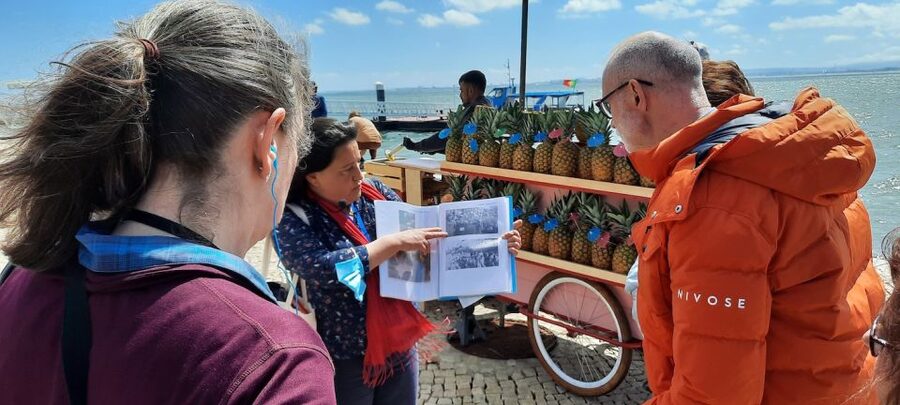
I especially like the small-group pace and the fact that guide Leonor Abrantes shows up with supplemental materials to keep the details clear. One drawback to plan around: it runs rain or shine, and it’s not built for stopping to eat—so wear good shoes and expect no food included.
In This Review
- Key things I’d circle before you book
- WWII Lisbon makes sense once you see the streets
- Starting near Marquês de Pombal: the right mood for the story
- Parque Eduardo VII and Avenida da Liberdade: Portugal’s skyline viewpoint
- Restauradores Square to Baixa: where the war news felt close
- Chiado’s café culture: spies, refugees, and the sound of rumors
- The notable names you hear along the way
- Praça Dom Pedro IV to Cais do Sodré: walking toward the river
- Price and value: is $170 per group worth it?
- Guide Leonor Abrantes: the difference is the prep
- Is this tour the right fit for you?
- Practical tips so you enjoy the walk (not just endure it)
- Should you book this Lisbon WWII walking tour?
- FAQ
- Where is the meeting point?
- How long is the Lisbon in the Shadows of World War II walking tour?
- What does the tour cost?
- What languages is the live guide?
- Where does the tour end, and what can I do nearby?
- Does the tour include food and drinks?
- Does the tour run in rain?
- Is the tour wheelchair accessible?
Key things I’d circle before you book
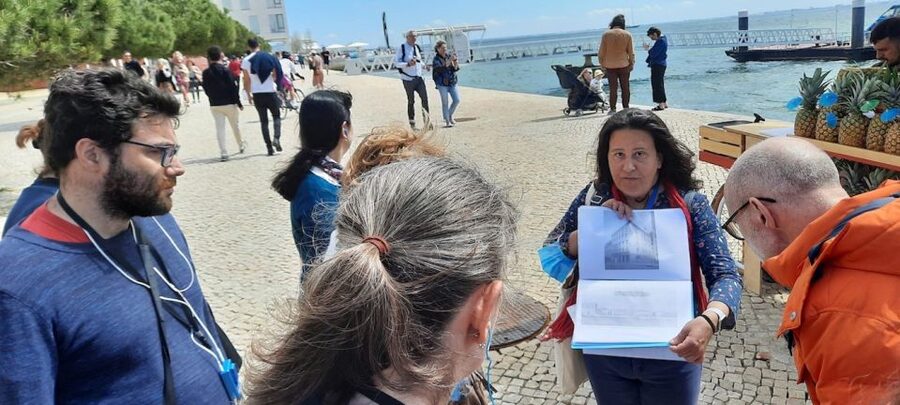
- A wartime guide (Leonor Abrantes) who brings extra materials to make the stories easier to follow
- A focused 3-hour route that connects the Marquês de Pombal area to Cais do Sodré
- Espionage plus refugees, not just one side of the war story
- Café stops including Café Chave d’Ouro and Pastelaria Suiça, where the mood around the war felt personal
- Big-city overview early on, with a photo stop at Parque Eduardo VII
WWII Lisbon makes sense once you see the streets
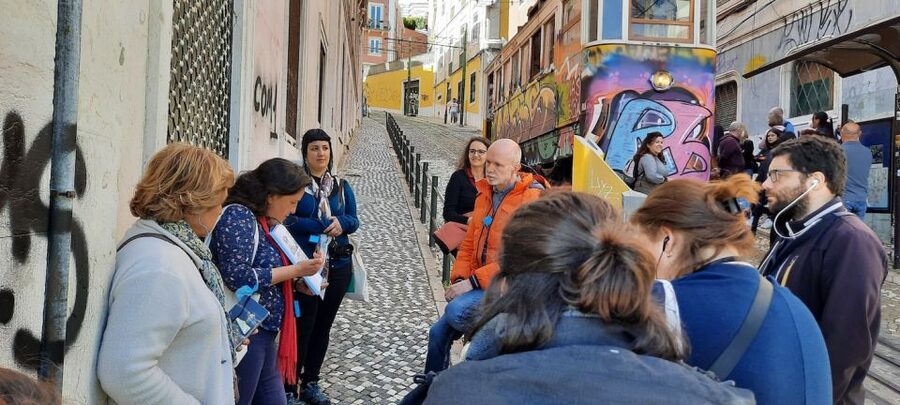
Lisbon during World War II wasn’t a battlefield in the usual way. Still, the city carried the pressure of the era every day—especially because Portugal stayed neutral under the dictatorship of António Oliveira Salazar.
That neutrality had consequences. Lisbon turned into a waiting zone for refugees trying to get visas to leave war-torn Europe. At the same time, it became an attractive place to watch and to influence, so spies from Britain, Germany, and the United States moved through the city—and the Portuguese political police kept an eye on it all.
What makes this walk different from a standard “history tour” is the mix. You don’t just hear about politics. You see why ordinary street life mattered: where people lingered, where news spread, and how conversations could be monitored. In three hours, the city starts to feel like a living intelligence map.
Lisbon at walking pace, a few more routes
- Lisbon: History, Stories and Lifestyle Walking Tour
★ 4.8 · 10,902 reviews - Best of Lisbon Small-Group Guided Walking Tour
★ 5.0 · 4,869 reviews - Lisbon: Food and Wine Small Group Walking Tour
★ 4.9 · 4,082 reviews - Best of Lisbon Walking Tour: Rossio, Chiado & Alfama
★ 4.9 · 2,700 reviews
Starting near Marquês de Pombal: the right mood for the story
Your meeting point is in front of Café A Padaria Portuguesa at Praça Marquês de Pombal 12. Starting here helps you get your bearings fast, because it’s a major Lisbon hub and it sets the tone for a city-wide story rather than a single neighborhood.
From the start, Leonor Abrantes frames Lisbon’s late-1930s and 1940s reality: a capital where people were waiting for paperwork and outcomes, while others were hunting for information. You’ll also hear how the area connected to the once-famous Hotel Aviz, which helps give the setting weight without turning it into a lecture.
One practical note: because this is a walk, you’ll want comfortable shoes and a light layer. The route is paced for story, not sightseeing-by-photo-only.
Parque Eduardo VII and Avenida da Liberdade: Portugal’s skyline viewpoint
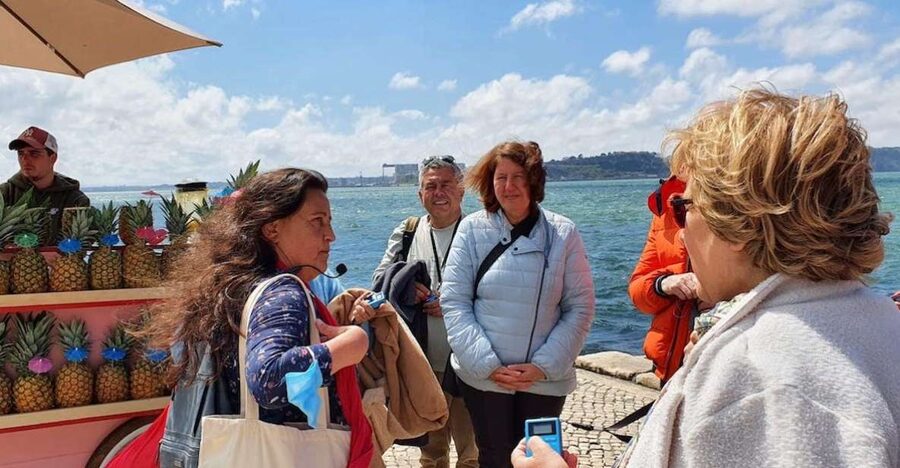
The tour includes a stop at Parque Eduardo VII, starting with a photo stop (about 15 minutes) and then guided context. This part matters because it gives you an overview of the city before you zoom in on the drama happening street level.
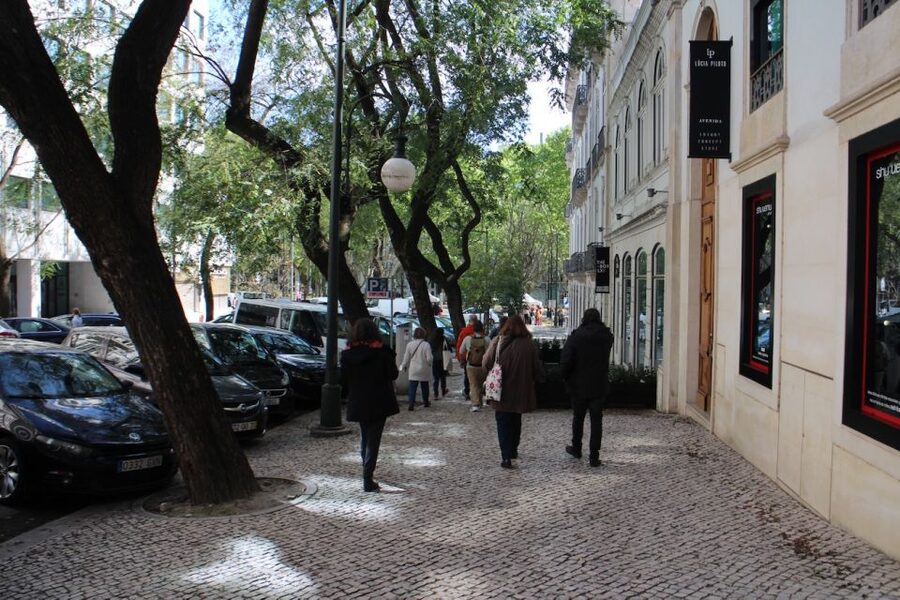
Then you head toward Avenida da Liberdade. This is the kind of elegant avenue where you can imagine how wartime anxieties sat alongside everyday life. In a city like Lisbon, looks and routine don’t cancel stress—they often hide it.
You’ll get guided time here (about 20 minutes), and the goal isn’t to admire architecture for its own sake. It’s to understand how a modern-looking capital can still function as a pressure cooker when borders and visas decide who gets to leave and who has to stay.
Restauradores Square to Baixa: where the war news felt close
At Restauradores Square, the guide brings you into the rhythm of the downtown core. The history here is about movement: people circulating for work, errands, and information, and also refugees trying to figure out what comes next.
The walk then works you into Baixa de Lisboa (about a short guided segment). This is a smart choice for a WWII theme because Baixa is where you can feel the “everyday Lisbon” energy—shops, streets, and the kind of density that makes surveillance believable. When a political police force is watching, the city’s layout and crowd flow become part of the story.
In other words, the route is doing more than covering ground. It’s teaching you how to read the city as a system: where information travels fastest and where strangers can blend in.
Worth a look before you lock anything else in around Lisbon:
Chiado’s café culture: spies, refugees, and the sound of rumors
Chiado gets about 15 minutes on the tour, and this is where the emotional tone shifts. Lisbon’s café culture shows up for a reason: in wartime, cafés weren’t just for coffee. They were where people talked, reacted, and tried to interpret events.
You’ll visit historic café settings mentioned on the route, including Café Chave d’Ouro and Pastelaria Suiça. The key detail isn’t the menu—it’s the atmosphere around the war. War news brought a mix of excitement and fear, and the presence of spies from opposing sides added extra tension to conversations.
This is also where you’ll hear about Lisbon preparing for the possibility of an Axis invasion. That idea matters because it explains why the city wasn’t only waiting. It was readying itself, including planning to protect significant monuments and buildings if bombings came.
If you enjoy history that feels human—less about dates and more about how people actually behaved—Chiado is one of the strongest parts of the walk.
The notable names you hear along the way
One of the most memorable aspects of this tour is how it connects real people to real places. You’ll learn that Lisbon hosted figures whether by choice or circumstance, and those names act like anchors for the era.
Among the personalities mentioned are Josephine Baker, Alfred Döblin, and Leslie Howard. When you hear those names in the context of Lisbon during wartime, it stops being abstract. These weren’t distant celebrities; they were people living inside the same uncertain atmosphere as everyone else.
This kind of storytelling is especially valuable because it changes how you think about refugee history. It’s easy to treat refugees as a category. It’s harder—and more accurate—to see that they existed in a world full of famous and influential people too, all reacting to the same crisis.
Praça Dom Pedro IV to Cais do Sodré: walking toward the river

You’ll pass through Praça Dom Pedro IV, with guided time (about 15 minutes). This is a transitional stop that helps you connect the central streets to Lisbon’s lower areas and the water.
Then you finish at Cais do Sodré, near the river. The ending location is useful because it doesn’t just close the tour. It sets you up to keep going right away.
From here, you’re within walking distance of Time Out Market, which makes a convenient post-walk option if you want a snack or a light meal. Since food and drinks aren’t included on the tour, that nearby plan matters.
For me, the river finish also gives the trip emotional closure. Lisbon’s wartime story is about waiting—waiting for visas, waiting for news, waiting for outcomes. The river is a natural symbol for what people hoped would come next.
Price and value: is $170 per group worth it?
The price is listed as $170 per group up to 6. That pricing model can be a strong deal if you’re traveling with 2–6 people and want a shared experience without splitting into larger crowds.
You’ll also see that the tour is described as small-group (12 pax) and run as a private group. The practical takeaway: you should feel like you’re part of a real walk with time for questions, not just a large herd.
At three hours, you’re buying more than walking time. You’re buying a guided interpretation of Lisbon under the Estado Novo regime, connecting neutrality, the refugee situation, spy activity, and Portuguese political police oversight into one coherent route. That’s the kind of context that usually takes longer to piece together on your own—especially if you don’t know where to look.
If you’re solo, the price might feel steep compared with per-person group tours. But if you care about narrative quality and the guide’s preparation, it can still be worth it, particularly when you value a tighter group setting.
Guide Leonor Abrantes: the difference is the prep
Leonor Abrantes leads the tour in English and German. What stands out in the way this tour is described is that the guide arrives prepared with supplemental materials, not just spoken facts.
That matters because WWII history can get heavy fast. Extra materials help you track names, policies, and context without losing the thread. In a city-walk format, having that support lets you stay focused on the street story rather than trying to remember everything mid-walk.
I also appreciate the bilingual setup. If you’re in a mixed-language group, you’re more likely to get a smooth experience without awkward gaps.
Is this tour the right fit for you?
This walk is best if you like history that’s tied to place. If you enjoy seeing how governments, intelligence networks, and ordinary routines shaped daily life, you’ll probably get a lot out of the route.
It’s also well-suited for travelers who want a guided introduction to Lisbon’s wartime identity without needing to do extra museum searching first. In a few stops, you’ll cover neutrality, refugees, spy movement, and wartime precautions against a possible invasion.
Two cautions:
- It’s described as rain or shine, so bring weather protection and stay ready for wet pavement.
- Accessibility guidance is mixed: it’s listed as wheelchair accessible, but it also says it is not suitable for people with mobility impairments. If you’re relying on mobility support, I’d confirm details directly with the provider before you go.
Practical tips so you enjoy the walk (not just endure it)
Plan for about three hours on your feet. The itinerary includes multiple guided segments across Lisbon’s central areas, so you’ll want shoes that handle uneven pavement and possible drizzle.
Bring a small bottle of water if you tend to get thirsty while walking. Food and drinks aren’t included, and you’ll likely want to pace yourself until the end near Cais do Sodré.
If you’re sensitive to crowds or noise, keep in mind you’re moving through central Lisbon neighborhoods and squares. The tour theme leans into watchfulness and tension, and the city’s real-world energy will be part of the atmosphere.
Weather matters most. If it’s raining, you won’t be the only one with a plan, so use an umbrella or rain jacket that won’t get in the group’s way.
Should you book this Lisbon WWII walking tour?
I’d book it if you want Lisbon to feel like more than postcards. This tour is about understanding how WWII pressure shaped refugee journeys and international espionage in a neutral Portugal. The guide’s prepared materials and the focus on cafés, squares, and street-level context make it feel anchored and readable.
I’d skip it if you want a light, purely scenic walk with no political weight. The subject is serious, and the route is built to explain surveillance, policy, and wartime fear.
If you like city walks with story and you’re curious about Lisbon’s side of WWII that you don’t see in typical guides, this is a smart use of a half-day.
FAQ
Where is the meeting point?
You meet in front of Café A Padaria Portuguesa at Praça Marquês de Pombal 12.
How long is the Lisbon in the Shadows of World War II walking tour?
The tour lasts 3 hours.
What does the tour cost?
It is priced at $170 per group up to 6.
What languages is the live guide?
The live tour guide offers English and German.
Where does the tour end, and what can I do nearby?
The tour finishes at Cais do Sodré, within walking distance of Time Out Market for a snack or light meal.
Does the tour include food and drinks?
No, food and drinks are not included.
Does the tour run in rain?
Yes. The tour will run rain or shine.
Is the tour wheelchair accessible?
It is listed as wheelchair accessible, but it also notes it is not suitable for people with mobility impairments. If you have accessibility needs, check directly with the provider before booking.
More Tours in Lisbon
- Lisbon City Center Tour – The Unmissable Lisbon★ 5.0 · 22,234 reviews
- Lisbon: History, Stories and Lifestyle Walking Tour★ 4.8 · 10,902 reviews
- True 4Hour Private Tuk Tuk Tour: Discover Lisbon with a Local!★ 5.0 · 8,008 reviews
- Winner 2025 Undiscovered Lisbon Food & Wine Tour by Eating Europe★ 5.0 · 6,390 reviews
- Lisbon: Sintra, Pena, Cabo da Roca, Cascais Tour with Pickup★ 4.8 · 5,445 reviews
More Tour Reviews in Lisbon
- Lisbon City Center Tour – The Unmissable Lisbon★ 5.0 · 22,234 reviews
- Lisbon: Sintra, Pena, Regaleira, Cabo da Roca & Cascais★ 4.7 · 19,656 reviews
- Lisbon Card: 24, 48, or 72-Hour Pass★ 4.5 · 17,944 reviews
- Lisbon: Jerónimos Monastery Entrance Ticket★ 4.1 · 14,164 reviews
- Lisbon: History, Stories and Lifestyle Walking Tour★ 4.8 · 10,902 reviews
More of Lisbon, One Hill at a Time
- Lisbon: History, Stories and Lifestyle Walking Tour★ 4.8 · 10,902 reviews
- Best of Lisbon Small-Group Guided Walking Tour★ 5.0 · 4,869 reviews
- Lisbon: Food and Wine Small Group Walking Tour★ 4.9 · 4,082 reviews
- Best of Lisbon Walking Tour: Rossio, Chiado & Alfama★ 4.9 · 2,700 reviews
- Age of Discoveries Walking Tour in Belém★ 5.0 · 1,513 reviews
Just in: fresh Lisbon reviews from the team




Lisbon Walking Tours, compared.
 ★ 4.8History, Stories and Lifestyle Walking TourFrom $2910,902 reviews
 ★ 5.0Best of Lisbon Small-Group Guided Walking TourFrom $234,869 reviews
 ★ 4.9Food and Wine Small Group Walking TourFrom $724,082 reviews
 ★ 4.9Best of Lisbon Walking Tour: Rossio, Chiado & AlfamaFrom $232,700 reviews
 ★ 5.0Age of Discoveries Walking Tour in BelémFrom $31,513 reviews
 ★ 5.0Lisbon Roots – Small group Food & Culture Walking Tour w/tastingsFrom $168910 reviews
 ★ 4.9Starter Walking Tour to the highlights in GermanFrom $33781 reviews
 ★ 4.1Lisbon Tram No. 28 Ride & Walking TourFrom $23766 reviews
Browse the lists this tour appears in