
Reviewed · BELÉM TOURS
Walking Tour in Alfama with Castle and Belém by Car
Lisbon’s hills hit different with a guide. This private day strings together Alfama stories with real viewpoint time and ends with Pastéis de Belém tasting in Belém. You’ll get a mix of walking, some elevator help, and an air-conditioned van when the slopes start to bully your calves.
I particularly like how the day connects places to the people who shaped them, from the Inquisition-era stops near Rossio to the maritime clues in Belém. You’ll also get practical pacing, so the castles and churches feel doable instead of rushed.
One thing to watch: São Jorge Castle admission is not included, so plan on adding that cost (and your energy) for the wall-walk portion.
In This Review
- Key highlights
- A private day that stitches Lisbon into one clear story
- Morning start in Rossio: Rossio Square, Inquisition-era clues, and the city center you should learn first
- Figueira Square and the lesson in how Lisbon moves
- Alfama: the hill climbs, the Moorish presence, and why the neighborhood feels different
- Practical tip for Alfama
- São Jorge Castle: the views are the payoff, but the wall-walk is the real attraction
- Cost check
- What you gain here
- Miradouro das Portas do Sol: the viewpoint that sets you up for the Cathedral descent
- Lisbon Cathedral (Sé de Lisboa): old church architecture and the 1755 earthquake impact
- How to get the most out of the Cathedral stop
- Church of St. Anthony: the crypt stop that feels personal
- Praça do Comércio and Rua Augusta: Lisbon’s Age of Discovery trade center, plus a walk you’ll actually enjoy
- Elevador de Santa Justa and Largo do Carmo: art nouveau engineering and earthquake scars
- Belém by car: a smart break before the Portuguese global era stops
- Pastéis de Belém: the tasting is included, and the factory tour adds context
- Jerónimos Monastery (Mosteiro dos Jerónimos): Manueline detail and Age of Discovery symbolism
- Why this stop is worth your time
- Torre de Belém: outside views and a neat 1922 aviation fact
- Padrão dos Descobrimentos: the “caravel” monument and the global map detail
- Lunch is on you: quick planning so the day stays smooth
- Who this tour fits best (and who might want a different plan)
- Should you book Bruno Miguel Tours for this Lisbon route?
- FAQ
- What time does the tour start?
- Is hotel pickup and drop-off included?
- Is this tour private?
- Are tickets included for São Jorge Castle?
- What about the other attractions on the route?
- Does the tour include Pastéis de Belém?
- What level of walking is involved?
- Is cancellation free?
Key highlights
- Private guide + English commentary that keeps the day moving without turning it into a blur
- Rossio Square religious history stop including the Jewish Memorial and St. Dominic’s Church
- São Jorge Castle wall game where you literally walk the fortifications for views
- Portas do Sol viewpoint + St. Vicente statue to orient you before heading down to the Sé
- Belém factory-style Pastéis de Belém tour with a tasting built in
- UNESCO stops in Belém: Jerónimos Monastery, Torre de Belém (outside), and Padrão dos Descobrimentos
A private day that stitches Lisbon into one clear story
Lisbon is all hills, staircases, and sudden views. A self-guided day can work, but it’s easy to miss the thread. This tour gives you that thread, and you feel it from the first hour: you’re not just hopping between postcards.
You start in the downtown core around Praça de D. Pedro IV (Rossio), then head into Alfama, where narrow lanes and Moorish-era echoes set the tone. After that comes São Jorge Castle, one of Lisbon’s best big-picture vantage points. Then the day turns outward toward the Tagus and Portugal’s overseas era with Belém.
Price-wise, $238.28 per person is not cheap for Portugal, but you’re paying for a private setup with a guide, an air-conditioned car/van (size depends on your group), bottled water, parking and toll fees, plus hotel pickup and drop-off. The one clear add-on is the São Jorge Castle ticket, which you’ll want to budget for so you don’t get surprised at the gate. Lunch is also not included, so you’ll eat on your own.
More mornings among the monuments of Belém
- Lisbon: Jerónimos Monastery Entrance Ticket
★ 4.1 · 14,164 reviews - Private Lisbon Sightseeing Tuk-Tuk Tour: Alfama, Belém & More
★ 5.0 · 4,277 reviews - Age of Discoveries Walking Tour in Belém
★ 5.0 · 1,513 reviews - Lisbon: Bike Tour from Lisbon to Belém + Liquor & Pastry
★ 4.7 · 688 reviews
Morning start in Rossio: Rossio Square, Inquisition-era clues, and the city center you should learn first
You meet at 9:00 am, and the pickup details come with a call about 24 hours before. That timing is useful. Early gives you cooler walking conditions, and it also means you avoid starting Alfama at peak traffic.
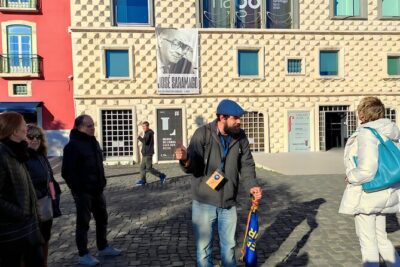
Praça de D. Pedro IV (Rossio Square) is a strong first anchor point. It’s iconic for a reason: the Pombaline architecture from the 18th century and the mosaic paving make it feel like a living museum. On this stop, you also visit the Jewish Memorial and St. Dominic’s Church, with time devoted to the period of the Inquisition in Portugal. This is the kind of stop that helps you understand why Lisbon’s layers are so visible. You’re not just hearing dates; you’re seeing how religion and power played out in real places.
One small note: the Inquisition-era focus may feel heavy if you’re expecting pure scenic sightseeing. If that subject matter interests you, great. If you prefer lighter vibes, you’ll still appreciate it as context for what follows in Alfama.
Figueira Square and the lesson in how Lisbon moves
After Rossio, you step into Figueira Square. It’s known for everyday Lisbon energy: cafés, shops, and a layout that acts like a transport hub. The equestrian statue of King John I is the visual center, but the practical value is how it helps you get oriented.
Lisbon’s neighborhoods can feel disconnected if you don’t understand the geography. Stops like this quietly give you a map in your head. You start to see where the route will pull you next, and you’ll feel less like you’re walking blind later on.
Alfama: the hill climbs, the Moorish presence, and why the neighborhood feels different
Alfama is where Lisbon stops being tidy. It turns into narrow, winding lanes with steep slopes and colorful houses. The tour aims to tackle the hills in a smart way. When elevators are available, you use them; when they’re not, you keep moving at a pace that doesn’t feel punishing.
This is also where the guide’s storytelling matters most. You learn about:
- the history of Alfama
- the origin of the name
- the Moorish presence in Lisbon and Portugal
That matters because Alfama isn’t just old-looking. Its layout and street logic help you feel the past rather than just read about it. You get time to wander through alleyways, find small squares, and notice how the neighborhood’s angles funnel you toward viewpoints.
Based on the way this tour is described, the guide also adds energy and humor, and they can tailor the day to your interests. That shows up in the balance: you walk enough to feel like you’re in Alfama, but you don’t grind for hours without breaks.
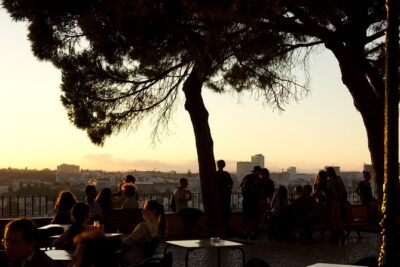
Deeper into Alfama's lanes and miradouros
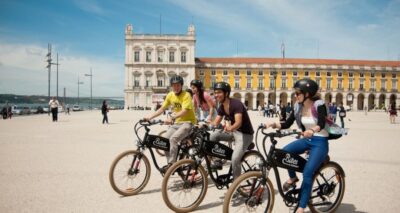
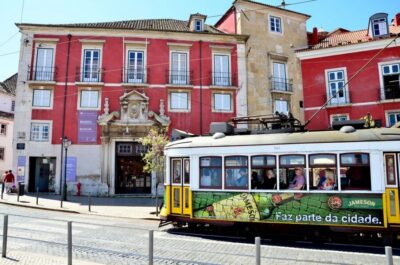

Practical tip for Alfama
If you have even mildly sore knees, you’ll feel the slopes. The tour helps, but it’s still Lisbon. Wear shoes you’d use for stairs, not sightseeing slippers.
São Jorge Castle: the views are the payoff, but the wall-walk is the real attraction
Next up is Castelo de São Jorge (São Jorge Castle). This fortress sits on Lisbon’s highest hill, and the tour leans into the experience instead of treating it like a quick photo stop.
Historically, the site is layered. It goes back to the 8th century BC, with Phoenicians, Carthaginians, Romans, and Moors all leaving their mark. Later, it reaches a high point under the Portuguese monarchy as a royal palace and stronghold. Today, you’re looking at medieval structures, archaeological remains, towers, and gardens.
The fun part is how you’re invited to “become the guards” and walk the walls and towers, hunting for enemies as you go—basically a guided patrol route with big viewpoint payoff. It’s a playful way to get you moving along the best sections of fortification and still learning what you’re seeing.
Cost check
São Jorge Castle admission is not included and is listed as 15 euros. If you want the full wall experience, budget that amount up front.
What you gain here
You don’t just get a view of the city. You get a view from the exact kind of place that used to control the city. You’ll understand why Lisbon developed the way it did once you see how the terrain works from above.
Miradouro das Portas do Sol: the viewpoint that sets you up for the Cathedral descent
Before you head toward the center church district, you stop at Miradouro das Portas do Sol. This square is known for a panoramic look over terracotta rooftops and the Tagus River. You also get context on the name: it translates roughly to “Gates of the Sun,” tied to ancient gate positions.
A specific highlight here is the St. Vicente statue. You learn about the patron saint’s legend—São Vicente depicted holding a boat, with two ravens tied to the story. That detail makes the viewpoint more than background scenery.
Then you descend through Alfama’s maze toward Lisbon Cathedral, with time to pass the old Fernandín wall that once helped protect the city. This is one of the smartest transitions on the route. You go from seeing the city from above to moving through the physical remnants of how it was protected.
Lisbon Cathedral (Sé de Lisboa): old church architecture and the 1755 earthquake impact
Sé de Lisboa, Lisbon Cathedral, is the oldest church in the city, with construction beginning in the 12th century. The architecture mixes Romanesque and Gothic influences. And like much of Lisbon, the cathedral story has a 20th-century-sized ghost.
The big reference point is the devastating 1755 earthquake, which impacted the city widely. On this stop, you get time to see the cathedral and understand why restoration and rebuilding shaped what you see today.
How to get the most out of the Cathedral stop
Go in with the mindset of “this is Lisbon’s timeline.” You don’t need to rush. The building gives you plenty to look at, and the guide’s interpretation helps connect it to what you already walked through in Alfama.
Church of St. Anthony: the crypt stop that feels personal
Next is the Church of Saint Anthony of Lisbon. The current structure is Baroque-Rococo, reconstructed after the 1755 earthquake. The guide brings the story back to Saint Anthony himself: the church sits on the site where he was born in 1195.
The most memorable part is the crypt. You get a chance to visit where the house of Saint Anthony used to be, and there’s time to kneel in the same kind of place used by Pope John Paul II during his 1982 visit. Even if you’re not a church detail person, this is the stop that can feel quietly moving because it’s practical, grounded, and specific.
Admission is listed as free, so you’re not juggling ticket math while your day is already full.
Praça do Comércio and Rua Augusta: Lisbon’s Age of Discovery trade center, plus a walk you’ll actually enjoy
After the religious and medieval stops, the tour pivots to the waterfront world with Praca do Comercio (Terreiro do Paço). This is a huge plaza, one of the largest in Europe, built after the 1755 earthquake as a sign of Lisbon’s resilience and rebirth. The design is neoclassical, and the space feels like it was made for crowds and movement.
One of the tour’s key interpretive angles here is trade. You learn about historic events tied to the square, including how it served as a main port during the age of discovery, with goods arriving from across the Portuguese empire.
From there, you walk Rua Augusta, the pedestrian street that links Praça do Comércio to Praça do Rossio. It’s lined with shops, Portuguese restaurants, and street performers, and it’s a natural place to reset your legs after the hills.
You’ll also see the towering Rua Augusta Arch, which is one of those landmarks that instantly gives you a sense of scale. You don’t need to go searching for it. It finds your attention.
Elevador de Santa Justa and Largo do Carmo: art nouveau engineering and earthquake scars
Lisbon has a genius habit of turning transportation into architecture. The Elevador de Santa Justa is a great example. Built in an Art Nouveau style with striking ironwork, it connects the Baixa district with Largo do Carmo. You get panoramic views from here, which is a welcome break from walking.
Then you land at Largo do Carmo, dominated by the ruins of Carmo Convent. Those ruins are tied to the 1755 earthquake. Today, the convent houses the Archaeological Museum of Carmo, and the square also connects to modern political history through its role in the Carnation Revolution of 1974.
This stop works well because it blends old damage with newer change. It’s not only about what happened long ago; it shows how Lisbon’s identity kept shifting.
Belém by car: a smart break before the Portuguese global era stops
At this point, the tour’s structure starts making sense. You’ve done a lot of walking through Alfama and central Lisbon. Belém is a different world, focused on maritime power and the “we sailed out there” story.
The tour uses a car or van to get you there comfortably, with bottled water and the guide keeping the timeline coherent. That matters because Belém can be tiring if you treat it like a second full day on foot.
Pastéis de Belém: the tasting is included, and the factory tour adds context
The Belém highlight that hits fast is Pastéis de Belém at the historic factory, Fábrica dos Pastéis de Belém. This is where the famous custard tarts come from, produced since 1837 using a closely guarded recipe.
What makes this stop stronger than a random pastry break is that you get a guided tour through the factory and a tasting. Even if you’ve had pastéis before, this is the version with story and process.
You also uncover how Pastéis de Belém came to be, and the tour frames the pastry as part of Portuguese culture rather than just a sweet souvenir. This included treat is also a real value add since the tour lists it as included, not something you must chase down separately.
Jerónimos Monastery (Mosteiro dos Jerónimos): Manueline detail and Age of Discovery symbolism
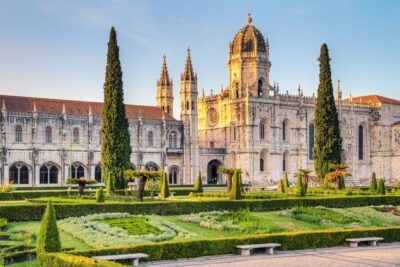
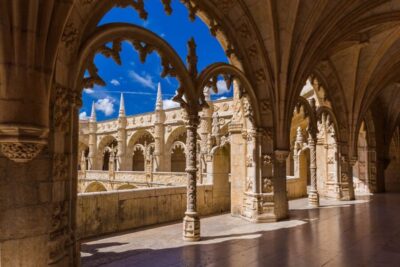
Next is Mosteiro dos Jerónimos, a UNESCO site and one of Lisbon’s great architecture flexes. The style is Manueline, full of intricate carvings and maritime motifs tied to the Age of Discoveries.
The monastery was commissioned by King Manuel I in the late 15th century. The guide takes you through its role as a commemorative monument for Portugal’s overseas era. You also visit the church, with time connected to notable figures laid there, including Vasco da Gama and Luís de Camões.
Why this stop is worth your time
When you see the manual skill in the stonework, you understand how Portugal wanted its maritime achievements remembered. This is not a quick look-and-leave stop. Give it enough attention so the details feel earned.
Torre de Belém: outside views and a neat 1922 aviation fact
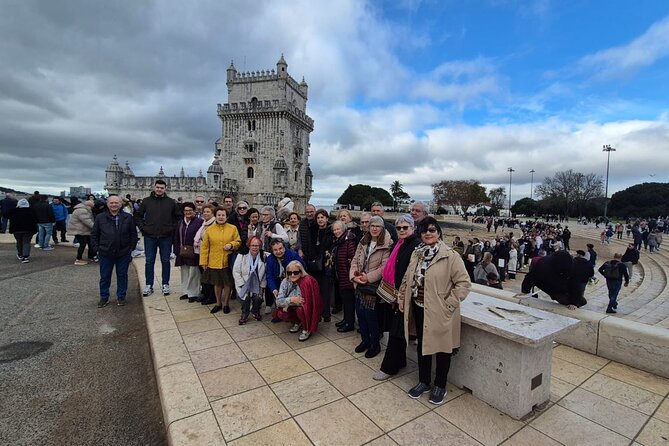
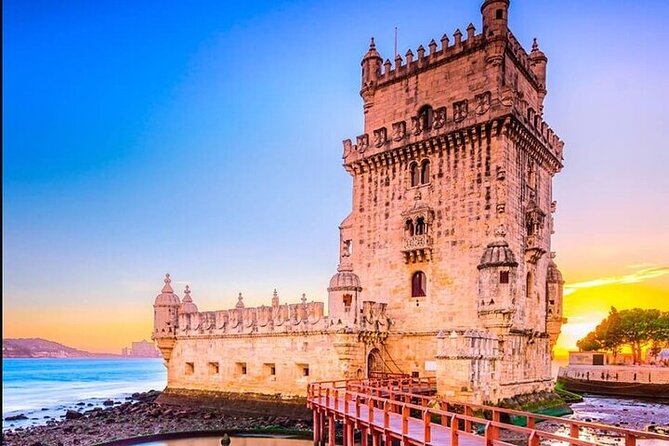
The tour then heads to Torre de Belém, another UNESCO landmark. It was originally built in the early 16th century as a defensive fortification for the Tagus.
Here, you only visit from the outside. You’ll have time for photos and a bit of extra context: you’ll hear about the first airplane that crossed the south Atlantic in 1922. That detail is a clever bridge between Portuguese exploration and later global connection.
Padrão dos Descobrimentos: the “caravel” monument and the global map detail
To wrap the Belém story, you visit the Padrão dos Descobrimentos (Monument to the Discoveries). It’s shaped like a caravel, and it honors maritime history with a prominent figure of Prince Henry the Navigator. Other sculptural figures represented include Vasco da Gama and Luís Vaz de Camões.
The monument was completed in 1960, so it’s not medieval in age, but it is medieval in spirit: it turns centuries of exploration into a single public landmark you can stand in front of.
A standout detail mentioned on the tour is a map of the world offered to Portugal by the Republic of South Africa. It helps you visualize how wide the Portuguese empire’s reach was in the 16th century and how that reach affected the wider world.
Lunch is on you: quick planning so the day stays smooth
Lunch is not included, so you’ll need to choose your own spot. The good news is the tour doesn’t trap you in one neighborhood for hours. You get food options across central Lisbon and near Belém.
If you’re the type who hates searching mid-day, build in a simple plan: pick a café or quick meal near wherever you feel least energetic. The tour’s pacing should still leave you time to find something without turning it into a scavenger hunt.
Who this tour fits best (and who might want a different plan)
This tour fits best if you want:
- a private guide in English
- a day focused on Alfama + São Jorge views + Belém UNESCO without stress
- a balance of walking with elevator help in Alfama and car time later
It’s also a strong choice if you appreciate context. The route keeps linking locations to political and religious shifts, and then it switches gears to maritime power and Portuguese overseas expansion.
If you only want flat, short walks or you hate hills completely, you might find Alfama tough even with elevators. And if you’re allergic to any heavy historical topics, the Inquisition-era stop may feel like a mood change.
Should you book Bruno Miguel Tours for this Lisbon route?
I’d book it if you want an organized, private way to do Lisbon’s most meaningful “story stops” in one day. The value is in the structure: hotel pickup/drop-off, an air-conditioned ride, a guide who brings places to life, and an included stop with a real edible payoff at Pastéis de Belém.
I’d pause if you’re traveling with a tight budget due to the extra São Jorge Castle ticket, or if your group prefers long independent time over guided interpretation. Also remember: lunch isn’t included.
If your goal is to leave Lisbon with the big-picture geography in your head, plus good photos and strong food at the right moment, this is a smart pick.
FAQ
What time does the tour start?
The tour starts at 9:00 am.
Is hotel pickup and drop-off included?
Yes. Hotel pickup and drop-off are included.
Is this tour private?
Yes. It’s a private tour/activity, and only your group participates.
Are tickets included for São Jorge Castle?
No. São Jorge Castle admission is not included (listed as 15 euros).
What about the other attractions on the route?
For the listed stops, admission is shown as free for everything except São Jorge Castle.
Does the tour include Pastéis de Belém?
Yes. You’ll have a guided tour through the factory and a tasting of Pastéis de Belém, and it’s marked as included.
What level of walking is involved?
The tour requires moderate physical fitness due to Lisbon’s hills, but it also uses elevators when available to help.
Is cancellation free?
Yes. Free cancellation is offered if you cancel up to 24 hours in advance of the experience’s start time.
More of Lisbon, One Hill at a Time
- Lisbon: History, Stories and Lifestyle Walking Tour★ 4.8 · 10,902 reviews
- Best of Lisbon Small-Group Guided Walking Tour★ 5.0 · 4,869 reviews
- Lisbon: Food and Wine Small Group Walking Tour★ 4.9 · 4,082 reviews
- Best of Lisbon Walking Tour: Rossio, Chiado & Alfama★ 4.9 · 2,700 reviews
- Age of Discoveries Walking Tour in Belém★ 5.0 · 1,513 reviews
Keep Wandering Old Alfama
- Alfama Tour in Lisbon Old Town★ 5.0 · 4,936 reviews
- Private Lisbon Sightseeing Tuk-Tuk Tour: Alfama, Belém & More★ 5.0 · 4,277 reviews
- Lisbon: Hills, Alfama, and Mouraria Tour by Electric Bike★ 4.8 · 3,438 reviews
- Best of Lisbon Walking Tour: Rossio, Chiado & Alfama★ 4.9 · 2,700 reviews
- Lisbon: Baixa District Food Tour with Dinner and Drinks★ 4.9 · 1,997 reviews
Belém: More Monuments and Pastéis
- Lisbon: Jerónimos Monastery Entrance Ticket★ 4.1 · 14,164 reviews
- Private Lisbon Sightseeing Tuk-Tuk Tour: Alfama, Belém & More★ 5.0 · 4,277 reviews
- Age of Discoveries Walking Tour in Belém★ 5.0 · 1,513 reviews
- Lisbon: Bike Tour from Lisbon to Belém + Liquor & Pastry★ 4.7 · 688 reviews
- Bike Tours Lisbon – Center of Lisbon to Belém★ 5.0 · 686 reviews
Just in: fresh Lisbon reviews from the team




Belém Tours, compared.
 ★ 4.1Jerónimos Monastery Entrance TicketFrom $2114,164 reviews
 ★ 5.0Private Lisbon Sightseeing Tuk-Tuk Tour: Alfama, Belém & MoreFrom $524,277 reviews
 ★ 5.0Age of Discoveries Walking Tour in BelémFrom $31,513 reviews
 ★ 4.7Bike Tour from Lisbon to Belém + Liquor & PastryFrom $46688 reviews
 ★ 5.0Bike Tours Lisbon – Center of Lisbon to BelémFrom $19686 reviews
 ★ 3.7Jerónimos Monastery E-Ticket and Audio GuideFrom $33660 reviews
 ★ 4.9Belém Walking Tour with Jerónimos Monastery TicketFrom $69637 reviews
 ★ 4.0MAAT Gallery and MAAT Central Entry TicketsFrom $17559 reviews
Browse the lists this tour appears in