
Reviewed · LISBON WALKING TOURS
Secret Lisbon Walking Tour
One street, one small group, and suddenly Lisbon feels like a spy movie. This 2.5-hour secret walking tour strings together monasteries, hidden crypts, Jewish history, and palace rooms you rarely see, with an expert guide who keeps the stories moving. The ending at Praça do Comércio adds a big, satisfying payoff: you finish where Lisbon’s royal story shifted into its modern public face.
What I love most is the hands-on access to places classic tours usually just point at from the sidewalk, like historic interiors and special stops such as Independence Palace or the Doll’s Hospital. I also really like the storytelling thread: spies, freemasons, and even Mouraria’s Fado beginnings all connect to real streets you can stand on, not just dates in a pamphlet.
One drawback to consider: it is a walking tour with some darker, heavier topics (including cemeteries and major Jewish suffering in 1506), and it is listed as not suitable for children under 5 or for people with mobility impairments.
In This Review
- Key things to know before you go
- Secret Lisbon starts at a monastery with a 2017 jaw-drop
- Walk over graves and learn why freemasons mattered here
- Mouraria: where Fado’s early story takes you by the hand
- The oldest well inside a hotel and the Doll’s Hospital door
- Roman ground, medieval hospitals, and Independence Palace’s secret garden
- Largo dos Domingos I, 1506, and the burned-out Dominican Church
- Rossio Square spies and WWII Jewish refugees in the café world
- The finish at Praça do Comércio and a Moorish-style palace feeling
- Price and value: what $41 buys you in real access
- The guide matters: Peter’s humor and tight structure
- Who should book Secret Lisbon, and who might skip it
- Should you book this tour?
- FAQ
- How long is the Secret Lisbon Walking Tour?
- How much does it cost?
- Is this tour a small group?
- What languages are offered?
- What’s included in the ticket?
- Where does the tour end?
- What’s the meeting point situation?
- Is it suitable for young children or mobility impairments?
Key things to know before you go
- Small group (max 8) means you can actually ask questions and keep up with the pace.
- Stepping inside special sites: your ticket includes entry to Independence Palace or the Doll’s Hospital.
- Hidden-monastery to secret-garden arc: Nossa Senhora da Graça to Independence Palace in one coherent route.
- Mouraria and Fado origins: you’ll reach the neighborhood tied to the music’s early story from about 200 years ago.
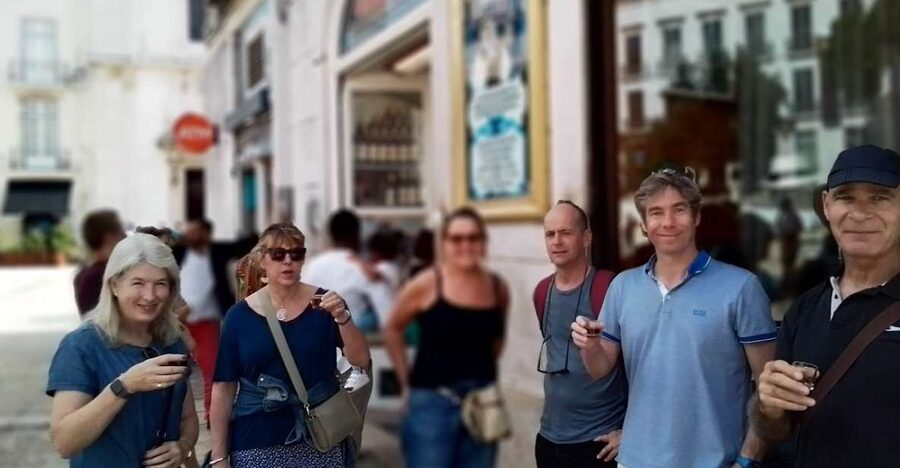
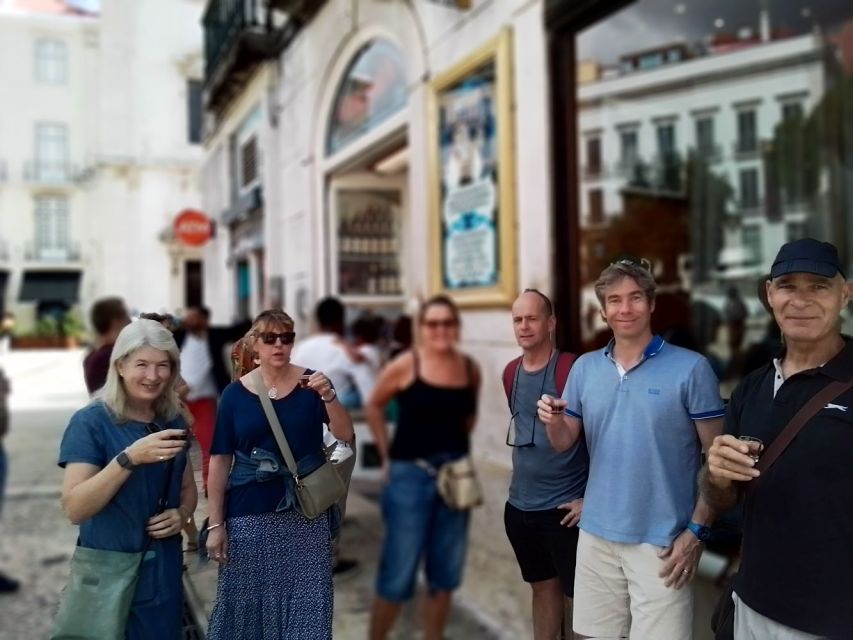
- A place to taste Lisbon: you get a pastel de nata or ginginha along the way.
Secret Lisbon starts at a monastery with a 2017 jaw-drop
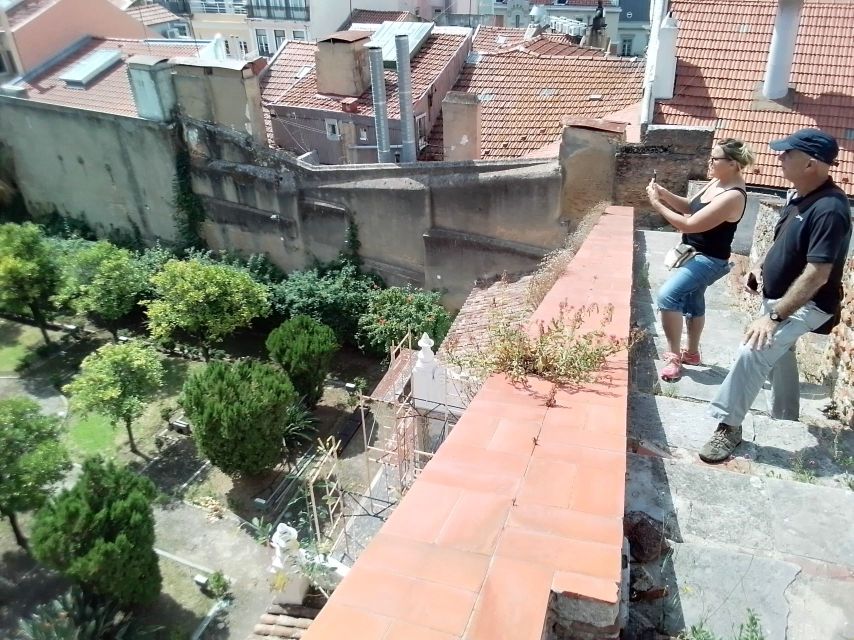
If you think Lisbon secrets are only about tile-covered façades and quiet viewpoints, this tour corrects that fast. The first big stop is the medieval monastery of Nossa Senhora da Graça, where you get the kind of backstory that makes you look at a building differently. You’re not just learning names. You’re learning how hidden spaces can shape a city’s reputation.
The monastery route includes talk about a secret crypt and a jaw-dropping discovery in 2017. Even without turning it into a checklist, the point is clear: Lisbon kept layers. People used walls, rooms, and underground spaces the way other cities used politics or propaganda. Standing there, you start to understand why the city can feel both “old” and constantly re-invented.
This is where the tour also earns its secret-tour label. You’re shown angles you won’t notice on your own, and the guide’s timing matters. He’ll set the scene first, then guide you through the space so you can picture what changed over time.
Lisbon at walking pace, a few more routes
- Lisbon: History, Stories and Lifestyle Walking Tour
★ 4.8 · 10,902 reviews - Best of Lisbon Small-Group Guided Walking Tour
★ 5.0 · 4,869 reviews - Lisbon: Food and Wine Small Group Walking Tour
★ 4.9 · 4,082 reviews - Best of Lisbon Walking Tour: Rossio, Chiado & Alfama
★ 4.9 · 2,700 reviews
Walk over graves and learn why freemasons mattered here
After the monastery, the route shifts to the darker side of Lisbon’s past, including walking over graves hidden near the monastery area. That detail is not there for shock value. It’s there to show how tightly burial spaces and daily life used to overlap. It also makes the tour feel honest. Not every secret is cheerful, and Lisbon’s “secrets” include survival stories and reminders of who lived, who died, and who was erased.
From there, you’ll visit an old freemason hangout. This stop works best if you like history that explains people, not just buildings. Freemasonry in Europe often carried social networks, private meeting culture, and influence through talk and connections. In Lisbon, the guide connects that tradition to local street-level realities—who met where, and why it mattered.
You’ll also pass by street art during the transitions. It’s a smart touch. The tour keeps changing “time periods,” so the modern layers help you reset your eyes. You don’t want to leave feeling trapped in the past; you want to carry the past forward while you still notice the city around you.
Mouraria: where Fado’s early story takes you by the hand
Next comes Mouraria, one of those neighborhoods where the streets feel like they’ve absorbed centuries of music, need, faith, and reinvention. The tour points you to a spot connected to where Fado began around 200 years ago. That matters because Fado isn’t just a performance. It’s a social language, tied to specific local life.
This is the part of the tour that helps you avoid a common mistake: treating Fado like a museum object. Instead, you’re moving through the place it grew, and the guide explains the conditions that let the music take shape. Even if you already know the general story of Fado, seeing it anchored in one neighborhood street makes it feel more real.
You’ll also visit another medieval cemetery and hear about its inhabitants. Again, the tour doesn’t just say “cemetery.” It connects the cemetery to the people and patterns of the city. If you prefer lighter themes, this section might feel heavy. But it’s also the kind of information that makes Lisbon more understandable, not just more dramatic.
The oldest well inside a hotel and the Doll’s Hospital door
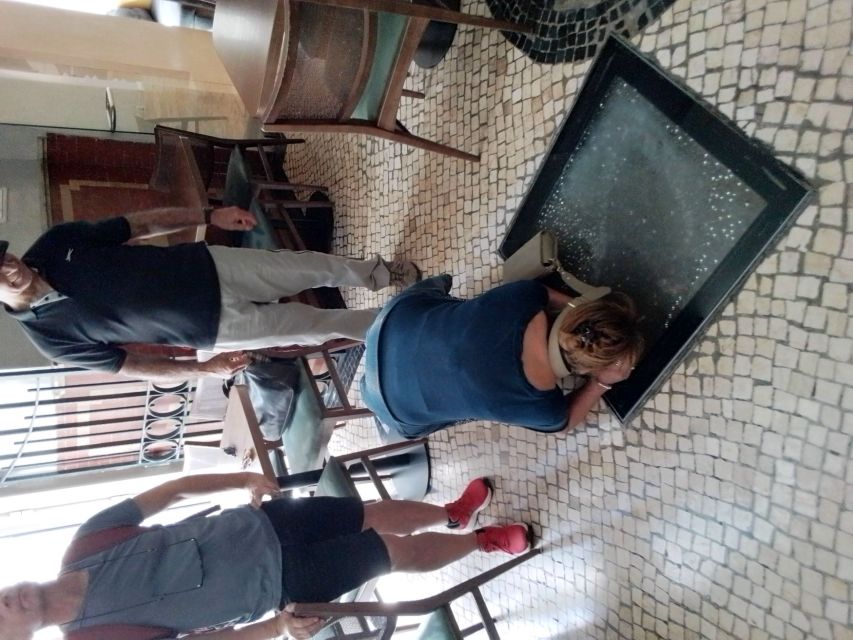
One of the quietly fun stops is the city’s oldest well, now tucked away inside a hotel. It’s a perfect Lisbon detail: something ancient remains useful, but it gets wrapped into modern life. You may expect a standalone monument. Instead, you see how Lisbon preserves things by absorbing them into daily routines.
Then the tour heads to the Doll’s Hospital. This stop is famous for a reason: it turns craft, repair, and care into a story you can walk through. You learn the establishment’s background and get to view a secret door. The “secret” theme stays consistent here, but in a way that feels playful rather than grim.
Why these two stops work together:
- The well shows continuity—old infrastructure, repurposed.
- The Doll’s Hospital shows care—old objects, restored, given another chance.
If you’re traveling with someone who thinks history is only about wars and rulers, this is where you win them over. It keeps the tour from becoming a single-note lecture.
Worth a look before you lock anything else in around Lisbon:

Roman ground, medieval hospitals, and Independence Palace’s secret garden
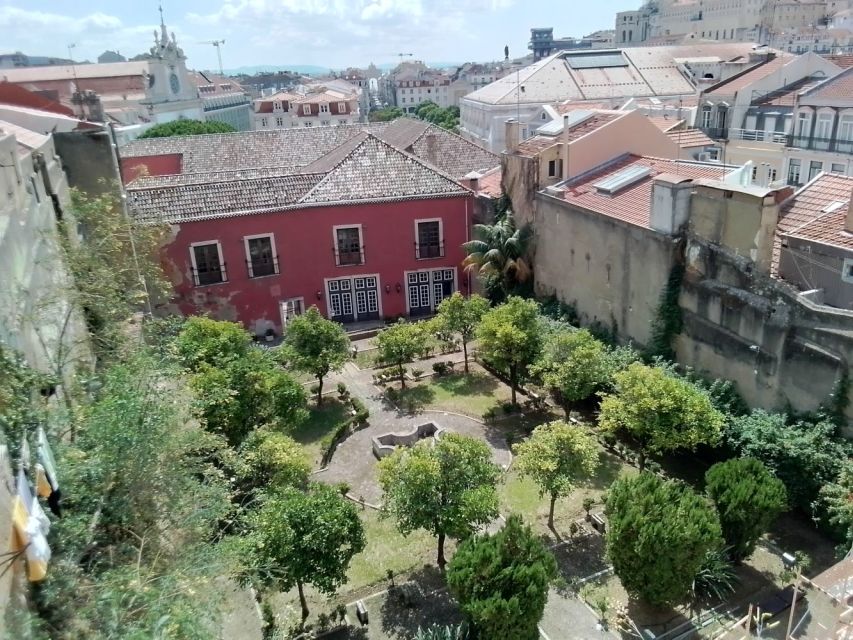
From the Doll’s Hospital area, you’ll pass the site of the Roman hippodrome and then a medieval hospital. These stops are short, but they’re key for perspective. Lisbon did not “start” in the 1500s. It layered Roman activity into later medieval care systems, and the tour helps you read that layering while you walk.
Then you enter the Independence Palace, including access to its secret garden—a place very few people visit. This is the big contrast moment. After cemeteries and underground spaces, you step into something curated and quiet, where the city feels briefly controlled by design. It’s also a good place to catch your breath, because the walking rhythm still matters after such stops.
If you choose the option that includes Independence Palace, you’ll feel the tour’s payoff more. The garden is a reward for the earlier “less obvious” history, and it makes the tour feel like more than a string of facts. It becomes a sequence.
Largo dos Domingos I, 1506, and the burned-out Dominican Church
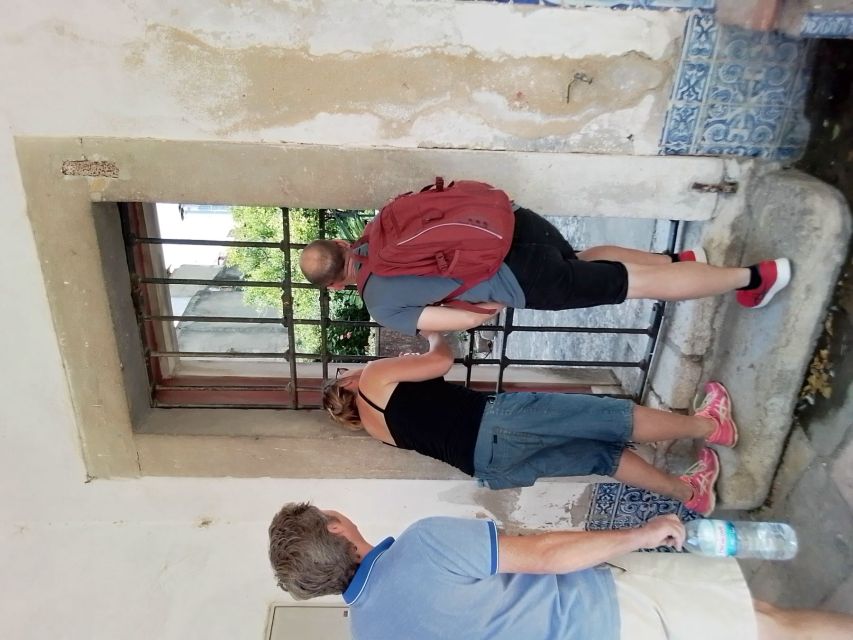
Outside at Largo dos Domingos I, the tour includes the massacre of the city’s Jews in 1506. This is not a casual mention. The guide’s job here is to connect the event to the streets you’re standing on, so you’re not just hearing a number—you’re placing it.
Nearby is the burned-out Dominican Church. Seeing what’s left of a structure after destruction makes the event feel physical. Even if you already know Lisbon has a painful Jewish history, this stop gives you a specific anchor location rather than a generalized timeline.
This section is one reason the tour is not recommended for very young children. It’s intense, and it requires attention.
Rossio Square spies and WWII Jewish refugees in the café world
Next is Rossio Square, where stories shift into wartime Europe. You’ll hear about spies and about Jewish refugees who used the cafes of the square in World War II. That’s a powerful angle because it highlights how ordinary public spaces became survival spaces.
Cafes are one of those details that can feel too everyday for big history—until you realize cafés are where people talk, listen, exchange rumors, meet contacts, and sometimes hide in plain sight. The guide uses Rossio to show that private danger often lived inside public life.
After that, you walk along one of Lisbon’s oldest streets, with roots going back to Roman times, and you hear about the “Roaring 20s” story: casinos and nightclubs where Lisbon’s later party era took shape. This keeps the emotional swing balanced. You move from suffering and fear back to nightlife and motion, and the street itself becomes the link.
The finish at Praça do Comércio and a Moorish-style palace feeling
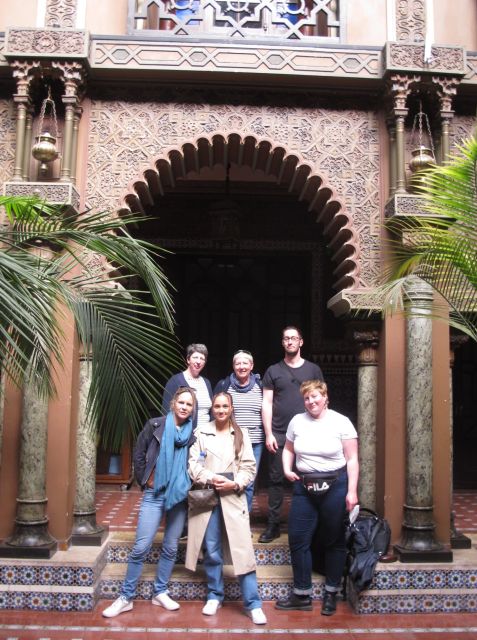
The tour ends at Praça do Comércio, which was the former site of the Royal Palace. Finishing here works because it’s a space built for scale and sightlines. After narrow monastery lanes and hidden corners, Praça do Comércio feels like Lisbon opening up.
You also finish at a beautiful former palace decorated in Moorish style. That final room-and-style contrast is more than decoration. It’s a reminder that Lisbon’s identity is not one straight line. It’s a patchwork of influences, some visible and some secret, and this tour makes that mix feel tangible.
Price and value: what $41 buys you in real access
At $41 per person for about 2.5 hours, this tour is priced like an experience, not just a lecture. The real value comes from included access:
- Entry to Independence Palace or the Doll’s Hospital
- A pastel de nata or ginginha
If you’ve ever tried to piece together a day with museums, palace admissions, and “maybe we’ll get in,” you’ll understand why this is smart value. The tour does the coordination for you. You also get a live guide in English or French, and the small group size (limited to 8 people) keeps the experience personal.
One thing to watch: there are two different included options (Independence Palace vs Doll’s Hospital). If one of those fits your interests more, choose accordingly. It changes how you remember the tour’s ending and overall mood.
The guide matters: Peter’s humor and tight structure
The best part of this tour is how well the guide connects details into a storyline. One name you’ll likely hear mentioned in English and French is Peter. The guide’s style is described as very informed, structured, and attentive, with an easy humor that helps the heavier material land without becoming gloomy.
A small but important detail: when the meeting point is easy to mix up, the guide is known for staying patient and making sure you’re found. That’s worth something when you’re traveling in a city that loves to look similar street to street.
Also, the tour can be engaging even when younger people are involved, since the guide sometimes shifts the tone to be more playful. The official listing still notes it’s not suitable for children under 5, so use that as your boundary.
Who should book Secret Lisbon, and who might skip it
This tour is a great match if you want Lisbon beyond postcards. I’d especially recommend it if you:
- like history connected to streets you can walk through
- enjoy dark details alongside lighter cultural stops
- want small-group attention (not a herd)
- value access to interior sites that most people miss
You might skip it if:
- you need a fully wheelchair-friendly route (it’s not suitable for mobility impairments)
- you’re traveling with very small children
- you prefer only light and scenic storytelling (there are cemeteries and major Jewish history)
Should you book this tour?
If you want one high-impact day plan that feels like Lisbon’s underground wiring—secret spaces, unusual buildings, and stories that explain why the city is the way it is—this is a strong choice. For $41, you’re not just buying walking time. You’re buying access to interiors, a local taste (pastel de nata or ginginha), and a guide who keeps the route coherent from monastery crypts to a Moorish-style finish.
Book it if your schedule allows 2.5 focused hours. Skip it if mobility is a concern or if heavy historical material will take the joy out of your trip. Otherwise, you’ll come away with Lisbon feeling much bigger than the usual highlights.
FAQ
How long is the Secret Lisbon Walking Tour?
The tour lasts 2.5 hours.
How much does it cost?
It costs $41 per person.
Is this tour a small group?
Yes. The group is limited to 8 participants.
What languages are offered?
The live tour guide speaks French and English.
What’s included in the ticket?
The ticket includes a 2.5-hour walking tour of Lisbon secrets, plus entrance to Independence Palace OR the Doll’s Hospital. You also get a pastel de nata or ginginha.
Where does the tour end?
It ends at Praça do Comércio.
What’s the meeting point situation?
The meeting point may vary depending on the option booked.
Is it suitable for young children or mobility impairments?
It’s not suitable for children under 5 and not suitable for people with mobility impairments.
More Tours in Lisbon
- Lisbon City Center Tour – The Unmissable Lisbon★ 5.0 · 22,234 reviews
- Lisbon: History, Stories and Lifestyle Walking Tour★ 4.8 · 10,902 reviews
- True 4Hour Private Tuk Tuk Tour: Discover Lisbon with a Local!★ 5.0 · 8,008 reviews
- Winner 2025 Undiscovered Lisbon Food & Wine Tour by Eating Europe★ 5.0 · 6,390 reviews
- Lisbon: Sintra, Pena, Cabo da Roca, Cascais Tour with Pickup★ 4.8 · 5,445 reviews
More Tour Reviews in Lisbon
- Lisbon City Center Tour – The Unmissable Lisbon★ 5.0 · 22,234 reviews
- Lisbon: Sintra, Pena, Regaleira, Cabo da Roca & Cascais★ 4.7 · 19,656 reviews
- Lisbon Card: 24, 48, or 72-Hour Pass★ 4.5 · 17,944 reviews
- Lisbon: Jerónimos Monastery Entrance Ticket★ 4.1 · 14,164 reviews
- Lisbon: History, Stories and Lifestyle Walking Tour★ 4.8 · 10,902 reviews
More of Lisbon, One Hill at a Time
- Lisbon: History, Stories and Lifestyle Walking Tour★ 4.8 · 10,902 reviews
- Best of Lisbon Small-Group Guided Walking Tour★ 5.0 · 4,869 reviews
- Lisbon: Food and Wine Small Group Walking Tour★ 4.9 · 4,082 reviews
- Best of Lisbon Walking Tour: Rossio, Chiado & Alfama★ 4.9 · 2,700 reviews
- Age of Discoveries Walking Tour in Belém★ 5.0 · 1,513 reviews
Just in: fresh Lisbon reviews from the team





Lisbon Walking Tours, compared.
 ★ 4.8History, Stories and Lifestyle Walking TourFrom $2910,902 reviews
 ★ 5.0Best of Lisbon Small-Group Guided Walking TourFrom $234,869 reviews
 ★ 4.9Food and Wine Small Group Walking TourFrom $724,082 reviews
 ★ 4.9Best of Lisbon Walking Tour: Rossio, Chiado & AlfamaFrom $232,700 reviews
 ★ 5.0Age of Discoveries Walking Tour in BelémFrom $31,513 reviews
 ★ 5.0Lisbon Roots – Small group Food & Culture Walking Tour w/tastingsFrom $168910 reviews
 ★ 4.9Starter Walking Tour to the highlights in GermanFrom $33781 reviews
 ★ 4.1Lisbon Tram No. 28 Ride & Walking TourFrom $23766 reviews
Browse the lists this tour appears in