
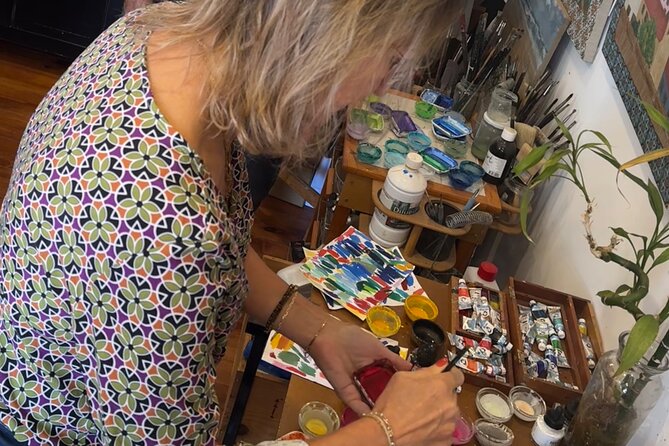
Reviewed · WORKSHOPS
Portuguese Tile Workshop
Lisbon tiles teach you by doing. This Portuguese Tile Workshop at Formettes – Azulejos Design turns a classic Lisbon art form into a hands-on session with simple steps, templates, and real tools for making a geometric azulejo pattern.
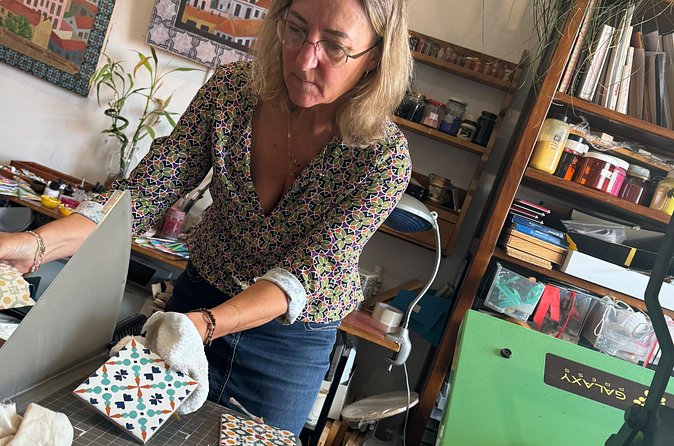
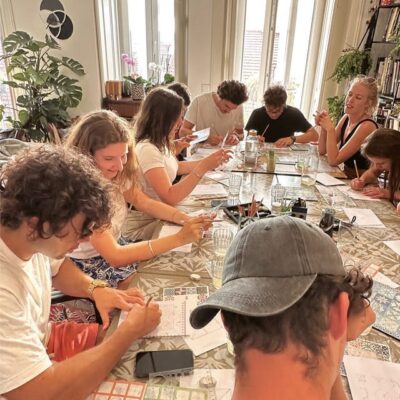
I especially like the small setup—an intimate group (capped at six) means you’re not lost in a crowd. And I like the finish: your artwork is cleaned up, multiplied, and transferred to a ceramic tile (10cm x 10cm) using a thermal press after the workshop.
One consideration: bottled water isn’t included, so if you’re the type who gets thirsty during creative work, plan ahead.
In This Review
- Key Things That Make This Workshop Worth Your Time
- What You’ll Create: A Lisbon Azulejo That Becomes a Real 10x10cm Tile
- Step-By-Step Workshop Flow: Pencil to Marker to Watercolor
- The Hidden Value: Pattern Thinking (Not Just Art Class)
- Coffee, Tea, and Cozy Instructor Attention at Formettes
- From Your Drawing to the Finished Tile: Photoshop + Thermal Press
- Where the Workshop Starts in Lisbon (and How to Show Up Ready)
- Price and Value: What You’re Actually Paying For
- Who This Workshop Is Best For (and Who Might Skip It)
- A Practical Way to Get the Most Out of Your Tile
- Should You Book This Portuguese Tile Workshop?
- FAQ
- How long is the Portuguese Tile Workshop?
- What does the workshop cost?
- Is the workshop offered in English?
- Is coffee or tea included?
- What size tile will I make?
- What supplies are included?
- What should I bring or plan for if I’m thirsty?
Key Things That Make This Workshop Worth Your Time
- Small-group help (often capped at six): you get real attention while drawing and painting.
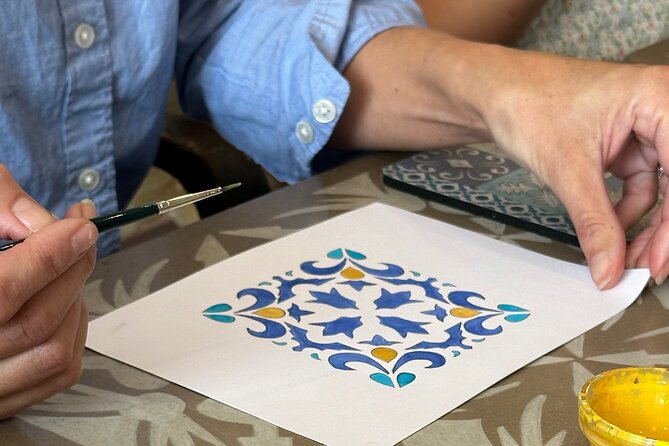
- A clear 3-step design method: pencil sketch, fine black marker, then watercolor color.
- You learn how azulejos work, not just how to copy them: there’s a quick presentation of the azulejos method.
- Templates and pattern tools: you don’t start from zero.
- Your design becomes a real tile: it’s corrected, multiplied, and pressed onto a 10cm x 10cm ceramic tile.
What You’ll Create: A Lisbon Azulejo That Becomes a Real 10x10cm Tile
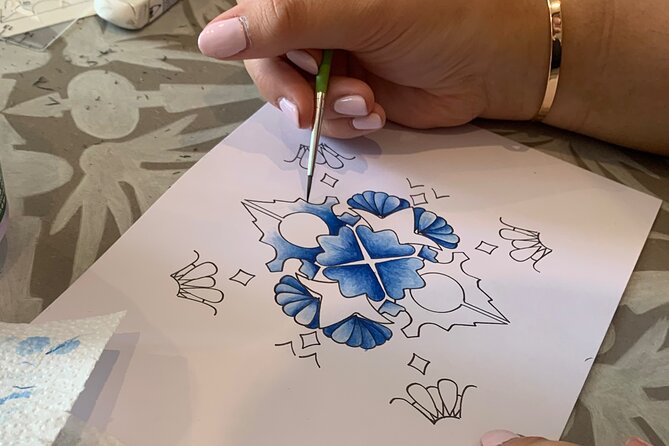
This is the kind of souvenir that feels personal because you’re making the design, not just buying one. You’ll create a geometric-looking pattern meant for azulejos style, then your drawing becomes a finished ceramic tile sized at 10cm x 10cm.
What makes that valuable is the “design-to-object” chain. You’re not just drawing for fun and then leaving. Your pattern goes through post-workshop refinement—small corrections in digital editing, then multiplication—so the final tile looks like a proper repeated azulejo design.
Worth a look before you lock anything else in around Lisbon:
- Lisbon: Pastel de Nata Baking Class
★ 4.9 · 2,106 reviews - Lisbon: Traditional Portuguese Cooking Class
★ 4.9 · 592 reviews - Pastel de Nata Pastry Class: Bake and Enjoy Your Own Treats
★ 5.0 · 485 reviews - Lisbon: 2-Hour Pastel de Nata Cooking Class
★ 4.8 · 461 reviews
Step-By-Step Workshop Flow: Pencil to Marker to Watercolor
The workshop is structured to keep you moving, not stuck. You start with a short presentation on azulejos and the method, then you’re guided through the actual making.
Here’s the hands-on sequence:
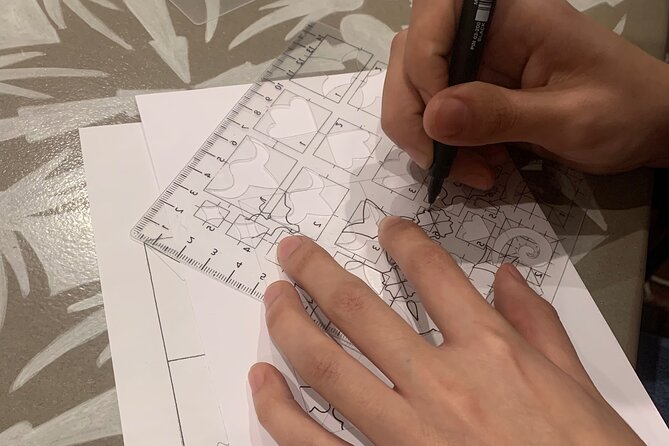
- Step 1: Draw with pencil. This is where you build your geometric layout.
- Step 2: Trace with a fine black marker, then erase the pencil. The marker lines stay crisp while the pencil construction disappears.
- Step 3: Color with watercolor. This is where your pattern turns into something distinctly yours.
You’ll also get a presentation of a pattern-making tool associated with Formettes. The goal is to help you create an azulejo design that looks coherent and repeatable—so you’re not just filling in shapes randomly.
If you’ve ever looked at Portuguese tiles and thought, That’s beautiful, but I could never make that, this structure is the answer. It breaks the intimidation into small, doable steps.
The Hidden Value: Pattern Thinking (Not Just Art Class)
Azulejos are famous in Lisbon for a reason: they’re built on repetition, symmetry, and geometry. In this workshop, the learning is practical. You’re taught the method so your drawing works as a tile design.
That matters for your outcome. If you’ve ever tried to “make it up” with no structure, you end up with a nice drawing that doesn’t translate well into a repeating pattern. Here, the templates and design support help you find a layout that actually fits the medium.
That’s also why the workshop works even if you’re not an artist. You’re not expected to invent a style from scratch—you’re guided into a system that already produces azulejo results.
Coffee, Tea, and Cozy Instructor Attention at Formettes
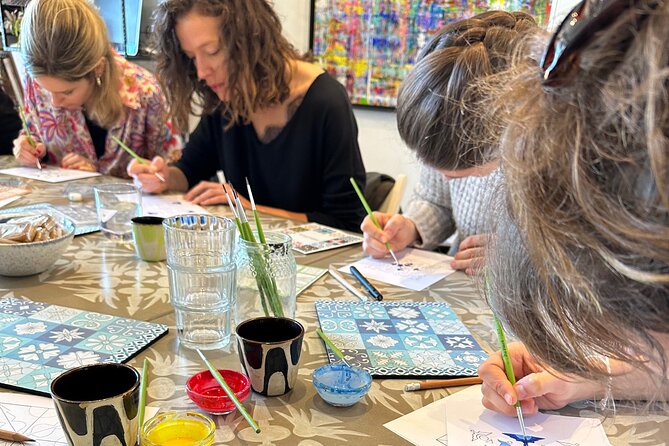
This workshop runs in an intimate space. Expect a relaxed atmosphere where you can focus on your design without the usual studio chaos.
Two details stand out for me when I’m judging value in small workshops:
- Complimentary tea and coffee keep the energy up during the session.
- The instructor support is hands-on, especially because the group is kept small (capped at six).
Some people worry that small groups mean less fun because you’ll feel rushed. Here it feels different: more time for questions, more time for adjustment, more time for the instructor to point out how to steer your pattern into something that will look right on a tile.




From Your Drawing to the Finished Tile: Photoshop + Thermal Press
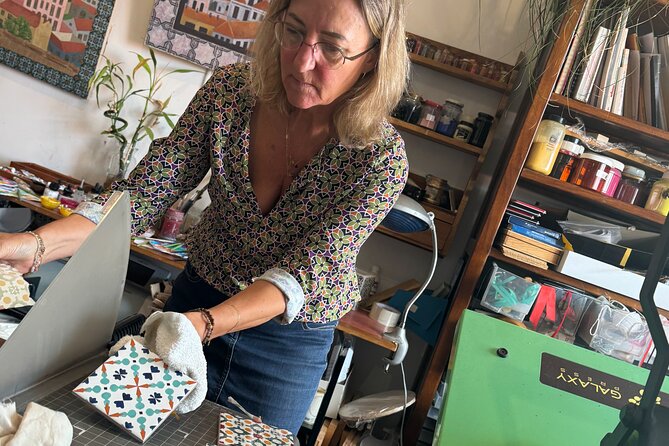
One of the smartest things about this experience is what happens after the workshop. Your design isn’t left to chance.
After you finish the drawing and watercolor steps, the workshop team:
- works on each design in Photoshop (slightly correcting if needed),
- multiplies the pattern so it’s tile-ready,
- transfers the final repeated design to the ceramic tile using a thermal press.
Why this is good news for you: it protects the result. Even if your pencil-to-marker lines aren’t perfectly symmetrical, the final tile can still come out looking polished and consistent. It turns a creative session into a realistic souvenir you’ll be proud to hang, frame, or gift.
And it also means the workshop is designed around design decisions you make during the session, while the technical repetition work happens afterward.
Where the Workshop Starts in Lisbon (and How to Show Up Ready)
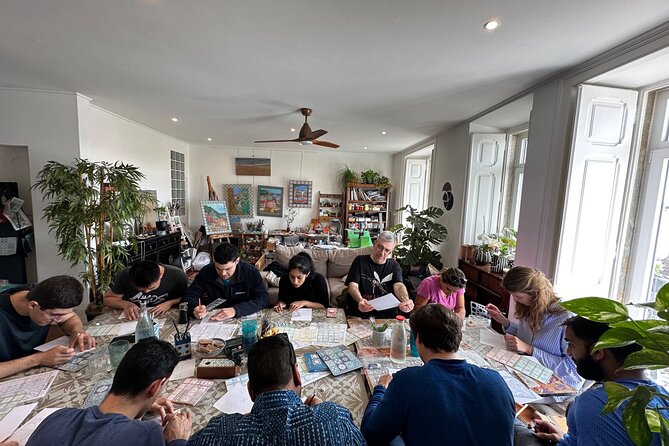
The meeting point is at Formettes – Azulejos Design, PC das Novas Nações 44, 2andar, 1170-277 Lisboa, Portugal. The activity ends back at the meeting point.
This location is described as near public transportation, which matters because you don’t want to spend your creative time hunting for parking. I’d still plan to arrive a few minutes early, especially if you’re using public transit and navigating a new neighborhood.
Also, because bottled water isn’t included, it’s smart to bring your own bottle or buy one nearby before you start.
Price and Value: What You’re Actually Paying For
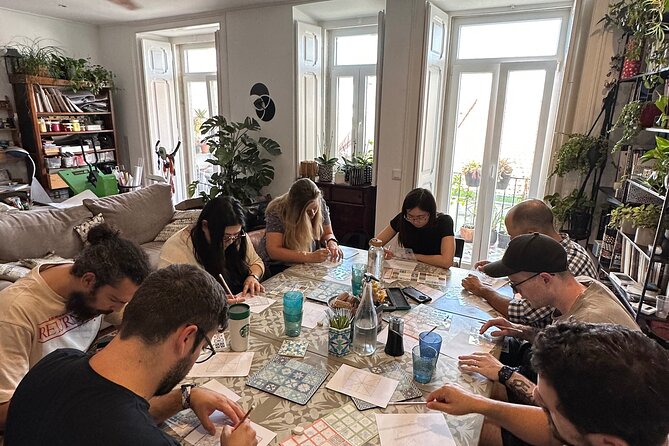
At $66.08 per person, this isn’t a “grab-and-go” craft. But for what you get, it’s a fair deal if you care about the finished object.
Here’s what your price covers:
- Coffee and/or tea
- All materials needed for the workshop, including the 10x10cm ceramic tile painting and the production process for your design
What you should understand is that you’re paying for both creativity and finishing. The instructor helps you create the tile design, then the team does the digital correction/multiplication and the thermal-press transfer. That production step is a big part of the value. Many souvenirs are one-way—pay money, take a pre-made item. This is more “make-to-finish.”
So if you want a souvenir that feels like Lisbon craft rather than a generic tourist item, the price starts making sense fast.
Who This Workshop Is Best For (and Who Might Skip It)
This workshop is a strong fit if you:
- love Lisbon’s art and want to bring home something you made
- enjoy calm, guided projects where you can ask questions
- like the idea of learning a method (not just following a vague demo)
It’s also a good choice for mixed groups of ages, since the experience is described as suitable for most travelers and has worked well for children, teenagers, and adults in terms of activity style.
You might consider skipping if:
- you want a fast “see and go” activity with zero creative effort
- you’re only interested in tiles as architecture photos, not as a hands-on craft
A Practical Way to Get the Most Out of Your Tile
You don’t need advanced drawing skills. You do benefit from a calm mindset and a willingness to follow the steps.
A few practical tips:
- Think geometric. The more consistent your shapes are, the easier it will be to create a repeatable design.
- Take your time with the pencil stage. That’s your blueprint.
- Be ready to color with watercolor. This part tends to be the most fun and also the most forgiving if you don’t overthink it.
- If you’re sensitive to planning, bring water. Bottled water and soda/pop aren’t included.
And if you’re traveling with someone you’ll like to do this together. Small-group workshops are often more enjoyable when you can share the process and trade pattern ideas between steps.
Should You Book This Portuguese Tile Workshop?
If you want a Lisbon souvenir with real creative value, I’d book it. The combination of small-group help, guided azulejo method (pencil → marker → watercolor), and a production finish that transfers your design onto a true ceramic tile is the sweet spot.
I’d say yes especially if:
- you like crafts where the process matters
- you’d rather take home something you designed than something you bought
- you have about 2 hours 30 minutes and want to end your trip with a skill
If you’re undecided, ask yourself one question: do you want the story behind your tile? This workshop is built for that.
FAQ
How long is the Portuguese Tile Workshop?
The workshop lasts about 2 hours 30 minutes.
What does the workshop cost?
It costs $66.08 per person.
Is the workshop offered in English?
Yes, it’s offered in English.
Is coffee or tea included?
Yes. Coffee and/or tea are included.
What size tile will I make?
You’ll work with and leave with a 10cm x 10cm ceramic tile.
What supplies are included?
All materials are included for the painting portion, including the tile and painting supplies.
What should I bring or plan for if I’m thirsty?
Bottled water and soda/pop are not included, so you may want to bring water or plan to buy it nearby.
More Workshops in Lisbon
- Lisbon: Pastel de Nata Baking Class★ 4.9 · 2,106 reviews
- Lisbon: Traditional Portuguese Cooking Class★ 4.9 · 592 reviews
- Pastel de Nata Pastry Class: Bake and Enjoy Your Own Treats★ 5.0 · 485 reviews
- Lisbon: 2-Hour Pastel de Nata Cooking Class★ 4.8 · 461 reviews
- Lisbon Portuguese Cooking Class with 3-Course Dinner★ 5.0 · 445 reviews
More Tour Reviews in Lisbon
- Lisbon City Center Tour – The Unmissable Lisbon★ 5.0 · 22,234 reviews
- Lisbon: Sintra, Pena, Regaleira, Cabo da Roca & Cascais★ 4.7 · 19,656 reviews
- Lisbon Card: 24, 48, or 72-Hour Pass★ 4.5 · 17,944 reviews
- Lisbon: Jerónimos Monastery Entrance Ticket★ 4.1 · 14,164 reviews
- Lisbon: History, Stories and Lifestyle Walking Tour★ 4.8 · 10,902 reviews
Just in: fresh Lisbon reviews from the team





Workshops, compared.
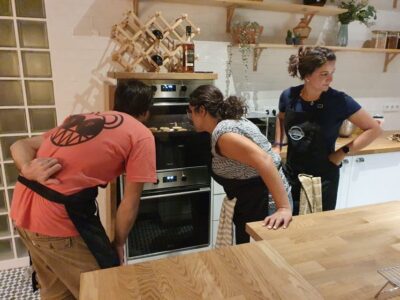 ★ 4.9Pastel de Nata Baking ClassFrom $642,106 reviews
 ★ 4.9Traditional Portuguese Cooking ClassFrom $100592 reviews
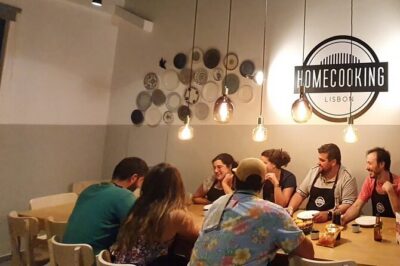 ★ 5.0Pastel de Nata Pastry Class: Bake and Enjoy Your Own TreatsFrom $66485 reviews
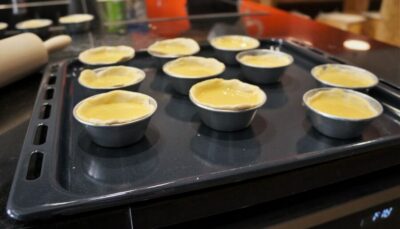 ★ 4.82-Hour Pastel de Nata Cooking ClassFrom $64461 reviews
 ★ 5.0Lisbon Portuguese Cooking Class with 3-Course DinnerFrom $130445 reviews
 ★ 4.9Azulejos’ Design Create Your Own Tile WorkshopFrom $64420 reviews
 ★ 5.0Traditional Portuguese Cooking Class in LisbonFrom $102287 reviews
 ★ 4.81.5-Hour Surf LessonFrom $35275 reviews
Browse the lists this tour appears in