
Reviewed · PASTEL DE NATA CLASSES
Pastel de Nata Pastry Class: Bake and Enjoy Your Own Treats
Pastel de Nata tastes better when you made it. This hands-on pastry class at Homecooking Lisbon walks you through making your own Pastéis de Nata from scratch, with puff pastry and custard filling included. I especially love the step-by-step coaching during the baking, and I also like that the class ends with the Portuguese-style tasting setup: coffee or tea plus Porto wine for adults.
One thing to consider: this is a kitchen experience, not a long sightseeing tour. You’ll spend most of the 2 hours making and waiting for tarts to bake, so if you’re after big city views or a history walk, this may feel more work-then-reward than full-day adventure.
In This Review
- Key things to know before you go
- Pastel de Nata in Lisbon: what this class is really about
- Homecooking Lisbon and the “no-stress” kitchen setup
- The 2-hour flow: making Pastel de Nata from scratch
- 1) Start at the meeting point, then get settled
- 2) Learn the history while you get oriented
- 3) Make the dough and custard filling (both included)
- 4) Roll, fill, and get the timing right
- 5) Bake, then enjoy your results Portuguese-style
- What you’ll actually taste: coffee, tea, and Porto wine
- Where this class shines for couples and foodies
- Price and value: is $66.51 per person fair?
- Getting there: meeting point, neighborhood feel, and timing
- Who should book this Pastel de Nata class, and who might skip it
- Should you book this class?
- FAQ
- How long is the Pastel de Nata pastry class in Lisbon?
- What is the price per person?
- Is the class offered in English?
- What is included in the lesson and food?
- Will alcohol be served to everyone?
- How big is the class group?
- Where does the class start and end?
Key things to know before you go
- Small group size (max 16) keeps the class hands-on instead of watch-and-hope
- From scratch means puff pastry and custard filling are part of the session, not just assembly
- Instructor help while you roll and fill makes it doable even if you’ve never baked
- Tasting at the end pairs your fresh pastries with coffee or tea and Porto wine (adults only)
- English instruction and a mobile ticket make planning straightforward
Pastel de Nata in Lisbon: what this class is really about
If you only know Pastel de Nata from shop windows, this class upgrades your understanding fast. You’ll start with ingredients and technique, not a pre-baked shortcut. And yes, the pastries you’ll make are the star, but the real value is learning how the tart gets its signature flaky shell and creamy custard.
This is also a nice “do something Lisbon-specific” option without needing to be a foodie genius. Pastel de Nata is everywhere in Portugal now, but making it yourself gives you a new kind of respect. You get the same lesson from the oven-to-table moment: it’s not complicated, but it is precise. In a small group, you can actually get feedback instead of guessing.
I like that the experience is built around a short, focused rhythm. You come hungry, you work through the steps, and then you get to enjoy what you made right away with the drinks included. The price is not the cheapest “snack and chat” option, but it’s fair for a hands-on class where you’re supplied with the materials and guided through the process.
And the vibe works for more than one kind of traveler. If you’re a couple, it’s easy to do side-by-side. If you’re traveling solo, the class format makes it natural to talk. If you’re a food lover, it’s a practical way to go beyond eating and actually learn.
Roll your sleeves up for more nata baking
- Lisbon: Pastel de Nata Baking Class
★ 4.9 · 2,106 reviews - Pastel de Nata Masterclass at a Real Bakery in Downtown Lisbon
★ 5.0 · 491 reviews - Pastel de Nata Pastry Class: Bake and Enjoy Your Own Treats
★ 5.0 · 485 reviews - Lisbon: 2-Hour Pastel de Nata Cooking Class
★ 4.8 · 461 reviews
Homecooking Lisbon and the “no-stress” kitchen setup
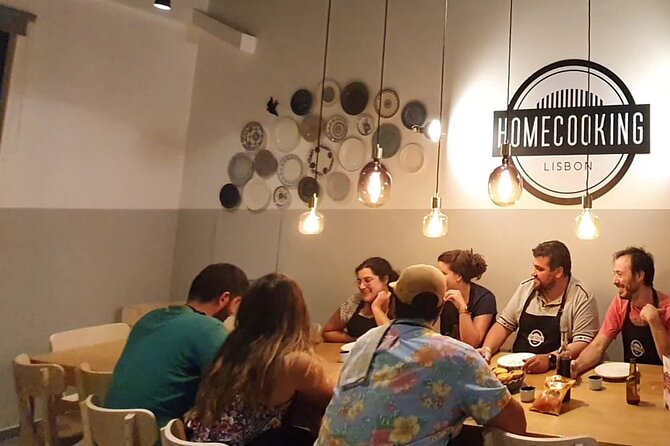
Homecooking Lisbon is the kind of place that feels built for instruction. The kitchen is described as clean and comfortable, and the classes are kept small. That matters because rolling puff pastry and filling custard needs space, tools, and patience. If the room were chaotic, you’d spend your time fighting your station instead of learning.
Another practical win: you get offered snacks and drinks during the session. That keeps the energy up while dough rests and the oven does its job. The setup includes water, coffee, tea, and for adults, alcohol as part of the tasting experience. If you’re under 18, the alcohol won’t be served, and you’ll still have non-alcohol options like water, juices, or tea.
In terms of group dynamics, the cap of 16 travelers is a big deal. You’re not just standing around. People can pair up at workstations, and instructors can move through and offer feedback when you need it. I also like the “practical pairing” aspect: you can chat between steps without losing track of what you’re doing.
Language is also handled: the class is offered in English, and the teaching style is repeatedly described as clear and patient. In real-world terms, that means you won’t be stuck decoding directions. You’ll be able to ask questions and get answers while it still matters.
The 2-hour flow: making Pastel de Nata from scratch
Here’s the core of what you’ll do, in the order that makes sense for learning.
1) Start at the meeting point, then get settled
Your experience begins back at the meeting point at R. Aliança Operária 54, 1300-049 Lisboa, Portugal. It’s a straightforward start and ends back there too, so you’re not dragged across town afterward.
The venue is also noted as near public transportation, which helps in Lisbon where timing and walking uphill can be real variables. One review even placed the area as between Belem and Baixa, near the LX Factory area. If you’re already spending time around those neighborhoods, you’ll likely find logistics easier than expected.
Worth a look before you lock anything else in around Lisbon:

2) Learn the history while you get oriented
Before you roll or fill anything, you’ll hear about the history of this iconic Portuguese pastry. Pastel de Nata is often associated with specific factories and traditions, including the famous Pastéis de Belém. This history piece matters because it explains why the tart has the reputation it has, not just that it’s popular.
And yes, it helps you pay attention while your dough rests later. It turns waiting time into something useful instead of just standing there watching ovens.
3) Make the dough and custard filling (both included)
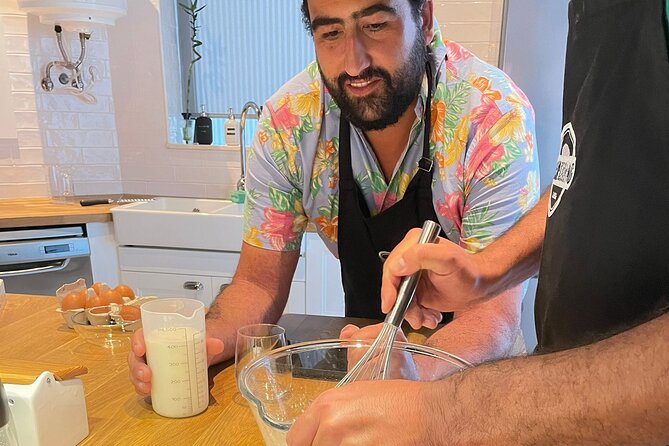
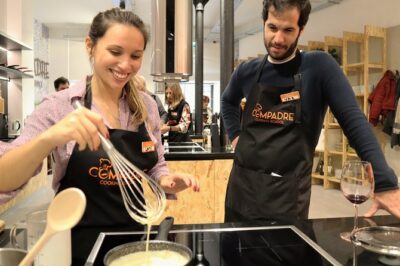
This class is not just “fill and bake.” You’re taught to prepare your own batch from scratch, including puff pastry and the filling. That’s the big difference between a real skills class and a tourist snack activity.
In practice, this is where the instructor feedback becomes crucial. Multiple instructors are mentioned by name in the reviews, including Rita, Beatriz, Pedro, and Miguel, and they’re described as walking people through each phase. You’ll learn what to look for while rolling pastry and while preparing the custard.
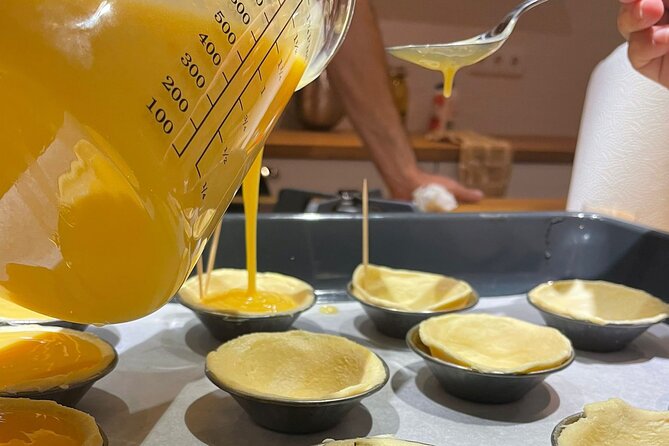
4) Roll, fill, and get the timing right
The work is hands-on and step-by-step. Most feedback in the reviews centers on instructors coming by to correct rolling and offer guidance during the process. That means you don’t need to be a born baker to get results.
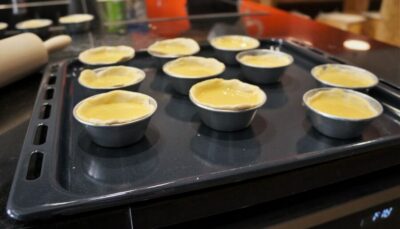
One good detail to watch for: fresh pastries come out hot. Reviews call out that the tarts are piping hot when you taste them, so plan to let them cool slightly before your first bite if you’re sensitive to heat.
5) Bake, then enjoy your results Portuguese-style
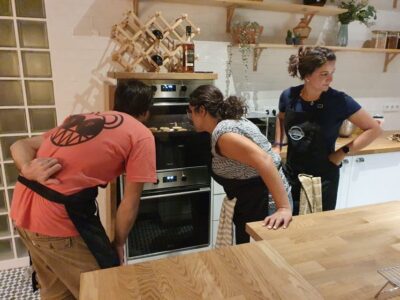
While your pastries bake, there’s time to chat and hang out. The class is structured so you’re not just waiting. You’ll spend time mingling as your tarts cook, and that’s part of why it can feel like a “date night” or “friend day” activity.
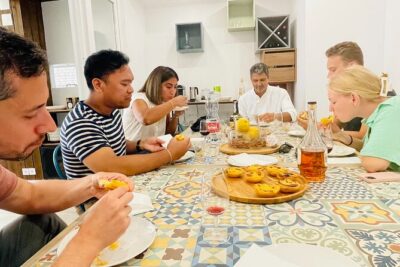
When the tarts are ready, you savor them straight from the oven with the included drinks.
What you’ll actually taste: coffee, tea, and Porto wine
The end of the class is designed like a reward, not an afterthought. You’ll enjoy the pastries you baked with coffee (or tea), and then there’s a tasting of the class’s best Porto wine.
Alcohol policy is clear: alcohol won’t be served to participants under 18, and water, juices, or tea will be available instead. So if you’re booking for a mixed-age group, you won’t need to worry about the adults getting a different experience than the kids/teens.
This pairing makes sense. Pastel de Nata is sweet and rich, and coffee or tea gives you a clean counterpoint. Porto wine adds a grown-up finish, which is a fun Lisbon touch since Porto is one of Portugal’s biggest names. If you’re doing this as a couple, it’s also a nice “we earned this” moment after handling dough and custard for about two hours.
One more practical note: your “fresh out of the oven” moment is the best time to evaluate what you learned. The crust flakiness and custard texture are easiest to notice when they’re truly new. If you let them cool completely, they can taste good, but you’ll miss the peak experience.
Where this class shines for couples and foodies
For couples, the best feature is how naturally you work together. You’re doing something tactile and focused in the same space, so you don’t have to force conversation. The small group setup also means you’re not stuck sharing your whole evening with strangers from start to finish, but you’ll still meet people if you want.
For foodies, this class is valuable because it teaches a repeatable skill. After one session, you can recreate the process at home and start understanding why variations happen. Even if your first batch isn’t identical to a top factory, you’ll know what stage matters most and what you should adjust.
It’s also a good low-pressure option if you want a cooking activity but don’t want to commit to a full day. Two hours is enough to learn technique and taste the results, without swallowing your whole schedule. You’ll likely end up with that satisfied travel feeling: not just fed, but informed.
And it’s friendly for first-timers. Reviews repeatedly describe the experience as easy, fun, and suitable even for people new to baking. In plain language: the instructors seem to plan for beginners, and the kitchen setup supports that.
Price and value: is $66.51 per person fair?
At $66.51 per person for about 2 hours, you’re paying for three things: instruction, ingredients/tools, and a guided tasting moment. This isn’t a free-flow cooking demo where you watch from the sidelines. You’re actively making Pastel de Nata with puff pastry and custard filling included.
If you’ve ever taken a class where the instructor barely answers questions, you know how frustrating that can be. Here, the consistent feedback is about step-by-step directions and personalized help during the hands-on parts. That turns the price into something more like a workshop fee than a snack price.
Also, the beverages included help the math. You get water, coffee/tea, and alcohol for adults, plus snacks. You’re not adding a separate bill for drinks at the end, which matters in Lisbon where you can easily spend more than you expected on coffee or wine after walking around all day.
Is it worth it if you just want to eat one tart? Probably not. But if you want to leave with a skill, a cultural touchpoint, and a fresh batch to enjoy, the value holds up.
Getting there: meeting point, neighborhood feel, and timing
You start at R. Aliança Operária 54, 1300-049 Lisboa, Portugal and return there at the end. That’s helpful because it reduces navigation stress. Lisbon is hilly, and you don’t want your “one fun evening” to turn into a logistical puzzle.
The venue is described as near public transportation, which is practical for visitors who don’t want to rely on taxis. One review specifically placed the location near the LX Factory area, between Belem and Baixa. That’s a good mental map if you’re planning your day around those zones.
Booking timing is also worth noting. On average, this is booked about 21 days in advance, which suggests it fills up. If you can, lock it in earlier rather than assuming you can grab any time slot last minute. (Mobile ticket delivery is part of the convenience.)
Who should book this Pastel de Nata class, and who might skip it
This is a great fit if you:
- Want a hands-on Lisbon food experience that’s focused and not overwhelming
- Like learning technique, not just eating dessert
- Prefer a small group setting where you actually work at a station
- Travel as a couple and want a fun shared activity
- Are a foodie who wants the “why” behind the pastry’s fame
You might skip it if you:
- Want mainly sightseeing or scenery time, not cooking time
- Are very short on time and need a quick tasting only
- Have strong expectations that a home-baked class will match the exact output of a top factory’s production style (you’ll learn and improve, but this is a class, not a factory tour)
Should you book this class?
I’d book it if you like the idea of taking a famous Portuguese pastry and turning it into a skill you can use again. The consistent strengths are the clear step-by-step coaching, the clean comfortable kitchen, and the fact that the session ends with you eating what you made with the right Lisbon-style pairings.
If you’re excited by the idea of working dough and custard, and you’ll enjoy sharing a couple of hours with an instructor and small group, this is a smart use of your Lisbon time. Just go in ready to work a little, take a few moments to cool down hot pastries before the first bite, and treat it like a workshop. That’s where the real fun is.
FAQ
How long is the Pastel de Nata pastry class in Lisbon?
It runs for about 2 hours.
What is the price per person?
The price is $66.51 per person.
Is the class offered in English?
Yes, it is offered in English.
What is included in the lesson and food?
You’ll make Pastel de Nata from scratch, with puff pastry and filling included, and you’ll have snacks plus water, coffee, and tea. The tasting also includes Porto wine.
Will alcohol be served to everyone?
Alcohol is not served to participants under 18. Water, juices, or tea are available instead.
How big is the class group?
The class has a maximum of 16 travelers.
Where does the class start and end?
It starts at R. Aliança Operária 54, 1300-049 Lisboa, Portugal and ends back at the meeting point.
More Workshops in Lisbon
- Lisbon: Pastel de Nata Baking Class★ 4.9 · 2,106 reviews
- Lisbon: Traditional Portuguese Cooking Class★ 4.9 · 592 reviews
- Lisbon: 2-Hour Pastel de Nata Cooking Class★ 4.8 · 461 reviews
- Lisbon Portuguese Cooking Class with 3-Course Dinner★ 5.0 · 445 reviews
- Lisbon: Azulejos’ Design Create Your Own Tile Workshop★ 4.9 · 420 reviews
More Tour Reviews in Lisbon
- Lisbon City Center Tour – The Unmissable Lisbon★ 5.0 · 22,234 reviews
- Lisbon: Sintra, Pena, Regaleira, Cabo da Roca & Cascais★ 4.7 · 19,656 reviews
- Lisbon Card: 24, 48, or 72-Hour Pass★ 4.5 · 17,944 reviews
- Lisbon: Jerónimos Monastery Entrance Ticket★ 4.1 · 14,164 reviews
- Lisbon: History, Stories and Lifestyle Walking Tour★ 4.8 · 10,902 reviews
Bake Another Batch of Nata
- Lisbon: Pastel de Nata Baking Class★ 4.9 · 2,106 reviews
- Pastel de Nata Masterclass at a Real Bakery in Downtown Lisbon★ 5.0 · 491 reviews
- Lisbon: 2-Hour Pastel de Nata Cooking Class★ 4.8 · 461 reviews
- Pasteis de Nata Baking Class from Lisbon★ 5.0 · 248 reviews
- Lisbon: Pastel de Nata Masterclass at a Real Bakery★ 4.9 · 206 reviews
Just in: fresh Lisbon reviews from the team





Pastel de Nata Classes, compared.
 ★ 4.9Pastel de Nata Baking ClassFrom $642,106 reviews
 ★ 5.0Pastel de Nata Masterclass at a Real Bakery in Downtown LisbonFrom $84491 reviews
 ★ 4.82-Hour Pastel de Nata Cooking ClassFrom $64461 reviews
 ★ 5.0Pasteis de Nata Baking Class from LisbonFrom $78248 reviews
 ★ 4.9Pastel de Nata Masterclass at a Real BakeryFrom $82206 reviews
 ★ 4.9Catamaran Cruise with Drinks & Pastel de NataFrom $47153 reviews
 ★ 5.0Pasteis de Nata Baking ClassFrom $76134 reviews
 ★ 5.0Pastel de Nata Cooking Class in LisbonFrom $62118 reviews
Browse the lists this tour appears in