
Reviewed · LISBON WALKING TOURS
Lisbon Walking Tour – The Perfect Introduction to the City
Lisbon makes more sense after this walk. You start at Praça do Comércio and cover key downtown neighborhoods with a guide who connects monuments to real events, from the 1755 earthquake to the Carnation Revolution.
I love the way the route gives you instant orientation: you’re in the historical core of Baixa and Chiado, and you see how Lisbon’s layout, squares, and churches fit together. Second, the best part for me is the human stuff your guide adds, including practical pointers like inexpensive food picks and viewpoint hints people actually use later.
One thing to consider: the experience is talk-heavy, and a few guides have been reported as fast talkers, so if you’re sensitive to accents or speed, you may want to ask questions early to keep up. Also, because it’s a tip-at-the-end style tour, you should mentally prepare for that rather than expecting a fixed-price, no-surprises setup.
In This Review
- Key things to know before you go
- Meeting Praça do Comércio and finding your orange-umbrella guide
- Walking Lisbon’s downtown squares: D. José I to Praca do Comercio
- Rua Augusta, Dom Pedro IV, and the stretch that feels like Lisbon’s spine
- Earthquake stories you can point to: churches, ruins, and what survived
- Santa Justa, Avenida da Liberdade, and Casa do Alentejo’s calmer charm
- Rossio station, Praca Luis de Camoes, and the nightlife edge of Bairro Alto
- Tipping, the low base price, and why the guide matters
- Pace, rain strategy, and what to wear on Lisbon’s stones
- Who this tour is best for (and who should pick something else)
- Should you book Lisbon Walking Tour for a first trip?
- FAQ
- What’s included in the tour price?
- How long is the Lisbon Walking Tour?
- What language is the tour offered in?
- Where does the tour start, and how do I find the guide?
- Where does the tour end?
- Is there free cancellation?
Key things to know before you go
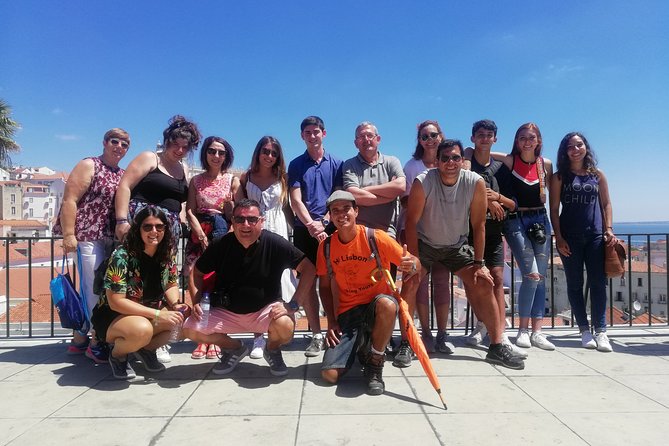
- Small group (max 20) means easier questions and less getting lost in the crowd.
- English-speaking guides focused on stories tied to real Lisbon history.
- Major landmarks in one loop: Santa Justa Elevator area, Carmo Church ruins area, Rossio, and the squares that define central Lisbon.
- Tip-at-the-end format: the base ticket is low, so your guide’s pay depends on you.
- Designed for a first visit to help you pick what to do next.
- Works in rain if you show up prepared with an umbrella or poncho.
Meeting Praça do Comércio and finding your orange-umbrella guide
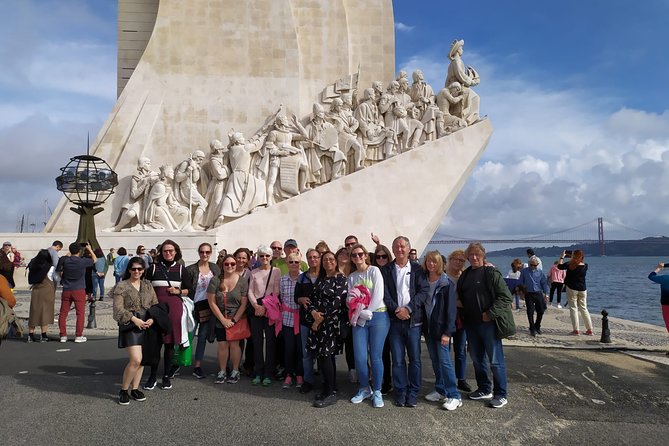
Your tour starts at Praça do Comércio, right where Lisbon’s center meets the riverfront energy. The key detail that matters in real life: look for your guide with an orange umbrella near the big arch and the statue in the middle of the square. That simple visual cue is the difference between a smooth start and the kind of awkward five-minute scramble you don’t need.
This location is also smart because you’re in an easy-access zone. The tour notes it’s near public transportation, so you can arrive without a car or complicated transfers. Plus, starting in a big open square makes the first briefing easy for a guide to keep everyone together.
The tour duration is about 2 hours 30 minutes, so you’re not signing up for an all-day slog. It’s long enough to cover meaningful history and multiple stops, but short enough that you can still enjoy the rest of your day on your own after.
One small practical note: if you’re traveling with strollers, the walking plan has been described as manageable even with kids. Still, wear shoes you’re comfortable walking in for a few hours, because downtown Lisbon is all cobbles and curves.
Lisbon at walking pace, a few more routes
- Lisbon: History, Stories and Lifestyle Walking Tour
★ 4.8 · 10,902 reviews - Best of Lisbon Small-Group Guided Walking Tour
★ 5.0 · 4,869 reviews - Lisbon: Food and Wine Small Group Walking Tour
★ 4.9 · 4,082 reviews - Best of Lisbon Walking Tour: Rossio, Chiado & Alfama
★ 4.9 · 2,700 reviews
Walking Lisbon’s downtown squares: D. José I to Praca do Comercio
Early on, you’ll be in the political and geographic heart of Lisbon. The first stop is the Statue of D. José I, and it’s a perfect opener because it frames the city as a place built around power and public space.
From there, you move into Praça do Comércio, Lisbon’s biggest square. This matters more than it sounds. If you’ve never seen Lisbon before, it can feel like the city is all hills and viewpoints. Standing in the largest square helps you understand the “flat-to-steep” rhythm of the city and how neighborhoods connect.
You also pass through Municipal Square, the area where the city hall is located. That’s another orientation anchor. Lisbon isn’t just postcard stuff; it’s an active working city, and the city hall zone helps you see that lived-in side.
Then comes a key landmark stretch: Elevador de Santa Justa. You’ll get a look at one of Europe’s famous features right in the downtown grid. The point here isn’t just photo value. It’s Lisbon’s vertical story: the city climbs, and elevators like Santa Justa are part of how people move through steep terrain without abandoning central areas.
Rua Augusta, Dom Pedro IV, and the stretch that feels like Lisbon’s spine

Next up is Praca Dom Pedro IV, one of Lisbon’s oldest squares. It’s a classic “meet here, walk from here” spot, and it helps you understand how the city funnels people through the center.
After that, you hit Rua Augusta, one of the most important streets in Lisbon. This is the kind of street where your guide’s explanations can make a huge difference. Without context, it’s just busy. With the story, it becomes a living corridor between major squares—exactly where you’ll want to be if you’re planning your own sightseeing after the tour.
A few guides have been praised for bringing Lisbon to life through storytelling, and you’ll feel that here. The tempo works best if you keep your eyes up at facades and landmarks, not just at your feet.
And yes, you’ll be walking. This is a walking tour, not a bus tour. So keep expectations realistic: you’re trading a bit of rest time for a strong mental map of the city center.
Earthquake stories you can point to: churches, ruins, and what survived

Lisbon’s signature event is the Great Lisbon Earthquake of 1755, and this tour builds it into the route so it doesn’t feel like a random history lesson. You’ll learn about what changed and why certain buildings became symbols of survival.
One of the most emotional historical stops on the walk is the Memorial as Vitimas do Massacre Judaico de 1506. It’s a reminder that Lisbon’s past isn’t only about natural disasters and kings. It also includes human violence, community tragedy, and the long effects of intolerance.
Then comes Igreja De S Domingos, described as one of the most impressive churches in Europe. Even if you don’t go inside for a full visit, the exterior presence and the story your guide tells around it help you see the church as part of Lisbon’s earthquake-era narrative.
Later, you’ll reach Largo do Carmo, the place where the Carnation Revolution took place. This is a great contrast moment. After the earthquake talks, you shift to a 20th-century turning point that’s closer to modern life. It gives you a sense that Lisbon keeps changing, and it does so through both shocks and organized political action.
And you’ll end up at Igreja de Sao Roque, highlighted as one of the few churches in Lisbon to survive the 1755 quake. That survival detail sticks. It gives you something you can “read” in the city as you move on.
Worth a look before you lock anything else in around Lisbon:

Santa Justa, Avenida da Liberdade, and Casa do Alentejo’s calmer charm
After the denser downtown blocks, the tour includes a change of pace with Avenida da Liberdade, Lisbon’s most fancy avenue. This isn’t just a walk-by. It helps you notice the shift in scale and mood that happens as you move from the old central core toward more elegant parts of the city.
Then there’s Casa do Alentejo, described as one of the most charming houses in Lisbon. Spots like this matter because they break up the “everything looks the same” problem you can get when you’re only seeing major landmarks. They’re the types of places you remember later when you’re trying to find that right neighborhood feeling again.
At this point, you’ll likely also start to pick up your guide’s personal style. Some guides have been singled out for being energetic and funny, like Tiago (also spelled Tiabo in one account) and Jose or Jose Tenorio, while others like Natalia and Kate are praised for turning history into something you can visualize. Even if your guide isn’t the person named in a review, the best ones tend to do this same thing: connect each stop to a reason it matters.
Rossio station, Praca Luis de Camoes, and the nightlife edge of Bairro Alto
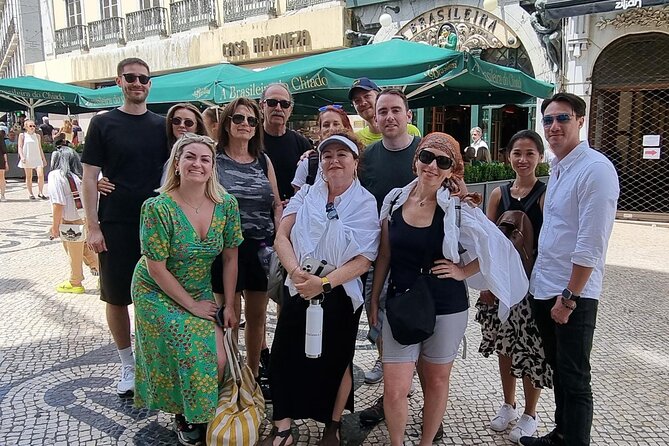
As you near the back half, the tour reaches Estacao Do Rossio, the old central station of Lisbon. Even just seeing it can help you understand how Lisbon used to organize travel and movement through the center.
Then you head to Praca Luis de Camoes, one of the city’s iconic squares. This is a solid “pause and breathe” moment near the end of the walking loop, before you transition into the neighborhood that feels distinctly Lisbon after-dark.
Finally, you end near Bairro Alto and the Camões Square area. Bairro Alto is the famous nightlife zone, and by ending there, the tour sets you up perfectly for the next step: eating, wandering, and planning your evening. If you’re staying only a few days, this ending location helps you avoid the common mistake of spending your whole first day focused on monuments and not enough time mapping where life happens at street level.
Tipping, the low base price, and why the guide matters
The listed price is very low for what you get: $1.25 per person with a mobile ticket and an English-speaking guide. The math here is simple. You’re paying for the guide’s time and the structure of the walk, not for a bundle of paid entrances.
Your guide is paid largely through the tip-at-the-end model. That’s common for walking tours, and it’s also why the guide experience can vary a bit depending on how you handle that part of the interaction.
Here’s the practical way to think about it before you go: if you like story-driven walking tours and you enjoy asking questions, your guide’s performance can genuinely change the value. Some people loved the “university lecturer” energy and highly engaging storytelling style. Others had concerns about certain guides setting expectations at the start, including comments that felt too direct about minimum amounts.
So my advice is straightforward: go into it expecting to tip and to be treated like an adult. If you don’t want a tip-based experience, consider a different style of tour that’s explicitly fixed-price.
Pace, rain strategy, and what to wear on Lisbon’s stones
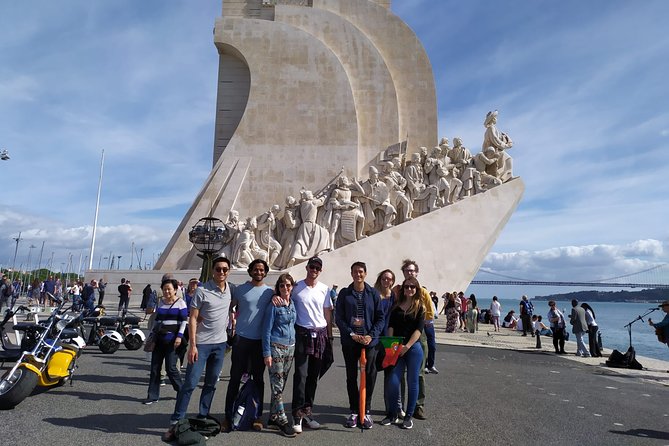
This tour is a real walk. Reviews mention good pacing for moving between stops, but also mention that a couple guides spoke quickly enough that people had to work to catch everything. That doesn’t mean the tour is bad; it means you should be ready to engage. If you hear something you want to understand better, ask. It’s a small group (up to 20), so questions are usually doable.
Weather is another real factor. One account described rain for about half the tour time and noted that the tour kept going. That’s a good sign: this isn’t the type of event that collapses the minute the sky changes.
Bring a practical rain setup even in summer. A poncho and an umbrella are the simplest tools. And wear shoes that handle cobblestones without making you hate Lisbon by hour one.
Who this tour is best for (and who should pick something else)
This Lisbon walking tour is a great match if you’re doing Lisbon for the first time and you want a fast city map. It’s also ideal if you like history tied to what you can actually see—earthquake survival details, revolution locations, and churches and monuments that become more meaningful once you understand the story.
It can also work well for mixed groups. A guide has been praised for handling strollers and kids smoothly, and another account praised guide control even with an unexpectedly large group. The max group size stays small enough to keep the vibe from turning into a shuffle line.
Who might consider alternatives: if you dislike long explanations, or if you need very quiet walking conditions, the talk-heavy format may not feel relaxing. And if you strongly prefer fixed-price tours without tip messaging, this style might feel uncomfortable.
Should you book Lisbon Walking Tour for a first trip?
Yes, I’d book it if you want a smart first-day foundation. The route hits the kind of anchor points that make the rest of Lisbon easier to enjoy: big squares, major streets, famous landmarks like Santa Justa, plus emotionally powerful context around the earthquake and the Carnation Revolution.
Book it early in your trip too. The guide-style recommendations people mention—especially food and viewpoints—tend to pay off when you use them the same day or the next.
My only caution is about expectations. Show up ready to walk, ready to listen, and ready to tip your guide for real effort. If you do that, this tour tends to land exactly where it should: as a low-cost, high-value introduction to downtown Lisbon.
FAQ
What’s included in the tour price?
The tour is priced at $1.25 per person and uses a mobile ticket. The highlights focus on seeing major sights and learning the stories behind them, and your guide ends the tour with a tip-your-guide model.
How long is the Lisbon Walking Tour?
It runs for approximately 2 hours 30 minutes.
What language is the tour offered in?
The tour is offered in English.
Where does the tour start, and how do I find the guide?
You meet at Praça do Comércio (1100-148 Lisbon). The guide is described as looking for an orange umbrella near the big arch and the statue in the middle of the square.
Where does the tour end?
The tour ends around Praça Luís de Camões (Largo Luís de Camões, 1200-243 Lisboa), with the walk finishing near Camões Square.
Is there free cancellation?
Yes. You can cancel up to 24 hours in advance for a full refund.
More Tours in Lisbon
- Lisbon City Center Tour – The Unmissable Lisbon★ 5.0 · 22,234 reviews
- Lisbon: History, Stories and Lifestyle Walking Tour★ 4.8 · 10,902 reviews
- True 4Hour Private Tuk Tuk Tour: Discover Lisbon with a Local!★ 5.0 · 8,008 reviews
- Winner 2025 Undiscovered Lisbon Food & Wine Tour by Eating Europe★ 5.0 · 6,390 reviews
- Lisbon: Sintra, Pena, Cabo da Roca, Cascais Tour with Pickup★ 4.8 · 5,445 reviews
More Tour Reviews in Lisbon
- Lisbon City Center Tour – The Unmissable Lisbon★ 5.0 · 22,234 reviews
- Lisbon: Sintra, Pena, Regaleira, Cabo da Roca & Cascais★ 4.7 · 19,656 reviews
- Lisbon Card: 24, 48, or 72-Hour Pass★ 4.5 · 17,944 reviews
- Lisbon: Jerónimos Monastery Entrance Ticket★ 4.1 · 14,164 reviews
- Lisbon: History, Stories and Lifestyle Walking Tour★ 4.8 · 10,902 reviews
More of Lisbon, One Hill at a Time
- Lisbon: History, Stories and Lifestyle Walking Tour★ 4.8 · 10,902 reviews
- Best of Lisbon Small-Group Guided Walking Tour★ 5.0 · 4,869 reviews
- Lisbon: Food and Wine Small Group Walking Tour★ 4.9 · 4,082 reviews
- Best of Lisbon Walking Tour: Rossio, Chiado & Alfama★ 4.9 · 2,700 reviews
- Age of Discoveries Walking Tour in Belém★ 5.0 · 1,513 reviews
Just in: fresh Lisbon reviews from the team





Lisbon Walking Tours, compared.
 ★ 4.8History, Stories and Lifestyle Walking TourFrom $2910,902 reviews
 ★ 5.0Best of Lisbon Small-Group Guided Walking TourFrom $234,869 reviews
 ★ 4.9Food and Wine Small Group Walking TourFrom $724,082 reviews
 ★ 4.9Best of Lisbon Walking Tour: Rossio, Chiado & AlfamaFrom $232,700 reviews
 ★ 5.0Age of Discoveries Walking Tour in BelémFrom $31,513 reviews
 ★ 5.0Lisbon Roots – Small group Food & Culture Walking Tour w/tastingsFrom $168910 reviews
 ★ 4.9Starter Walking Tour to the highlights in GermanFrom $33781 reviews
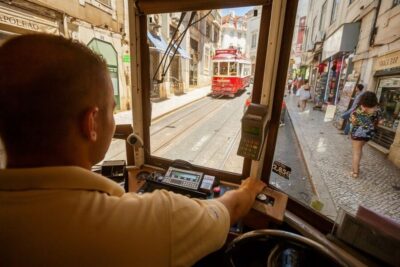 ★ 4.1Lisbon Tram No. 28 Ride & Walking TourFrom $23766 reviews
Browse the lists this tour appears in