
Reviewed · LISBON WALKING TOURS
Lisbon: The Jewish Sephardic Walking Tour
Lisbon hides Jewish footsteps in plain sight. On this 4-hour walk with a small group, you visit Shaare Tikva and follow Sephardic stories into Rua de Judiara in Alfama. I love that combo of a real synagogue visit plus street-level history. The one drawback: you’ll be on foot for a full 4 hours, with steep, uneven lanes.
You’ll go with a live guide in English or Portuguese, and the group stays small (up to 8 people). Entrance fees for the synagogue are handled, and you skip the ticket line so your time stays focused on Lisbon instead of waiting.
In This Review
- Key things I’d circle on your plan
- Shaare Tikva: the synagogue stop that sets the tone
- Alfama and Rua de Judiara: Lisbon’s oldest streets as a historical map
- The long arc of belonging: exile, return, and reappearing communities
- The 1506 Massacre: a turning point you can’t ignore
- Portugal’s Jewish and Portuguese figures: names that make the story stick
- How the tour likely flows through the city (without wasting your time)
- Guide impact: why Paulo Levy is repeatedly the reason people recommend it
- Price and value: $165 for a group up to 2
- Who should book this tour (and who should think twice)
- Before you go: shoes, clothing, and a realistic pace
- Should you book the Lisbon Jewish Sephardic Walking Tour?
- FAQ
- Where does the tour meet?
- How long is the Lisbon Jewish Sephardic Walking Tour?
- What languages are the tours offered in?
- Is the synagogue entrance included?
- What should I wear or bring?
- Is it wheelchair accessible?
Key things I’d circle on your plan
- Shaare Tikva visit, Portugal’s first synagogue built since the late 15th century
- A walk through Alfama, with the Rua de Judiara route tied to Jewish life
- The 1506 Massacre story, explained as a turning point in how the community lived
- A tour narrative that connects Jewish history to Portuguese law and local streets
- A guide with strong personal storytelling, especially Paulo Levy
Shaare Tikva: the synagogue stop that sets the tone
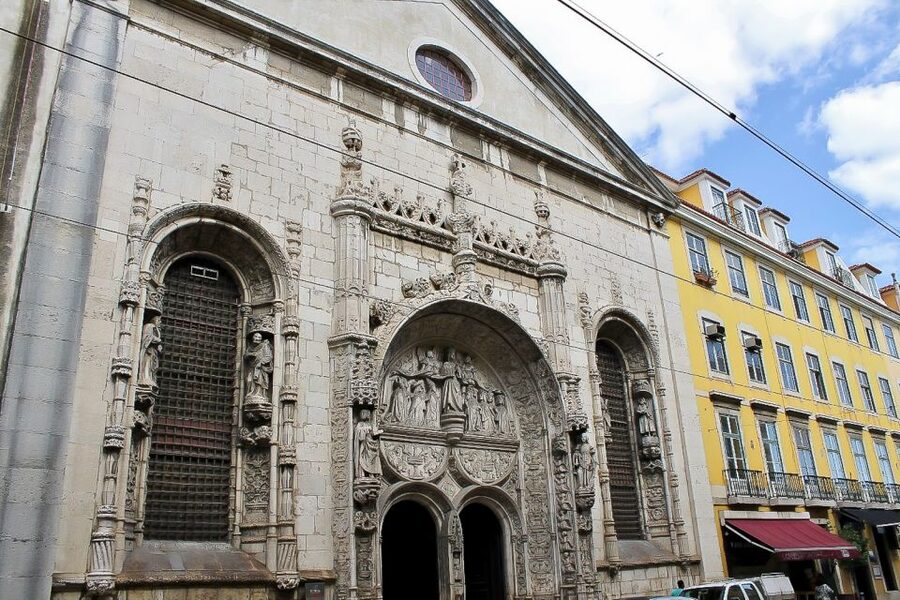
If you care about Jewish history in Portugal, this tour starts in the right place. Shaare Tikva (Lisbon Synagogue) isn’t just a quick look. It’s the main anchor, because this synagogue is described as Portugal’s first built since the late 15th century—meaning it’s not only old-world history, but also a modern re-rooting of a community that had been pushed out and reshaped many times.
I like the way the guide uses the building to frame the bigger story. You’re not asked to memorize dates and names like it’s a school test. Instead, you’re given context that helps you see why the synagogue mattered, how it fit into Portuguese society over time, and why it’s still symbolically important today.
Practical tip: synagogue visits often come with strict rules. Based on the tour info, plan clothing that covers appropriately—short skirts and sleeveless shirts aren’t allowed. Wear something you could comfortably stand and walk in, because the tour is not a sit-down experience.
Lisbon at walking pace, a few more routes
- Lisbon: History, Stories and Lifestyle Walking Tour
★ 4.8 · 10,902 reviews - Best of Lisbon Small-Group Guided Walking Tour
★ 5.0 · 4,869 reviews - Lisbon: Food and Wine Small Group Walking Tour
★ 4.9 · 4,082 reviews - Best of Lisbon Walking Tour: Rossio, Chiado & Alfama
★ 4.9 · 2,700 reviews
Alfama and Rua de Judiara: Lisbon’s oldest streets as a historical map
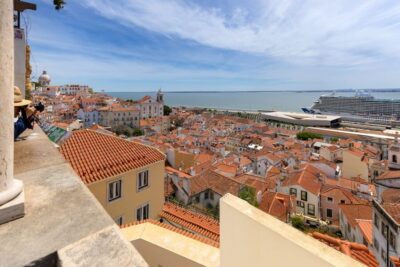
Then you shift into Alfama, Lisbon’s oldest neighborhood, where the streets are narrow and the walking feels like you’re following a human-scale maze. This part is where the tour turns from “history facts” into “how did people actually move through a city?”
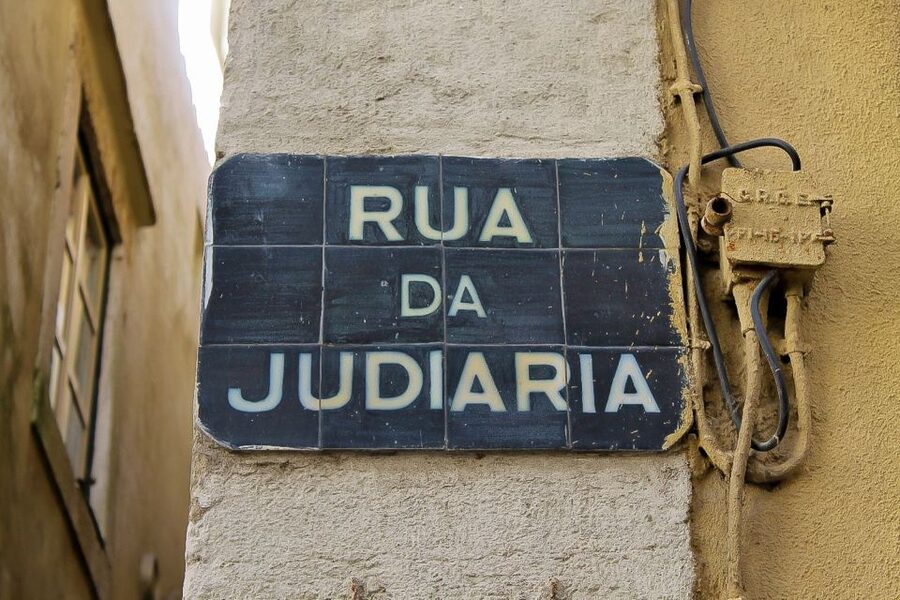
One of the highlights is walking down Rua de Judiara, a street tied to Jewish life. That name alone gets your attention, but what really makes it work is that the guide links the lane to the lived reality of community spaces: where people worked, gathered, worshipped, and eventually faced the consequences of violence and policy.
I’d call this the tour’s best format choice. You can read about Lisbon’s Jewish community all day. But when you’re standing in the physical geography of Alfama, you start to understand why neighborhood identity mattered so much—especially when communities had to survive by finding belonging in changing circumstances.
Also, remember the pace. Steep streets + old cobbles can add up fast. If you’re the type who normally does short walks and then waits for coffee, this one might feel like a real commitment. If you’re fine with 4 hours on foot, you’ll likely enjoy the flow.
The long arc of belonging: exile, return, and reappearing communities
A huge part of this experience is the tour’s “big story” approach. You hear about the Jewish people’s journey starting with the exodus narrative, then moving through centuries of movement: settlements appearing, disappearing, and reappearing across different places. It’s described as an experience of being both everywhere and nowhere—belonging, yet never fully secure.
What I like about this storytelling method is that it explains why Portuguese Jewish history can’t be treated as one simple timeline. Lisbon didn’t just happen to a community once. The city and the community were shaped by repeated cycles: laws, migrations, pressures, and opportunities.
You also get a specific Portuguese framing. The tour highlights that in the 12th century, the Kingdom of Portugal recognized the Jewish community as a distinct legal entity with its own jurisdiction. That detail matters, because it shows you how Jewish life in Portugal wasn’t only social or religious—it was also legal and administrative. It’s the kind of fact that makes you rethink the city as a system, not just scenery.
If you like history that connects institutions to everyday life, this is a strong point. If you only want archaeology-level “where is the exact building from year X,” you might find the focus more interpretive than site-counting. Still, the tour is structured around real, named places, not vague talking.
The 1506 Massacre: a turning point you can’t ignore
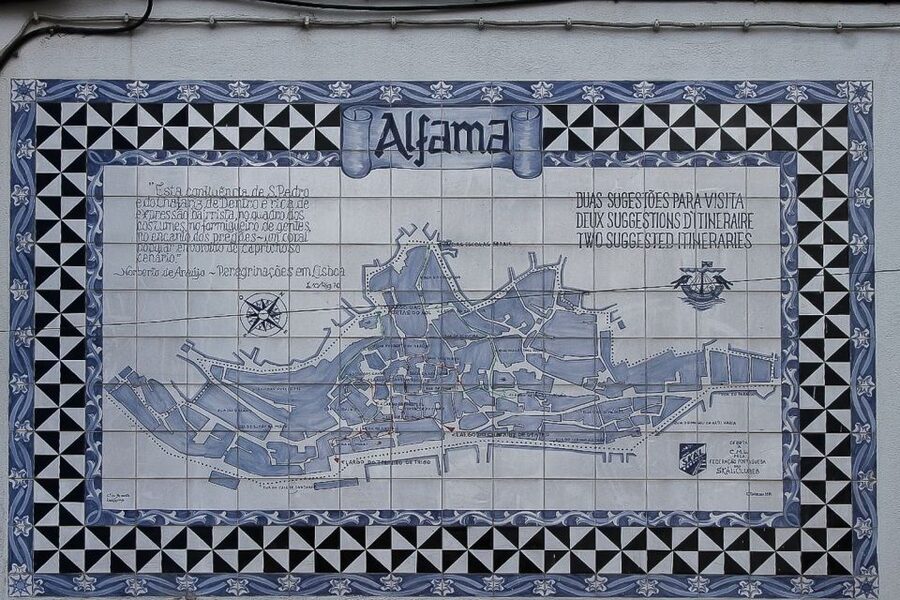
The tour doesn’t shy away from the darkest chapter: the 1506 Massacre. Instead of presenting it as a random horror story, the guide explains how the violence started and how it changed the trajectory of Jewish life in Lisbon.
This is one of those moments where a walking tour actually helps. When you’re outside, moving between neighborhoods, you’re forced to imagine the speed of change—how quickly a place can go from normal to dangerous. It’s also easier to connect the narrative to the city’s layout because you’re seeing how communities were tucked into particular quarters and streets.
I’d mentally prepare for this section. It’s not a cheerful story, and it’s not supposed to be. But if you want a Jewish Lisbon tour that treats history with seriousness rather than just postcard wonder, this is part of the value.
Worth a look before you lock anything else in around Lisbon:

Portugal’s Jewish and Portuguese figures: names that make the story stick
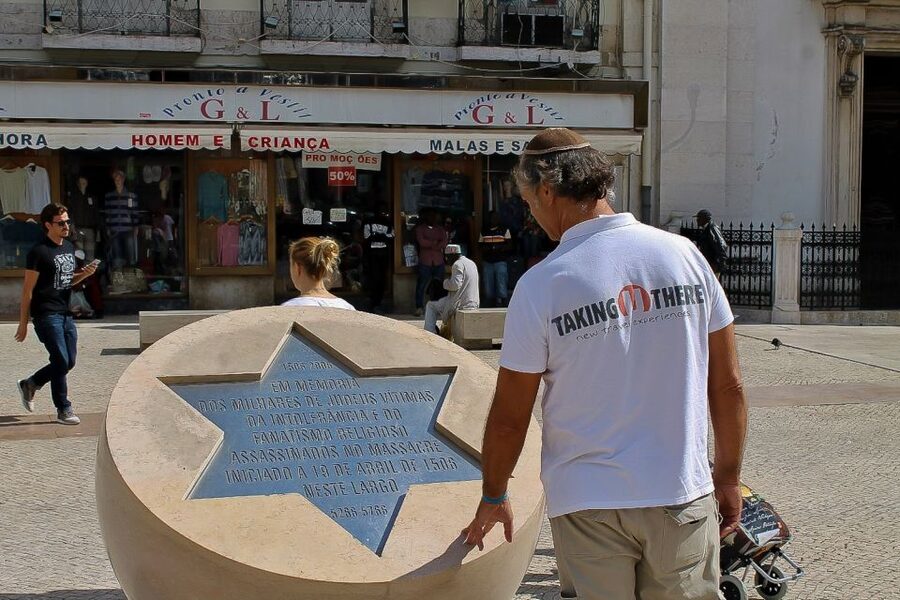
One of the tour’s strengths is turning background history into people. You hear about important Jewish and Portuguese figures who shaped Lisbon’s story or helped others survive. Two names mentioned clearly in the tour description stand out:
- Abraham Anahory
- Aristides Sousa Mendes, the Portuguese consul credited with saving the lives of thousands of Jewish refugees
I like when a tour does this, because names give your brain something solid to hold onto. It also prevents the story from staying stuck at the level of “community experiences hardship” without showing how individuals acted—sometimes with courage, sometimes through roles in legal and political life.
You’ll also hear about the way Jewish and Portuguese identities intersected in different eras. That helps you avoid the oversimplified idea that history always moves in one direction. In real places like Lisbon, roles blur. People are connected to the story in multiple ways.
How the tour likely flows through the city (without wasting your time)
You should expect a narrative walk that moves between significant sites for Lisbon’s Jewish community and the surrounding Portuguese Christian context. The tour description points to historic quarters and “famous memorials,” which suggests the experience is meant to be more than a straight line from one attraction to another.
Here’s what that means for you, practically:
- You’ll spend a lot of the time listening while standing in place and looking around.
- You’ll get frequent context so you understand why a stop matters, not just what it is.
- You’ll likely end up with a better sense of how the story connects to multiple corners of Lisbon, rather than one single neighborhood bubble.
One thing to note: the route is described as a walking tour with a 4-hour duration and “narrow streets” in Alfama. Translation? This is not a sit-on-the-terrace experience. Plan water, pace yourself, and don’t treat each stop as a quick photo opportunity.
Guide impact: why Paulo Levy is repeatedly the reason people recommend it
The vibe of this tour is heavily shaped by the guide. In multiple accounts, Paulo Levy comes up as the key to the experience—friendly, story-driven, and enthusiastic about both Lisbon and Jewish heritage.
What makes that more than just a “good review” talking point is that Paulo’s personal connection to the subject is described as part of the storytelling. That’s why the tour doesn’t feel like a script read at you. It feels like a local sharing what he cares about, with enough historical structure to keep it grounded.
If you’re choosing this tour specifically for the guide’s role, that matters. The experience provider runs small-group tours, and when the guide is strong, small groups can feel personal instead of crowded.
Price and value: $165 for a group up to 2
The listed price is $165 per group for up to 2 people, with the tour lasting 4 hours. That makes it easiest to justify if you’re booking as a pair (two friends, a couple, or family members who can walk together).
Is it expensive compared with casual walking tours? Yes, likely. But you’re paying for:
- A private guide for a small group
- A synagogue entrance included for Shaare Tikva
- A skip-the-ticket-line approach
In other words, the price isn’t just “someone talks while you walk.” A chunk of it covers access and time spent making the story coherent. If you’d rather spend your day reading signs alone, you could do that. If you want structure, context, and a live guide who can answer the inevitable questions that pop up while you’re in Alfama’s streets, this is a fair value for the kind of experience it is.
Who should book this tour (and who should think twice)
This tour is a great fit if you:
- Want a Jewish Sephardic Lisbon perspective that connects religion, law, and everyday street life
- Like walking tours that treat history as human stories
- Appreciate synagogue visits and on-the-ground explanation, not just quick exterior stops
It may not be the best fit if you:
- Have mobility limitations. The tour notes it’s not suitable for people with mobility impairments or wheelchair users.
- Have heart problems. The tour explicitly says it isn’t suitable for people with heart problems.
- Are sensitive to long walking on steep, narrow streets. Based on the tour experience description, you should plan for a challenging walk.
If you’re a “four hours is fine but I hate steep cobbles” type, you might still enjoy the content—just bring the right shoes and go at your pace.
Before you go: shoes, clothing, and a realistic pace
This isn’t a museum tour where you can stop and sit every few minutes. Comfortable shoes matter. The streets in Alfama are narrow and can be slippery or uneven, and you’re walking for the full tour length.
For clothing, the tour rules are clear: short skirts and sleeveless shirts aren’t allowed. It’s a synagogue setting, so dress in a way that respects that space and helps you feel comfortable standing and walking.
Weather matters too. Lisbon can surprise you, so wear weather-appropriate layers and bring something simple for sun or mild rain if needed.
Should you book the Lisbon Jewish Sephardic Walking Tour?
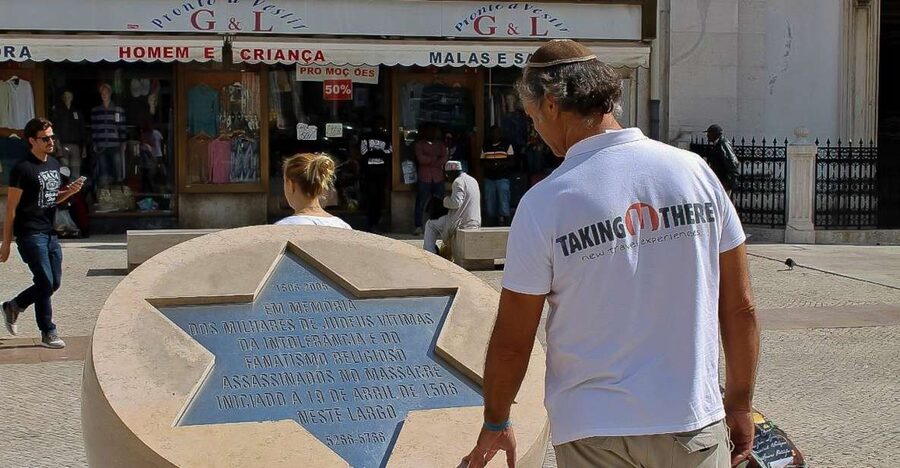
Book it if you want a focused, small-group experience that connects Lisbon’s Jewish story to real locations—especially Shaare Tikva, Rua de Judiara, and the turning point marked by the 1506 Massacre. The guide factor is strong here, and the tour format makes it easier to understand Portuguese Jewish history as a lived, shifting reality rather than a distant timeline.
Think twice if you don’t handle long walks well, or if your health or mobility limits you. If you can walk comfortably for 4 hours and you’re open to a serious historical narrative, you’ll likely come away with a sharper sense of Lisbon—and a better understanding of how communities survived, adapted, and left traces in the streets.
FAQ
Where does the tour meet?
You meet in front of Lisbon Synagogue at R. Alexandre Herculano 59, 1250-010 Lisboa, Portugal.
How long is the Lisbon Jewish Sephardic Walking Tour?
The tour lasts 4 hours.
What languages are the tours offered in?
The live tour guide speaks English and Portuguese.
Is the synagogue entrance included?
Yes. Entrance fees to Shaare Tikva (Lisbon Synagogue) are included, and you skip the ticket line.
What should I wear or bring?
Bring comfortable shoes and comfortable, weather-appropriate clothing. Short skirts and sleeveless shirts are not allowed.
Is it wheelchair accessible?
No. The tour is not suitable for wheelchair users and also not suitable for people with mobility impairments or heart problems.
More Tours in Lisbon
- Lisbon City Center Tour – The Unmissable Lisbon★ 5.0 · 22,234 reviews
- Lisbon: History, Stories and Lifestyle Walking Tour★ 4.8 · 10,902 reviews
- True 4Hour Private Tuk Tuk Tour: Discover Lisbon with a Local!★ 5.0 · 8,008 reviews
- Winner 2025 Undiscovered Lisbon Food & Wine Tour by Eating Europe★ 5.0 · 6,390 reviews
- Lisbon: Sintra, Pena, Cabo da Roca, Cascais Tour with Pickup★ 4.8 · 5,445 reviews
More Tour Reviews in Lisbon
- Lisbon City Center Tour – The Unmissable Lisbon★ 5.0 · 22,234 reviews
- Lisbon: Sintra, Pena, Regaleira, Cabo da Roca & Cascais★ 4.7 · 19,656 reviews
- Lisbon Card: 24, 48, or 72-Hour Pass★ 4.5 · 17,944 reviews
- Lisbon: Jerónimos Monastery Entrance Ticket★ 4.1 · 14,164 reviews
- Lisbon: History, Stories and Lifestyle Walking Tour★ 4.8 · 10,902 reviews
More of Lisbon, One Hill at a Time
- Lisbon: History, Stories and Lifestyle Walking Tour★ 4.8 · 10,902 reviews
- Best of Lisbon Small-Group Guided Walking Tour★ 5.0 · 4,869 reviews
- Lisbon: Food and Wine Small Group Walking Tour★ 4.9 · 4,082 reviews
- Best of Lisbon Walking Tour: Rossio, Chiado & Alfama★ 4.9 · 2,700 reviews
- Age of Discoveries Walking Tour in Belém★ 5.0 · 1,513 reviews
Just in: fresh Lisbon reviews from the team



Lisbon Walking Tours, compared.
 ★ 4.8History, Stories and Lifestyle Walking TourFrom $2910,902 reviews
 ★ 5.0Best of Lisbon Small-Group Guided Walking TourFrom $234,869 reviews
 ★ 4.9Food and Wine Small Group Walking TourFrom $724,082 reviews
 ★ 4.9Best of Lisbon Walking Tour: Rossio, Chiado & AlfamaFrom $232,700 reviews
 ★ 5.0Age of Discoveries Walking Tour in BelémFrom $31,513 reviews
 ★ 5.0Lisbon Roots – Small group Food & Culture Walking Tour w/tastingsFrom $168910 reviews
 ★ 4.9Starter Walking Tour to the highlights in GermanFrom $33781 reviews
 ★ 4.1Lisbon Tram No. 28 Ride & Walking TourFrom $23766 reviews
Browse the lists this tour appears in