
Reviewed · LISBON WALKING TOURS
Lisbon: See Lisbon Like a Local on a Private Walking Tour
Lisbon rewards the curious, and this private walk is all about getting your bearings fast while tasting the city’s real flavors. You start at a small bar for a glass of sour cherry liqueur at A Ginjinha, then you’ll work your way through Mouraria and Alfama while your guide connects the old Arab quarter to the roots of fado. I also love the built-in pause at Miradouro de Graça for a coffee with panoramic views. The only real catch is that you’ll be walking uphill and doing some climbing, so it’s not the best choice if stairs and slopes are a problem.
What makes it feel local is the rhythm: viewpoints where locals actually linger, church-and-convent stops that explain Lisbon’s layers, and a finish at Praça do Comércio where the city suddenly opens to the sea. It’s a solid value too—you get ginja and coffee included—but plan on supplementing the rest with your own food before or after since meals aren’t part of the package.
In This Review
- Key highlights worth planning for
- Why this Lisbon private walking tour feels different than casual sightseeing
- Starting at A Ginjinha: sour cherry liqueur before the uphill work
- The Moorish Quarter and fado roots: Mouraria’s story on street corners
- Caracol da Graça and Church stops: small landmarks that explain the city’s slope
- Miradouro de Graça: coffee, panoramic payoff, and better photos
- Alfama after 1775: walking streets that survived a turning point
- Santo Estêvão Belvedere, the Saramago Museum area, and a church stop that ties it together
- Praça do Comércio: the harbor reveal and the Cais das Colunas detail
- Price and value: is $82 per person worth it?
- Who should book this Lisbon Like a Local private walk
- Should you book this tour or skip it?
- FAQ
- Where do I meet for the tour?
- How long is the private tour?
- What’s included in the price?
- Is the tour private?
- What languages are available for the live guide?
- Is it suitable for people with mobility impairments?
Key highlights worth planning for
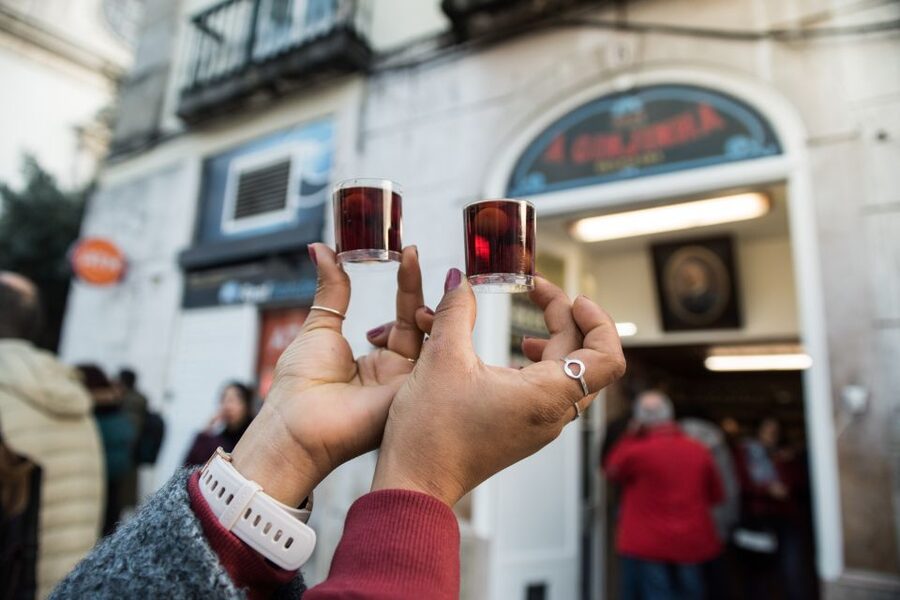
- A Ginjinha sour cherry liqueur: start with a local ritual before you go street-level sightseeing
- Mouraria and fado origins: you’ll hear how this neighborhood’s Arab-world links show up in the music’s story
- Miradouro de Graça coffee views: a natural break with big photo angles over Lisbon
- Alfama lanes untouched by 1775: you’ll walk areas said to have survived the earthquake that reshaped much of the city
- Praça do Comércio’s dramatic harbor finish: the Tagus and Cais das Colunas footbridge bring the walk home visually
- Private guide in your language: Spanish, English, Portuguese, or French, plus the pace is controlled for your group
Why this Lisbon private walking tour feels different than casual sightseeing
A private walking tour can go two ways: either it becomes a checklist with a price tag, or it becomes a guided way to understand where you are. This one leans toward the second option. In just 3 hours, you get a tight route through Lisbon’s older quarters, and the guide explains what you’re looking at instead of just pointing.
The payoff is in the combination. You’re not only seeing Miradouro viewpoints and postcard squares—you’re also tasting something that’s culturally specific (ginja), and learning the story that ties Mouraria’s atmosphere to fado. That matters because Lisbon is easy to enjoy from the outside, but it’s better when you understand why certain neighborhoods feel the way they do.
Also, since you’re on foot, you don’t just “arrive” at places—you pass them. That’s how the narrow lanes of Alfama start to make sense: the slope, the tiny squares, the churchfronts, and the sense that the city grew in layers.
Lisbon at walking pace, a few more routes
- Lisbon: History, Stories and Lifestyle Walking Tour
★ 4.8 · 10,902 reviews - Best of Lisbon Small-Group Guided Walking Tour
★ 5.0 · 4,869 reviews - Lisbon: Food and Wine Small Group Walking Tour
★ 4.9 · 4,082 reviews - Best of Lisbon Walking Tour: Rossio, Chiado & Alfama
★ 4.9 · 2,700 reviews
Starting at A Ginjinha: sour cherry liqueur before the uphill work
Meet at the entrance of A Ginjinha, a cozy start that immediately sets the tone. Instead of kicking things off with a lecture, the tour begins with a small local ritual: a glass of their specialty sour cherry liqueur (ginja). It’s included, so you don’t have to budget for it separately.
This is also a smart practical move. By the time you leave the bar, you’ve warmed up a bit, and you have a taste of Lisbon before the walking ramps up. If you’re sensitive to strong alcohol flavors, you can treat it like a tasting rather than trying to “drink your way through” Lisbon. Either way, it’s a simple way to anchor the rest of your walk in something you can remember.
You’ll then head into the city’s religious and neighborhood streetscape, where the tour’s pacing feels realistic: short guided stops, then you move on again.
The Moorish Quarter and fado roots: Mouraria’s story on street corners
From early church stops to the neighborhood feel of the Moorish quarter, the tour leans into Lisbon’s layered identity. One of the most interesting parts is the explanation of Mouraria’s connection to the origins of fado, including its close relationship with the Arab world. That kind of context changes how you interpret the streets. You start to notice how the old quarter feels like a living memory rather than just a scenic maze.
A good private guide can make this land without turning it into a textbook. Here, the stops are timed so you’re not stuck in one place too long. You’ll also get a sense of how Lisbon’s older districts shaped culture through space—where people lived, how neighborhoods formed, and why certain sounds and stories attached themselves to certain corners of the city.
And yes, you’ll still be sightseeing—church façades, viewpoints, and the rhythm of walking between them—but the story gives the route meaning. That’s why people rate the experience highly: guides like Alfredo and Joana are described as energetic, personable, and fun, and the best guides here clearly know how to translate Lisbon’s past into something you can experience in the present.
Caracol da Graça and Church stops: small landmarks that explain the city’s slope

You’ll pass through a series of short guided stops that are easy to miss when you’re on your own. These aren’t just random photo stops. They help you understand Lisbon’s geography and how people built around it.
Two things to watch for:
- Stairs and slopes: you’ll keep climbing in small bursts. Wear shoes with good grip. This matters more than you think when streets are steep and cobbled.
- Church and convent context: you’ll spend time at places like the Church of St. Dominic and the Church of Our Lady of Grace, and later at the Monastery of São Vicente de Fora. Even when you’re not a cathedral expert, the guide’s explanations make the architecture feel tied to Lisbon’s daily life.
These stops also prevent the “tour blur” effect. Instead of walking for 90 minutes straight, you get small pauses to reset your brain and take in what you’re actually seeing.
Worth a look before you lock anything else in around Lisbon:

Miradouro de Graça: coffee, panoramic payoff, and better photos

Miradouro de Graça is where the walk starts to reward you with wide views. You’ll pause here for a cup of coffee, which is included, and you’ll have time to enjoy the panorama rather than just sprinting through for a quick picture.
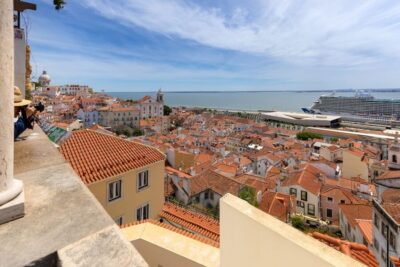
This viewpoint is useful for travelers because it helps you understand Lisbon’s layout. From higher ground, you can see how the city unfolds over hills, rooftops, and distant lines toward the river. You’ll also be able to frame better shots later—especially when you end at the harbor area—because you’ll recognize the city’s big shapes.
If you like photography, this is your moment to slow down. Don’t only look at the photo screen. Turn your head and take in the whole view. Lisbon is one of those places where a 360-degree sweep helps you feel oriented for the rest of your stay.
Alfama after 1775: walking streets that survived a turning point
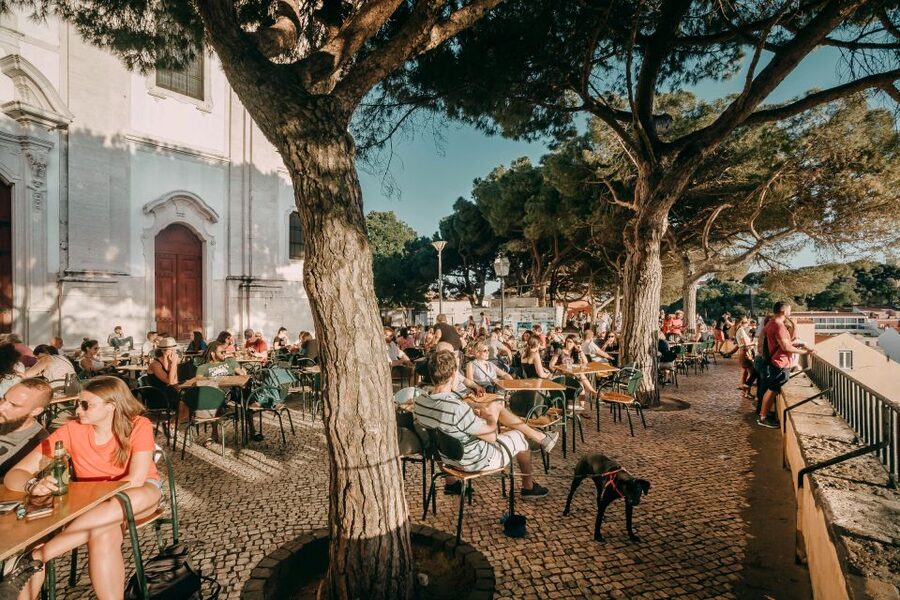
Alfama is the part of Lisbon that most people picture—but this tour helps you walk it with purpose. You’ll explore the district of Alfama, known for narrow, winding, sloping lanes with small squares, cafés, and charming shops. The tour also emphasizes the area’s reputation for having been unscathed by the earthquake of 1775, which makes the streets feel like a kind of time capsule.
Here’s what you can expect in practical terms:
- You’ll move through tight streets where it’s easy to get lost on your own. With a guide, you get the fun of the maze without the stress.
- You’ll get more than one “wow” moment. The viewpoint stops and church visits break the walk into digestible segments.
- You’ll notice the neighborhood texture: everyday life, not just monuments.
Alfama can feel crowded if you wander without a plan. On this kind of guided route, you tend to hit the streets with better timing and better context, and you come away understanding why the district feels the way it does.
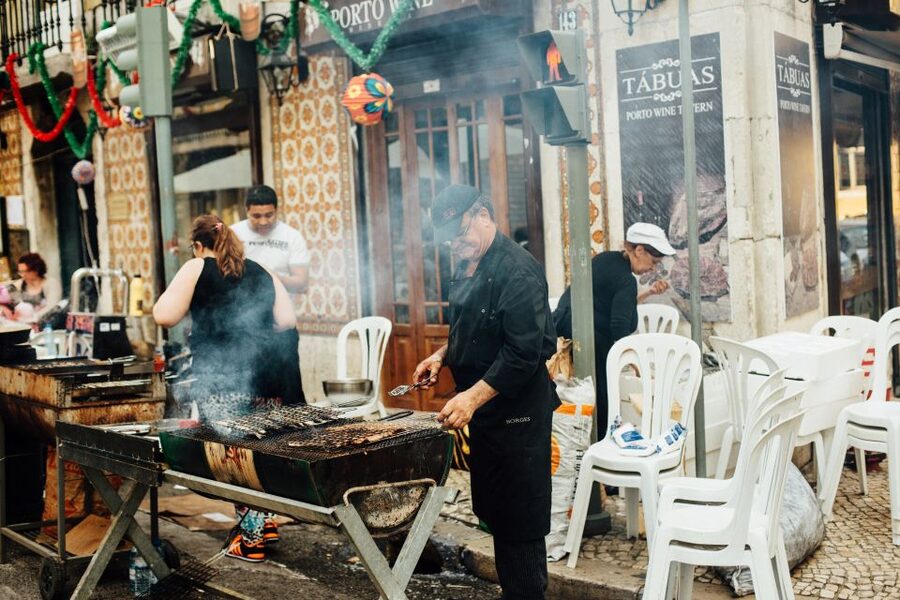
Also, there’s mention of lively market energy along the way. If you see stalls and small street activity, it’s worth stopping for a moment. Not to turn your tour into shopping time—just to soak up the atmosphere and understand what the neighborhood feels like when it’s not being photographed.
Santo Estêvão Belvedere, the Saramago Museum area, and a church stop that ties it together
After Alfama, you’ll keep moving toward more viewpoints and cultural anchors. The tour includes Santo Estêvão Belvedere, plus a stop around the José Saramago Foundation Museum area, and then the Nossa Senhora da Conceição Church.
What makes these stops worthwhile is how they connect the old-quarter walking experience. You get:
- Another look over the city from high ground (Belvedere viewpoints help you “read” Lisbon visually)
- A cultural pause near the museum area (useful if you like Lisbon beyond old stone and scenic lanes)
- A church visit that continues the theme of how religion and community shaped neighborhoods
Even if you don’t go deep on museum interests, the structure is good: you’re not just repeating viewpoints. You’re seeing different flavors of Lisbon—street-level, view-level, and culture-level—in a tight loop.
Praça do Comércio: the harbor reveal and the Cais das Colunas detail
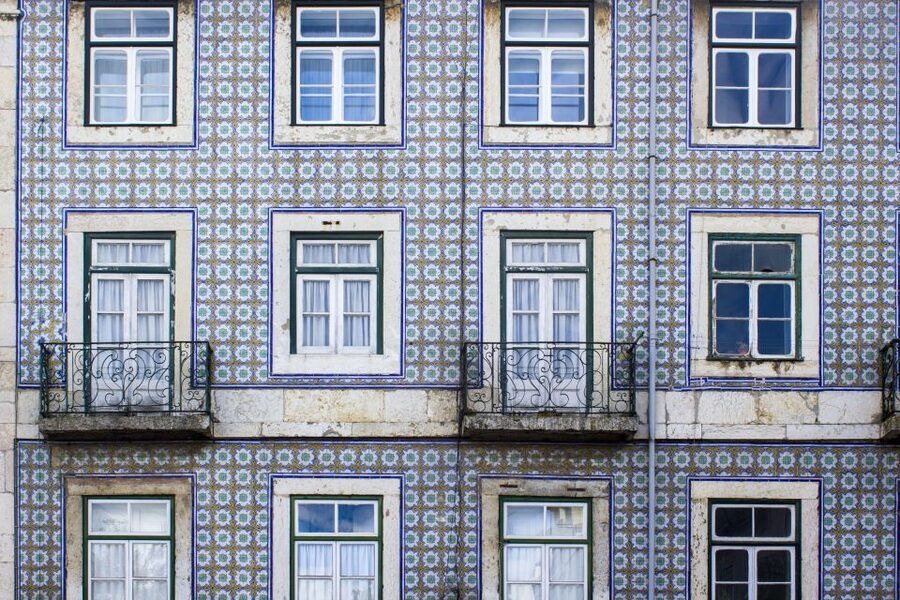
Ending at Praça do Comércio is a smart way to finish a walk through hills and tight streets. After hours of slopes and narrow lanes, the square opens to the sea. It feels like the city draws a breath.
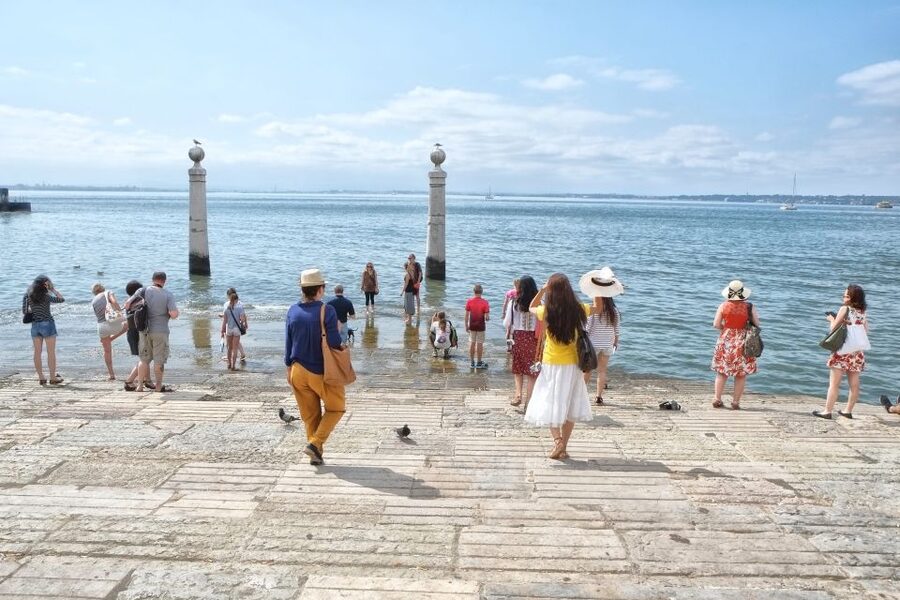
You’ll spend time relaxing in the square and taking in the Tagus River view. One specific detail worth noting is the Cais das Colunas footbridge, which is described as having been used by kings in the past. Whether you’re a facts-first traveler or just want the story attached to the photo, that’s exactly the kind of concrete detail that makes an ending memorable.
This finish also gives you a clean next step. Praça do Comércio sits in a practical location for continuing your Lisbon day—whether you want to wander the waterfront or head back toward other neighborhoods. Even without extra guidance, you’ll feel oriented because you’ll have seen Lisbon’s “inner world” first, then watched it open outward.
Price and value: is $82 per person worth it?
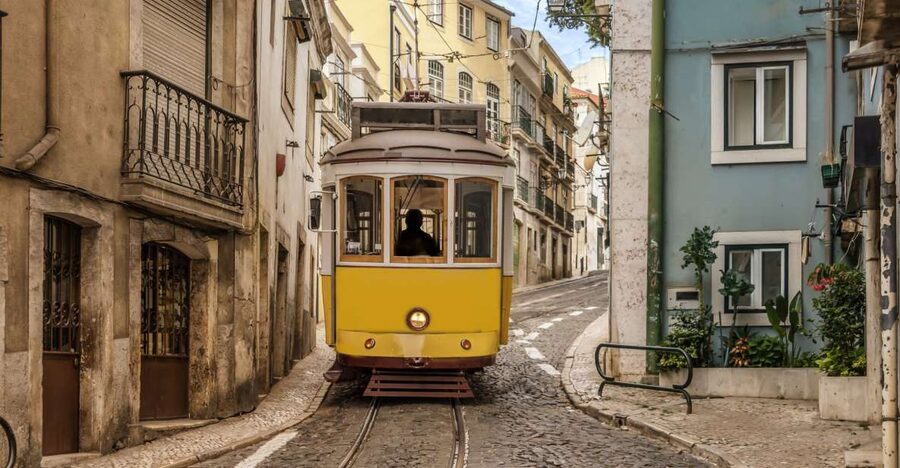
For $82 per person for a 3-hour private walking tour, the main value is the mix of guided interpretation plus included drinks. You’re not paying only for movement around town. You’re paying for someone to guide you through Mouraria and Alfama with context, then guide you to viewpoints where you can actually enjoy the scenery.
Two practical reasons it feels like good value:
- Ginja and coffee are included, which is helpful because Lisbon is full of small add-on costs when you’re out walking all afternoon.
- You’re getting a route that aims beyond the most obvious stops. Instead of bouncing between a handful of big names, you’re shown how neighborhoods connect.
The other side is also real: it’s 3 hours of walking, rain or shine, and it may require climbing. If you’re limited by mobility, this is probably not the right fit. If you’re comfortable walking uphill, it’s a straightforward way to get a guided Lisbon overview without turning the day into a bus-and-stops routine.
Who should book this Lisbon Like a Local private walk
I think this tour is a strong match if you:
- Want a private guide and a human-paced route through Lisbon’s older districts
- Like Lisbon best when it comes with stories—especially fado and Mouraria’s cultural origins
- Enjoy viewpoints but don’t want them to feel like quick “photo-and-go” stops
- Are happy with included tasting drinks and planning your own food separately
It’s not a great choice if:
- You need step-free access (the tour isn’t suitable for people with mobility impairments)
- You’d struggle with uphill walking and climbing
If you’re deciding between this and a more standard big-sights tour, pick this when you care more about neighborhood atmosphere and local context than just ticking off the most famous buildings.
Should you book this tour or skip it?
Book it if you want a guided walk that makes Lisbon feel personal: ginja at A Ginjinha, fado roots in Mouraria, coffee at Miradouro de Graça, and a satisfying ending at Praça do Comércio with the Tagus in view. The private format helps the experience stay flexible and enjoyable.
Skip it if steep streets and climbing are deal-breakers for you, or if you want a tour that includes a full meal and longer indoor stops. For the right walker, this is a well-structured way to see Lisbon like a local in just 3 hours.
FAQ
Where do I meet for the tour?
Meet at the entrance of the bar A Ginjinha.
How long is the private tour?
The tour lasts 3 hours.
What’s included in the price?
A ginja and a coffee are included, along with the 3-hour guided private walking experience.
Is the tour private?
Yes. It’s listed as a private group.
What languages are available for the live guide?
The live guide is available in Spanish, English, Portuguese, and French.
Is it suitable for people with mobility impairments?
No. It’s not suitable for people with mobility impairments, and it may require climbing.
More Tours in Lisbon
- Lisbon City Center Tour – The Unmissable Lisbon★ 5.0 · 22,234 reviews
- Lisbon: History, Stories and Lifestyle Walking Tour★ 4.8 · 10,902 reviews
- True 4Hour Private Tuk Tuk Tour: Discover Lisbon with a Local!★ 5.0 · 8,008 reviews
- Winner 2025 Undiscovered Lisbon Food & Wine Tour by Eating Europe★ 5.0 · 6,390 reviews
- Lisbon: Sintra, Pena, Cabo da Roca, Cascais Tour with Pickup★ 4.8 · 5,445 reviews
More Tour Reviews in Lisbon
- Lisbon City Center Tour – The Unmissable Lisbon★ 5.0 · 22,234 reviews
- Lisbon: Sintra, Pena, Regaleira, Cabo da Roca & Cascais★ 4.7 · 19,656 reviews
- Lisbon Card: 24, 48, or 72-Hour Pass★ 4.5 · 17,944 reviews
- Lisbon: Jerónimos Monastery Entrance Ticket★ 4.1 · 14,164 reviews
- Lisbon: History, Stories and Lifestyle Walking Tour★ 4.8 · 10,902 reviews
More of Lisbon, One Hill at a Time
- Lisbon: History, Stories and Lifestyle Walking Tour★ 4.8 · 10,902 reviews
- Best of Lisbon Small-Group Guided Walking Tour★ 5.0 · 4,869 reviews
- Lisbon: Food and Wine Small Group Walking Tour★ 4.9 · 4,082 reviews
- Best of Lisbon Walking Tour: Rossio, Chiado & Alfama★ 4.9 · 2,700 reviews
- Age of Discoveries Walking Tour in Belém★ 5.0 · 1,513 reviews
Just in: fresh Lisbon reviews from the team





Lisbon Walking Tours, compared.
 ★ 4.8History, Stories and Lifestyle Walking TourFrom $2910,902 reviews
 ★ 5.0Best of Lisbon Small-Group Guided Walking TourFrom $234,869 reviews
 ★ 4.9Food and Wine Small Group Walking TourFrom $724,082 reviews
 ★ 4.9Best of Lisbon Walking Tour: Rossio, Chiado & AlfamaFrom $232,700 reviews
 ★ 5.0Age of Discoveries Walking Tour in BelémFrom $31,513 reviews
 ★ 5.0Lisbon Roots – Small group Food & Culture Walking Tour w/tastingsFrom $168910 reviews
 ★ 4.9Starter Walking Tour to the highlights in GermanFrom $33781 reviews
 ★ 4.1Lisbon Tram No. 28 Ride & Walking TourFrom $23766 reviews
Browse the lists this tour appears in