
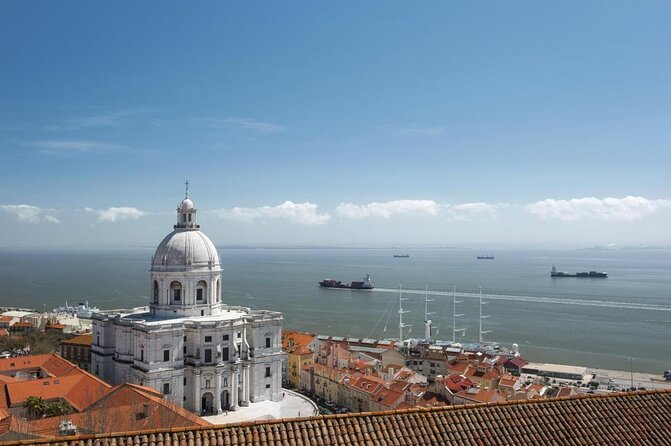
Reviewed · ALFAMA & OLD TOWN TOURS
Lisbon : Private St George Castle w/tkts + Walking Tour Alfama
Lisbon clicks into focus at the castle. This is a tight 3-hour plan that starts with St George’s Castle and then drops you into the lanes of Alfama, so you can see the city’s layers in the right order. I love the ticket-covered time inside the fortress, then the Alfama walking tour that keeps you close to the places you’d otherwise breeze past. One thing to plan for: you’ll be on hills and uneven streets, so moderate physical fitness helps.
A big plus is the feel of a small group. With a maximum of 20 people and a guide who can keep the pace workable, the tour doesn’t turn into a sprint. I also like the practical touch of a mobile ticket, so you can spend less time figuring out where to stand and more time looking up.
In This Review
- Key highlights you’ll actually feel on this tour
- Entering St George’s Castle: the city’s best “orientation in 60 minutes”
- Museu de Lisboa – Teatro Romano: the Roman stop that makes Lisbon feel layered
- Santa Luzia and Portas do Sol: miradouros that explain the view
- Miradouro de Santa Luzia
- Miradouro Das Portas Do Sol
- Rua da Judiaria and Chafariz d’El Rei: the neighborhoods of memory and water
- Rua da Judiaria
- Chafariz D’El Rei
- Lisbon Cathedral plus the Alfama church circuit: faith, rebuilding, and stubborn continuity
- Lisbon Cathedral (Sé de Lisboa)
- Church of St. Anthony
- Igreja de Nossa Senhora da Conceicao Velha
- Praça do Comércio finish: why ending by the Tagus feels so right
- Price and value: what $177.44 covers (and why it can be fair)
- Who this Lisbon tour fits best
- Final verdict: should you book this St George’s Castle and Alfama tour?
- FAQ
- How long is the tour?
- What’s included in the price?
- Are there admissions fees at other stops besides St George’s Castle?
- What language is the tour offered in?
- How big is the group?
- Where does the tour start and end?
- Is private transportation included?
- What fitness level do I need?
- Is free cancellation available?
Key highlights you’ll actually feel on this tour

- Guided time inside St George’s Castle so you don’t just walk the walls, you learn what you’re seeing
- Miradouros with story behind the view at Santa Luzia and Portas do Sol, not just photos
- Roman Theatre ruins, kept short and sweet at Museu de Lisboa – Teatro Romano
- Old neighborhoods in plain sight including Rua da Judiaria and sections of the medieval wall
- Iconic Lisbon churches in a logical circuit with stops tied to major turning points like the 1755 earthquake
- A strong finish at Praça do Comércio—big open space after all that alley energy
Entering St George’s Castle: the city’s best “orientation in 60 minutes”

You start at Castelo de São Jorge, right where the hilltop perspective makes Lisbon instantly make sense. The tour includes an admission ticket and a guided visit inside the castle, so you get more than viewpoints and battlements. You’ll spend about one hour here, which is just enough time to connect the geography to the stories you’ll hear.
This is the part of Lisbon where history stops being abstract. Different civilizations settled here over time, and the fortress setting helps you understand why the city developed the way it did—high ground for defense, command over movement, and a constant back-and-forth between power and daily life. The practical payoff is huge: once you know what you’re looking at from the walls, Alfama’s winding layout feels purposeful instead of random.
Tip: wear shoes you trust on steep, uneven ground. Even if you’re not doing intense hiking, the castle area can be slow-going. If you’re traveling with someone who moves carefully, this starting point still works because it’s organized time, not a scavenger hunt.
Deeper into Alfama's lanes and miradouros
- Alfama Tour in Lisbon Old Town
★ 5.0 · 4,936 reviews - Private Lisbon Sightseeing Tuk-Tuk Tour: Alfama, Belém & More
★ 5.0 · 4,277 reviews - Lisbon: Hills, Alfama, and Mouraria Tour by Electric Bike
★ 4.8 · 3,438 reviews - Best of Lisbon Walking Tour: Rossio, Chiado & Alfama
★ 4.9 · 2,700 reviews
Museu de Lisboa – Teatro Romano: the Roman stop that makes Lisbon feel layered
After the castle, you get a quick hit of something very different: Museu de Lisboa – Teatro Romano. This is a short 10-minute stop, but it’s a memorable one because it shows Lisbon wasn’t always the Alfama-and-Tagus postcard.
You’ll look at ruins of a Roman theater inaugurated in the 1st century AD, with an estimated capacity of about 4,000 people. That scale matters. It reframes the city: before the medieval walls and church towers, Lisbon had public entertainment built for crowds—an important clue that urban life here has been dense for a long time.
The draw is pace. You’re not stuck here for an hour, and the time is long enough for photos and a basic sense of what the ruins represent. If you enjoy variety in short bursts, this stop is a good reset between viewpoints.
Santa Luzia and Portas do Sol: miradouros that explain the view
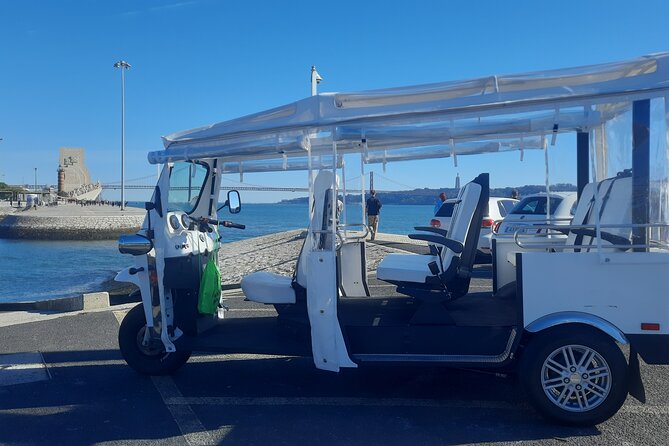
Then comes the part many people come to Lisbon for: the miradouros. This tour hits two of them, each in about 10 minutes, and each one comes with context so you know what you’re looking at.
Miradouro de Santa Luzia
At Santa Luzia, you’re placed above Alfama with the Tagus River in view. What I like here is the extra detail: you’ll notice tile panels that depict episodes from Lisbon’s history. It turns the viewpoint into a mini lesson. Instead of standing there thinking, That’s pretty, you start spotting references to how Lisbon sees itself.
Other ways up to the castle walls


Miradouro Das Portas Do Sol
Next is Portas do Sol, another viewpoint with excellent views over Alfama. This one is famous for the medieval street pattern—tight, layered, and shaped by the hill. The value here is quick orientation: after the earlier historical stops, you can actually connect the past to the present street grid.
Practical note: viewpoints can feel windy and bright. If you’re sensitive to sun glare, bring sunglasses and consider a light layer. You’ll be standing and looking longer than the “10 minutes” suggests.
Rua da Judiaria and Chafariz d’El Rei: the neighborhoods of memory and water
Alfama isn’t only churches and viewpoints. The tour also drops you into the social plumbing of the city—community life and everyday needs.
Rua da Judiaria
At Rua da Judiaria, you learn about the Jewish community that inhabited Lisbon and you can see parts of the medieval wall built by the Moors. This stop is about 15 minutes, and that extra time helps because you’re not just looking at a building; you’re reading the street like a document. You start to understand how layered cultures lived side by side, and how city walls shaped where people could go and what they could build.
Chafariz D’El Rei
Then you reach Chafariz D’El Rei, about a 10-minute stop. This is described as the first public fountain in Lisbon, built in the 13th century. It’s a powerful reminder that big historical moments are built on small needs—water. The fountain matters because it shows how a large part of the population came here to get water, day after day.
These two stops work well back-to-back. One is about community identity and boundaries. The other is about survival basics. Together, they make Alfama feel lived-in instead of staged.
Lisbon Cathedral plus the Alfama church circuit: faith, rebuilding, and stubborn continuity
You move from fountains and old walls into a small cluster of religious landmarks. Each stop is short (often around 10–15 minutes), but the order gives it meaning.
Lisbon Cathedral (Sé de Lisboa)
At Lisbon Cathedral, the tour points you to what makes it a cornerstone: it’s the oldest Catholic church in Lisbon, built in the 12th century when Christians took the city from the Moors. This isn’t just a date—it’s a turning point. You’ll feel the stop connect earlier themes (conquest, walls, civilizations) to the visible structures that replaced them.
Church of St. Anthony
Next is the Church of St. Anthony, about 15 minutes. It’s a landmark in Alfama and was built at the end of the 12th century on the same site where Saint Anthony was born. Even if you don’t know every detail of the saint’s story, you’ll get the idea: Lisbon’s religious sites often anchor legends to real ground.
Igreja de Nossa Senhora da Conceicao Velha
Finally, you visit Igreja de Nossa Senhora da Conceicao Velha, described as 16th-century architecture that was remodeled after the great earthquake of 1755. This stop is valuable because it shows how Lisbon absorbed disaster and rebuilt without wiping the slate clean. The building becomes proof of continuity—history that survived impact and still stands today.
How to enjoy these stops: don’t treat them like photo errands. Take a moment to look at how each church fits into its surroundings. Alfama’s narrow streets and hill layout shape what you experience inside and around the doors.
Praça do Comércio finish: why ending by the Tagus feels so right
You end at Praça do Comércio, the tour finish point at Praca do Comércio. This is Lisbon’s largest square, located right on the banks of the Tagus River. It’s described as a long-time political and economic center, and after the great earthquake of the 18th century, it was completely remodeled.
Ending here is a smart choice for your day. After hours of hills, alleys, and tightly packed architecture, the square gives you breathing room. The big open space also makes it easier to orient yourself for what’s next—whether that’s a riverside walk, a tram ride, or just soaking in the city’s horizon line.
You’ll get a “reset” effect: a place to stand back, see how Alfama connects to the waterfront, and plan without rushing.
Price and value: what $177.44 covers (and why it can be fair)
The price is $177.44 per person for about 3 hours. That number feels more reasonable once you look at what’s included:
- Entrance ticket to St George’s Castle
- Guided tour inside St George’s Castle and Alfama
- Mobile ticket convenience
Other stops along the way are listed as admission-free, including the Roman theater ruins area and the miradouros, plus multiple churches and viewpoints. That matters because it keeps your spending predictable. You’re paying for a guide-led experience with the major paid component handled up front.
Also, the group is kept to a maximum of 20 travelers, which usually helps with questions and pacing. And you’re traveling in English, which is a big deal if you want the explanations to land without mental translation.
One caution: private transportation is not included. So if you’re starting from far away or need a plan to get back to your hotel, account for that. The tour’s routing is designed around the sights in sequence, but you still need to handle your own getting-there and getting-home.
Who this Lisbon tour fits best
This is a great choice if you want Lisbon in an order that makes sense fast. You’ll start high with the fortress, then gradually work your way down into Alfama’s lived-in streets and landmarks, and end by the Tagus in a wide-open square.
It also suits families and mixed-age groups because pacing can be adjusted. In particular, the guide Luis is highlighted as attentive and ready for questions, and he can match the walking pace to the group’s comfort level. That kind of flexibility is a real value when you’re traveling with someone who doesn’t want to burn out.
If you like photo stops, you’ll enjoy the miradouros. If you like learning, you’ll appreciate the context tied to each place, especially the story connections (Roman theater scale, Moorish-built walls, and the earthquake rebuilding element in church architecture).
And if you’re the type who can handle moderate walking and hills, you’re set. The tour explicitly notes a moderate physical fitness level, so be honest about your comfort on steep streets and uneven cobbles.
Final verdict: should you book this St George’s Castle and Alfama tour?
I’d book it if you want a guided Lisbon “starter kit” that doesn’t waste time. The biggest reason is the flow: castle first for context, then Alfama viewpoints and street-level history, then a clean finish at Praca do Comércio so you end grounded instead of lost.
I’d think twice if you hate hills or slow walking. This route is built for people who can handle steep ground with some patience. Otherwise, it’s a solid value for the included St George’s Castle ticket plus the guided Alfama time, delivered in a small group format.
If this is your first time in Lisbon, do it early. It makes everything you see later feel like it belongs to a map you understand.
FAQ
How long is the tour?
The tour runs for about 3 hours (approx.).
What’s included in the price?
The price includes the entrance ticket to St George’s Castle and a guided tour inside St George Castle and Alfama.
Are there admissions fees at other stops besides St George’s Castle?
The itinerary lists several other stops as admission ticket free, including the Roman theater ruins, viewpoints, and the churches included on the walk.
What language is the tour offered in?
The tour is offered in English.
How big is the group?
The tour has a maximum of 20 travelers.
Where does the tour start and end?
It starts at Castelo de São Jorge (R. de Santa Cruz do Castelo, 1100-129 Lisboa, Portugal) and ends at Praça do Comércio (1100-148 Lisbon).
Is private transportation included?
No. Private transportation is not included.
What fitness level do I need?
The tour indicates you should have a moderate physical fitness level.
Is free cancellation available?
Yes, you can cancel for a full refund if you do it at least 24 hours in advance.
More of Lisbon, One Hill at a Time
- Lisbon: History, Stories and Lifestyle Walking Tour★ 4.8 · 10,902 reviews
- Best of Lisbon Small-Group Guided Walking Tour★ 5.0 · 4,869 reviews
- Lisbon: Food and Wine Small Group Walking Tour★ 4.9 · 4,082 reviews
- Best of Lisbon Walking Tour: Rossio, Chiado & Alfama★ 4.9 · 2,700 reviews
- Age of Discoveries Walking Tour in Belém★ 5.0 · 1,513 reviews
Back Up to São Jorge Castle
- Lisbon: São Jorge Castle E-Ticket and Audio Guide★ 4.3 · 2,182 reviews
- Lisbon: Sao Jorge Castle Skip-the-Line Ticket with Guide★ 4.6 · 1,191 reviews
- São Jorge Castle Skip-the-line Entry Ticket★ 4.5 · 440 reviews
- Lisbon: Alfama and São Jorge Castle Quarters Walking Tour★ 4.8 · 136 reviews
- Old Lisbon: Alfama and Sao Jorge neighborhood 3-Hour Walking Tour★ 5.0 · 61 reviews
Keep Wandering Old Alfama
- Alfama Tour in Lisbon Old Town★ 5.0 · 4,936 reviews
- Private Lisbon Sightseeing Tuk-Tuk Tour: Alfama, Belém & More★ 5.0 · 4,277 reviews
- Lisbon: Hills, Alfama, and Mouraria Tour by Electric Bike★ 4.8 · 3,438 reviews
- Best of Lisbon Walking Tour: Rossio, Chiado & Alfama★ 4.9 · 2,700 reviews
- Lisbon: Baixa District Food Tour with Dinner and Drinks★ 4.9 · 1,997 reviews
Just in: fresh Lisbon reviews from the team




Alfama & Old Town Tours, compared.
 ★ 5.0Alfama Tour in Lisbon Old TownFrom $34,936 reviews
 ★ 5.0Private Lisbon Sightseeing Tuk-Tuk Tour: Alfama, Belém & MoreFrom $524,277 reviews
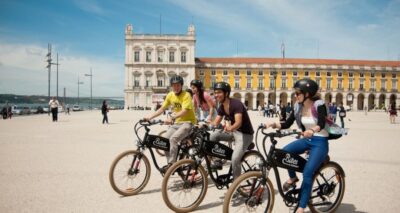 ★ 4.8Hills, Alfama, and Mouraria Tour by Electric BikeFrom $253,438 reviews
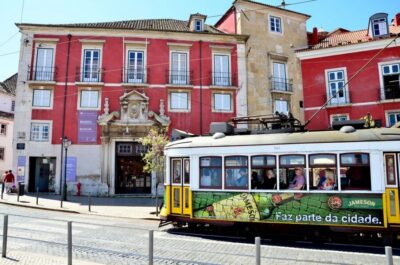 ★ 4.9Best of Lisbon Walking Tour: Rossio, Chiado & AlfamaFrom $232,700 reviews
 ★ 4.9Baixa District Food Tour with Dinner and DrinksFrom $931,997 reviews
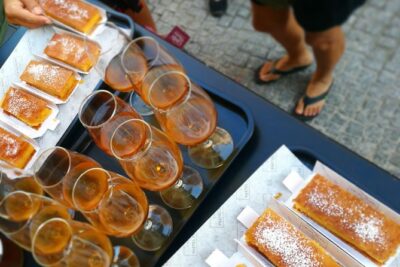 ★ 5.0Lisbon Small-Group Food Tour with 18 Tastings in Alfama DistrictFrom $1261,967 reviews
 ★ 4.5Lisbon E-Bike Tour Commerce Square, Mouraria and AlfamaFrom $301,688 reviews
 ★ 5.0Old Town TukTuk Tour and Scenic Viewpoints in AlfamaFrom $35974 reviews
Browse the lists this tour appears in