
Reviewed · LISBON WALKING TOURS
Lisbon: Jewish Walking Tour
Lisbon remembers its Jewish past in plain sight. In this 3-hour walk, I like two things right away: the start at Largo Portas do Sol with a jaw-dropping Tagus and Alfama view, and the fact that you’re led by an archaeologist who helps you read what’s left on the ground. The route also connects you with the present-day Jewish community through the Jewish Cultural Center on Rua da Judiaria, so the story isn’t just museum facts.
One heads-up: it’s not suitable for mobility impairments. You’ll be walking Lisbon’s old-town streets, and the experience depends on moving through the area at a walking pace.
In This Review
- Key highlights to look for
- Meeting at Largo Portas do Sol: Starting With the Tagus and Alfama
- The Archaeologist Guide Method: Luciano Waldman and “Seeing” What’s Gone
- Following the Footsteps of Jewish Lisbon: From Historical Sites to Archaeological Evidence
- The Jewish Cultural Center on Rua da Judiaria: Sustainable in a Real, Not-Just-PR Way
- The Way the Route Ends at Largo de São Domingos
- What Makes This Tour Worth $90 (and When It Might Not Be for You)
- Practical Tips That Actually Help During the Walk
- Who Should Book This Jewish Lisbon Tour?
- Should You Book It?
- FAQ
- Where does the tour meet?
- How long is the walking tour?
- How much does it cost?
- What languages are available?
- What should I bring?
- Is the tour suitable for people with mobility impairments?
- Is food included?
- Is hotel pickup included?
- Can I get a refund if my plans change?
- End of review
Key highlights to look for
- Portas do Sol start: the Tagus and Alfama panorama sets the scene fast
- Archaeologist-led storytelling: you learn to picture what’s missing, not just what’s visible
- Stops tied to excavations and surviving traces: the tour uses physical evidence to anchor the narrative
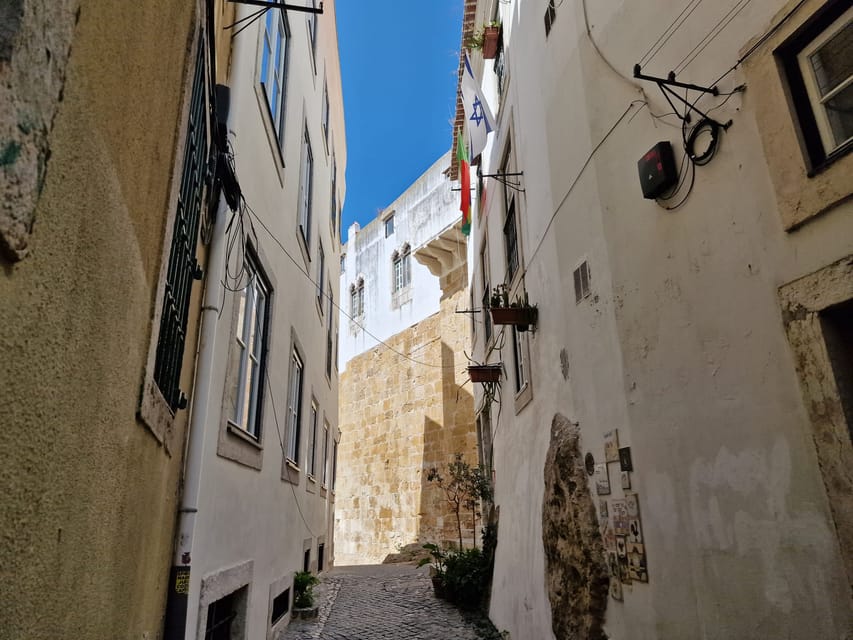
- Jewish Cultural Center on Rua da Judiaria: you’re supporting local preservation and education
- Finish at Largo de São Domingos: a meaningful end point for Portuguese Judaism
Meeting at Largo Portas do Sol: Starting With the Tagus and Alfama
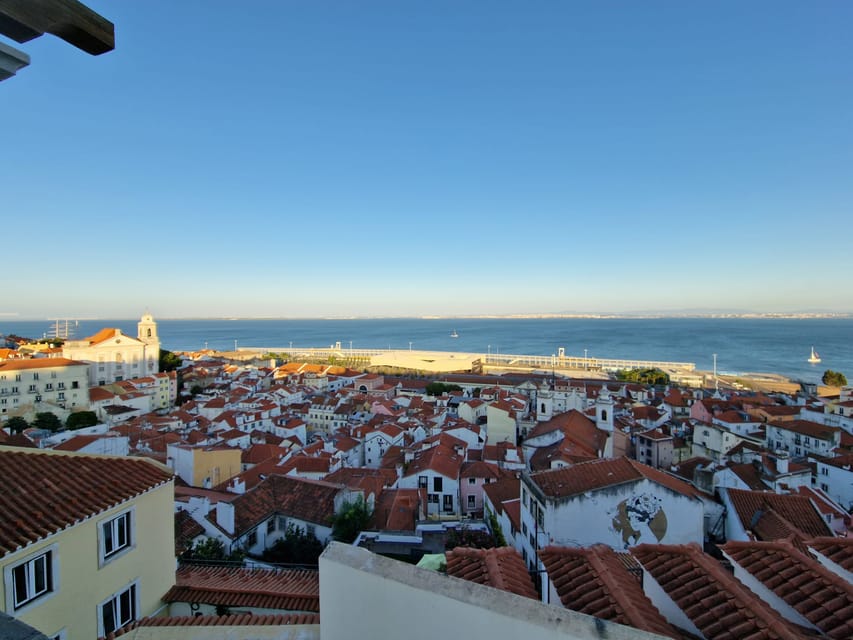
The tour meets at Largo Portas do Sol by the Statue of Saint Vicente. That matters more than it sounds. You begin at a viewpoint, not in a cramped indoor space. From up here, the city spreads out in front of you—especially the Tagus and Alfama—so the old neighborhoods feel real before you start walking.
I like this kind of start because Lisbon is built on layers. Once you’ve seen the terrain from above, the later turns make sense. You’re not just following a guide; you’re getting your bearings fast, like the city is a map you can walk into.
Bring water and wear comfortable shoes. The route is designed for a walking experience, and Lisbon’s stones don’t care about your itinerary.
Lisbon at walking pace, a few more routes
- Lisbon: History, Stories and Lifestyle Walking Tour
★ 4.8 · 10,902 reviews - Best of Lisbon Small-Group Guided Walking Tour
★ 5.0 · 4,869 reviews - Lisbon: Food and Wine Small Group Walking Tour
★ 4.9 · 4,082 reviews - Best of Lisbon Walking Tour: Rossio, Chiado & Alfama
★ 4.9 · 2,700 reviews
The Archaeologist Guide Method: Luciano Waldman and “Seeing” What’s Gone
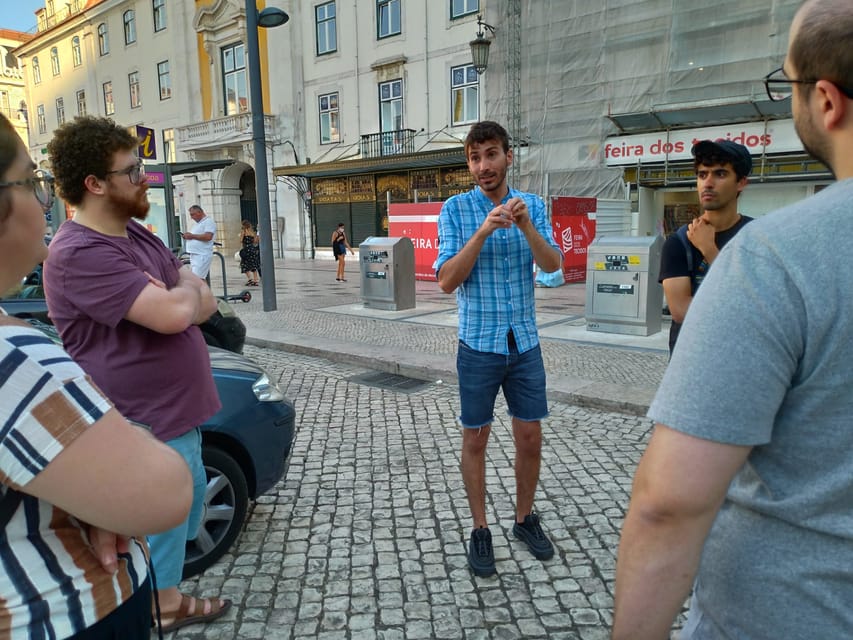
A standout feature is the guide’s background. The tour is led by an archaeologist, and the guide mentioned in bookings is Luciano Waldman (often referred to as Luciano, sometimes with the name Zelig in traveler notes). In plain terms: you get history with a physical lens.
That’s important here because many Jewish monuments in Lisbon are no longer standing. The tour doesn’t pretend that everything is intact. Instead, the guide helps you build a mental picture—where life likely concentrated, how the area changed, and how archaeological findings connect to the Jewish quarters you’re trying to understand.
English is the only language for the group tour. The guide is a native Portuguese and Hebrew speaker, so there may be a slight accent in English. That’s usually not a problem, but if you’re sensitive to accents or you lose words in noisy settings, plan to stay close and face the guide during explanations.
Following the Footsteps of Jewish Lisbon: From Historical Sites to Archaeological Evidence
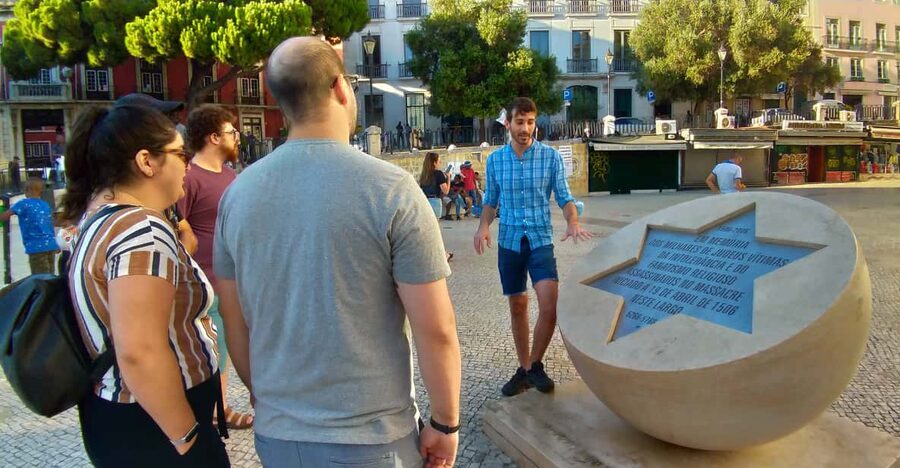
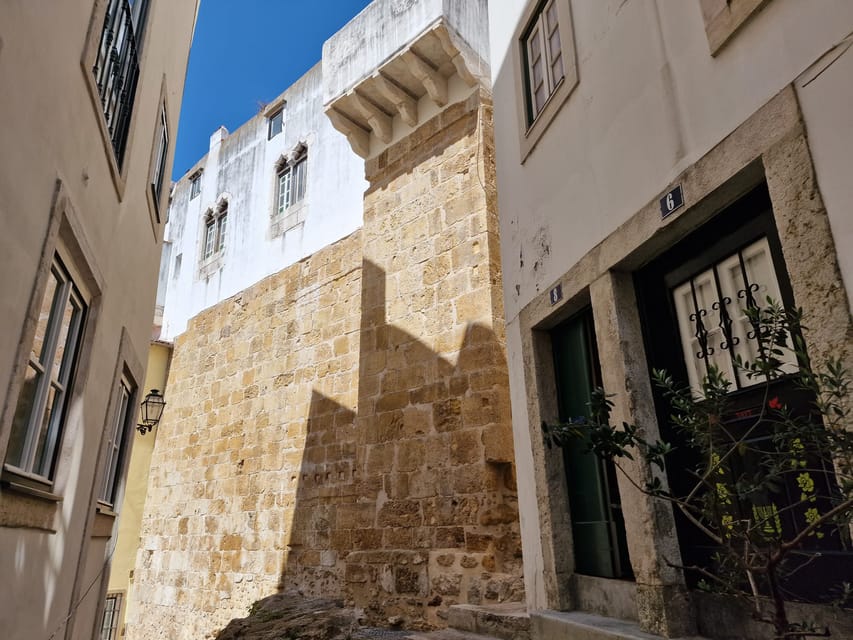
After the viewpoint, the walk moves through the Old Town, passing historical sites, monuments, and archaeological excavations. The purpose is to show you the Jewish Lisbon that once existed and how it connects to the city’s layout today.
Here’s what makes this portion work for you: it’s not just a list of buildings. It’s an orientation to how a city holds onto memory. When monuments are destroyed, people forget. When evidence is found—or when names remain on streets—you can rebuild context. That’s the tour’s core value.
You’ll also move through areas where the Jewish quarters once were. Even if you can’t point to a recognizable synagogue or old gate in the way some other European cities allow, the guide’s job is to help you “read between the lines.” Expect a mix of city history and Jewish history of Portugal, tied to where you’re standing.
One practical note: the route goes through areas with heavy tourist traffic. If you have hearing impairments, it may be difficult to follow explanations, since you’re often in crowds and not in a quiet street-corner setting. Your best move is to position yourself so you can see and hear the guide clearly when stops happen.
The Jewish Cultural Center on Rua da Judiaria: Sustainable in a Real, Not-Just-PR Way
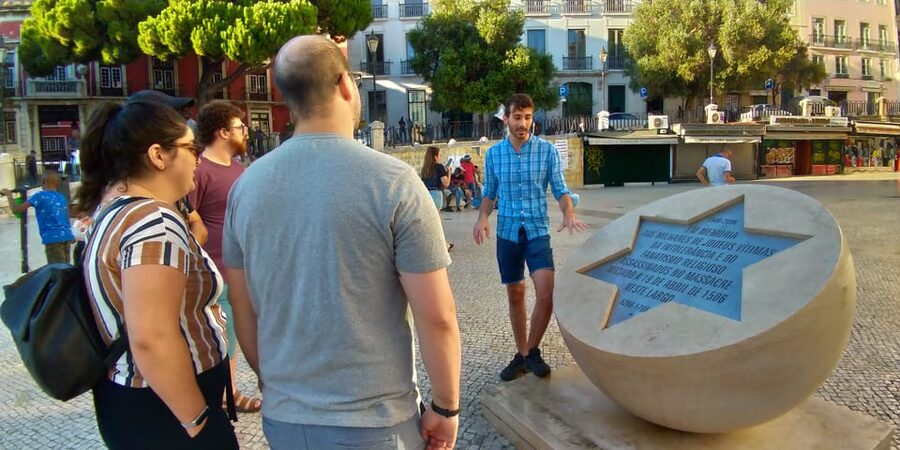
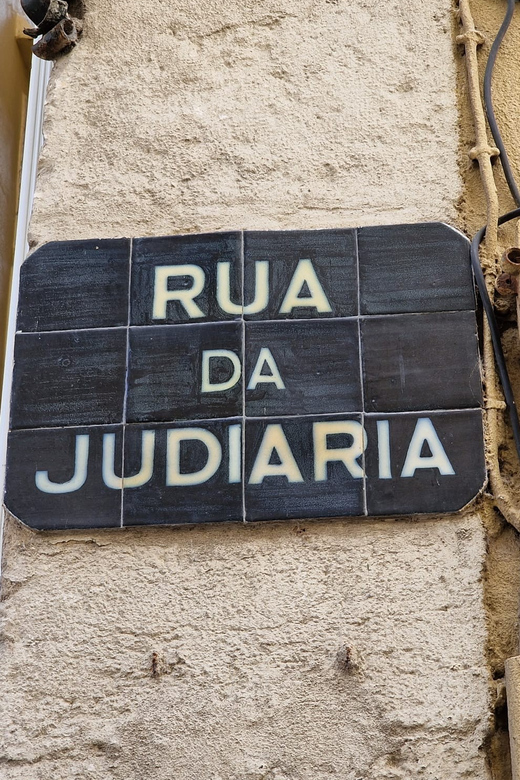
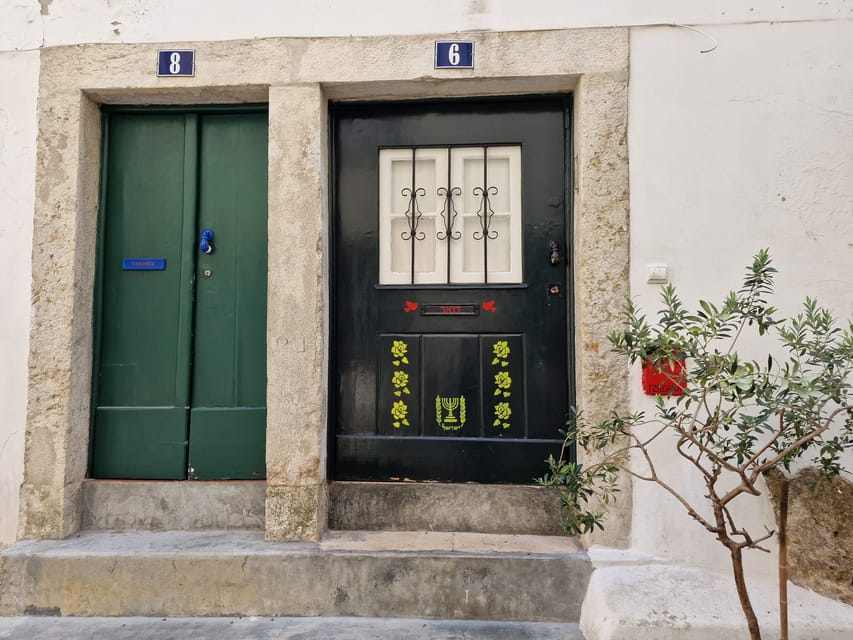
A highlight is the connection to the Jewish Cultural Center at Rua da Judiaria. The tour isn’t only about looking backward. It aims to be a sustainable form of tourism by supporting a local cultural institute that works to preserve and revive Jewish life in Lisbon.
This is one of those details that can sound like corporate wording until you experience it. Once you’re on the walk, the center becomes the bridge between past and present. You’re not treated like a passive spectator. You’re learning why the story matters now, not only because it happened years ago.
If you care about value, this is where the $90 makes sense. You’re paying for context, interpretation, and a guided pathway through places that are emotionally heavy and historically important—plus you’re channeling money toward a local institution that keeps the memory alive.
Worth a look before you lock anything else in around Lisbon:

The Way the Route Ends at Largo de São Domingos
The tour finishes at Largo de São Domingos, described as a place of great historical value to Portuguese Judaism. Ending there gives the experience a clear emotional cadence. You’ve been walking through traces, reconstructions, and archaeological context. Now you’re placed at a location that anchors the story with significance.
I like endings like this because they prevent the tour from feeling like a geography lesson only. The last stretch turns into reflection: you start to understand why the missing pieces matter, why the preserved pieces matter, and why communities work so hard not to be forgotten.
Also, it’s a helpful way to get your bearings for the rest of Lisbon. By the time you finish, you’re already near the kind of central areas where it’s easy to continue exploring on your own.
What Makes This Tour Worth $90 (and When It Might Not Be for You)
Let’s talk value, because it’s priced like a premium guided experience, not a cheap “see-the-sites” stroll.
You’re paying for:
- a 3-hour guided walk with a professional who’s also an archaeologist
- English-language interpretation in a route that covers both Lisbon and the broader Jewish history of Portugal
- liability and personal accident insurance included with the activity
Then add the factor that makes or breaks tours like this: many physical monuments are gone. That means your guide’s ability to explain what you can’t see becomes the product. When that guide connects evidence to storytelling, you leave with a real sense of place. When they don’t, you’d feel like you spent money walking past emptiness.
So this tour is a great fit if you like:
- history that uses actual traces—not just plaques
- a guided narrative that helps you picture what’s missing
- a route tied to a living cultural center, not only ruins and photos
It may be less ideal if you:
- need step-free access (it’s not suitable for mobility impairments)
- struggle with hearing in crowded areas
- hate walking and prefer fully accessible, indoor experiences
Practical Tips That Actually Help During the Walk
A few things will make your day smoother.
Wear comfortable shoes and assume you’ll be on uneven surfaces. Even when parts of the route are manageable, the old town adds friction.
Bring water. This is Lisbon, and you’ll be outside for the full 3 hours.
Arrive a few minutes early at the meeting point so you can find the Statue of Saint Vicente and settle in before the group starts. (This also helps if accents or English volume require a bit more attention.)
If you know you’re sensitive to background noise, choose a spot where you can see the guide during stops. Since the route passes through heavier tourist traffic, standing too far away can make it harder to catch the explanations.
Who Should Book This Jewish Lisbon Tour?
Book it if you want a guided introduction to Jewish Lisbon that treats the topic with seriousness and uses Lisbon’s actual geography to tell the story.
It’s especially well-suited for:
- people who like walking tours with a strong historical backbone
- travelers who want context, not just photos
- anyone interested in how cultural memory survives even when buildings don’t
Based on the tone that comes through in the guide’s work, this is also the kind of tour where you’ll likely feel the emotional weight. Much has disappeared, but the guide’s job is to make the story legible again—and to point you toward the present-day work happening at the Jewish Cultural Center.
Should You Book It?
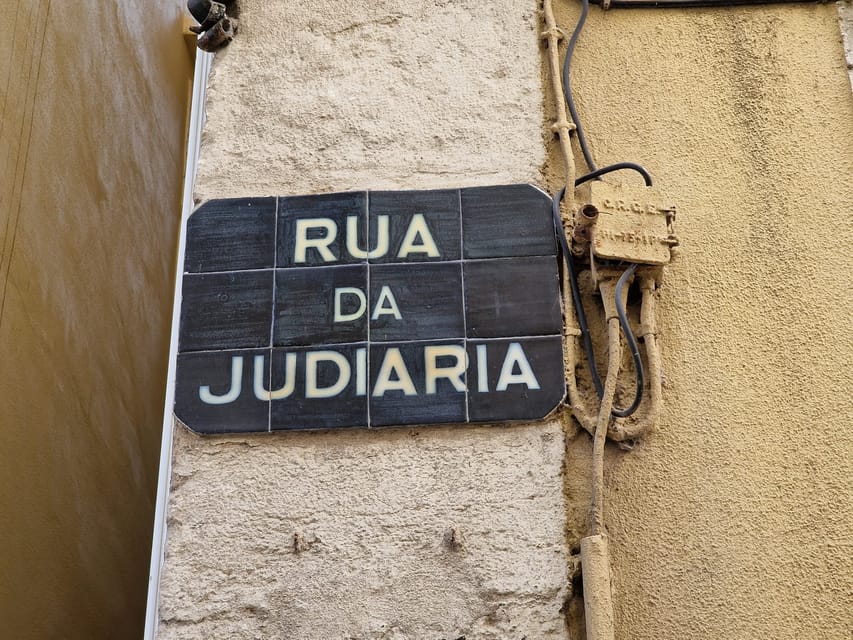
I’d book this tour if you’re the type of traveler who enjoys learning how cities remember. The combination of a viewpoint start, an archaeologist-led guide, and a finish at Largo de São Domingos turns Lisbon’s surviving clues into a coherent story. And the support for the Jewish Cultural Center on Rua da Judiaria adds real-world purpose to your ticket price.
Skip it only if mobility is a concern or if hearing in busy tourist areas would make the experience frustrating. Otherwise, this is one of the more meaningful ways to understand Lisbon beyond its postcards.
FAQ
Where does the tour meet?
The meeting point is at the view point Largo Portas do Sol, at the Statue of Saint Vicente.
How long is the walking tour?
The tour lasts 3 hours.
How much does it cost?
The price is $90 per person.
What languages are available?
The group tour is in English only. Other languages (Hebrew, Spanish, Portuguese) may be available if you request in advance.
What should I bring?
Bring water and wear comfortable shoes.
Is the tour suitable for people with mobility impairments?
No. The tour is listed as not suitable for people with mobility impairments.
Is food included?
No. Food and drinks are not included.
Is hotel pickup included?
No. Hotel pickup and drop-off are not included.
Can I get a refund if my plans change?
You can cancel up to 24 hours in advance for a full refund.
End of review
More Tours in Lisbon
- Lisbon City Center Tour – The Unmissable Lisbon★ 5.0 · 22,234 reviews
- Lisbon: History, Stories and Lifestyle Walking Tour★ 4.8 · 10,902 reviews
- True 4Hour Private Tuk Tuk Tour: Discover Lisbon with a Local!★ 5.0 · 8,008 reviews
- Winner 2025 Undiscovered Lisbon Food & Wine Tour by Eating Europe★ 5.0 · 6,390 reviews
- Lisbon: Sintra, Pena, Cabo da Roca, Cascais Tour with Pickup★ 4.8 · 5,445 reviews
More Tour Reviews in Lisbon
- Lisbon City Center Tour – The Unmissable Lisbon★ 5.0 · 22,234 reviews
- Lisbon: Sintra, Pena, Regaleira, Cabo da Roca & Cascais★ 4.7 · 19,656 reviews
- Lisbon Card: 24, 48, or 72-Hour Pass★ 4.5 · 17,944 reviews
- Lisbon: Jerónimos Monastery Entrance Ticket★ 4.1 · 14,164 reviews
- Lisbon: History, Stories and Lifestyle Walking Tour★ 4.8 · 10,902 reviews
More of Lisbon, One Hill at a Time
- Lisbon: History, Stories and Lifestyle Walking Tour★ 4.8 · 10,902 reviews
- Best of Lisbon Small-Group Guided Walking Tour★ 5.0 · 4,869 reviews
- Lisbon: Food and Wine Small Group Walking Tour★ 4.9 · 4,082 reviews
- Best of Lisbon Walking Tour: Rossio, Chiado & Alfama★ 4.9 · 2,700 reviews
- Age of Discoveries Walking Tour in Belém★ 5.0 · 1,513 reviews
Just in: fresh Lisbon reviews from the team





Lisbon Walking Tours, compared.
 ★ 4.8History, Stories and Lifestyle Walking TourFrom $2910,902 reviews
 ★ 5.0Best of Lisbon Small-Group Guided Walking TourFrom $234,869 reviews
 ★ 4.9Food and Wine Small Group Walking TourFrom $724,082 reviews
 ★ 4.9Best of Lisbon Walking Tour: Rossio, Chiado & AlfamaFrom $232,700 reviews
 ★ 5.0Age of Discoveries Walking Tour in BelémFrom $31,513 reviews
 ★ 5.0Lisbon Roots – Small group Food & Culture Walking Tour w/tastingsFrom $168910 reviews
 ★ 4.9Starter Walking Tour to the highlights in GermanFrom $33781 reviews
 ★ 4.1Lisbon Tram No. 28 Ride & Walking TourFrom $23766 reviews
Browse the lists this tour appears in