
Reviewed · LISBON WALKING TOURS
Lisbon Fado History Cultural Walking Tour
Lisbon’s fado has roots in real neighborhoods. This 3-hour cultural walk connects the streets around Mouraria with the story of where fado began, so the music makes more sense before you ever hear a note. You also get the kind of local context that helps you read Lisbon instead of just photographing it.
I especially like how it’s built around two short stops with real meaning: Praça Martim Moniz for the Mouraria story and today’s pressures on the area, then Igreja de São Cristóvão with fado history tied to a famous mural scene just below. I also like the small-group feel, with a maximum of 6 people, which makes it easier for your guide to slow down and actually talk to you.
One possible drawback: because it’s an evening walk and the stops are close but still involve streets, it helps to have a moderate fitness level and good walking shoes. And as with any guided experience, the pacing can feel different depending on the guide and the group’s energy.
Key points to know before you go
- Fado origins, explained where the sound comes from: you learn the story of how it was born, not just what to listen for.
- Mouraria context beyond the postcard: you get the neighborhood origin and a clear look at current gentrification pressures.
- Street art shows up in the story: a famous urban mural near São Cristóvão becomes part of the cultural map.
- Small group (max 6): easier conversation, more questions, and less waiting around.
- 3 hours, evening timing: it’s designed as a night-friendly cultural walk, with Friday hours shown as 7:00 PM to 10:00 PM.
- Tickets included at both stops: you’re not spending the evening hunting for entry rules.
In This Review
- Why this Mouraria-to-São Cristóvão walk makes fado click
- Price and logistics: what $34.89 buys you (and what it doesn’t)
- Where you meet and how to plan your evening
- Stop 1: Praça Martim Moniz and Mouraria’s shifting identity
- Stop 2: São Cristóvão Church, the mural, and the fado thread
- What the guides do well: humor, warmth, and pacing
- The social dinner promise: how to treat it during planning
- Who should book this tour (and who should skip it)
- Common gotchas: time, walking level, and expectations
- Should you book this Lisbon Fado History Cultural Walking Tour?
- FAQ
- What is the duration of the Lisbon Fado History Cultural Walking Tour?
- How much does it cost per person?
- Where does the tour start and end?
- What’s included during the stops?
- How big is the group?
- Do I need a printed ticket?
- What is the cancellation policy?
Why this Mouraria-to-São Cristóvão walk makes fado click

Fado isn’t just a performance. It’s a way of seeing Lisbon: intimate, emotional, and shaped by where people lived, worked, and coped. That’s why I like tours that don’t treat fado like a museum subject. This one ties the music to neighborhood history—especially around Mouraria—and to the street-level culture you can still sense in the area.
You’ll start by learning how the Mouraria area formed and what’s happening there now. Then, you connect that social backdrop to fado’s story and to the street art scene around São Cristóvão. The big payoff is that you’ll likely understand the next fado show you attend much faster, because you’ll know the human background behind the melodies.
Price and logistics: what $34.89 buys you (and what it doesn’t)
At $34.89 per person for about 3 hours, you’re paying for three things more than “just walking”:
First, you’re paying for a guide who can connect multiple layers—neighborhood identity, cultural change, and fado’s origin—into one clear storyline. Second, you’re paying for a small group, which tends to make the experience more personal and less rushed. Third, admission tickets are included at both of the main stops, so you don’t lose time dealing with entry logistics mid-walk.
What you shouldn’t expect is a checklist of big monuments. This is a cultural walk that focuses on meaning, not a highlight parade. If your idea of Lisbon is waiting in line for famous viewpoints, this may feel too story-led. If you want to understand the city and the music in the same breath, it’s a strong value.
Another night of fado and a glass of red
- Lisbon: Live Fado Show with Port Wine at Lisboa em Fado
★ 4.7 · 5,097 reviews - Lisbon: Fado Show and Wine inside Medieval Walls
★ 4.8 · 3,819 reviews - Lisbon: Fado Show and Portuguese Dinner
★ 4.5 · 1,531 reviews - Lisbon: Alfama Tour and Live Fado with Traditional Dinner
★ 4.4 · 970 reviews
Where you meet and how to plan your evening
You’ll meet at Rossio Square (Praça do Rossio, 1100-200 Lisboa, Portugal) and finish at São Cristovão (R. São Cristóvão 28, 1100-177 Lisboa, Portugal). The finish point matters: you end near the São Cristóvão area, which can help you continue your night afterward without backtracking across town.
This tour is listed as near public transportation, so you can usually get there without a long taxi ride. And because the schedule shows Friday hours from 7:00 PM to 10:00 PM, plan to treat this as an evening slot rather than something you stack with a daytime museum.
Also: the walking level is described as moderate fitness. Streets around Mouraria and São Cristóvão can be uneven and steep in places, and at night you’ll appreciate good footing. Bring comfortable shoes and a layer, even in warmer months—Lisbon nights can feel breezy.
Stop 1: Praça Martim Moniz and Mouraria’s shifting identity
Your first stop is Praça Martim Moniz, where you’ll learn about the origin of the Mouraria neighborhood and how the area is dealing with gentrification pressures right now. This is one of the most valuable parts of the tour, because it frames what you’re about to hear later.
Here’s what I think you’ll get out of it: Mouraria isn’t just “a place with old streets.” It’s a neighborhood with social history—where culture formed under real conditions, then kept evolving as the city changed around it. By discussing today’s transformation, the guide gives you language for what you’re seeing. You’ll notice the contrasts more clearly: old and new, long-time residents and newcomers, and the tension that shows up when a neighborhood becomes fashionable.
The stop is short (about 15 minutes), but it’s not filler. It sets the emotional context that fado depends on: belonging, struggle, and the complicated feel of home.
Stop 2: São Cristóvão Church, the mural, and the fado thread
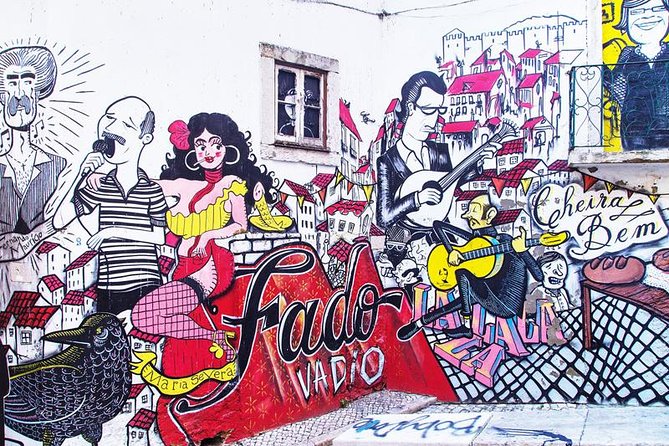
The second stop is at the Church of São Cristóvão, and just below it you’ll be pointed toward one of Lisbon’s famous urban art murals. Then the tour moves from visuals into sound: you’ll get the history of fado, including where and how it was born.
This stop is where the whole experience starts to connect. The Mouraria context helps you understand why fado carries that specific emotional weight. And the mural element adds another layer: it reminds you that Portuguese identity isn’t static. Street art, religious spaces, and music history all show up in the same neighborhood fabric.
You also have admission included for this stop (listed as part of the experience time window). That’s a practical advantage: you get access without adding extra planning. Spend your attention on what the guide points out—symbols, contrasts, and the way the area’s physical layout connects to the stories you’re hearing.
This is the part that helps you do better than just enjoy a fado show. You’ll likely understand why it feels so personal and why the performance style grew where it did.
Lisbon at walking pace, a few more routes
What the guides do well: humor, warmth, and pacing
Even when the route is the same, the experience can feel very different based on the guide’s style. The guides you may run into—such as Telma, João, Inés, or Alfredo—are repeatedly associated with storytelling that feels friendly and human, with a mix of culture and humor.
If Telma or Inés is your guide, you can expect an emphasis on making the city understandable—how things fit together and why they matter. If João is your guide, the tone tends toward animated explanation and adapting to the group’s needs. And if Alfredo is your guide, you may get a more patient, welcome style that keeps the conversation going even if the evening runs a little long.
That said, there’s one caution worth taking seriously: one account described a guide who seemed less focused and pushed breaks like buying pastries. That doesn’t mean every tour runs this way, but it is a reminder to go in with reasonable expectations about group pacing. If you prefer strict timing and constant forward motion, keep an open mind—and if anything feels off, speak up politely so the guide can steer the group better.
The social dinner promise: how to treat it during planning
The tour description frames this as more than a stroll: it’s meant to be an experience where you meet new people and enjoy the company, with a delicious dinner part of the idea.
Because the exact dinner timing and format aren’t spelled out in the essentials you provided, I’d treat this as a social evening concept rather than a detailed schedule you can rely on like a restaurant reservation. Still, the small-group size (max 6) fits perfectly with that kind of vibe. You’re more likely to talk to the people next to you instead of just hearing facts into your headphones.
Practical move: plan to eat lightly before you go, but not so lightly that you’re hungry during the walk. If dinner isn’t immediate after, you’ll want the flexibility.
Who should book this tour (and who should skip it)
This is best for you if:
- you care about fado culture, not only the performances
- you like learning through neighborhood context and street-level storytelling
- you want a small group and a more conversational evening
- you’ll likely attend a fado show later and want better context first
You might want to skip it if:
- you’re only interested in major landmarks and views
- you dislike walking on uneven streets in the evening
- you want a strictly timed, monument-hopping itinerary
If your travel style is “slow down and understand the city,” this fits neatly.
Common gotchas: time, walking level, and expectations

A few practical things can affect how you experience the tour:
Walking shoes matter. “Moderate fitness” is a polite way of saying Lisbon streets can be real streets, not flat sidewalks.
Timing can stretch. One account described the pacing running longer than planned. The good news is the tour is only about 3 hours, so stretching is less painful than with longer tours—but go in knowing the evening can breathe.
Guide energy varies. Most descriptions point to warm, humorous delivery, but one account flagged a guide who wasn’t as engaged. That’s rare, but it’s real enough that you should keep your expectations grounded.
If you want to maximize your odds of a great experience, arrive on time, ask one good question early, and give your guide a chance to set the tone.
Should you book this Lisbon Fado History Cultural Walking Tour?
If you want Lisbon to feel like more than a photo set, I think you’ll love this. For $34.89, you get a small-group evening walk, tickets included at both key stops, and a focused story connecting Mouraria’s social context to fado’s origins. That combination is exactly how you make cultural travel stick.
I’d book it if you’re excited by neighborhoods, by street-level culture, and by music explained with real place behind it. I’d hesitate only if you’re chasing big attractions or you can’t handle uneven streets at night.
Go into it with comfy shoes, an open mind, and curiosity about why fado sounds the way it does. That’s when the tour pays off most.
FAQ
What is the duration of the Lisbon Fado History Cultural Walking Tour?
The tour is listed as approximately 3 hours.
How much does it cost per person?
The price is $34.89 per person.
Where does the tour start and end?
You start at Rossio Square (Praça do Rossio, 1100-200 Lisboa, Portugal) and end at São Cristovão (R. São Cristóvão 28, 1100-177 Lisboa, Portugal).
What’s included during the stops?
Admission tickets are included at both scheduled stops in the experience.
How big is the group?
The tour has a maximum group size of 6 travelers.
Do I need a printed ticket?
You receive a mobile ticket.
What is the cancellation policy?
You can cancel for free up to 24 hours in advance for a full refund. If you cancel less than 24 hours before the start time, the amount paid is not refunded.
More Tour Reviews in Lisbon
- Lisbon City Center Tour – The Unmissable Lisbon★ 5.0 · 22,234 reviews
- Lisbon: Sintra, Pena, Regaleira, Cabo da Roca & Cascais★ 4.7 · 19,656 reviews
- Lisbon Card: 24, 48, or 72-Hour Pass★ 4.5 · 17,944 reviews
- Lisbon: Jerónimos Monastery Entrance Ticket★ 4.1 · 14,164 reviews
- Lisbon: History, Stories and Lifestyle Walking Tour★ 4.8 · 10,902 reviews
More of Lisbon, One Hill at a Time
- Lisbon: History, Stories and Lifestyle Walking Tour★ 4.8 · 10,902 reviews
- Best of Lisbon Small-Group Guided Walking Tour★ 5.0 · 4,869 reviews
- Lisbon: Food and Wine Small Group Walking Tour★ 4.9 · 4,082 reviews
- Best of Lisbon Walking Tour: Rossio, Chiado & Alfama★ 4.9 · 2,700 reviews
- Age of Discoveries Walking Tour in Belém★ 5.0 · 1,513 reviews
One More Night of Fado
- Lisbon: Live Fado Show with Port Wine at Lisboa em Fado★ 4.7 · 5,097 reviews
- Lisbon: Fado Show and Wine inside Medieval Walls★ 4.8 · 3,819 reviews
- Lisbon: Fado Show and Portuguese Dinner★ 4.5 · 1,531 reviews
- Lisbon: Alfama Tour and Live Fado with Traditional Dinner★ 4.4 · 970 reviews
- Lisbon: Tapas & Drinks with Fado Live Performance★ 4.6 · 749 reviews
Just in: fresh Lisbon reviews from the team





Lisbon Walking Tours, compared.
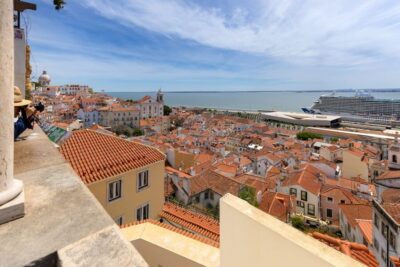 ★ 4.8History, Stories and Lifestyle Walking TourFrom $2910,902 reviews
 ★ 5.0Best of Lisbon Small-Group Guided Walking TourFrom $234,869 reviews
 ★ 4.9Food and Wine Small Group Walking TourFrom $724,082 reviews
 ★ 4.9Best of Lisbon Walking Tour: Rossio, Chiado & AlfamaFrom $232,700 reviews
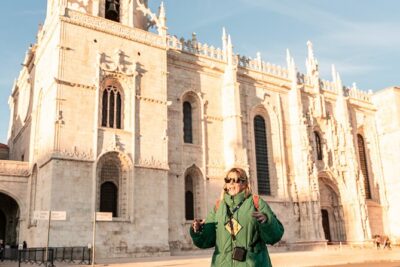 ★ 5.0Age of Discoveries Walking Tour in BelémFrom $31,513 reviews
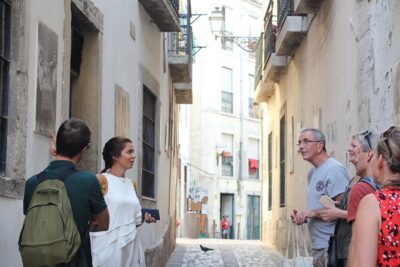 ★ 5.0Lisbon Roots – Small group Food & Culture Walking Tour w/tastingsFrom $168910 reviews
 ★ 4.9Starter Walking Tour to the highlights in GermanFrom $33781 reviews
 ★ 4.1Lisbon Tram No. 28 Ride & Walking TourFrom $23766 reviews
Browse the lists this tour appears in