
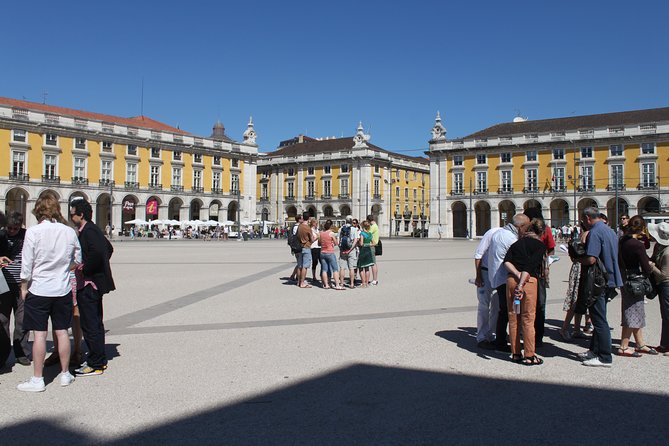
Reviewed · LISBON WALKING TOURS
Lisbon Essential Walking Tour: History, Stories and Lifestyle
Lisbon makes sense when you walk it. This 3-hour walking tour strings together the city’s key neighborhoods and landmarks with a local guide, so you leave with clear context and handy wayfinding. You’ll hit major sights like Igreja de São Roque and Lisbon Cathedral, with snacks built in along the way.
I love the mix of stops: you get big-picture stories (how the city rebuilt after the 1755 earthquake) plus real places to look at, like the miradouros and church interiors. I also love the practical touches, especially the coffee and cake break and the tram ride that helps you keep moving without turning the day into an endurance test.
One thing to consider: Lisbon is hilly, and this tour includes plenty of walking and steps. If you have trouble with uneven ground, take it seriously and wear supportive shoes and bring water.
In This Review
- Key highlights at a glance
- A 3-hour Lisbon starter tour that actually helps you navigate
- Bairro Alto to São Pedro de Alcântara: hill views and the city’s big reset
- Igreja de São Roque: the contrast of an austere façade and an opulent interior
- Carmo Convent and Church: Gothic architecture tied to 1974
- Santa Justa elevator: one of the best viewpoints, but choose how you spend your money
- Baixa café break and Praça da Figueira: the city center you’ll recognize all trip
- Alfama: fado streets, saint festivals, and the river-facing endgame
- Lisbon Cathedral (Sé): the 1150 starting point that explains later architectural mix
- Cost, group size, and what you’re really paying for
- What to expect on the ground: walking pace, steps, and smart prep
- Guides and the small touches that make it memorable
- Should you book this Lisbon Essential Walking Tour?
- FAQ
- How long is the Lisbon Essential Walking Tour?
- What does the tour cost?
- What sights are included on the tour?
- Is the elevator included in the price?
- What’s included with the tour?
- Is the tour offered in English?
- How big is the group?
- Where does the tour start and end?
- Do I need cash for food and drinks?
- What if I need to cancel?
Key highlights at a glance
- Small group size (max 15): easier questions and a less chaotic pace.
- Bairro Alto + miradouros: quick, high-payoff views over the Baixa and Tagus.
- Igreja de São Roque inside: plain from the outside, stunning inside with gilding, tiles, and painting.
- Carmo Convent link to 1974: Gothic architecture tied to the Carnation Revolution.
- Santa Justa elevator is optional: not included, so you can decide on the spot.
- Coffee and pastry are part of the plan: a real break, not just a photo stop.
A 3-hour Lisbon starter tour that actually helps you navigate
Think of this tour as your fast pass to understanding Lisbon. In just a few hours, you’ll connect the dots between neighborhoods that otherwise feel like separate postcards: hilltop Bairro Alto, view-heavy miradouro spots, the historic church circuit, then down into Alfama and finally the Cathedral area. The guide’s job isn’t just to point; it’s to give you a storyline you can carry into the rest of your trip.
The price is $30.25, and you’re not just paying for a walk. You’re paying for a professional guide, a tram trip, coffee and cake, plus insurance that covers liability and personal accident. That turns the tour from a “see a few sights” afternoon into a built-in orientation session you can build the rest of your day around.
There’s also a very real value in group logistics. With up to 15 people, it’s still personal. You can ask where to go next, how to handle the hills, or what to prioritize if you only have one full day.
Lisbon at walking pace, a few more routes
- Lisbon: History, Stories and Lifestyle Walking Tour
★ 4.8 · 10,902 reviews - Best of Lisbon Small-Group Guided Walking Tour
★ 5.0 · 4,869 reviews - Lisbon: Food and Wine Small Group Walking Tour
★ 4.9 · 4,082 reviews - Best of Lisbon Walking Tour: Rossio, Chiado & Alfama
★ 4.9 · 2,700 reviews
Bairro Alto to São Pedro de Alcântara: hill views and the city’s big reset
Your walk starts in Bairro Alto, a neighborhood shaped by Lisbon’s hills. This is one of those areas where the geography is the story. From here, you learn how Lisbon evolved and how the city rebalanced after the 1755 earthquake forced major change. It’s the kind of context that makes later sights click—especially when you see how different areas relate to each other.
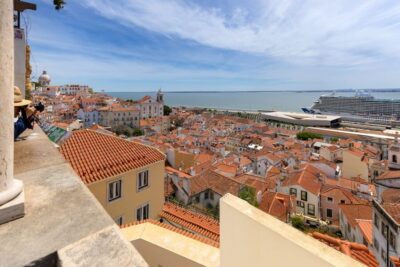
After that, you move toward Miradouro São Pedro de Alcântara, passing through the garden before you reach the view. This stop is short, but it’s one of the most useful kinds of stops: you look out over the Baixa and the south bank of the Tagus. Once you’ve seen that angle, you’ll start recognizing where things are as you wander later. It’s also a great moment to slow down, grab photos, and notice the layers—old streets below, open sightlines beyond.
A practical tip: miradouro steps and uneven paths can add up. If it’s hot or windy, this is a good place to check your water situation early.
Igreja de São Roque: the contrast of an austere façade and an opulent interior
Next up is Igreja de São Roque, a church and museum connected to the Jesuits. What makes it special isn’t just that it’s historic; it’s the contrast. The façade is described as austere, but the inside is where Lisbon shows off: gilding, tiles, and paintings that make it feel more like a museum experience than a quick church visit.
You’ll also hear how early the Jesuits got established here, since São Roque was one of the first Jesuit churches in Portugal and among the earliest worldwide. That matters because it explains why the interior has such a strong artistic presence. It’s not random decoration; it’s a cultural statement.
Time is modest here (about 20 minutes), so you won’t get a slow, museum-style tour. But that’s part of the value. You come in knowing what to look for. Then you leave ready to notice details on your own during future visits.
Carmo Convent and Church: Gothic architecture tied to 1974
Heading downhill (and into more layered Lisbon territory), you reach Igreja do Carmo and the Carmo convent and church. This is where the tour blends “pretty old buildings” with a clear modern turning point.
Architecturally, it’s a strong example of Gothic design. Historically, it’s a key site because the Carnation Revolution began in 1974 here, bringing an end to nearly 50 years of dictatorship. That connection changes the feel of the stop. You’re not just walking through pretty stonework—you’re standing in a place with a direct link to how Portugal changed in the 20th century.
The stop is about 20 minutes, and that’s usually perfect for this kind of location: enough time to appreciate both the structure and the story without rushing the group too much.
Worth a look before you lock anything else in around Lisbon:

Santa Justa elevator: one of the best viewpoints, but choose how you spend your money
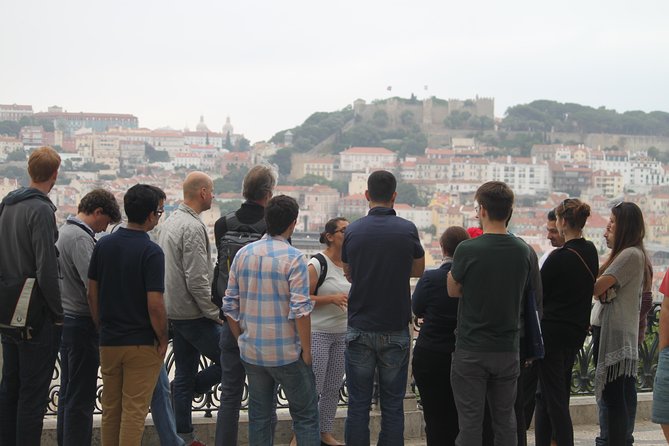
Then comes Elevador de Santa Justa. Even before you decide whether to ride it, it’s an imposing monument in Gothic Revival style, and it’s built for views. You’ll get a feel for why people line up here—Lisbon’s city plan can be hard to understand at street level, and this spot helps you see the layout in a way that photos often don’t.
Here’s the part that affects value: the elevator ticket is not included. So you should decide based on your priorities and energy. If you want a guaranteed viewpoint and don’t mind paying extra, it’s worth considering. If you’d rather keep costs tighter, you can still treat it as a landmark stop and move on.
Because the tour is timed around walking, this is also a good moment to judge whether you need a short break before heading into Baixa and the tram ride.
Baixa café break and Praça da Figueira: the city center you’ll recognize all trip
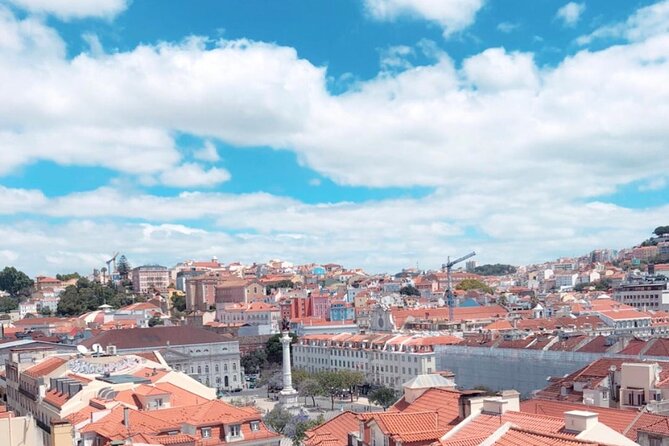
After the big architectural landmark moment, you shift into Baixa de Lisboa, the core of Lisbon’s street grid. You get a coffee and pastry break in a local café, and that’s not small. This tour keeps moving, and a real sit-down break helps you actually enjoy what comes next.
From there you see Praca da Figueira, still in the heart of Lisbon’s downtown. This is where your earlier view moments pay off. You’ll start to connect the neighborhoods you’ve seen to the routes you can walk on your own.
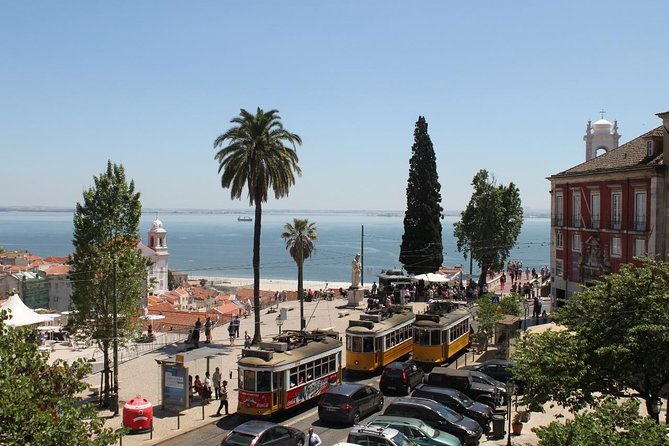
Then you take a tram ride, going up from the castle area toward Portas do Sol. In past groups, guides have been praised for making this part feel smooth and efficient, and it often lines up nicely with the famous tram experience people hope to see. You should still expect the tram segment to be part ride, part scenic orientation rather than a long ride.
Alfama: fado streets, saint festivals, and the river-facing endgame
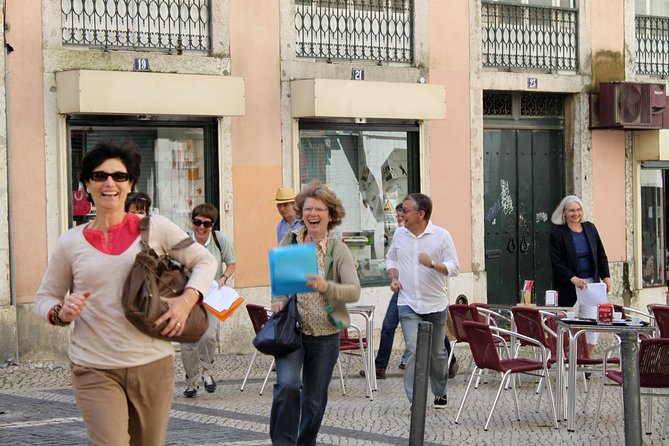
The tour’s last leg leans into the atmosphere. At Portas do Sol, you’ll also see key landmarks nearby, including the Monastery of São Vicente de Fora and the National Pantheon, before you settle into Alfama.
Alfama is one of Lisbon’s oldest traditional neighborhoods, known for fado houses and the saint festivals, especially St. Anthony. What you’re doing here is learning how Lisbon’s culture lives in the street plan. The narrow streets and winding lanes aren’t just inconvenient—they’re part of the way the neighborhood gathers, celebrates, and performs.
This segment is about 20 minutes, so it won’t turn into a full Alfama exploration on its own. Still, it gives you a sense of direction. Once you know the landmarks around Portas do Sol and the feel of Alfama’s street maze, your next self-guided walk will be less guesswork and more curiosity.
Lisbon Cathedral (Sé): the 1150 starting point that explains later architectural mix
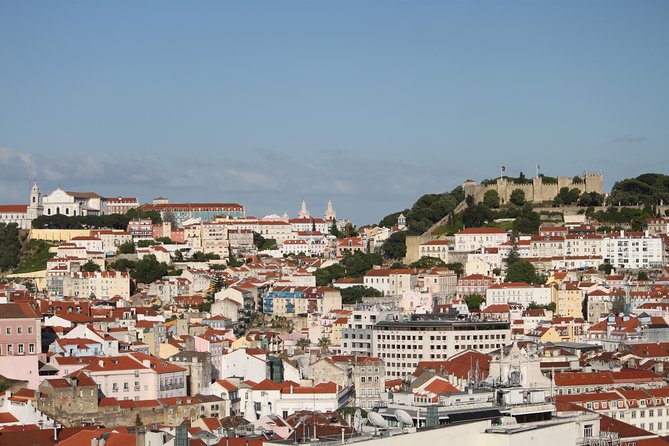
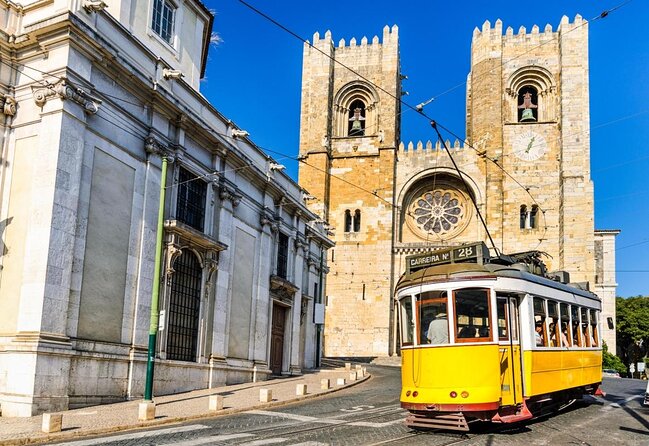
You end at Lisbon Cathedral, built in 1150, about three years after the city was taken back from the Moors. That timing matters. It places the cathedral as one of the earliest major anchors of Lisbon’s Christian-era core.
Over time, the Cathedral became a mix of architectural styles, because eras changed what people built and what they kept. That’s one of the most Lisbon things you’ll see all trip: layers that coexist instead of replacing each other entirely.
If you’ve followed the walk up to this point, Lisbon Cathedral won’t feel like a random stop. It’ll feel like the finish line to the storyline: hills, reconstruction, religious power, political change, and city life all converging into one central site.
Cost, group size, and what you’re really paying for
At $30.25, the tour is priced like an essential introduction rather than a deep-dive ticketed museum day. And the included items make it better than a simple walk:
- Guide time: not just “point-and-shoot” guiding.
- Tram trip: helps connect viewpoints and neighborhoods without making everything purely uphill.
- Coffee and cake: a planned energy reset.
- Insurance: liability and personal accident coverage.
Add the small group limit of 15 travelers, and you’re likely to get a tour that feels flexible enough for questions. That’s a big deal in Lisbon, where one wrong turn can send you into a hill you didn’t plan for.
Also, you’ll see that a few attractions have free entry on the plan, but Santa Justa elevator isn’t included. So if you want every optional add-on, budget a bit more. If you’re happy with viewpoints from street level, you can keep spending under control.
What to expect on the ground: walking pace, steps, and smart prep
This isn’t a sit-behind-a-driver tour. You’ll be moving through Lisbon’s real streets and stairs. Some reviews highlight that the route includes enough steps and walking that it may not suit people with mobility limits.
So plan like this:
- Wear comfortable, supportive shoes for hills and uneven pavement.
- Bring water, especially in warm months.
- Leave a little time after the tour for your own wandering, because you’ll want to follow the story you just learned.
One more detail that matters: the tour ends at the Cathedral area, so your “day layout” should probably be designed around that. If you want to head somewhere else immediately afterward, it helps to have a nearby plan rather than trying to cross the whole city right away.
Guides and the small touches that make it memorable
A big part of whether this tour feels like a great introduction is the guide. In the groups I’ve seen highlighted, guides such as Paolo, Ana, Beatrice, Ricardo, Sofia, Lucie, and Joao are praised for staying engaging while also sharing concrete practical tips.
You’ll likely hear recommendations beyond the sights, including where to try food and how to approach fado so you don’t end up in a random performance with no context. And you’ll probably get suggestions on how to navigate Lisbon’s hills without wasting time.
There’s also a recurring theme in the feedback: people love the pairing of stories + scenic viewpoints plus the planned snack break. That blend is what keeps the tour from feeling like a rushed checklist.
Should you book this Lisbon Essential Walking Tour?
Book it if you’re doing Lisbon for the first time or you want a clear framework for where to go next. The stops cover major “identity points” in a logical order: hill neighborhoods, major church interiors, political history tied to 1974, downtown Baixa orientation, then Alfama culture, finishing at the Cathedral.
Skip or choose carefully if you have mobility concerns. The tour is active, with hills and stairs, and at least one major viewpoint option (Santa Justa) is extra if you want to ride.
If you can handle a few hours of walking, this is one of the easiest ways to reduce Lisbon stress. You get context fast, you see the right places, and you’re set up to explore the rest of the city with much more confidence.
FAQ
How long is the Lisbon Essential Walking Tour?
It lasts about 3 hours.
What does the tour cost?
The price is $30.25 per person.
What sights are included on the tour?
You’ll visit key places such as Bairro Alto, Igreja de São Roque, Igreja do Carmo, Elevador de Santa Justa (viewpoint stop), Baixa de Lisboa, Alfama, and the Lisbon Cathedral.
Is the elevator included in the price?
No. The Santa Justa elevator admission is not included.
What’s included with the tour?
In addition to a professional guide, you get a tram trip, a coffee and cake break, and liability and personal accident insurance.
Is the tour offered in English?
Yes, it’s offered in English. Other languages are also available at booking.
How big is the group?
The tour has a maximum group size of 15 travelers.
Where does the tour start and end?
It starts and ends in Lisbon, Portugal, with the tour ending at Lisbon Cathedral.
Do I need cash for food and drinks?
Other food and beverages aren’t included. The tour includes coffee and cake, but you’ll pay for anything beyond that.
What if I need to cancel?
Cancellation is free up to 24 hours in advance for a full refund.
More Tours in Lisbon
- Lisbon City Center Tour – The Unmissable Lisbon★ 5.0 · 22,234 reviews
- Lisbon: History, Stories and Lifestyle Walking Tour★ 4.8 · 10,902 reviews
- True 4Hour Private Tuk Tuk Tour: Discover Lisbon with a Local!★ 5.0 · 8,008 reviews
- Winner 2025 Undiscovered Lisbon Food & Wine Tour by Eating Europe★ 5.0 · 6,390 reviews
- Lisbon: Sintra, Pena, Cabo da Roca, Cascais Tour with Pickup★ 4.8 · 5,445 reviews
More Tour Reviews in Lisbon
- Lisbon City Center Tour – The Unmissable Lisbon★ 5.0 · 22,234 reviews
- Lisbon: Sintra, Pena, Regaleira, Cabo da Roca & Cascais★ 4.7 · 19,656 reviews
- Lisbon Card: 24, 48, or 72-Hour Pass★ 4.5 · 17,944 reviews
- Lisbon: Jerónimos Monastery Entrance Ticket★ 4.1 · 14,164 reviews
- Lisbon: History, Stories and Lifestyle Walking Tour★ 4.8 · 10,902 reviews
More of Lisbon, One Hill at a Time
- Lisbon: History, Stories and Lifestyle Walking Tour★ 4.8 · 10,902 reviews
- Best of Lisbon Small-Group Guided Walking Tour★ 5.0 · 4,869 reviews
- Lisbon: Food and Wine Small Group Walking Tour★ 4.9 · 4,082 reviews
- Best of Lisbon Walking Tour: Rossio, Chiado & Alfama★ 4.9 · 2,700 reviews
- Age of Discoveries Walking Tour in Belém★ 5.0 · 1,513 reviews
Just in: fresh Lisbon reviews from the team





Lisbon Walking Tours, compared.
 ★ 4.8History, Stories and Lifestyle Walking TourFrom $2910,902 reviews
 ★ 5.0Best of Lisbon Small-Group Guided Walking TourFrom $234,869 reviews
 ★ 4.9Food and Wine Small Group Walking TourFrom $724,082 reviews
 ★ 4.9Best of Lisbon Walking Tour: Rossio, Chiado & AlfamaFrom $232,700 reviews
 ★ 5.0Age of Discoveries Walking Tour in BelémFrom $31,513 reviews
 ★ 5.0Lisbon Roots – Small group Food & Culture Walking Tour w/tastingsFrom $168910 reviews
 ★ 4.9Starter Walking Tour to the highlights in GermanFrom $33781 reviews
 ★ 4.1Lisbon Tram No. 28 Ride & Walking TourFrom $23766 reviews
Browse the lists this tour appears in