
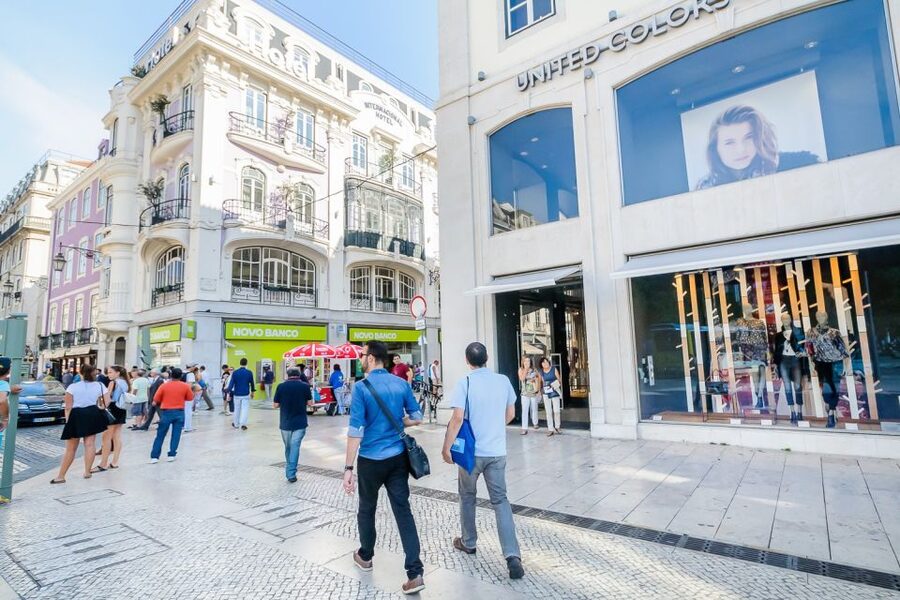
Reviewed · LISBON WALKING TOURS
Lisbon: Best of City Private Walking Tour
Three hours, and Lisbon clicks into place.
This private walking tour stitches together Rossio, Restauradores, Carmo, Chiado, and Alfama, while your guide turns big moments—earthquake rebuilding, revolution, and fado—into walkable scenes. I like that the route is built around landmarks, not random stops, and yes, you get to try Pastel de Nata along the way.
What I really love is how the story shows up in the city itself. You’ll stand by the Obelisk at Restauradores Square (linked to Portugal’s 1640 independence) and then hear how Carmo Square connects to the Carnation Revolution. I also like the value of the included stops: a pastry, a tapa, and wine make the walk feel more like a local introduction than a checklist. The main drawback: it’s still a 3-hour walking tour—comfortable shoes matter, especially once Alfama starts its twisty climb-and-turn rhythm.
In This Review
- Key highlights worth your attention
- Why this Lisbon route works in just three hours
- Starting at Praça Dom Pedro IV (Rossio Square): your “where am I?” moment
- Restauradores Square’s Obelisk: history you can see from the sidewalk
- Rossio Square deeper context: why it matters for your whole visit
- Carmo Square and the Carnation Revolution: modern history in a public space
- Chiado walking section: cafés, boutiques, bookstores, and a pastry break
- Baixa Downtown: the rebuilt city and why it feels different
- Alfama’s maze and fado: the neighborhood that makes Lisbon feel ancient
- Food and wine stops: simple inclusions that make the tour feel local
- Pace, comfort, and what private guiding really changes
- Price and value: is $102 a good deal?
- Where you end: wrapping near Praça do Comércio
- Should you book this Lisbon private walking tour?
- FAQ
- How long is the Lisbon private walking tour?
- Where does the tour start?
- Where does the tour end?
- Is this tour private or group-based?
- What languages are available for the live guide?
- What’s included in the price?
- Are entrance tickets to monuments included?
- Is hotel pickup available?
- Can I bring pets?
- What should I bring for the tour?
- Is the tour flexible if I’m on a shore excursion?
- What’s the cancellation policy?
Key highlights worth your attention

- Restauradores Square Obelisk ties Lisbon street scenes to 1640 independence
- Rossio Square orientation helps you understand where old and new Lisbon meet
- Carmo Square and the Carnation Revolution gives modern history meaning
- Chiado stroll + Pastel de Nata blends classic neighborhoods with an easy food stop
- Alfama’s alley maze and fado talk is the kind of context you can’t easily read on your own
- Wine tasting at a local bar adds a relaxed finish before you wrap up near Praça do Comércio
Why this Lisbon route works in just three hours
Lisbon can be a little overwhelming on day one. Big squares, steep streets, and a few neighborhoods that feel like they were designed by a mischievous cat. This tour helps you pin the city to your brain fast by pairing each area with a clear “why it matters” moment.
You’re not just looking at postcards. You’re walking through places that explain how Lisbon became Lisbon—how it rebuilt after the 18th-century earthquake, how political change showed up in public squares, and how culture lives in streets, cafés, and even the way people sing fado.
And you get the practical benefit of a private guide: you can ask questions, adjust the pace if you’re slower, and keep the walk from turning into stress. In guides like João, Filipa, Inès, Beatriz, Raquel, and Tiago, the common thread is simple—information that matches what you’re seeing right now.
Lisbon at walking pace, a few more routes
- Lisbon: History, Stories and Lifestyle Walking Tour
★ 4.8 · 10,902 reviews - Best of Lisbon Small-Group Guided Walking Tour
★ 5.0 · 4,869 reviews - Lisbon: Food and Wine Small Group Walking Tour
★ 4.9 · 4,082 reviews - Best of Lisbon Walking Tour: Rossio, Chiado & Alfama
★ 4.9 · 2,700 reviews
Starting at Praça Dom Pedro IV (Rossio Square): your “where am I?” moment
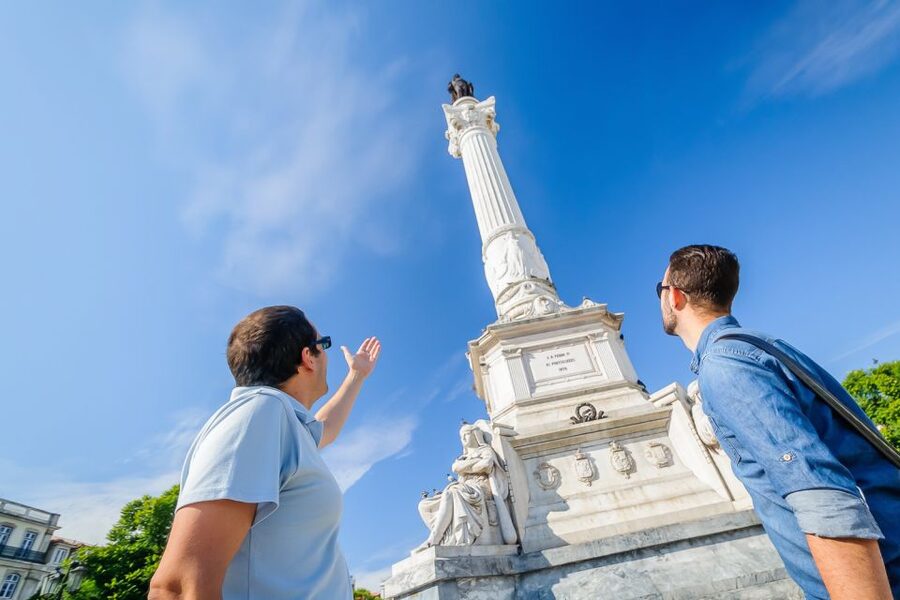
The tour begins at Rossio, at Praça Dom Pedro IV, in front of the Column of King Pedro IV. That spot is a smart choice because Rossio sits at the heart of both old and new Lisbon. If you’re trying to learn where things connect—downtown versus historic districts—Rossio is a great first anchor.
Right away, your guide sets the frame. The tour steps back to the 18th century, when Lisbon was devastated by an earthquake and then rebuilt. You’ll hear how that rebuilding changed the city’s layout and urban thinking, which matters later when you reach Baixa.
This also helps you “read” the rest of the walk. Once you know what came after the earthquake, the street patterns start to make sense instead of feeling random.
Restauradores Square’s Obelisk: history you can see from the sidewalk
Next comes Restauradores Square—and the imposing Obelisk in the center. This isn’t just a monument photo moment. Your guide explains what it commemorates: the Restoration of Portugal’s independence from Spain in 1640.
I love stops like this because you’re not learning dates in a vacuum. You’re standing in the exact public space tied to national identity. It makes the city feel less like architecture and more like a living timeline.
A practical note: squares are open and sunny (or windy). Bring water if it’s hot, and if the weather’s rough, you’ll appreciate how a guide keeps moving you from one landmark to the next instead of lingering in one exposed spot.
Rossio Square deeper context: why it matters for your whole visit
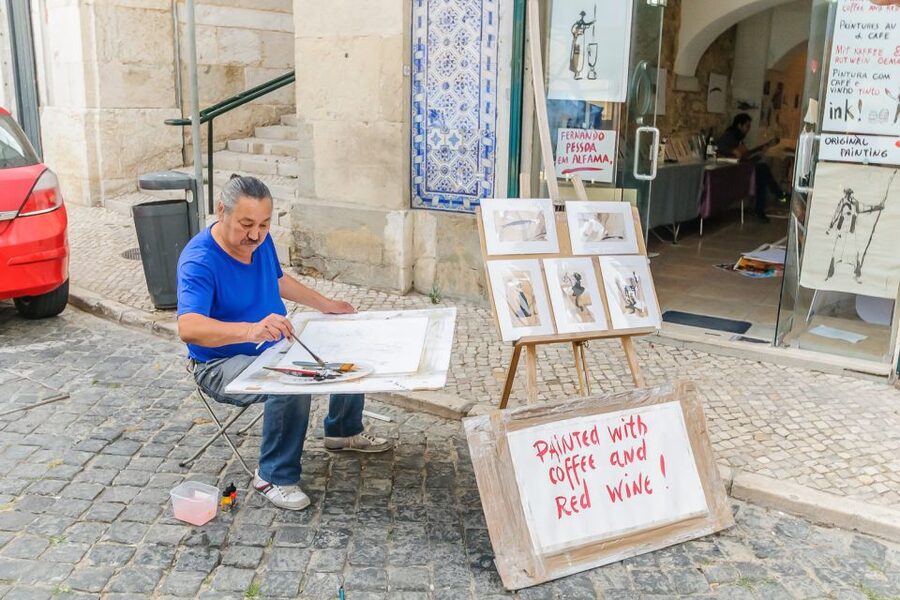
Rossio isn’t just where you start. It’s also one of the tour’s key “center of gravity” points, tied to Lisbon’s mix of old and new.
Here’s the value: your guide uses Rossio as a reference point while explaining the city’s transformation. That matters because many visitors spend a lot of time bouncing between neighborhoods without understanding how the layout evolved. Even in 3 hours, you leave with a better mental map.
If you’ve got limited time and want your bearings quickly, this is the part that delivers the most return.
Worth a look before you lock anything else in around Lisbon:

Carmo Square and the Carnation Revolution: modern history in a public space
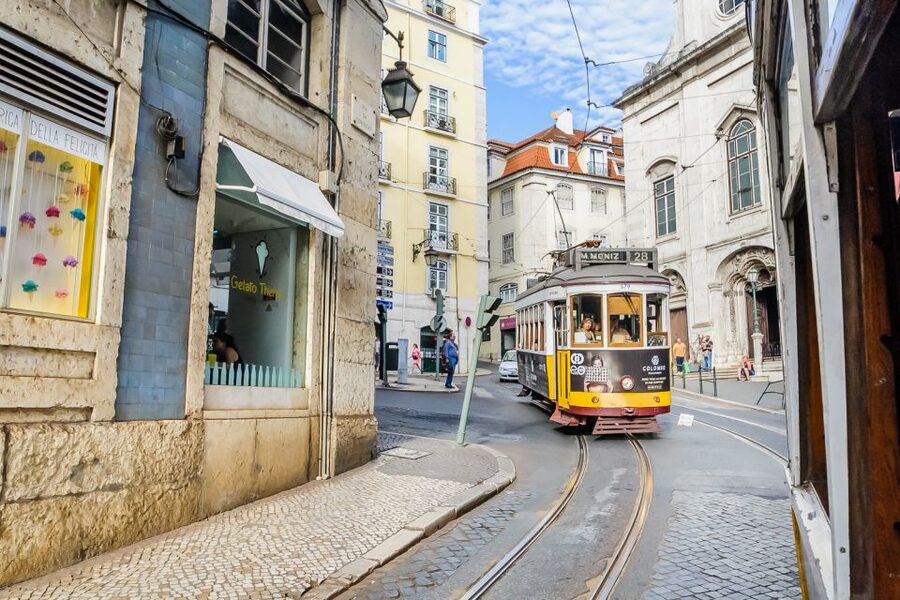
Carmo Square is where the tour shifts from older patterns to modern political change. Your guide connects this area to the Carnation Revolution of 1974, the turning point that ended Portugal’s dictatorial regime after 48 years.
What I like here is the balance. The walk covers medieval-feeling streets later, but Carmo brings you back to the reality that Lisbon’s story is still happening. It’s not just old stone. It’s public memory and change tied to a square you can actually stand in.
The tour also links this stop into the broader “how Lisbon rebuilt and reorganized itself” theme. In other words: revolution and earthquake rebuilding are different events, but they both shaped how the city functioned afterward.
Chiado walking section: cafés, boutiques, bookstores, and a pastry break
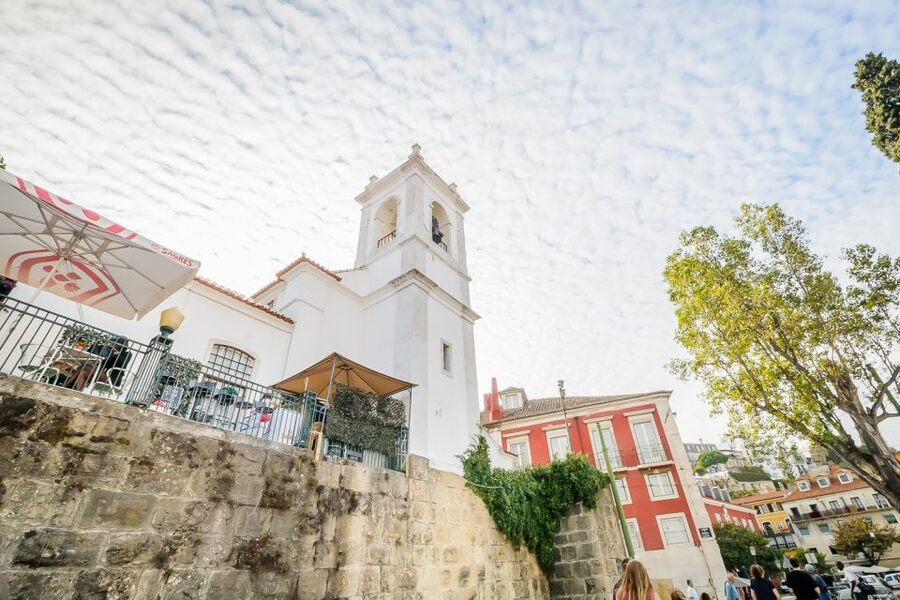
From Carmo Square, you head into Chiado, one of Lisbon’s elegant neighborhoods. This stretch is more about atmosphere and everyday culture. You’ll see the vibe of old cafés, boutiques, theaters, and bookstores as your guide talks through how Chiado fits into the city’s story.
Then comes one of the most satisfying included moments: tasting a Pastel de Nata (Portuguese custard tart). It’s not an afterthought. It’s scheduled so you get a real taste of Lisbon while the guide’s talking about culture and everyday life, not only history.
A small but important tip: you’re walking for 3 hours. If you usually eat light early, plan for the pastry as fuel. Don’t treat it like dessert only. You’ll be happier when Alfama starts its maze-like turns.
Baixa Downtown: the rebuilt city and why it feels different
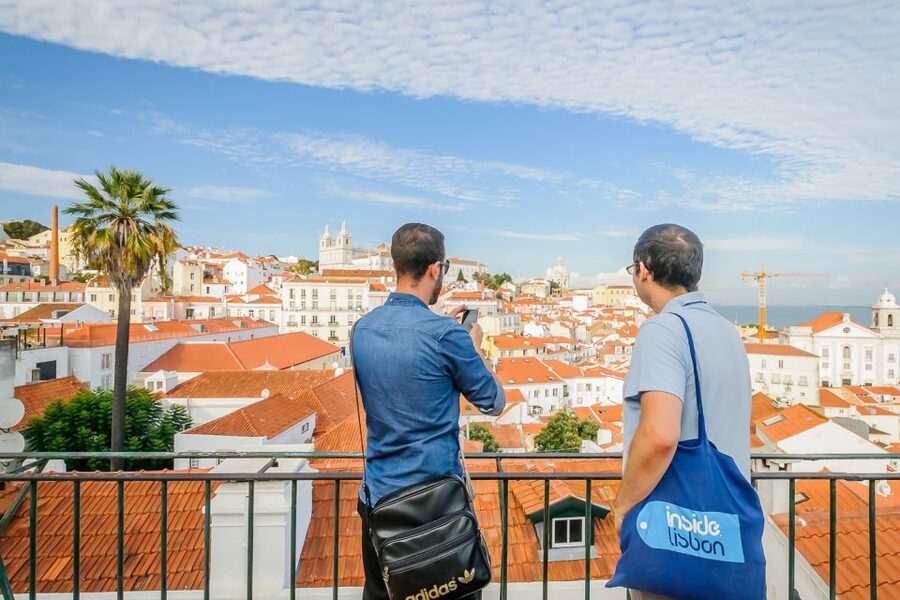
After Chiado, you reach Baixa, the Downtown area that was rebuilt after the 18th-century earthquake. Your guide explains that this rebuild came with new rules of urbanism and a street plan that followed a different logic than what came before.
Baixa’s value in this tour is that it acts like an explanation key. You can physically see how Lisbon’s post-quake thinking shaped the feel of the streets—more structured, more planned, and designed for how the city would move and grow.
If you tend to enjoy architecture and city planning, Baixa is where the walk starts feeling extra smart. Even if you don’t, it still helps you move around later because you’ll recognize the “grid-like” feel and understand why it looks the way it does.
Alfama’s maze and fado: the neighborhood that makes Lisbon feel ancient
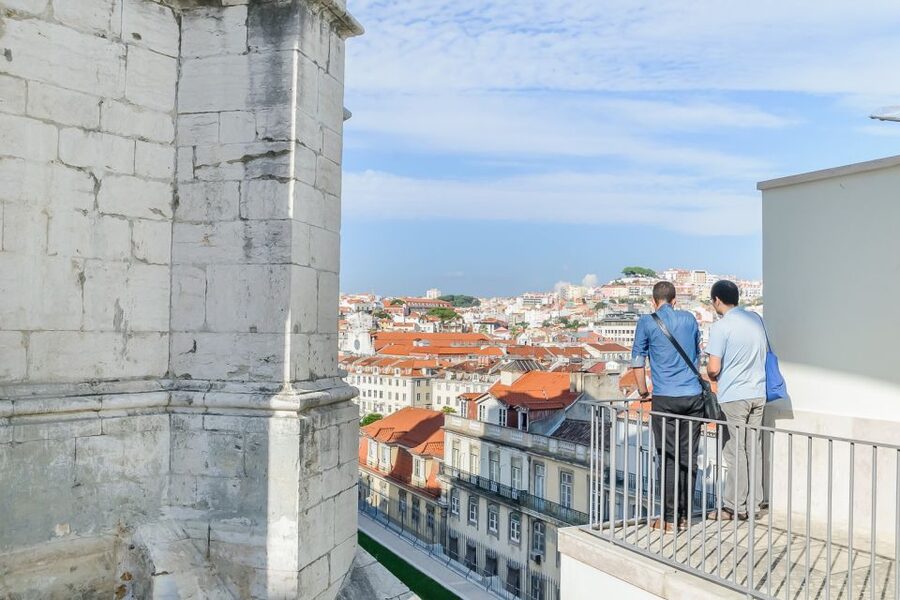
Then comes the part many people picture when they think of Lisbon: Alfama. This is the Moorish-influenced area of small squares and narrow alleyways, where time can feel like it slows down.
Your guide talks about fado—Lisbon’s musical genre—and you’ll also get pointed toward some of Alfama’s lesser-known fado restaurant spots. This matters because if you only rely on a guidebook list, you often end up in the same tourist-friendly loops. The tour gives you context so you understand why these places cluster where they do.
Expect lots of turns and a real “walk through the city, not just between it” feeling. The upside is memorable atmosphere. The catch is physical effort. Alfama’s streets are not built for a leisurely stroller pace.
If you’re going in comfortable shoes and you’re okay with a bit of uphill and winding walking, you’ll love this segment.
Food and wine stops: simple inclusions that make the tour feel local
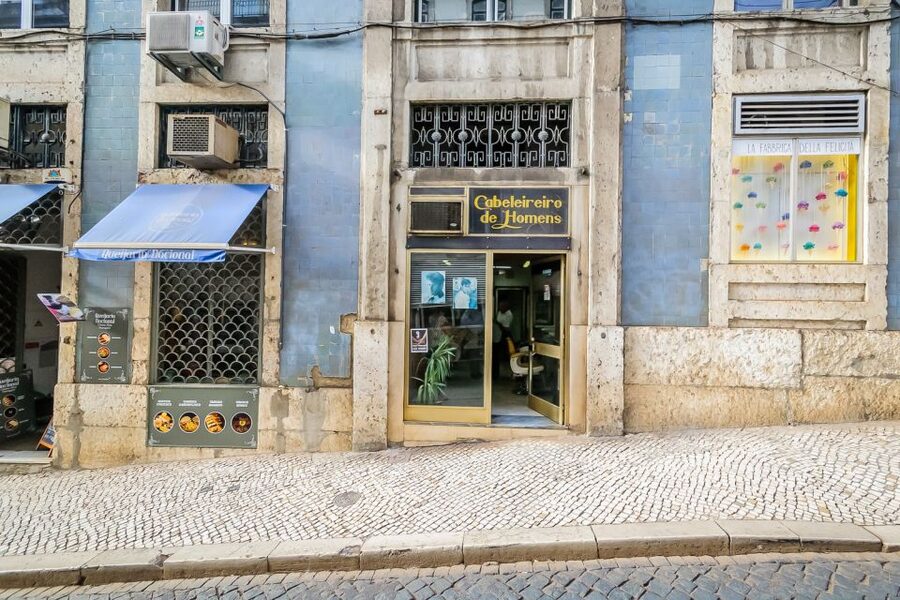
This tour includes:
- Pastel de Nata
- 1 tapa
- Wine tasting
You’ll get these at local stops during the walk, including a break that includes wine. The food isn’t just there to fill time—it’s tied to the neighborhood flow. You’ll taste something sweet in Chiado, and then later you’ll have the more savory side (tapa) and wine as the tour moves through the older districts.
One detail I appreciate from guide patterns in this tour category: the guides tend to keep the stops efficient but pleasant. People describe the pace as just right for a 3-hour walk—fast enough to cover major sights, not so rushed that the tasting moments feel like a drive-by.
Pace, comfort, and what private guiding really changes
The tour is 3 hours long. That’s a sweet spot if you want a first-day orientation but don’t want to spend half your trip on one activity. The private format is also a big deal. You’re not stuck moving as the slowest group member. You’re following one person with a plan.
From how guides are praised—names like Chon, Pedro Osário, Catarina Fonseca, and Carolina also show up frequently—the standout theme is control: keeping the walk on track, answering questions, and giving practical advice for the rest of your stay.
Still, your body sets the limits. If you’re elderly or easily tired, choose shoes carefully and expect that 3 hours on foot includes steady movement. The tour isn’t advertised as a slow sightseeing stroll. It’s a guided walk with stops.
Price and value: is $102 a good deal?
At $102 per person for a private, 3-hour walking tour, this isn’t the cheapest way to “see Lisbon.” But it can be strong value if you factor in what’s included and what you’re buying: time with a real guide and built-in tasting breaks.
You’re paying for:
- A live private guide (English, Spanish, Portuguese)
- A planned route through major districts
- Pastel de Nata, 1 tapa, and wine tasting
- No need for you to manage monument timing inside during the walk (entrances aren’t included)
For $102, the question isn’t only “what do I see?” It’s “how much hassle do I avoid?” A good guide turns streets into context, and context is the difference between taking photos and actually understanding where you are.
If you’re traveling as a couple or a small group, private format can also feel fair because you’re paying for a shared service, not multiple separate taxis or planning sessions.
Where you end: wrapping near Praça do Comércio
The tour finishes near Praça do Comércio, a massive waterfront square that served as the former entrance hall of the city and is known as one of Europe’s largest and most beautiful squares.
Your tour details also say it ends back at the meeting point. In practice, expect the wrap-up to keep you oriented to central Lisbon—either ending by returning toward Rossio or by ending near Praça do Comércio and keeping you close to transit-friendly areas. Either way, you’ll end your walking loop with a “big open-space” moment that feels like a payoff.
Should you book this Lisbon private walking tour?
I’d book it if:
- You want a fast, structured intro to Lisbon’s main districts in only 3 hours
- You like history that shows up in real squares (Restauradores, Rossio, Carmo)
- You’re happy to walk a fair bit, including winding streets in Alfama
- You want a guide strong enough to handle questions and keep the pace smooth
- You’d enjoy the included tastings: Pastel de Nata, tapa, and wine
I’d think twice if:
- You want to spend most of your time doing museum-style indoor visits (this tour does not include guided monument entries)
- You’re looking for a very light, minimal-walking experience
If your goal is to get your bearings fast and leave with Lisbon stories you can repeat later, this tour is a solid pick.
FAQ
How long is the Lisbon private walking tour?
The tour lasts 3 hours.
Where does the tour start?
You meet at Praça Dom Pedro IV (Rossio Square), in front of the Column of King Pedro IV.
Where does the tour end?
It ends back at the meeting point, and the route includes a finish near Praça do Comércio.
Is this tour private or group-based?
It’s a private group tour.
What languages are available for the live guide?
The tour offers English, Spanish, and Portuguese.
What’s included in the price?
A guided walking tour with a live guide, plus Pastel de Nata, 1 tapa, and a wine tasting.
Are entrance tickets to monuments included?
No. Guided tours inside monuments and entrance tickets are not included.
Is hotel pickup available?
Yes, pickup is available for hotels located in Lisbon city center.
Can I bring pets?
No, pets are not allowed.
What should I bring for the tour?
Wear comfortable shoes. The walk involves a fair amount of street walking.
Is the tour flexible if I’m on a shore excursion?
If you’re on a port excursion, the times are flexible. Lunch can be excluded and the tour shortened, but you should contact the tour operator after booking for guaranteed flexibility.
What’s the cancellation policy?
Free cancellation is available up to 24 hours in advance for a full refund.
More Tours in Lisbon
- Lisbon City Center Tour – The Unmissable Lisbon★ 5.0 · 22,234 reviews
- Lisbon: History, Stories and Lifestyle Walking Tour★ 4.8 · 10,902 reviews
- True 4Hour Private Tuk Tuk Tour: Discover Lisbon with a Local!★ 5.0 · 8,008 reviews
- Winner 2025 Undiscovered Lisbon Food & Wine Tour by Eating Europe★ 5.0 · 6,390 reviews
- Lisbon: Sintra, Pena, Cabo da Roca, Cascais Tour with Pickup★ 4.8 · 5,445 reviews
More Tour Reviews in Lisbon
- Lisbon City Center Tour – The Unmissable Lisbon★ 5.0 · 22,234 reviews
- Lisbon: Sintra, Pena, Regaleira, Cabo da Roca & Cascais★ 4.7 · 19,656 reviews
- Lisbon Card: 24, 48, or 72-Hour Pass★ 4.5 · 17,944 reviews
- Lisbon: Jerónimos Monastery Entrance Ticket★ 4.1 · 14,164 reviews
- Lisbon: History, Stories and Lifestyle Walking Tour★ 4.8 · 10,902 reviews
More of Lisbon, One Hill at a Time
- Lisbon: History, Stories and Lifestyle Walking Tour★ 4.8 · 10,902 reviews
- Best of Lisbon Small-Group Guided Walking Tour★ 5.0 · 4,869 reviews
- Lisbon: Food and Wine Small Group Walking Tour★ 4.9 · 4,082 reviews
- Best of Lisbon Walking Tour: Rossio, Chiado & Alfama★ 4.9 · 2,700 reviews
- Age of Discoveries Walking Tour in Belém★ 5.0 · 1,513 reviews
Just in: fresh Lisbon reviews from the team





Lisbon Walking Tours, compared.
 ★ 4.8History, Stories and Lifestyle Walking TourFrom $2910,902 reviews
 ★ 5.0Best of Lisbon Small-Group Guided Walking TourFrom $234,869 reviews
 ★ 4.9Food and Wine Small Group Walking TourFrom $724,082 reviews
 ★ 4.9Best of Lisbon Walking Tour: Rossio, Chiado & AlfamaFrom $232,700 reviews
 ★ 5.0Age of Discoveries Walking Tour in BelémFrom $31,513 reviews
 ★ 5.0Lisbon Roots – Small group Food & Culture Walking Tour w/tastingsFrom $168910 reviews
 ★ 4.9Starter Walking Tour to the highlights in GermanFrom $33781 reviews
 ★ 4.1Lisbon Tram No. 28 Ride & Walking TourFrom $23766 reviews
Browse the lists this tour appears in