
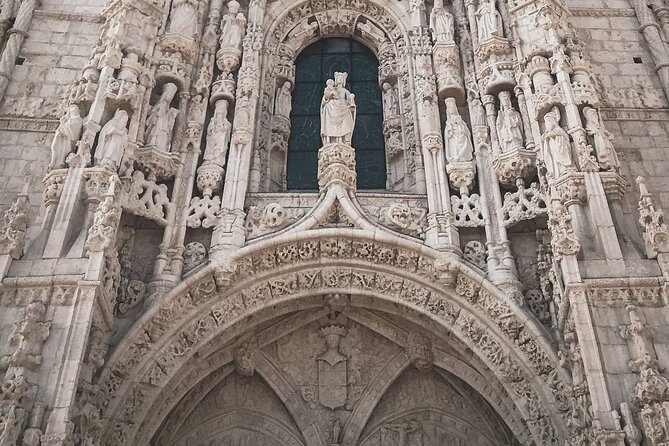
Reviewed · BELÉM TOURS
Jeronimos Monastery Guided Tour – Small Groups – Tickets Included
Jeronimos Monastery is more than stone. This small-group tour helps you read the building like a story, with a guide who connects the Portuguese Age of Explorations to the cloister and church details you’d otherwise miss.
I like two things right away: the group stays small (max 8), and you get fast-track access for the cloister with your guide. The pacing also feels human, so you can actually ask questions instead of being swept along.
One heads-up: it’s still a set 2 hours 30 minutes, so if you love lingering in churches like a museum, you may want extra solo time right after the tour to slow down.
In This Review
- Key highlights you will actually feel
- Jerónimos in 2.5 Hours: How this guided format really works
- Getting in faster: what the fast-track does for your visit
- Cloister walkthrough: symbolic architecture you can actually read
- The South Portal secrets: a detail-driven moment
- West Portal and the king’s portrait: where looking becomes comprehension
- Church portion: tombs of explorers, poets, and royal power
- Architecture + Portugal’s Age of Explorations: why this tour is worth your time
- What it costs and why it feels like decent value
- Who this tour suits best (and who might want to self-guide)
- Practical tips for your morning at Praça do Império
- Should you book this Jerónimos Monastery guided tour?
- FAQ
- How long is the Jerónimos Monastery guided tour?
- What time does the tour start?
- How many people are in each group?
- Are tickets included?
- Does the tour help you avoid long lines?
- Where do I meet the guide?
- Is the tour suitable for most people?
- Is there free cancellation?
- Who is the guide for this tour?
Key highlights you will actually feel
- Small group (max 8): easier questions, better flow, and less crowd pressure.
- Fast-track for the cloister: you save time at one of the busiest entry points.
- Cloister plus church, both guided: you see the whole experience, not just the main hall.
- Tombs tied to Portuguese identity: Fernando Pessoa, Alexandre Herculano, Vasco da Gama, Luís de Camões, plus the royal tombs.
- Portals explained in plain language: the South Portal secrets and the West Portal with the king’s portrait.
- One certified guide (Rafael Pereira): history, architecture, and symbolism connected into a clear narrative.
Jerónimos in 2.5 Hours: How this guided format really works
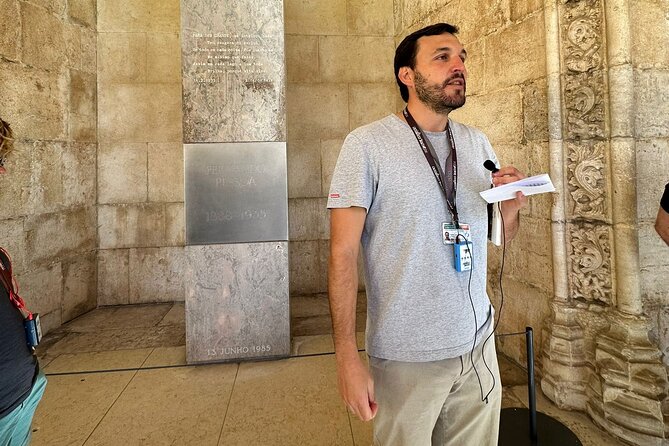
This is a morning-focused guided visit starting at 9:00am at Jerónimos Monastery (Praça do Império). You’ll spend about 2 hours 30 minutes with a certified guide, and the tour ends back at the meeting point. Since tickets are included, you can focus on the site instead of doing logistics on the fly.
The biggest practical win is the group size: up to 8 people. That small number matters in Jerónimos. Once you’re inside, people tend to drift toward the same photo spots. A small group keeps you moving as a team and gives the guide room to respond to your questions, not just speak into the crowd.
Also, you’ll cover two distinct areas: the cloister and the church. That’s not just a checklist. Jerónimos feels very different in each space, so it’s helpful to get an organized route from a guide who knows how the symbols, tombs, and architectural choices fit together.
If you’re the type who wants to understand what you’re looking at—even if you only have one or two trips around Lisbon—this format is a smart use of limited time.
More mornings among the monuments of Belém
- Lisbon: Jerónimos Monastery Entrance Ticket
★ 4.1 · 14,164 reviews - Private Lisbon Sightseeing Tuk-Tuk Tour: Alfama, Belém & More
★ 5.0 · 4,277 reviews - Age of Discoveries Walking Tour in Belém
★ 5.0 · 1,513 reviews - Lisbon: Bike Tour from Lisbon to Belém + Liquor & Pastry
★ 4.7 · 688 reviews
Getting in faster: what the fast-track does for your visit
Your entry to the cloister uses a fast-track setup for groups with a guide. Translation: you’re less likely to be stuck in long lines and more likely to start seeing details right away.
That time-saving isn’t just comfort. Jerónimos rewards attention to small things. When you arrive late in the day or after a slow queue, you end up rushing the parts that need focus—doorways, carvings, and the tomb areas. The fast-track helps you keep a calmer rhythm, which is where good guiding really matters.
The tour uses a mobile ticket, so you won’t be hunting for paper. Confirmation is provided when you book, and the meeting point is right at the monastery: Praça do Império, Lisbon.
One more practical tip: since this is a popular site, I recommend you arrive a couple minutes early. Even with fast-track, being at the right spot on time makes the whole morning smoother.
Cloister walkthrough: symbolic architecture you can actually read
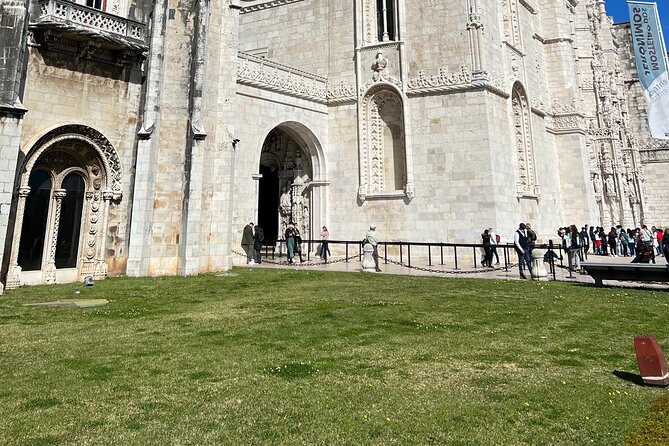
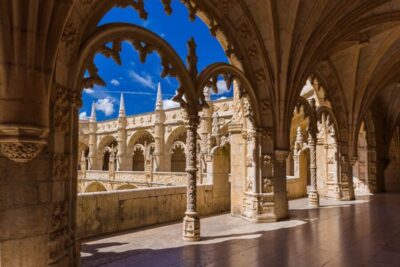
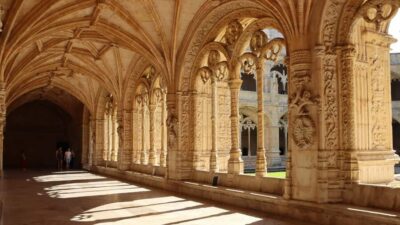
The cloister is where Jerónimos starts to feel like a coded message—religion, power, and national pride carved into stone. During this part, your guide sets you up to notice the logic behind the design, not just the decoration.
You’ll get the story behind:
- the history of the monastery
- the monastery’s place in the Portuguese Age of Explorations
- how the architecture uses symbolic language
This matters because Jerónimos isn’t only beautiful; it’s purposeful. The guide’s job here is to help you see how the stones connect to Portugal’s mindset during the era of seafaring ambition—courage, identity, and belief packaged into ornament and form.
Then comes a highlight area: the tombs inside the guided route. The cloister portion includes the tombs of:
- Fernando Pessoa
- Alexandre Herculano
I like including these names because it bridges centuries. You start at the age of exploration, then the guide brings you into later Portuguese culture and literature. It turns the monastery from a past-only site into a living reference point for Portuguese identity.
The cloister also sets you up for the portals, which are the next big “look closer” moments. If you’re someone who usually takes quick photos and moves on, this is the section that will slow you down in a good way.
The South Portal secrets: a detail-driven moment
The tour doesn’t treat the portals as background. It gives you a focused explanation—especially for the South Portal.
You’ll hear about the secrets of the South Portal, with context for what you’re seeing and why those design choices were made. Portals at Jerónimos aren’t random masterpieces. They’re part of the monastery’s language: signs meant to communicate status, belief, and story to people who understood the visual code.
When a guide explains the meaning, carvings stop being “pretty stone.” They become a map. You begin to notice patterns and themes rather than just surfaces.
If you want the kind of experience where you walk out thinking, I know what I looked at and why it matters, the South Portal segment is one of the best places to get that payoff.
Worth a look before you lock anything else in around Lisbon:


West Portal and the king’s portrait: where looking becomes comprehension
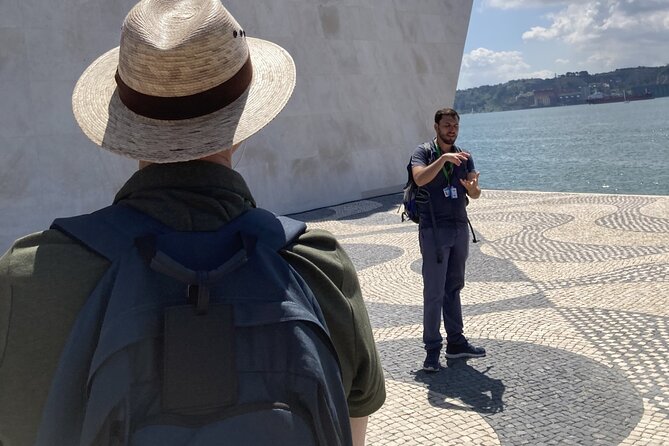
Another standout moment is the west portal, including the portrait of the king. This is exactly the sort of detail where self-guided visits often feel frustrating. You can see the carving, but unless someone explains the reference points, it’s easy to miss the point.
With the guided explanation, the king’s portrait becomes part of a wider theme: how authority and the monarchy connected to the cultural and religious purpose of the monastery.
This section also fits perfectly with the tour’s bigger thread: you’re not only learning the monastery’s facts—you’re learning how the building communicates.
If you enjoy architecture, symbolism, or church art that has layers, don’t skip the portal stops. Stay with the guide here. The meaningful parts are often the ones you might otherwise rush past.
Church portion: tombs of explorers, poets, and royal power
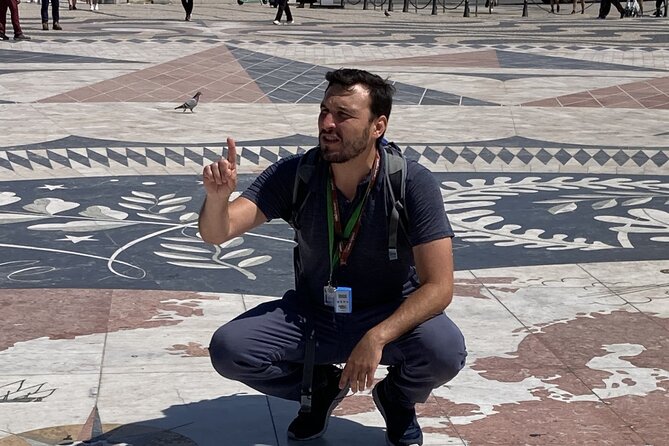
After the cloister, the route moves into the church, where the energy changes. The space can feel more solemn, and the guiding shifts from symbolic architecture into a heavier focus on people—Portugal’s key figures and what their presence means in the monastery.
You’ll learn about tombs connected to major Portuguese icons:
- Vasco da Gama
- Luís de Camões
- and the royal tombs
This combination is powerful. Vasco da Gama represents the outward reach of Portuguese exploration—routes, voyages, ambition. Luís de Camões represents the language and storytelling that turned those journeys into cultural memory. And the royal tombs anchor the whole thing in political legitimacy.
If you care about how Portugal brands its identity across time, this is the section that makes the visit feel coherent. You start to see the monastery less as an isolated landmark and more as a national stage where history, myth, and faith intersect.
The guide ties these tombs into the architecture and the themes you heard earlier, so the story doesn’t restart from scratch. You’ll leave with a clearer sense of how Jerónimos holds meaning beyond its outward appearance.
Architecture + Portugal’s Age of Explorations: why this tour is worth your time
One reason I think this tour works well is that it doesn’t treat Jerónimos as just a pretty building. The guide connects:
- the history of the monastery
- the Portuguese Age of Explorations
- the importance of symbolic language in the architecture
- and the way tombs and portals fit into that story
That approach changes how you experience the place. Instead of walking through and thinking, I guess this is important, you start noticing how each area supports the others—cloister details feeding into portals, portals feeding into meaning, and the church bringing it home with tombs tied to Portuguese identity.
The guide’s style also comes through in the way people describe the experience: the tour is paced well, and the guide can explain complex material in a way that’s easy to follow. I’d also expect clear English throughout, since that matters when you’re trying to understand symbolism rather than just admire shapes.
If you like architecture tours where you actually learn something new (not just the date and the obvious facts), this is that kind of visit.
What it costs and why it feels like decent value
The price is $77.02 per person, for about 2 hours 30 minutes of guided access to the cloister and church, with all tickets included. That’s the key detail: you’re not paying extra at the gate or later to cover entry.
I judge this value by two things:
- how much it reduces your waiting and decision-making
- whether it helps you understand what you’re seeing
With fast-track access for the cloister and a guide who focuses on symbolism, portals, and the meaning behind major tombs, you’re paying for interpretation, not just entry. In Lisbon, where Jerónimos is popular and queue-heavy at times, saving time and learning the right details tends to be worth it.
Is it the cheapest way to visit? No. But if you want a visit that turns into real understanding, the cost looks more reasonable.
Who this tour suits best (and who might want to self-guide)
This tour fits best if you:
- want small-group attention
- care about the intersection of Portuguese history, architecture, and symbolism
- like tombs and “who’s who” stories, especially when they’re connected to the Age of Explorations
- prefer a clear route over wandering and guessing
It may be less ideal if you:
- want long, quiet solo time in the church without stopping for explanations
- don’t care much about carved details, portals, or tomb context
- plan to visit only for quick photos (you might feel the time constraint)
A nice compromise: do this guided route, then return on your own afterward for extra lingering where you personally liked the details.
Practical tips for your morning at Praça do Império
You’ll meet at Praça do Império, right at Jerónimos Monastery (address listed as Praça do Império 1400-206 Lisboa). The site is marked as near public transportation, which is good news if you’re combining Jerónimos with nearby Belém-area stops.
A few common-sense moves that help:
- arrive a few minutes early so the group doesn’t start late
- keep your phone ready for the mobile ticket
- wear comfortable shoes; Jerónimos is a walking-and-looking kind of visit
- plan for a focused morning; this is not a casual stroll where you can drift whenever you want
If anything affects site access on a specific day, you may need to wait. The good news: the tour setup is designed around guided entry, so you’re less likely to be stuck sorting everything out alone.
Should you book this Jerónimos Monastery guided tour?
If you want Jerónimos to make sense—not just look impressive—I’d book it. The small group size, the fast-track for the cloister, and the guided emphasis on portals and major tombs give you a visit that’s more than sightseeing.
Choose it if you like learning the “why” behind architectural choices and if you’re curious about how Portugal’s exploration era connects to poetry, identity, and monarchy. And if you’re short on time in Lisbon, this is a well-packed way to cover the cloister and church without wasting your morning.
Skip it only if you truly prefer to wander without structure and don’t care about symbolism, portals, and the people tied to the monastery.
FAQ
How long is the Jerónimos Monastery guided tour?
It runs for about 2 hours 30 minutes.
What time does the tour start?
The tour starts at 9:00am for the morning session.
How many people are in each group?
The tour is limited to a maximum of 8 travelers.
Are tickets included?
Yes. All tickets are included, and you’ll use a mobile ticket.
Does the tour help you avoid long lines?
For the cloister, you’ll use a fast-track setup for groups with a tour guide.
Where do I meet the guide?
The meeting point is Jerónimos Monastery, Praça do Império 1400-206 Lisboa, Portugal. The tour ends back at the meeting point.
Is the tour suitable for most people?
Yes. The tour indicates that most people can participate.
Is there free cancellation?
Yes. You can cancel for a full refund up to 24 hours before the experience starts.
Who is the guide for this tour?
The experience provider is Rafael Pereira, and the tour is led by a certified guide.
More Tours in Lisbon
- Lisbon City Center Tour – The Unmissable Lisbon★ 5.0 · 22,234 reviews
- Lisbon: History, Stories and Lifestyle Walking Tour★ 4.8 · 10,902 reviews
- True 4Hour Private Tuk Tuk Tour: Discover Lisbon with a Local!★ 5.0 · 8,008 reviews
- Winner 2025 Undiscovered Lisbon Food & Wine Tour by Eating Europe★ 5.0 · 6,390 reviews
- Lisbon: Sintra, Pena, Cabo da Roca, Cascais Tour with Pickup★ 4.8 · 5,445 reviews
More Tour Reviews in Lisbon
- Lisbon City Center Tour – The Unmissable Lisbon★ 5.0 · 22,234 reviews
- Lisbon: Sintra, Pena, Regaleira, Cabo da Roca & Cascais★ 4.7 · 19,656 reviews
- Lisbon Card: 24, 48, or 72-Hour Pass★ 4.5 · 17,944 reviews
- Lisbon: Jerónimos Monastery Entrance Ticket★ 4.1 · 14,164 reviews
- Lisbon: History, Stories and Lifestyle Walking Tour★ 4.8 · 10,902 reviews
Belém: More Monuments and Pastéis
- Lisbon: Jerónimos Monastery Entrance Ticket★ 4.1 · 14,164 reviews
- Private Lisbon Sightseeing Tuk-Tuk Tour: Alfama, Belém & More★ 5.0 · 4,277 reviews
- Age of Discoveries Walking Tour in Belém★ 5.0 · 1,513 reviews
- Lisbon: Bike Tour from Lisbon to Belém + Liquor & Pastry★ 4.7 · 688 reviews
- Bike Tours Lisbon – Center of Lisbon to Belém★ 5.0 · 686 reviews
Just in: fresh Lisbon reviews from the team





Belém Tours, compared.
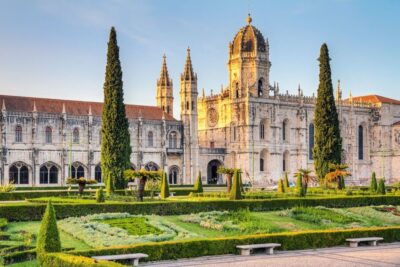 ★ 4.1Jerónimos Monastery Entrance TicketFrom $2114,164 reviews
 ★ 5.0Private Lisbon Sightseeing Tuk-Tuk Tour: Alfama, Belém & MoreFrom $524,277 reviews
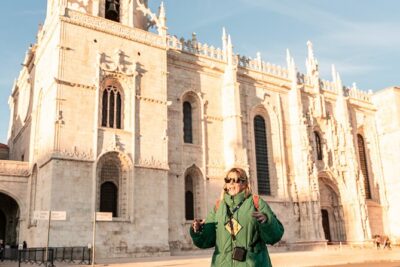 ★ 5.0Age of Discoveries Walking Tour in BelémFrom $31,513 reviews
 ★ 4.7Bike Tour from Lisbon to Belém + Liquor & PastryFrom $46688 reviews
 ★ 5.0Bike Tours Lisbon – Center of Lisbon to BelémFrom $19686 reviews
 ★ 3.7Jerónimos Monastery E-Ticket and Audio GuideFrom $33660 reviews
 ★ 4.9Belém Walking Tour with Jerónimos Monastery TicketFrom $69637 reviews
 ★ 4.0MAAT Gallery and MAAT Central Entry TicketsFrom $17559 reviews
Browse the lists this tour appears in