

Reviewed · OCEANÁRIO & NATIONS PARK
Lisbon: Oceanário de Lisboa Entrance Ticket
One aquarium. Four oceans. A great way to beat Lisbon’s weather. At the Oceanário de Lisboa, I like that you’re walking around 8,000+ creatures from 500 species inside Europe’s biggest indoor aquarium. Two things I’d make a beeline for are the central tank views (sharks and rays glide past at eye level) and the only two existing sea otters in Europe. The main drawback is crowding on busy days, so if you hate queues or noisy groups, timing matters.
It sits on the Expo 98 waterfront in Parque das Nações, so getting there is easy once you’re near Oriente. Your ticket covers permanent and temporary exhibits, and yes, you can skip the ticket line—use that saved time to plan your route around the big displays before you wander into the smaller basins. If you want the otter moment, check feeding times online before you go so you’re not stuck staring at glass at the wrong hour.
In This Review
- Key things to know before you go
- Oceanário de Lisboa basics: what your ticket really gets you
- Entering the Oceanário: where to start so you don’t lose time
- The main central tank: sharks, rays, and that slow-motion effect
- Four ocean worlds in one walk: how the basins change the mood
- Sea otters in Lisbon: the small exhibit that steals the show
- Coral reefs, information panels, and the good kind of learning
- Should you pay for a guided tour in English, Spanish, or Portuguese?
- Getting there without stress: buses, metro, and Oriente station
- Best time to go: avoid crowds, catch the best moments
- How long should you plan for Oceanário de Lisboa?
- Price and value: is $29 a good deal?
- Food, souvenirs, and what to do with your energy
- Should you book Oceanário de Lisboa tickets?
- FAQ
- Where is the Oceanário de Lisboa?
- What does the entrance ticket include?
- How long should I plan to spend there?
- What time is the Oceanário open?
- Are guided tours included with the ticket?
- What can I see at the aquarium?
- Is the Oceanário wheelchair accessible?
- How do I get there by subway?
- Can I get a refund if my plans change?
Key things to know before you go

- Four ocean regions in one building: North Atlantic, Antarctic, Temperate Pacific, and Tropical Indian Ocean.
- The central acrylic tunnel tank is the star: you’ll see sharks and rays from multiple viewpoints.
- Sea otters are a major highlight: there are only two in Europe, and they’re a crowd magnet.
- You get permanent + temporary exhibits with one ticket.
- Plan for peak crowds: school trips and busy days can make some spots feel packed.
Oceanário de Lisboa basics: what your ticket really gets you

The Lisbon Oceanarium is one of those places where the “ticket” part is simple and the “what you’ll actually do” part surprises you. For a flat price (listed as about $29 per person), you’re paying for access to everything on site: the permanent exhibits plus any temporary exhibitions running during your visit.
The big value is that it’s not just one large tank. The building is organized around four separate bodies of water—North Atlantic, Antarctic, Temperate Pacific, and Tropical Indian Ocean—then uses clever central viewing so it feels like one connected ocean space. That layout matters. You get variety without feeling like you’re walking in circles.
If you’re short on time, you don’t have to “see it all” to feel you got your money’s worth. Start with the main viewing areas and the otters, then choose one or two smaller basins to linger in. The reviews lean heavily toward the main tank plus the otter viewing as the memorable combo.
One more practical note: opening hours run daily from 10:00 AM to 8:00 PM, with last entry at 7:00 PM. If you arrive late, you’ll still see a lot, but you’ll feel rushed when you get to the big central tank.
More time out at Parque das Nações
- Lisbon: Nations Park Gondola Lift Cable Car Round Trip
★ 4.5 · 1,563 reviews - Lisbon Oceanario: Aquarium Entrance Ticket
★ 4.5 · 1,454 reviews - Lisbon: Nations Park Gondola Lift One-Way Cable Car
★ 4.6 · 189 reviews - Lisbon: Full-Day City Tour with Cable Car Ride
★ 4.5 · 57 reviews
Entering the Oceanário: where to start so you don’t lose time
Getting inside is straightforward. Your ticket includes skip-the-line entry, which is a lifesaver when the building is busy. Use the first minutes to orient yourself rather than immediately chasing every sign.
Here’s my simple approach:
- Start with the central aquarium area first.
- Then route yourself toward the sea otters and the nearby underwater scenes.
- Finish with the smaller basins and any temporary exhibits.
Why this order works: the central tank is where the building’s design really clicks. It’s where you get the “multi-level, same moment” effect—standing somewhere new still puts you back into the same main view. If you do that early, you avoid the tired feeling of “I still have to find the best part.”
Also, don’t underestimate how calming it feels. Several visitors describe it as relaxing—partly because it’s huge, partly because you’re mostly moving slowly and sitting down by glass. So give yourself permission to pause. You’ll catch different species in different minutes, not just in the first 20 seconds.
The main central tank: sharks, rays, and that slow-motion effect
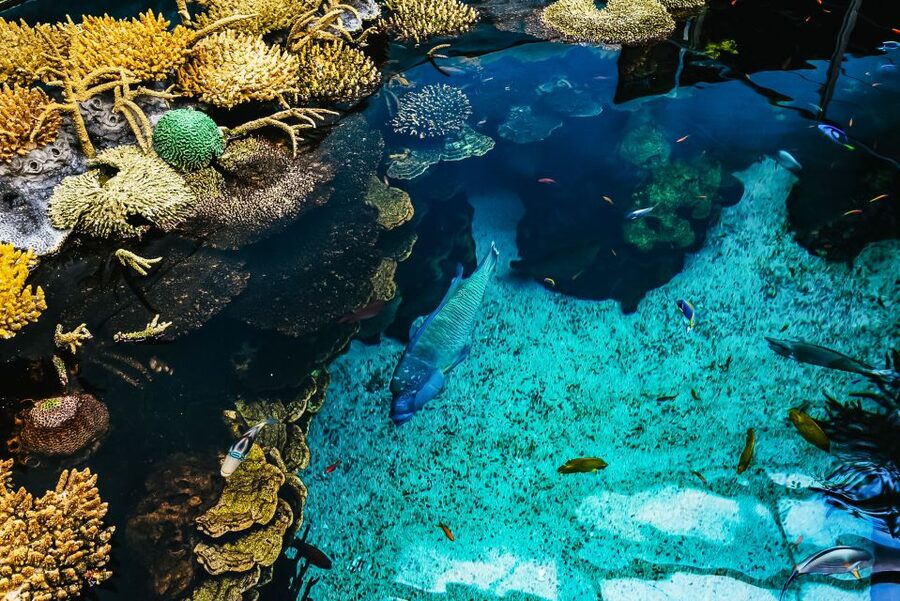
If there’s a single reason the Oceanário is famous, it’s the main tank design. It’s built around large acrylic panels and a central viewing area that makes separate regions feel like one connected marine world.
This tank is where you should look for the big-ticket animals people keep mentioning:
- Sharks
- Stingrays / rays
- Coral-focused scenes tied to specific regions
The best strategy is to do it from more than one level. Even if you only move a few steps to a new viewing angle, the change in perspective makes it feel like a different show. You also tend to see different animals as they shift through the space—one minute it’s rays cruising, the next it’s sharks gliding through the darker water.
You’ll also notice the “information without drowning you” approach. The signage isn’t just random fun facts. The exhibits are linked to ocean conservation themes and the idea that these environments connect. The building helps you understand that the ocean isn’t one thing—it’s a system.
Four ocean worlds in one walk: how the basins change the mood

The Oceanário’s four-basin concept isn’t a gimmick. It changes the visual experience.
- North Atlantic areas tend to feel open and wide.
- Antarctic scenes give a colder, more sparse look (and visitors often linger here to compare species).
- Temperate Pacific basins are visually different enough that you’ll feel like you’re changing climates.
- Tropical Indian Ocean spaces often look warmer and more colorful.
And because the building is designed so these regions “interact” visually from the center, you don’t feel trapped in one theme. You’re moving through habitats—then coming back to the big central view that ties it all together.
This is also why the “I just came for the sharks” plan still works. You can focus on one highlight, then realize you’ve already seen a whole range of ocean life just by following the layout.
Worth a look before you lock anything else in around Lisbon:




Sea otters in Lisbon: the small exhibit that steals the show

The sea otters are a standout detail you should plan around. The Oceanário has the only two existing sea otters in Europe, and it shows. People end up stopping longer here than they expect, because otters don’t just swim—they play, pause, and perform their own version of a show.
Two practical tips:
- Give yourself time to watch quietly before you start taking photos. If you arrive right at a peak crowd moment, you’ll get better views after the initial surge.
- If you care about otter timing, look up feeding times online before you arrive. Several people specifically recommend planning around those moments.
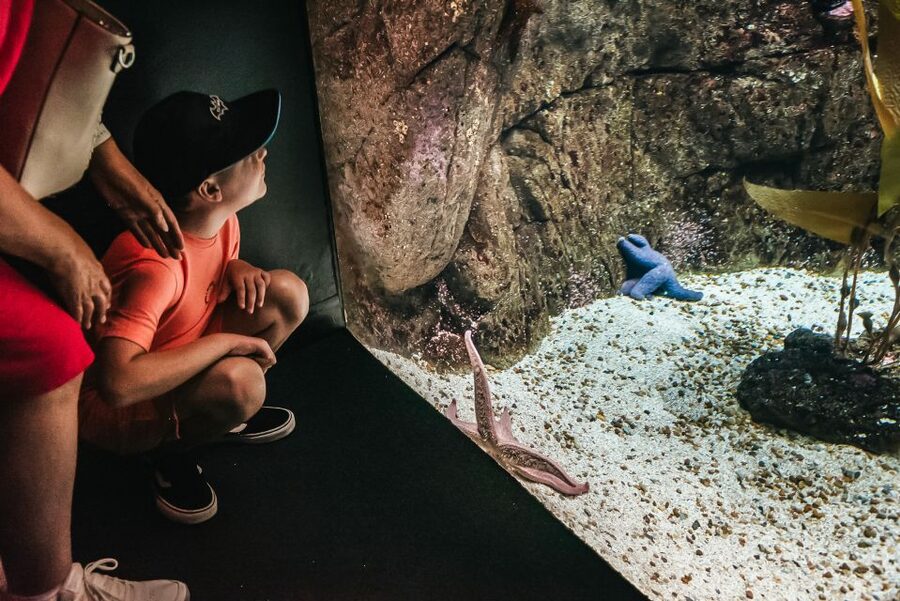
Also, if you’re traveling with kids, this is where you’ll get the most guaranteed “wow.” Adults do too, but kids usually lock onto the otters first and everything else becomes a secondary mission.
Coral reefs, information panels, and the good kind of learning

One of the smarter parts of the Oceanário is how it mixes visuals with explanation. You can walk through as a pure spectator, but there’s plenty of context if you slow down.
You’ll see coral reef-related displays and learn that the ocean isn’t only about the animals you can name. It’s also about habitat structure—why certain species live together, how food webs work, and why conservation matters.
The information is especially useful for two types of visitors:
- Curious adults who want more than labels.
- Families who need something that keeps kids thinking.
Even if you don’t read everything, look for the sign sections that explain the conservation angle. It changes your experience from “cool animals” into “why this matters,” without turning the visit into a lecture hall.
Should you pay for a guided tour in English, Spanish, or Portuguese?

Guided tours are available at an extra cost, and they’re offered in Portuguese, Spanish, and English (pre-book required). If you’re the kind of person who loves animal details, this is where your money can shift from “entry fee” to “experience upgrade.”
The guided-tour accounts include guides with strong subject focus. Names you may run into include Sophia, Bruno, Katie, and Silvia—and the common theme is that they’re not just pointing at fish. They share backgrounds, names, and lots of creature facts. One guide approach that comes up repeatedly is using props and answering questions in a way that keeps the group engaged, especially when kids are involved.
When a guided tour is worth it:
- You want the story behind what you’re seeing.
- Your group likes Q&A and animal names.
- You’re short on time and want help prioritizing.
When you can skip it:
- You’d rather wander at your own pace.
- You only care about the main tank plus the otters.
- Your schedule is flexible and you can take the visit slowly.
As a practical time reference, people report finishing quickly with a guide (around 1.5 hours for smaller groups). If you go without a guide, plan for a longer, more open-ended visit—especially if you sit down by the central tank and just watch.
Getting there without stress: buses, metro, and Oriente station
The Oceanário sits in Parque das Nações, on the Parque das Nacões waterfront. If you’re staying near central Lisbon, the good news is it’s connected.
By subway: follow the red M signs and take the red line to Oriente, which is the last stop.
By bus: routes serving the nearby stop called Oriente include 5, 10, 19, 21, 28, 50, 68, 81, 82, 85.
It’s also a common stop for hop-on hop-off buses.
If you want the GPS for maps apps:
N 38º 45′ 48.61” W 9º 5′ 37.62”
One more transport tip: if you’re pairing this with another Expo-area activity, give yourself buffer time. Oriente can be a convenient hub, but moving from one waterfront stop to another can take a bit longer than you expect when crowds swell.
Best time to go: avoid crowds, catch the best moments
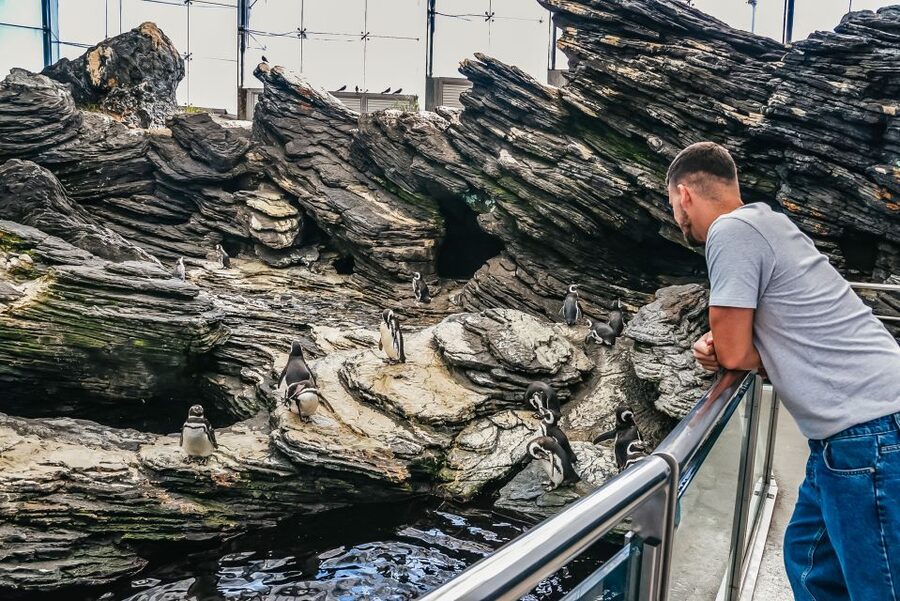
The Oceanário can get busy, including with school trips. That can mean:
- Longer bottlenecks at popular viewing points.
- Less breathing room for photos.
- A more “busy indoor” vibe instead of the calm one.
If your top goal is the main tank + otters, going earlier in the day tends to make the visit easier. People who arrived early describe better conditions and smoother viewing. On the flip side, if you’re already near Oriente and it’s raining, the Oceanário is still a great plan because it turns bad weather into a comfortable indoor afternoon.
If your schedule is flexible, aim for a time when you can move slowly between basins rather than sprinting. The building rewards walking at a human pace.
How long should you plan for Oceanário de Lisboa?
The experience is listed as 1 day, but in real life you’re deciding between a focused visit and a linger-and-watch visit.
A sensible planning range:
- About 2–3 hours if you prioritize the central tank, otters, and one or two extra basins.
- 3.5 hours or more if you want to sit by glass and watch rays and sharks move.
- ~1.5 hours with a guided tour in a smaller group (people describe guided visits as efficient and information-heavy).
If you only have one day in Lisbon, this can still fit well. The Oceanário is large, but the layout keeps it from feeling chaotic. You’re not stuck chasing random rooms—you’re moving through a system of ocean regions.
Price and value: is $29 a good deal?
At about $29 per person, the Oceanário is priced similarly to other major attractions, but its value is in what you get after you pay.
What makes the ticket feel fair:
- You get access to all permanent and temporary exhibits.
- The building is a large indoor experience that works in rain and heat.
- The central tank design is a true signature—you don’t just see animals, you see them from multiple viewpoints.
- The otters are a rare draw: only two in Europe.
Where value depends on you:
- If you’re the type who reads signs and enjoys learning, you’ll get more out of it.
- If you mainly want a quick look at a couple of fish, you might feel like you spent more than you needed.
In other words: if you like animals, ocean science, or just a big indoor “wow” hour, you’re in the right place. If you’re only lukewarm about aquariums, go for the highlights and don’t try to exhaust the whole building.
Food, souvenirs, and what to do with your energy
Food and drink are available for purchase, but they’re not included. Souvenirs are also available, but not included. I’d plan a snack strategy rather than assuming you’ll want a full meal mid-visit.
Also, wear shoes you can stand in. Even though there are seating areas, you’ll want to reposition often to get the best views from different angles. This isn’t a “sit down once and finish” kind of museum.
If you want photos, go earlier or accept that some moments may feel crowded around the most popular glass. It’s not impossible—just don’t expect a quiet museum moment at the most famous tank.
Should you book Oceanário de Lisboa tickets?
Book it if you want a high-impact Lisbon stop that’s easy to reach from the city and works on rainy days. The combination of the main central tank, the sea otters, and the four-region layout makes the Oceanário a strong “one-stop” aquarium experience.
Consider skipping or keeping it solo (no guided tour) if:
- You’re very short on time and only care about one highlight.
- Crowds stress you out and you can’t adjust your arrival time.
- You’re not interested in learning beyond basic labels.
My practical recommendation: get the ticket for the highlights, then decide on a guided tour only if your group wants names, backgrounds, and deeper explanations while you walk.
FAQ
Where is the Oceanário de Lisboa?
It’s in Parque das Nações on the Lisbon waterfront. It’s near the Oriente area and easy to reach using public transport.
What does the entrance ticket include?
Your ticket includes access to all permanent and temporary exhibitions. It also includes entry with skip-the-line access.
How long should I plan to spend there?
It’s designed for a day visit, but many people plan around a few hours. With a guided tour, visits can feel shorter because you follow the highlights.
What time is the Oceanário open?
It’s open daily from 10:00 AM to 8:00 PM, with last entry at 7:00 PM.
Are guided tours included with the ticket?
No. Guided tours are available at an extra cost, and they must be pre-booked. Languages listed are Portuguese, Spanish, and English.
What can I see at the aquarium?
You can see more than 8,000 sea creatures from 500 species, including sharks, coral reef displays, and the sea otters highlighted as the only two existing in Europe.
Is the Oceanário wheelchair accessible?
Yes. The building has ramps and elevators throughout and is wheelchair accessible.
How do I get there by subway?
Take the red metro line to Oriente, which is the last stop. Follow the red M signs.
Can I get a refund if my plans change?
No. The experience is listed as non-refundable.
More Tickets in Lisbon
- Lisbon: Jerónimos Monastery Entrance Ticket★ 4.1 · 14,164 reviews
- Lisbon: São Jorge Castle E-Ticket and Audio Guide★ 4.3 · 2,182 reviews
- Lisbon: 72/96-Hour Hop-On Hop-Off Bus, Tram & Boat Ticket★ 4.4 · 2,170 reviews
- Lisbon Oceanario: Aquarium Entrance Ticket★ 4.5 · 1,454 reviews
- Lisbon: Sintra, Pena, Cascais & Cabo Day Tour With Tickets★ 4.9 · 1,267 reviews
More Tour Reviews in Lisbon
- Lisbon City Center Tour – The Unmissable Lisbon★ 5.0 · 22,234 reviews
- Lisbon: Sintra, Pena, Regaleira, Cabo da Roca & Cascais★ 4.7 · 19,656 reviews
- Lisbon Card: 24, 48, or 72-Hour Pass★ 4.5 · 17,944 reviews
- Lisbon: Jerónimos Monastery Entrance Ticket★ 4.1 · 14,164 reviews
- Lisbon: History, Stories and Lifestyle Walking Tour★ 4.8 · 10,902 reviews
More at Parque das Nações
- Lisbon: Nations Park Gondola Lift Cable Car Round Trip★ 4.5 · 1,563 reviews
- Lisbon Oceanario: Aquarium Entrance Ticket★ 4.5 · 1,454 reviews
- Lisbon: Nations Park Gondola Lift One-Way Cable Car★ 4.6 · 189 reviews
- Lisbon: Full-Day City Tour with Cable Car Ride★ 4.5 · 57 reviews
- Hop on Hop Off Bus with Oceanario Ticket★ 4.4 · 33 reviews
Just in: fresh Lisbon reviews from the team





Oceanário & Nations Park, compared.
 ★ 4.5Nations Park Gondola Lift Cable Car Round TripFrom $111,563 reviews
 ★ 4.5Lisbon Oceanario: Aquarium Entrance TicketFrom $301,454 reviews
 ★ 4.6Nations Park Gondola Lift One-Way Cable CarFrom $8189 reviews
 ★ 4.5Full-Day City Tour with Cable Car RideFrom $7057 reviews
 ★ 4.4Hop on Hop Off Bus with Oceanario TicketFrom $5833 reviews
 ★ 3.0Lisbon Hop-On Hop-Off Bus and Boat Tour with Oceanário TicketFrom $7019 reviews
 ★ 5.0Oceanário de Lisboa Guided Tour & Behind the ScenesFrom $4214 reviews
Browse the lists this tour appears in