
Reviewed · LISBON WALKING TOURS
Historical Private Walking Tour of Lisbon
Lisbon is best seen while walking uphill. This private route stitches together squares, church facades, and big city views, then finishes at Carmo Square for the Santa Justa area. You get a mobile ticket and a guide-led flow through the historic centre, from Alfama to Chiado.
Two things I really like: first, the mix of grand plazas and tiny lanes. You’ll go from Praca do Comercio’s riverfront drama to Alfama’s narrow streets, then land in the more polished Chiado café-and-shop zone. Second, the food and drink are built in at the right moment: a stop for pastel de nata custard tarts plus an included local liquor called ginja. One consideration: the route is not flat. Lisbon’s seven hills mean about 5 km of walking with lots of up-and-down.
Key details matter here too. It’s private, so it’s just your group, and it’s designed for a “see a lot without rushing” pace. If you’re very unfit, you’ll likely feel it. Moderate fitness is your friend.
In This Review
- 5 Things That Make This Lisbon Walking Tour Worth Your Time
- From Restauradores to Carmo Square: A Route That Feels Like Lisbon
- Meeting at Praça dos Restauradores and Getting Your Bearings Fast
- Church Facades, a Famous Monument, and the Figueira Market Square
- Miradouros Near Sao Jorge: The Best Views Come in Sets
- Calcada da Amalia and Alfama’s Stair-Step Streets
- Praca do Comercio and Rua Augusta: Where Lisbon Looks Grand
- Chiado’s Old-School Glam, Then Largo do Carmo and the Revolution Ending
- The Included Breaks: Pastel de Nata and Ginja That Actually Fit the Walk
- Price and Value: What $72.30 Really Buys You
- Practical Walking Tips: Shoes, Hills, and Smart Timing
- Who This Tour Suits Best (and Who Might Want a Different Plan)
- Should You Book This Lisbon Private Walking Tour?
- FAQ
- How long is the Historical Private Walking Tour of Lisbon?
- What is the price per person?
- Where does the tour start and end?
- Is this a private tour?
- What ticket type do you provide?
- What is included in the tour price?
- What entrances are not included?
- How much do the optional entrances cost?
- What fitness level do you need?
- Can you cancel for a full refund?
5 Things That Make This Lisbon Walking Tour Worth Your Time
- Alfama plus viewpoints: you’ll hit multiple miradouros (lookouts) around Sao Jorge before and during Alfama.
- Historic squares in a smart order: Restauradores to Pedro IV, then Figueira, Comercio, Chiado, and finally Largo do Carmo.
- Included ginja and pastel de nata: not an afterthought, but part of the schedule.
- Optional big-ticket sights: Sé Cathedral, Santa Justa elevator, Carmo convent, and Rua Augusta arch are nearby if you want extras.
- Bernardo-style guidance: reviews highlight excellent English and clear, professional storytelling.
From Restauradores to Carmo Square: A Route That Feels Like Lisbon
This isn’t a “stand in one spot and read a plaque” kind of tour. The route is built like a guided hike through Lisbon’s layers: the central monuments, the market-and-church core, the lookout zone near Sao Jorge, the stair-step labyrinth of Alfama, and then the smoother, more elegant streets of Chiado. The pacing is long enough to feel satisfying, but not so long that you’re exhausted in hour one.
Because it’s private, you can move as a group without waiting for strangers to arrive from different hotels. You also start at a very recognizable place: Praça dos Restauradores. The walk ends at Largo do Carmo, which is about minutes from Pedro IV Square and a short hop from the Santa Justa area. It’s a convenient ending point if you want to keep wandering after the tour.
Plan for a practical reality: you’ll walk roughly 5 km on uneven streets. Lisbon rewards comfortable shoes.
Lisbon at walking pace, a few more routes
- Lisbon: History, Stories and Lifestyle Walking Tour
★ 4.8 · 10,902 reviews - Best of Lisbon Small-Group Guided Walking Tour
★ 5.0 · 4,869 reviews - Lisbon: Food and Wine Small Group Walking Tour
★ 4.9 · 4,082 reviews - Best of Lisbon Walking Tour: Rossio, Chiado & Alfama
★ 4.9 · 2,700 reviews
Meeting at Praça dos Restauradores and Getting Your Bearings Fast
Your start is Praça dos Restauradores, a solid landmark for first-time orientation. From there, the tour moves toward the city’s historic center, letting you set context early instead of guessing where things are.
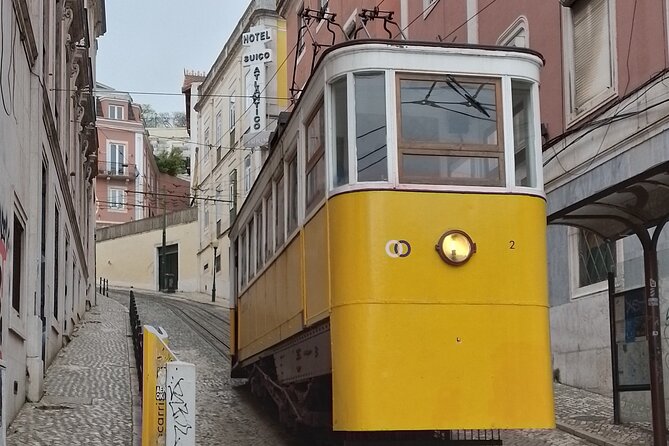
At the first stop, you’ll take in several sights around the square, including the Restauradores obelisk, the Calçateiros statue, the Gloria elevator, and the Avenida da Liberdade. You’re basically getting a snapshot of Lisbon’s “city core,” plus a feel for how plazas and viewpoints work here—open space, then sudden slopes.
Then the walk heads to the Monumento a D. Pedro IV, which is described as the center point for seeing key surrounding landmarks like the Carmo convent, Maria II Theatre, and the Castle of Sao Jorge. This is a good moment to look around and realize you’re stepping through a real geography, not a random list of attractions.
Church Facades, a Famous Monument, and the Figueira Market Square
A walking tour earns its keep when it teaches you how to look at what you’re seeing. Here, you get that education through small, specific stops.
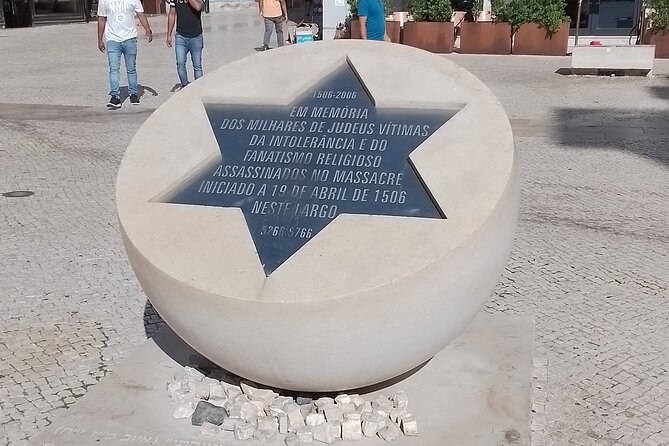
Next up is Igreja de Sao Domingos. You’ll spend time on the church and nearby points of interest, including a monument connected to the star of David and the oldest ginja shop. Even if you’re not hunting for ginja yet, these details help you connect Lisbon’s religious landmarks with its everyday culture.
Then you reach Praca da Figueira, a market square with major icons around it. The Confeitaria Nacional is one, and the stop also points out the statue of D. Joao I and the so-called doll hospital. That mix—royal monument, pastry reputation, quirky local lore—is exactly what makes Lisbon feel like a lived-in city.
This section of the walk is also a good energy reset. After being oriented by central monuments, you’re now in a place where people shop, snack, and pass through without thinking.
Miradouros Near Sao Jorge: The Best Views Come in Sets
If you like city views, this part is your payoff. The tour includes multiple viewpoints (miradouros), each from a slightly different angle, so the scenery doesn’t feel repetitive.
One key stop is Miradouro Chao do Loureiro, described as right below the Castle of Sao Jorge. From here, you can see the Tejo River and the 25th of April Bridge. Even better, it’s framed as a “fantastic viewpoint,” which matches what you feel when you step outside and the city opens up all at once.
After that comes a short food break at Santo António, where you can try a pastel de nata and have a beverage. The tour also notes you can see the custard tarts being made. That means you’re not just eating; you’re watching a local routine in action—useful if you like food that has a story.
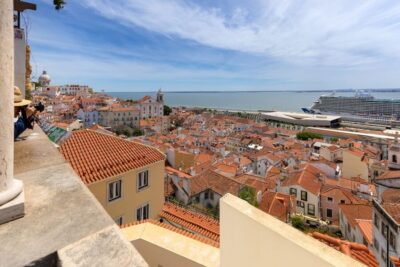
Then you go to two more viewpoints in the Alfama area: Miradouro de Santa Luzia and Miradouro das Portas do Sol. Santa Luzia is highlighted for tile portraits, while Portas do Sol offers another angle with the Vasco da Gama Bridge and the St. Vincent church in view. Think of it like changing cameras: same neighborhood vibe, different city geometry.
Worth a look before you lock anything else in around Lisbon:

Calcada da Amalia and Alfama’s Stair-Step Streets
Now you shift from “look out at the city” to “walk inside the city.”
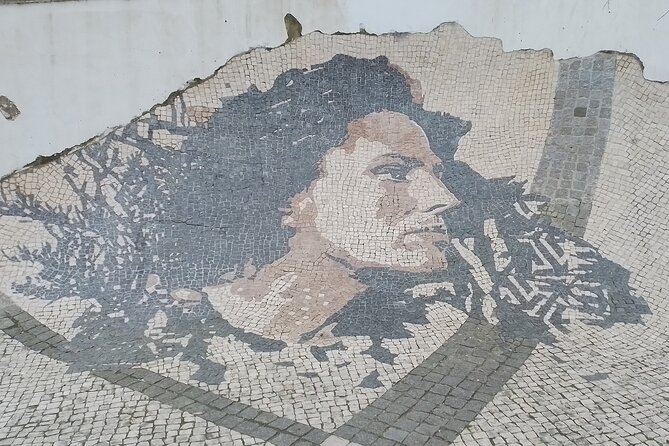
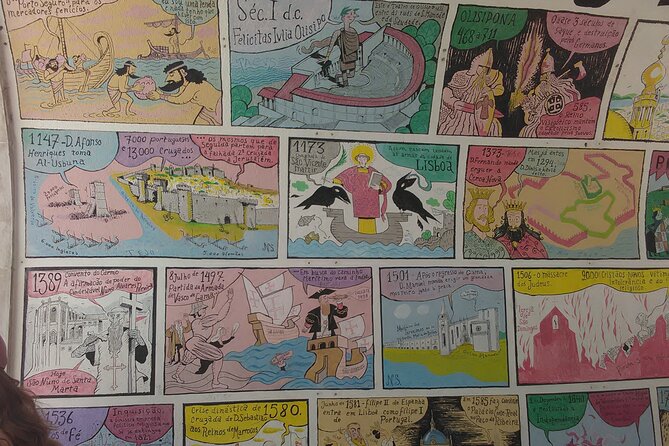
At Calcada da Amalia, you’ll see a cobble mural honoring Amália Rodrigues, Portugal’s most famous fado singer. It’s a quick stop, but it sets the emotional tone. Alfama isn’t just old buildings; it’s also music, identity, and rhythm under your feet.
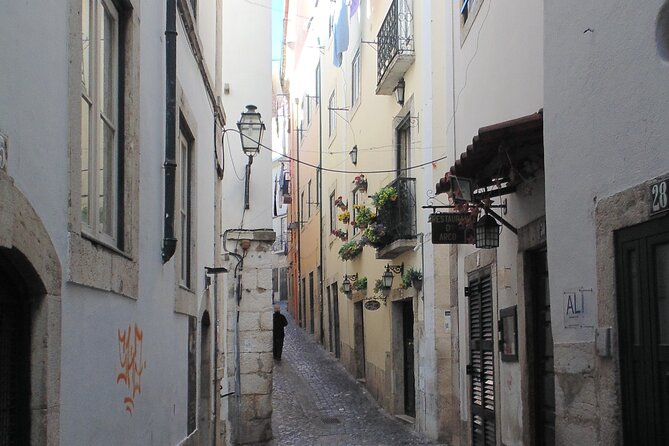
Next, the tour enters Alfama, described as the oldest neighborhood in Lisbon and one of the oldest in Europe. This is where you’ll feel why Lisbon is famous for its uphill streets. The lanes are narrow and winding, and the walk here is the point. You’re moving through the city the way residents do—slowly, curiously, with turns that keep you looking over your shoulder.
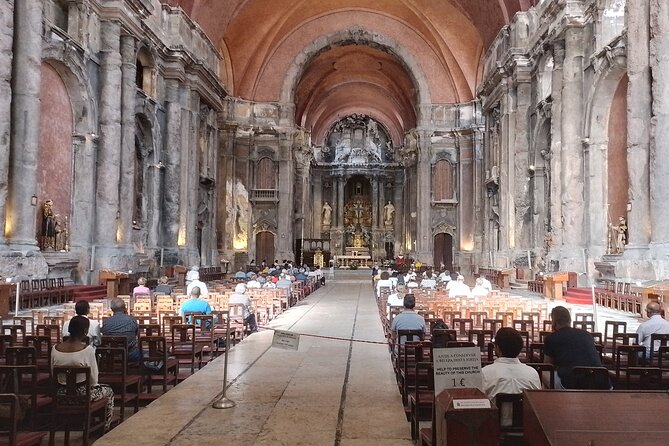
You’ll also stop at the Lisbon Cathedral (Sé) area. The tour notes it as the oldest cathedral in Lisbon, and importantly, it says the entrance to Sé Cathedral is not included (with set prices for adults and children). That’s a smart approach: you get the landmark stop without forcing everyone into extra ticket lines. If you want inside access, you’ll have the option.
Opposite the cathedral area, the tour also mentions Santo António church. So even if you choose not to pay for Sé entrance, you still get strong visual payoff.
Praca do Comercio and Rua Augusta: Where Lisbon Looks Grand
After Alfama’s tight lanes, the city opens up.
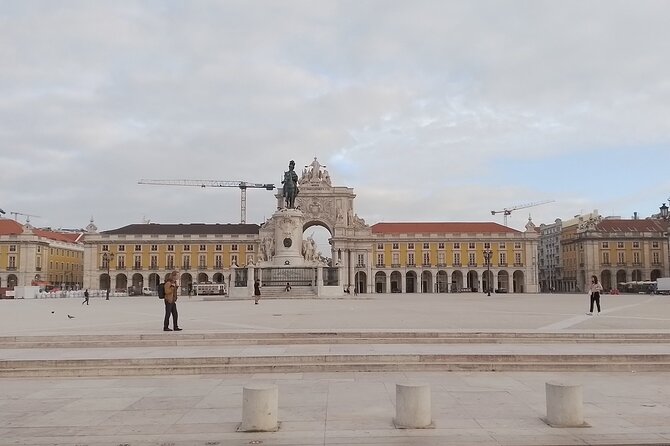
Praca do Comercio (Terreiro do Paco) is Lisbon’s biggest square right by the river, and you get a sense of the city’s ceremonial entrance coming from the water. This stop is ideal for photos, yes, but it’s also a mental reset. You’re out of the maze and back into wide space where the river becomes part of the view.
Then you walk along Rua Augusta, the famous street connecting Praça do Comércio to Pedro IV Square. This is a key “spine” street. You’re basically walking between major reference points, which helps you later navigate on your own.
One extra detail: the Rua Augusta arch entrance is listed as not included (with a set adult price). If you want that final arch view, you can plan your time accordingly, rather than treating it as mandatory.
Chiado’s Old-School Glam, Then Largo do Carmo and the Revolution Ending
Chiado is the tour’s transition into a more stylish, classic Lisbon mood. Chiado is described as emblematic, with boutique shops and theatre energy, plus historic cafés. The stop also mentions Camões Square and the Brasileira Café. Even if you don’t go inside anything, just walking here helps you understand how Lisbon’s “culture district” works—less maze, more stroll.
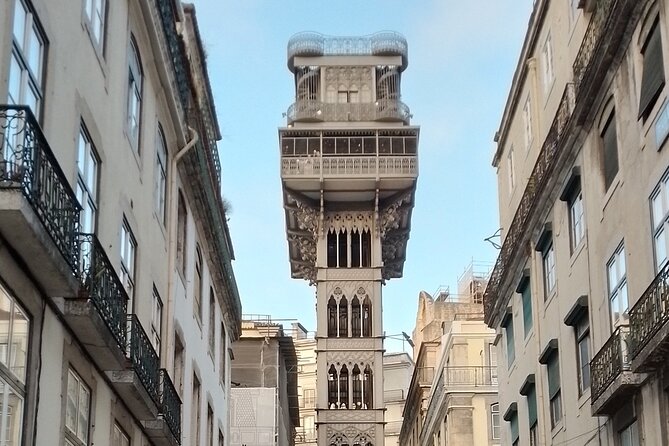
Finally, you reach Largo do Carmo, where the tour connects the neighborhood to modern Portuguese history. It highlights the Carmation Revolution and the end of dictatorship, along with historic sites like Carmo convent and access to Santa Justa elevator.
The Santa Justa elevator itself is not included in the price, but the stop sets you up for it. The tour notes Santa Justa elevator access is available nearby with a return trip price. That means you can decide on the spot: do you want a shortcut up and a city-overview again, or do you want to keep walking at ground level?
The Included Breaks: Pastel de Nata and Ginja That Actually Fit the Walk
This is where the tour earns extra goodwill. You don’t just get sightseeing; you get a built-in moment of rest.
At Santo António, the schedule includes a pastry break for pastel de nata custard tarts plus a beverage. Since the tour notes you can see the custard being made, it feels less like a tourist snack stop and more like a local food routine.
Then there’s the included alcoholic drink: ginja. The tour calls it a local liquor called ginja, and it’s part of the experience. Ginja is one of those Lisbon tastes that tells you you’re in Portugal, not just watching it from a distance.
If you’re trying to keep your food costs predictable, these inclusions matter. They also help break up the hills so the later viewpoints and Alfama section feel more manageable.
Price and Value: What $72.30 Really Buys You
At $72.30 per person, this is a solid value if you compare it to doing Lisbon’s historic-centre highlights with separate paid entries and no guide.
What you get for that price:
- A private, guide-led walk through the historic core
- A 3 to 4 hour route that hits multiple neighborhoods and viewpoints
- A built-in meal moment: pastel de nata and a beverage
- An included ginja
What you don’t get (important for budgeting):
- Sé Cathedral entrance (not included)
- Santa Justa elevator (not included)
- Carmo convent (not included)
- Rua Augusta arch entrance (not included)
So the real question isn’t just whether the tour price is fair. It’s whether you’ll want the optional entrances. If you plan to add Sé, Santa Justa, or the Carmo convent, expect extra euros on top. If you like outdoor viewpoints and photo stops more than ticketed interiors, you may pay less in add-ons and still feel like you got a full experience.
Also, because it’s private, you’re paying for time and expertise, not just motion. The reviews emphasize strong English and professional guidance from Bernardo, including being on time and picking you up at your accommodation. For a first visit, that cuts down on guesswork fast.
Practical Walking Tips: Shoes, Hills, and Smart Timing
Lisbon is famous for its hills, and this route is built around that fact. The tour explicitly recommends moderate physical fitness and says you should avoid it if you’re very unfit. It estimates about 5 km of walking and mentions the seven hills.
So here’s what to do:
- Wear comfortable shoes with grip. Uneven stone and cobbles aren’t a joke.
- Bring a light layer. Weather can shift quickly, and the tour notes good weather is needed.
- If you’re prone to tiring fast uphill, pace yourself. The guide-led stops give you frequent breaks, but you’re still climbing.
The itinerary also naturally mixes short stops (10 to 15 minutes) with longer “walk-and-look” sections. That structure helps you avoid the trap of one long slog followed by a short photo stop.
Who This Tour Suits Best (and Who Might Want a Different Plan)
This works especially well for:
- First-time visitors who want a big sweep of the historic centre
- People who like viewpoints and want more than one angle at each area
- Anyone who values a private guide with strong English and clear explanations (Bernardo comes up repeatedly)
It may be less ideal if:
- You have limited mobility or find hills very hard
- You want a mostly flat, stroller-friendly route (this one is not that)
- You expect every major interior to be included (key entrances cost extra)
On the flip side, the tour is flexible in a good way: you see the landmarks, you understand where you are, and you can choose which extra interiors to pay for.
Should You Book This Lisbon Private Walking Tour?
If you want a guided walk that covers the core of Lisbon—from Restauradores and central monuments to Alfama streets, then onward to Chiado and Largo do Carmo—this is a very practical choice. The included pastel de nata and ginja help it feel like more than a sightseeing circuit, and the route design keeps you moving between iconic squares and real neighborhood textures.
Book it if:
- You’re comfortable walking about 5 km with hills
- You’d rather have a guide connect the dots than figure it out on your own
- You want optional paid interiors only if you feel like adding them
Skip or consider another option if hills are a real problem for you. Lisbon will happily test your calves.
FAQ
How long is the Historical Private Walking Tour of Lisbon?
It runs about 3 to 4 hours.
What is the price per person?
The price is $72.30 per person.
Where does the tour start and end?
It starts at Praça dos Restauradores, 1250-096 Lisboa, and ends at Largo do Carmo 13, 1200-203 Lisboa.
Is this a private tour?
Yes. It’s private, so only your group participates.
What ticket type do you provide?
You receive a mobile ticket.
What is included in the tour price?
The tour includes alcoholic beverages (ginja) and a breakfast stop with pastel de nata custard tarts plus a beverage.
What entrances are not included?
Sé Cathedral, Santa Justa elevator, Carmo convent, and the Rua Augusta arch are not included.
How much do the optional entrances cost?
Sé Cathedral: adults 5 euros; children 7–12, 3 euros. Santa Justa elevator: 5.30 euros return trip. Carmo convent: adults 7 euros, seniors/students 5 euros. Rua Augusta arch: 3 euros for adults.
What fitness level do you need?
The tour advises a moderate physical fitness level. It notes Lisbon’s seven hills and estimates about 5 km of walking, with up-and-down.
Can you cancel for a full refund?
Yes. You can cancel up to 24 hours in advance for a full refund. After that, the amount paid is not refunded.
More Tours in Lisbon
- Lisbon City Center Tour – The Unmissable Lisbon★ 5.0 · 22,234 reviews
- Lisbon: History, Stories and Lifestyle Walking Tour★ 4.8 · 10,902 reviews
- True 4Hour Private Tuk Tuk Tour: Discover Lisbon with a Local!★ 5.0 · 8,008 reviews
- Winner 2025 Undiscovered Lisbon Food & Wine Tour by Eating Europe★ 5.0 · 6,390 reviews
- Lisbon: Sintra, Pena, Cabo da Roca, Cascais Tour with Pickup★ 4.8 · 5,445 reviews
More Tour Reviews in Lisbon
- Lisbon City Center Tour – The Unmissable Lisbon★ 5.0 · 22,234 reviews
- Lisbon: Sintra, Pena, Regaleira, Cabo da Roca & Cascais★ 4.7 · 19,656 reviews
- Lisbon Card: 24, 48, or 72-Hour Pass★ 4.5 · 17,944 reviews
- Lisbon: Jerónimos Monastery Entrance Ticket★ 4.1 · 14,164 reviews
- Lisbon: History, Stories and Lifestyle Walking Tour★ 4.8 · 10,902 reviews
More of Lisbon, One Hill at a Time
- Lisbon: History, Stories and Lifestyle Walking Tour★ 4.8 · 10,902 reviews
- Best of Lisbon Small-Group Guided Walking Tour★ 5.0 · 4,869 reviews
- Lisbon: Food and Wine Small Group Walking Tour★ 4.9 · 4,082 reviews
- Best of Lisbon Walking Tour: Rossio, Chiado & Alfama★ 4.9 · 2,700 reviews
- Age of Discoveries Walking Tour in Belém★ 5.0 · 1,513 reviews
Just in: fresh Lisbon reviews from the team





Lisbon Walking Tours, compared.
 ★ 4.8History, Stories and Lifestyle Walking TourFrom $2910,902 reviews
 ★ 5.0Best of Lisbon Small-Group Guided Walking TourFrom $234,869 reviews
 ★ 4.9Food and Wine Small Group Walking TourFrom $724,082 reviews
 ★ 4.9Best of Lisbon Walking Tour: Rossio, Chiado & AlfamaFrom $232,700 reviews
 ★ 5.0Age of Discoveries Walking Tour in BelémFrom $31,513 reviews
 ★ 5.0Lisbon Roots – Small group Food & Culture Walking Tour w/tastingsFrom $168910 reviews
 ★ 4.9Starter Walking Tour to the highlights in GermanFrom $33781 reviews
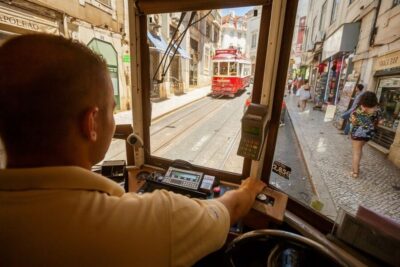 ★ 4.1Lisbon Tram No. 28 Ride & Walking TourFrom $23766 reviews
Browse the lists this tour appears in