
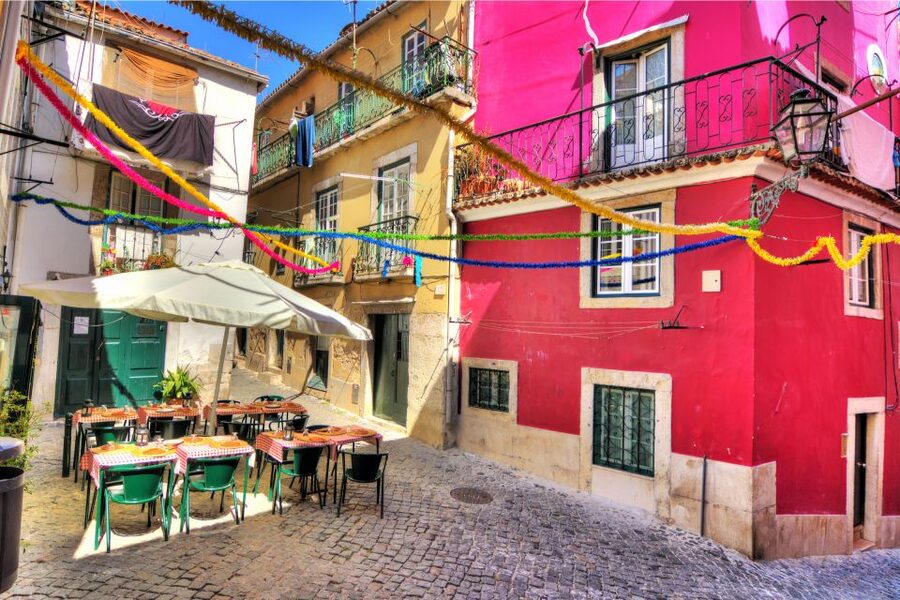
Reviewed · LISBON WALKING TOURS
Highlights & Secrets of Lisbon Private Walking Tour
Lisbon feels like a stair run—this tour helps. Starting under the statue at Luís de Camões Square, you get a private, local-led route that hits the big sights and the quieter corners, with skip-the-line access to the Convento do Carmo ruins. I also like how the food stops are built into the flow, so you end up tasting classic Lisbon flavors like Pastel de Nata, plus a proper pour of ginja.
The only real watch-out is effort: expect up-and-down hilly streets for the full 3 hours, and the pace can feel detailed if you prefer a quick-hit overview.
In This Review
- Key highlights worth planning around
- Starting at Luís de Camões Square: the easy beginning
- Manteigaria: the coffee and pastry stop that makes the walk work
- Igreja de São Roque and the Trindade area: where Lisbon’s style gets explained
- Largo do Carmo: the square where the tour’s energy tightens
- The palace-turned brewery stop: tiles, frescoes, and why it matters
- Skip the line at Convento do Carmo: ruins with context
- Santa Justa Lift and Commerce Square: two different kinds of Lisbon drama
- Nossa Senhora da Conceição Church and Casa dos Bicos: details you’d miss alone
- Lisbon Cathedral: where styles mix at street level
- Miradouro time: Santa Luzia views plus the ginja viewpoint
- Alfama on foot: the neighborhood that teaches Lisbon’s pace
- Fado Museum exterior: finishing where the music atmosphere lives
- Price and value: what $86 buys you in real terms
- Who this Lisbon private walk suits best
- Should you book this Lisbon private walking tour?
- FAQ
- How long is the private walking tour?
- What is the meeting point?
- Is this tour private?
- Do I get skip-the-line access anywhere?
- What food and drink are included?
- What viewpoints are included?
- Which neighborhoods and major sights are part of the walk?
- Is the Fado Museum included?
- What languages are the guides available in?
- What should I know before I go?
Key highlights worth planning around
- Skip-the-line Convento do Carmo using a separate entrance, so you spend less time waiting around
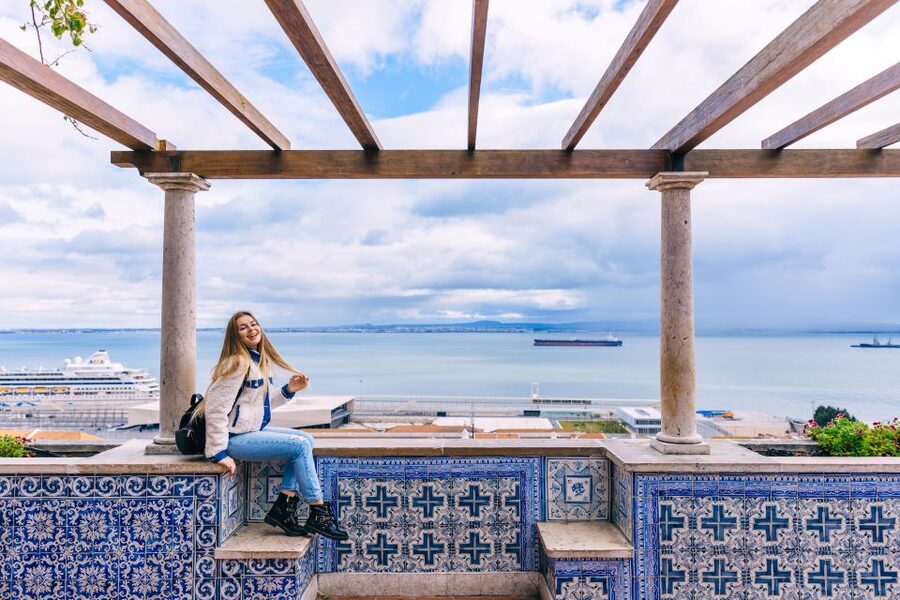
- Tiles, arches, and a palace-turned brewery stop where the walls do most of the talking
- Churches and viewpoints in one loop from São Roque area to Alfama miradouros
- Pastel de Nata + coffee as a built-in recharge, not an afterthought
- Ginja with a major view from a miradouro spot in the Lisbon hills
- Alfama ending near the Fado Museum exterior, so you finish where the sound of Lisbon lives
Starting at Luís de Camões Square: the easy beginning

Meet your guide under the statue in Luís de Camões Square, and right away you know you’re not doing a random “follow the map” stroll. A local guide sets the tone fast: where to look, what to notice, and why each street feels the way it does in Lisbon. It’s the kind of start that helps you get your bearings fast, even if it’s your first time in town.
Because this is a private group, you’re not squeezed into a herd line with strangers. Your guide can slow down when the scene deserves it, and speed up when you’re clearly trying to beat the heat.
This tour is also built around small segments rather than one long push. You’ll move from squares to churches to viewpoints, with enough short stops that you’re not stuck waiting for the group to catch up.
Lisbon at walking pace, a few more routes
- Lisbon: History, Stories and Lifestyle Walking Tour
★ 4.8 · 10,902 reviews - Best of Lisbon Small-Group Guided Walking Tour
★ 5.0 · 4,869 reviews - Lisbon: Food and Wine Small Group Walking Tour
★ 4.9 · 4,082 reviews - Best of Lisbon Walking Tour: Rossio, Chiado & Alfama
★ 4.9 · 2,700 reviews
Manteigaria: the coffee and pastry stop that makes the walk work
One of the first practical wins is the stop at Manteigaria (about 15 minutes). Lisbon can run you out of energy if you only rely on sightseeing adrenaline, so having a coffee and a local pastry early is smart. If Pastel de Nata is on your list (and it should be), this is where the tour’s food rhythm starts to make sense.
I like that this isn’t treated as a random snack break. It’s a quick reset so you can keep walking without turning your afternoon into a caffeine-and-grump marathon.
Quick tip: if you’re the kind of person who photographs everything, still try to eat at a normal pace. The best pastries in Lisbon are great, but the hills are the real boss battle.
Igreja de São Roque and the Trindade area: where Lisbon’s style gets explained

Next up is Igreja de São Roque with a guided stop. Church interiors in Lisbon can feel like they’re designed for close-up viewing, and a good guide makes a difference here. You’re not just looking at stone; you’re learning how art and architecture show up in everyday city life.
Then the route moves through Trindade (another short guided segment). This part matters because Lisbon’s center is packed with layers. From street level, it’s hard to see how all the pieces connect, but a guide can point out what’s from one era, what reflects another, and what you should prioritize before you start snapping photos.
You’ll also get a sense of how the city’s religious and civic buildings sit side by side, shaping what the neighborhoods feel like.
Largo do Carmo: the square where the tour’s energy tightens
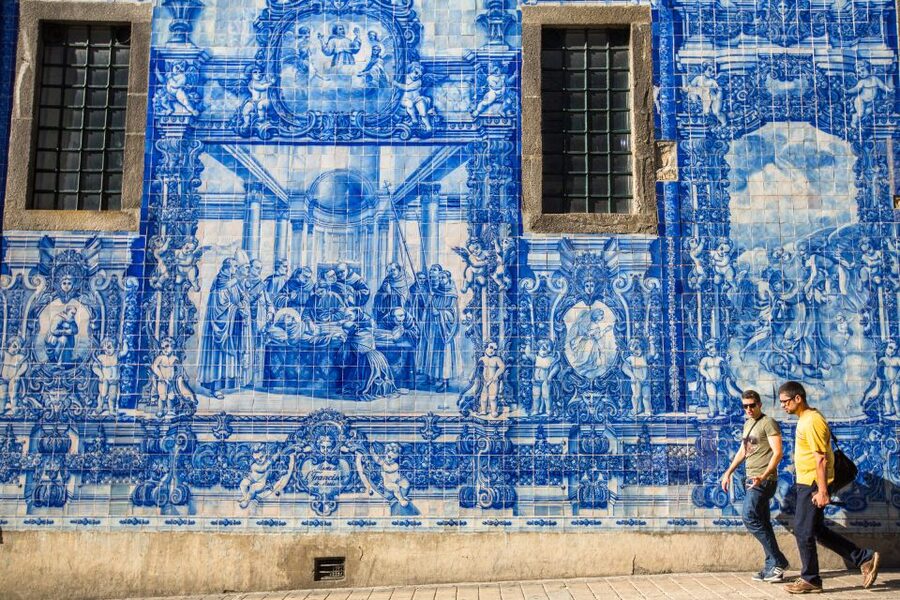
At Largo do Carmo, you slow down for a longer stop (about 25 minutes). This is a good place to pause because the square frames the surrounding architecture in a way that’s easier to understand. You’ll also get that “okay, Lisbon has a story” moment—where the buildings stop being background and start becoming plot points.
From here, the tour ties together multiple ideas: viewpoint culture, old Lisbon streets, and the famous ruins you came for. It’s the kind of transition that makes the rest of the day feel planned rather than stitched together.
Worth a look before you lock anything else in around Lisbon:

The palace-turned brewery stop: tiles, frescoes, and why it matters
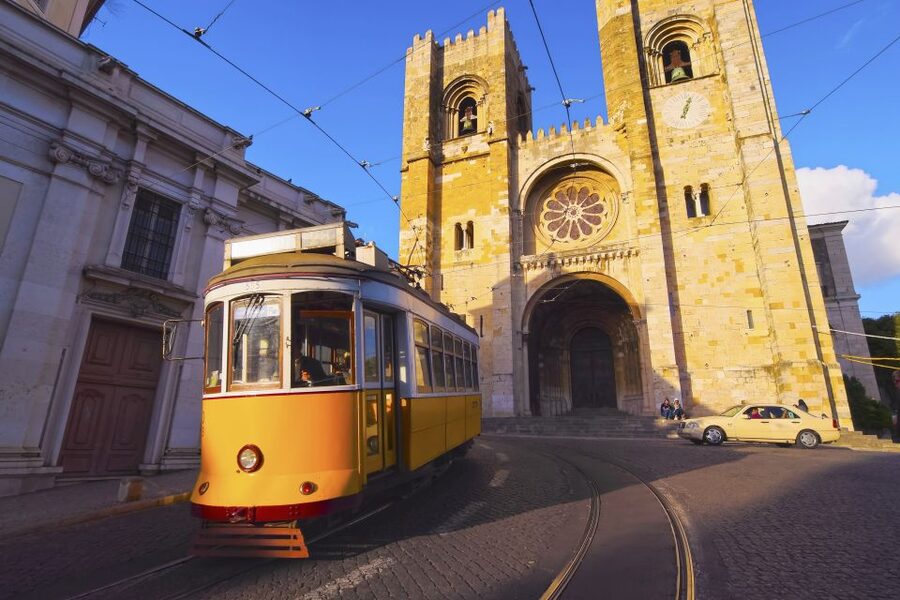
One of the more interesting “only-in-Lisbon” parts is a visit to a brewery that was once a palace. The setting is described as having stunning tiles, frescoes, and arches, and that combination tends to be a big clue about Lisbon’s taste.
This is valuable because it shows Lisbon wasn’t always about museums and viewpoints. It also had grand social spaces where people gathered, drank, and celebrated. Seeing the architecture in a working setting gives the city more texture, not just a checklist of monuments.
Don’t rush this stop. Even if you only spend a few extra minutes looking up at the details, you’ll feel like you learned something real instead of just walking past something pretty.
Skip the line at Convento do Carmo: ruins with context

A major highlight is Convento do Carmo. You get skip-the-line tickets and a separate entrance, which matters in Lisbon. Waiting around defeats the point of a guided tour, especially when you’re already walking uphill.
The ruins themselves are fascinating because they aren’t a clean, polished museum scene. You’re seeing a site that carries history in the broken edges. With guidance, that’s easier to understand. Your guide can explain what the convent was, what you’re looking at now, and why the site feels so central to the Lisbon story.
If you hate long waits, this is the part to love. It respects your time.
Santa Justa Lift and Commerce Square: two different kinds of Lisbon drama

Next, you pass through Santa Justa Lift (about 15 minutes) and then move on to Commerce Square with another guided stop.
Santa Justa Lift is Lisbon’s showpiece for a reason. Even if you don’t ride it, it gives you a sense of the city’s vertical scale. A lift in Lisbon isn’t just transport; it’s part of how the city survives its own hills.
Commerce Square, on the other hand, is Lisbon’s open-air counterweight. It feels built for space, commerce, and big-city gravity. If you’ve been walking narrow streets, this wide square helps you reset your sense of direction and scale.
This pairing works well for first-timers because it shows two faces of Lisbon: the tight, winding old-city mood and the grander open civic space.
Nossa Senhora da Conceição Church and Casa dos Bicos: details you’d miss alone
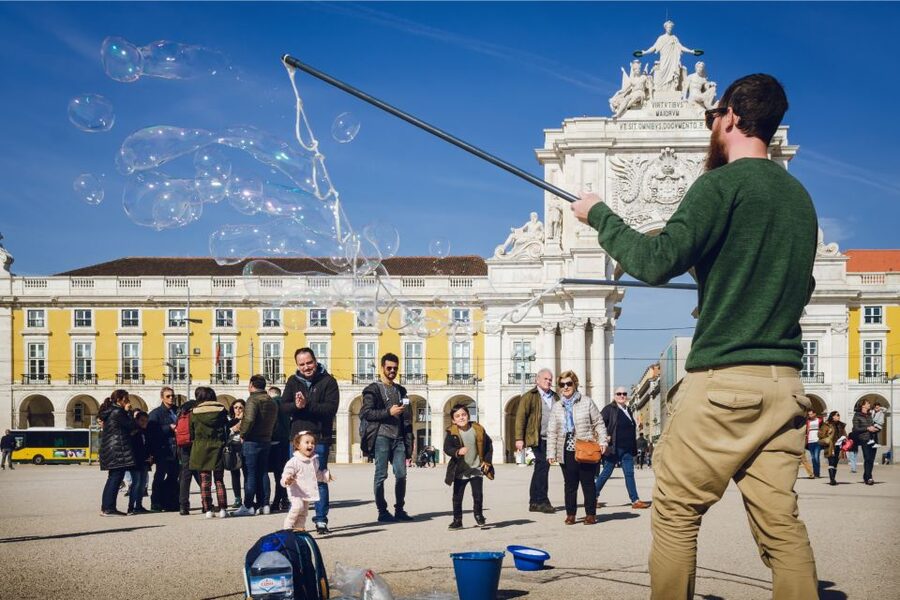
You’ll also stop at Nossa Senhora da Conceição Church (about 10 minutes). Short church stops can feel rushed, but here the guide’s job is to point out what’s worth seeing quickly so you don’t leave overwhelmed or underinformed.
After that comes Casa dos Bicos (another 10-minute guided visit). This stop is a great example of why a guided private walk can be more efficient than wandering. Lisbon has too many visually similar streetfronts to sort out alone. With a guide, you learn why this building matters and what to pay attention to.
If you’re the kind of traveler who likes architecture but doesn’t want to read a textbook, these minutes add up.
Lisbon Cathedral: where styles mix at street level
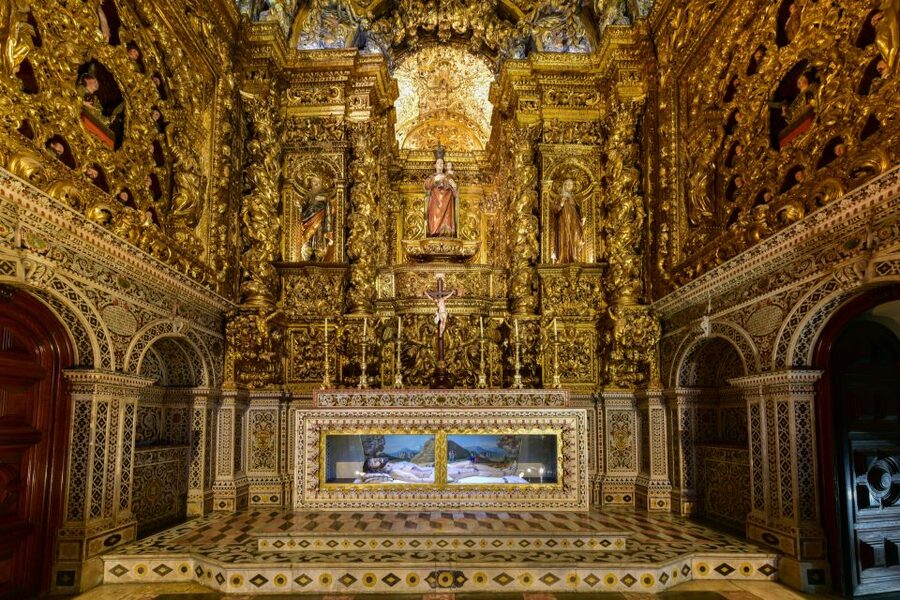
At Lisbon Cathedral (about 15 minutes), you’ll get a guided overview of an architectural masterpiece that blends different styles. This is where Lisbon stops being a collection of pretty stops and starts becoming a city shaped by time.
Cathedrals are easy to over-romanticize, but the best part of having a guide is learning what changes and what stays. You’ll come away with a clearer sense of how Lisbon’s layers show up in real stonework, real design decisions, and the way the building occupies space.
Practical tip: because you’re on foot, don’t plan to linger too long after the guide’s explanation. Use the guided time to learn, then take your photos quickly before the pace moves on.
Miradouro time: Santa Luzia views plus the ginja viewpoint
You’ll get viewpoint time at Miradouro de Santa Luzia (about 15 minutes). This is a classic Lisbon angle—good for photos, good for understanding the city’s curves, and good for reminding yourself why people come here even when they complain about the hills.
Then the tour builds in a ginja moment at one of Lisbon’s most scenic overlooks, Miradouro de Santo Estêvão. You’ll enjoy one cup of Ginja, the traditional Portuguese liqueur, while taking in panoramic views.
I like that the tour doesn’t just say miradouro and move on. It pairs the drink with a viewpoint, so the moment feels like a local ritual rather than a souvenir moment.
Small practical note: ginja is an alcoholic drink. Sip it like you’re walking afterward, because you are. Pace matters.
Alfama on foot: the neighborhood that teaches Lisbon’s pace
The tour spends time in Alfama (about 15 minutes guided). This is the neighborhood where Lisbon’s older character shows up the most. The streets feel designed for slow movement: corners, steep grades, and small sightlines that reward attention.
Alfama is also a neighborhood where your guide can help you notice what you’d otherwise miss—street texture, church placement, and how views open and close as the street bends.
If your instinct is to power through for photos, try to adjust. Alfama is better when you walk a bit slower than your phone wants you to.
Fado Museum exterior: finishing where the music atmosphere lives
The day ends at the Fado Museum exterior, near Alfama. You’re not necessarily doing a deep museum session here—your focus is on finishing the walking arc in the right mood.
This ending works because fado is part of Lisbon’s everyday identity. Even from the outside, it signals the vibe of the neighborhood: intimate, emotional, and tied to Portuguese storytelling.
If you want to turn the evening into something musical, finish here and then keep exploring on your own at an easy pace. You’ll already understand why the area feels like it does.
Price and value: what $86 buys you in real terms
At $86 per person for about 3 hours, this isn’t a bargain tour, but it is good value if you care about two things: time saved and guided interpretation.
Here’s what you actually get built into the price:
- a private local guide
- skip-the-line access to Convento do Carmo
- coffee and a local pastry
- Pastel de Nata tastings and a cup of Ginja
That mix matters. Many Lisbon tours do the monuments but leave food and context to chance. This one plans for both. The pastry and coffee reduce the energy crash that ruins sightseeing afternoons, and the Convento do Carmo skip turns a potential time-sink into an efficient win.
One more value point: guides like André (noted for architecture, history, and storytelling) and Mafalda (praised for effort during a French-language visit) show up in the reviews for a reason. When the guide is strong, the buildings feel less like checklist items.
Who this Lisbon private walk suits best
This tour is a strong match if you:
- want a guided route with clear explanations of major Lisbon sights
- like walking but don’t want to plan every stop yourself
- enjoy food tastings built into sightseeing
- care about seeing both viewpoints and churches without juggling logistics
It may be less ideal if you:
- hate steep streets and long walking segments
- prefer faster, shorter stops with minimal detail
And yes, the tour can feel detailed and slightly longer in feel, which is sometimes a plus. If you like understanding what you’re seeing, that detail is the point.
Should you book this Lisbon private walking tour?
If your goal is a meaningful first taste of Lisbon—Alfama streets, cathedral architecture, viewpoints, and classic flavors—this is a smart booking. The private guide plus skip-the-line Convento do Carmo are the big practical reasons to choose it, and the tastings (Pastel de Nata, coffee, and ginja) keep the afternoon from feeling like you’re only “working” through sights.
Book it if you’re comfortable with hilly walking and you like guided stories over fast photo stops. Skip it if you want a casual, low-effort stroll with minimal explanation.
FAQ
How long is the private walking tour?
It lasts 3 hours.
What is the meeting point?
Meet your guide under the statue in Luís de Camões Square.
Is this tour private?
Yes, it’s a private group.
Do I get skip-the-line access anywhere?
Yes. You get skip-the-line tickets to Convento do Carmo via a separate entrance.
What food and drink are included?
You’ll have coffee and a local pastry per person, plus one cup of ginja. The tour also includes tasting Pastel de Nata.
What viewpoints are included?
You’ll visit Miradouro de Santa Luzia and enjoy a major view from Miradouro de Santo Estêvão.
Which neighborhoods and major sights are part of the walk?
The route includes highlights in areas such as Alfama, plus stops including São Roque, Largo do Carmo, Santa Justa Lift, Commerce Square, and Lisbon Cathedral.
Is the Fado Museum included?
The tour includes visiting the outside of the Fado Museum.
What languages are the guides available in?
Spanish, English, Portuguese, and French.
What should I know before I go?
You should expect walking up and down hilly streets.
More Tours in Lisbon
- Lisbon City Center Tour – The Unmissable Lisbon★ 5.0 · 22,234 reviews
- Lisbon: History, Stories and Lifestyle Walking Tour★ 4.8 · 10,902 reviews
- True 4Hour Private Tuk Tuk Tour: Discover Lisbon with a Local!★ 5.0 · 8,008 reviews
- Winner 2025 Undiscovered Lisbon Food & Wine Tour by Eating Europe★ 5.0 · 6,390 reviews
- Lisbon: Sintra, Pena, Cabo da Roca, Cascais Tour with Pickup★ 4.8 · 5,445 reviews
More Tour Reviews in Lisbon
- Lisbon City Center Tour – The Unmissable Lisbon★ 5.0 · 22,234 reviews
- Lisbon: Sintra, Pena, Regaleira, Cabo da Roca & Cascais★ 4.7 · 19,656 reviews
- Lisbon Card: 24, 48, or 72-Hour Pass★ 4.5 · 17,944 reviews
- Lisbon: Jerónimos Monastery Entrance Ticket★ 4.1 · 14,164 reviews
- Lisbon: History, Stories and Lifestyle Walking Tour★ 4.8 · 10,902 reviews
More of Lisbon, One Hill at a Time
- Lisbon: History, Stories and Lifestyle Walking Tour★ 4.8 · 10,902 reviews
- Best of Lisbon Small-Group Guided Walking Tour★ 5.0 · 4,869 reviews
- Lisbon: Food and Wine Small Group Walking Tour★ 4.9 · 4,082 reviews
- Best of Lisbon Walking Tour: Rossio, Chiado & Alfama★ 4.9 · 2,700 reviews
- Age of Discoveries Walking Tour in Belém★ 5.0 · 1,513 reviews
Just in: fresh Lisbon reviews from the team





Lisbon Walking Tours, compared.
 ★ 4.8History, Stories and Lifestyle Walking TourFrom $2910,902 reviews
 ★ 5.0Best of Lisbon Small-Group Guided Walking TourFrom $234,869 reviews
 ★ 4.9Food and Wine Small Group Walking TourFrom $724,082 reviews
 ★ 4.9Best of Lisbon Walking Tour: Rossio, Chiado & AlfamaFrom $232,700 reviews
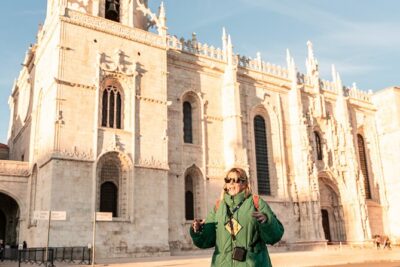 ★ 5.0Age of Discoveries Walking Tour in BelémFrom $31,513 reviews
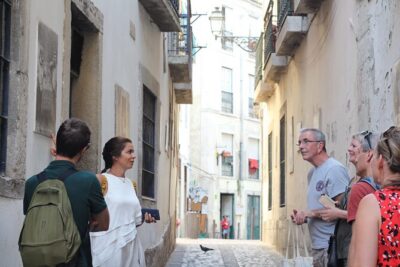 ★ 5.0Lisbon Roots – Small group Food & Culture Walking Tour w/tastingsFrom $168910 reviews
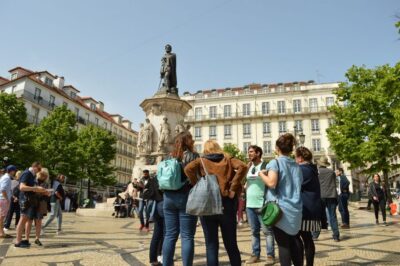 ★ 4.9Starter Walking Tour to the highlights in GermanFrom $33781 reviews
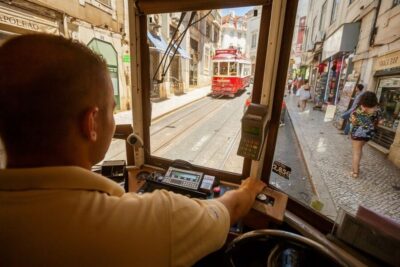 ★ 4.1Lisbon Tram No. 28 Ride & Walking TourFrom $23766 reviews
Browse the lists this tour appears in