

Reviewed · LISBON WALKING TOURS
Highlights and Secrets of Lisbon Private Walking Tour
Lisbon gets personal on this 3-hour walk. You get a local-style route with a private guide, plus two classic tastings I really love: pastéis de nata and ginjinha. Along the way, you also bounce between big Lisbon names and streets locals actually use, so the city feels like more than a postcard.
The main consideration is timing and tickets. A couple of key stops (like Elevador de Santa Justa and the Fado Museum) are not included, so you’ll want a small extra budget. And while the tour is built for most people, it’s still a walking route through hilly areas, and one unhappy booking described a late guide—so keep an eye on the meeting spot and stay reachable.
In This Review
- Key things I’d write on a sticky note
- Getting Your Bearings with a Lisbon Private Guide (and a tight 3-hour plan)
- Why the Pastéis de Nata + Coffee Stop Feels Like Real Lisbon
- Church of Saint Roch: Gold and Wood, Not Just a Pretty Facade
- Trindade Brewery and the Azulejos with Masonic Symbology
- Convento do Carmo and the Two Histories You Can See at Once
- Carmo Archaeological Museum: Skip the Line, See the Gothic Ruins
- Elevador de Santa Justa: The Engineering Stop with Real Views
- Rua Garrett, Rua Augusta, and the Moment You Reach Praça do Comércio
- Nossa Senhora da Conceição Velha: A Church That Survived, Plus a Women-Linked Story
- Casa dos Bicos and José Saramago: A Palace-Era Lisbon Moment
- Lisbon Cathedral: From Former Mosque to a Mix of Styles
- Miradouro de Santo Estevão and Ginjinha: View First, Then Sip
- Fado Museum Finish: A Smooth Ending Near Alfama
- Price and What You’re Really Paying For ($79.52 per person)
- How to Make This Tour Feel Like It Fits You
- Should you book this Lisbon Private Walking Tour?
- FAQ
- FAQ
- How long is the Lisbon private walking tour?
- What is the price per person?
- Is this a private tour?
- What’s included in the ticket price?
- Are the Elevador de Santa Justa and Fado Museum tickets included?
- Where does the tour start and end?
- How close is the meeting point to public transportation?
- Is confirmation given at booking time?
- What’s the cancellation policy?
Key things I’d write on a sticky note
- Private guide, private pace: it’s only your group, so you can ask questions without being rushed.
- Sweet-and-sour Lisbon food stops: pastéis de nata, local coffee, and ginjinha are scheduled, not random.
- Earthquake scars, explained: you’ll see the Carmo ruins tied to the 1755 earthquake and later history.
- Azulejos with secret symbols: Trindade’s brewery palace is famous for azulejos featuring masonic symbology.
- Panorama payoff: Santa Justa is a great viewpoint over Baixa and toward Alfama and São Jorge.
- Where the tour ends matters: finishing near the Fado Museum can help you plan your next move in Alfama.
Getting Your Bearings with a Lisbon Private Guide (and a tight 3-hour plan)

This tour is built for people who want orientation fast. You start near Praça Luís de Camões and work through central neighborhoods that many first-timers find confusing—Baixa Pombalina, then toward Alfama and viewpoints. With a private guide, the walk feels less like sightseeing and more like a guided walk through the city’s “logic”: where Lisbon built its power, where it worshiped, and where it looked out over the water and hills.
The route also has a smart rhythm. It mixes quick exterior stops (churches, squares, monuments) with timed food breaks and a couple of longer anchor moments, so you’re not stuck doing one thing for the full time. That matters because Lisbon hills can turn a long day into a slow day fast.
One practical tip: come with comfortable shoes and a light layer. The route includes viewpoints and older streets, where you’ll want sure footing and easy movement.
Lisbon at walking pace, a few more routes
- Lisbon: History, Stories and Lifestyle Walking Tour
★ 4.8 · 10,902 reviews - Best of Lisbon Small-Group Guided Walking Tour
★ 5.0 · 4,869 reviews - Lisbon: Food and Wine Small Group Walking Tour
★ 4.9 · 4,082 reviews - Best of Lisbon Walking Tour: Rossio, Chiado & Alfama
★ 4.9 · 2,700 reviews
Why the Pastéis de Nata + Coffee Stop Feels Like Real Lisbon
Two early stops set the tone: you’ll get a classic custard tart stop at Rua do Loreto 4, plus local coffee. The timing is short, so it doesn’t drag, but it’s not a token bite either. Lisbon has plenty of places that serve pastéis de nata, yet the best experiences tend to come from spots that locals still treat as everyday stops.
Here’s what I like about this approach: it connects taste to place. Your guide can point out why this pastry is such a big deal in Lisbon culture, and how to order/choose without overthinking it. If you’re the type who’s fine with walking first and shopping later, this is an ideal setup.
Plan on taking your time for coffee even if you’re tempted to rush. The best part of this stop is not just the flavor; it’s the feel of a traditional café setup in the middle of a working city.
Church of Saint Roch: Gold and Wood, Not Just a Pretty Facade

Next up is the Church of Saint Roch, tied to the Brotherhood of Misericórdia. This is the kind of stop that pays off when you’re with a guide who can point out what you’re looking at. The church is described as having precious works in wood and gold, which is the sort of detail your eye might miss if you just pass by.
The attraction here is less about seeing one iconic photo and more about understanding the role of religious brotherhoods in Lisbon. It’s a reminder that Lisbon isn’t only monuments and viewpoints—it’s also organized community, institutions, and art tied to faith.
This stop is brief, so the goal is to look closely while you have the chance. If you’re tempted to use your phone for everything, save some of your attention for the interior details.
Trindade Brewery and the Azulejos with Masonic Symbology
When you hit Trindade, you’re stepping into a piece of Lisbon that blends everyday industry with visual storytelling. The tour highlights it as the oldest brewery in Lisbon, and it adds an art detail many visitors miss: azulejos (the blue-and-white tiles) with masonic symbology.
This is one of those “small stop, big context” moments. It’s easy to see the tiles and call them beautiful, but it’s more interesting when you understand that they’re part of a larger symbolic language used in Lisbon’s older spaces.
Also, breweries feel like an odd choice in a walking tour—until you realize Lisbon is a city where food, drink, and industry shaped neighborhoods. Seeing the palace that housed the brewery adds a layer of meaning that you don’t get from another church-and-cathedral day.
Worth a look before you lock anything else in around Lisbon:

Convento do Carmo and the Two Histories You Can See at Once
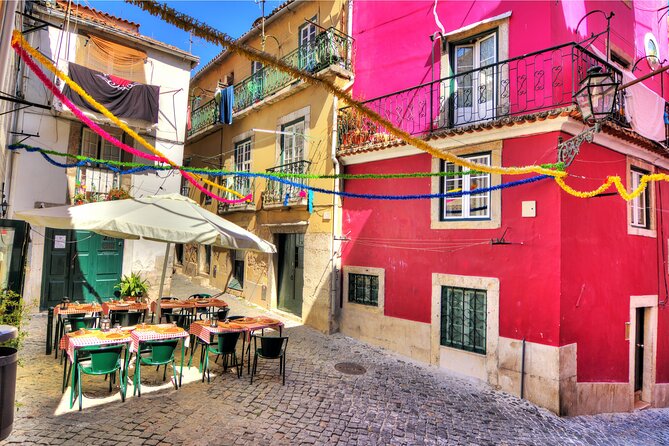
The tour brings you through the Carmo Convent (Convento do Carmo) area, where the story isn’t just ancient. It connects the site to the 1755 earthquake and then to contemporary history tied to the Carnation Revolution. That pairing is powerful because it shows how a place can keep getting repurposed in public memory.
What makes this section work is that it doesn’t treat ruins as a dead end. You’re not just looking at damage—you’re looking at layers. The guide can help you read the site as a timeline, where the same stone carries different meanings across centuries.
If you’re the type who enjoys thinking about how modern Portugal claims its history, this is one of the most satisfying segments.
Carmo Archaeological Museum: Skip the Line, See the Gothic Ruins
Right after the convent walk, you’ll visit the Carmo Archaeological Museum with a skip-the-line ticket included. This is a key value point in the itinerary because it saves time at a popular stop. Inside, you’ll see the gothic temple in ruins due to the 1755 earthquake.
This is where the tour’s history stops become more than quick glances. Ruins need a little time to absorb, and the included admission gives you that pause in a planned way.
One small caution: ruined sites can mean uneven footing and a lot of time looking upward or around. If you have mobility issues, it’s still listed as suitable for most travelers, but you’ll want to take it slow here.
Elevador de Santa Justa: The Engineering Stop with Real Views

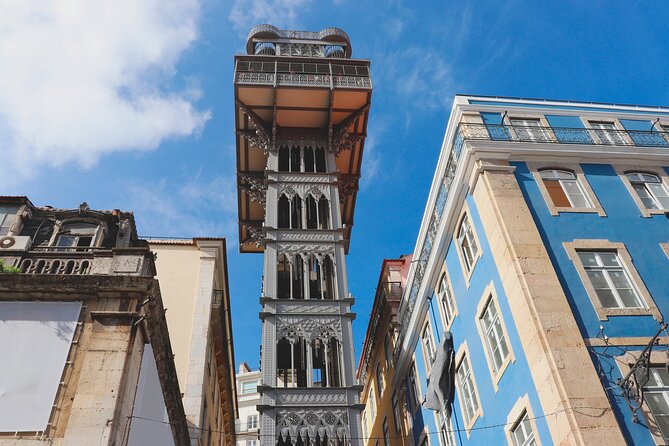
Then comes Elevador de Santa Justa for a look at Lisbon’s early 1900s engineering. The ticket is not included, but the stop still matters because your guide can show you what to notice before you go up or decide to skip.
This is a strong viewpoint area over Baixa Pombalina, toward Alfama, and in the direction of the Castle of São Jorge. Even without buying the lift ticket, just the perspective from the immediate area helps you understand why Lisbon was built the way it was—tight city below, dramatic viewpoints above.
If you do choose to pay for the elevator, plan it as part of your “pay-off moment.” Don’t let it turn into a hurried experience while you’re multitasking with photos.
Rua Garrett, Rua Augusta, and the Moment You Reach Praça do Comércio
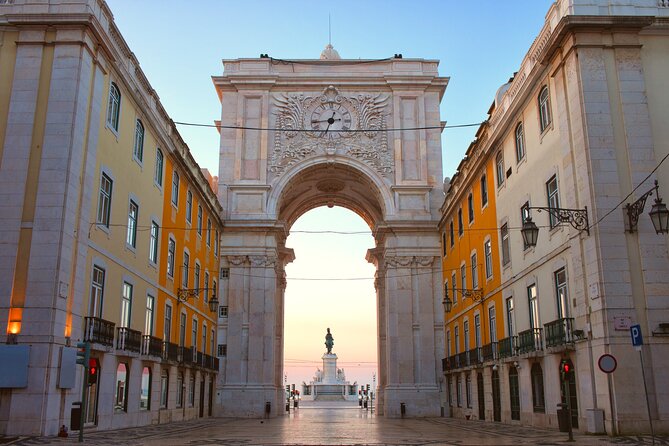
As the walk flows toward Baixa Pombalina, you’ll pass along Rua Garrett and then stroll toward Rua Augusta and the grand monumental arch. This is your switch from church-and-views to the city’s public, civic space energy.
From there you reach Praça do Comércio, a huge, open area that makes Lisbon feel organized and official. You’ll see the rebuilt entrance gate tied to the 1755 earthquake and designed with masonic symbols. The tour also points out the Cais das Colunas area, where a marble walkway has served as a grand welcome for important figures.
This is a good stop for understanding how Lisbon projects power. It’s less about individual buildings and more about how the city presents itself when it wants to impress.
Nossa Senhora da Conceição Velha: A Church That Survived, Plus a Women-Linked Story
Next is Church Nossa Senhora da Conceição Velha. The tour highlights that it survived the earthquake and features a facade in the Manuelino style (Portuguese baroque). It also notes a fascinating history connected to women, which is the kind of detail that changes this from “just another church” to a story you remember.
The key here is that the facade is the hook, but the cultural context is what makes the short visit worth it. It’s quick, so focus on the exterior character and then listen for the human side of the story.
Casa dos Bicos and José Saramago: A Palace-Era Lisbon Moment
At Museu de Lisboa – Casa dos Bicos, you’ll encounter a palace that belonged to the first governor of the Indies. That’s already interesting, but the tour also links the site to modern Portuguese literature, with a foundation dedicated to José Saramago, the only Portuguese Nobel Prize writer mentioned in the tour description.
This stop works because it connects Lisbon’s global role (the Indies) to something Lisbon is proud of today: its writers. It also helps break up the religious-and-monument rhythm with a calmer, culture-and-layers moment.
This is not a long stop, so it’s best if you’re okay with scanning and learning rather than treating it like a half-day museum plan.
Lisbon Cathedral: From Former Mosque to a Mix of Styles
Then comes Lisbon Cathedral, described as a church obtained from a former mosque. Externally, it’s Romanesque, while inside you’ll also find Gothic and neo-Gothic styling.
If you like architecture that tells stories, this is your stop. You can’t miss the style shift when you step inside, and it’s a great reminder that Lisbon’s layers aren’t only chronological—they’re also stylistic.
The cathedral visit is short, but it gives you a big “aha”: Lisbon’s religious and cultural history is layered, and you can see it.
Miradouro de Santo Estevão and Ginjinha: View First, Then Sip
Now you hit one of Lisbon’s key viewpoint moments: Miradouro de Santo Estevão. Here you’ll taste ginjinha, a cherry liqueur made by the ladies of Alfama, and the tour keeps it connected to the place you’re standing.
This stop feels practical. A viewpoint can turn into a photo factory if you’re not careful. Pairing it with a drink makes it slower and more memorable. It’s also a Lisbon detail you can talk about later, not just something you saw.
After that, you stroll through the old quarter while continuing to enjoy ginjinha. This is the part of the route where Lisbon feels most like itself—close streets, local mood, and a softer pace.
Fado Museum Finish: A Smooth Ending Near Alfama
The tour ends near the Fado Museum in Alfama. You’ll also get a brief intro to the history of fado, but the museum admission is not included.
Finishing here is smart because Alfama is where many people want to go next. Even if you skip the museum, you’ll be in the right neighborhood to hunt for dinner or continue walking at your own speed.
If you’re planning your night, this finish helps because you’re already set up in the area where music and atmosphere are part of the local plan.
Price and What You’re Really Paying For ($79.52 per person)
At $79.52 per person for about 3 hours, this tour isn’t trying to be the cheapest way to “see Lisbon.” It’s priced like an experience that saves you time and gives you a guide-driven route.
Here’s the value math I’d use:
- You’re getting a private guide, which matters if you’re the kind of group that asks questions or wants to stop for detail.
- Carmo Archaeological Museum includes admission and a skip-the-line ticket, which can be the difference between spending time standing around and actually using your time for viewing.
- Most other stops are marked as free admission, which keeps your day from turning into a ticket-budget shock.
Two costs you should expect:
- Elevador de Santa Justa ticket is not included.
- Fado Museum ticket is not included.
Also note that the tour offers wide departure options online, with times accurate to within half an hour, and there are group discounts mentioned. The tour is usually booked about 80 days in advance, so if your dates are fixed, I’d plan early rather than waiting.
How to Make This Tour Feel Like It Fits You
This is a strong pick if you want:
- a structured walk that still feels local,
- a route connecting viewpoints, churches, and Lisbon’s older civic spaces,
- food stops that are part of the plan, not a random detour.
It may feel less perfect if you:
- want only museums with lots of indoor time,
- dislike stairs and uneven pavement,
- need fully ticket-included attractions (because some major items aren’t included).
One more note based on real-world experience patterns: this tour can go smoothly, but timing matters. One person reported a late guide start and a billing issue, which is a reminder to double-check your meeting point and stay reachable on the day.
And if you’re lucky enough to get Rodrigo, that’s a name worth noting. In one standout review, Rodrigo was described as excellent and fun, with attention to questions throughout.
Should you book this Lisbon Private Walking Tour?
If you want a guided route that connects Lisbon’s earthquake-era ruins, famous viewpoints, and classic tastes without turning the day into a rush, I’d say yes. The private format plus the skip-the-line museum inclusion makes it easier to get value from your time in the city.
Book it if you like learning while walking and you’re okay paying a bit extra for the two non-included attractions. Skip it if you’re trying to minimize costs to the last euro or you want a longer, museum-heavy itinerary.
FAQ
FAQ
How long is the Lisbon private walking tour?
It runs for about 3 hours.
What is the price per person?
The price is $79.52 per person.
Is this a private tour?
Yes. It’s a private tour/activity, and only your group participates.
What’s included in the ticket price?
The Carmo Archaeological Museum admission is included with a skip-the-line ticket. Many other listed stops have free admission.
Are the Elevador de Santa Justa and Fado Museum tickets included?
No. Elevador de Santa Justa and the Fado Museum are listed as admission not included.
Where does the tour start and end?
It starts at Praça Luís de Camões, Largo Luís de Camões, 1200-243 Lisboa, Portugal. It ends near the Fado Museum at Alfama, Largo do Chafariz de Dentro 1, 1100-139 Lisboa, Portugal.
How close is the meeting point to public transportation?
The tour notes that it’s near public transportation.
Is confirmation given at booking time?
Yes. Confirmation is received at time of booking.
What’s the cancellation policy?
You can cancel for a full refund up to 24 hours in advance of the experience’s start time.
More Tours in Lisbon
- Lisbon City Center Tour – The Unmissable Lisbon★ 5.0 · 22,234 reviews
- Lisbon: History, Stories and Lifestyle Walking Tour★ 4.8 · 10,902 reviews
- True 4Hour Private Tuk Tuk Tour: Discover Lisbon with a Local!★ 5.0 · 8,008 reviews
- Winner 2025 Undiscovered Lisbon Food & Wine Tour by Eating Europe★ 5.0 · 6,390 reviews
- Lisbon: Sintra, Pena, Cabo da Roca, Cascais Tour with Pickup★ 4.8 · 5,445 reviews
More Tour Reviews in Lisbon
- Lisbon City Center Tour – The Unmissable Lisbon★ 5.0 · 22,234 reviews
- Lisbon: Sintra, Pena, Regaleira, Cabo da Roca & Cascais★ 4.7 · 19,656 reviews
- Lisbon Card: 24, 48, or 72-Hour Pass★ 4.5 · 17,944 reviews
- Lisbon: Jerónimos Monastery Entrance Ticket★ 4.1 · 14,164 reviews
- Lisbon: History, Stories and Lifestyle Walking Tour★ 4.8 · 10,902 reviews
More of Lisbon, One Hill at a Time
- Lisbon: History, Stories and Lifestyle Walking Tour★ 4.8 · 10,902 reviews
- Best of Lisbon Small-Group Guided Walking Tour★ 5.0 · 4,869 reviews
- Lisbon: Food and Wine Small Group Walking Tour★ 4.9 · 4,082 reviews
- Best of Lisbon Walking Tour: Rossio, Chiado & Alfama★ 4.9 · 2,700 reviews
- Age of Discoveries Walking Tour in Belém★ 5.0 · 1,513 reviews
Just in: fresh Lisbon reviews from the team





Lisbon Walking Tours, compared.
 ★ 4.8History, Stories and Lifestyle Walking TourFrom $2910,902 reviews
 ★ 5.0Best of Lisbon Small-Group Guided Walking TourFrom $234,869 reviews
 ★ 4.9Food and Wine Small Group Walking TourFrom $724,082 reviews
 ★ 4.9Best of Lisbon Walking Tour: Rossio, Chiado & AlfamaFrom $232,700 reviews
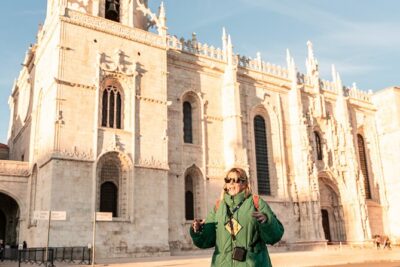 ★ 5.0Age of Discoveries Walking Tour in BelémFrom $31,513 reviews
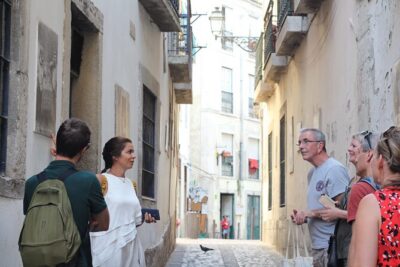 ★ 5.0Lisbon Roots – Small group Food & Culture Walking Tour w/tastingsFrom $168910 reviews
 ★ 4.9Starter Walking Tour to the highlights in GermanFrom $33781 reviews
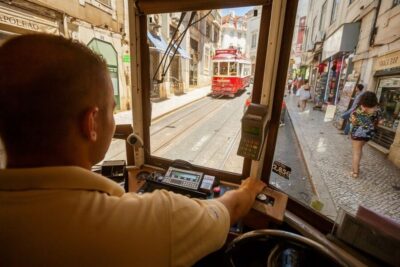 ★ 4.1Lisbon Tram No. 28 Ride & Walking TourFrom $23766 reviews
Browse the lists this tour appears in