
Reviewed · LISBON WALKING TOURS
Half-Day Walking Tour about the African Presence in Lisbon
Lisbon has stories hiding in plain sight. This small-group walking tour follows those threads through Alfama, the Baixa center, and the Rossio area, using on-the-ground stops to explain the African presence in Lisbon—from Moorish and Arab roots to the realities of the slave trade and its long after-effects. What I like most: you get a tight group (max 15) and the pace is walkable enough to actually take in details, plus the route connects major landmarks to lived human stories. One thing to consider: at this price point, you’ll want a guide who clicks with you, because a few past participants found the experience pricey or said the tour wasn’t perfectly organized.
The big win here is focus. You’re not doing a generic “Lisbon highlights” loop—you’re using the city as your textbook, including places tied to social class, labor, religion, and abolition. If you prefer history told with context (not vague facts), this tour is built for you; if you only want scenery, you may feel a bit heavy on the topics by the end.
In This Review
- Key things to know before you go
- African presence in Lisbon: what makes this walk different
- Price and value: what $179.74 buys you
- Logistics that matter: meeting point, timing, and pacing
- Stop 1: Alfama—Arab roots and the oldest streets
- Stop 2: Chafariz d’El Rei—class divisions in a fountain
- Stop 3: Campo das Cebolas—an early arrival point
- Stop 4: Praça do Comércio / Terreiro do Paço—power and slave trade
- The 1755 earthquake and the rebuilt center
- Stop 5: Calle Rosa de Lisboa—where services were sold
- Stop 6: Time Out Market Lisboa—then and now
- Stop 7: Jardim Dom Luis—Marquis Sá da Bandeira and abolition
- Stop 8: The Brazilian consulate—transatlantic consequences in a real location
- Stop 9: Praça Dom Pedro IV—integration and the building of colonies
- Stop 10: Igreja de S Domingos—African presence in Catholic life
- Stop 11: Estação do Rossio and the Berlin Conference tie-in
- Final square: Portugal’s independence from Spain and African fighters
- Guide quality and what to expect from the storytelling
- Who should book this African presence in Lisbon tour
- Should you book it? My decision guide
- FAQ
- How long is the Half-Day Walking Tour about the African Presence in Lisbon?
- What’s the group size?
- What language is the tour offered in?
- Where is the meeting point, and what time does it start?
- Is this tour okay if I have moderate physical fitness?
- What is the cancellation policy if plans change?
Key things to know before you go
- Max 15 travelers: small group size keeps the tour feel personal.
- A 3–4 hour walking route: timed stops across Alfama, Baixa, and Rossio.
- Real landmarks tied to human stories: fountains, squares, churches, markets, and memorial context.
- Most stops are low-friction: each listed stop is marked with free admission ticket.
- English-speaking guide: the tour is offered in English.
- Start at Praça dos Restauradores at 9:00 am: you’ll want to find the meeting point early.
African presence in Lisbon: what makes this walk different
This tour is for people who are tired of only hearing the postcard version of Lisbon. The route is built around specific city corners where you can connect architecture and street names to big, uncomfortable themes: migration and integration, labor and class divisions, Portuguese colonial links, and the long shadow of the transatlantic slave trade.
I like that the tour doesn’t treat African influence as a side note. It frames it as part of how Lisbon formed—socially, economically, and culturally—then asks you to notice how those connections still show up today. And since it’s on foot, you’re constantly “reading” the city instead of speed-scanning it from a bus window.
One practical upside: you get a half-day format (about 3 to 4 hours). That’s long enough to learn and still short enough to pair with dinner plans, a museum visit, or just time to wander without feeling behind schedule.
Lisbon at walking pace, a few more routes
- Lisbon: History, Stories and Lifestyle Walking Tour
★ 4.8 · 10,902 reviews - Best of Lisbon Small-Group Guided Walking Tour
★ 5.0 · 4,869 reviews - Lisbon: Food and Wine Small Group Walking Tour
★ 4.9 · 4,082 reviews - Best of Lisbon Walking Tour: Rossio, Chiado & Alfama
★ 4.9 · 2,700 reviews
Price and value: what $179.74 buys you
$179.74 per person is not a budget tour. So the value has to come from more than “a guide with a microphone.” Here, the value is in three places:
- Small-group delivery (max 15) means the guide can pace the conversation and respond to questions.
- A tight, landmark-based route means you’re paying for interpretation, not transport.
- Free-entry stops keep you from getting hit with extra ticket costs across the main sights.
The other value lever is guide quality. Past participants gave the experience a 4.9 rating with 95% recommending it, which is a strong sign that the storytelling tends to land well. Still, one or two comments flagged that organization and pace can vary—so I’d treat this as a history-first tour, not a laid-back sightseeing stroll.
Logistics that matter: meeting point, timing, and pacing
You start at Praça dos Restauradores (Restauradores Square), 1250-001 Lisboa, with a 9:00 am start time. The activity ends back at the meeting point, so you’re not left hunting for your next ride in a different neighborhood.
The tour asks for moderate physical fitness. Lisbon involves uneven sidewalks, hills, and stairs. Even if the pace is “walking tour” pace (not a forced march), you’ll want comfortable shoes and a little stamina.
Also: plan around good weather. This experience requires decent conditions; if it gets canceled for weather, you’ll be offered another date or a full refund.
Stop 1: Alfama—Arab roots and the oldest streets
You begin in Alfama, the city’s oldest neighborhood, described as founded by Arabs. This opening matters because it sets an early frame: African presence in Portugal isn’t being introduced as a separate chapter—it’s positioned as part of Lisbon’s deeper, layered history.
In practice, Alfama is perfect for this kind of guided storytelling. The streets are narrow, the atmosphere is old, and the physical setting helps you understand how neighborhoods evolve instead of feeling like history is happening only in books. If you’re visiting for the first time, this is also an easy place to get your bearings fast on foot.
If you dislike walking through crowded lanes, you might want to mentally prepare for busy corners. It’s Lisbon’s “real neighborhood energy,” not a quiet museum corridor.
Worth a look before you lock anything else in around Lisbon:
Stop 2: Chafariz d’El Rei—class divisions in a fountain
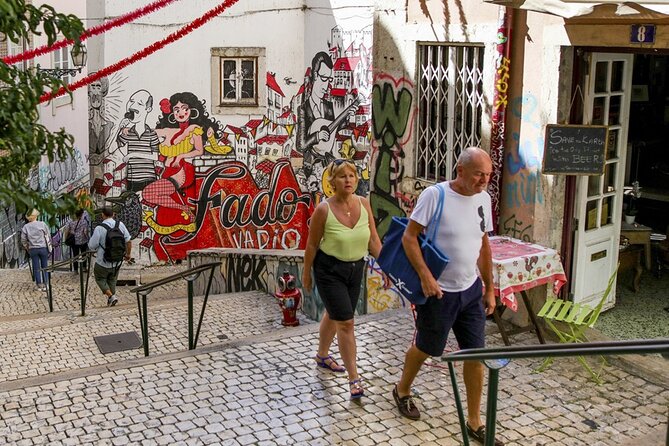
Next comes Chafariz D’El Rei, a fountain tied to how social classes were divided during the Middle Ages. The key point here is that Africans are also represented in the story—meaning the guide isn’t talking about distant “events,” but about visible life patterns connected to public spaces.
A fountain stop can sound small, but it’s actually a smart choice. Public water sources were central to daily survival, so talking class and presence at a fountain turns an object you’d normally photograph into something more meaningful. You learn to look for who was included and who wasn’t.
This is also a short stop, so if you like deeper Q&A, you’ll have to ask quickly before the group moves on.
Stop 3: Campo das Cebolas—an early arrival point
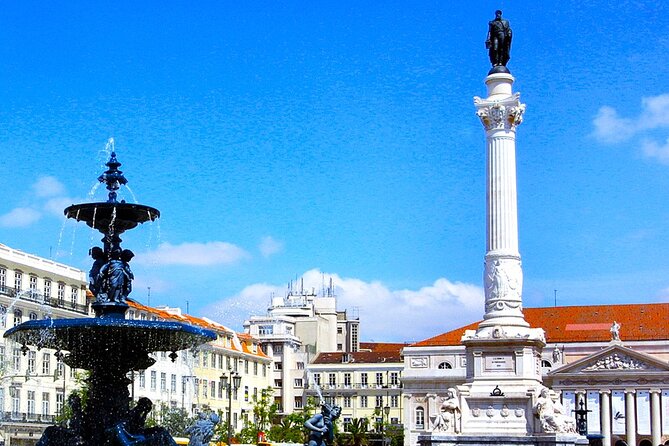
Then you head to Campo das Cebolas, described as linked to the old port of Lisbon, where the first African slaves arrived in Europe. That’s heavy subject matter, and the tour’s value is how it places this within the geography of the city.
What I appreciate about this kind of stop is the clarity it offers. Ports explain motives—trade, profit, power. And when you stand near a place associated with those arrivals, it’s easier to understand why the consequences were long-lasting.
Still, be aware of emotional pacing. If you’re sensitive to discussions of slavery and forced labor, go in prepared for that tone. This is not a “lighter history” route.
Stop 4: Praça do Comércio / Terreiro do Paço—power and slave trade
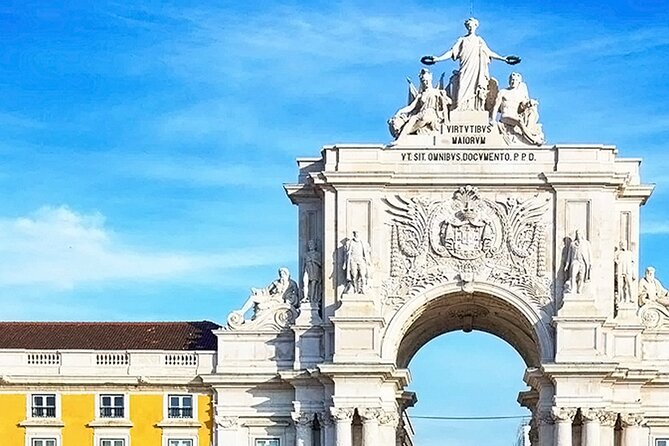
Praça do Comércio (Terreiro do Paço) is one of Lisbon’s emblematic spaces, and the tour uses it to talk about major events in Portugal’s history—specifically, its role in the slave trade.
This is where the tour’s big idea becomes most visible: the architecture of power. A grand square wasn’t built for romance; it was built for administration, movement of goods, and the machinery of empire. Standing there, you can see how public spaces were shaped by private greed.
The drawback? This stop can feel like a “big moment” without a long pause, depending on the group. If you want time to process, plan to spend a few extra minutes on your own while the guide talks to the group.
The 1755 earthquake and the rebuilt center
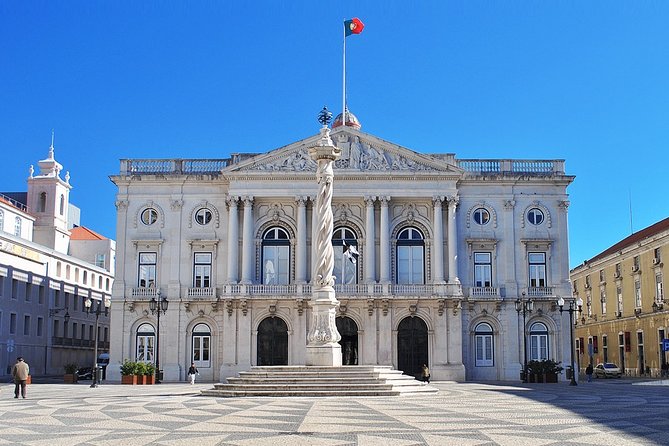
Right in the middle of the walk, you reach a central Lisbon area described as destroyed by the 1755 earthquake. The guide uses that to talk about how Lisbon was rebuilt—and how that process affects what gets remembered (and what gets glossed over).
This is a valuable transition because it turns history from “what happened” into “what survived.” When cities rebuild, they also choose what to emphasize. The result is that some stories get harder to find unless you’re shown where to look.
If you enjoy connecting urban planning to social memory, you’ll like this part a lot.
Stop 5: Calle Rosa de Lisboa—where services were sold
Then comes Calle Rosa de Lisboa, described as a place where several African women provided services. It’s a difficult topic, but the tour’s purpose here is to place marginalized lives into the center of the story, not outside the frame.
This stop can be an eye-opener for anyone who thinks Lisbon’s African presence only belongs in colonial offices or church records. Here, the presence is tied to work, survival, and the economic undercurrent of city life.
Practical note: if you’re the type who hates walking near “commercial streets” or places that feel tense, you’ll still likely pass through quickly. But it’s better to know the tone up front rather than get surprised.
Stop 6: Time Out Market Lisboa—then and now
At Time Out Market Lisboa, the tour connects the modern market to its past, where it was a place of work for many Africans. That’s a smart way to bridge decades without turning the story into a lecture.
This stop works well if you want something concrete after heavier topics. Even if you don’t plan to eat there, the market area is a good moment to look around and notice how “today’s normal” often has a backstory.
One thing to keep in mind: your group may move quickly through the area, so if you want to browse, you may need to add time after the tour ends.
Stop 7: Jardim Dom Luis—Marquis Sá da Bandeira and abolition
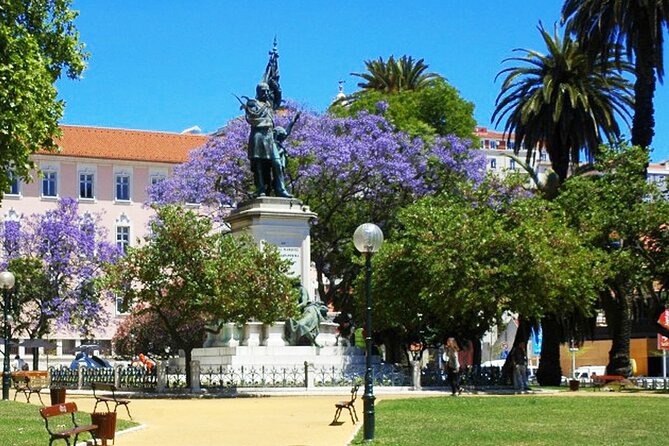
In Jardim Dom Luis, you’ll see a statue tied to Marquis Sá da Bandeira, described as responsible for the abolition of slavery in Portuguese territory and colonies. This is an important balancing point.
A tour like this can easily fall into only darkness. Adding a stop that acknowledges abolition efforts helps you understand the full arc: not just the system, but also the political and moral pushback that followed.
If you like statues and symbolism, this stop gives you an anchor. And since it’s a garden setting, it can also be a small reset for your brain mid-walk.
Stop 8: The Brazilian consulate—transatlantic consequences in a real location
Next is in front of the Consulate-General of the Federative Republic of Brazil in Lisbon, where the tour discusses transatlantic slave traffic and its consequences.
I appreciate this choice because it keeps the story from staying stuck in the past. The consulate location is part of the modern political map of the Atlantic world, which is exactly where these legacies still show up—in migration, communities, and shared history.
You’ll likely get more meaning from this stop if you’ve paid attention earlier to how the tour tied trade routes to human lives. By now, the connections should feel less abstract.
Stop 9: Praça Dom Pedro IV—integration and the building of colonies
At Praca Dom Pedro IV, the guide talks about integration of Africans and the creation of colonies. This is another central square stop, but it isn’t filler. The context is the point: Lisbon’s public centers were where power, administration, and identity formation intersected.
This is a good stop for asking questions. If your guide is the type who can answer clearly, you’ll get the most value here by pushing beyond dates and names into “how did it work in everyday life?” territory.
If you’re traveling with someone who prefers lighter pacing, this might be the moment where you take a slower walk for perspective while they process.
Stop 10: Igreja de S Domingos—African presence in Catholic life
Next comes Igreja de S Domingos. Here, the tour focuses on integration of Africans in the Catholic religion and achievements.
This is one of the stops that tends to satisfy people who came for history but also care about culture. It’s not only about who was present; it’s about how communities found ways to live inside the religious structure of the time.
As with other church stops, you might want to check local rules for behavior and dress if you get close enough to go inside. The tour stop time here is relatively short, so don’t count on a long self-guided exploration.
Stop 11: Estação do Rossio and the Berlin Conference tie-in
You end up near Estação do Rossio, built in the 19th century with Manueline architectural style. The guide ties the station to Portugal’s “golden times” and to the way European powers divided Africa into colonies—specifically referencing the Berlin Conference of 1884.
This stop is valuable because it shows how “national pride architecture” and imperial politics can share the same visual language. Stations are about movement. When the guide links that idea to colonization, you start seeing the city’s infrastructure as part of the machine—not separate from it.
One consideration: if you’re not into 19th-century European political history, this may feel dense. But if you can tolerate a bit of timeline building, it helps you see Lisbon’s role in the bigger scramble for Africa.
Final square: Portugal’s independence from Spain and African fighters
The walk finishes at a square tied to Portugal’s restoration of independence from Spain, with the note that many African slaves fought. This final stop is meant to land the human dimension in a national story—no side footnotes.
It’s also a reminder that “Portugal’s story” is not only Portuguese people making choices in a vacuum. It involved forced labor, coerced lives, and complicated participation in wars and politics.
If you want a clean takeaway, ask yourself a simple question before you head off: how does this change the way you interpret what you see elsewhere in Lisbon? That’s usually the best “memory hook” after a tour like this.
Guide quality and what to expect from the storytelling
Two guide names show up in the tour experience: Al and Alcides. Multiple people described Alcides as personal and context-driven, tying together sites across old Lisbon with stories tied to Cape Verdean ancestry. Another comment praised Al for patience and clear English, including mention that he studied in London.
So here’s my practical expectation setting: the tour tends to succeed when you treat it like a conversation, not a slideshow. Bring curiosity, ask questions, and expect the guide to connect locations to themes (not just list facts). The best moments usually happen when the guide pulls the story from one stop and uses it to explain what you’re seeing in the next street.
Who should book this African presence in Lisbon tour
Book it if you:
- Want a route-based history tour, not a generic highlights walk
- Care about African influence and integration in Portuguese life
- Like neighborhoods like Alfama and the Rossio/center areas more than only viewpoint hopping
- Appreciate guided context, even when the topics are hard
Skip it (or consider other options) if you:
- Prefer mostly light sightseeing with minimal heavy subject matter
- Need frequent restroom breaks and hate “random stops” (one pacing complaint mentioned restroom organization)
- Want a tour that feels extremely structured at every minute—some people noted organization issues, like a late start
Should you book it? My decision guide
If your goal is to understand Lisbon beyond the usual myths, this tour is an excellent use of a half-day. The route is compact but meaning-heavy. The small group size and the guide’s ability to tie locations to the African presence in Lisbon are the reasons this works.
If you’re on the fence because of price, don’t think of it as paying for walking. Think of it as paying for interpretation of major sites—Alfama, Baixa’s rebuilding context, slave trade-linked squares, and even the political story behind architecture like Estação do Rossio.
My final nudge: wear good shoes, bring patience for tough topics, and come with questions. If the guide is your style, you’ll finish the walk with Lisbon in a new light.
FAQ
How long is the Half-Day Walking Tour about the African Presence in Lisbon?
It runs about 3 to 4 hours.
What’s the group size?
The tour has a maximum of 15 travelers.
What language is the tour offered in?
The tour is offered in English.
Where is the meeting point, and what time does it start?
Meet at Praça dos Restauradores, 1250-001 Lisboa, Portugal at 9:00 am. The tour ends back at the meeting point.
Is this tour okay if I have moderate physical fitness?
Yes. It’s designed for people with moderate physical fitness.
What is the cancellation policy if plans change?
You can cancel for free up to 24 hours before the experience’s start time for a full refund. If it’s canceled due to poor weather, you’ll be offered a different date or a full refund.
More Tours in Lisbon
- Lisbon City Center Tour – The Unmissable Lisbon★ 5.0 · 22,234 reviews
- Lisbon: History, Stories and Lifestyle Walking Tour★ 4.8 · 10,902 reviews
- True 4Hour Private Tuk Tuk Tour: Discover Lisbon with a Local!★ 5.0 · 8,008 reviews
- Winner 2025 Undiscovered Lisbon Food & Wine Tour by Eating Europe★ 5.0 · 6,390 reviews
- Lisbon: Sintra, Pena, Cabo da Roca, Cascais Tour with Pickup★ 4.8 · 5,445 reviews
More Tour Reviews in Lisbon
- Lisbon City Center Tour – The Unmissable Lisbon★ 5.0 · 22,234 reviews
- Lisbon: Sintra, Pena, Regaleira, Cabo da Roca & Cascais★ 4.7 · 19,656 reviews
- Lisbon Card: 24, 48, or 72-Hour Pass★ 4.5 · 17,944 reviews
- Lisbon: Jerónimos Monastery Entrance Ticket★ 4.1 · 14,164 reviews
- Lisbon: History, Stories and Lifestyle Walking Tour★ 4.8 · 10,902 reviews
More of Lisbon, One Hill at a Time
- Lisbon: History, Stories and Lifestyle Walking Tour★ 4.8 · 10,902 reviews
- Best of Lisbon Small-Group Guided Walking Tour★ 5.0 · 4,869 reviews
- Lisbon: Food and Wine Small Group Walking Tour★ 4.9 · 4,082 reviews
- Best of Lisbon Walking Tour: Rossio, Chiado & Alfama★ 4.9 · 2,700 reviews
- Age of Discoveries Walking Tour in Belém★ 5.0 · 1,513 reviews
Just in: fresh Lisbon reviews from the team




Lisbon Walking Tours, compared.
 ★ 4.8History, Stories and Lifestyle Walking TourFrom $2910,902 reviews
 ★ 5.0Best of Lisbon Small-Group Guided Walking TourFrom $234,869 reviews
 ★ 4.9Food and Wine Small Group Walking TourFrom $724,082 reviews
 ★ 4.9Best of Lisbon Walking Tour: Rossio, Chiado & AlfamaFrom $232,700 reviews
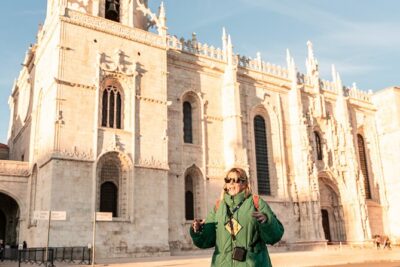 ★ 5.0Age of Discoveries Walking Tour in BelémFrom $31,513 reviews
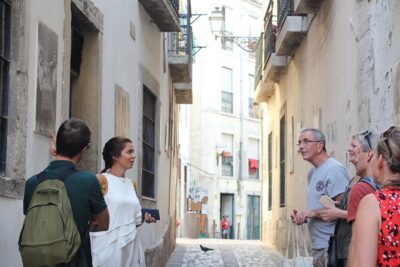 ★ 5.0Lisbon Roots – Small group Food & Culture Walking Tour w/tastingsFrom $168910 reviews
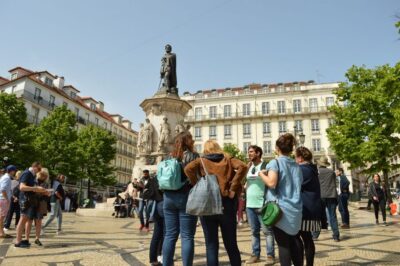 ★ 4.9Starter Walking Tour to the highlights in GermanFrom $33781 reviews
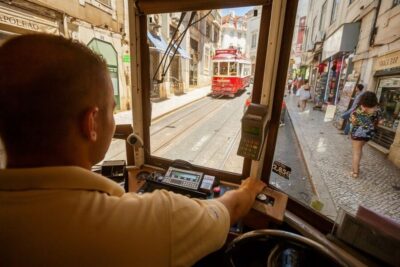 ★ 4.1Lisbon Tram No. 28 Ride & Walking TourFrom $23766 reviews
Browse the lists this tour appears in