
Reviewed · HISTORICAL TOURS
Full day Small Group Tour of Historical Lisbon
Lisbon finally makes sense on foot. This small-group day tour threads together the city’s big landmarks and the everyday streets between them, from baroque churches to Alfama viewpoints where Fado feels close. I especially like how the route is built for walkable storytelling, so you’re not just seeing sights—you’re understanding why they’re there.
The second thing I like: you get lots of key moments without a giant crowd—maximum 8 travelers—so your guide can answer your questions as you go. One real consideration is the walking itself: it’s a full day with plenty of uneven streets and stairs, and on a hot day it can feel long.
In This Review
- Key things I’d plan around
- Getting Your Bearings in Central Lisbon (Without Feeling Like a Tourist Trap)
- Starting at Igreja de São Roque: Baroque Art in One Stop
- Bairro Alto Streets and the Eccentric Side of Lisbon
- Trindade and Largo do Carmo: Food, Belief, and Earthquake Memory
- Santa Justa Elevator Views: A Quick Shortcut Over the City
- Chiado and Praca Dom Pedro IV: Shopping Streets With Real Stories
- The City’s Planned Core: Neo-Manueline Station and Praça da Figueira
- Rua Augusta Area and Miradouro da Graça: Lisbon Looks Like a Drawing
- Church of Our Lady of Grace and Saint Vincent’s: Old Lisbon’s Religious Threads
- Feira da Ladra and the National Pantheon: Everyday Life and Big Names
- Alfama Viewpoints and Surviving the 1755 Earthquake
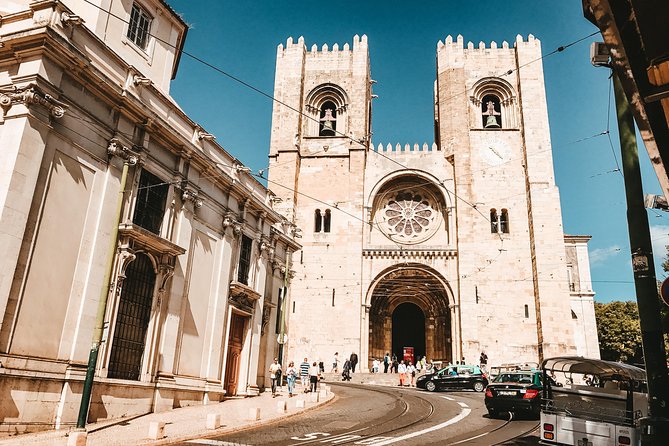
- Lisbon Cathedral Interior: The One Extra Ticket Cost
- Reconquista, Prayer, and the Tagus: Santa Luzia and Portas do Sol
- The Spiked House and a Glimpse of Lisbon’s Trade Union Story
- Praca do Comercio Finale: From Regents to River Air
- Price and Value: Is $39 a Smart Deal?
- Who This Tour Fits Best (And Who Should Skip It)
- Should You Book This Historical Lisbon Tour?
- FAQ
- How long is the Lisbon historical small-group tour?
- What’s included in the price?
- Is food and drinks included?
- Is Lisbon Cathedral included?
- How many people are in the group?
- Where does the tour start and end?
- What time does the tour begin?
- Is the tour suitable for people with walking disabilities?
- What’s the cancellation policy?
Key things I’d plan around
- Small group size (max 8) means you move as a real team, not a herd
- Viewpoints throughout the day help you learn Lisbon’s layout fast
- Major districts in one loop: Alfama, Bairro Alto, and Baixa-Chiado
- Clear history markers from the 1755 earthquake to later political repression
- Most stops are admission-free, with the Lisbon Cathedral interior costing extra
Getting Your Bearings in Central Lisbon (Without Feeling Like a Tourist Trap)
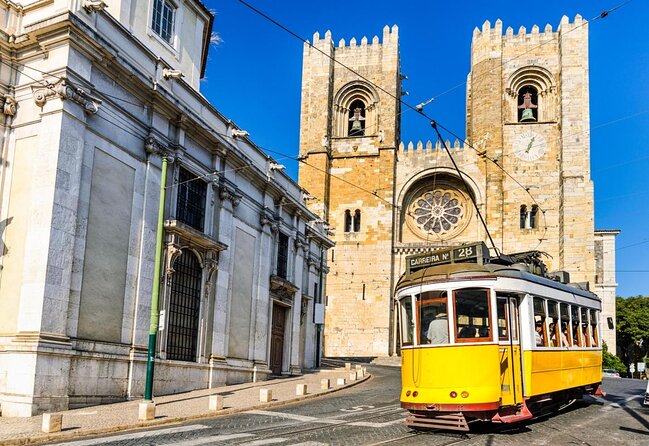
If you’re landing in Lisbon and want a day that gives you shape and direction, this is a strong format. You start in the central core and keep circling through the neighborhoods that most visitors want to see—Alfama, Bairro Alto, and Baixa-Chiado—plus the in-between streets that make Lisbon feel like Lisbon.
I like tours like this because they do two useful things at once. They point out monuments you can’t miss, and they also explain the smaller clues—religious history, major disasters, political power shifts—that explain why the city looks the way it does today.
The day runs about 8 hours, starting at 10:00am. It’s the kind of length where you should treat it like a hike with stops, not a museum trip with breaks.
Worth a look before you lock anything else in around Lisbon:
- Lisbon: History, Stories and Lifestyle Walking Tour
★ 4.8 · 10,902 reviews - Lisbon: Daytime or Sunset Boat Cruise with History and Wine
★ 5.0 · 1,053 reviews - Explore Lisbon by Tuk Tuk: History and Viewpoints
★ 5.0 · 840 reviews - Private Tuk Tuk Tour Through Lisbon’s Historical Streets
★ 5.0 · 734 reviews
Starting at Igreja de São Roque: Baroque Art in One Stop
Your morning begins at Igreja de São Roque, one of Lisbon’s standout churches for dramatic Portuguese Baroque. The big value here isn’t just admiring the building from outside; the stop is designed as a guided look at the church’s artistry (and it’s free).
What you’ll get from this start: a first taste of how Catholic Lisbon’s identity shows up in real places—through sculpture, decoration, and sheer visual effort. If you’ve got any interest in architecture, this is a great “set the stage” moment before you move into neighborhoods where the past is layered into the streets.
Practical note: even though the stop is short, churches can mean cooler interiors and different lighting than the street. Wear clothing that lets you adjust without fuss.
Bairro Alto Streets and the Eccentric Side of Lisbon
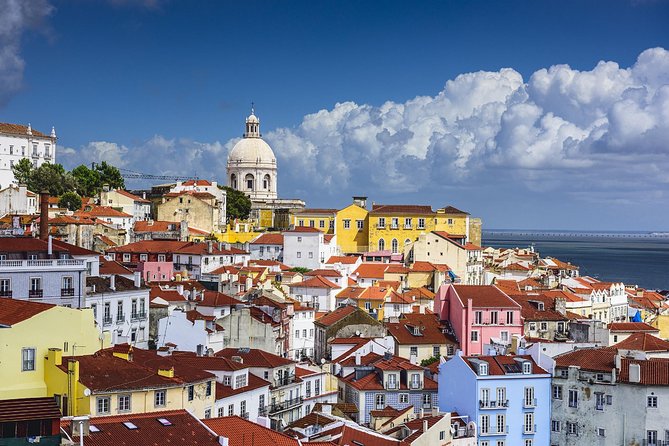
Next up is Bairro Alto, a neighborhood often described in terms of nightlife and viewpoints, but the guided walk pushes beyond that. You’re taken through older streets with a local guide reading the city’s patterns—what’s been preserved, what changed, and why the neighborhood feels different from Baixa.
This is a good stretch for photos and for learning Lisbon’s slope. You’ll feel the city’s “up and down” in your legs, but you’ll also start noticing how Lisbon manages views at every turn.
If you only saw Lisbon from the iconic squares, you’d miss the in-between logic. Bairro Alto is where you start building that mental map.
Trindade and Largo do Carmo: Food, Belief, and Earthquake Memory
At Trindade, the tour adds a clever kind of Lisbon trivia: you learn about a peculiar restaurant area and its connection to Catholic worship, beer, and Freemasonry. It’s short, but it’s the kind of story that makes the city’s culture feel human and specific, not just historical.
Then comes Largo do Carmo, where you stand in front of Gothic ruins tied to the 1755 earthquake. This is one of those moments where you can see how catastrophe becomes part of a city’s identity, not something erased. The square’s vibe is peaceful, but the history underneath it is heavy.
This pairing—Trindade’s cultural oddness and Largo do Carmo’s earthquake memory—works well because it keeps you from falling into a single “church and castle” rhythm.
Worth a look before you lock anything else in around Lisbon:

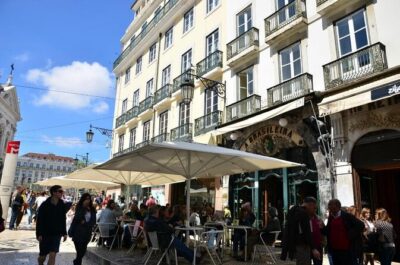

Santa Justa Elevator Views: A Quick Shortcut Over the City
Elevador de Santa Justa is next, giving you a chance for a high viewpoint—a birds-eye look over the city and the Tagus River. Even if you’ve seen postcards, being up there helps you understand how the neighborhoods stack against each other.
For practical value, this is also a time-saver in your mental map. After the lower streets and squares, seeing the city from above helps connect what you just walked with where you’re going next.
If you’re the type who needs a “pause point” during a long day, this stop can be that reset.
Chiado and Praca Dom Pedro IV: Shopping Streets With Real Stories
As you move into Chiado, you’ll get a look at the neighborhood’s traditional shops and businesses. This is Lisbon’s central “daytime” face, but your guide keeps it from becoming random wandering.
Then you reach Praça Dom Pedro IV, in the Baixa Pombalina area, known for its planned urban style after 1755. The stop focuses on key sights around the square, including the Queen Mary National Theatre and Opera House area.
A nice detail: you also get small cultural markers nearby, like long-running local businesses (the tour mentions places such as Tabacaria Mónaco). Those aren’t just name-drops; they help you picture what this neighborhood feels like day-to-day.
The City’s Planned Core: Neo-Manueline Station and Praça da Figueira
A little further along, the tour includes a late 19th-century train station with Neo-Manueline architecture. Even if you don’t board trains, the exterior design gives you another layer of Lisbon’s identity—Portugal’s pride in its own architectural language.
From there you’ll pause at Largo de São Domingos, tied to the Jewish massacre of 1506, with a memorial for victims of religious persecution. Then there’s a quick look at Igreja de São Domingos, and another historical square stop at Praça da Figueira.
These are brief stops, but they matter. Lisbon isn’t only about kings and cathedrals—religious conflict shaped the city’s story, and the memorials and churches show it clearly.
Rua Augusta Area and Miradouro da Graça: Lisbon Looks Like a Drawing
The tour then heads through one of Lisbon’s main pedestrian shopping streets in the downtown core, with views and context tied back to the Santa Justa area. This section is practical: it gets you moving through the central heart without too much detour.
Next comes Miradouro da Graça (Sophia de Mello Breyner Andresen), a classic viewpoint where you look back toward the Castelo de São Jorge, the historic district of Mouraria, and the Tagus in the distance. The stop also helps connect the neighborhoods you’re seeing to the city’s music tradition—there’s a wider Fado thread running through the day.
If you like street-level history, the Miradouro stage is a good reward. You’ll finally see the city’s layers laid out in one view.
Church of Our Lady of Grace and Saint Vincent’s: Old Lisbon’s Religious Threads
At Church of Our Lady of Grace, you’re shown one of the city’s oldest churches and convent areas, tied to the Augustinian monks until 1834. This is about continuity—how religious institutions carried influence over long periods, long before modern city planning.
Then you’ll stop at Igreja de São Vicente de Fora, connected to Lisbon’s patron saint. Again, the time on each spot is short, but the guide’s job is to make each one part of a bigger pattern: who had power, who protected traditions, and how the city marked those shifts in stone.
If you enjoy history, you’ll like how this tour links places with meaning instead of treating them like separate postcards.
Feira da Ladra and the National Pantheon: Everyday Life and Big Names
Feira da Ladra is included as a visit to one of Lisbon’s oldest flea markets, with the note that it has its unique atmosphere on Tuesdays and Saturdays. Even if your day doesn’t match market hours, it’s still an interesting stop because it anchors Lisbon’s street life in a long-running tradition.
Then you get an exterior look at the National Pantheon, a monumental mausoleum for prominent Portuguese men and women. You don’t need to be a hardcore history fan to appreciate the scale here—it’s a “Lisbon takes itself seriously” moment, in architecture.
This mix is smart: a market for the everyday, then a monument for the national story.
Alfama Viewpoints and Surviving the 1755 Earthquake
Now the day leans hard into Alfama, and that’s where the walking feels most real. You’re given time to learn about Alfama’s everyday life, plus key viewpoint stops that show why Alfama is famous: small streets, steep angles, and constant sightlines.
At Miradouro de Santo Estêvão, you get one of Alfama’s best viewpoints—plus a sense of how tiny street patterns connect to larger city landmarks.
Then there’s a stop focused on Alfama’s connection to Fado music, followed by Igreja de São Miguel, identified as one of the churches that survived the 1755 earthquake. That detail alone gives you a different kind of respect for what you’re seeing. You’re not just looking at an old church; you’re looking at something that made it through a turning point in Lisbon’s history.
Lisbon Cathedral Interior: The One Extra Ticket Cost
At Lisbon Cathedral, you’ll have the chance to visit the interior with a detailed guided tour. This is also the one spot where admission isn’t included, so plan for that extra cost.
Why it’s worth the extra time: cathedrals are where you often see the longest threads of a city’s identity—religious influence, architectural layering, and centuries of change.
This is also a good moment to slow down. If your legs are feeling it, the cathedral interior gives you a change of pace from the bright outdoor walking.
Reconquista, Prayer, and the Tagus: Santa Luzia and Portas do Sol
Next comes Igreja de Santa Luzia, paired with a unique viewpoint over Alfama and the Tagus. The tour frames Lisbon as a religious battleground during the Reconquista, and you’ll start seeing the city’s faith history less like abstract facts and more like an actual map of places and power.
Then you reach Miradouro das Portas do Sol, a “breathe for a minute” kind of viewpoint. These stops aren’t only for sightseeing; they help you understand why locals built homes where they did—because views weren’t optional.
The Spiked House and a Glimpse of Lisbon’s Trade Union Story
There’s a brief architecture stop to see Lisbon’s famous Spiked House (the tour describes it as a rare example of 16th-century palatial architecture). These kinds of buildings can feel like puzzles, and Lisbon has a lot of puzzles. This is one you can spot and talk about later.
Then the day includes a short history note about trade union activism in Lisbon—a quick reminder that the city’s story isn’t only about monarchs, churches, and wars. Labor movements helped shape modern social life too.
These shorter stops can be easy to miss if you rush. Try to keep your attention switched on here, because that’s where the “Lisbon is weird in a good way” stories show up.
Praca do Comercio Finale: From Regents to River Air
You end at Praça do Comércio (Terreiro do Paço) in the Baixa waterfront area. This big square is tied to major Portuguese history, including mentions of the Marquis of Pombal and the regicide of 1908, all explained in context as you wrap up the loop.
Why this ending works: after spending the day climbing, descending, and looking at angles from above, you finish in a wide open space with the Tagus in reach. It’s a natural “reset” for your body and your brain.
For a practical next step, this is also a good place to plan your own dinner—central, easy to reach, and full of options nearby (just remember food and drinks aren’t included in the tour).
Price and Value: Is $39 a Smart Deal?
At about $39 for roughly 8 hours with a professional guide and a maximum group size of 8 travelers, this is priced like a local-walk day rather than a pricey museum tour. The biggest value boosters are the included guide and local taxes, plus the fact that many of the listed stops are marked as free admission (church exteriors, viewpoints, and several guided segments).
The one clear cost surprise to consider is Lisbon Cathedral interior, where admission is not included. If you add that, your total will be a bit higher, but you still get a full day of guided context across multiple neighborhoods.
Also, because food and drinks aren’t included, I recommend budgeting for at least water and one meal. Bring snacks if you hate the idea of spending your whole day hungry.
Who This Tour Fits Best (And Who Should Skip It)
This tour fits best if you:
- want a first-time friendly way to understand central Lisbon
- like walking plus guided explanation (not just photo stops)
- care about architecture and religious history, plus the story behind the Fado connection
It’s less ideal if you:
- have walking limitations or struggle with stairs (the day is physically demanding)
- want a low-step, slow-paced day with lots of long breaks
A lot of people end up loving this experience because it gives them a map of Lisbon’s identity, not just a checklist of sights.
Should You Book This Historical Lisbon Tour?
Yes—if you want the best “I get Lisbon now” day you can manage. The route is built around real neighborhoods (Alfama, Bairro Alto, Baixa-Chiado) and strong story anchors: churches, viewpoints, earthquake memory, and major historical moments like the 1506 massacre and the Salazar-era political prison museum reference tied to Lisbon Cathedral-area stops.
Book it if you’re okay with an active full day and you’d like to learn from a guide in a small-group setting where questions actually get answered. Skip it if you can’t handle lots of steps and uneven streets.
If you want, tell me your travel dates and your interests (Fado, architecture, history, food, viewpoints). I can help you decide how much to budget for extra admissions and which day to aim for based on your priorities.
FAQ
How long is the Lisbon historical small-group tour?
The tour runs for about 8 hours.
What’s included in the price?
The tour includes local taxes and a professional guide. A mobile ticket is provided.
Is food and drinks included?
No. Food and drinks are not included, so you’ll need to plan your own meal and water.
Is Lisbon Cathedral included?
You can do the Lisbon Cathedral interior visit with a detailed tour, but admission is not included, so expect an extra ticket cost there.
How many people are in the group?
The maximum group size is 8 travelers, which keeps the experience more personal.
Where does the tour start and end?
It starts at Church of Saint Roch, Largo Trindade Coelho, 1200-470 Lisboa and ends at Praça do Comércio, 1100-148 Portugal.
What time does the tour begin?
The start time is 10:00am.
Is the tour suitable for people with walking disabilities?
It’s not recommended for travelers with walking disabilities. You should have moderate physical fitness since there’s a lot of walking and stairs.
What’s the cancellation policy?
There is free cancellation up to 24 hours in advance for a full refund. If you cancel less than 24 hours before the start time, the amount paid is not refunded.
More Historical Tours in Lisbon
- Lisbon: History, Stories and Lifestyle Walking Tour★ 4.8 · 10,902 reviews
- Lisbon: Daytime or Sunset Boat Cruise with History and Wine★ 5.0 · 1,053 reviews
- Explore Lisbon by Tuk Tuk: History and Viewpoints★ 5.0 · 840 reviews
- Private Tuk Tuk Tour Through Lisbon’s Historical Streets★ 5.0 · 734 reviews
- Lisbon Sunset Sailing with Portuguese Wine and History★ 5.0 · 668 reviews
More Tours in Lisbon
- Lisbon City Center Tour – The Unmissable Lisbon★ 5.0 · 22,234 reviews
- Lisbon: History, Stories and Lifestyle Walking Tour★ 4.8 · 10,902 reviews
- True 4Hour Private Tuk Tuk Tour: Discover Lisbon with a Local!★ 5.0 · 8,008 reviews
- Winner 2025 Undiscovered Lisbon Food & Wine Tour by Eating Europe★ 5.0 · 6,390 reviews
- Lisbon: Sintra, Pena, Cabo da Roca, Cascais Tour with Pickup★ 4.8 · 5,445 reviews
More Tour Reviews in Lisbon
- Lisbon City Center Tour – The Unmissable Lisbon★ 5.0 · 22,234 reviews
- Lisbon: Sintra, Pena, Regaleira, Cabo da Roca & Cascais★ 4.7 · 19,656 reviews
- Lisbon Card: 24, 48, or 72-Hour Pass★ 4.5 · 17,944 reviews
- Lisbon: Jerónimos Monastery Entrance Ticket★ 4.1 · 14,164 reviews
- Lisbon: History, Stories and Lifestyle Walking Tour★ 4.8 · 10,902 reviews
Just in: fresh Lisbon reviews from the team





Historical Tours, compared.
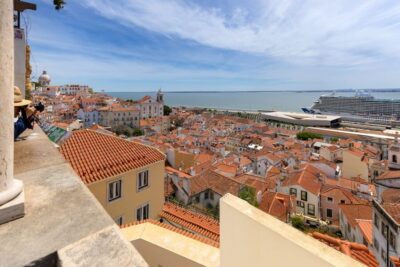 ★ 4.8History, Stories and Lifestyle Walking TourFrom $2910,902 reviews
 ★ 5.0Daytime or Sunset Boat Cruise with History and WineFrom $471,053 reviews
 ★ 5.0Explore Lisbon by Tuk Tuk: History and ViewpointsFrom $19840 reviews
 ★ 5.0Private Tuk Tuk Tour Through Lisbon’s Historical StreetsFrom $27734 reviews
 ★ 5.0Lisbon Sunset Sailing with Portuguese Wine and HistoryFrom $54668 reviews
 ★ 4.8Live Fado Show in Historic Alfama with Port WineFrom $17572 reviews
 ★ 4.8Guided Tuk-Tuk Tour Along the Historic Tram Line 28From $147475 reviews
 ★ 5.0Private Lisbon-Arrábida Wine Tour: 3 Wineries, Coast & HeritageFrom $156450 reviews
Browse the lists this tour appears in