
Reviewed · TAGUS RIVER CRUISES
Lisbon Sunset Sailing with Portuguese Wine and History
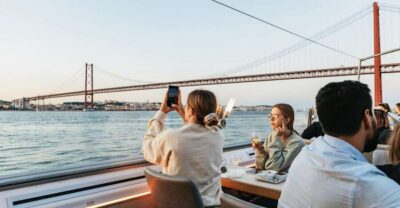
Sunset sailing on the Tagus feels like magic. You get Vinho Verde poured as you drift past Lisbon’s best-known sights, with guide commentary that links what you see to what Lisbon has been through. My one caution: the river breeze can bite, and even with blankets you may want warmer layers if you go outside summer.
I really like that this is built for comfort and conversation, not big-boat chaos. With a maximum of 14 people onboard, I like how easy it is to hear the crew and still find space to lean out for photos. A smart consideration: you’re mostly viewing from the water, so plan to use this as a best-of orientation, not a substitute for walking every neighborhood.
In This Review
- Key things I’d plan around on this sunset sail
- Why the Tagus sunset view is the real Lisbon highlight
- Meeting at Doca de Santo Amaro and settling into a small sailboat
- The skyline start: 25th April Bridge, Christ the King, and Commerce Square views
- Alfama, Sé de Lisboa, and Castelo: seeing the old city from the water
- Vasco da Gama Bridge, Pantheon, and the “new Lisbon” along the water
- Barrio Alto and Cais do Sodré: nightlife and port-town energy
- Time Out Market and Ponto Final: turning the city’s flavors into a plan
- Belém landmarks you can’t miss: Jerónimos, Belem Tower, Discoveries monument
- More Belém stops: Belem Palace, Pastéis de Belém, and the science-meets-art angle
- Bugio, Ajuda Palace, CCB, and Champalimaud: what else is worth noticing
- Wine, snacks, and what to wear when the breeze turns up
- Guides named Pedro and David: the storytelling style you’ll feel
- How much you pay, and why it can be good value
- Who should book this sunset sailing trip, and who might skip
- Should you book Lisbon Sunset Sailing with Portuguese Wine and History?
- FAQ
- How long is the Lisbon Sunset Sailing tour?
- How much does the tour cost?
- What drinks are included on board?
- Where do I meet the group?
- What’s the group size on this shared sail?
- Is the tour in English?
- Is my ticket valid for any session?
- What happens if weather is poor?
- Are service animals allowed?
- Any quick tips to stay comfortable?
Key things I’d plan around on this sunset sail
- Free-flow Vinho Verde plus iced tea and bottled water keeps the mood easy
- Small group (max 14) means the boat stays relaxed and not jammed
- Landmarks from the Tagus include major bridges and major hills on both banks
- Pedro and David are the kind of guides who connect sights to real Lisbon life
- Blankets and windbreak help when the sky gets pretty but the air gets cool
- A 2-hour session is a great “in-between” activity when your day feels packed
Why the Tagus sunset view is the real Lisbon highlight
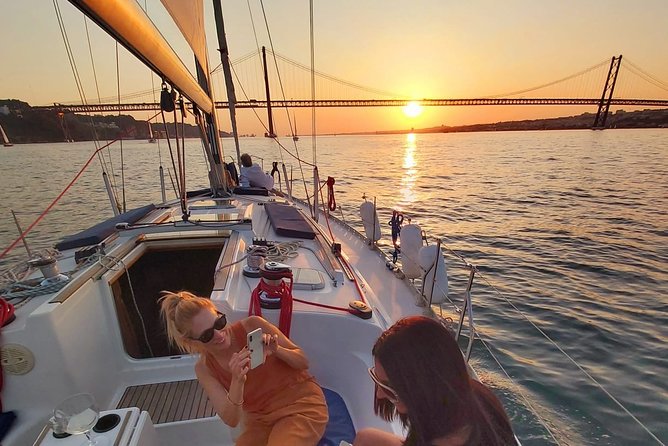
Lisbon’s famous for hills, tiles, viewpoints, and tight streets. But from land, it can be hard to understand how all those angles and neighborhoods fit together. From the Tagus, the city’s shape makes sense fast: you see the bridges, you see the coastline, and you understand why ships and sailors mattered here.
This sail is a classic “end of day” move because the light changes everything. As the sun drops, the waterfront colors soften and even the big monuments look less like postcards and more like part of a living city. If you like your sightseeing with a little downtime, this format hits the sweet spot.
Back on the Tagus: more hours on the water
- Lisbon: Sunset Boat Party Cruise with DJ and Open Bar
★ 4.5 · 10,378 reviews - Lisbon: Sunset Boat Tour with Music and Drinks
★ 4.6 · 3,908 reviews - Lisbon: Tagus River Cruise with Welcome Drink
★ 4.2 · 3,717 reviews - Lisbon: Daytime/Sunset/Night City Sailboat Tour with Drink
★ 4.9 · 3,114 reviews
Meeting at Doca de Santo Amaro and settling into a small sailboat
You meet at Doca de Santo Amaro, 1300 Lisbon, and the ride ends back at the same spot. There’s no hotel pickup, so give yourself time to reach the marina by public transport and arrive a little early just to get settled.
This is a shared experience with a maximum of 14 onboard, and that matters. In practice, you’re not squeezed onto a crowded vessel where you miss the guide’s stories. People in your group can still talk to the crew, ask questions, and get attention without feeling like you’re interrupting a conveyor belt.
The boat itself is comfortable and kept clean, and the layout gives you decent viewpoints from both the front and back areas. If you’re the type who wants to photograph bridges and skylines, this helps because you can reposition without climbing over strangers.
The skyline start: 25th April Bridge, Christ the King, and Commerce Square views
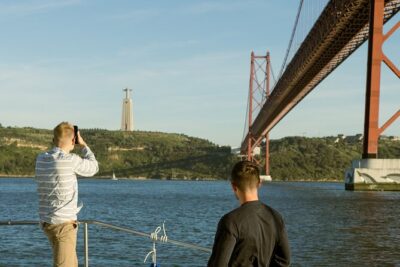
The first big “wow” is how the sail frames Lisbon’s river infrastructure. You’ll catch views connected to the 25th April Bridge (a suspension bridge across the Tagus). It was originally named Salazar Bridge, and your guide explains how that name change and the bridge’s presence fit Portugal’s modern story.
On the south bank side, you also get a sense of Christ the King in Almada—an iconic religious monument that overlooks Lisbon. From the water, the statue’s scale and the river’s width do the explaining. Even if you don’t climb any hills during this trip, you’ll still come away with a stronger mental map of where the viewpoints sit.
As you continue, your guide turns the river into a history lesson by pointing out what you’ll later recognize on land—especially around the Commerce Square (Terreiro do Paço) and the Arco da Rua Augusta entrance. Commerce Square is the kind of place where you can feel Lisbon was rebuilt after disaster. Your guide also connects it to the 1755 earthquake era, which helps the huge, open space feel more meaningful than just a photo spot.
Alfama, Sé de Lisboa, and Castelo: seeing the old city from the water
Lisbon’s oldest neighborhoods can be hard to picture until you get the “bird’s-eye” idea—even if you’re still on a boat. From the Tagus, the hills work like a diagram. Your guide will bring up Alfama, known for winding streets, colorful buildings, and traditional fado music, and then connect those ideas to what you’re seeing across the river.
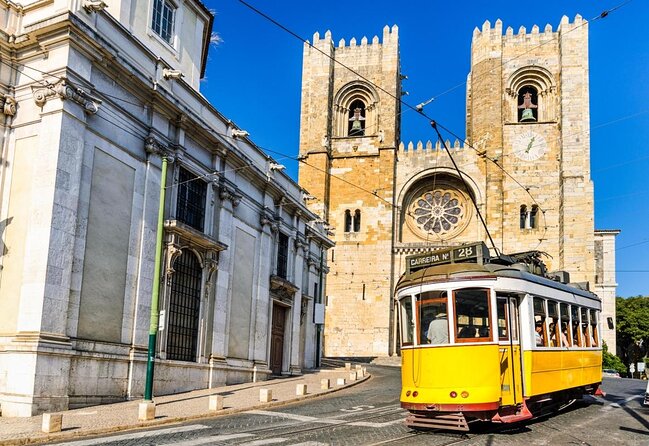
Next comes Sé de Lisboa (Lisbon Cathedral), a Roman Catholic cathedral from the 12th century with a mix of architectural styles. Hearing that the building blends Romanesque, Gothic, and Baroque details is useful because it matches what you’ll notice later if you spend time in the neighborhood.
Above it all is St. George’s Castle, a medieval fortress that has served as both royal palace and military stronghold. From the water, you won’t get a close-up like you would from the castle walls, but you’ll see why it’s positioned where it is: it dominates the city’s rise. That visual context makes the castle feel less like an optional stop and more like Lisbon’s natural anchor.
You’ll also get references that tie the city’s slopes to viewpoints—your guide mentions views from the Castelo area (often described as the encostas do Castelo do rio). It’s a reminder that Lisbon isn’t flat, and that’s the main reason walking here feels like both exercise and entertainment.
Worth a look before you lock anything else in around Lisbon:
Vasco da Gama Bridge, Pantheon, and the “new Lisbon” along the water
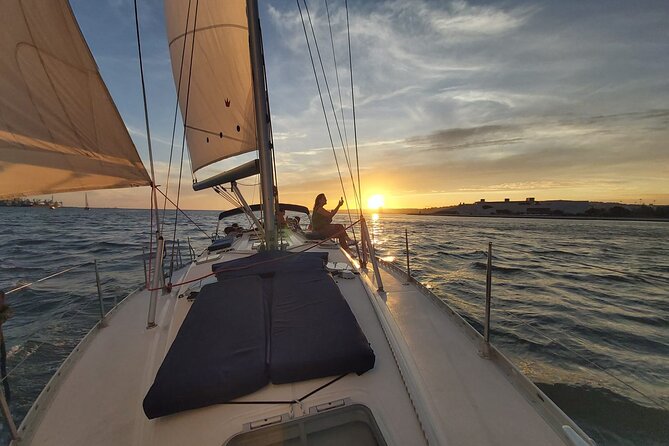
Not everything here is medieval or maritime. As the sail continues, you get skyline impressions that include the Vasco da Gama Bridge, one of Europe’s longest bridges. It opened in 1998 for the World Expo in Lisbon, so it’s a marker of how Lisbon kept changing even while it protected the old.
The route also points you toward cultural landmarks such as the National Pantheon, which holds tombs of famous Portuguese figures like explorers, poets, and politicians. From a boat view, it can be harder to read details, but the story helps. It frames the building as a national memory box rather than just another big structure.
Barrio Alto and Cais do Sodré: nightlife and port-town energy
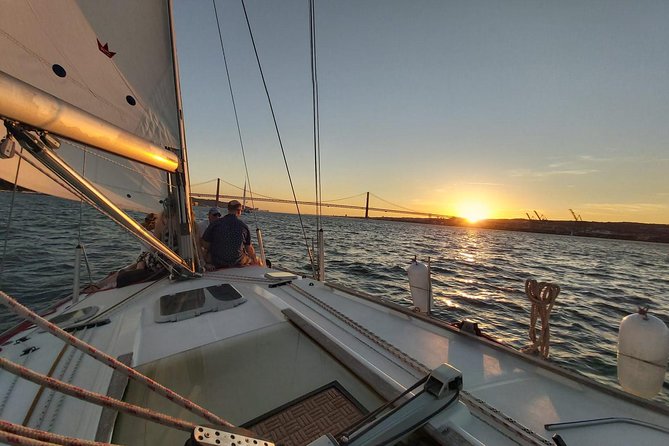
Your guide connects river views with the neighborhoods that give Lisbon its daily pulse. Bairro Alto comes up as a bohemian area known for street art, nightlife energy, and traditional fado. Cais do Sodré is described as a former port area that now feels more modern and social, with bars and restaurants along with street art.
From the Tagus, you’re not going to wander these streets during the sail. But if you’ve got dinner plans after, this part of the tour helps you choose directions with confidence. It’s like getting the map’s legend without having to stop and study it yourself.
Time Out Market and Ponto Final: turning the city’s flavors into a plan
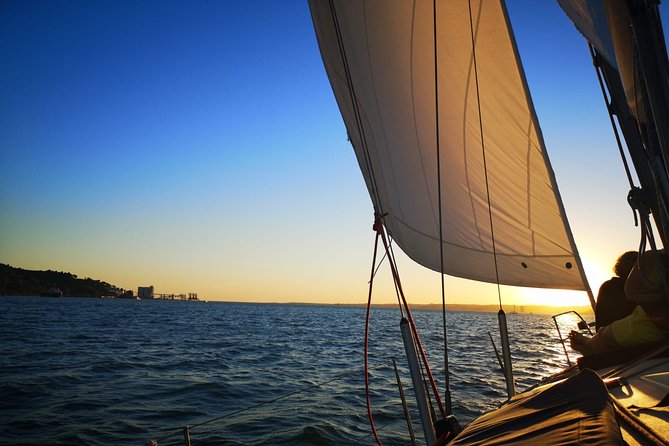
Even though you’re on the water, food landmarks show up in the narrative in a way that helps you time your evening. Time Out Market Lisboa is presented as an updated version of the old Mercado da Ribeira in Cais do Sodré, where chefs share the spotlight in one food hall. If you want a low-effort meal plan after sailing, this is a strong candidate.
On the Almada side, Ponto Final is mentioned as a seafood restaurant with sweeping Tagus views. Even if you don’t eat there that night, it gives you a clear idea of where to aim for dinner when the sky goes quiet.
Belém landmarks you can’t miss: Jerónimos, Belem Tower, Discoveries monument
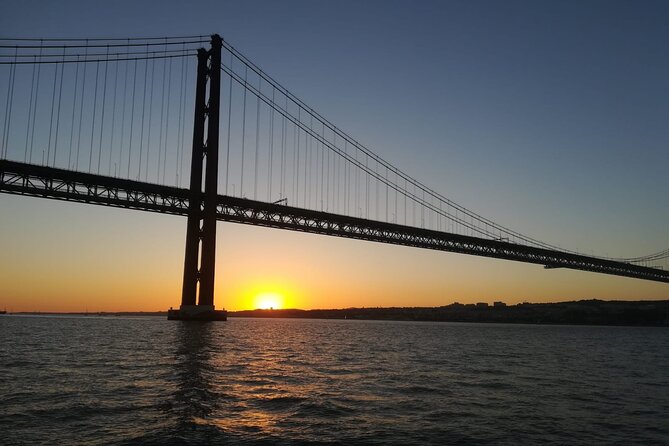
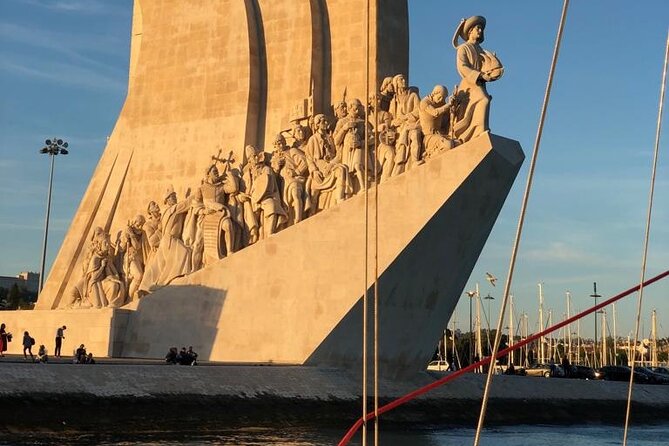
This is where the sail really earns its title, Lisbon Sunset Sailing with Portuguese wine and history. You’ll get views and explanations linked to Belém’s maritime identity, including the Monument to the Discoveries (Padrão dos Descobrimentos) built to commemorate Portugal’s Age of Discovery. Your guide points out how the monument sits where ships once departed, so it’s not just sculpture; it’s geography turned into memory.
The Jerónimos Monastery is also in the mix, a UNESCO site with standout Portuguese Gothic architecture. The key value here is that your guide ties it to sailors and prayer connected with voyages, which makes the building feel like part of the departure story rather than a museum stop.
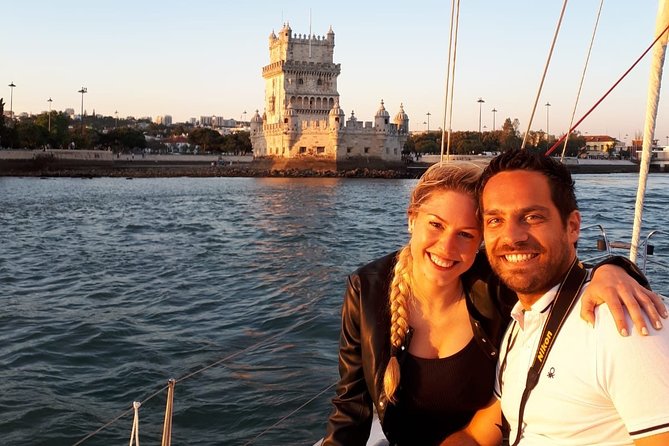
And then there’s the Belém Tower, a signature symbol of Lisbon’s maritime heritage. Historically, it served defensive and ceremonial roles for ships arriving and leaving. Seeing it referenced from the water helps you understand why it looks “at the edge” in a city built around the Tagus.
More Belém stops: Belem Palace, Pastéis de Belém, and the science-meets-art angle
Belém isn’t only grand monuments. Your guide also brings in Belem Palace, the President’s official residence with gardens. Nearby, the classic snack-and-sweet stop is Pasteis de Belém Coffee House, famous for pastéis de nata.
If you like pairing your sightseeing with a finish you can taste, this part matters. You’ll likely want dessert after, and your guide’s mention of that Belém pastry tradition makes it easy to plan a direct, satisfying route.
You’ll also hear about modern culture on the waterfront, including the Museum of Art, Architecture and Technology (MAAT), which sits by the Tagus and connects contemporary art with architecture and technology. Another cultural note is the Electricity Museum, housed in a historic power station with interactive exhibits and workshops.
On the history-and-innovation side, the sail route references the Hidroavião Lusitania Sacadura Cabral e Gago Coutinho monument commemorating the 1922 flight from Lisbon to Rio de Janeiro. It’s the kind of detail that makes Lisbon feel like it traveled beyond Europe long before social media.
Bugio, Ajuda Palace, CCB, and Champalimaud: what else is worth noticing
Belém and the river don’t end at the postcard. Your guide includes additional references that help you see Lisbon as a whole ecosystem.
Bugio is a small island in the Tagus between Cascais and Lisbon, and it’s known for a lighthouse built in the 16th century. Even if you can’t read every detail from the water, the idea of navigation landmarks is powerful, because it puts the harbor’s safety into the story.
You’ll also hear about Ajuda Palace, the former royal residence until the monarchy ended in 1910. And nearby are modern institutions like the Centro Cultural de Belém (CCB), described as a modern art museum tied to exhibitions related to music, theater, and literature.
One more forward-looking stop you may find interesting is the Champalimaud Research Center, a biomedical research facility established in 2004. It’s listed as a state-of-the-art facility in Belém, and the way it’s mentioned makes a point: Lisbon is still writing new chapters, not only reenacting old ones.
Wine, snacks, and what to wear when the breeze turns up
Let’s talk about what’s actually in your cup. Included drinks are Vinho Verde, iced tea, and bottled water. More than one guide-led moment is tied to how the crew keeps things flowing, including a free-flow vibe where glasses are topped up. In the reviews, I saw people praise guides like Pedro and David for keeping the mood friendly and the wine pours generous.
You’ll also get blankets onboard, and some visits mention windbreakers too. That’s great, because even when the sun is warm, the river can turn chilly once you’re out on open water. If you run cold easily, bring a light jacket even in shoulder seasons.
For snacks, there are small light bites mentioned in the experience, including chips. It’s not a full meal, so if you’re sailing before dinner, plan to eat after.
Guides named Pedro and David: the storytelling style you’ll feel
A big part of why this sail works is how the crew talks. Guides like Pedro and David are referenced repeatedly for connecting the landmarks to Portugal’s lived story, not just listing names. I like that they slow down enough to answer questions and adapt to the group, because some people want quick facts and some want more context.
If you care about how Lisbon got shaped—bridges, ports, neighborhoods, and how a country remembers itself—this format gives you a route map for later. You’ll recognize more when you walk, because the guide tied the names to the skyline you just saw.
How much you pay, and why it can be good value
At $54.42 per person for about 2 hours, the value comes from three things you’re not always getting together in Lisbon: a sunset sail, drinks included, and a small group with guide commentary. A “view” activity gets pricey in many places, but here you’re paying for the boat time plus the Vinho Verde experience.
Also, the cap of 14 people keeps it personal. If you’ve ever been stuck in a large tour group where you miss the guide over engines and crowd noise, you’ll appreciate the smaller onboard size.
Who should book this sunset sailing trip, and who might skip
This works best if you want a single activity that does multiple jobs: sightseeing, orientation, and a relaxed evening plan. It’s a strong pick for couples, small groups, and anyone who wants to see Lisbon’s big landmarks without sprinting around in heat or traffic.
It might be less ideal if you want a hands-on history walk with extended stops and museum time. This is mainly a viewpoint experience from the water, and you’ll get best results if you treat it as the opener to deeper exploring on land after.
Should you book Lisbon Sunset Sailing with Portuguese Wine and History?
I’d book it if you want a sunset plan that feels special but not stressful. The combination of small group sailing, Vinho Verde, and landmark storytelling is a practical way to understand Lisbon quickly—especially the way the Tagus divides and connects everything.
Book it with one simple expectation: you’re mostly taking in Lisbon from the river, not doing a long checklist of site entrances. If you’re okay with that, you’ll leave with better bearings, a fuller sense of the city’s layers, and a nice chance to end the day without racing to your next reservation.
FAQ
How long is the Lisbon Sunset Sailing tour?
It runs for about 2 hours.
How much does the tour cost?
The price is $54.42 per person.
What drinks are included on board?
The tour includes Vinho Verde, iced tea (soda/pop ice tea), and bottled water.
Where do I meet the group?
You meet at Doca de Santo Amaro, 1300 Lisbon, Portugal.
What’s the group size on this shared sail?
The maximum number of travelers onboard is 14.
Is the tour in English?
Yes, it’s offered in English.
Is my ticket valid for any session?
No. The ticket is valid only for the indicated session.
What happens if weather is poor?
The experience requires good weather. If it’s canceled due to poor weather, you’ll be offered a different date or a full refund.
Are service animals allowed?
Service animals are not allowed on shared experiences.
Any quick tips to stay comfortable?
Bring warm layers for breezy evenings and expect a cooler river wind, even if the sunset looks warm.
More Cruises & Boat Tours in Lisbon
- Lisbon: Sunset Boat Party Cruise with DJ and Open Bar★ 4.5 · 10,378 reviews
- Lisbon: Sunset Boat Tour with Music and Drinks★ 4.6 · 3,908 reviews
- Lisbon: Tagus River Cruise with Welcome Drink★ 4.2 · 3,717 reviews
- Lisbon: Daytime/Sunset/Night City Sailboat Tour with Drink★ 4.9 · 3,114 reviews
- Lisbon: Sunset Cruise with Welcome Drink and Snacks★ 4.4 · 3,021 reviews
More Tour Reviews in Lisbon
- Lisbon City Center Tour – The Unmissable Lisbon★ 5.0 · 22,234 reviews
- Lisbon: Sintra, Pena, Regaleira, Cabo da Roca & Cascais★ 4.7 · 19,656 reviews
- Lisbon Card: 24, 48, or 72-Hour Pass★ 4.5 · 17,944 reviews
- Lisbon: Jerónimos Monastery Entrance Ticket★ 4.1 · 14,164 reviews
- Lisbon: History, Stories and Lifestyle Walking Tour★ 4.8 · 10,902 reviews
More Hours on the Tagus
- Lisbon: Sunset Boat Party Cruise with DJ and Open Bar★ 4.5 · 10,378 reviews
- Lisbon: Sunset Boat Tour with Music and Drinks★ 4.6 · 3,908 reviews
- Lisbon: Tagus River Cruise with Welcome Drink★ 4.2 · 3,717 reviews
- Lisbon: Daytime/Sunset/Night City Sailboat Tour with Drink★ 4.9 · 3,114 reviews
- Lisbon: Sunset Cruise with Welcome Drink and Snacks★ 4.4 · 3,021 reviews
Just in: fresh Lisbon reviews from the team




Tagus River Cruises, compared.
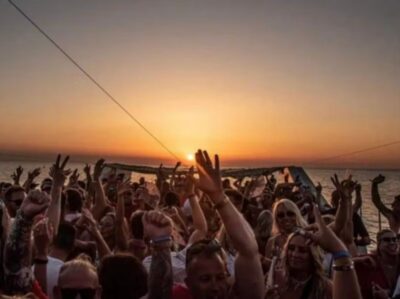 ★ 4.5Sunset Boat Party Cruise with DJ and Open BarFrom $2710,378 reviews
 ★ 4.6Sunset Boat Tour with Music and DrinksFrom $183,908 reviews
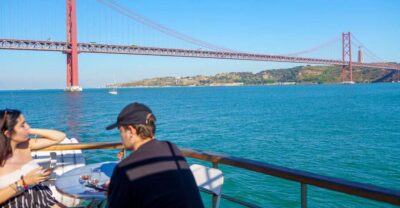 ★ 4.2Tagus River Cruise with Welcome DrinkFrom $163,717 reviews
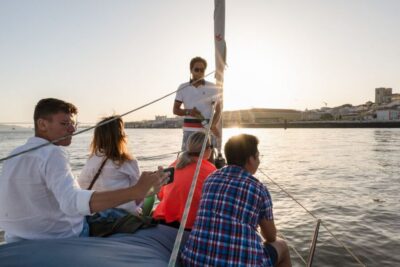 ★ 4.9Daytime/Sunset/Night City Sailboat Tour with DrinkFrom $413,114 reviews
 ★ 4.4Sunset Cruise with Welcome Drink and SnacksFrom $353,021 reviews
 ★ 4.0Tagus River Cruise to the Ocean & Dolphin WatchingFrom $383,019 reviews
 ★ 4.7Sunset Catamaran Boat Tour with Music and DrinksFrom $262,834 reviews
 ★ 4.2Tejo River Sightseeing CruiseFrom $212,799 reviews
Browse the lists this tour appears in