

Reviewed · LISBON TUK-TUK TOURS
Full day in Lisbon with Tuk-Tuk
Lisbon in a tuk-tuk feels like cheating. The day pairs tuk-tuk ease with a serious dose of real Lisbon: seven hills, miradouros, cathedrals, monasteries, and that Belém stretch that can swallow a whole trip. The best part is the human one, a local guide (with years of experience and the kind of local perspective that makes the streets feel readable, not just photogenic).
I also love how the route is built for relaxed exploration instead of a hard sprint. You get standout viewpoints like Portas do Sol and Santa Luzia, and you also have room for quieter stops off the main tourist lanes, with your guide willing to adjust the day to your group. One thing to keep in mind: the price is on the high side for a 5-hour tour, and you’ll still do some uphill walking in older neighborhoods like Alfama.
In This Review
- Key moments that make this Lisbon tuk-tuk day worth it
- Why the tuk-tuk approach works in Lisbon’s seven hills
- Praça da Figueira to Lisbon Cathedral: a fast start with real context
- Miradouro Santa Luzia and Senhora do Monte: viewpoints with purpose
- São Vicente de Fora and the National Pantheon: Portugal’s solemn side
- Alfama on foot: the oldest streets, fado vibes, and a quick aperitif
- Chiado, Bairro Alto, and viewpoints with evening energy
- Estrela Basilica and Estrela Gardens: slow down in the green
- Belém in a single day: Pastéis de Belém plus the big monuments
- Cristo Rei after the 25 de Abril Bridge: a dramatic viewpoint break
- Ferry back to Lisbon: Tagus time instead of one more van ride
- Guide quality is the real difference on this tour
- Price and value: when $471 per group makes sense
- Who this Lisbon tuk-tuk day is best for
- Should you book this Lisbon tuk-tuk tour?
- FAQ
- Where does the tour start and end?
- How long is the Lisbon tuk-tuk experience?
- How much is it, and what group size is included?
- What food and drinks are included?
- What are the main sightseeing areas you’ll cover?
- Is the tour private?
- What languages are the live guides available in?
- Is the tour wheelchair accessible?
- Can I cancel for a full refund?
- Is there a reserve now & pay later option?
Key moments that make this Lisbon tuk-tuk day worth it

- A 27-year local guide with 9 years of guiding experience, focused on stories you can actually use in your next walk
- Seven hills, but manageable: tuk-tuk hops between viewpoints so you’re not cooked by the slopes
- Top miradouros with photo time at Santa Luzia and Senhora do Monte (plus other scenic terrace moments)
- Alfama on foot with a guided stroll through the oldest streets and a quick aperitif
- Belém essentials in one pass: Jerónimos Monastery, Belém Tower, Monument to the Discoveries, and Pastéis de Belém
- A ferry return that adds a calm Tagus perspective before you head back
Why the tuk-tuk approach works in Lisbon’s seven hills
Lisbon is one of Europe’s most walkable cities, but the hills are no joke. This is where a tuk-tuk earns its keep. You’re not trying to “power walk” from viewpoint to viewpoint. Instead, you do the uphill effort in small, planned doses, then let the tuk-tuk reposition you so you can keep enjoying the sights.
That matters because this tour covers multiple neighborhoods that are usually done as separate days. By hopping between areas, you get more variety: old-world religious landmarks, hilltop panorama points, and the Belém monuments that most people only reach if they commit to a long day.
And yes, it’s still a sightseeing day. You’ll have short visits and photo stops, plus guided walking time in places where walking is the point. The goal isn’t to avoid walking entirely. It’s to keep you comfortable enough to actually enjoy what you came for.
The hills done the easy way, more tuk-tuk runs
- True 4Hour Private Tuk Tuk Tour: Discover Lisbon with a Local!
★ 5.0 · 8,008 reviews - Lisbon: Private Guided Tuk-Tuk Tour with Hotel Pickup
★ 4.9 · 4,552 reviews - Private Lisbon Sightseeing Tuk-Tuk Tour: Alfama, Belém & More
★ 5.0 · 4,277 reviews - Lisbon Highlights: Private Tuk Tuk Tour Adventure Sightseeing
★ 5.0 · 3,284 reviews
Praça da Figueira to Lisbon Cathedral: a fast start with real context
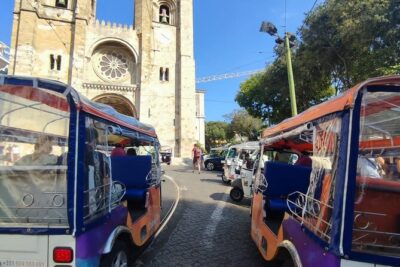
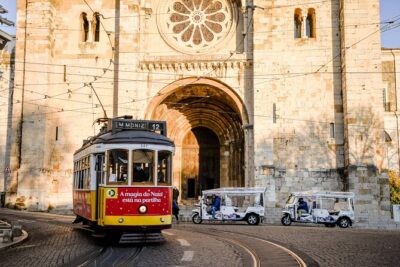
You begin at Praça da Figueira, a practical launch point because it’s central and helps you get your bearings quickly. From there, the day starts with Lisbon Cathedral (Sé de Lisboa). Your stop is short, but it’s enough to notice scale and style before you move on.
Why this opening works: it gives you a reference point for the rest of the day. Lisbon’s later layers—earthquake-era changes, hillside neighborhoods, and the grand churches you’ll see next—make more sense once you’ve seen where the story starts in stone.
Tip for you: even if you’re not a “cathedral person,” use this moment to locate the bigger idea. Think of it as orientation for Lisbon, not just sightseeing.
Miradouro Santa Luzia and Senhora do Monte: viewpoints with purpose
You’ll hit Miradouro de Santa Luzia first, with time to take photos and simply take in the angles. Santa Luzia is famous for a reason: the view lines are dramatic, and the setting feels like a stage built for postcards.
Then comes the higher stop: Miradouro da Senhora do Monte. This is the one that gives you the “highest point” feeling and helps you understand Lisbon’s hill layout in a way that a map can’t. It’s also a strong moment for your brain to reset. After the Cathedral, the hills can start to feel like a maze. From here, you see how the city is stacked.
Here’s what I like about having these two miradouros in the same day: it’s not just pretty scenery. It’s a guided lesson in how Lisbon moves from valley to ridge.
São Vicente de Fora and the National Pantheon: Portugal’s solemn side
Next up is the Monastery of São Vicente de Fora. It’s the kind of place that rewards even brief visiting time. The location and atmosphere make it easier to grasp why Lisbon’s religious and royal connections are so interwoven.
After that, you go to the National Pantheon of Santa Engracia, with a longer visit time than the earlier stops. You’ll have enough room here to slow down a bit and actually notice details instead of rushing through.
Practical note: pantheons and monasteries often mean stairs, uneven surfaces, and cooler indoor air. If you want great photos, wear shoes you can trust. And if you’re traveling with limited mobility, this is exactly the kind of day where having a guide who can help pace stops is a real advantage.
Worth a look before you lock anything else in around Lisbon:



Alfama on foot: the oldest streets, fado vibes, and a quick aperitif
Alfama is the neighborhood where Lisbon stops feeling like geography and starts feeling like character. You spend guided time walking through the narrow streets, where the city’s history shows up in everyday form—tight lanes, sudden turns, and that sense that you’re moving inside the city’s original body.
Your stop also includes a brief aperitif moment and an included ginginha taste. That’s a small thing, but it matters. It turns the day from “look and leave” into “taste and remember.” Alfama is also closely tied to fado culture, so this part of the day gives you the atmosphere even if you don’t book a separate fado show.
What to expect: you’ll likely do more footwork here than at some other stops. If your legs get tired, say so early. A good guide will pace the walking so you still enjoy it instead of counting minutes.
Chiado, Bairro Alto, and viewpoints with evening energy
After Alfama, you head toward Chiado. Chiado is a different mood: shopping streets, café life, and an easy sense of Lisbon’s modern day blending into the older city fabric. Your time here is designed as a visit—enough to feel the neighborhood without getting stuck in it.
Then the day shifts into scenic terrace territory again, with a photo stop at Miradouro de São Pedro de Alcântara. It’s one of those places where the city looks staged. The view helps you understand what you’ve already seen and what you’re about to tackle next.
You also stop by Elevador da Glória for a quick photo moment and spend time around Bairro Alto. Bairro Alto is where Lisbon feels more alive at certain hours, and even a short visit helps you connect the day’s hills and viewpoints to the city’s nightlife energy.
If you’re camera-first, this is a good section for it. If you’re more “experience-first,” it’s still worth it because the viewpoints and neighborhood vibe teach you how locals actually experience their city.
Estrela Basilica and Estrela Gardens: slow down in the green
Then comes a welcome change of pace: Estrela Basilica and Estrela Gardens. You’ll visit the basilica and then have time in the gardens.
This part is valuable because it breaks up the long run of hilltop viewpoints and monument stops. Gardens are where you can reset. You can sit, recover, and get that quiet Lisbon feeling that doesn’t always show up in the postcards.
If you like travel that doesn’t just stack attractions, this section is one of the best “you can breathe here” moments.
Belém in a single day: Pastéis de Belém plus the big monuments
Belém is the section of the tour most people come for, even if they don’t realize it at the start. You get a proper chunk of time there, including the famous Pastéis de Belém stop. If you’re going to Lisbon and you skip this, you’re missing a classic for a reason—it’s local, it’s iconic, and it’s part of how Portuguese food culture shows itself in a simple, repeatable way.
From there, you visit the Jerónimos Monastery and Belém Tower, plus time at the Monument to the Discoveries. These stops matter because they connect Lisbon to the age of exploration in a tangible way. You’re not just reading about ships and maps—you’re looking at stone built for that story.
Practical tip: this is where you’ll want good shoes and an eye for shade. Outdoor walking and museum-type interiors can add up, especially after multiple viewpoints.
Cristo Rei after the 25 de Abril Bridge: a dramatic viewpoint break
Next you cross the 25 de Abril Bridge toward Christ the King (Cristo Rei). Your time here includes a scenic stop and photo moments on the way, with time set aside for that big panoramic feeling.
Why this is a smart move: it’s a viewpoint outside the old city core. You get a different kind of perspective—more open, more wide-angle. It helps tie together the Tagus River relationship you’ve been seeing in glimpses.
If you’ve been thinking Lisbon is all steep streets and rooftops, this is the moment that makes the city feel bigger than a neighborhood.
Ferry back to Lisbon: Tagus time instead of one more van ride
To return, you board a ferry that connects Trafaria to Belém. This is a genuinely nice pacing choice. Instead of squeezing in another long transport segment, you get Tagus River views and a calmer reset before you head back toward the center.
The ferry segment also helps break the day emotionally. The earlier stops are intense—cathedrals, hills, monuments. A river crossing feels like a soft landing.
Guide quality is the real difference on this tour
The most consistent praise around this experience isn’t just the route. It’s the guide’s flexibility and attention to comfort.
In past groups, guides like André and Pedro have been described as friendly, patient, and eager to tailor stops. That flexibility shows up in practical ways: you can ask for adjustments, you can get help managing time, and the day doesn’t feel like it’s locked to a rigid script that ignores your pace.
This is especially meaningful if you’re traveling with anyone who doesn’t handle steps well. Lisbon’s older areas are full of curves, stairs, and uneven ground. Having a guide who can accommodate within reason makes the difference between “we saw everything” and “we enjoyed the city.”
Price and value: when $471 per group makes sense
The price is $471 per group (up to 6), with a total duration of about 5 hours. That puts it in the “private tour” tier, not the mass-tour tier.
So is it worth it? For me, it’s a good value when at least one of these is true:
- You’re a group of 3–6 and want comfort plus a custom-feeling day.
- You want to cover Belém and multiple viewpoints without spending your whole trip on trains/buses.
- You care about having a guide who can steer you toward quieter, less predictable corners as well as the classics.
- You want included food moments (ginginha and Pastéis de Belém) without having to plan them separately.
If you’re traveling solo or as a couple and you mainly want one or two highlights, you might find cheaper options. But if you want a full, organized day that reduces Lisbon’s logistical headaches—this private format can be a smart way to buy back your energy.
Who this Lisbon tuk-tuk day is best for
This experience fits best if you want:
- A high-variety day (hills + viewpoints + Alfama + Belém monuments)
- Private-group pacing, with a guide who can adjust
- A mix of short stops and walking segments (not nonstop marching)
- Food included: Pastéis de Belém and a ginginha tasting moment
It may be less ideal if your idea of Lisbon is a slow neighborhood-only vibe with long unplanned wandering. This tour is designed to cover a lot with structure.
Should you book this Lisbon tuk-tuk tour?
I’d book it if you want one well-designed day that hits the major viewpoints and neighborhoods without turning your trip into a logistics project. The included food moments are a nice bonus, and the private-group setup tends to make the day feel more human than checklist-driven.
I’d think twice if you’re on a tight budget or you know you’ll struggle with uphill walking in older streets. Lisbon’s hills still exist even when you use a tuk-tuk. The tour helps you manage them, but it doesn’t erase them.
If your goal is to see Lisbon’s best-known places with less stress and better pacing, this is a strong choice.
FAQ
Where does the tour start and end?
The tour starts and ends at Praça da Figueira.
How long is the Lisbon tuk-tuk experience?
It lasts about 5 hours.
How much is it, and what group size is included?
It costs $471 per group, for up to 6 people.
What food and drinks are included?
You get to taste ginginha, and you also try the famous Pastéis de Belém.
What are the main sightseeing areas you’ll cover?
You’ll visit areas including Alfama, Chiado, Bairro Alto, Estrela, and Belém, plus viewpoints and key monuments like Jerónimos Monastery and Belém Tower.
Is the tour private?
Yes. It’s listed as a private group.
What languages are the live guides available in?
The live guide is available in English, French, German, Italian, Portuguese, and Spanish.
Is the tour wheelchair accessible?
Yes, it’s listed as wheelchair accessible.
Can I cancel for a full refund?
You can cancel up to 24 hours in advance for a full refund.
Is there a reserve now & pay later option?
Yes, you can reserve now & pay later, with pay nothing today.
More Full-Day in Lisbon
- Sintra Full-Day Private Tour – A Journey through Wonderland★ 5.0 · 1,665 reviews
- From Lisbon: Fátima, Batalha, Nazaré & Óbidos Full-Day Tour★ 4.7 · 881 reviews
- Full Day Lisbon Tour Baixa Chiado with Alfama and Belem★ 5.0 · 471 reviews
- Évora and Megaliths Full-Day Tour from Lisbon★ 4.7 · 456 reviews
- From Lisbon: Sintra to Cascais Full-Day Guided E-Bike Tour★ 4.9 · 375 reviews
More Tour Reviews in Lisbon
- Lisbon City Center Tour – The Unmissable Lisbon★ 5.0 · 22,234 reviews
- Lisbon: Sintra, Pena, Regaleira, Cabo da Roca & Cascais★ 4.7 · 19,656 reviews
- Lisbon Card: 24, 48, or 72-Hour Pass★ 4.5 · 17,944 reviews
- Lisbon: Jerónimos Monastery Entrance Ticket★ 4.1 · 14,164 reviews
- Lisbon: History, Stories and Lifestyle Walking Tour★ 4.8 · 10,902 reviews
More Hills by Tuk-Tuk
- True 4Hour Private Tuk Tuk Tour: Discover Lisbon with a Local!★ 5.0 · 8,008 reviews
- Lisbon: Private Guided Tuk-Tuk Tour with Hotel Pickup★ 4.9 · 4,552 reviews
- Private Lisbon Sightseeing Tuk-Tuk Tour: Alfama, Belém & More★ 5.0 · 4,277 reviews
- Lisbon Highlights: Private Tuk Tuk Tour Adventure Sightseeing★ 5.0 · 3,284 reviews
- Welcome Lisbon Tour with Local Guide in Private Eco Tuk Tuk★ 5.0 · 1,691 reviews
Just in: fresh Lisbon reviews from the team





Lisbon Tuk-Tuk Tours, compared.
 ★ 5.0True 4Hour Private Tuk Tuk Tour: Discover Lisbon with a Local!From $1088,008 reviews
 ★ 4.9Private Guided Tuk-Tuk Tour with Hotel PickupFrom $1534,552 reviews
 ★ 5.0Private Lisbon Sightseeing Tuk-Tuk Tour: Alfama, Belém & MoreFrom $524,277 reviews
 ★ 5.0Lisbon Highlights: Private Tuk Tuk Tour Adventure SightseeingFrom $843,284 reviews
 ★ 5.0Welcome Lisbon Tour with Local Guide in Private Eco Tuk TukFrom $171,691 reviews
 ★ 4.9Private City Tour by Eco Tuk TukFrom $281,215 reviews
 ★ 5.0Old Town TukTuk Tour and Scenic Viewpoints in AlfamaFrom $35974 reviews
 ★ 5.0Explore Lisbon by Tuk Tuk: History and ViewpointsFrom $19840 reviews