
Reviewed · BELÉM TOURS
Belém: Lisbon 3-Hour Walking Tour
Belém feels like Lisbon’s maritime front porch. In just three hours, you take a tram out to the water, walk the Tagus, and see two UNESCO standouts: the Mosteiro dos Jerónimos and the Torre de Belém, with a proper Pastel de Belém stop in between. I love how the route gives you both big monuments and small street-life moments, and I also like the way the guide connects the stone details to the Age of Discoveries. One thing to consider: if you prefer mostly sightseeing with minimal talking, the history portion may feel like a lot.
This is a small-group outing (up to 10), led in English, which helps keep the pace practical and the questions flowing. The meeting point is easy to find: Praça D. Pedro IV, near D. Maria II Theatre, and the guide shows up with a black backpack with the Lisbon Spirit logo. Bring comfortable shoes, because you’re walking besides the river rather than just ticking off viewpoints.
What makes this tour especially satisfying is that it covers Belém’s “why” as well as its “wow.” You get the Manueline style at the monastery (built in the mid-1400s under Infante Henry the Navigator’s era) and the riverbank theater of the Torre de Belém (limestone, early 16th century), plus the local flavor of Rua de Belém’s long-running shops.
In This Review
- Key moments worth circling
- From Praça D. Pedro IV to Belém: getting there the easy way
- The Tagus waterfront walk: where the scenery actually helps understanding
- Pastel de Belém at Fábrica: how to enjoy the sweet stop like a local
- Mosteiro dos Jerónimos: Manueline architecture with real meaning
- Torre de Belém: the riverbank landmark that turns into a story
- Rua de Belém and the 160-year shopfront feel
- Guide style and pacing: you’ll either love it or adjust your expectations
- Price and logistics: is $23 a fair trade?
- Who this Belém tour fits best (and who should skip)
- Should you book this Belém: Lisbon 3-hour walking tour?
- FAQ
- How long is the Belém: Lisbon 3-Hour Walking Tour?
- Where do I meet the tour guide?
- What is included in the price?
- What do I see during the tour?
- Is the tour guide English-speaking?
- Are there monument fees?
- How big is the group?
Key moments worth circling
- Tram ride out and back: you start in Lisbon and arrive in Belém with less logistics hassle.
- Pastel de Belém, one real stop: you get one pastry at Fábrica de Pasteis de Belém, not a random snack.
- Mosteiro dos Jerónimos inside: the Manueline architecture makes a lot more sense once you see it up close.
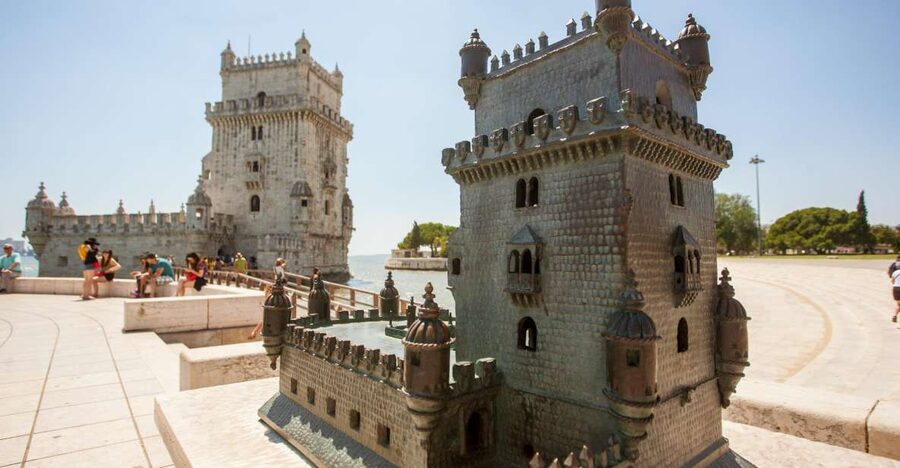
- Torre de Belém façade on the Tagus: a classic photo moment, framed by the river you’re walking beside.
- Small group size: up to 10 people keeps things conversational.
- English guide with a strong history focus: expect a lot of explanation, including dates and symbolism.
From Praça D. Pedro IV to Belém: getting there the easy way
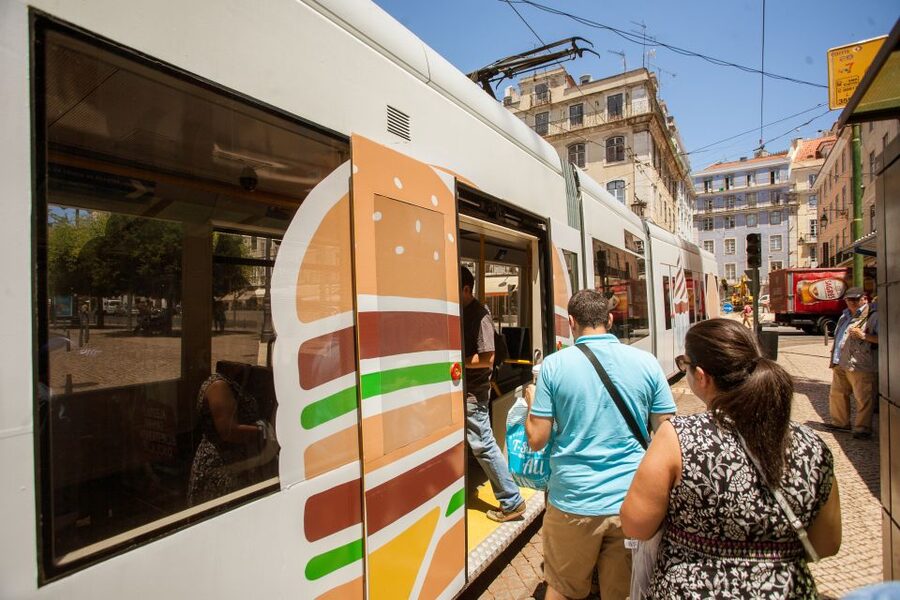
The tour starts right in central Lisbon at Praça D. Pedro IV, near D. Maria II Theatre. That matters, because it’s the kind of meeting point you can actually use without a scavenger hunt. Once you meet your guide, you head to Belém by tram and keep things simple: no separate transit planning, no guessing which stop to use.
I like how the tram sets the tone. You’re not walking from point A to B with no context—you’re being carried toward the Tagus corridor that Belém is built around. Then, when you step off and start walking, the change in atmosphere feels earned rather than abrupt.
Because the group is capped at 10, the walk tends to move as a unit. That’s great if you’re the type who hates waiting for people to catch up. It’s also useful if you want to ask follow-up questions when the guide mentions something like Manueline design or maritime-era Portuguese politics.
More mornings among the monuments of Belém
- Lisbon: Jerónimos Monastery Entrance Ticket
★ 4.1 · 14,164 reviews - Private Lisbon Sightseeing Tuk-Tuk Tour: Alfama, Belém & More
★ 5.0 · 4,277 reviews - Age of Discoveries Walking Tour in Belém
★ 5.0 · 1,513 reviews - Lisbon: Bike Tour from Lisbon to Belém + Liquor & Pastry
★ 4.7 · 688 reviews
The Tagus waterfront walk: where the scenery actually helps understanding
Belém’s big monuments can feel slightly “museum-y” if you rush in and out. This tour avoids that by making the walk itself part of the story. As you head along the river, you’re physically experiencing the same setting that made Belém important in Portugal’s maritime days.
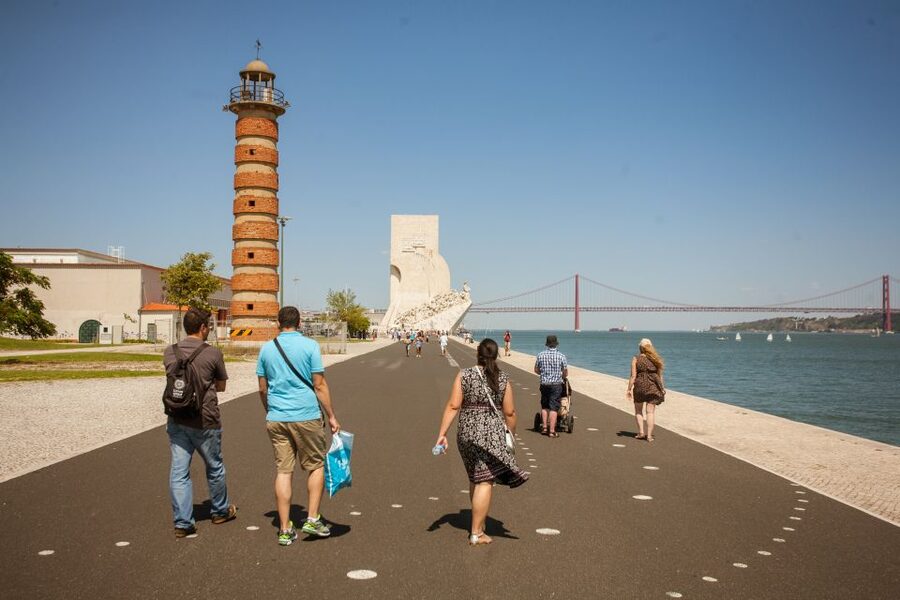
The Tagus isn’t just a backdrop. It explains why you’re seeing military outposts, religious wealth, and royal-era stonework concentrated in one district. You’ll be walking in a stretch where the river is always in your mental model, so the architecture stops being abstract.
Here’s a practical tip that matters more than you’d think: bring water and plan for sun. One guide-driven reality of Lisbon is that your best intentions for “quick walking” can turn into a sweaty slog if you don’t prepare. If you’re sensitive to heat, small adjustments—water, shade breaks, and sun protection—make the whole experience better.
Pastel de Belém at Fábrica: how to enjoy the sweet stop like a local
The pastry stop is built into the tour rather than being an optional detour. You get one Pastel de Belém, served at the famous Fábrica de Pasteis de Belém. That’s a big deal because Belém pastries are famous for a reason: the shell-to-custard balance depends on freshness and the right kind of flaky pastry.
I like that the tour treats this as a moment, not a checkbox. You’re tasting something made in the same neighborhood you’re using to understand Portuguese maritime-era wealth and trade. In other words: it’s food as place-based context.
A simple way to make the pastry stop more enjoyable is to time your pace. If you’ve been walking in warm weather, let the first few bites cool slightly before you judge the custard. Also, don’t plan to “save it for later”—the best texture is the one you eat while it’s still at its prime.
One caution: because you only get one pastry, you’ll feel the difference between “had a snack” and “had the featured item.” If you’re someone who gets hungry easily, you may want to eat a proper meal before the tour rather than assuming this will be enough food.
Mosteiro dos Jerónimos: Manueline architecture with real meaning
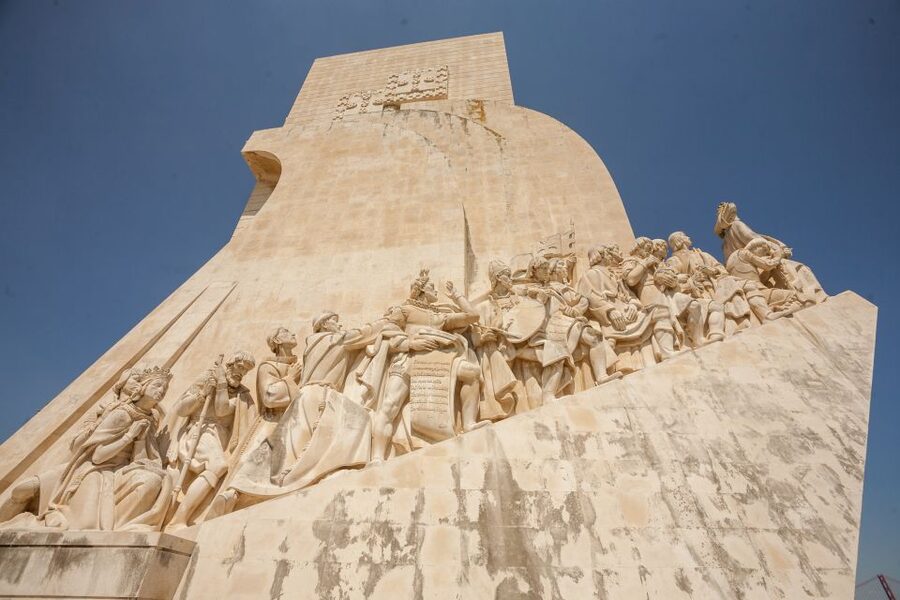
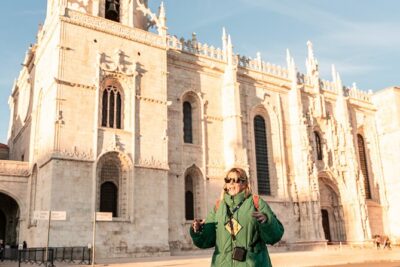
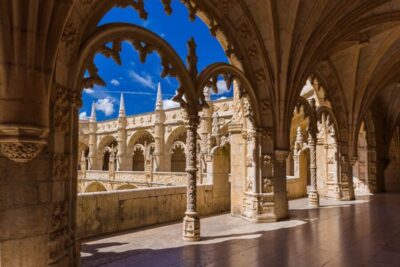
The star stop is the Mosteiro dos Jerónimos, and the tour rightly treats it as more than a pretty exterior. This monastery is UNESCO World Cultural Heritage, and its Manueline style is tied to the theme of the great discoveries. You’re not just looking at ornate stone; you’re seeing symbolism shaped by Portugal’s confidence during the Age of Exploration.
The guide’s job here is to translate the look into understanding. You learn that it was originally the home for the Hieronymite religious order, built around 1459 with the influence of Infante Henry the Navigator. That historical anchor helps you read the building instead of merely admiring it.
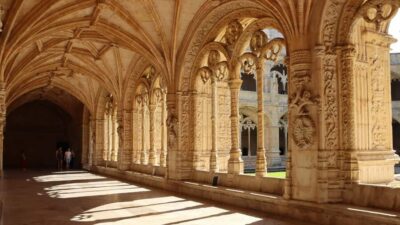
What I love most about this stop is the way the architecture rewards slow attention. Manueline details can feel like visual noise if you’re rushing. But with an explanation in your head—what to notice and why—you start seeing patterns: the kind of stonework that feels both decorative and purposeful.
It also helps that the tour emphasizes the significance of seeing it from multiple angles, not just one front-of-building view. If you’re the type who likes “spotting” details, you’ll likely enjoy this stop even more than the average monument tourist.
One practical consideration: you may feel like the tour’s history portion is heavy here. That’s not a flaw, but it’s a style choice. If you want more time on your feet with fewer explanations, this is where the talking can feel strongest.
Lisbon at walking pace, a few more routes
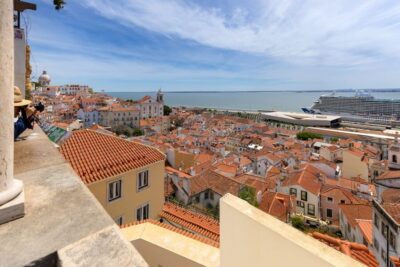



Torre de Belém: the riverbank landmark that turns into a story
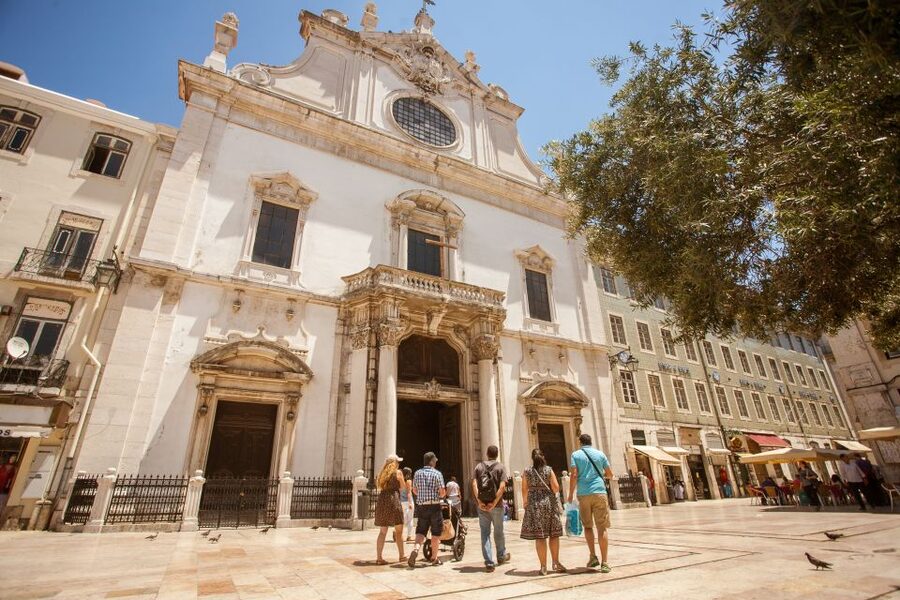
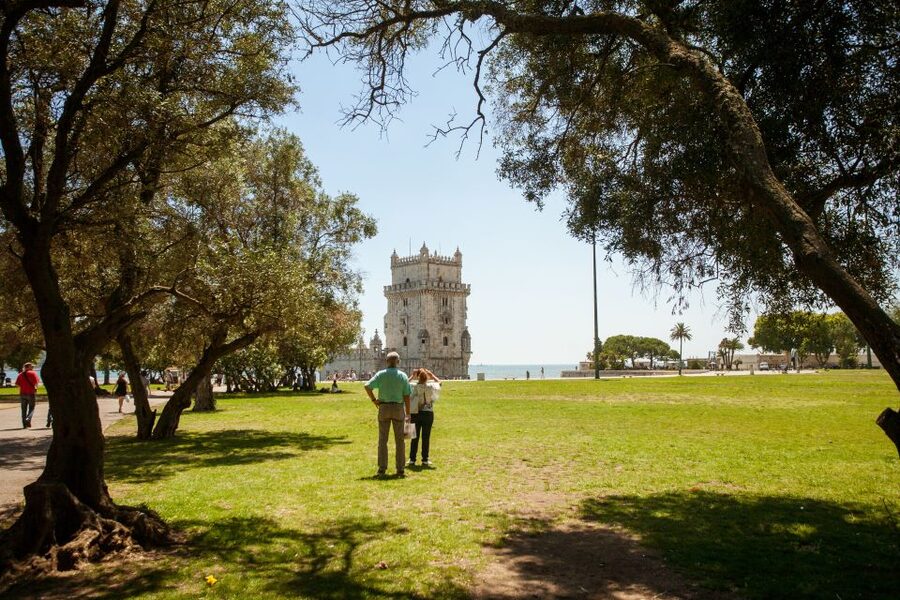
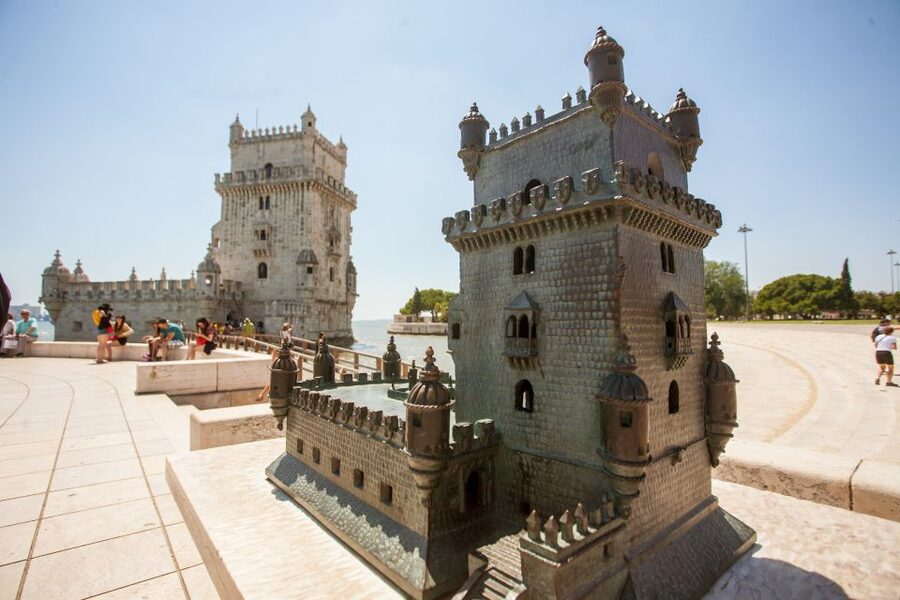
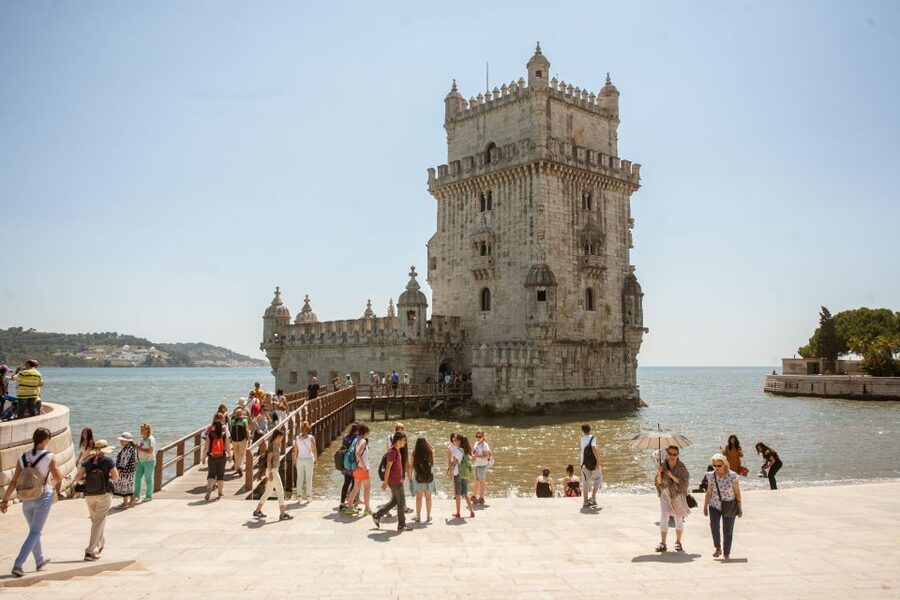
After the monastery, the tour shifts to one of Portugal’s most recognizable silhouettes: the Torre de Belém. You’ll see the iconic quarter façade on the Tagus, built from limestone in the early 16th century. The timing of the architecture fits the theme of Belém’s maritime power, because by then Portugal’s voyages had reshaped wealth, politics, and identity.
The tour gives you the right facts without leaving you to piece them together alone. The Torre de Belém was declared one of the 7 Wonders of Portugal in 2007, and it was inscribed by UNESCO in 1983. With those dates in mind, the tower stops feeling like a postcard and starts feeling like a carefully recognized monument.
If you’re thinking about photos, this is where you’ll notice why Belém has such a consistent visual appeal. The tower isn’t isolated on a street corner; it’s staged by the river. That makes framing easier and also makes the tower feel “alive” in a way that a purely urban monument sometimes doesn’t.
That said, the tower viewing can be a bit weather-dependent. If the wind is up on the river, plan for it. If it’s very bright, the stone can be reflective, so adjust your phone camera angle rather than fighting glare.
Rua de Belém and the 160-year shopfront feel
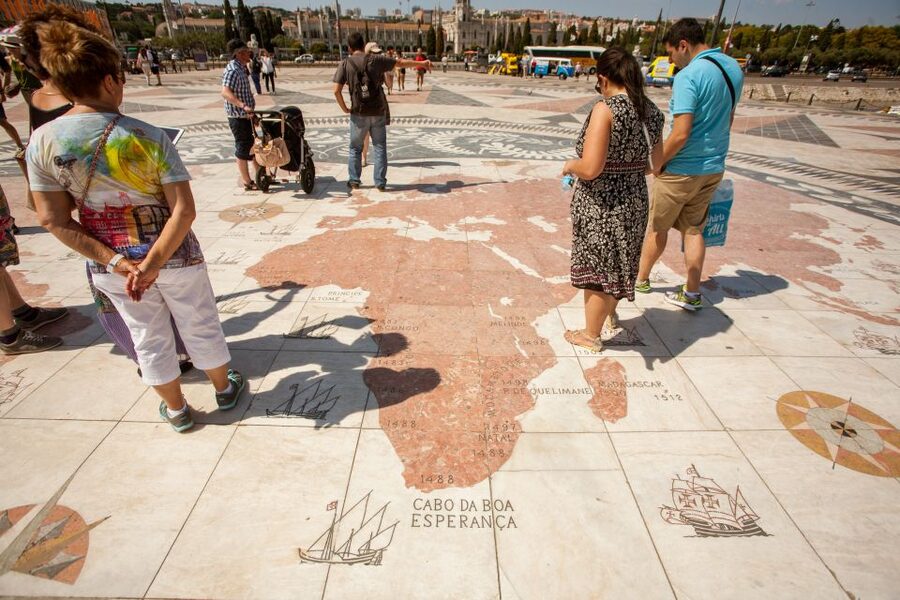
Between the big UNESCO anchors, the tour gives you time in the smaller, human scale Belém. Rua de Belém is described as having buildings that have survived about 160 years of change, and you’ll see what that means in practice: older façades, a lived-in rhythm, and the sense that Belém isn’t only a monument district.
This is one of the quiet strengths of the tour. The itinerary doesn’t just sprint from landmark to landmark. It gives you a chance to feel Belém as a neighborhood where people still shop and walk and eat—especially near the pastry tradition tied to the main street.
If you’re traveling to Lisbon and trying to understand how Belém fits with the city’s wider identity, these street-level moments help. You’re not only looking at Portuguese power symbols; you’re seeing where those symbols sit inside everyday life.
Guide style and pacing: you’ll either love it or adjust your expectations
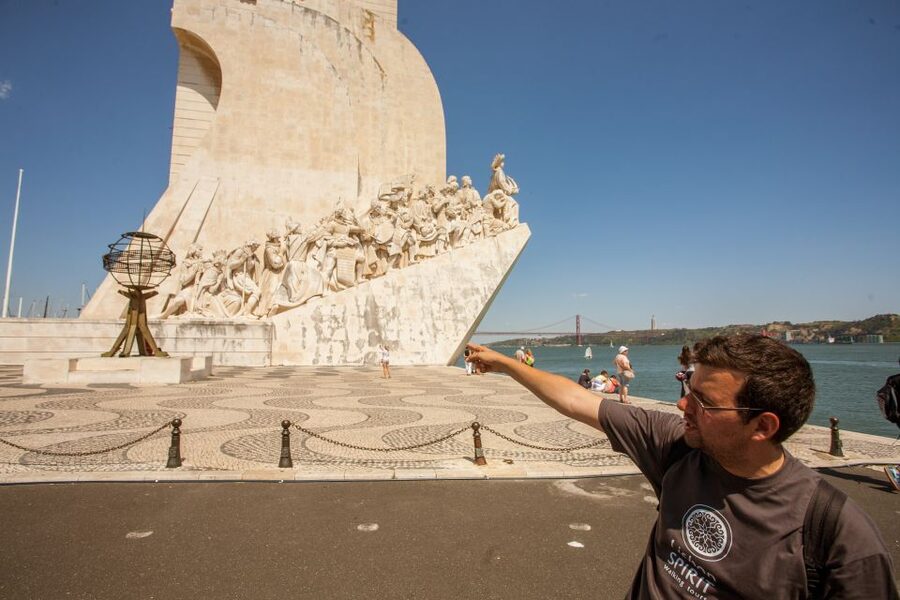
One pattern shows up clearly: the guide leans hard into history details, and the best moments come when you’re open to that. There’s a guide named Nono/Nonon (spelled slightly differently across accounts), and the consistent impression is that he brings the period to life with both detail and humor.
That approach is a win if you’re the kind of traveler who likes learning why things were built the way they were. It also helps you understand what you’re seeing at the monastery and tower, since Manueline design and maritime power aren’t quick facts.
But it can be frustrating if your ideal tour is mostly movement with shorter explanations. Some people would rather have fewer historical lectures and more time strolling, taking photos, and exploring on their own. If you’re in that camp, go into it with a plan: treat the narrative as part of the experience, and save your extra exploring for after the tour ends.
Pacing also depends on questions. In a small group, people will ask things, and that can stretch the timing. So if your schedule is tight afterward, avoid stacking a must-do reservation immediately at the end.
Price and logistics: is $23 a fair trade?
At $23 per person for a three-hour tour, the value depends on how you like to travel. You’re paying for three practical ingredients: a round-trip tram from Lisbon to Belém, a guided walking experience, and entry details around key sites (with monument fees handled except the Mosteiro dos Jerónimos).
That’s not a bargain if you just want to do Belém by yourself. You could walk the area and see the exterior views without a guide. But if you care about interpretation—why the Manueline style looks the way it does, what the Age of Discoveries influenced, and why these buildings matter—this price starts making more sense.
The other value factor is group size. With up to 10 people, you generally get a less crowded experience than the big-bus crowding problem. That means you can actually pay attention while you’re inside and at key viewpoints.
One more practical note: the tour includes the monastery stop but not all monument fees. The Mosteiro dos Jerónimos has an additional cost component, while other monument fees are treated differently. If you’re budgeting tightly, plan for that.
Overall, I’d call this a good deal for first-time Belém visitors who want the guided context. If you’re already comfortable with Portuguese maritime history and you prefer independent time, you might find it only moderately satisfying.
Who this Belém tour fits best (and who should skip)
I think this tour suits you if you like monuments but also want the “why” behind them. The Mosteiro dos Jerónimos and Torre de Belém are both impressive with or without explanation, but the tour is at its best when you want meaning tied to design.
It’s also a smart choice if you’re new to Lisbon logistics. The tram adds an easy spine to the outing, and the meeting point near D. Maria II Theatre keeps it straightforward.
You might want to skip or soften expectations if you’re chasing a relaxed sightseeing vibe. The strong history focus can take over the day’s tempo, and the tour’s length is fixed at three hours, so you’re not getting a long independent roam.
If you’re traveling with older knees or very limited walking tolerance, also take a look at your comfort level. The tour is described as a walking tour along the river corridor, so “light stroll only” is probably not accurate.
Should you book this Belém: Lisbon 3-hour walking tour?
Book it if you want a tidy, high-impact Belém introduction: tram ride included, one signature Pastel de Belém, and the two big UNESCO sites with enough explanation to make the Manueline stonework click. The small group size and the guide’s strong delivery style are exactly what turn these monuments into more than photos.
Don’t book it if you strongly prefer minimal talking. If you want more free time to roam and fewer history lectures, consider using Belém as a self-paced day. You’ll still see plenty, but you might not get the same connections between Portuguese maritime power and the architecture.
FAQ
How long is the Belém: Lisbon 3-Hour Walking Tour?
The tour lasts 3 hours.
Where do I meet the tour guide?
Meet at Praça D. Pedro IV near D. Maria II Theatre.
What is included in the price?
It includes a 2-way tram trip from Lisbon to Belém and back, plus 1 Pastel de Belém.
What do I see during the tour?
You’ll explore Belém’s maritime history, visit the Mosteiro dos Jerónimos and the Torre de Belém, and enjoy the Pastel de Belém.
Is the tour guide English-speaking?
Yes, the tour has a live English guide.
Are there monument fees?
Monument fees are not included for the Mosteiro dos Jerónimos, while other monument fees are handled as part of the tour.
How big is the group?
The group is limited to 10 participants.
More Tour Reviews in Lisbon
- Lisbon City Center Tour – The Unmissable Lisbon★ 5.0 · 22,234 reviews
- Lisbon: Sintra, Pena, Regaleira, Cabo da Roca & Cascais★ 4.7 · 19,656 reviews
- Lisbon Card: 24, 48, or 72-Hour Pass★ 4.5 · 17,944 reviews
- Lisbon: Jerónimos Monastery Entrance Ticket★ 4.1 · 14,164 reviews
- Lisbon: History, Stories and Lifestyle Walking Tour★ 4.8 · 10,902 reviews
More of Lisbon, One Hill at a Time
- Lisbon: History, Stories and Lifestyle Walking Tour★ 4.8 · 10,902 reviews
- Best of Lisbon Small-Group Guided Walking Tour★ 5.0 · 4,869 reviews
- Lisbon: Food and Wine Small Group Walking Tour★ 4.9 · 4,082 reviews
- Best of Lisbon Walking Tour: Rossio, Chiado & Alfama★ 4.9 · 2,700 reviews
- Age of Discoveries Walking Tour in Belém★ 5.0 · 1,513 reviews
Belém: More Monuments and Pastéis
- Lisbon: Jerónimos Monastery Entrance Ticket★ 4.1 · 14,164 reviews
- Private Lisbon Sightseeing Tuk-Tuk Tour: Alfama, Belém & More★ 5.0 · 4,277 reviews
- Age of Discoveries Walking Tour in Belém★ 5.0 · 1,513 reviews
- Lisbon: Bike Tour from Lisbon to Belém + Liquor & Pastry★ 4.7 · 688 reviews
- Bike Tours Lisbon – Center of Lisbon to Belém★ 5.0 · 686 reviews
Just in: fresh Lisbon reviews from the team




Belém Tours, compared.
 ★ 4.1Jerónimos Monastery Entrance TicketFrom $2114,164 reviews
 ★ 5.0Private Lisbon Sightseeing Tuk-Tuk Tour: Alfama, Belém & MoreFrom $524,277 reviews
 ★ 5.0Age of Discoveries Walking Tour in BelémFrom $31,513 reviews
 ★ 4.7Bike Tour from Lisbon to Belém + Liquor & PastryFrom $46688 reviews
 ★ 5.0Bike Tours Lisbon – Center of Lisbon to BelémFrom $19686 reviews
 ★ 3.7Jerónimos Monastery E-Ticket and Audio GuideFrom $33660 reviews
 ★ 4.9Belém Walking Tour with Jerónimos Monastery TicketFrom $69637 reviews
 ★ 4.0MAAT Gallery and MAAT Central Entry TicketsFrom $17559 reviews
Browse the lists this tour appears in