
Reviewed · 7-DAY EXPERIENCES
7 Days Private Tour In Portugal from Lisbon
A great Portugal plan should remove stress, not add it. This 7-day private tour from Lisbon keeps you moving with a driver/guide and a private vehicle, while stacking major highlights like Sintra, Porto, and Evora into one smooth route. I like that the schedule is already mapped out, and you spend less time figuring out where to go next and more time actually seeing Portugal. One thing to keep in mind: the package covers transportation and guidance, but admission fees are mostly on you, so budgeting helps.
Two things I genuinely like about this experience are the hotel pickup and drop-off (no scrambling for meeting points) and the mix of UNESCO-level sights with real neighborhoods and viewpoints. You’ll also have onboard WiFi, which sounds small until you’re trying to confirm train times, check dinner spots, or just keep your maps handy.
The only realistic drawback is pace. This route packs a lot into a week, and you’ll be in transit often, especially on longer day loops (Douro and the day from Lisbon back through Aveiro/Nazaré/Óbidos). If you want slow travel and lots of free hours, this may feel busy.
In This Review
- Key points worth getting excited about
- What this private 7-day tour is really like (and who it’s for)
- Lisbon day: Baixa, Alfama, Belém, and Pastéis (the classics, paced well)
- Baixa de Lisboa: the anti-seismic plan you can still feel
- Alfama: oldest Lisbon vibes and the birthplace of saudade
- Belém: the Age of Discoveries in stone, tower, and tile
- Pastéis de Belém: where the treat meets the story
- Sintra and Cascais/Estoril day: Pena’s drama, Cabo da Roca’s edge
- Sintra historic center: pastries, alley charm, and an easy warm-up
- Park and National Palace of Pena: pick your fantasy
- Cabo da Roca: the point where land-to-sea feels real
- Cascais and Estoril: fishing village to Atlantic resort
- Fatima to Coimbra to Porto: sacred stops and a library you won’t forget
- Fatima sanctuary: chapels you can understand without extra explanation
- Coimbra University and the Joanina Library: old school prestige in a single room
- Se Velha (old Coimbra): slow down for cafés and alleys
- Porto day: tiles, bookstores, churches, and port aging in Gaia
- Avenida dos Aliados and Porto City Hall: the city’s public face
- Livraria Lello: architecture fans and book lovers
- São Bento Station: 20,000 tiles tell Portugal’s moving story
- Church of San Francisco: gilded carvings and the gold dust curiosity
- Gaia and the Churchill’s port wine cellars
- Douro Valley day: Amarante sweets, Pinhão tile station, winery tasting
- Amarante and Igreja de São Gonçalo: architecture plus playful candy lore
- Pinhão Railway Station: the tiles that teach the region
- Quinta do Tedo: wine region reality, not just scenic photos
- Casal de Loivos viewpoint: the view you’ll keep thinking about
- Aveiro, Nazaré, Óbidos: canals, waves, and medieval streets
- Aveiro: Portuguese Venice and a moliceiro boat ride
- Aveiro Station: iron and glass Art Nouveau vibes
- Nazaré: wave fame and traditional houses
- Óbidos: white-walled UNESCO medieval charm
- Evora day: Roman ruins, Chapel of Bones, and Alentejo tastings
- Evora historic center: Temple of Diana and Agua da Prata aqueduct
- Chapel of Bones: a skull-and-bone focal point
- Ervideira winery tasting: Alentejo’s wine profile explained
- Cork factory and cork’s aging role: cork, not just wine
- Price and value: what $2,165.28 per person buys you
- What’s included (and how it changes your day)
- The biggest practical tips before you go
- The guide factor: Hugo Gonçalves and Manuel Da Silva
- Should you book this private 7-day Portugal tour?
- FAQ
- Is pickup from my hotel included?
- What’s included in the tour price?
- Are meals and hotel stays included?
- Are entrance tickets included?
- Does the tour use a private vehicle?
- What language is the tour offered in?
- How far in advance is this typically booked?
- What is the cancellation policy?
Key points worth getting excited about
- Private vehicle + hotel pickup means fewer logistics headaches.
- UNESCO hits in multiple regions, including Sintra and Evora.
- Driver/guide support keeps stops efficient and easier to navigate.
- Several viewpoints and free-entry areas let you enjoy Portugal without paying at every stop.
- Douro wine tasting day pairs scenic stops with an actual winery visit.
What this private 7-day tour is really like (and who it’s for)
This is a private, English-offered tour built for people who want structure. You’re paying for time-saving decisions: you don’t have to research routes between Lisbon, Sintra, Porto, the Douro Valley, and Alentejo. Starting at 9:00am with pickup from your accommodation also sets a helpful rhythm—less wandering at the beginning of the day.
I think it’s a smart match if your group wants comfort but still cares about authenticity. Instead of only big-ticket museums, you also get neighborhood context—places like Alfama in Lisbon and the university district feel like you’re moving through real towns, not just ticking boxes.
This is also a good fit for travelers who don’t want to rent a car. Between hills, old streets, and different regions each with their own driving rules, a private vehicle does a lot of heavy lifting for you.
Worth a look before you lock anything else in around Lisbon:
- True 4Hour Private Tuk Tuk Tour: Discover Lisbon with a Local!
★ 5.0 · 8,008 reviews - Lisbon: Private Guided Tuk-Tuk Tour with Hotel Pickup
★ 4.9 · 4,552 reviews - Private Lisbon Sightseeing Tuk-Tuk Tour: Alfama, Belém & More
★ 5.0 · 4,277 reviews - Lisbon Highlights: Private Tuk Tuk Tour Adventure Sightseeing
★ 5.0 · 3,284 reviews
Lisbon day: Baixa, Alfama, Belém, and Pastéis (the classics, paced well)
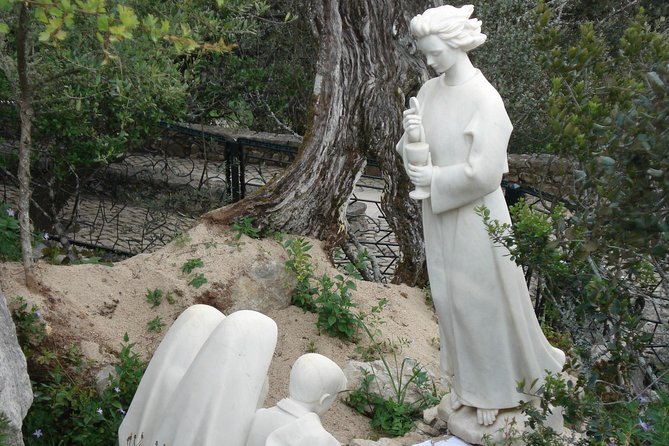
Day 1 is a very Lisbon start: Baixa de Lisboa, Alfama, and Belém, plus the Pastéis de Belém factory. It’s not trying to be everything at once—it’s selecting the parts that give you Lisbon’s story in a single week.
Baixa de Lisboa: the anti-seismic plan you can still feel
Baixa is where Lisbon’s 1755 earthquake history becomes architecture. The route references the rebuilt city plan with straight, perpendicular streets organized around an axis near Rua Augusta—that grid explains why Baixa feels more open than the older quarters.
This stop is worth it because it gives context before you ride uphill later. Once you understand Baixa’s layout, you’ll notice how Alfama works differently, with a maze of small lanes.
Alfama: oldest Lisbon vibes and the birthplace of saudade
Then you step into Alfama, Lisbon’s oldest quarter. This part is all about narrow alleys, defensive-medina shapes, and that layered Portuguese feeling people associate with saudade—plus the fado connection rooted in this neighborhood.
You’ll probably want to slow down a bit here. Even if the scheduled time is short, Alfama rewards walking at your own pace between viewpoints.
Worth a look before you lock anything else in around Lisbon:
Belém: the Age of Discoveries in stone, tower, and tile
Belém is framed as the launch point of sailors heading into the unknown, and you’ll visit the Jerónimos Monastery complex, Belém Tower, and the Monument to the Discoveries. If you’re a visual person, this trio works well because it’s monument-scale storytelling.
Be aware of one practical detail: this day includes paid attractions in Belém, so admissions can add up compared with the neighborhood stops.
Pastéis de Belém: where the treat meets the story
You’ll also stop at the Pastéis de Belém factory, a long-running pastry institution. This isn’t just about eating something sweet—it’s about meeting Lisbon’s food heritage in the place tied to it.
If you’re sensitive to crowds, go with a simple mindset: don’t plan to linger for photos forever. Think of it as a quick, flavorful cap to a big day.
Sintra and Cascais/Estoril day: Pena’s drama, Cabo da Roca’s edge
Day 2 is one of the strongest “variety per hour” sections of the whole trip. You get aristocratic Sintra, palace choices, then coast views at Cabo da Roca, followed by Cascais and Estoril.
Sintra historic center: pastries, alley charm, and an easy warm-up
Your Sintra start focuses on narrow alleys and regional product stores, with time around Piriquita pastry for Queijadas de Sintra and Travesseiros de Sintra. This is a good warm-up because it’s low-pressure and tasty, and it makes the next big sites feel less like a theme-park checklist.
Park and National Palace of Pena: pick your fantasy
From there, you head to the Park and National Palace of Pena area. The tour explains that you can choose what to prioritize, and one suggestion mentioned is Quinta da Regaleira—it’s described as impressive and decorated with Masonic symbolism.
Then the route points you toward the Moorish Castle (Islamic presence evidence in the region) and the Palácio da Pena as a revivalist 19th-century reconstruction tied to nineteenth-century romanticism.
Practical note: these places aren’t quick. Even when the scheduled time is set, comfortable pacing matters, so wear shoes you trust on uneven ground and stairs.
Cabo da Roca: the point where land-to-sea feels real
Next is Farol do Cabo da Roca, known as the Snout of the Rock and also framed poetically. It’s part of the Sintra-Cascais Natural Park, and the guide references the sense that the land ends and the sea begins, tied to the poet Camoes.
This is one of those stops where you can understand Portugal’s geography fast. The cliffs make it obvious why Portugal built its identity on maritime routes.
Cascais and Estoril: fishing village to Atlantic resort
In Cascais, you’ll explore the old fisherman’s village that turned into a beach resort feel. Then you’ll head to Estoril, noted for its casino and for being where Fleming wrote the first 007 novel, Casino Royale.
If you like human-scale towns, Cascais delivers. If you want entertainment history, Estoril does the job. If you don’t care about casinos, just focus on the coast walk options and the ocean views.
Fatima to Coimbra to Porto: sacred stops and a library you won’t forget
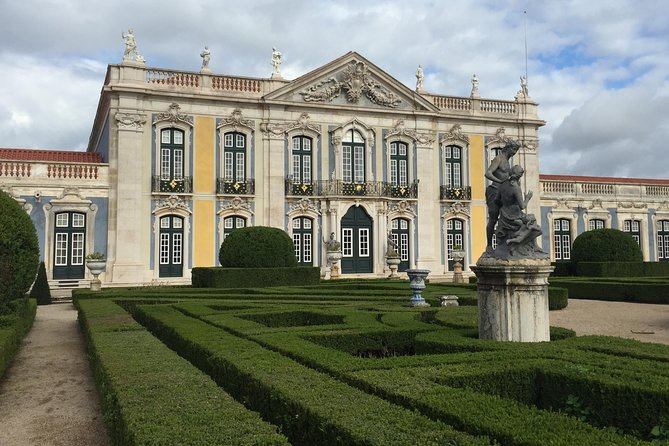
Day 3 shifts you away from Lisbon’s coastline into religious and academic Portugal before you arrive in Porto.
Fatima sanctuary: chapels you can understand without extra explanation
You start with Museu do Santuario de Fatima, then move through areas including the Chapel of the Apparitions and the Basilica de Nossa Senhora de Fatima. The route also mentions the tombs of the children and Sister Lucia, plus a second basilica (Santíssima Trindade) built later with a modern, imposing scale.
There’s also an optional mass mentioned, so if that’s meaningful to you, you’ll have a chance to plan for it. If not, you can still treat it as a calm, powerful cultural stop.
Coimbra University and the Joanina Library: old school prestige in a single room
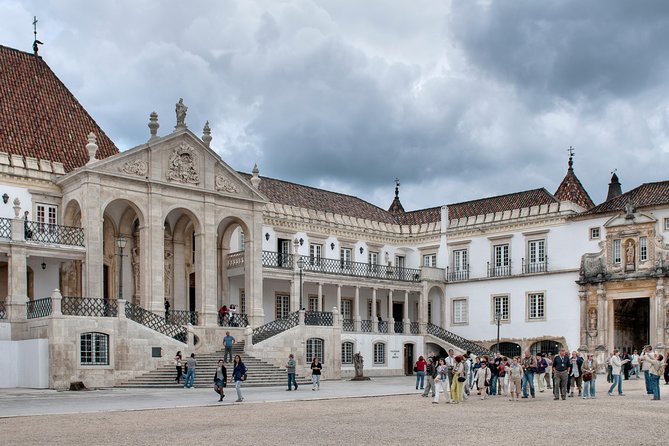
Then you head to Coimbra, where the schedule focuses on Coimbra University and the highlight Joanine Library. The tour describes it as one of the most beautiful libraries in the world, built in the 18th century on the former prison of the university.
They also call out fresco work and artistic details tied to Mestre António Ribeiro and Vicente Nunes, plus ceiling frescoes and portrait references. Even if you don’t study art history, you’ll feel the intention: this library was built to impress.
Se Velha (old Coimbra): slow down for cafés and alleys
After the big interiors, Se Velha is the recovery zone—downtown Coimbra between the Mondego river and the university. You’ll be walking a lovely sidewalk street, squares, and narrow alleys with cafés and pastry shops.
This is the right timing for a breather before Porto, because it gives you energy without requiring a ticketed site.
Porto day: tiles, bookstores, churches, and port aging in Gaia
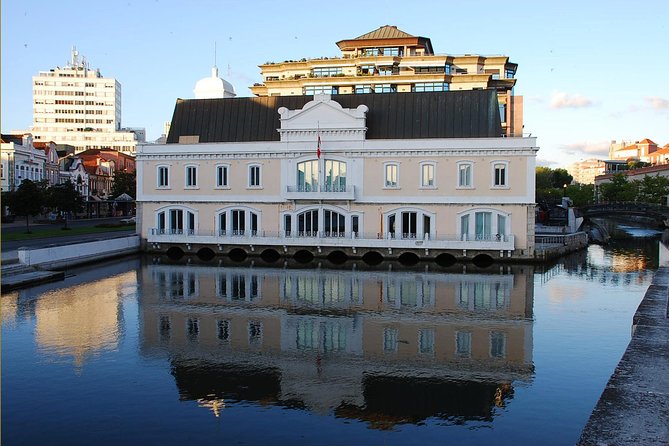
Day 4 is classic Porto pacing: downtown first, then iconic sights, then Gaia and port wine in cellars.
Avenida dos Aliados and Porto City Hall: the city’s public face
You start at the area around Avenida dos Aliados, described as Porto’s focal point. The mention of the imposing Municipal Council building gives you a sense of where local life gathers—parades, celebrations, and everyday street energy.
Livraria Lello: architecture fans and book lovers
Next is Livraria Lello. The tour highlights the dramatic staircase and its connection to Harry Potter fans, including the note that JK Rowling was married to a Portuguese and lived in Porto when she started writing Philosopher’s Stone.
Even if you’re not a Potter person, this bookstore is a design stop. Expect that you’ll want to look up, not just at books.
São Bento Station: 20,000 tiles tell Portugal’s moving story
Then you reach São Bento Railway Station, where Jorge Colaco’s tiles create a visual trip through Portugal. It’s not just pretty ceramics—it frames the idea of history you can see at eye level, including themes tied to different civilizations and occupations.
Church of San Francisco: gilded carvings and the gold dust curiosity
You also visit Igreja de San Francisco, built in the 12th century with Romanesque roots and later Gothic and Baroque transformations. The tour mentions gilded carvings across three naves and even references the idea that gold dust might have been used in the process.
Gaia and the Churchill’s port wine cellars
Finally, you head to Gaia for port wine aging cellars, with a visit to one and a tasting described as part of understanding the full process. This is one of the days where drinking a little makes sense because you’re learning the steps from harvest to final product.
A practical note: tasting-style experiences often aren’t cheap, so treat this as a highlight worth budgeting for.
Douro Valley day: Amarante sweets, Pinhão tile station, winery tasting
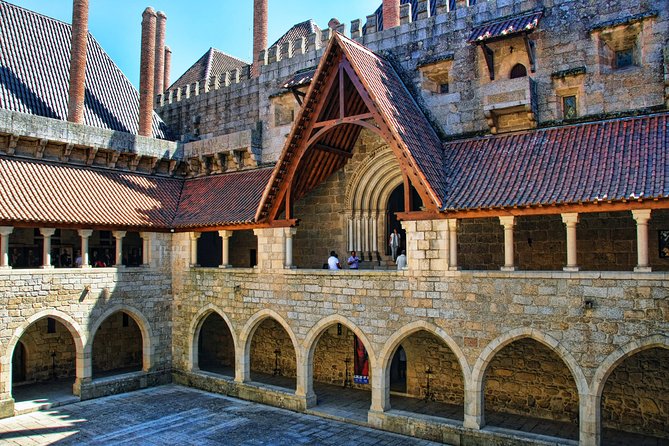
Day 5 is a full day tied to the Douro spirit. You’ll see a few small but meaningful stops, then land at viewpoints that explain why people fall in love with this valley.
Amarante and Igreja de São Gonçalo: architecture plus playful candy lore
Your morning stop centers on Amarante, especially Igreja e Convento de São Gonçalo. The tour mentions Romanesque and medieval architecture, plus the Dominican friar bridge connection.
There’s also a fun note about sweets for São Gonçalo festivities—quilhõezinhos de S. Gonçalo—with the tradition behind boys offering them to girls they hope to conquer. It’s an example of how small local stories make the day feel human.
Pinhão Railway Station: the tiles that teach the region
Then you move to Pinhão Railway Station, famous for its 19th-century tilework showing Douro life and port production. The tour highlights images of harvest, grape transport, and rabelos boats.
This station is worth your attention because it’s both practical and artistic—like a public museum you don’t have to schedule.
Quinta do Tedo: wine region reality, not just scenic photos
After the station, you visit Quinta do Tedo, described as being part of the oldest wine region in the world. You’ll get a winery walk-through covering winemaking methods, plus a tasting.
If you only do winery visits elsewhere in Europe, this one is valuable because the Douro has its own approach shaped by steep terrain and irrigation needs. The tour description also hints at why this region’s profile differs.
Casal de Loivos viewpoint: the view you’ll keep thinking about
To finish, you’ll visit Casal de Loivos Viewpoint, described as the best view at the Douro Valley. This is short—about 30 minutes—but it’s a great use of time because it lets you absorb the valley after learning how wine production fits the geography.
Aveiro, Nazaré, Óbidos: canals, waves, and medieval streets
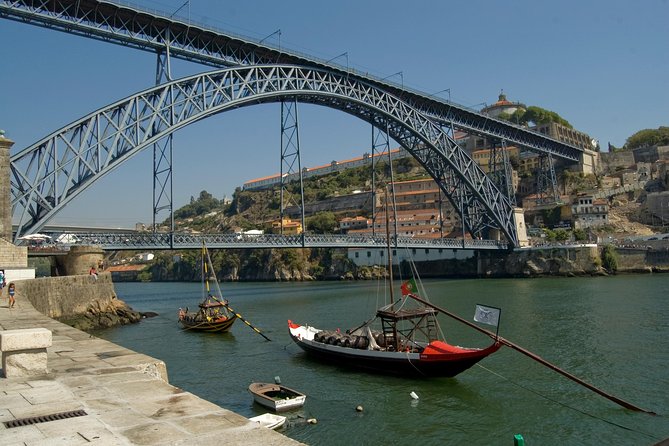
Day 6 is your “Portugal variety pack,” moving from water cities to seaside legends to a walled UNESCO town.
Aveiro: Portuguese Venice and a moliceiro boat ride
Your Aveiro stop emphasizes canals and a boat ride on a moliceiro to learn about the seaweed and salt context tied to the city’s canals. It’s framed as a quick way to understand the city’s relationship with its water.
Aveiro Station: iron and glass Art Nouveau vibes
Then you visit Aveiro Railway Station, described as a wrought iron and glass structure linked to the style of Gustave Eiffel, with Art Nouveau buildings that show the city’s importance and wealth.
Even if you only get an hour, it’s a nice shift from coast color to architecture detail.
Nazaré: wave fame and traditional houses
Next is Nazaré, described as a pictorial village with churches and traditional houses. The tour also mentions the Nazaré Cannon and that in 2013 surfer McNamara broke a world record surfing a wave around 30 meters high.
There’s also a note about the “seven skirts” tradition from Nazare women. It’s the kind of detail you remember later because it connects place to everyday identity.
Óbidos: white-walled UNESCO medieval charm
You finish at Óbidos, noted as UNESCO world heritage. You’ll walk narrow streets, traditional shops, and white-painted old houses along medieval walls.
The route adds that Óbidos was used as a wedding gift from D. Dinis to D. Isabel, later becoming part of the Casa das Rainhas. It also mentions contributions like an aqueduct and fountains attributed to D. Catarina.
This is a strong final-night atmosphere for Lisbon return, because the streets are made for wandering.
Evora day: Roman ruins, Chapel of Bones, and Alentejo tastings
Day 7 is where the tour shifts into Alentejo. The emphasis becomes kings, artists, Roman traces, and then food and craft experiences.
Evora historic center: Temple of Diana and Agua da Prata aqueduct
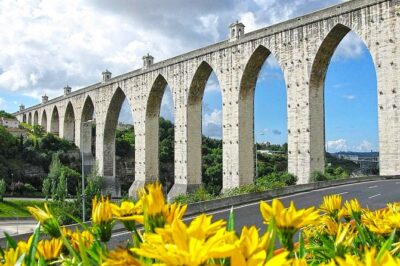
You start in Centro Histórico de Evora, tied to Portuguese kings and artistic patronage. You’ll visit the Temple of Diana area and also the aqueduct of Água da Prata, built in the 16th century to transport water, with arches visible both outside and inside the city walls.
This combination is useful: it gives you Roman-era framing and then shows how later Portugal kept building on top of older systems.
Chapel of Bones: a skull-and-bone focal point
Next is the Chapel of Bones at the Church of San Francisco. The tour describes it as decorated with skulls and bones of 500 monks, with a message at the entrance.
This one is not subtle. If you prefer calm sightseeing, approach with respect and expect it to be emotionally intense.
Ervideira winery tasting: Alentejo’s wine profile explained
Then you move to Ervideira for an included winery visit and tasting. The tour description explains Alentejo’s hot and dry climate, plus why adding water to vines matters, along with how soils and relief influence grape maturation.
White wines are described as soft, slightly acidic, with aromas of tropical fruits, while reds are full-bodied with tannins and red or wild fruit notes. That kind of explanation makes your tasting more meaningful because you’re connecting flavor to conditions.
Cork factory and cork’s aging role: cork, not just wine
Finally, you visit Corticarte – Arte em Cortica, a cork factory. Cork is explained as bark from a specific oak, grown and harvested after about nine years, then removed and allowed to regenerate.
The tour also mentions Portugal producing 55% of world cork, plus the idea that cork allows only small amounts of oxygen to contact wine without spoiling aging. And yes, this stop includes the admission fee, which makes it a nice value add.
Price and value: what $2,165.28 per person buys you
At $2,165.28 per person for about seven days, you’re not buying a budget bus tour. You’re paying for private transportation, a driver/guide, and hotel pickup and drop-off—big deal if you’re trying to reduce daily friction.
You’re also getting a route that covers a lot of ground: Lisbon, Sintra, Fatima, Coimbra, Porto, the Douro region stops, Aveiro, Nazaré, Óbidos, and Evora. That mix is part of the value: you’re not just repeating one kind of scene all week.
The main cost consideration is admissions. The tour lists admission fees as not included, and several of the biggest sights are marked as not included (like major Belém landmarks, Pena, Coimbra University, Livraria Lello, port experiences, and the Chapel of Bones). Your final spend depends on what you choose to pay for at each site.
What’s included (and how it changes your day)
Included in the tour:
- Driver/guide
- Transport by private vehicle
- WiFi on board
- Personal accidents insurance
- All taxes, fees and handling charges
Included extras like WiFi matter more than people think. When you’re moving between cities and different areas, you can quickly check directions, find a backup dinner spot, or confirm your next stop.
The driver/guide setup also tends to make complex stops feel simpler. Instead of wandering through each site wondering where to start, you get a guided flow that keeps the week efficient.
The biggest practical tips before you go
This schedule is packed, so plan for movement days. Wear shoes for hills and old stones, and keep a light day bag for viewpoints and shorter stops.
Also, think about admission budgeting in advance. Even though some stops are listed as free-entry, the itinerary includes multiple major paid attractions, and those are the ones that typically add up.
If you’re a foodie, Portugal will spoil you. You’ll have built-in chances for pastries and tastings, including the Pastéis de Belém stop and wine tastings tied to the Douro area and Alentejo.
The guide factor: Hugo Gonçalves and Manuel Da Silva
One of the reasons this tour scores so well is the human touch. The trip notes mention Hugo Gonçalves contacting you after booking to adjust the experience to your priorities, and in Portugal Manuel Da Silva guiding in a way that’s described as attentive to preferences.
That matters because private tours are only as good as the way they respond when you’re tired, curious, or want to tweak timing.
Should you book this private 7-day Portugal tour?
Book it if you want a structured week with private comfort, hotel pickup, and major UNESCO sights like Sintra and Evora without the stress of planning between them. This is especially attractive if you’re traveling as a group that can make private-vehicle time worth the price.
Consider skipping or adjusting if you hate busy days, want long free afternoons every day, or you prefer to handle admissions and timing entirely on your own. Also, if you’re tight on budget, admissions not included can shift the true total.
If you want a Portugal sampler that still feels grounded in real places, this route makes sense—and it’s designed so you spend your energy on seeing, not on logistics.
FAQ
Is pickup from my hotel included?
Yes. Pickup details say you’ll be picked up at your accommodation, starting at 9:00am, and you’ll be dropped off after the tour.
What’s included in the tour price?
Included items are a driver/guide, transport by private vehicle, WiFi on board, all taxes/fees/handling charges, and personal accidents insurance.
Are meals and hotel stays included?
No. Meals and hotels are not included.
Are entrance tickets included?
No. Admission fees are not included, though some stops in the itinerary are marked free-entry.
Does the tour use a private vehicle?
Yes. Transport is by a private vehicle for the tour group.
What language is the tour offered in?
The tour is offered in English.
How far in advance is this typically booked?
On average, it’s booked about 61 days in advance.
What is the cancellation policy?
Free cancellation is available. You can cancel up to 24 hours in advance for a full refund.
More Private in Lisbon
- True 4Hour Private Tuk Tuk Tour: Discover Lisbon with a Local!★ 5.0 · 8,008 reviews
- Lisbon: Private Guided Tuk-Tuk Tour with Hotel Pickup★ 4.9 · 4,552 reviews
- Private Lisbon Sightseeing Tuk-Tuk Tour: Alfama, Belém & More★ 5.0 · 4,277 reviews
- Lisbon Highlights: Private Tuk Tuk Tour Adventure Sightseeing★ 5.0 · 3,284 reviews
- Welcome Lisbon Tour with Local Guide in Private Eco Tuk Tuk★ 5.0 · 1,691 reviews
More Tours in Lisbon
- Lisbon City Center Tour – The Unmissable Lisbon★ 5.0 · 22,234 reviews
- Lisbon: History, Stories and Lifestyle Walking Tour★ 4.8 · 10,902 reviews
- True 4Hour Private Tuk Tuk Tour: Discover Lisbon with a Local!★ 5.0 · 8,008 reviews
- Winner 2025 Undiscovered Lisbon Food & Wine Tour by Eating Europe★ 5.0 · 6,390 reviews
- Lisbon: Sintra, Pena, Cabo da Roca, Cascais Tour with Pickup★ 4.8 · 5,445 reviews
More Tour Reviews in Lisbon
- Lisbon City Center Tour – The Unmissable Lisbon★ 5.0 · 22,234 reviews
- Lisbon: Sintra, Pena, Regaleira, Cabo da Roca & Cascais★ 4.7 · 19,656 reviews
- Lisbon Card: 24, 48, or 72-Hour Pass★ 4.5 · 17,944 reviews
- Lisbon: Jerónimos Monastery Entrance Ticket★ 4.1 · 14,164 reviews
- Lisbon: History, Stories and Lifestyle Walking Tour★ 4.8 · 10,902 reviews
Just in: fresh Lisbon reviews from the team




7-Day Experiences, compared.
 ★ 5.0Private tour Portugal 7 days from LisbonFrom $1,72410 reviews
 ★ 5.0Private Tour for small groups of 7 Days in Portugal from LisbonFrom $1,6525 reviews
 ★ 5.0Private 7-day itinerary in PortugalFrom $2,1294 reviews
 ★ 5.07-Day Classic Trip in Portugal and SpainFrom $2,8003 reviews
Browse the lists this tour appears in