
Reviewed · LISBON TUK-TUK TOURS
Tour TukTuk 3 hours Lisbon Free Pick-up
Lisbon looks best from above, and this tuk-tuk route is built for that. You’ll roll past old churches, city miradouros, and story-rich streets, with a guide explaining how Lisbon’s history and daily life connect. It’s a smart way to get your bearings fast without turning your legs into sad souvenirs.
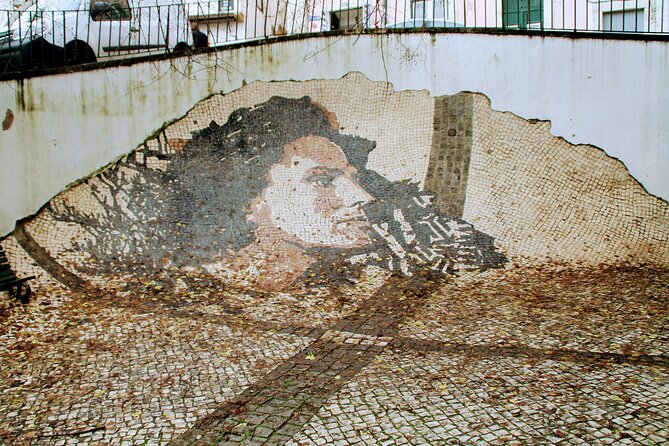
I love the private group setup, because it keeps the pacing human and you can ask questions as you go. I also like that the itinerary mixes big sights with small “wait, look at that” details—like the Amália Rodrigues pavement face by the urban artist Vhils and the dramatic viewpoints over the Tagus.
One thing to weigh: several stops are outside only or have no included monument entry, so plan for extra ticket costs if you decide to go in. This tour also works best when the weather plays along, since it’s an outdoor-heavy route.
In This Review
- Key highlights you should care about
- Price and logistics: what $48.12 buys you in 3 hours
- A route that teaches you Lisbon’s “up, down, and around” layout
- Lisbon Cathedral and Portas do Sol: start with the oldest layers
- Graça viewpoints and Vila Berta: tiles, convents, and industrial Lisbon
- Senhora do Monte: the best view, plus a chair legend
- Saint Vincent de Fora, Campo de Santa Clara, and the Pantheon connection
- Alfama and Chafariz de Dentro: fountains, Arab roots, and water politics
- Old churches and new-facing views: Conceição Velha to Praça do Comércio
- Chiado, Saint Roque, and Miradouro Sao Pedro de Alcântara: culture in walking distance
- Bairro Alto and Carmo Convent ruins: where the day turns to night
- Should you book this Lisbon tuk-tuk tour?
- FAQ
- How long is the Tour TukTuk Lisbon tour?
- What’s the price per person?
- Is the tour private?
- Are monument entrances included?
- Is the tour offered in English?
- Do I need a printed ticket?
- Does the tour allow small children?
- Is there free pick-up?
Key highlights you should care about
- Private tuk-tuk time: your group only, with English-speaking guidance throughout.
- Viewpoints without the climb: Tagus River views from multiple miradouros, plus quick “look up” stops.
- Old Lisbon in layers: Moorish-era references, the 1755 earthquake impact, and Portuguese architecture styles in one route.
- Tucked-in details: public fountains, convent leftovers, and pavement art that most quick tours miss.
- Guides with flexibility: operators have shown they can adjust plans around bad weather or street disruptions.
- Free stops mixed in: several viewpoints and outdoor sights are listed as free, helping keep costs steadier.
Price and logistics: what $48.12 buys you in 3 hours
At about $48.12 per person for roughly 3 hours, this isn’t a “see everything” day. It’s more like a guided sampler platter—designed to help you understand Lisbon’s layout and priorities, then let you return later on foot for what you liked most.
You’ll ride in a private tuk-tuk with free pick-up, and the tour runs in English. You get a mobile ticket, which is convenient, and there’s no mention of needing printed documents. The experience is also set up with practical rules: no smoking and no alcohol on board, and large suitcases aren’t allowed. Children under 7 aren’t allowed either, so keep that in mind if you’re traveling with little ones.
The main value here is efficiency. Lisbon’s hills are no joke, but this route gives you lots of the viewpoints that people usually struggle to reach on foot. You’ll still do some walking at the stops, but it’s short and focused—enough to see what matters and move on.
Finally, a quick budgeting note: the tour time is tight, and entrances to monuments aren’t included. Some sights are listed as free, but others are not. If you’re the type who likes to go inside every church or museum, you’ll likely spend extra.
The hills done the easy way, more tuk-tuk runs
- True 4Hour Private Tuk Tuk Tour: Discover Lisbon with a Local!
★ 5.0 · 8,008 reviews - Lisbon: Private Guided Tuk-Tuk Tour with Hotel Pickup
★ 4.9 · 4,552 reviews - Private Lisbon Sightseeing Tuk-Tuk Tour: Alfama, Belém & More
★ 5.0 · 4,277 reviews - Lisbon Highlights: Private Tuk Tuk Tour Adventure Sightseeing
★ 5.0 · 3,284 reviews
A route that teaches you Lisbon’s “up, down, and around” layout
This itinerary threads together four core zones that many visitors bounce between awkwardly: the historic core near Baixa, the viewpoint-and-convent stretch around Graça and Alfama, and the high-energy older streets around Chiado and Bairro Alto.
As the vehicle moves, you’ll get a sense for why locals use viewpoints like landmarks. You’re not just collecting postcards—you’re learning how neighborhoods relate to each other, especially around the Tagus River and the castle area.
The pacing is also intentional. Several stops are short—think about 10 to 15 minutes—which keeps the day from dragging. That’s perfect if you want context without losing an entire morning to queues or long museum visits. If you want slow strolling and extended interior time, you’ll probably supplement this later.
Lisbon Cathedral and Portas do Sol: start with the oldest layers
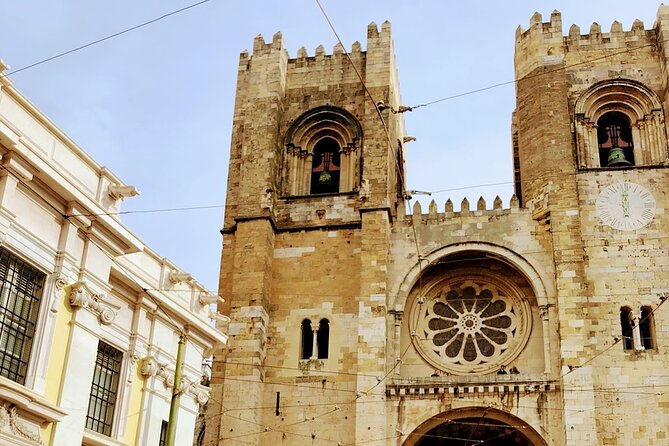
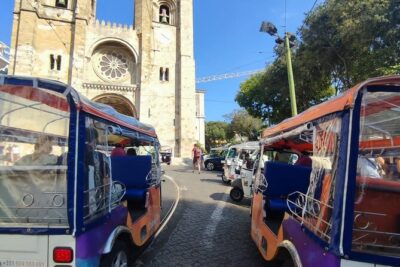
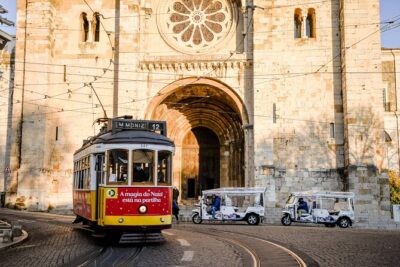
Your tour begins near the center, and the first major stop is Lisbon Cathedral. This is a big deal historically: it began in 1147, right after Lisbon was taken from the Moors, under King Afonso Henriques. It’s considered the oldest church in today’s Lisbon’s core. Even if you don’t plan to enter, the location alone helps you understand why the city grew where it did.
From there, you head toward Miradouro das Portas do Sol, one of Lisbon’s most famous river lookouts. The name refers to an old “door of the sun” (tied to Moorish-era structures), and it’s also connected to the reality of the 1755 earthquake, which ruined parts of the surrounding defenses. This is one of those viewpoints where the guide’s narration matters, because the view is wide, but the story makes it stick.
There’s also a quick artistic moment here: you’ll pass the face of Amália Rodrigues created in Portuguese pavement by the urban artist Vhils. It’s small, but it’s the kind of Lisbon detail that turns a route into a memory.
What to watch for: stand where the guide points out the best angles—Lisbon views can be misleading if you’re standing in the “wrong” part of the lookout.
Graça viewpoints and Vila Berta: tiles, convents, and industrial Lisbon
Next comes Miradouro da Graça, linked with Sophia de Mello Breyner Andresen. This viewpoint sits by the Convent of Grace, and the area is tied to the Order of Saint Augustine (formerly Augustinian Hermits) founded in the 13th century. You’ll also hear why the hill matters in the 1100s: it’s associated with where D. Afonso Henriques camped during the siege of Lisbon in 1147.
If you like visual Lisbon, this is where the tile work becomes a payoff. The route includes time to notice the beautiful tile panels nearby. They’re not just pretty decorations; they’re a reminder of how Lisbon tells stories with surfaces.
After the viewpoint time, you’ll spend a moment around Vila Berta, part of Lisbon’s industrial heritage. This neighborhood was built as housing for factory workers, and it’s tied to how industrial-era neighborhoods often formed for people moving in from elsewhere. It’s a reminder that Lisbon isn’t only postcard scenery—it’s also where people worked, lived, and built routines.
Possible drawback: this segment is more about quick “stop-and-look” moments than long interior time. If you’re hoping for deep museum-style visits, you’ll want to plan those separately.
Worth a look before you lock anything else in around Lisbon:



Senhora do Monte: the best view, plus a chair legend
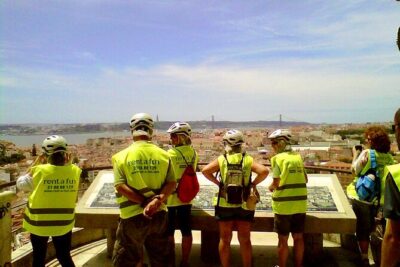
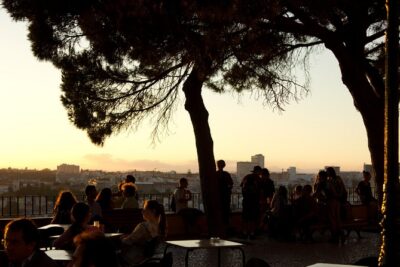
The tuk-tuk then heads to Miradouro da Senhora do Monte, a viewpoint that really earns its reputation. From here you can see a lot at once: Palha Sea, São Jorge Castle, parts of downtown Lisbon, the Tagus River estuary, stretches of Bairro Alto to Monsanto Forest Park, and the valley of Avenida Almirante Reis.
Next to the viewpoint is a small, ancient Hermitage of Our Lady of Mount, founded in 1147 and consecrated to Saint Gens. You’ll hear about an old “stone chair” connected to a tradition: pregnant women who sat there were said to have easier births. Whether you treat it as legend or folklore, it’s the kind of local detail that makes Lisbon feel personal.
Tip that helps: when you pause at viewpoints, give your eyes 30 seconds to adjust and scan. Lisbon’s layers show up only after you stop “zooming with your feet” and instead let the scene settle.
Saint Vincent de Fora, Campo de Santa Clara, and the Pantheon connection
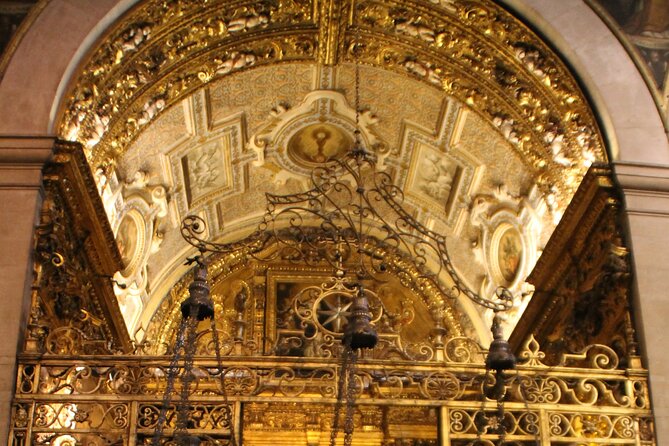
From the heights, the route shifts toward sights that explain Lisbon’s religious and cultural storytelling.
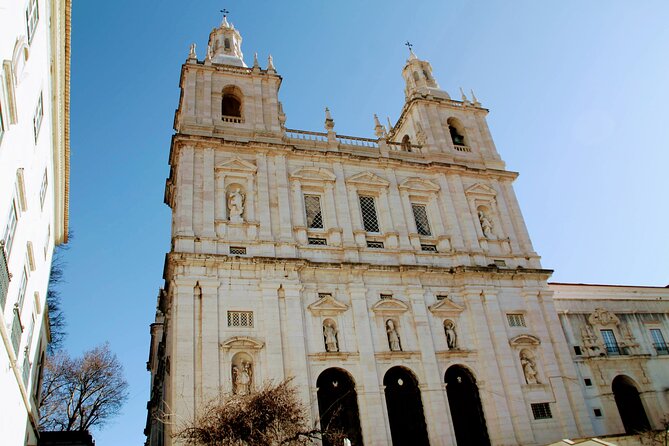
You’ll reach Church of St. Vincent de Fora. The construction started in 1582, and it’s linked to the earlier idea of building a temple on the same invocation of São Vicente, proclaimed patron saint of Lisbon in 1173. Architecturally, the guide will point out the mix—Mannerism traces in Portugal, along with Gothic and Baroque influences. This is one of those churches where a short exterior look is still meaningful because the architecture tells you what era was in charge.
Then there’s Campo de Santa Clara, anchored by the Saint Clara market area. The notes connected to it include craft shops and a “thief fair” on Tuesdays and Thursdays, with roots going back to the 13th century. If you’re there on market days, this can be a good place to pick up small, practical souvenirs like ceramics or handmade goods. If not, it still gives you a sense of neighborhood rhythm.
Later, you’ll visit Panteão Nacional (National Pantheon). It’s housed in the Church of Santa Engrácia, whose construction began in 1682 and ended in 1966—so yes, it took centuries. Here the story turns from architecture to people honored for service to Portugal, including graves of Amália (fado’s iconic diva) and football legend Eusébio, plus other notable figures.
Budget note: entrances aren’t included here, so if you want to go inside, keep a little extra money in mind.
Alfama and Chafariz de Dentro: fountains, Arab roots, and water politics

One of the best shifts on this route is the move into Alfama, Lisbon’s oldest neighborhood and one of its most typical areas. The name traces to Arabic al-hamma, tied to fountains or hot baths, which makes sense because Alfama was associated with thermal waters.
From there, you’ll spend time around Chafariz de Dentro (a fountain in Alfama). There are historical details baked into it: older records refer to 1285 as the Fountain of Horses, and in 1373 the bronze heads were taken by Castilians as a reminder of Lisbon’s sack. Later it became known as Inside Fountain because it sat on the inner side of the Fernandina fence.
This part matters because Lisbon’s water system wasn’t just engineering—it was social. The information provided includes that the fountain had multiple waterspouts, each tied to different social groups, and that by 1517 the outlets were regulated. That’s a surprisingly practical way to learn how city life was organized.
Nearby, you may also spot the House of Nozzles (House of Brás de Albuquerque), a historic building connected to the José Saramago museum. The notes tie it to Roman salt tanks, medieval towers, and Mudéjar pavement, built in 1523. The facade is covered in diamond-shaped stone beaks, with Italian Renaissance influence. It’s not a “big monument” in scale, but it’s the kind of detail that makes Lisbon feel lived-in rather than staged.
Old churches and new-facing views: Conceição Velha to Praça do Comércio
The route then moves toward the riverfront and the more open squares. You’ll stop at Igreja de Nossa Senhora da Conceição Velha, a church whose current form reflects the rebuilding after the 1755 earthquake. The older church on that site was Our Lady of Mercy, described as the second-largest Manueline temple in Lisbon after Jerónimos Monastery in Belém.
You’ll get time to see the interior style briefly if it’s available, but even when you can’t go in, the story helps. Lisbon’s architecture keeps changing because of real events, not just fashion.
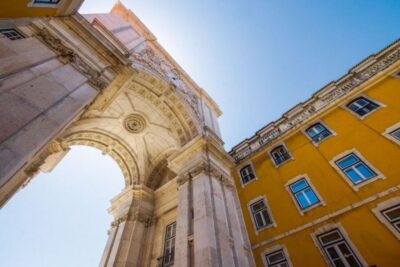
Next is Praça do Comércio, one of Europe’s largest squares. It was the home ground of Portuguese kings for about two centuries, so you’re standing in a political center as much as a scenic one. A highlight you’ll hear about here is Martinho da Arcada café, described as the oldest in Lisbon and a favorite of Fernando Pessoa. You’ll also see the Triumphal Arch from Rua Augusta.
At this stage, you’re close to the river areas that define evening plans. The route also references Cais do Sodré—next to the river, a nightlife and gastronomy zone—with Time Out linked to the older Ribeira Market area. And it includes the area known as Pink Street, famous for nightlife culture.
If you’re planning your own evening later, this portion gives you the geography: you’ll know where to go and why.
Chiado, Saint Roque, and Miradouro Sao Pedro de Alcântara: culture in walking distance
As you continue, you’ll pass through Chiado, known as a Bohemian neighborhood connected to writers and artists. The notes include the chic café Brasileira, with a statue of Fernando Pessoa, plus Largo Luis de Camões (the Portuguese poet of The Lusiads). Even a short stop here helps you connect Lisbon’s literary side with its café culture.
Then comes Igreja de São Roque, a Jesuit church built at the end of the 16th century. It’s described as one of the first Jesuit churches in Portugal and in the world, and importantly, it survived the 1755 earthquake unscathed. Inside, the church has multiple chapels—mainly Baroque—and one of the most notable is the chapel of Saint John the Baptist, an Italian art masterpiece noted as unique in the world.
The route also mentions the area’s history as a place linked to pilgrimage early on, and that a plague cemetery existed outside the walls. That’s the kind of detail that makes a church stop more than a quick photo.
After that, you’ll head to Miradouro São Pedro de Alcântara, described as one of Lisbon’s most beautiful viewpoints, especially overlooking the eastern side of downtown. Nearby is the Convent of Saint Peter from Alcântara, founded in the 17th century (with a key figure named D. António Luís de Menezes, 1st Marquis of Marialva). The notes include the funerary chapel of Cardinal D. Veríssimo de Lencastre as untouched after the earthquake—again, history you can feel in the buildings.
Bairro Alto and Carmo Convent ruins: where the day turns to night
The final parts of the route shift toward Lisbon’s high-energy streets. You’ll reach Bairro Alto, known for narrow cobbled streets and centuries-old houses. Since the 80s, it’s become Lisbon’s best-known nightlife area, with bars, restaurants, and fado clubs.
This is also where the tour includes the Carmo Convent and the idea of a ruin that remained after the 1755 earthquake. The convent was founded in 1389 by D. Nuno Álvares Pereira, and the note highlights that some walls remained and were not rebuilt in the same way right after the quake. That means the site works like a “stop” in your understanding: Lisbon remembers tragedy in stone.
Right there is the Pombalino do Carmo Fountain, replacing an older fountain in the same place in 1786. It’s a nice closing beat because you get one more piece of Lisbon’s daily-life infrastructure—water again—right next to a very emotional historical reminder.
Should you book this Lisbon tuk-tuk tour?
I’d book it if you want a fast, guided orientation to Lisbon’s hills, viewpoints, and major neighborhoods—without hiking all day. It’s especially worth it if you plan to spend the rest of your trip returning on foot to the places that clicked.
Skip it (or plan carefully) if you need long museum visits or you’re hoping for fully included monument entry. Since entrances aren’t included, you’ll need to decide on the spot which indoor stops are worth extra cost.
Also: if you’re the kind of traveler who cares about the “why” behind Lisbon’s angles—Moorish references, the 1755 earthquake impact, and how religious and social life shaped neighborhoods—this route rewards you.
If your priority is getting your bearings and seeing the best viewpoints with minimal hill pain, this is a strong value at $48.12 for a 3-hour private ride with a guide who can keep the day moving.
FAQ
How long is the Tour TukTuk Lisbon tour?
It’s about 3 hours.
What’s the price per person?
The price is listed as $48.12 per person.
Is the tour private?
Yes. It’s a private tour/activity, so only your group participates.
Are monument entrances included?
No. Entrances to monuments are not included, though some stops are listed as free.
Is the tour offered in English?
Yes, it’s offered in English.
Do I need a printed ticket?
No. A mobile ticket is included.
Does the tour allow small children?
Children under age 7 are not allowed.
Is there free pick-up?
The tour name includes free pick-up, and the activity starts at Rua do Comércio (then ends back at the meeting point).
More Tours in Lisbon
- Lisbon City Center Tour – The Unmissable Lisbon★ 5.0 · 22,234 reviews
- Lisbon: History, Stories and Lifestyle Walking Tour★ 4.8 · 10,902 reviews
- True 4Hour Private Tuk Tuk Tour: Discover Lisbon with a Local!★ 5.0 · 8,008 reviews
- Winner 2025 Undiscovered Lisbon Food & Wine Tour by Eating Europe★ 5.0 · 6,390 reviews
- Lisbon: Sintra, Pena, Cabo da Roca, Cascais Tour with Pickup★ 4.8 · 5,445 reviews
More Tour Reviews in Lisbon
- Lisbon City Center Tour – The Unmissable Lisbon★ 5.0 · 22,234 reviews
- Lisbon: Sintra, Pena, Regaleira, Cabo da Roca & Cascais★ 4.7 · 19,656 reviews
- Lisbon Card: 24, 48, or 72-Hour Pass★ 4.5 · 17,944 reviews
- Lisbon: Jerónimos Monastery Entrance Ticket★ 4.1 · 14,164 reviews
- Lisbon: History, Stories and Lifestyle Walking Tour★ 4.8 · 10,902 reviews
More Hills by Tuk-Tuk
- True 4Hour Private Tuk Tuk Tour: Discover Lisbon with a Local!★ 5.0 · 8,008 reviews
- Lisbon: Private Guided Tuk-Tuk Tour with Hotel Pickup★ 4.9 · 4,552 reviews
- Private Lisbon Sightseeing Tuk-Tuk Tour: Alfama, Belém & More★ 5.0 · 4,277 reviews
- Lisbon Highlights: Private Tuk Tuk Tour Adventure Sightseeing★ 5.0 · 3,284 reviews
- Welcome Lisbon Tour with Local Guide in Private Eco Tuk Tuk★ 5.0 · 1,691 reviews
Just in: fresh Lisbon reviews from the team





Lisbon Tuk-Tuk Tours, compared.
 ★ 5.0True 4Hour Private Tuk Tuk Tour: Discover Lisbon with a Local!From $1088,008 reviews
 ★ 4.9Private Guided Tuk-Tuk Tour with Hotel PickupFrom $1534,552 reviews
 ★ 5.0Private Lisbon Sightseeing Tuk-Tuk Tour: Alfama, Belém & MoreFrom $524,277 reviews
 ★ 5.0Lisbon Highlights: Private Tuk Tuk Tour Adventure SightseeingFrom $843,284 reviews
 ★ 5.0Welcome Lisbon Tour with Local Guide in Private Eco Tuk TukFrom $171,691 reviews
 ★ 4.9Private City Tour by Eco Tuk TukFrom $281,215 reviews
 ★ 5.0Old Town TukTuk Tour and Scenic Viewpoints in AlfamaFrom $35974 reviews
 ★ 5.0Explore Lisbon by Tuk Tuk: History and ViewpointsFrom $19840 reviews
Browse the lists this tour appears in