
Reviewed · DOLPHIN WATCHING TOURS
Meet the Lisbon Dolphins – Dolphin Watching in Lisbon
One of Lisbon’s best wildlife plans comes with a boat ride. This small-group cruise mixes real ocean searching with dolphin-spotting lessons, plus a smooth run past big landmarks. You get Tagus River searching first, then (when conditions allow) time out near the Atlantic for dolphins, whales, and other surprises.
I love how this tour keeps you active instead of just hoping for sightings. Two things I like a lot are the tight group size (max 10) and the way the guide teaches you how to watch and identify animals, not just where to look.
The main drawback to plan for: wildlife is wildlife. On rougher days or if dolphins are scarce, the search can take longer, and you may leave without the specific animals you hoped to see—though they do keep working hard to find dolphins.
In This Review
- Quick facts: why this Lisbon dolphin cruise earns near-perfect scores
- From Doca de Santo Amaro to the first dolphins in the Tagus
- Tagus to the open ocean: how the captain hunts, then re-hunts
- What the guide actually teaches you to notice
- The monument pass: Torre de Belém, Descobrimentos, 25 de Abril, and MAAT
- Comfort reality: pack for wind, spray, and cold August water
- Price and value: what you’re really paying for at $78.61
- Who this tour fits best (and who might want to reconsider)
- Should you book Lisbon Dolphins?
- FAQ
- Where does the Lisbon Dolphins tour start?
- How long is the tour?
- What language is the tour offered in?
- What animals might you see?
- What’s included in the price?
- What should I bring since warm clothes aren’t included?
- What if the weather isn’t good or the tour can’t run?
Quick facts: why this Lisbon dolphin cruise earns near-perfect scores

- Max 10 people means you’re not shouting over a crowd
- Up to 40 miles of searching with a practical, moving search pattern
- Tagus first, ocean second when sea conditions allow
- One extra hour of dolphin searching if they haven’t found them yet
- Learn-to-identify coaching after you get your sightings
- Cold-water reality check: pack a proper wind layer for the boat
From Doca de Santo Amaro to the first dolphins in the Tagus
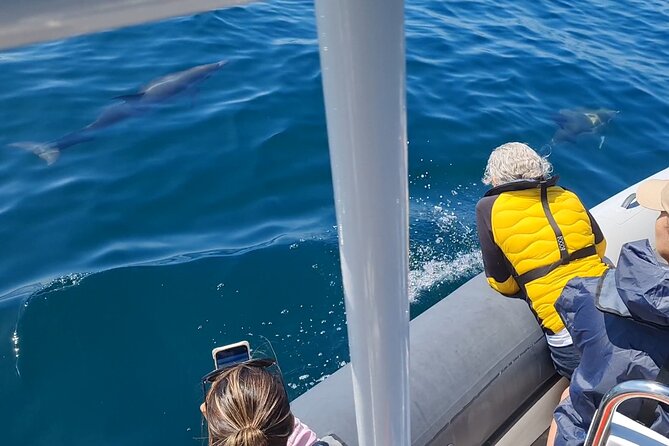
The tour meets at Doca de Santo Amaro, just under the bridge area, and it starts at 9:30 am. The morning timing matters: calmer seas are more likely, and the water can be easier to read from the boat. You’ll also get lifejackets and a professional guide/driver team, which makes the whole thing feel organized from the jump.
This is built as a small-group experience, with a stated maximum of 10 travelers. That changes the vibe. You can actually hear instructions, the captain can steer with less chaos, and you’re more likely to have everyone on the same side of the boat when something surfaces.
The tour is in English, so you’re not stuck with a phrasebook while you’re trying to learn animal behavior. Also, it’s marked as being near public transportation, which helps if you’d rather avoid hunting for parking early in the morning.
More chances to spot dolphins off the coast
- Lisbon: Tagus River Cruise to the Ocean & Dolphin Watching
★ 4.0 · 3,019 reviews - Lisbon: Dolphin Watching with Marine Biologist
★ 4.9 · 1,853 reviews - Lisbon: Dolphin Watching with Marine Biologist – Small Group
★ 4.9 · 867 reviews - Lisbon: Dolphin Watching with a Marine Biologist – Ocean Safari
★ 5.0 · 812 reviews
Tagus to the open ocean: how the captain hunts, then re-hunts
Here’s the simple logic: first they look for dolphins in the Tagus River, then they decide whether to head out toward the ocean. If sea conditions allow, you’ll sail into the Atlantic zone looking for dolphins and even whales.
If you do not find dolphins early, the plan doesn’t just stop. You’ll move toward areas with higher chances of sightings, and the tour includes an extra hour of dolphin searching if none are found at the first stages. That extra hour is not a marketing line; it’s part of what’s included.
They also describe a flexible strategy once they do find dolphins:
- If they found dolphins already, they’ll shift toward areas where you might see more interesting species or more exciting group behavior.
- If they haven’t found them, they keep searching and re-routing based on what’s most promising next.
You should also expect an approach aimed at keeping dolphins close. The tour says they’ll try to stay away from other boats and keep consistent steering so the dolphins may remain near you instead of just passing through. That matters because dolphins often change their timing and movement when boats crowd in or when the boat is constantly zig-zagging.
The tour includes up to 40 miles of dolphin searching, which is a lot of ground for a half-day outing. Translation: it’s not a slow drift with a lot of wishful thinking. It’s an active search.
What the guide actually teaches you to notice
Seeing dolphins is only half the fun. The other half is learning how to watch them so the experience feels richer in real time.
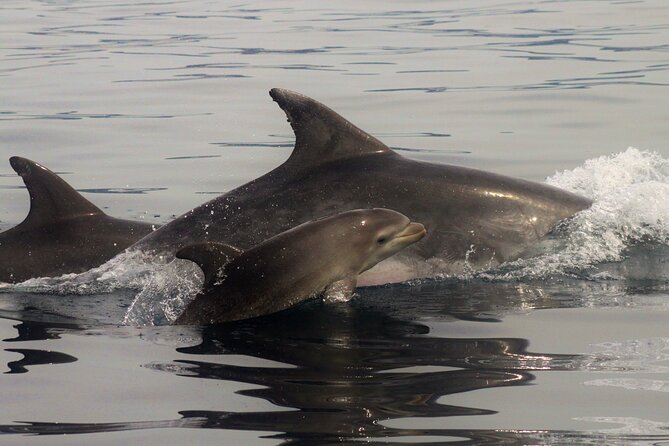
Once you get your moment with dolphins, the guide teaches you how to observe them in a way that turns a brief sighting into a mini lesson you can carry home. The tour also includes time to explain the group structure, plus habits and behaviors—basically the patterns dolphins show when they’re feeding, traveling, or interacting.
A standout detail from the guide talent: Francisco is mentioned for helping people recognize dolphins using marks and explaining behavior. That’s the difference between seeing a “dolphin splash” and actually understanding what the group is doing. You start to notice the subtle stuff: how the animals move as a group, how they surface, and what their spacing can suggest.
After a quick break onboard near the end, you’ll get help identifying the species you saw. If you want the extra “stick around a little longer” feeling, the tour also mentions fanservice time for those who want more looking after the main sightings.
If you’re the type who also loves birds, there’s a bonus angle here. Several sightings in past outings included seabirds (and even a feeding frenzy moment). So even if your heart is set on dolphins, you’re likely to get a second wildlife track going too.
The monument pass: Torre de Belém, Descobrimentos, 25 de Abril, and MAAT
This cruise isn’t just “out on the water.” You also get a structured pass by major Lisbon landmarks with short, interesting facts before arrival.
You’ll see Torre de Belém (Stop 1) as part of that on-the-water route along the river and coast. Even if you’ve been inside before, seeing it from the water gives it a different scale. It also acts as an easy visual anchor early in the trip, when you’re still waiting for dolphin action.
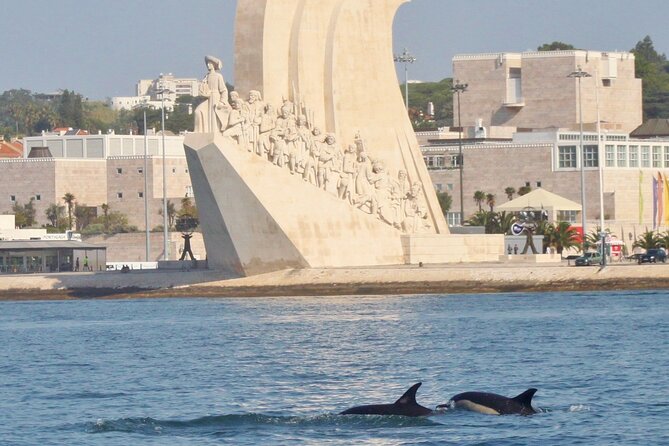
Next is the Padrão dos Descobrimentos (Stop 2). It’s a monument that’s easier to appreciate when you connect it to the idea of exploration and seafaring. From the boat, you’re literally in the setting those themes belong to.
Then you pass by the Ponte 25 de Abril (Stop 3). This is one of those “you came to Lisbon and you have to see this” moments, and on the water it becomes part of the geography you’re moving through—not just a photo stop.
Finally, you get the MAAT – Museu de Arte, Arquitetura e Tecnologia area (Stop 4). The timing of these passes is designed so you’re not stuck sitting with nothing to do while waiting. As the boat moves and you’re searching, the monuments keep the trip from feeling like a long pause.
One practical note: these are “pass-by” moments with facts, not a long museum-style visit. If you’re hoping for time to step out and explore buildings, this isn’t that format.
Worth a look before you lock anything else in around Lisbon:
Comfort reality: pack for wind, spray, and cold August water
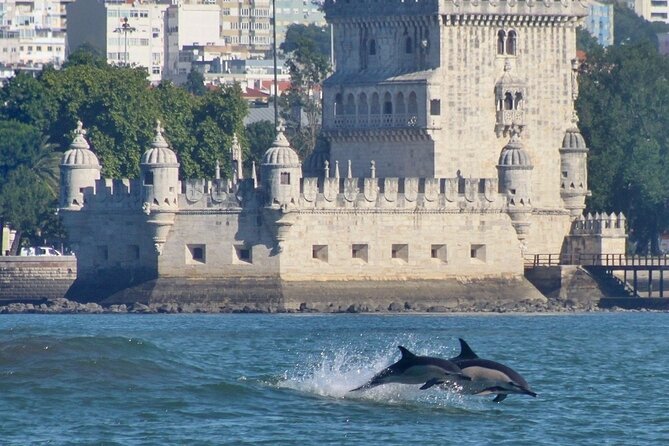
Even in August, the water can feel colder than land. You’ll want to plan like you’re going out on a windy bay, not like you’re strolling a sunny street.
Based on what people experienced on this specific type of outing, I’d pack like this:
- A warm layer you can keep on even if it’s sunny but breezy
- A windproof jacket or something you can treat as your boat shield
- Sunscreen (strong sun can still hit you while the wind keeps you from feeling warm)
- Water for before/after, since lunch and snacks are not included
A couple of very practical tips matter once waves start splashing:
- Lift your feet if spray comes up at the wrong time
- Keep your bag from becoming a sliding problem on the floor
Restrooms are another comfort item. The tour does not include a restroom on board, though you will get a quick WC break before arrival. So plan your timing and don’t assume you’ll be able to pop inside whenever you want.
Also, warm clothes are called out as something you should bring. The boat will provide lifejackets, but it’s you who controls your comfort.
Price and value: what you’re really paying for at $78.61
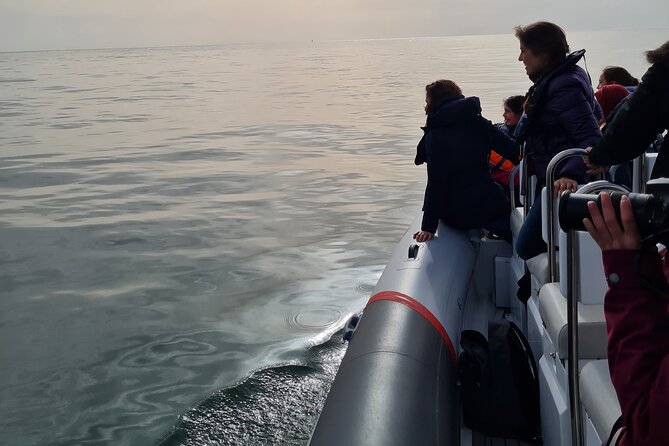
At $78.61 per person for about 3 hours, you’re paying for a focused wildlife search plus the ability to stay flexible while dolphins are doing their dolphin thing. If you only compare duration, it can look like a standard half-day. But the value is in the search method.
Here’s what’s included:
- Driver/guide and a professional guide
- Lifejackets
- All fees and taxes
- Up to 40 miles of dolphin searching
- A possible extra hour of searching if dolphins are not found
- Short monument facts during the route
What’s not included:
- Lunch and snacks
- A restroom on board
- Warm clothes/jackets (you bring them)
- The tour is noted as not operating with fewer than 5 passengers
That last point helps explain why this trip feels well-run when it runs. It’s also why, when the weather is poor or the minimum is not met, you may be offered a different date or a refund. You’re not paying for a “guaranteed dolphin show.” You’re paying for a well-managed chance with meaningful search time and coaching.
If you like wildlife tours where you learn something, the teaching component is part of the value. Many boat trips tell you where to look. This one helps you understand what you’re seeing afterward, including species identification.
Finally, timing matters. The experience is often booked about 13 days in advance on average, so it’s smart to lock in your date if you’re traveling in peak season.
Who this tour fits best (and who might want to reconsider)
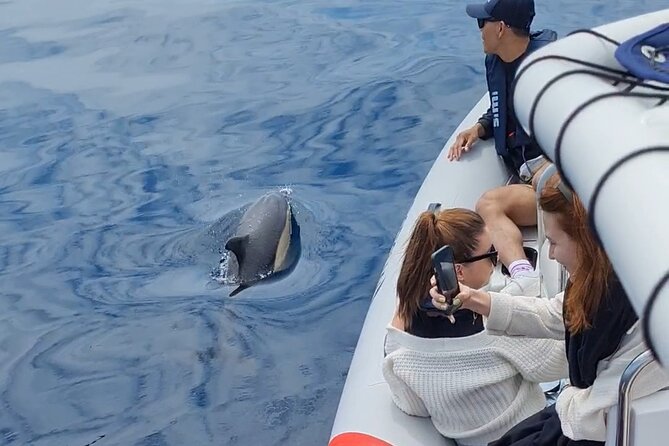
This works well for families and for active adults. Kids tend to do great on boats when there’s constant movement and guided attention. In past experiences, people highlighted that children enjoyed it from start to finish, especially when pods appeared in multiple waves.
Bird watchers also have a reason to be interested. Even when the main goal is dolphins, seabirds often show up in the same areas where wildlife is active.
You should consider skipping if you:
- Can’t do impact activities (the tour notes it’s not recommended for travelers that can’t do those)
- Really need a warm, seated, low-spray experience (the boat conditions can be breezy and wet)
- Expect a guaranteed dolphin count regardless of the day (no tour can promise that)
You’ll enjoy it most if you like a mix of:
- Ocean and river scenery
- Wildlife watching that depends on real conditions
- A guide who helps you recognize behavior, not just animals as dots on the horizon
Should you book Lisbon Dolphins?
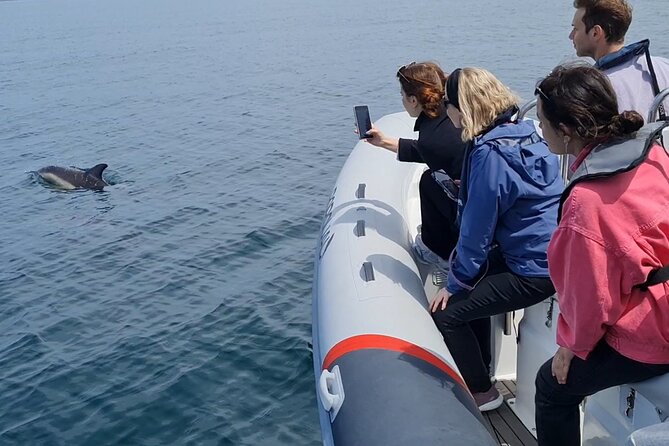
If you want a small-group dolphin search that takes the time to look in the Tagus and then out toward the ocean when conditions allow, this is a strong choice. The standout reasons are the active search plan (including the extra hour) and the instruction that helps you spot and identify what you see—especially with guides like Francisco described for hands-on teaching.
I do suggest going in with the right mindset: this is a wildlife experience, not a staged show. Bring warm layers, sunscreen, and water, and accept that some days dolphins are just not where we’d like them to be.
My call: yes, book it if you’re flexible about sightings and you’ll dress for the wind. If you’re very sensitive to cold spray or you need a guarantee of specific animals, pick a different style of Lisbon activity on the day you travel.
FAQ
Where does the Lisbon Dolphins tour start?
It starts at Doca de Santo Amaro, listed as 1300 Lisbon, Portugal. The activity ends back at the meeting point.
How long is the tour?
The tour runs for about 3 hours (approx.). If dolphins aren’t found, there is one extra hour of dolphin searching included if needed.
What language is the tour offered in?
The tour is offered in English.
What animals might you see?
The experience focuses on dolphins and also mentions wildlife such as sea turtles and seabirds. When sea conditions allow, it also states looking for dolphins and whales.
What’s included in the price?
Included are the driver/guide and professional guide, lifejackets, all fees and taxes, up to 40 miles of dolphin searching, and an extra hour of dolphin searching if needed.
What should I bring since warm clothes aren’t included?
Warm clothes/jackets are not included, and the tour notes it can be cold on the water. Bring a warm layer, plus sunscreen and water are practical additions.
What if the weather isn’t good or the tour can’t run?
The experience requires good weather. If it’s canceled due to poor weather, you’ll be offered a different date or a full refund. It also has a minimum number of travelers, and if that minimum isn’t met, you’ll be offered a different experience or a full refund.
More Dolphin Watching in Lisbon
- Lisbon: Tagus River Cruise to the Ocean & Dolphin Watching★ 4.0 · 3,019 reviews
- Lisbon: Dolphin Watching with Marine Biologist★ 4.9 · 1,853 reviews
- Lisbon: Dolphin Watching with Marine Biologist – Small Group★ 4.9 · 867 reviews
- Lisbon: Dolphin Watching with a Marine Biologist – Ocean Safari★ 5.0 · 812 reviews
- Lisbon: Arrábida Natural Park Dolphin Watching Boat Tour★ 4.9 · 212 reviews
More Tour Reviews in Lisbon
- Lisbon City Center Tour – The Unmissable Lisbon★ 5.0 · 22,234 reviews
- Lisbon: Sintra, Pena, Regaleira, Cabo da Roca & Cascais★ 4.7 · 19,656 reviews
- Lisbon Card: 24, 48, or 72-Hour Pass★ 4.5 · 17,944 reviews
- Lisbon: Jerónimos Monastery Entrance Ticket★ 4.1 · 14,164 reviews
- Lisbon: History, Stories and Lifestyle Walking Tour★ 4.8 · 10,902 reviews
Out to Sea for the Dolphins
- Lisbon: Tagus River Cruise to the Ocean & Dolphin Watching★ 4.0 · 3,019 reviews
- Lisbon: Dolphin Watching with Marine Biologist★ 4.9 · 1,853 reviews
- Lisbon: Dolphin Watching with Marine Biologist – Small Group★ 4.9 · 867 reviews
- Lisbon: Dolphin Watching with a Marine Biologist – Ocean Safari★ 5.0 · 812 reviews
- Lisbon: Arrábida Natural Park Dolphin Watching Boat Tour★ 4.9 · 212 reviews
Just in: fresh Lisbon reviews from the team



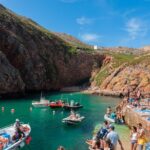

Dolphin Watching Tours, compared.
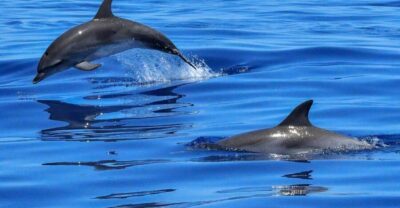 ★ 4.0Tagus River Cruise to the Ocean & Dolphin WatchingFrom $383,019 reviews
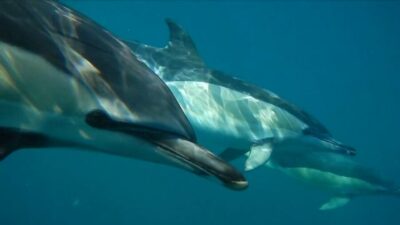 ★ 4.9Dolphin Watching with Marine BiologistFrom $761,853 reviews
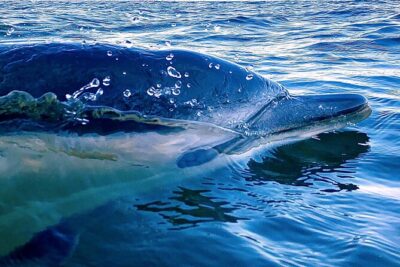 ★ 4.9Dolphin Watching with Marine Biologist – Small GroupFrom $61867 reviews
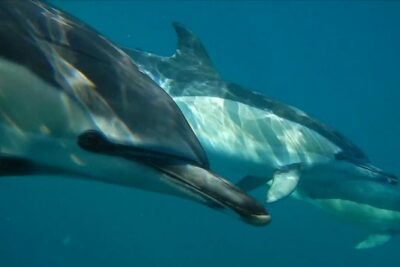 ★ 5.0Dolphin Watching with a Marine Biologist – Ocean SafariFrom $62812 reviews
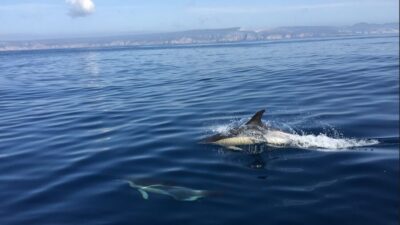 ★ 4.9Arrábida Natural Park Dolphin Watching Boat TourFrom $58212 reviews
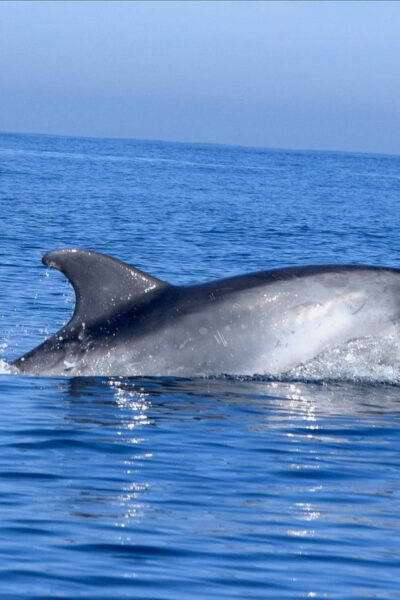 ★ 4.9Cascais: Dolphin Watching Speedboat TourFrom $76156 reviews
★ 5.0Dolphin Watching with Marine Biologist – Small GroupFrom $78131 reviews
★ 4.9Cascais: Dolphin Watching Speedboat TourFrom $76156 reviews
★ 5.0Dolphin Watching with Marine Biologist – Small GroupFrom $78131 reviews
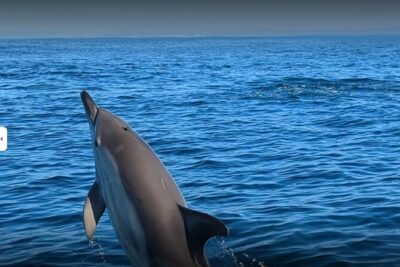 ★ 5.0Lisbon Dolphin Watching Ocean SafariFrom $7235 reviews
Browse the lists this tour appears in