
Reviewed · TOURS
Lisbon Small Group Tour
Lisbon makes you work a little, then rewards you big. This max-8 tour is built for quick orientation: viewpoints on the seven hills, historic churches, and the Belém waterfront in one focused morning. I like the small group limit of 8, so you spend less time waiting and more time looking. I also like that you get private, air-conditioned transport plus WiFi and bottled water, which helps when you’re hopping between districts. The one catch: at 5 hours with lots of stops, it’s not a slow wander—expect a steady pace and some uphill walking.
You’ll also get a smart mix of Lisbon’s “why it matters” landmarks and pure photo moments. From the Miradouro da Senhora do Monte views to Manueline architecture at the Jerónimos Monastery, the day helps you connect the city’s geography and history fast. If you’re hoping for long museum time or lots of free roaming, this format may feel a bit tight. But if you want a first taste that sets you up for the rest of your trip, it’s a strong match.
In This Review
- Key things to notice before you go
- Why this max-8 Lisbon route is such a good first move
- Price and logistics: what you’re actually paying for
- Miradouro da Senhora do Monte: the view that sets Lisbon in context
- Igreja de São Vicente de Fora: a church with Lisbon’s patron saint behind it
- Miradouro das Portas do Sol: Alfama, Moorish remnants, and the Tagus in one frame
- Lisbon Cathedral (Sé): mixed styles, long timeline, and national monument status
- Church of St. Anthony: the engagement ritual and the tile panel
- Parque Eduardo VII and the Aqueduto das Águas Livres: Lisbon beyond the postcard
- Belém day: Jerónimos, Torre de Belém, and the Discoveries monument
- Jerónimos Monastery: Manueline at full volume
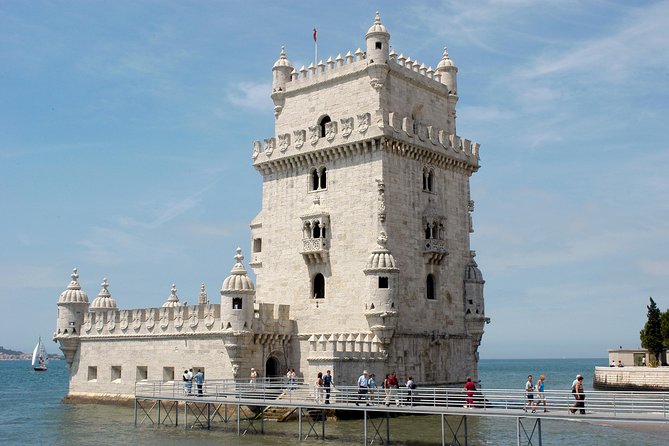
- Torre de Belém: from defense tower to icon
- Monument to the Discoveries: modern sculpture with navigator symbolism
- Pastéis de Belém and the bridges to big views
- Finishing in Baixa: Restauradores, Rossio’s square feel, and Avenida da Liberdade
- Praça dos Restauradores: a tall reminder of 1640
- Praça Dom Pedro IV (Rossio area): markets and an old name
- Avenida da Liberdade: wide boulevard, gardens, and big-city feel
- Who should book this tour (and who might want a different one)
- Should you book Lisbon Small Group Tour?
- FAQ
- How long is the Lisbon Small Group Tour?
- What is the group size limit?
- Where does the tour start and when?
- What is included in the price?
- Is breakfast or lunch included?
- Do you get a mobile ticket?
- Are there admission tickets mentioned for the stops?
- What should I do if the weather is poor?
- Is cancellation free?
- Who can participate?
Key things to notice before you go
- Max-8 group means more room to ask questions and less time stuck in crowds
- Seven-hill viewpoints give you the real Lisbon geography fast
- Belém highlights in one loop: Jerónimos, Torre de Belém, and the Monument to the Discoveries
- Church stops with specific local context, like St. Vincent of Lisbon and St. Anthony traditions
- Comfort extras: air-conditioned vehicle, WiFi on board, bottled water
- A morning that returns you to your starting point, so you don’t have to plan a second ride
Why this max-8 Lisbon route is such a good first move
Lisbon is one of those cities where your feet do a lot of work. Hills, staircases, and twisting streets are part of the deal. What I like about this tour is how it uses that fact instead of fighting it. You get driven between key areas, then you step out at the spots that explain the city in one glance.
Because the group is capped at 8 people, the guide can keep everyone moving without rushing you through the views. In a bigger group, you’d lose time to crowd control and waiting your turn. Here, the rhythm stays human: short stop, look, listen, then off to the next viewpoint.
There’s also a practical side. The route mixes “big must-sees” with lesser-known-but-significant corners—especially around Alfama and the cathedral area. That combo is what makes it useful for planning the rest of your Lisbon days.
Still deciding? See how this one measures up against a few Lisbon favourites.
- Lisbon City Center Tour – The Unmissable Lisbon
★ 5.0 · 22,234 reviews - Lisbon: Sintra, Pena, Regaleira, Cabo da Roca & Cascais
★ 4.7 · 19,656 reviews - Lisbon: Jerónimos Monastery Entrance Ticket
★ 4.1 · 14,164 reviews - Lisbon: History, Stories and Lifestyle Walking Tour
★ 4.8 · 10,902 reviews
Price and logistics: what you’re actually paying for
At $115.19 per person for about 5 hours, you’re paying mostly for three things: guided orientation, transport, and efficiency. The tour includes an air-conditioned vehicle, private transportation, WiFi on board, and bottled water. You also get a mobile ticket, so you’re not scrambling for paper.
You start at Pç do Marquês de Pombal 8, 1250-160 Lisboa at 9:30 am and you end back at the meeting point. That matters more than it sounds. If you’re staying in a central hotel or near a metro line, starting and ending in the same place keeps the day simple—no awkward second transfer.
Meals aren’t included (no breakfast, lunch, or dinner). So I’d treat this like a morning plan. If you’re going to add a pastry stop, you can, but you’ll still want to eat on your own schedule before or after.
Miradouro da Senhora do Monte: the view that sets Lisbon in context
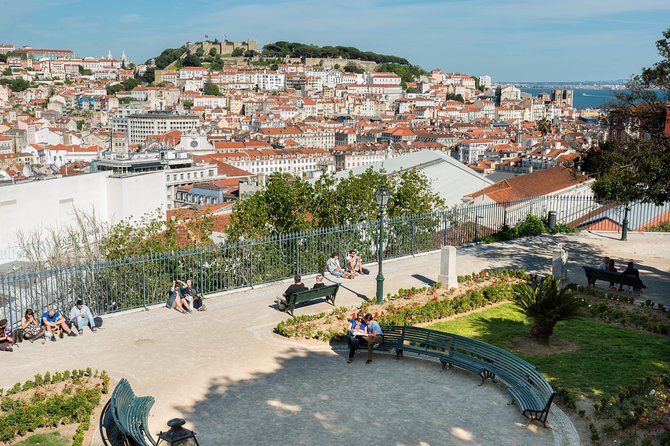
Stop 1 is Miradouro da Senhora do Monte, by the Chapel of Our Lady of the Mount. This belvedere works because it shows you multiple Lisbon layers at once. From here, you can see toward the south the sea of the Straw (the terracotta rooftops), the Castle of São Jorge area, parts of Baixa, and the Tagus River estuary. To the west, the view reaches from Bairro Alto toward Monsanto. Northward, you can look along Avenida Almirante Reis.
It’s also a smart first stop. Even before you step into churches, you’re learning how the city sits on its hills and how the river shapes everything. That makes the later stops easier to understand.
Practical tip: expect wind and sun. Even in mild weather, viewpoints can feel cooler than street level. Dress for that, and keep your phone camera ready—this is a strong photo moment.
Igreja de São Vicente de Fora: a church with Lisbon’s patron saint behind it
Next up is Igreja de São Vicente de Fora. The basic story helps you read the building. It started in 1582 at a site where D. Afonso Henriques had built an earlier temple. St. Vincent became the patron of Lisbon in 1173, after his relics were moved from the Algarve to a church outside the city walls.
Construction began later, in 1590, led by Filippo Terzi, guided by a drawing from Juan de Herrera. Another name tied to the work is Portuguese architect Baltasar Álvares.
What I like here is that you get more than a pretty facade. You get a chain of why Lisbon’s identity is tied to saints, relics, and architecture, not just to monuments. Also, the stop is short—so you’ll get the highlights without feeling stuck in a long interior visit.
Consideration: churches can have lines or changing access, depending on conditions. The tour’s short stop time is helpful, but it also means you’ll see the essentials rather than do a deep interior study.
Miradouro das Portas do Sol: Alfama, Moorish remnants, and the Tagus in one frame
Then the tour moves to Miradouro das Portas do Sol in Alfama. The place name connects to the old Porta do Sol, once part of the Moorish fence of Lisbon. That older structure was ruined in the 1755 earthquake, which gives the square a real historical bite.
From the balcony-like viewpoint, you get views over eastern Alfama’s narrow, winding streets, down toward the Tagus River. You can also see the Church of São Vicente de Fora from here, which helps you link earlier stops into one mental map.
This is the kind of spot you’ll want to pause at for a full minute or two. Alfama is easiest to understand from above, and that’s what this lookout gives you.
Small practical note: Alfama streets below can be uneven. If you plan to explore more later, this is a good place to decide how much walking you want to do on your own.
Lisbon Cathedral (Sé): mixed styles, long timeline, and national monument status
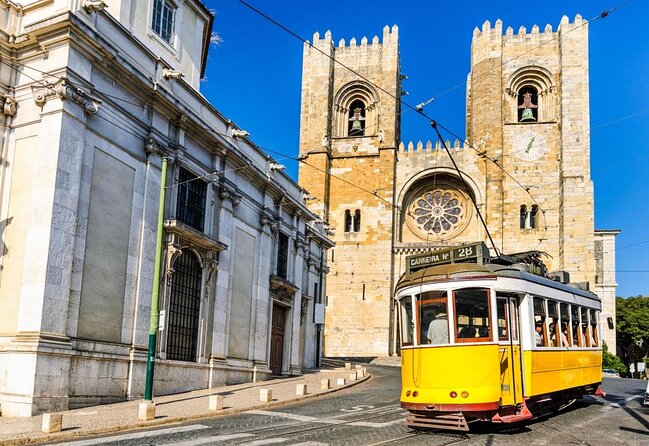
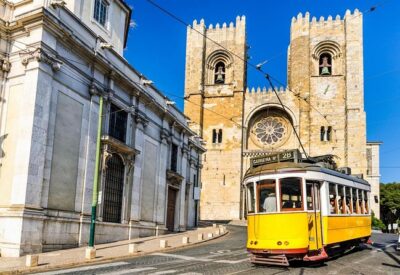
Next: Lisbon Cathedral, also known as Santa Maria Maior or Sé. The cathedral is the seat of the Patriarchate of Lisbon and the Parish of Sé. Construction began in the second half of the 12th century, after D. Afonso Henriques resumed the city from the Moors. Today, it’s a mix of architectural styles and is classified as a National Monument (since 1910).
This stop adds another layer to the morning. Earlier you’re at lookouts and saints; here you’re at the seat of major religious power. Even with limited time, the key takeaway is the cathedral’s age and its “layering” effect—Lisbon didn’t build its identity in one era. It built it over and over.
Consideration: if you’re the type who wants lots of time inside, you may feel the stop is brief. For that kind of visit, I’d treat this tour as the spark, then plan a longer return on another day.
Church of St. Anthony: the engagement ritual and the tile panel
The tour then heads to Church of St. Anthony (Santo António), in the Sé area near the old port route of medieval Lisbon. The tour highlights the tradition that people preparing to marry visit the church, pray, and leave flowers for St. Anthony, who is known as the intercessor of newlyweds.
There’s also a small museum dedicated to him. Another specific detail worth noting: on the descent to the crypt, there’s a panel of modern tiles that celebrates Pope John Paul II’s visit in 1982.
I like this stop because it connects a landmark to living customs. It’s not just a building; it’s still part of local life and ritual.
If you’re visiting as a couple, or even as a history lover, this kind of detail makes the area feel more human.
Parque Eduardo VII and the Aqueduto das Águas Livres: Lisbon beyond the postcard
After the religious sites, you get a breather with Parque Eduardo VII, the biggest central park in Lisbon. It was baptized in 1903 in honor of Eduardo VII of the UK, who visited Lisbon the year before to reinforce the alliance between the two countries. Before that, the park was called Freedom Park.
Then comes a major infrastructure story: Aqueduto das Águas Livres. This aqueduct system collected, carried, and distributed water to Lisbon, and its most emblematic work is the grand stone arches over the Alcântara valley—one of Lisbon’s classic postcard visuals.
The tour places this in context by tying it to the 18th century: built by King João V, originating at Águas Livres in Belas (near Sintra). It was reinforced and expanded through the 19th century. A key “Lisbon survival” fact: it resisted the 1755 earthquake.
Why this part matters: many Lisbon tours focus only on old centers and church facades. Here you get a sense of how Lisbon actually functioned—water, engineering, and long-term city planning. It’s a smart shift, and it balances the day so you don’t feel like you’re only looking at stone.
Belém day: Jerónimos, Torre de Belém, and the Discoveries monument
The tour’s Belém segment is where Lisbon’s story turns global. It’s described as a return back to the 16th century in Bethlehem, centered on Portuguese navigators and their voyages.
Jerónimos Monastery: Manueline at full volume
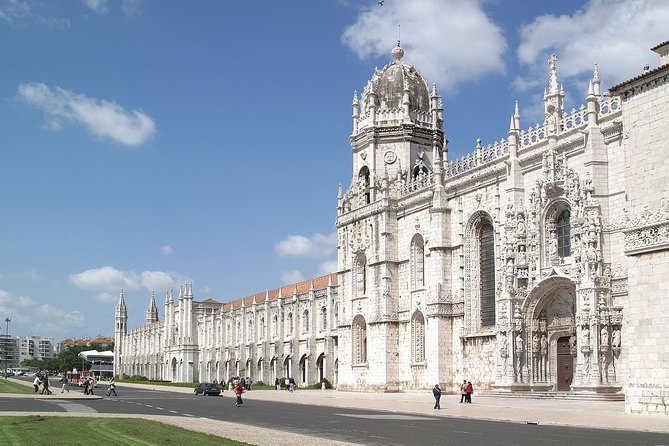
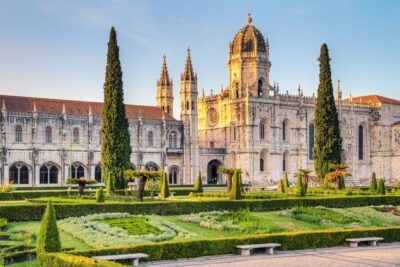
Stop 8 is Mosteiro dos Jerónimos (Monastery of Santa Maria de Belém). It’s a Portuguese monastery of the Order of St. Jerome built in the 16th century. Since 2016, it has the status of National Pantheon.
The structure is presented as a culmination of Manueline architecture and one of the most remarkable Portuguese monastic complexes of its time. Construction began on the initiative of King Manuel I at the start of the 16th century and lasted about 100 years, led by a group of architects and masters of works, including João de Castilho.
This is the kind of stop where even a short visit gives you a strong visual education. Manueline design is detailed, but the big takeaway is scale and ambition—Lisbon wanted to mark its era.
Torre de Belém: from defense tower to icon
Next: Torre de Belém (Torre de São Vicente). It sits on the right bank of the Tagus, where Belém beach once existed. Originally, it was surrounded by water; over time the surrounding beach became land.
The tower is tied to the reign of D. Manuel I and combines medieval tradition with a more modern bulwark, where artillery could be used. Again, the point isn’t to memorize details—it’s to see how Lisbon’s riverfront built defense and identity at the same time.
Monument to the Discoveries: modern sculpture with navigator symbolism
Then you’ll see Padrão dos Descobrimentos (Monument to the Discoveries). It sits prominently on the Tagus riverbank. The design is credited to Cottinelli Telmo and the sculptures to Leopoldo de Almeida. The inauguration date listed is 1960.
This is a good stop if you want a quick visual bridge between Portugal’s historical navigation era and how those stories are remembered in modern Lisbon.
Pastéis de Belém and the bridges to big views
One of the tour’s signature experiences is a stop for Pastéis de Belém, described as the original cream pastries recipe from an old bakery dating to 1837. The tour also highlights a specific claim: that only 6 people know the original recipe. Treat that as part of the attraction story, not a fact you need to verify—what matters is you’re getting the classic pastry associated with Belém.
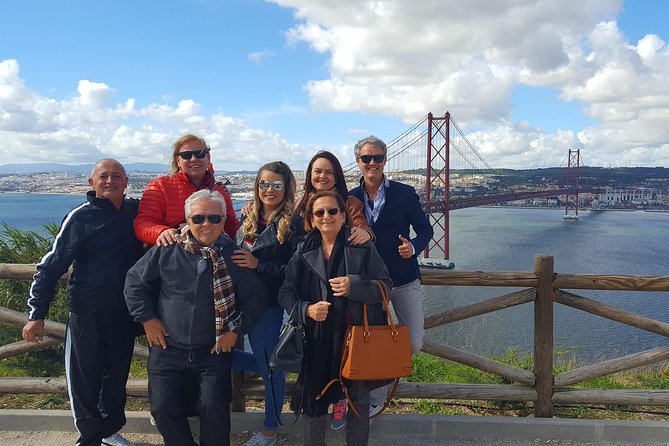
You’ll also cross the 25 de Abril Bridge, often compared to the Golden Gate Bridge. That crossing is more than a fun nickname: it changes your perspective on the Tagus and gives your camera a new angle on the city’s geometry.
And the overview includes a look at Lisbon from the Statue of Christ King, described as a replica of Rio’s Christ the Redeemer. Even if you’re not a statue person, it’s a classic Lisbon viewpoint add-on that rounds out the day’s “high places.”
Finishing in Baixa: Restauradores, Rossio’s square feel, and Avenida da Liberdade
After Belém and the river side, the tour brings you back toward the heart of the city with classic central landmarks.
Praça dos Restauradores: a tall reminder of 1640
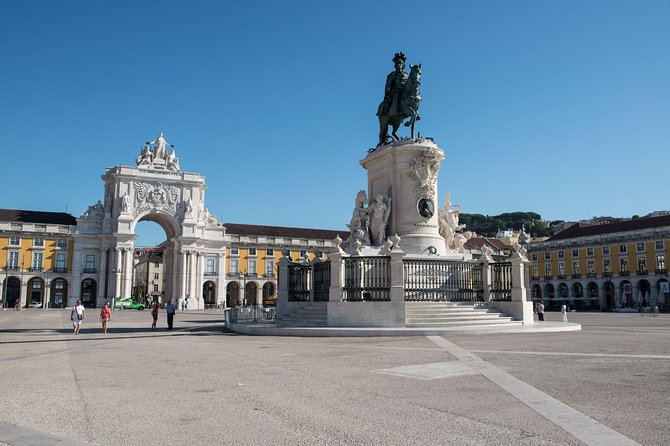
At Praça dos Restauradores, you’ll see the Monument to the Restorers, a 30-meter obelisk inaugurated April 28, 1886. It commemorates liberation from Spanish dominion on December 1, 1640. The square is in Baixa, at the southern end of Avenida da Liberdade, near Praça Dom Pedro IV.
Praça Dom Pedro IV (Rossio area): markets and an old name
Then you’ll reach Praça Dom Pedro IV. The tour notes this area was once called Valverde, a low-lying zone tied to a tributary of the Tagus River. It also mentions the Rossio bush and how the area served as a large market space.
This stop is shorter, but it helps you understand why Lisbon’s central squares became social hubs.
Avenida da Liberdade: wide boulevard, gardens, and big-city feel
Finally, Avenida da Liberdade. This is one of Lisbon’s main avenues connecting Praça dos Restauradores to Marquês de Pombal Square. It’s about 90 meters wide and 1100 meters long, with wide walks and garden elements. The avenue’s origins are traced to Passeio Público started in 1764 by Reinaldo Manuel. It was later altered in the 1830s and 1840s by Malaquias Ferreira Leal, who introduced a new garden and fountain arrangement with waterfalls and allegorical elements.
By this point, you’ve seen hillside viewpoints, major monuments, and central squares. The avenue stop gives you a feeling for Lisbon’s more modern street-life side—less steep, more open.
Who should book this tour (and who might want a different one)
This is a great choice if:
- it’s your first time in Lisbon and you want quick orientation across multiple neighborhoods
- you like guided context, especially around churches, saints, and Lisbon’s evolution
- you want Belém highlights without turning the day into a stressful transit puzzle
- you’re traveling in a small group and you value a short stop format with lots of variety
You might skip it if:
- you want long independent time inside major sites like Jerónimos or the cathedral
- you dislike hills and want a very slow pace
- you plan to spend the morning elsewhere and only need one neighborhood
Given the set start time (9:30 am) and the number of stops, I’d plan to stay flexible with footwear and energy. You’ll do best if you treat it like a guided tasting menu of Lisbon: lots of flavors, smaller portions of each.
Should you book Lisbon Small Group Tour?
If you want a guided “best of” Lisbon that actually helps you understand the city’s layout, I’d book it. The value isn’t just the $115.19 price tag—it’s the combination of max-8 group size, private air-conditioned transport, and a route that hits both viewpoints and key historic sites without eating your whole day.
The only reason I’d hesitate is pacing. This is designed for seeing a lot in about 5 hours, so it won’t replace a slow afternoon in Alfama or a long museum day in Belém. Think of it as the smart kickoff that makes your independent sightseeing easier and more enjoyable.
FAQ
How long is the Lisbon Small Group Tour?
It lasts about 5 hours.
What is the group size limit?
The tour is limited to a maximum of 8 people.
Where does the tour start and when?
It starts at Pç do Marquês de Pombal 8, 1250-160 Lisboa at 9:30 am, and it ends back at the meeting point.
What is included in the price?
It includes an air-conditioned vehicle, private transportation, WiFi on board, and bottled water.
Is breakfast or lunch included?
No. Breakfast, lunch, and dinner are not included.
Do you get a mobile ticket?
Yes, the tour includes a mobile ticket.
Are there admission tickets mentioned for the stops?
Each listed stop shows admission ticket free.
What should I do if the weather is poor?
The experience requires good weather, and if it’s canceled due to poor weather, you’ll be offered a different date or a full refund.
Is cancellation free?
Yes, free cancellation is offered up to 24 hours in advance for a full refund.
Who can participate?
Most travelers can participate, and it’s only for your group.
More Tours in Lisbon
- Lisbon City Center Tour – The Unmissable Lisbon★ 5.0 · 22,234 reviews
- Lisbon: History, Stories and Lifestyle Walking Tour★ 4.8 · 10,902 reviews
- True 4Hour Private Tuk Tuk Tour: Discover Lisbon with a Local!★ 5.0 · 8,008 reviews
- Winner 2025 Undiscovered Lisbon Food & Wine Tour by Eating Europe★ 5.0 · 6,390 reviews
- Lisbon: Sintra, Pena, Cabo da Roca, Cascais Tour with Pickup★ 4.8 · 5,445 reviews
More Tour Reviews in Lisbon
- Lisbon City Center Tour – The Unmissable Lisbon★ 5.0 · 22,234 reviews
- Lisbon: Sintra, Pena, Regaleira, Cabo da Roca & Cascais★ 4.7 · 19,656 reviews
- Lisbon Card: 24, 48, or 72-Hour Pass★ 4.5 · 17,944 reviews
- Lisbon: Jerónimos Monastery Entrance Ticket★ 4.1 · 14,164 reviews
- Lisbon: History, Stories and Lifestyle Walking Tour★ 4.8 · 10,902 reviews
Just in: fresh Lisbon reviews from the team




Tours, compared.
 ★ 5.0Lisbon City Center Tour – The Unmissable LisbonFrom $322,234 reviews
 ★ 4.8History, Stories and Lifestyle Walking TourFrom $2910,902 reviews
 ★ 5.0True 4Hour Private Tuk Tuk Tour: Discover Lisbon with a Local!From $1088,008 reviews
 ★ 5.0Winner 2025 Undiscovered Lisbon Food & Wine Tour by Eating EuropeFrom $1256,390 reviews
 ★ 4.8Sintra, Pena, Cabo da Roca, Cascais Tour with PickupFrom $585,445 reviews
 ★ 5.0Alfama Tour in Lisbon Old TownFrom $34,936 reviews
 ★ 5.0Best of Lisbon Small-Group Guided Walking TourFrom $234,869 reviews
 ★ 4.11-or 2-Day Hop-On Hop-Off Bus TourFrom $254,774 reviews