
Lisbon clicks fast from the hills. This private, English-language walking tour strings together the city’s best miradouros and classic neighborhoods, then finishes with food at Time Out Market. I like that the pace is set for photos and storytelling, and I especially like the built-in tastings plus photo support. One thing to consider: it is still a walking tour with viewpoints on slopes, so moderate fitness helps a lot.
You’ll start high, then work your way down into Alfama, Baixa, Rossio, Chiado, and Carmo. You also get a feel for how locals move through Lisbon: short walks, quick looks, and good stops for coffee and snacks instead of long, slow detours.
The tour runs about 3 to 5 hours and stays private for your group only, so you can ask questions and tweak timing with your guide. If you want a Lisbon plan that feels personal rather than one-size-fits-all, this one is built for that.
In This Review
- Key highlights I’d plan around
- How this private Lisbon tour stays organized in 3–5 hours
- Viewpoint circuit: Senhora do Monte to Santa Luzia
- Sé Cathedral area: Saint Antonio Church and Lisbon’s mosque-to-gothic story
- Praça do Comércio and Rua Augusta to Rossio: the center of the postcard
- Baixa, Rossio and Restauradores: Nikola cafe and a smarter break
- Chiado and Carmo Convent ruins: the Carnation Revolution you can see
- Santa Justa, Bertrand, and Atelier Azulejos: elevator views, bookstore stamps, and tile making
- Pink Street and Time Out Market Lisboa: photos and your last bites
- Price and value: is $72.10 per person fair?
- Should you book this Lisbon Private Tour with Local Guide?
- FAQ
- Where does the tour start?
- Where does the tour end?
- How long is the tour?
- Is this tour private?
- What language is the tour offered in?
- What food and drinks are included?
- Are admission tickets included for the stops?
- Is the Atelier Azulejos stop available every day?
- Is the tour suitable for people with limited mobility?
- Can I bring a service animal?
- What is the cancellation policy?
Key highlights I’d plan around
- Miradouro first approach: you begin at Senhora do Monte for immediate orientation over the old town and 25th of April Bridge
- Alfama viewpoint run: Portas do Sol and Santa Luzia are quick photo wins with strong local stories
- Sé Cathedral layers: Saint Antonio Church details and the cathedral’s site history add depth without feeling heavy
- Food built into the route: coffee break at Nikola cafe plus pastel de nata and ginjinha at the end
- Tile-and-heritage stops: Bertrand bookstore and Atelier Azulejos help you see how Lisbon thinks
- Time Out Market finish: a practical landing spot for lunch/dinner with final tips
How this private Lisbon tour stays organized in 3–5 hours
This is a private tour, so only your group participates. That matters in Lisbon, where streets can be steep and sight lines are tight; having a guide who can adjust timing makes the whole day smoother. You’ll have a mobile ticket, and the tour is offered in English.
Expect a guided walking route with a lot of short stops (many are around 10–15 minutes). That format sounds rushed on paper, but it works well in Lisbon because the best moments often happen quickly: a viewpoint, a church detail, a tile mural, a square with the right angle. Your guide (often noted for being attentive and story-minded, like Nemanja and Jelena in past tours) also takes photos for you, which is a real time-saver when you want to keep walking.
The tour is flexible too, since the plan is customizable. You can use that to slow down for photos, speed up if you’re fit and focused, or ask for short local detours when the timing fits.
Worth a look before you lock anything else in around Lisbon:
- Best of Lisbon Small-Group Guided Walking Tour
★ 5.0 · 4,869 reviews - Lisbon: Private Guided Tuk-Tuk Tour with Hotel Pickup
★ 4.9 · 4,552 reviews - From Lisbon: Fátima, Nazaré, Batalha, and Óbidos Guided Tour
★ 4.7 · 3,060 reviews - Guided Tour to Sintra, Pena, Regaleira, Cabo da Roca and Cascais
★ 5.0 · 2,978 reviews
Viewpoint circuit: Senhora do Monte to Santa Luzia
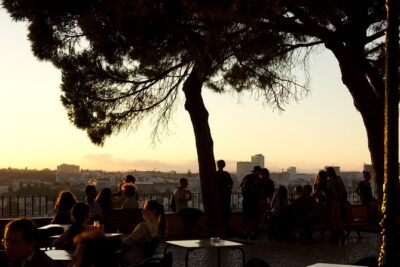
You start at Miradouro Da Senhora Do Monte, Lisbon’s high viewpoint. From here you get the big picture over the old town, the castle area, and the 25th of April Bridge. It’s the fastest way to understand where everything sits, especially if it’s your first visit.
Then you head toward Miradouro da Graça (Sophia de Mello Breyner Andresen). This stop mixes a church visit with azulejos—blue-and-white Portuguese tilework that’s more than decoration. It’s a story tool that helps you read Lisbon’s history at a glance.
Next comes Miradouro das Portas do Sol, one of the most iconic terraces above Alfama. You learn why Alfama matters: it’s the only district that survived the 1755 earthquake. That single fact turns your photos into something with context, not just pretty angles.
You end the viewpoint section at Miradouro de Santa Luzia. It’s a garden viewpoint with mosaics that show Lisbon before the earthquake, plus stories tied to the Knights of Malta. Even if you normally skip museum-style explanations, this kind of detail makes the neighborhood feel personal.
Practical tip: bring comfortable shoes and plan for stairs and slopes. Viewpoints are worth it, but your legs will notice them.
Sé Cathedral area: Saint Antonio Church and Lisbon’s mosque-to-gothic story
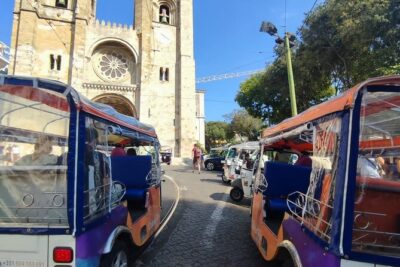
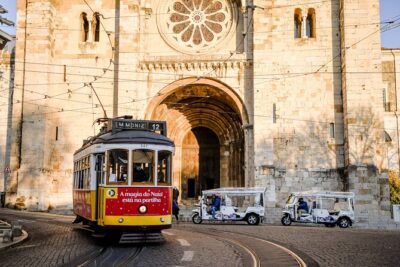
After the hills, the route settles into history at Lisbon Cathedral (Sé de Lisboa). You’ll also see Saint Antonio Church, dedicated to Lisbon’s patron saint. It’s a small stop, but the charm comes from the stories tied to local festivals held every June.
Inside Sé de Lisboa, the big value is how clearly the building reflects layers of Lisbon. The cathedral is described as the city’s oldest church, built on the site of a former mosque. Then you’ll walk through gothic halls that make those eras feel close together.
This stop works especially well after the miradouros. From above, Lisbon looks like a patchwork. From inside Sé, you feel how those layers stayed put while the city changed around them.
Small drawback: churches can be cool and dim compared to outside light. If you’re taking photos, you’ll want your camera ready and your eyes adapted.
Praça do Comércio and Rua Augusta to Rossio: the center of the postcard
Praca do Comercio is the tour’s moment of scale. This grand riverside square was rebuilt after the earthquake, and the stories you get here focus on the triumphal arch and the statues that define Portugal’s golden age. It’s the kind of stop that helps you understand why Lisbon feels both regal and practical at the same time.
From there, Rua Augusta becomes your main walking spine. You’ll stroll down it toward Rossio, passing the everyday rhythm of central Lisbon rather than just staring at monuments. Rossio Square itself is known for patterned pavement and the national theatre, and it’s full of lively café energy.
This section is good for your first full day because it does two jobs fast: it orients you in the city’s core and gives you a sense of where people gather. If you like travel days that move with momentum, this is where the tour feels most satisfying.
One consideration: this part of Lisbon is popular and can be busy on foot. If you hate crowds, your guide’s timing adjustments and short stop strategy can still help you get clear moments for photos.
Worth a look before you lock anything else in around Lisbon:

Baixa, Rossio and Restauradores: Nikola cafe and a smarter break
After Rossio, the tour continues through Baixa and toward Restauradores. This is the part that helps you connect the grand squares with the neighborhoods in between—streets that look small until you understand how they link the city’s topography.
Then you hit a coffee break at the iconic Nikola cafe, and that drink is included in the tour price. For me, included breaks are a big deal because they remove decision fatigue. You don’t have to hunt for a good spot mid-walk; you just take a breather, sip coffee, and let your guide keep the story threads going.
If you’re the type who likes to snack and then keep moving, this stop is timed well. You’ll have energy for the next section into Chiado and Carmo.
The trade-off: since it’s all part of a 3–5 hour schedule, you’ll want to treat the café break as a recharge, not a long sit-down meal.
Chiado and Carmo Convent ruins: the Carnation Revolution you can see
Chiado and Carmo Convent ruins add a different kind of depth. You’re not just learning what Lisbon has preserved; you’re learning what Lisbon changed.
At the Carmo Convent ruins, your guide connects the site to the 1974 Carnation Revolution, the event that changed Portugal forever. Seeing ruins in this context makes the broken spaces feel purposeful, not sad. It also gives you a break from viewpoints and tiles, switching from scenic Lisbon to story Lisbon.
This stop is worth it if you like history that’s tied to real streets. If you only want photo stops, you might feel the time here a bit more structured. But the explanation aims to keep it moving and grounded.
Wear layers if you run cold in shaded areas; church-adjacent spaces can feel cooler than the sunny squares nearby.
Santa Justa, Bertrand, and Atelier Azulejos: elevator views, bookstore stamps, and tile making
Next you head to Elevador de Santa Justa. You’ll use a local trick during the visit, which is one of those small-but-smart guide moves that can save time and stress. Even without knowing the exact details ahead of time, the bigger point is that your guide knows how to make this stop work inside a walking schedule.
After that, you visit Bertrand, described as the oldest bookstore in the world. You get a book with a stamp, which is a fun souvenir that feels connected to Lisbon rather than generic.
Then it’s Atelier Azulejos, a spot where you can see how azulejos are made. The workshop is open Monday through Friday, so if your tour date lands on a weekday, this stop can be a great way to understand why Lisbon’s tilework shows up everywhere. In Lisbon, azulejos aren’t just art on walls; they’re a language.
Finally, you reach Praca Luis de Camoes, where you learn about famous figures like Luis de Camoes and Fernando Pessoa. This isn’t an extra church or viewpoint; it’s Lisbon’s literary side, which helps round out the city’s personality.
Practical note: these stops are closer together than the viewpoints were, so it’s a good stretch to keep your walking energy steady.
Pink Street and Time Out Market Lisboa: photos and your last bites
Pink Street is your photo moment. It’s short, designed for a quick wander and great pictures, and it breaks up the day so you’re not going straight from history to a food hall. If you’re traveling with a phone camera, this is the kind of stop where you’ll actually use it.
The tour ends at Time Out Market Lisboa (Mercado da Ribeira). This is a smart finish point because it gives you choices right away. You’ll also get pastel de nata and ginjinha there, plus final tips from your guide for what to eat next.
This ending is valuable even if you already planned your lunch. The market is a useful reset: you can decide what you want without rushing, and you’re in a central place with plenty of options.
One more nice touch: you’ve already had photos taken for you during the tour. That means your focus can shift from documenting to enjoying your final bites.
Price and value: is $72.10 per person fair?
At $72.10 per person, you’re paying for a private, English-language guide plus a route that hits major Lisbon viewpoints and core neighborhoods in about 3–5 hours. What makes it feel fair is that the price isn’t only about walking with someone holding a map.
Included features you should care about:
- Snacks like pastel de nata and ginjinha, plus coffee (including the Nikola cafe break)
- Photo help, so you’re not forced into awkward self-timer poses
- A customizable plan, which can reduce the chance you waste time on stuff you don’t care about
Also, there’s personal insurance included, listed with Alianz, and the tour has an official licence reference (RNAAT 567/2025). That doesn’t make the day more fun, but it does add peace of mind.
Where the value can dip: if you’re the type who loves long, unstructured wandering and already knows Lisbon well, a dense guided route might feel like you’re being guided more than you want to be. In that case, you might prefer a self-paced day.
Should you book this Lisbon Private Tour with Local Guide?
Book it if you want Lisbon to feel navigable on day one or day two. This tour is strongest for getting your bearings fast, seeing Alfama from the right angles, and learning the stories behind Sé, Praça do Comércio, Carmo ruins, and the azulejos tradition.
Skip it or consider another format if you hate walking and slopes. The itinerary is active, with many short viewpoint stops, so comfortable shoes matter.
If your goal is a well-paced day with a real local feel, snack breaks built in, and photos that actually make sense, this is a solid choice for the money.
FAQ
Where does the tour start?
The tour starts at Rua da Senhora do Monte, 1170 Lisboa, Portugal.
Where does the tour end?
The tour ends at Time Out Market (Mercado da Ribeira), Av. 24 de Julho, 1200-479 Lisboa, Portugal.
How long is the tour?
The duration is approximately 3 to 5 hours.
Is this tour private?
Yes. It’s a private tour/activity, so only your group will participate.
What language is the tour offered in?
The tour is offered in English.
What food and drinks are included?
You’ll have snacks including pastel de nata and ginjinha, plus coffee. There’s also a coffee break at Nikola cafe included in the price.
Are admission tickets included for the stops?
Admission is listed as free for the stops shown in the tour description, including the viewpoint terraces and other listed locations.
Is the Atelier Azulejos stop available every day?
Atelier Azulejos is open Monday through Friday, so timing matters if your tour date falls on a weekend.
Is the tour suitable for people with limited mobility?
The tour notes a moderate physical fitness level. Since it includes viewpoints and walking, it may be challenging if you have mobility limits.
Can I bring a service animal?
Yes, service animals are allowed.
What is the cancellation policy?
You can cancel for a full refund if you cancel up to 24 hours in advance of the experience’s start time.
More Guided in Lisbon
- Best of Lisbon Small-Group Guided Walking Tour★ 5.0 · 4,869 reviews
- Lisbon: Private Guided Tuk-Tuk Tour with Hotel Pickup★ 4.9 · 4,552 reviews
- From Lisbon: Fátima, Nazaré, Batalha, and Óbidos Guided Tour★ 4.7 · 3,060 reviews
- Guided Tour to Sintra, Pena, Regaleira, Cabo da Roca and Cascais★ 5.0 · 2,978 reviews
- Lisbon: São Jorge Castle E-Ticket and Audio Guide★ 4.3 · 2,182 reviews
More Tours in Lisbon
- Lisbon City Center Tour – The Unmissable Lisbon★ 5.0 · 22,234 reviews
- Lisbon: History, Stories and Lifestyle Walking Tour★ 4.8 · 10,902 reviews
- True 4Hour Private Tuk Tuk Tour: Discover Lisbon with a Local!★ 5.0 · 8,008 reviews
- Winner 2025 Undiscovered Lisbon Food & Wine Tour by Eating Europe★ 5.0 · 6,390 reviews
- Lisbon: Sintra, Pena, Cabo da Roca, Cascais Tour with Pickup★ 4.8 · 5,445 reviews
More Tour Reviews in Lisbon
- Lisbon City Center Tour – The Unmissable Lisbon★ 5.0 · 22,234 reviews
- Lisbon: Sintra, Pena, Regaleira, Cabo da Roca & Cascais★ 4.7 · 19,656 reviews
- Lisbon Card: 24, 48, or 72-Hour Pass★ 4.5 · 17,944 reviews
- Lisbon: Jerónimos Monastery Entrance Ticket★ 4.1 · 14,164 reviews
- Lisbon: History, Stories and Lifestyle Walking Tour★ 4.8 · 10,902 reviews
Just in: fresh Lisbon reviews from the team





Guided, compared.
 ★ 5.0Best of Lisbon Small-Group Guided Walking TourFrom $234,869 reviews
 ★ 4.9Private Guided Tuk-Tuk Tour with Hotel PickupFrom $1534,552 reviews
 ★ 4.7From Lisbon: Fátima, Nazaré, Batalha, and Óbidos Guided TourFrom $473,060 reviews
 ★ 5.0Guided Tour to Sintra, Pena, Regaleira, Cabo da Roca and CascaisFrom $952,978 reviews
 ★ 4.3São Jorge Castle E-Ticket and Audio GuideFrom $302,182 reviews
 ★ 4.2Quinta da Regaleira: Skip-The-Booth E-Ticket and Audio GuideFrom $322,067 reviews
 ★ 5.0Welcome Lisbon Tour with Local Guide in Private Eco Tuk TukFrom $171,691 reviews
 ★ 4.6Sao Jorge Castle Skip-the-Line Ticket with GuideFrom $371,191 reviews