
Reviewed · LISBON BIKE & E-BIKE TOURS
Lisbon: 7 Hills Half-Day Electric Bike Tour
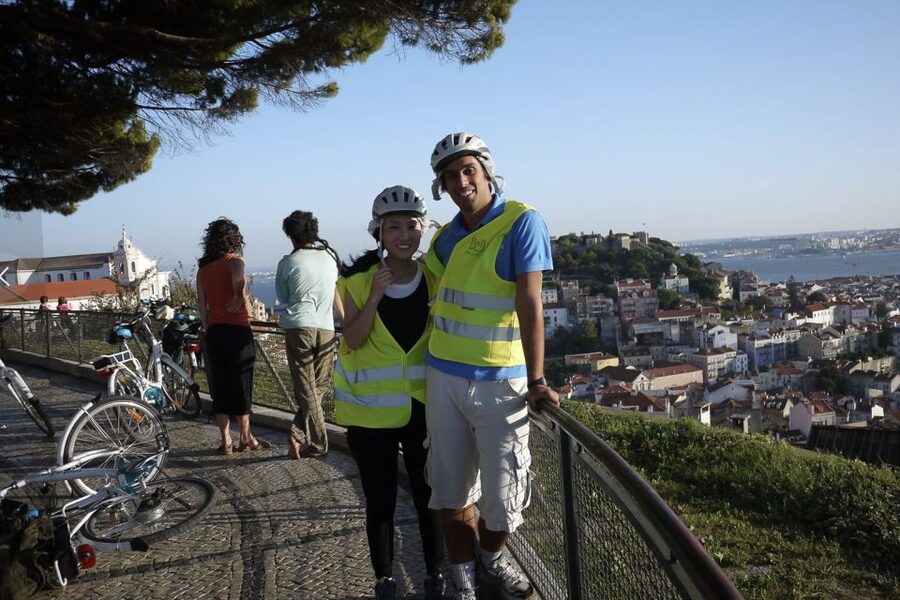
Lisbon was built for hills, then dared people to ride them. This 7 Hills Half-Day Electric Bike Tour turns those steep climbs into a smooth, doable circuit with big viewpoints and classic sights. I especially like the mix of panoramic stops and real neighborhood wandering, and I love that you get electric assistance so the day stays fun instead of sweaty. One thing to consider: the route still uses real streets with real gradients, so you’ll want to feel comfortable riding in a group.
I also like how the tour packs a strong sampler—Sé de Lisboa, the Ascensor da Lavra, and multiple miradouros—into about three hours. If you’re new to Lisbon or short on time, that matters. The main drawback is simple: road surfaces and tight turns in older areas mean you’ll need to pay attention and follow the guide’s instructions closely.
In This Review
- Key highlights at a glance
- Lisbon’s 7 Hills on an e-bike: what changes for you
- Meeting point in Alfama, route start near the harbor, and how the 3 hours move
- Feira da Ladra to Panteão Nacional: start with an easy history warm-up
- São Vicente de Fora and Palácio Belmonte: classic places with lived-in streets around them
- Chão do Loureiro terrace and Miradouro da Graça: where the photos actually make sense
- Penha de França and Monte Agudo: the viewpoint that justifies the climb
- Sé de Lisboa cathedral and Ascensor da Lavra: iconic sights, not just scenery
- Vila Berta, Campos Mártires da Pátria, and Jardim do Torel: neighborhood Lisbon in motion
- Guides, safety, and getting comfortable on the bike fast
- Price and value: is $27 a smart deal for 3 hours?
- Who this e-bike tour suits best (and who might want to adjust)
- Should you book the Lisbon 7 Hills Half-Day Electric Bike Tour?
- FAQ
- How long is the Lisbon 7 Hills half-day e-bike tour?
- Where do I meet for the tour?
- What is the starting area once the tour begins?
- Is the tour guide available in English?
- What’s included in the price?
- How much does the tour cost?
- Is there a cancellation option if my plans change?
- Can I reserve now and pay later?
Key highlights at a glance
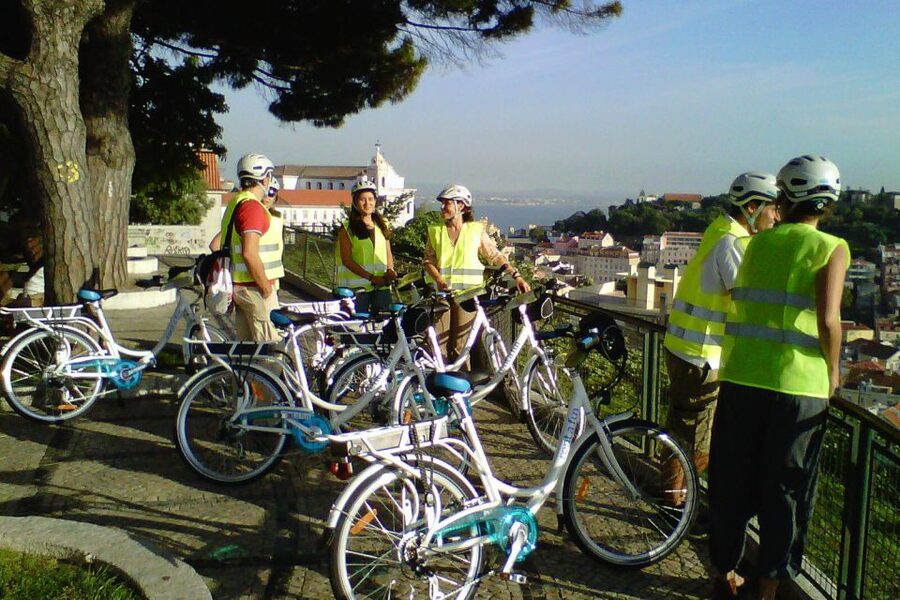
- Electric e-bikes make Lisbon’s steep climbs feel manageable
- Miradouros with real payoff: Chão do Loureiro, Miradouro da Graça, and Monte Agudo
- Big-ticket landmarks: Sé de Lisboa cathedral and the Ascensor da Lavra funicular
- Neighborhood variety: Alfama-adjacent streets plus areas like Penha de França and Vila Berta
- Time-efficient loop that helps you get oriented fast
Lisbon’s 7 Hills on an e-bike: what changes for you
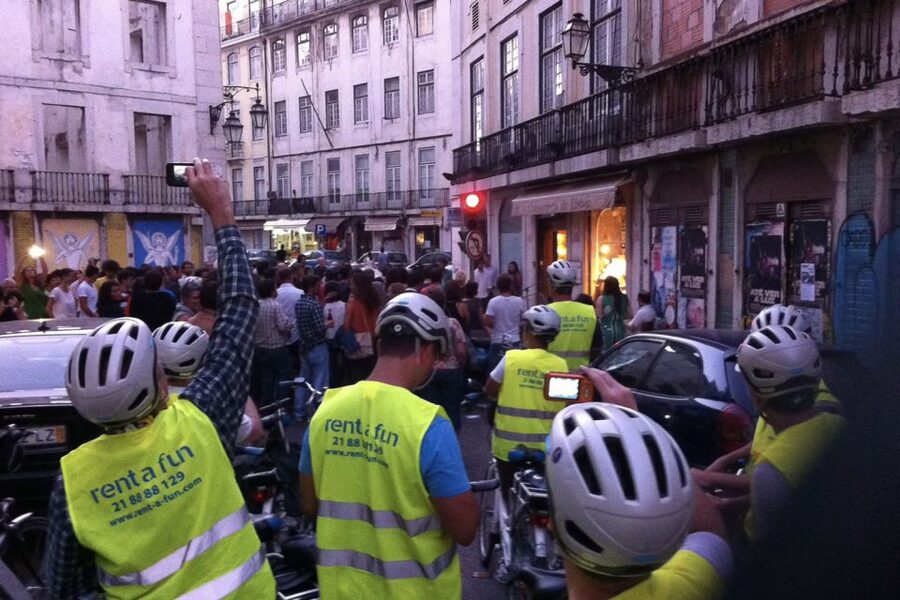
Lisbon’s hills are famous for a reason. Even when the distance doesn’t look long on a map, the climbs can sap your energy, and the descents demand focus. With an electric bike, the whole rhythm shifts. You still ride, you still feel the city, but the motor helps you keep a steady pace up the grade and save your legs for enjoying the viewpoints.
That’s the big practical win: you get more “Lisbon per hour.” You can do the classic viewpoints without spending your afternoon gasping behind a coffee cup. And because you’re not fighting the terrain nonstop, you’re more likely to notice details—tile work, church facades, street life—rather than just surviving the next incline.
The tour also includes a helmet and water, which sounds basic until you’re actually out on a warm day climbing and stopping frequently.
Seven hills on two wheels, a few more routes
- Lisbon: Hills, Alfama, and Mouraria Tour by Electric Bike
★ 4.8 · 3,438 reviews - Lisbon E-Bike Tour Commerce Square, Mouraria and Alfama
★ 4.5 · 1,688 reviews - Lisbon: 7 Hills Half-Day Electric Bike Tour
★ 4.9 · 1,592 reviews - Lisbon: City Highlights and Viewpoints E-Bike Tour
★ 4.9 · 1,556 reviews
Meeting point in Alfama, route start near the harbor, and how the 3 hours move
You meet at Rua do Jardim do Tabaco, N2 1100-287 Lisboa (Alfama). The tour route begins close to the harbor area at Rua Cais de Santarém, so expect the day to feel like it’s linking Lisbon’s edges to its older hilltop quarters.
Over about 3 hours, the goal isn’t to ride every corner. It’s to connect key zones: harbor-side streets, historic churches and monuments, miradouros for photos and orientation, then back through neighborhoods that help you understand where everything sits.
If you’re trying to decide when to do this, I think it works best early in your trip. You come away with a mental map. Later, when you return on foot or by tram, your choices get smarter because you’ve already seen the “shape” of the city.
Feira da Ladra to Panteão Nacional: start with an easy history warm-up
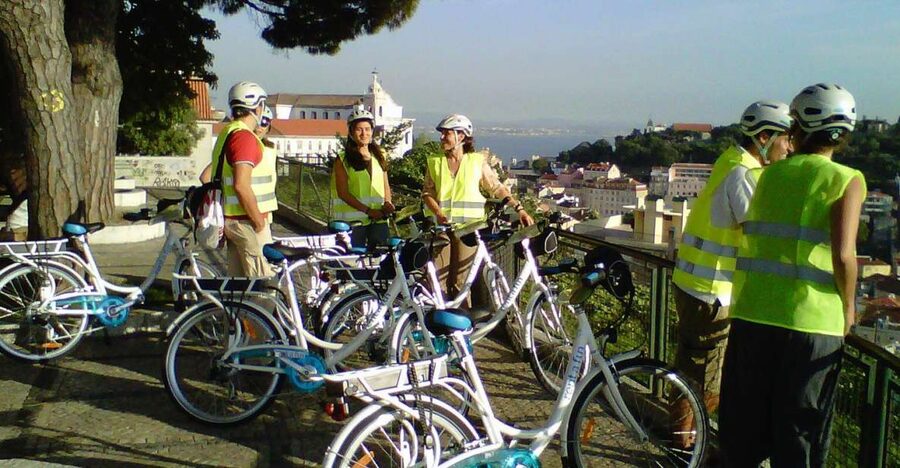
One of the smartest parts of the route is how it starts in the older Lisbon mix: near the harbor, then into the area that’s tied to markets and daily life. You pass through the zone around Feira da Ladra, the well-known flea market. Even if you visit outside market days, the area still feels like a place where Lisbon trades goods, not just postcards.
From there, the tour moves toward monumental sights, including the Panteão Nacional. You get the chance to see how Lisbon’s public architecture signals power and identity across centuries. The stop style matters here: you’re not standing around forever. You get a guided context, you see the exterior and surroundings, then you’re back on the bike.
Why it’s valuable for you: this early segment gives you “where you are” knowledge. Lisbon can feel like a maze. This helps you start placing landmarks into a believable route you could repeat later.
São Vicente de Fora and Palácio Belmonte: classic places with lived-in streets around them
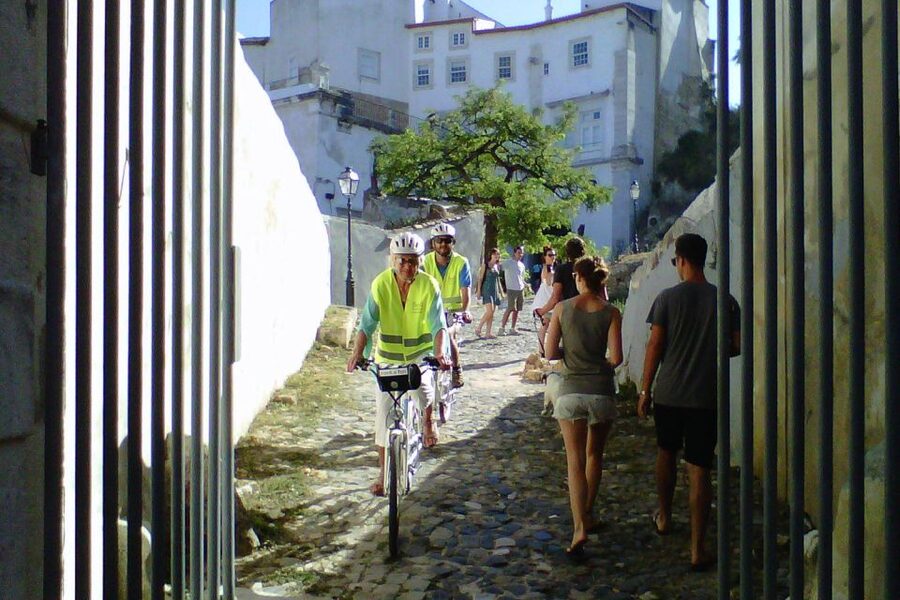
The tour heads to São Vicente de Fora, including the area around the Mannerist Monastery of São Vicente de Fora. Monasteries can become visual wallpaper on tours, but here the pacing is built for understanding—quick orientation plus stories that make the buildings matter.
Then comes Palácio Belmonte—a stop that’s less about a single room and more about how Lisbon’s grandeur shows up inside a city of narrow streets. Seeing a palace while still riding city blocks helps you connect the “big” landmarks to the daily streets that surround them.
Practical note: older streets can mean tight sections and turns. This is where the guide’s job is important. In multiple runs, guides emphasize safe riding habits such as moving in a predictable pattern and staying aware of traffic.
Worth a look before you lock anything else in around Lisbon:
Chão do Loureiro terrace and Miradouro da Graça: where the photos actually make sense
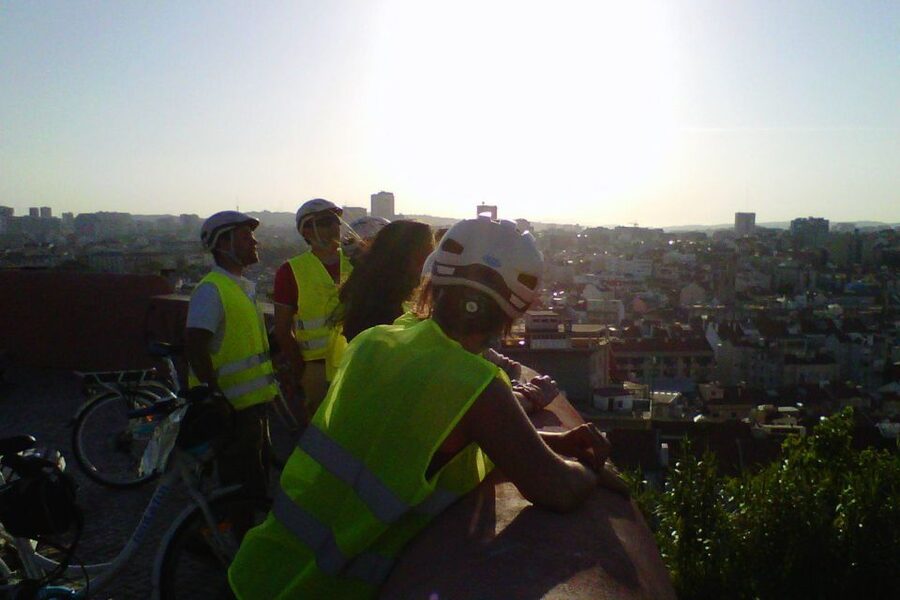
Lisbon’s viewpoints can feel like tourist traps if you treat them like checklist stations. This is different because you hit viewpoints that also help you understand the city’s layout.
The route includes the terrace of Chão do Loureiro and the Miradouro da Graça viewpoint. From these spots, you can see how the hills stack and how neighborhoods layer over the slopes. You also get a sense of how Lisbon’s rail lines, streets, and staircases fit into the geography.
I like this part because it’s not only about the view. It’s about perspective. After these stops, many people suddenly understand why certain sights are hard to reach on foot. You’re not guessing anymore—you’re seeing the hills as the city’s “map.”
If you want a simple strategy: use your first miradouro for orientation, then your later ones for comparison. You’ll notice which districts look closer or higher. That makes the rest of your trip feel easier.
Penha de França and Monte Agudo: the viewpoint that justifies the climb
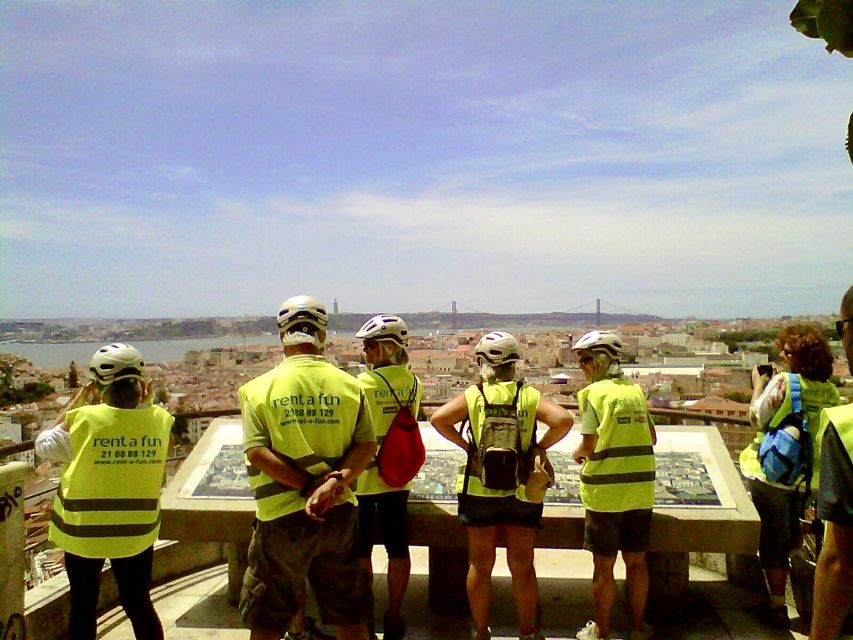
The tour also reaches Penha de França, including the mirador of Monte Agudo. This is a key stop for two reasons.
First, it gives you a higher-altitude perspective of Lisbon’s sprawl and the way the city wraps around the hills. Second, it helps you feel what the e-bike is doing. If the hills were purely a workout, you’d be drained before the view. With the motor assistance, you can arrive still ready to look around and enjoy the scenery.
This is one of the moments where I think the value is highest. You’re paying for access to viewpoints that would be a bigger chore without help.
Sé de Lisboa cathedral and Ascensor da Lavra: iconic sights, not just scenery
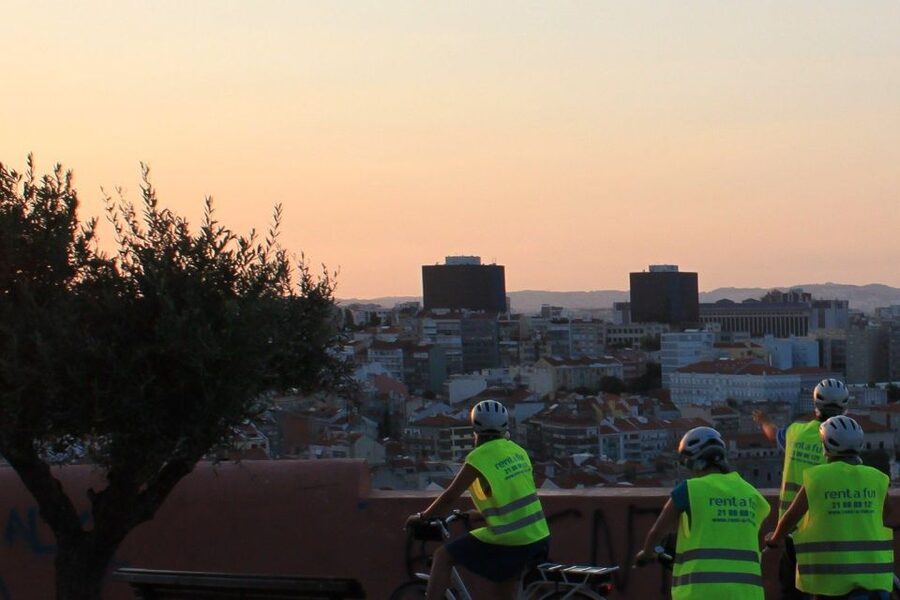
Two of the most recognizable landmarks on the route are Sé de Lisboa (the cathedral) and the Ascensor da Lavra funicular. These aren’t random stops. They anchor you in Lisbon’s religious and transport history.
Sé de Lisboa gives you a strong sense of the city’s long timeline, including the way major institutions shaped older districts. The guide’s explanations tend to focus on what the building represents and how it fits into the surrounding neighborhood.
Then the Ascensor da Lavra, one of the earlier vehicles that helped conquer the hills back in 1884, shows how Lisbon solved its own geometry problem. Even if you’ve seen funiculars in other cities, this one reads as part of Lisbon’s practical adaptation. It’s not only romantic. It’s functional history.
Why you’ll enjoy this segment: you’re connecting architecture with movement. Lisbon is a city of vertical travel—stairs, trams, funiculars. These stops make that pattern click.
Vila Berta, Campos Mártires da Pátria, and Jardim do Torel: neighborhood Lisbon in motion
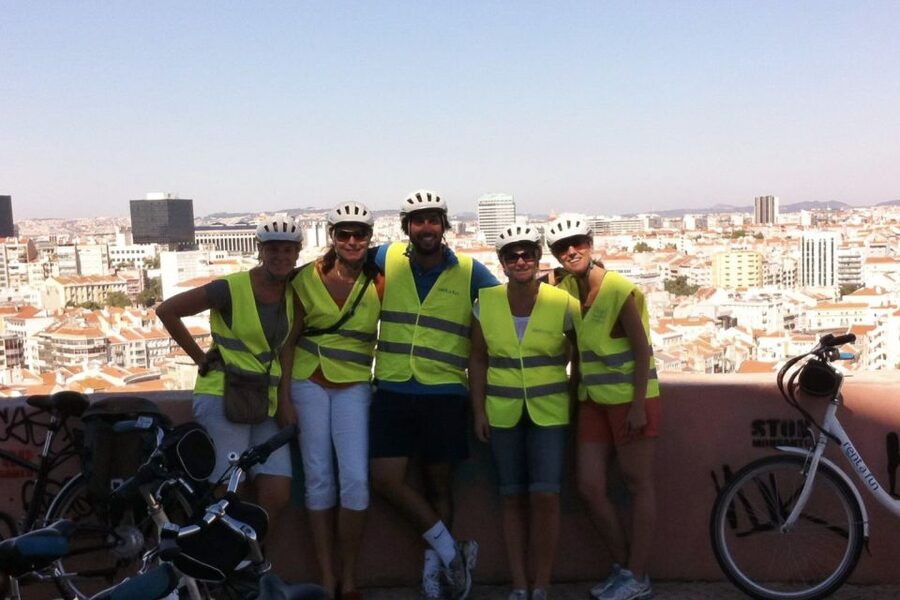
What keeps this tour from feeling like a list of monuments is the way it threads through neighborhoods and parks.
You ride through Vila Berta, plus the Campos Mártires da Pátria area and Jardim do Torel. These stops help you see Lisbon as more than old stone. You get open-air breaks and a calmer rhythm between viewpoints.
You might not spend much time doing this on your own on a first day, because you wouldn’t know which stretches are worth your effort. The guided bike loop helps you “sample” without committing a full afternoon to planning.
Also, the pacing matters. Several guests note frequent stops and photo breaks. That’s exactly what you want on a city-with-hills tour: time to look, time to ask questions, then time to move.
Guides, safety, and getting comfortable on the bike fast
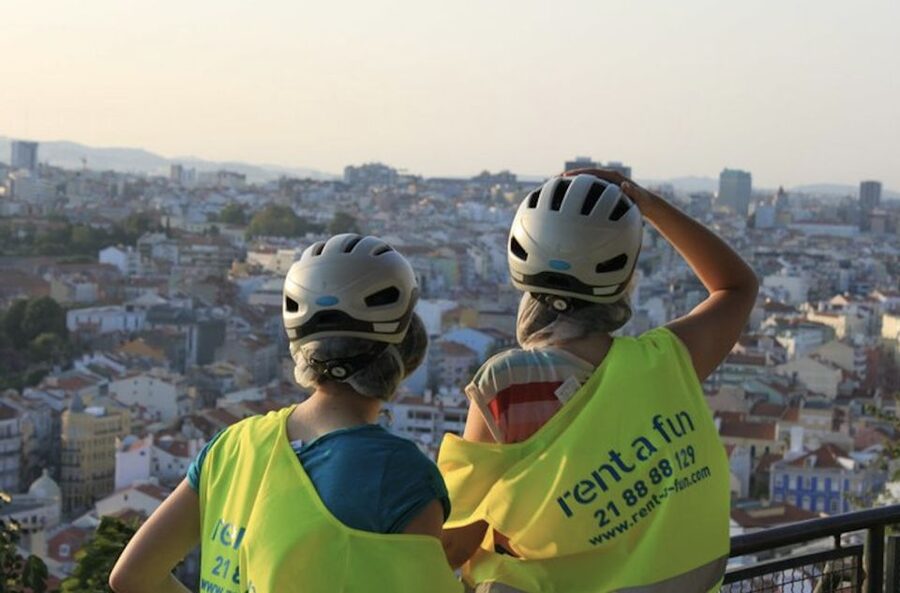
The biggest single driver of satisfaction is the guide. Names you may encounter include Rafael, Miguel, Juan, Pedro, Antonio, Ricardo, Diogo, João, Manuel, and others. Across these runs, common themes show up: clear instruction, attention to safety, and a strong local voice.
Before you really roll, you should expect a rundown of how to ride the e-bike. You’ll likely get guidance on safe spacing in a group (one rider behind another) and how to handle turns and stops.
This is important because e-bikes can make people overconfident. The motor helps, but it doesn’t erase road rules, curb edges, or the need to stay alert. One guest even flagged that the hills can be challenging in part due to road surfaces and hill gradient. Translation for you: ride smoothly, don’t rush the tight bits, and follow the guide’s lead.
If weather shifts, it can help that at least one tour run included a rain jacket at the start. You won’t be able to control Lisbon rain, but you can be prepared—and if your tour offers weather gear, take it.
Price and value: is $27 a smart deal for 3 hours?
At about $27 per person for 3 hours, this tour can be a very efficient use of time. You’re not just paying for transportation. You’re paying for:
- A guide who helps you connect the dots between monuments and neighborhoods
- An e-bike that makes Lisbon’s hills practical
- Helmet and insurance
- Water
That package matters in Lisbon because classic sightseeing often costs time, not just money. Walking up and down hills burns hours and energy. A bike loop lets you see more key areas without spending the rest of the day recovering.
You also get strong satisfaction signals overall, with an average rating of 4.9 from 1,592 reviews. That doesn’t replace your judgment, but it does suggest the tour consistently delivers what it promises: views, history context, and a smooth ride experience.
Who this e-bike tour suits best (and who might want to adjust)
This tour is a great fit if:
- you want a strong first-day orientation to Lisbon
- you’re okay biking but don’t want to turn the trip into a fitness test
- you care about both iconic sights and neighborhood texture
- you’re traveling with teens or mixed fitness levels (the e-bike helps everyone keep up)
You might reconsider if:
- you’re extremely uncomfortable riding near traffic or on uneven surfaces
- you hate group pacing and prefer slow solo exploration
- you want a deep, museum-style day (this is about movement and viewpoints, not ticket lines and long indoor stays)
Should you book the Lisbon 7 Hills Half-Day Electric Bike Tour?
If your main goal is to see Lisbon’s highlights without spending the day fighting the hills, I’d book it. The best argument is simple: electric bikes turn “too hard” into “actually enjoyable.” With stops at Sé de Lisboa, Ascensor da Lavra, and multiple miradouros, you get the payoff you came for.
If you’re unsure, use this decision rule: if you’d rather spend money to save time and energy, this tour fits. If you’d rather go slow, take trams, and linger in museums, then you might skip it.
Either way, I’d plan to do it earlier in your visit. After you’ve ridden these routes once, Lisbon’s geography becomes readable. That makes everything else you do feel easier.
FAQ
How long is the Lisbon 7 Hills half-day e-bike tour?
It runs for 3 hours.
Where do I meet for the tour?
The meeting point is Rua do Jardim do Tabaco, N2 1100-287 Lisboa (Alfama).
What is the starting area once the tour begins?
The route begins close to the harbor area at Rua Cais de Santarém.
Is the tour guide available in English?
Yes. The live guide speaks English.
What’s included in the price?
Included items are the e-bike, guide, insurance, helmet, and water.
How much does the tour cost?
The price listed is $27 per person.
Is there a cancellation option if my plans change?
Yes. Free cancellation is available up to 24 hours in advance for a full refund.
Can I reserve now and pay later?
Yes. The offer includes reserve now & pay later, so you can book without paying today.
More Tours in Lisbon
- Lisbon City Center Tour – The Unmissable Lisbon★ 5.0 · 22,234 reviews
- Lisbon: History, Stories and Lifestyle Walking Tour★ 4.8 · 10,902 reviews
- True 4Hour Private Tuk Tuk Tour: Discover Lisbon with a Local!★ 5.0 · 8,008 reviews
- Winner 2025 Undiscovered Lisbon Food & Wine Tour by Eating Europe★ 5.0 · 6,390 reviews
- Lisbon: Sintra, Pena, Cabo da Roca, Cascais Tour with Pickup★ 4.8 · 5,445 reviews
More Tour Reviews in Lisbon
- Lisbon City Center Tour – The Unmissable Lisbon★ 5.0 · 22,234 reviews
- Lisbon: Sintra, Pena, Regaleira, Cabo da Roca & Cascais★ 4.7 · 19,656 reviews
- Lisbon Card: 24, 48, or 72-Hour Pass★ 4.5 · 17,944 reviews
- Lisbon: Jerónimos Monastery Entrance Ticket★ 4.1 · 14,164 reviews
- Lisbon: History, Stories and Lifestyle Walking Tour★ 4.8 · 10,902 reviews
The Seven Hills on Two Wheels
- Lisbon: Hills, Alfama, and Mouraria Tour by Electric Bike★ 4.8 · 3,438 reviews
- Lisbon E-Bike Tour Commerce Square, Mouraria and Alfama★ 4.5 · 1,688 reviews
- Lisbon: City Highlights and Viewpoints E-Bike Tour★ 4.9 · 1,556 reviews
- Lisbon: 3-Hour Tour by E-Bike★ 4.8 · 1,150 reviews
- From Lisbon: Atlantic Coast Guided Quad Bike Tour★ 4.9 · 864 reviews
Just in: fresh Lisbon reviews from the team





Lisbon Bike & E-Bike Tours, compared.
 ★ 4.8Hills, Alfama, and Mouraria Tour by Electric BikeFrom $253,438 reviews
 ★ 4.5Lisbon E-Bike Tour Commerce Square, Mouraria and AlfamaFrom $301,688 reviews
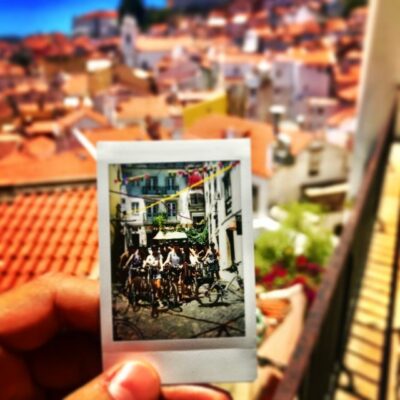 ★ 4.9City Highlights and Viewpoints E-Bike TourFrom $291,556 reviews
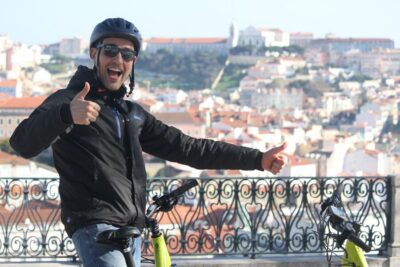 ★ 4.83-Hour Tour by E-BikeFrom $471,150 reviews
 ★ 4.9From Lisbon: Atlantic Coast Guided Quad Bike TourFrom $152864 reviews
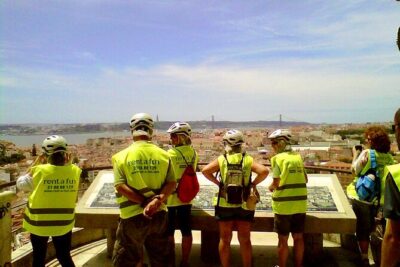 ★ 5.03-Hour Lisbon 7 Hills Electric Bike TourFrom $32818 reviews
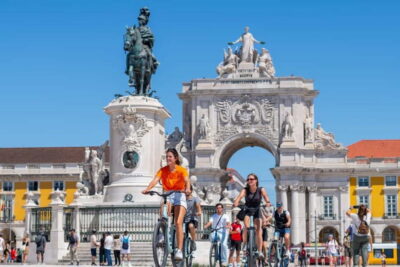 ★ 4.7Bike Tour from Lisbon to Belém + Liquor & PastryFrom $46688 reviews
 ★ 5.0Bike Tours Lisbon – Center of Lisbon to BelémFrom $19686 reviews
Browse the lists this tour appears in