
Reviewed · ALFAMA & OLD TOWN TOURS
Discover Bairro Alto’s Hidden Gems and Stunning Viewpoints
Lisbon rewards the curious at street level, and this walk nails the details. I love how it sets your bearings at Praça Dom Pedro IV and then shows you the big stories behind the walls in Bairro Alto. I also love the Rossio Train Station stop, because the building looks more like a temple than a station. One thing to consider: this is a moderate walk with time outdoors, so plan for hills and bring comfortable shoes.
You’ll cover landmark squares and viewpoints in about 2 hours 30 minutes, guided in English with a mobile ticket. The cost is low for what you get—local context, historical connections, and a route that helps you understand why this part of Lisbon looks the way it does today.
In This Review
- Key highlights I’d prioritize
- Praça Dom Pedro IV: Your fast track into Lisbon’s center
- Rossio Station: Neo-Manueline architecture and the Sintra link
- Praça Luís de Camões: Literature you can walk through
- Bairro Alto: how a hillside turned into Lisbon’s pressure cooker
- Largo do Carmo: Nuno Álvares Pereira’s vow and medieval Lisbon
- Price and value: what $3.61 buys you in real terms
- Timing, language, and group size: how to get the best experience
- Who this tour suits best (and who might not love it)
- Should you book this Bairro Alto viewpoints walk?
- FAQ
- How long is the tour?
- Where does the tour start and end?
- What’s the price per person?
- Is the tour offered in English?
- Are there entry fees for the stops?
- How many people are in a group?
- What should I know about canceling?
Key highlights I’d prioritize
- Neo-Manueline drama at Rossio Station with intertwined horseshoe portals
- Camões Square makes the Lusiads feel real with stories tied to Vasco da Gama’s voyage
- Bairro Alto’s layered past: city expansion, plague zones, and post-earthquake changes
- Nuno Álvares Pereira’s vow at Largo do Carmo connects medieval Portugal to today’s streets
- A smart end-point at Santa Catarina for easy viewpoint time after the walking
Praça Dom Pedro IV: Your fast track into Lisbon’s center
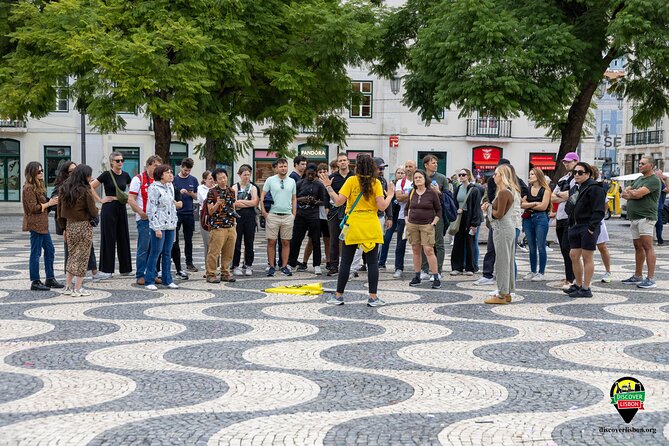
You start where locals actually move through the city: Praça Dom Pedro IV (Rossio area). This matters more than it sounds. Lisbon can feel like you’re jumping between viewpoints and viewpoints, but this opening gives you a mental map right away.
From the start, your guide points out the rhythm of the city: squares as meeting points, streets as shortcuts, and churches and walls as the edges of older Lisbon. You’re not just ticking off names. You’re learning how Lisbon got organized over time, including where growth pushed outward and how later events changed what was standing where you see it now.
I also like that the tour respects your time. The first stop is brief, about 25 minutes, with admission free. That means you’re not stuck in a single place waiting for the group. You get your bearings fast, then you walk.
Possible drawback: if you’re expecting a slow, sit-and-stare kind of tour, this one keeps moving. The pacing is built for seeing the key nodes efficiently.
Deeper into Alfama's lanes and miradouros
- Alfama Tour in Lisbon Old Town
★ 5.0 · 4,936 reviews - Private Lisbon Sightseeing Tuk-Tuk Tour: Alfama, Belém & More
★ 5.0 · 4,277 reviews - Lisbon: Hills, Alfama, and Mouraria Tour by Electric Bike
★ 4.8 · 3,438 reviews - Best of Lisbon Walking Tour: Rossio, Chiado & Alfama
★ 4.9 · 2,700 reviews
Rossio Station: Neo-Manueline architecture and the Sintra link
Next comes one of the most visually fun stops in the whole route: Estação do Rossio. It’s designed between 1886 and 1887 by Portuguese architect José Luís Monteiro for the Portuguese Royal Railway Company, and it was completed in 1890. That timeline alone helps you understand why the building feels theatrical.
The façade is Neo-Manueline, a Romantic recreation of the early 16th-century Manueline style. If you’ve seen Lisbon’s Manueline details on older monuments, this is the lighter, later cousin that plays the same game with ornate stonework and grand entrance symbolism. The two intertwined horseshoe portals at the entrance add a strong focal point, like the station is ushering you into a story.
Here’s the practical value of this stop: it connects Lisbon to the broader region. Rossio Station wasn’t just for local hopping—it was connected to the region of Sintra. When you stand outside, you get a sense of how this square functioned as a gateway to day trips and journeys beyond the city.
And then there’s the “wait, this looks like what?” feeling. The outside façade has the feel of a temple more than a train terminal. If you like architecture that surprises you, you’ll enjoy this one a lot—especially because it’s free to see from outside.
Praça Luís de Camões: Literature you can walk through
After the station, the tour shifts from buildings to ideas at Praca Luis de Camoes. This square is tied to Portugal’s national poet, author of the epic poem Os Lusiadas. If you’ve heard the title and wondered what it’s really about, this stop gives you the key thread: it describes Vasco da Gama’s sea route discovery to India.
The guide also brings in a personal detail that helps the poet feel human, not just a statue subject. It’s said Luís de Camões lost one eye in a battle in Ceuta. Small detail, big effect—it changes how you read the monument-like vibe of the square and name.
You also learn about language. The influence of Os Lusiadas is so strong that Portuguese is sometimes called the language of Camões. That’s a big claim, and hearing it in context makes the square feel less like a stop on a route and more like a cultural anchor.
This stop is also about 30 minutes and admission free. The time budget here is just right: long enough for context, not long enough to make you feel stuck.
Bairro Alto: how a hillside turned into Lisbon’s pressure cooker
Then you reach Bairro Alto, and this is where the tour earns its title. Bairro Alto looks like a neighborhood you wander through at night, but during the guided walk you see it as a landscape of decisions made by centuries of pressure: growth, disease, and rebuilding.
The tour explains how, in the late 15th century, Lisbon was full of people from across the world due to the discovery era. That meant the city center needed expansion, and the area that people now associate with Camões Square had once served as one of the city entrances.
You also get the “why does it look like this?” story. Lisbon’s older walls mattered—your guide mentions the Fernandine wall and the door of Santa Catarina at what is now a different set of landmarks after later destruction. After the earthquake, you’re told that the area now includes two churches: Encarnação and Loreto. That’s the sort of connection that makes you notice the city’s layers instead of treating them like random scenery.
One of the more striking historical points is how the area connected to illness. On the other side of the older wall, there were spaces tied to wealthy noble families. Higher on the hill, there was a cemetery for victims of the black plague. After a request for a relic of Saint Roque from Venice, a hermitage was placed near this cemetery. As disease and fear reshaped where people lived, the less fortunate and the sick ended up moving closer to the church, and an urban plan followed to receive them.
If you’re a “why” traveler, this is the moment you’ll appreciate. Bairro Alto isn’t just nightlife streets. It’s also a record of how cities manage risk and how neighborhoods form around power, faith, and survival.
Practical consideration: the walk involves hills and uneven street-level Lisbon. The tour notes you should have moderate physical fitness. I’d treat comfortable shoes as non-negotiable here.

Largo do Carmo: Nuno Álvares Pereira’s vow and medieval Lisbon
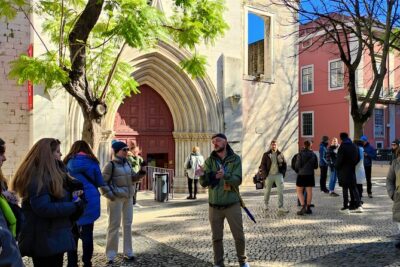
Your final major viewpoint-and-monument stop in the route is Largo do Carmo, where the Carmelite church and convent were built. You’re given a date and a dramatic backstory: construction started in 1389, connected to Nuno Álvares Pereira, a general who helped King João repel Castilian troops.
The legend is the kind that sticks because it ties religion directly to politics and battle outcomes. Nuno Álvares Pereira vowed to build what would be the most beautiful church if he defeated the Castilians in 1385 at the Battle of Aljubarrota. After Portugal’s victory, he funded the Carmelite church and convent. Later, once the convent was complete in 1423, he joined the Carmelite order and lived out the rest of his life there.
This isn’t just trivia. It explains why you’ll see such strong religious architecture in a place that also feels like an urban neighborhood today. It’s a reminder that the geography of devotion and the geography of power often share the same streets.
This stop is shorter—about 15 minutes, admission free. That brevity can be a feature: you get the story and the key visual impression without dragging the final moments of your tour.
Then the tour ends near the Miradouro de Santa Catarina, which is ideal if you want a last look from a high point after the walk.
Price and value: what $3.61 buys you in real terms
The price listed is $3.61 per person, and that low number changes how you should evaluate the value. This isn’t a long bus ride or a big-ticket attraction. It’s a guided walking route with context.
What you’re getting for the money:
- A local expert and dedicated guide
- Insights into Portuguese culture and history
- Specific connections tying Lisbon’s past to what you see in front of you today
- Free entry at the stops along the route (admission ticket free is noted for each segment)
- A small group limit of up to 50 travelers, which helps the guide keep the pace and manage questions better than huge crowds
Also, the tour specifically mentions earthquake and destruction history. Even if you’re only vaguely aware of the 1755 earthquake, this kind of framing helps you see Lisbon’s rebuilding logic rather than just noticing mismatched buildings.
One more practical value point: the tour includes discounts for booking other experiences later in the day and night in Lisbon. That can help you stretch your schedule and spend based on geography, not just luck.
If you’re comparing it to paying for a single ticket attraction, this walk can feel like a “free museum” day where the exhibits are squares, façades, and street-level stories.
Timing, language, and group size: how to get the best experience
This tour runs about 2 hours 30 minutes. It’s booked on average 5 days in advance, so if your dates are tight, don’t wait until the last minute.
It’s offered in English and uses a mobile ticket. That’s convenient because you’re not hunting for paper tickets mid-walk. Service animals are allowed too, and the route is described as near public transportation, which is handy since Lisbon’s streets are best approached on foot with frequent tram or metro access nearby.
Group size matters here. With a maximum of 50 travelers, you’re unlikely to feel completely lost. Still, Lisbon sidewalks can get narrow in places, and when you mix groups with viewpoints, you want to stay aware of your surroundings.
If you care about photos, plan quick stops. The itinerary segments are time-boxed, and the guide is working through a lot of story beats. I’d take photos when you get the context, not after. That way the viewpoint and the background meaning hit together.
Who this tour suits best (and who might not love it)
This is a good fit if you:
- Like walking routes that explain the why behind the city’s layout
- Want architecture and monuments plus the stories that connect them
- Prefer smaller, efficient segments instead of long drives
- Are the type who enjoys learning how major events (like plague and earthquakes) show up in everyday neighborhoods
You might feel less thrilled if you want a single, long contemplative experience at one place. The tour’s strength is variety and connection: Rossio Station, Camões Square, Bairro Alto’s layered past, and then Largo do Carmo before finishing near Santa Catarina.
Should you book this Bairro Alto viewpoints walk?
I’d book it if you want Lisbon to make more sense fast, without expensive tickets or time-consuming transfers. You get an efficient route, free entry at the stops, and a guide who ties monuments to real events: the age of discovery, the plague era, and how rebuilding shaped what’s visible now.
I’d hesitate only if you dislike hills, or if you’re looking for a tour that focuses on a single famous site with lots of downtime. This is a walking-and-learning style of experience.
If you can, wear comfortable shoes and give yourself a little patience with crowds around squares. This route works best when you treat it like a storyline you’re walking through, not a checklist.
FAQ
How long is the tour?
It lasts about 2 hours 30 minutes.
Where does the tour start and end?
It starts at Praça Dom Pedro IV (1100-581 Lisboa) and ends near Miradouro de Santa Catarina (1200-262 Lisboa).
What’s the price per person?
The price is listed as $3.61 per person.
Is the tour offered in English?
Yes, it’s offered in English.
Are there entry fees for the stops?
The route highlights listed show admission ticket free for the stops on the itinerary. Entry to Santa Justa elevator is not included.
How many people are in a group?
The tour has a maximum of 50 travelers.
What should I know about canceling?
You can cancel for a full refund up to 24 hours before the experience’s start time.
More Tour Reviews in Lisbon
- Lisbon City Center Tour – The Unmissable Lisbon★ 5.0 · 22,234 reviews
- Lisbon: Sintra, Pena, Regaleira, Cabo da Roca & Cascais★ 4.7 · 19,656 reviews
- Lisbon Card: 24, 48, or 72-Hour Pass★ 4.5 · 17,944 reviews
- Lisbon: Jerónimos Monastery Entrance Ticket★ 4.1 · 14,164 reviews
- Lisbon: History, Stories and Lifestyle Walking Tour★ 4.8 · 10,902 reviews
Keep Wandering Old Alfama
- Alfama Tour in Lisbon Old Town★ 5.0 · 4,936 reviews
- Private Lisbon Sightseeing Tuk-Tuk Tour: Alfama, Belém & More★ 5.0 · 4,277 reviews
- Lisbon: Hills, Alfama, and Mouraria Tour by Electric Bike★ 4.8 · 3,438 reviews
- Best of Lisbon Walking Tour: Rossio, Chiado & Alfama★ 4.9 · 2,700 reviews
- Lisbon: Baixa District Food Tour with Dinner and Drinks★ 4.9 · 1,997 reviews
Just in: fresh Lisbon reviews from the team





Alfama & Old Town Tours, compared.
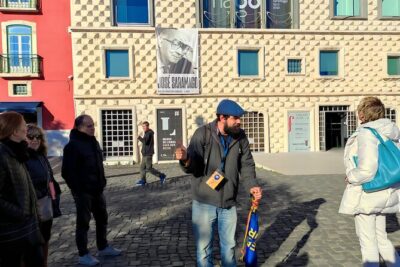 ★ 5.0Alfama Tour in Lisbon Old TownFrom $34,936 reviews
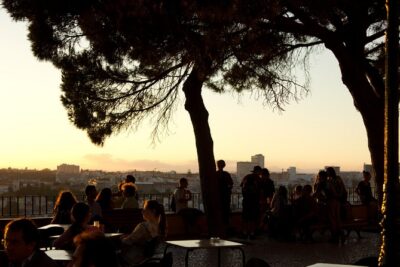 ★ 5.0Private Lisbon Sightseeing Tuk-Tuk Tour: Alfama, Belém & MoreFrom $524,277 reviews
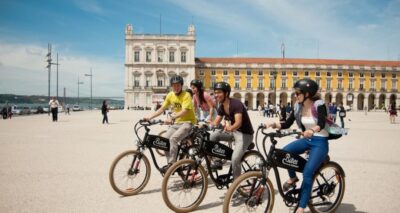 ★ 4.8Hills, Alfama, and Mouraria Tour by Electric BikeFrom $253,438 reviews
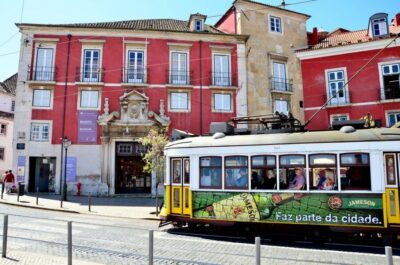 ★ 4.9Best of Lisbon Walking Tour: Rossio, Chiado & AlfamaFrom $232,700 reviews
 ★ 4.9Baixa District Food Tour with Dinner and DrinksFrom $931,997 reviews
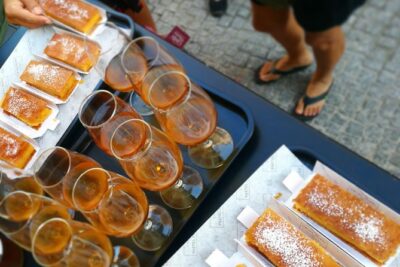 ★ 5.0Lisbon Small-Group Food Tour with 18 Tastings in Alfama DistrictFrom $1261,967 reviews
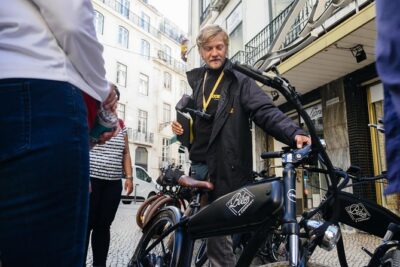 ★ 4.5Lisbon E-Bike Tour Commerce Square, Mouraria and AlfamaFrom $301,688 reviews
 ★ 5.0Old Town TukTuk Tour and Scenic Viewpoints in AlfamaFrom $35974 reviews
Browse the lists this tour appears in