
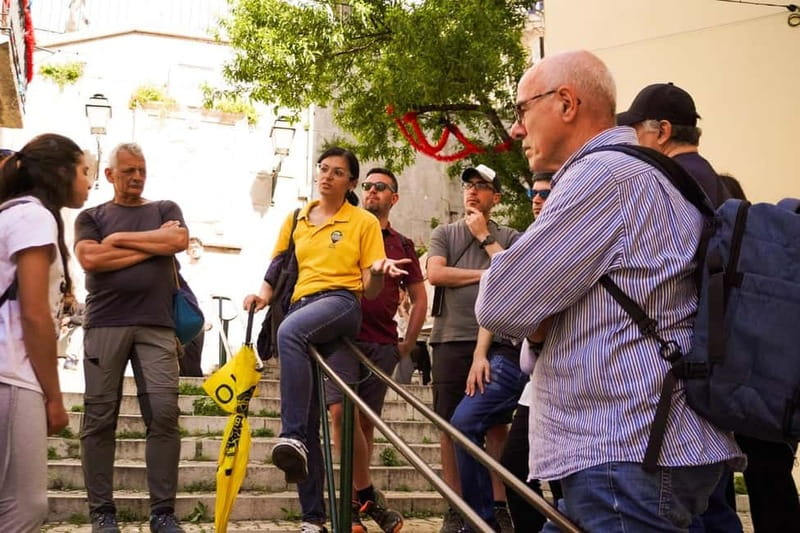
Reviewed · ALFAMA & OLD TOWN TOURS
Discover Alfama with the Exterior View of São Jorge Castle
Alfama is Lisbon at street level. This 150-minute walk threads through some of the city’s oldest lanes, with Miradouros for big views and an end that lands you right where the neighborhood’s stories feel most real. You also get an exterior look tied to São Jorge Castle, without needing to plan a separate visit.
What I like most is how the guide turns daily scenery into context. You’ll hear how Fado connects to UNESCO world heritage, and you’ll understand why that music still matters here, not just on posters. Second, you get the dramatic angle of why Alfama still feels so intact after the 1755 earthquake—a rare kind of neighborhood continuity you can actually walk through.
One thing to consider: this is an active hillside stroll. The alleys are steep, and you’ll want comfortable shoes and water (it’s also smart to pace yourself if you’re sensitive to stairs).
In This Review
- Key Things You’ll Notice on This Alfama Walk
- First Stop: Rossio Square and Getting Your Bearings
- Entering Alfama’s Azulejo Lanes and Arabic Name Clues
- Miradouro Portas do Sol: The View Stop That Changes the Walk
- Old Churches and Lisbon’s Survival Story After 1755
- Fado and the UNESCO Connection You Can Actually Feel
- Exterior Views Toward São Jorge Castle (Without the Full Ticket Plan)
- Tour Length, Walking Pace, and What to Bring
- Price and Value: Is $1.77 Actually Worth It?
- Who This Walking Tour Fits Best
- Practical Itinerary Flow (What You’ll Experience Step by Step)
- Should You Book This Alfama Tour?
- FAQ
- How long is the tour?
- Where does the tour start?
- Where does the tour end?
- What is the price per person?
- What’s included in the tour?
- What is not included?
- What language is the tour offered in?
- What should I bring?
- Is cancellation allowed?
Key Things You’ll Notice on This Alfama Walk
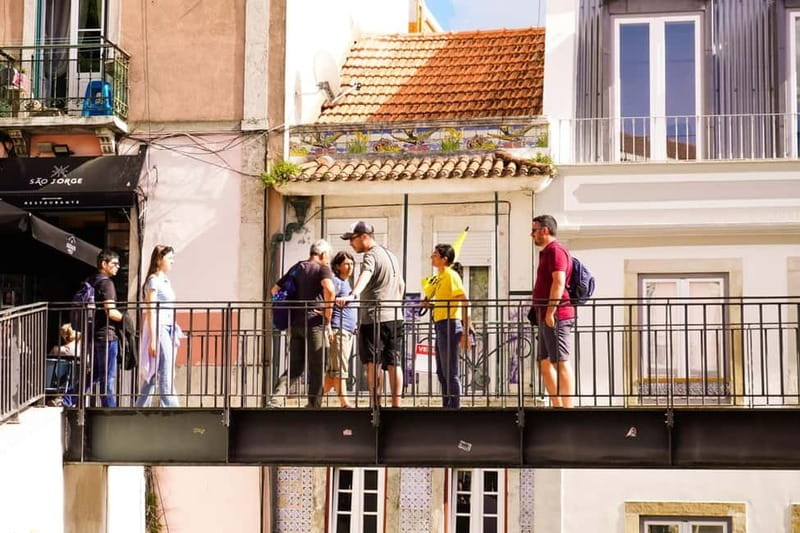
- Old Lisbon, right in front of you: one of the oldest districts, built for wandering on foot
- Fado with real-world context: how the music connects to place and culture
- Miradouro Portas do Sol stop: classic viewpoint energy over terracotta rooftops and the Tagus
- The 1755 earthquake story: why Alfama survived when so much else changed
- Arabic name lesson: Alfama comes from Al-hamma, tied to hot baths or fountains
- A fun, informed guide vibe: people have highlighted strong knowledge plus humor (including guides named Valeria and Andy)
First Stop: Rossio Square and Getting Your Bearings
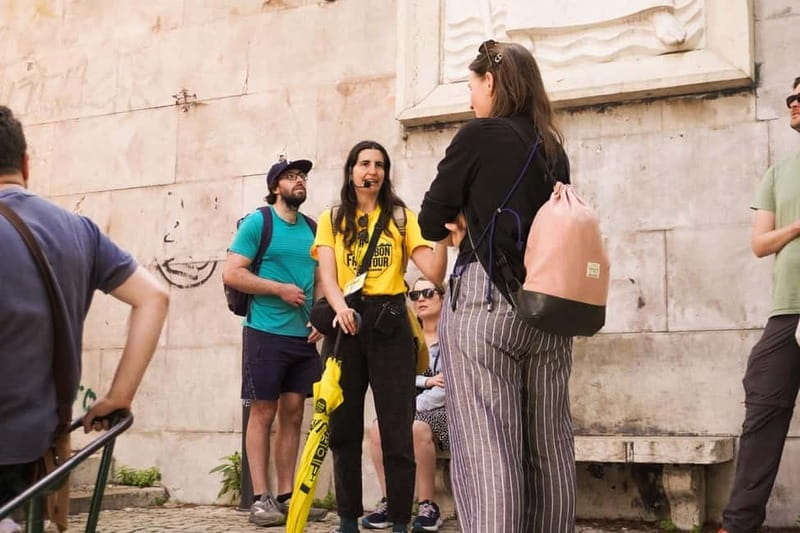
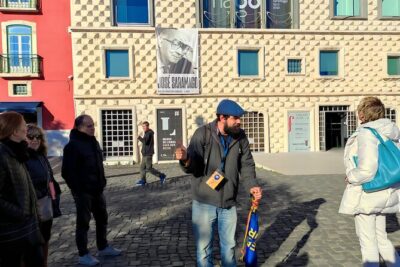
Most Lisbon walking tours start with a line or a map problem. This one keeps it simple. Meet in Rossio Square, near the statue in the middle, and look for the team with a yellow umbrella and a yellow hoodie or t-shirt. It’s an easy landmark to find, and it helps you avoid that early-tour stress when you’re already jet-lagged or in flip-flops that don’t belong on cobblestones.
From there, the route moves through key parts of the city before you push into Alfama’s core. That matters because Alfama doesn’t feel like a single attraction. It’s a whole neighborhood system—streets, views, old churches, and music—so a brief lead-in helps you connect dots instead of just taking photos and hoping everything makes sense later.
Deeper into Alfama's lanes and miradouros
- Alfama Tour in Lisbon Old Town
★ 5.0 · 4,936 reviews - Private Lisbon Sightseeing Tuk-Tuk Tour: Alfama, Belém & More
★ 5.0 · 4,277 reviews - Lisbon: Hills, Alfama, and Mouraria Tour by Electric Bike
★ 4.8 · 3,438 reviews - Best of Lisbon Walking Tour: Rossio, Chiado & Alfama
★ 4.9 · 2,700 reviews
Entering Alfama’s Azulejo Lanes and Arabic Name Clues
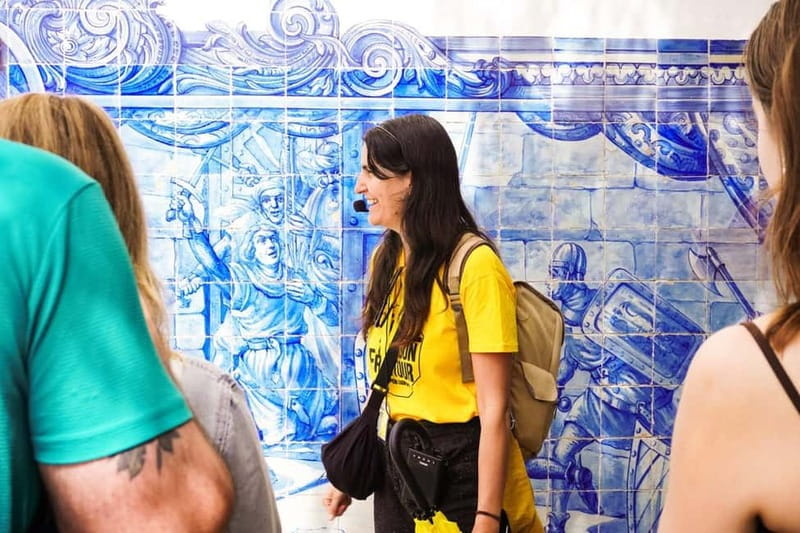
Once you’re inside Alfama, the character shows up fast: steep, winding alleys and that signature Lisbon look of azulejos along walls. You’ll likely notice how the neighborhood is designed for close-up detail. It’s not a stroll through a single monument. It’s a sequence of small scenes: tiled surfaces, narrow corners, and homes that feel lived-in rather than staged.
The tour’s name lesson is a great example of how the guide helps you read the streets. Alfama traces back to the Arabic Al-hamma, meaning hot fountains or baths. When you know that, the neighborhood’s story feels less random. It also gives you a better way to notice the layering—different cultural eras leaving their marks in street texture and local meaning.
And yes, you’ll get the sensory stuff too: you’ll pass aromas tied to traditional Portuguese food, you’ll catch echoes of Fado in the air, and you’ll see the neighborhood pace of older residents going about their day. That’s the best kind of authenticity: it doesn’t require pretending. It just happens because you’re walking where people actually live.
Miradouro Portas do Sol: The View Stop That Changes the Walk
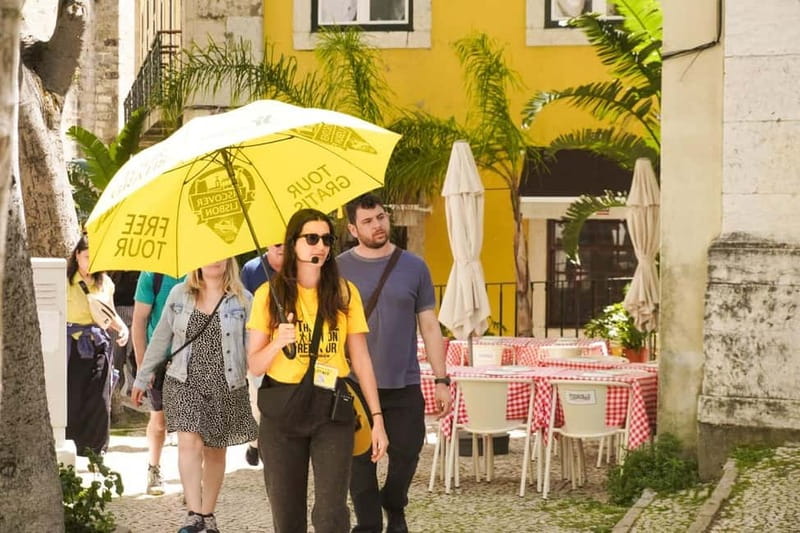
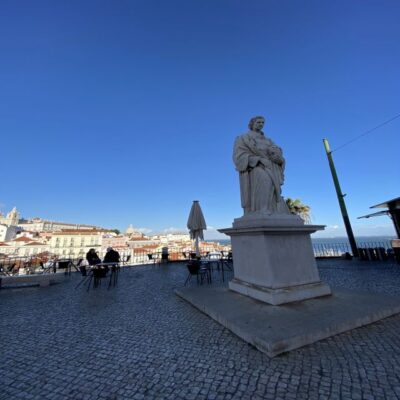
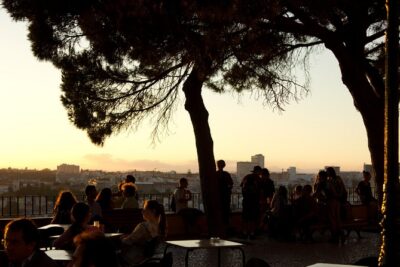
The most common reason people fall in love with Alfama is the viewpoints. Here you get a scheduled moment at Miradouro Portas do Sol. This is where the steep streets pay you back. You look out across a spread of terracotta rooftops and the Tagus River, and suddenly the narrow alleys make sense—you’re seeing what they were built to frame.
What I like about including a viewpoint stop is that it breaks up the physical effort. Instead of forcing you to suffer through hills for the whole 150 minutes, you get a clear payoff moment where you can pause, breathe, and reset your brain.
Practical note: viewpoints can get crowded. You’ll still have a good moment if you arrive ready to stand, shoot a few photos, and then step aside so others can enjoy the view.
Old Churches and Lisbon’s Survival Story After 1755

One of the tour’s best themes is the way Alfama’s survival story shapes what you experience. Alfama was one of the few neighborhoods that was not destroyed in the 1755 earthquake, and that has a noticeable effect on the feel of the streets. You’re not just visiting historic décor. You’re walking through continuity—old structures, old routes, and the sense that the neighborhood didn’t get wiped clean.
Along the way, you’ll get history of famous monuments and visits to old churches. The big advantage of doing this on a guided walk is that church exteriors and façades can feel like background noise if you’re on your own. With a guide, you learn what to look for and why it mattered to Lisbon’s past—without turning the experience into a textbook lecture.
A balanced reality check: since this is a walking tour, you shouldn’t expect full monument entry time. Entry to monuments isn’t included, so if you want to go inside and spend extra time, plan for that separately.
Other ways up to the castle walls


Fado and the UNESCO Connection You Can Actually Feel
Fado can sound like a museum word until you connect it to a neighborhood. This tour helps you do that. You’ll learn more about Fado music, including that it’s recognized as part of UNESCO’s world heritage listing.
The practical value here isn’t that you memorize facts about heritage. It’s that you start to understand the emotional math of the place: why Fado belongs in cramped rooms and hillside streets, why it resonates with daily life, and why Alfama remains a home for the style instead of an imported performance.
If you’re a first-time Lisbon visitor, this is the kind of cultural context that improves your entire trip. After you hear the neighborhood explanation here, Fado later feels less like a show you buy and more like a tradition you recognize.
Exterior Views Toward São Jorge Castle (Without the Full Ticket Plan)
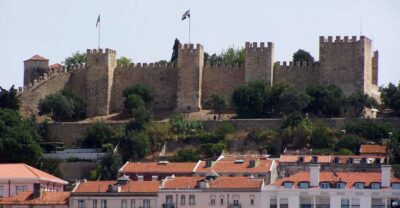
The experience is branded around an exterior view of São Jorge Castle, and you’ll pick it up as you move through the area. Even if you don’t enter the fortress, the castle presence matters. It’s a visual anchor over Alfama, and seeing it from the streets helps you understand why these viewpoints are so powerful: you’re not just looking out at scenery; you’re looking at Lisbon’s power layout.
This is also a good strategy for time and budget. Castle interiors can require tickets and extra scheduling. Here, you get the connection to the castle with the rest of the neighborhood experience woven in.
Tour Length, Walking Pace, and What to Bring
The tour runs 150 minutes, and that time is built for movement, viewpoints, and small story stops. It’s long enough to give you context, but short enough that you’re not stuck for half a day.
Bring:
- Comfortable shoes (seriously—steep streets and uneven footing are part of Alfama)
- Water
One more tip: dress for walking, not for standing perfectly still. You’ll be shifting constantly—turning corners, moving to viewpoints, and stopping near churches and viewpoints—so breathable layers and grippy soles help more than you think.
Price and Value: Is $1.77 Actually Worth It?
At $1.77 per person, the headline price looks almost unbelievable. The real question is value: what do you get for that money?
You get:
- An expert guide
- Historical and cultural insights
You do not get:
- Entry to monuments
- Transportation to or from the meeting point
So the value comes from guidance and context, not from paid attractions. For a neighborhood like Alfama, that can be a smart trade. The best parts of Alfama are often the streets themselves. A guide helps you read them—and a good guide can turn a walk into something you remember.
One thing to keep in mind from guide-focused feedback: guides like Valeria and Andy have been praised for strong knowledge and friendliness, with Andy specifically noted for humor and answering questions beyond the formal tour. A few people also mentioned an informal end-of-walk tipping moment. If you want to show appreciation, have some small cash handy—especially if you feel the guide really made the neighborhood click for you.
Who This Walking Tour Fits Best
This tour is a strong match if you:
- Want a short Lisbon immersion without museum fatigue
- Like learning culture through neighborhoods, not just through big-ticket sights
- Enjoy viewpoints and historic streets
- Prefer a guided narrative that explains why Alfama feels the way it does
It’s also a good fit for solo travelers, couples, and older kids who can handle a hillside walk. The main limitation is physical: if steep streets are tough for you, you may find the pace a bit demanding.
Practical Itinerary Flow (What You’ll Experience Step by Step)
Here’s the shape of the walk you can expect:
- Rossio Square meet-up, then a transition through key areas to set the scene.
- A deeper move into Alfama’s heart, where the guide points out azulejo details, street character, and the meaning behind the neighborhood name.
- A Miradouro stop at Portas do Sol for major views over terracotta rooftops and the Tagus.
- Visits to old churches plus historical storytelling about Lisbon’s monuments and the neighborhood’s relationship to the past, including the 1755 earthquake.
- A final push that leads you to the cathedral to close the loop between Alfama’s streets and its religious landmark focus.
- Along the route, you also get the tour’s exterior view connection to São Jorge Castle.
Should You Book This Alfama Tour?
If you want Lisbon in a way that feels human—streets, viewpoints, and stories tied to daily life—this is an easy yes. The guide-driven focus on Fado and Alfama’s 1755 survival theme gives the walk structure, so you come away with more than photos.
Book it if you:
- Are okay with walking on uneven, steep streets
- Want cultural context you can carry into the rest of your trip
- Appreciate humor and a friendly guide presence
Skip it (or at least adjust expectations) if you’re hoping for lots of paid monument entry. This is mostly about the neighborhood experience, not inside-the-building time. If that sounds right to you, you’ll likely find the value lands where it should: in the streets you actually remember.
FAQ
How long is the tour?
The duration is 150 minutes.
Where does the tour start?
You meet at Rossio Square, near the statue in the middle of the square. Look for the team with a yellow umbrella and yellow hoodie or t-shirt.
Where does the tour end?
The tour ends at the cathedral.
What is the price per person?
The listed price is $1.77 per person.
What’s included in the tour?
It includes an expert guide and historical and cultural insights.
What is not included?
Entry to monuments and transportation to/from the meeting point are not included.
What language is the tour offered in?
The tour is offered in English.
What should I bring?
Bring comfortable shoes and water.
Is cancellation allowed?
Yes. You can cancel up to 24 hours in advance for a full refund.
More Tour Reviews in Lisbon
- Lisbon City Center Tour – The Unmissable Lisbon★ 5.0 · 22,234 reviews
- Lisbon: Sintra, Pena, Regaleira, Cabo da Roca & Cascais★ 4.7 · 19,656 reviews
- Lisbon Card: 24, 48, or 72-Hour Pass★ 4.5 · 17,944 reviews
- Lisbon: Jerónimos Monastery Entrance Ticket★ 4.1 · 14,164 reviews
- Lisbon: History, Stories and Lifestyle Walking Tour★ 4.8 · 10,902 reviews
Back Up to São Jorge Castle
- Lisbon: São Jorge Castle E-Ticket and Audio Guide★ 4.3 · 2,182 reviews
- Lisbon: Sao Jorge Castle Skip-the-Line Ticket with Guide★ 4.6 · 1,191 reviews
- São Jorge Castle Skip-the-line Entry Ticket★ 4.5 · 440 reviews
- Lisbon: Alfama and São Jorge Castle Quarters Walking Tour★ 4.8 · 136 reviews
- Old Lisbon: Alfama and Sao Jorge neighborhood 3-Hour Walking Tour★ 5.0 · 61 reviews
Keep Wandering Old Alfama
- Alfama Tour in Lisbon Old Town★ 5.0 · 4,936 reviews
- Private Lisbon Sightseeing Tuk-Tuk Tour: Alfama, Belém & More★ 5.0 · 4,277 reviews
- Lisbon: Hills, Alfama, and Mouraria Tour by Electric Bike★ 4.8 · 3,438 reviews
- Best of Lisbon Walking Tour: Rossio, Chiado & Alfama★ 4.9 · 2,700 reviews
- Lisbon: Baixa District Food Tour with Dinner and Drinks★ 4.9 · 1,997 reviews
Just in: fresh Lisbon reviews from the team





Alfama & Old Town Tours, compared.
 ★ 5.0Alfama Tour in Lisbon Old TownFrom $34,936 reviews
 ★ 5.0Private Lisbon Sightseeing Tuk-Tuk Tour: Alfama, Belém & MoreFrom $524,277 reviews
 ★ 4.8Hills, Alfama, and Mouraria Tour by Electric BikeFrom $253,438 reviews
 ★ 4.9Best of Lisbon Walking Tour: Rossio, Chiado & AlfamaFrom $232,700 reviews
 ★ 4.9Baixa District Food Tour with Dinner and DrinksFrom $931,997 reviews
 ★ 5.0Lisbon Small-Group Food Tour with 18 Tastings in Alfama DistrictFrom $1261,967 reviews
 ★ 4.5Lisbon E-Bike Tour Commerce Square, Mouraria and AlfamaFrom $301,688 reviews
 ★ 5.0Old Town TukTuk Tour and Scenic Viewpoints in AlfamaFrom $35974 reviews
Browse the lists this tour appears in