
Reviewed · ALFAMA & OLD TOWN TOURS
Alfama and Mouraria Tour – The oldest neighbourhoods in Lisbon
Lisbon’s oldest corners, on foot and on purpose. This tour is built for getting your bearings in Alfama and Mouraria, with quick stops at major landmarks, famous viewpoints, and a finish near Rossio. You move at a human pace through steep streets that feel very Lisbon.
I love the guide storytelling that turns ordinary corners into a timeline, from King José I’s statue to the oldest church stops. I also like that the route gives you major photo moments without making you chase tickets all day.
One possible drawback: expect hills and stairs. And while the stops are marked as free, some parts of big sights can require payment depending on what you try to enter.
In This Review
- Quick highlights
- Lisbon’s oldest neighborhoods, explained one steep street at a time
- Start at Praça do Comércio: where Lisbon shows off its big square
- Praça do Comércio to St. Anthony’s: Lisbon’s religious roots at walking speed
- Casa dos Bicos: Manueline style in a very “Lisbon” shape
- Alfama streets: the neighborhood that refuses to be straight
- Lisbon Cathedral and the National Pantheon: two layers of Lisbon identity
- Portas do Sol and Santa Luzia: the miradouro strategy that saves your time
- Castelo de São Jorge: great views, plan for stairs
- Mouraria and the fado corner: finishing in a living neighborhood
- Getting to Rossio: the walk ends where Lisbon conveniently connects
- Guides really matter here: examples of what to expect
- Price and value: why $1.25 feels almost suspicious (in a good way)
- Logistics that can make or break your start
- Pace, comfort, and what to bring
- Who should book this tour (and who might skip it)
- Should you book the Alfama and Mouraria tour?
- FAQ
- How much does the Alfama and Mouraria Tour cost?
- How long is the tour?
- What language is the tour offered in?
- How big is the group?
- Do I need a printed ticket?
- Where does the tour start and end?
- Are the stops free to enter?
- What if the weather is bad?
- What is the cancellation policy?
- Are service animals allowed?
Quick highlights
- Small group size (max 20) helps the walk feel personal and question-friendly
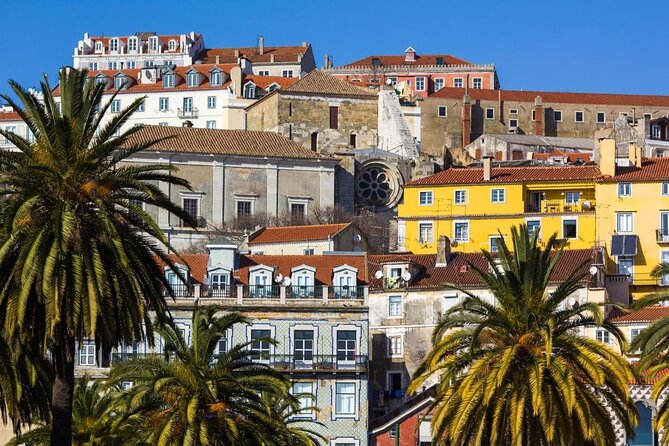
- Stunning viewpoints at Portas do Sol, Santa Luzia, and more, built into the route
- A street-level history route from Praça do Comércio to Alfama and into Mouraria
- Free-entry stops on the plan, so you’re paying mostly for the walk and the explanations
- English tours with a mobile ticket, plus a confirmation at booking
Lisbon’s oldest neighborhoods, explained one steep street at a time
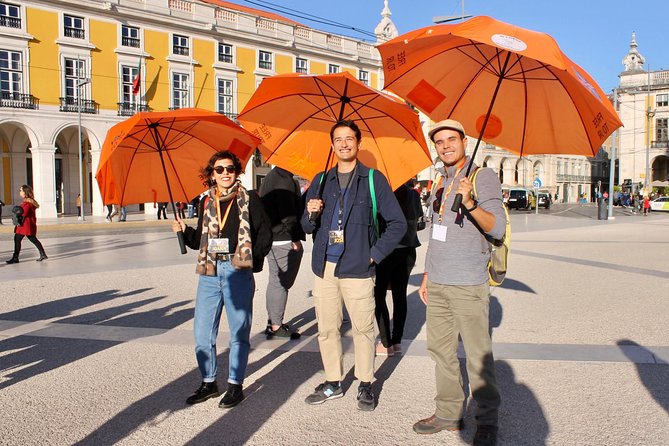
Alfama and Mouraria are where Lisbon starts to feel older than your travel calendar. The best part of this walk is the structure: it’s not a random wandering tour. It’s a guided route that keeps connecting the dots between rulers, churches, street names, and the city’s layered past.
And yes, your legs will notice the hills. Lisbon does that. The good news is the tour is designed with frequent short pauses. That helps you see the details without feeling like you’re sprinting between miradouros.
Deeper into Alfama's lanes and miradouros
- Alfama Tour in Lisbon Old Town
★ 5.0 · 4,936 reviews - Private Lisbon Sightseeing Tuk-Tuk Tour: Alfama, Belém & More
★ 5.0 · 4,277 reviews - Lisbon: Hills, Alfama, and Mouraria Tour by Electric Bike
★ 4.8 · 3,438 reviews - Best of Lisbon Walking Tour: Rossio, Chiado & Alfama
★ 4.9 · 2,700 reviews
Start at Praça do Comércio: where Lisbon shows off its big square
The tour begins in Praça do Comércio, the huge waterfront square that sets the tone immediately. You get an early dose of “Lisbon in one glance”: space, scale, and a sense of how central this area was.
From there, you head toward a key landmark tied to Portuguese monarchy: the Statue of D. José I. The guidance here is practical—think orientation and story first, not just standing still for a selfie. You’ll look for the guide with an orange umbrella near the main arch area and the statue.
Why this works: if you start here, the rest of the walk feels like the city slowly folds into smaller, older streets. It’s a smart move for first-timers.
Praça do Comércio to St. Anthony’s: Lisbon’s religious roots at walking speed
Next up is the Praca do Comercio stop again as an important moment in the route, followed by Church of St. Anthony. The key value isn’t only the building; it’s the explanation of where St. Antony of Padua was born and why that matters to Lisbon.
Even if a church is a quick visit, this kind of stop helps you understand why Alfama and nearby areas weren’t just residential. Places of worship shaped community life, street patterns, and how locals remembered their past.
Casa dos Bicos: Manueline style in a very “Lisbon” shape
Then you reach Casa dos Bicos (Museu de Lisboa), noted for being one of the oldest houses in Lisbon and for its Manueline style. This is one of those places where the exterior details matter—look for the distinctive façade character and let the guide connect it to Lisbon’s wider architectural story.
It’s brief (about 10 minutes), but that’s not a downside. With Alfama, time matters because the best views are still coming.
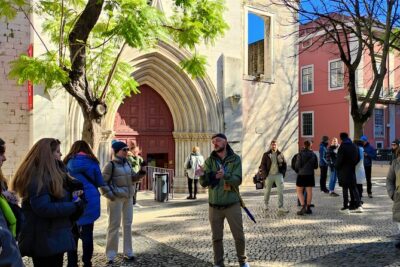


Alfama streets: the neighborhood that refuses to be straight
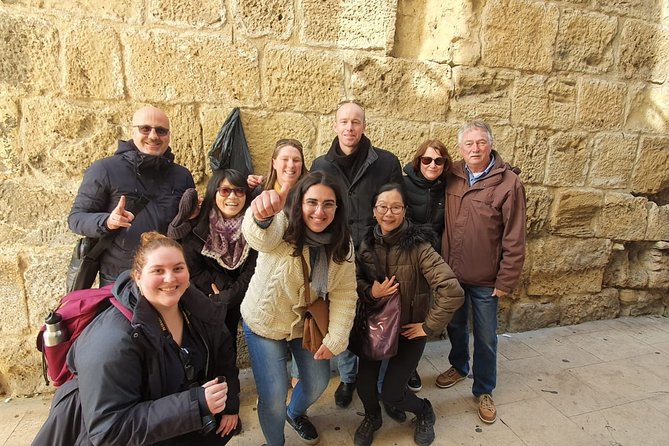
When the walk turns into Alfama, you’re in the oldest, most character-heavy zone. This portion is less about ticking monuments and more about experiencing narrow streets, turns, and sudden glimpses.
The tour gives you about 20 minutes here—just enough to feel the neighborhood texture without rushing. If you’re the type who likes to watch daily life (shop fronts, street corners, kids running around), this is where you’ll start enjoying the walk for reasons beyond the official stops.
Practical note: wear shoes you trust. Alfama’s stones can be slippery if they’re polished or wet.
Lisbon Cathedral and the National Pantheon: two layers of Lisbon identity
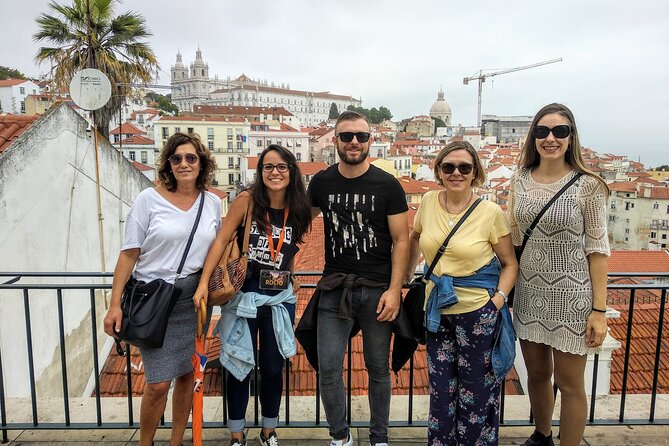
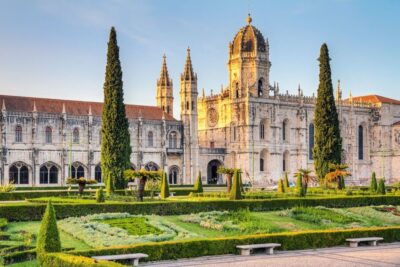
After Alfama, you visit Lisbon Cathedral, described as the oldest church in Lisbon. Then the walk includes Panteao Nacional (the National Pantheon of Lisbon).
These stops work well back-to-back because the guide can frame them as different kinds of significance: one tied to the long religious continuity, the other to national remembrance.
Also, they’re quick stops (roughly 10 minutes for the cathedral; about a minute for the pantheon). That keeps momentum. You get the emotional context without losing half the day in lines—at least that’s how the plan is built.
Portas do Sol and Santa Luzia: the miradouro strategy that saves your time
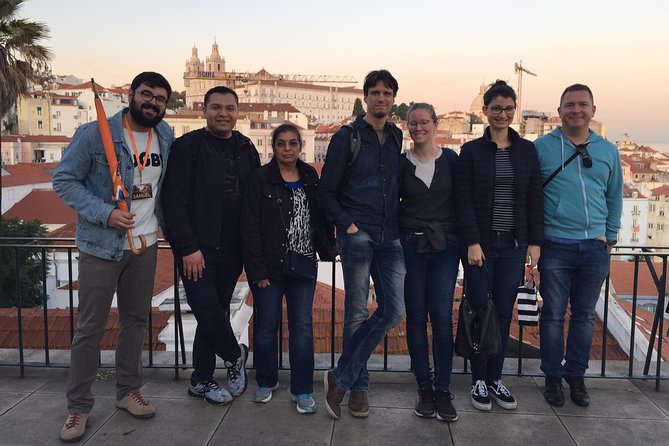
Two of the biggest payoff moments come next: Miradouro das Portas do Sol and Miradouro de Santa Luzia.
You’ll spend about 10 minutes at each viewpoint. That’s the sweet spot for Lisbon. You can:
- take in the view
- grab photos without racing
- listen while the guide points out what you’re actually looking at
These miradouros are famous for a reason. From up here, Alfama’s layout makes more sense. You understand why the streets twist and why certain squares and churches feel like they’re guarding the city’s edge.
Castelo de São Jorge: great views, plan for stairs
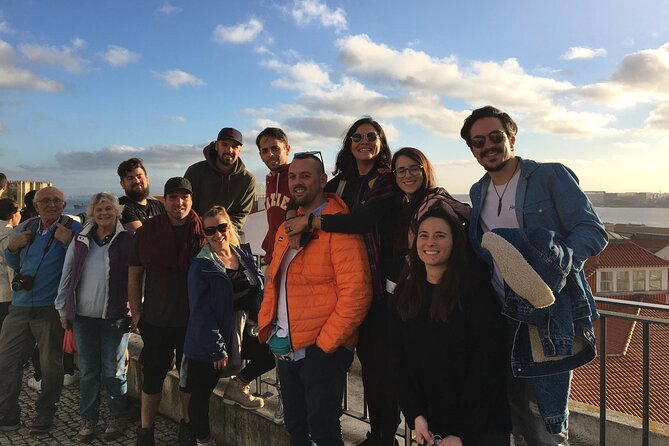
Next is Castelo de São Jorge, tied to an old Moors-era foundation in the 8th century.
A heads-up: this stop comes with a lot of uphill walking, and it’s only about 5 minutes as part of the guided flow. The tour is built to make the climb manageable. In past runs, guides have staged the walk so you’re not doing everything in one brutal gulp. That staging matters if you’re not used to Lisbon slopes.
One caution from real experiences: although the route lists admission as free for the castle, paid entry can show up depending on what access you try. So if you care about going inside, check on-site before assuming it’s included.
Mouraria and the fado corner: finishing in a living neighborhood
As the walk transitions to Mouraria, you shift from postcard Lisbon into more local street atmosphere. This portion is about 20 minutes walking the charming streets, plus a stop at Monumento Mouraria Berço do Fado.
This is where you feel Lisbon’s cultural storytelling in a different way. Instead of only grand buildings and viewpoints, you’re in an area where music and community identity sit close to street life.
Then there’s Igreja de São Vicente de Fora (brief), built in honor of St. Vincent. Even if it’s only a minute or so, it ties your walk back into Lisbon’s older spiritual thread before you head toward your finish.
Getting to Rossio: the walk ends where Lisbon conveniently connects
The tour ends around Rossio Square. That’s useful because Rossio is a major hub. So when your legs are tired and you want dinner, you’re not stuck in the middle of nowhere.
This finish also makes the whole route feel like a logical sweep: from a big central square down into the old maze, then back out toward a place where you can move quickly to your next plan.
Guides really matter here: examples of what to expect
The biggest strength of this tour is the human factor. When the guide is good, the walk feels like an entertaining walk with facts sprinkled in. When the guide is great, it feels like you’re getting a mini-course while you slowly earn your views.
From past performances, you may run into guides like:
- Walter, who’s been praised for animated storytelling and helpful historical perspective
- Hugo, noted as funny and professional, with a smooth day-of-heat approach
- Tiago, praised for friendliness and answering questions
- Jose, known for pacing the climb in steps and keeping the tone realistic
- Rita, highlighted as joyful and funny, especially for solo travelers
That said, pace can vary. Lisbon is a hill machine. Even a great guide can have a group that moves differently, so if you’re slow-walking or want extra time for photos, mention it early and let the guide know.
Price and value: why $1.25 feels almost suspicious (in a good way)
The posted price is $1.25 per person for about 2 hours 30 minutes. At that price, what you’re really buying is a guided route that strings together a lot of major stops—many marked as free admission—plus the context that makes the sights click.
So the value equation is strong:
- lots of major stops in a compact time window
- many quick, free-entry moments
- a small group (max 20), which tends to improve the experience compared with huge buses
The only reason to pause isn’t cost. It’s practicality. If you’re expecting everything to be fully paid-entry-free no matter what, don’t assume that. With older districts, some areas can have ticketed access zones even when the exterior viewing is free.
Logistics that can make or break your start
This tour uses a mobile ticket, and it’s offered in English. Confirmation happens at booking. It’s also described as near public transportation, which is handy because you’ll be in central Lisbon for the start and end.
Two practical tips:
- Arrive at the start at Praça do Comércio early. This is a popular area with lots going on.
- Take a screenshot of the exact meeting instructions and location. There have been real cases of meeting-point confusion, and your easiest fix is to follow directions closely.
If you’re visiting with service animals, the tour allows them.
Pace, comfort, and what to bring
This is a walking tour through hilly terrain. Expect:
- uphill climbs
- stairs
- a few viewpoint stops that are short but frequent
What you should plan around:
- Bring water, especially on warm days. (Guides have been praised for finding shade and working breaks into hot weather.)
- Wear grippy shoes.
- If you care about photos, know that stops are timed. Move fast after the guide points things out, then linger once the group is settled.
Who should book this tour (and who might skip it)
Book this if:
- you’re new to Lisbon and want a guided path through the old neighborhoods
- you like your history tied to street corners, not just museums
- you want big views without building your own hopscotch route
You might skip it if:
- you have low tolerance for steep walking and lots of stairs
- you strongly prefer fully ticketed, inside-visits only (since many stops are quick and the tour flow is about seeing and learning, not long museum time)
Should you book the Alfama and Mouraria tour?
I’d book it for most first-timers—especially if you want the oldest neighborhoods explained in a way that helps you understand Lisbon’s geography and identity. The value is strong, the small group size helps, and the viewpoints are timed so you get the payoff without wasting hours.
Just go in with the right expectations: it’s a walking day with hills, and while the plan lists free entry for the stops, major attractions can still have paid access areas on-site. If that’s fine with you, this is a smart, memorable way to see Lisbon’s older soul.
FAQ
How much does the Alfama and Mouraria Tour cost?
The price is $1.25 per person.
How long is the tour?
It runs for about 2 hours 30 minutes.
What language is the tour offered in?
The tour is offered in English.
How big is the group?
The tour has a maximum of 20 travelers.
Do I need a printed ticket?
No. It uses a mobile ticket.
Where does the tour start and end?
It starts at Praça do Comércio (1100-148 Lisbon) and ends around Praça do Rossio (Praça do Rossio, 1100-200 Lisboa).
Are the stops free to enter?
The itinerary lists admission as free for the stops included in the walk.
What if the weather is bad?
This experience requires good weather. If it’s canceled due to poor weather, you’ll be offered a different date or a full refund.
What is the cancellation policy?
Free cancellation is available up to 24 hours in advance for a full refund.
Are service animals allowed?
Yes, service animals are allowed.
More Tours in Lisbon
- Lisbon City Center Tour – The Unmissable Lisbon★ 5.0 · 22,234 reviews
- Lisbon: History, Stories and Lifestyle Walking Tour★ 4.8 · 10,902 reviews
- True 4Hour Private Tuk Tuk Tour: Discover Lisbon with a Local!★ 5.0 · 8,008 reviews
- Winner 2025 Undiscovered Lisbon Food & Wine Tour by Eating Europe★ 5.0 · 6,390 reviews
- Lisbon: Sintra, Pena, Cabo da Roca, Cascais Tour with Pickup★ 4.8 · 5,445 reviews
More Tour Reviews in Lisbon
- Lisbon City Center Tour – The Unmissable Lisbon★ 5.0 · 22,234 reviews
- Lisbon: Sintra, Pena, Regaleira, Cabo da Roca & Cascais★ 4.7 · 19,656 reviews
- Lisbon Card: 24, 48, or 72-Hour Pass★ 4.5 · 17,944 reviews
- Lisbon: Jerónimos Monastery Entrance Ticket★ 4.1 · 14,164 reviews
- Lisbon: History, Stories and Lifestyle Walking Tour★ 4.8 · 10,902 reviews
Keep Wandering Old Alfama
- Alfama Tour in Lisbon Old Town★ 5.0 · 4,936 reviews
- Private Lisbon Sightseeing Tuk-Tuk Tour: Alfama, Belém & More★ 5.0 · 4,277 reviews
- Lisbon: Hills, Alfama, and Mouraria Tour by Electric Bike★ 4.8 · 3,438 reviews
- Best of Lisbon Walking Tour: Rossio, Chiado & Alfama★ 4.9 · 2,700 reviews
- Lisbon: Baixa District Food Tour with Dinner and Drinks★ 4.9 · 1,997 reviews
Just in: fresh Lisbon reviews from the team





Alfama & Old Town Tours, compared.
 ★ 5.0Alfama Tour in Lisbon Old TownFrom $34,936 reviews
 ★ 5.0Private Lisbon Sightseeing Tuk-Tuk Tour: Alfama, Belém & MoreFrom $524,277 reviews
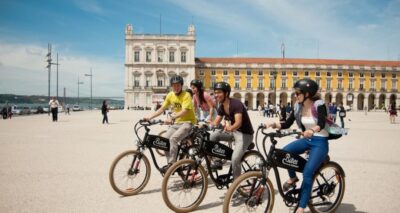 ★ 4.8Hills, Alfama, and Mouraria Tour by Electric BikeFrom $253,438 reviews
 ★ 4.9Best of Lisbon Walking Tour: Rossio, Chiado & AlfamaFrom $232,700 reviews
 ★ 4.9Baixa District Food Tour with Dinner and DrinksFrom $931,997 reviews
 ★ 5.0Lisbon Small-Group Food Tour with 18 Tastings in Alfama DistrictFrom $1261,967 reviews
 ★ 4.5Lisbon E-Bike Tour Commerce Square, Mouraria and AlfamaFrom $301,688 reviews
 ★ 5.0Old Town TukTuk Tour and Scenic Viewpoints in AlfamaFrom $35974 reviews
Browse the lists this tour appears in